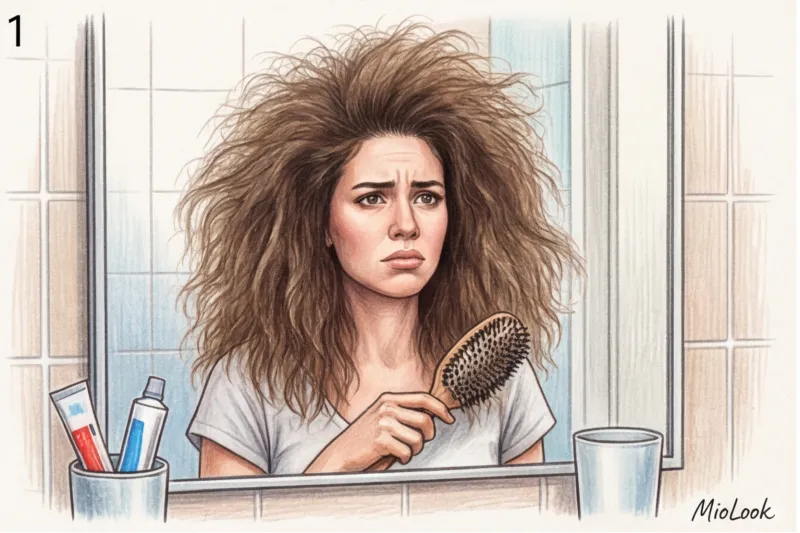
Over my 14 years as a stylist, I've heard the same complaint hundreds of times: "Olena, I buy texturizing sprays for €40, spend half an hour brushing, but by lunchtime the volume has treacherously faded." We start sorting through her makeup bag, looking for flaws in her blow-drying technique, but the problem turns out to be rooted before she even picked up a brush. It's hidden in the shower.
Most of us treat washing our hair as a routine hygiene procedure. Lather, rinse, and run. But in a professional environment, it's the first and most important step in creating a hairstyle. If you don't know, How to wash your hair properly , no expensive varnish or genius haircut for adding volume You won't be saved. We discussed the comprehensive approach in more detail in our complete guide: Proper hair care for perfect styling.
How to Wash Your Hair Properly: Why Old Habits Are Ruining Your Hairstyle
I remember my client Anna, a top manager. She complained about "heavy, flat roots" and blamed it on her hair type. In reality, the culprit was a cheap, mass-market €5 conditioner, rich in heavy silicones, which she generously applied directly to the crown of her head. These silicones literally pulled her strands down, undoing all the work of expensive styling products.
I often work on commercial photo shoots, and I can tell you for sure: you can't fool the camera. Trying to layer dry shampoo on a poorly rinsed base coat looks like your hair has been dusted with construction dust. It takes away the shine and natural movement of your hair.
"The illusion of cleanliness is when your hair is washed 'squeaky clean.' In reality, that squeak is your cuticle's cry for help. You've just completely washed away the scalp's protective lipid mantle."
Today, the "skinification" approach reigns supreme in trichology. Your scalp is an extension of your facial skin. It requires the same gentle, multi-step care, not aggressive degreasing.
Preparing to Wash: The Step 90% of Women Skip
According to research on the properties of keratin, hair can stretch up to 30% when wet. This is when it's most vulnerable. If you try to untangle tangles under running water, you're guaranteed to cause micro-tears in the hair shaft.
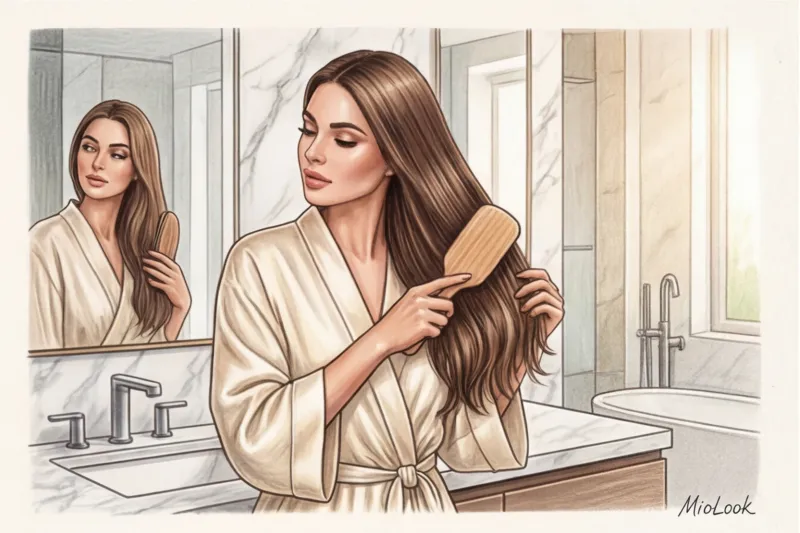
Therefore, the first law of my practice: Always comb your hair before showering. This accomplishes two things at once: you remove the remnants of yesterday's hairspray or gel and detangle tangles while the hair is still dry and strong.
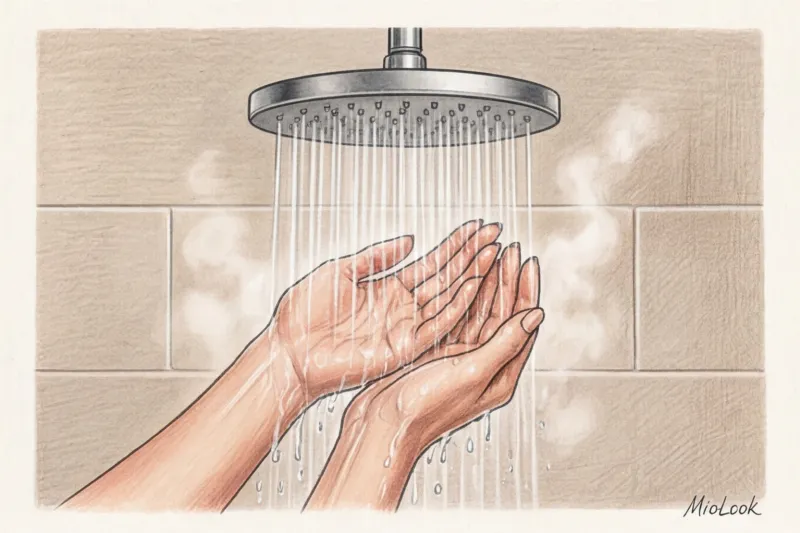
The second rule: let your hair get wet. Don't rush to pour shampoo. Stand in the shower for 1-2 minutes. The cuticles should be saturated with water, slightly open, and surface dirt should be softened.
Water Temperature: The Ice Rinse Myth
Adherents of "grandmother's recipes" love to recommend ice-cold rinses, supposedly sealing the cuticle and creating incredible shine. This is a dangerous misconception.
- What does ice water do: It causes a sharp spasm of the scalp's blood vessels, disrupting the follicles' nutrition. Water is unable to "close" the cuticle—this is due to the acid-base balance (pH).
- What hot water does: Stimulates the sebaceous glands. If you like to wash in boiling water, don't be surprised if your roots are greasy again by evening.
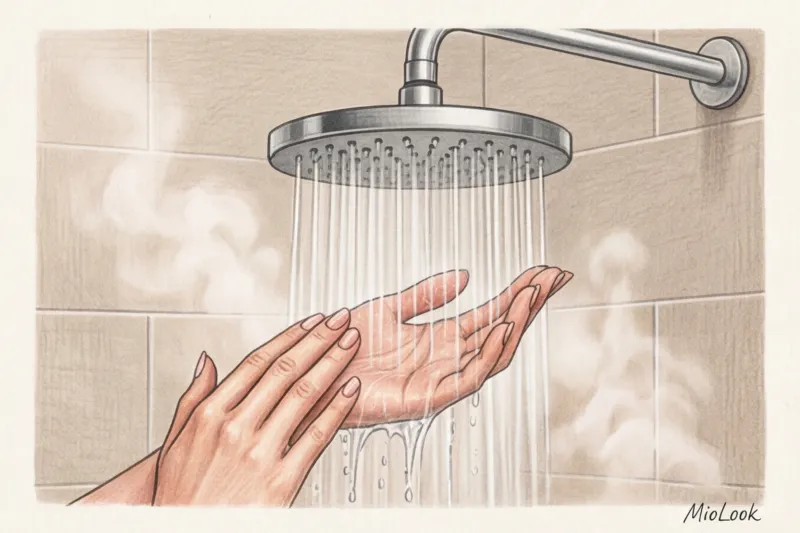
The optimal temperature for washing your hair is 35–37°C (your body temperature). It's comfortable for dissolving sebum but safe for blood vessels.
Access to MioLook for €0.99 — one-time payment
A smart AI stylist will select the perfect look for your new hairstyle.
Get access — €0.99 onceStep-by-step technique: how to wash your hair to keep volume
The statistics are relentless: about 60% of women squeeze a dollop of shampoo into their palm and immediately slap it directly onto the crown of their head. The result? A spot of concentrated surfactant drying out the top of their head, leaving the back of their head unwashed.
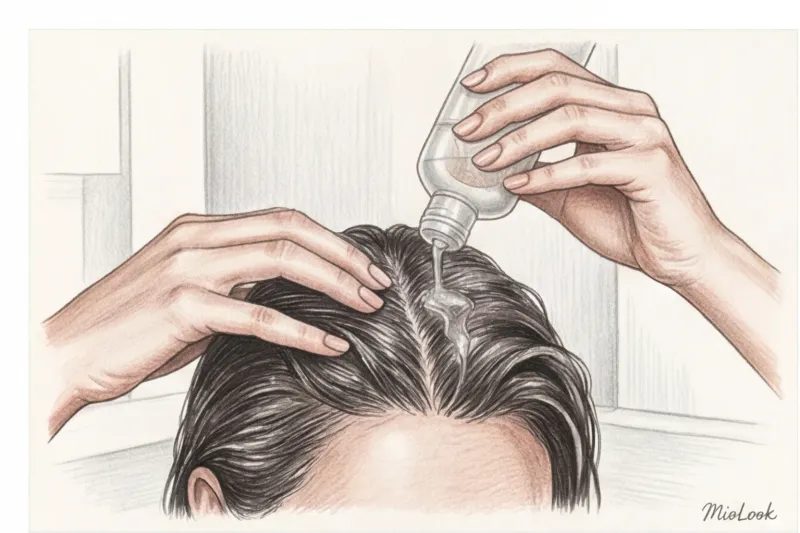
Proper emulsification looks different. Squeeze out a drop of shampoo (about the size of a €1 coin), add a little water, and lather it up in your palms. to Before applying it to your head, you should apply the foam, not the concentrate.
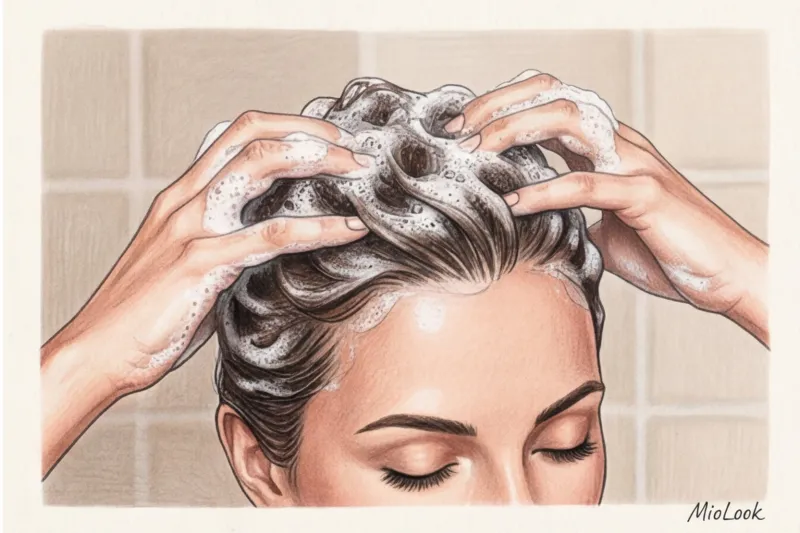
Massage your skin using your fingertips, not your nails. Work from the hairline to the crown and back of your head. Now, the key: Don't "erase" the length of your hair! They don't require friction. The foam that runs down the ends when you rinse is enough to clean dust off the ends.
Double cleansing rule for the scalp
Just as you remove makeup with cleansing oil and then with foam, your scalp requires a double approach.
- First soaping: It breaks down the surface layer of sebum, washes away urban smog and silicones from styling products. It won't lather well—that's normal.
- Second lathering: This is a therapeutic cleanse. This is when the shampoo's active ingredients (for example, zinc for dandruff or moisturizing complexes) begin to work. For the second time, you need half as much product.
A Conditioning Mistake That Kills Root Volume
Now I'm going to share a salon hair care secret that changes the way 9 out of 10 of my clients think about hair care. When you apply an expensive mask or conditioner to hair that's dripping with water, you're throwing money down the drain.
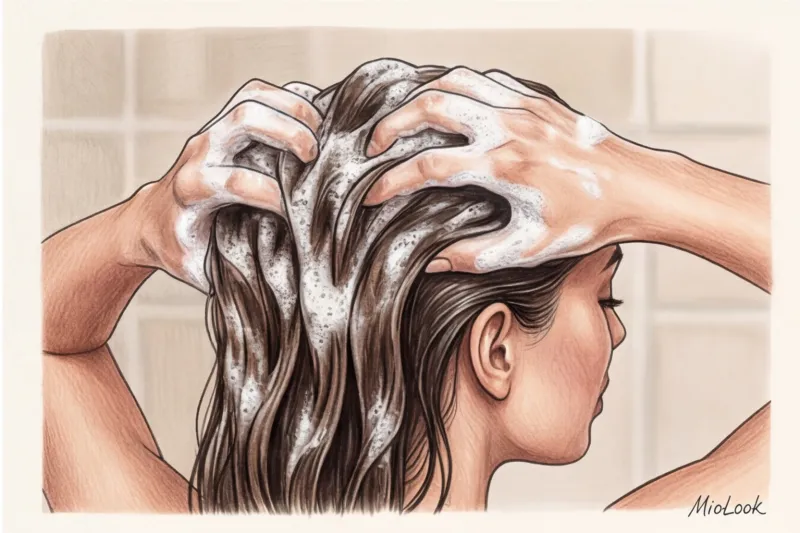
The physics of the process are simple: water in the hair acts as a barrier. It fills all the voids, leaving no room for the beneficial lipids from the conditioner to penetrate. Before applying the treatment, the hair must be thoroughly cleaned. wring out with a towel.
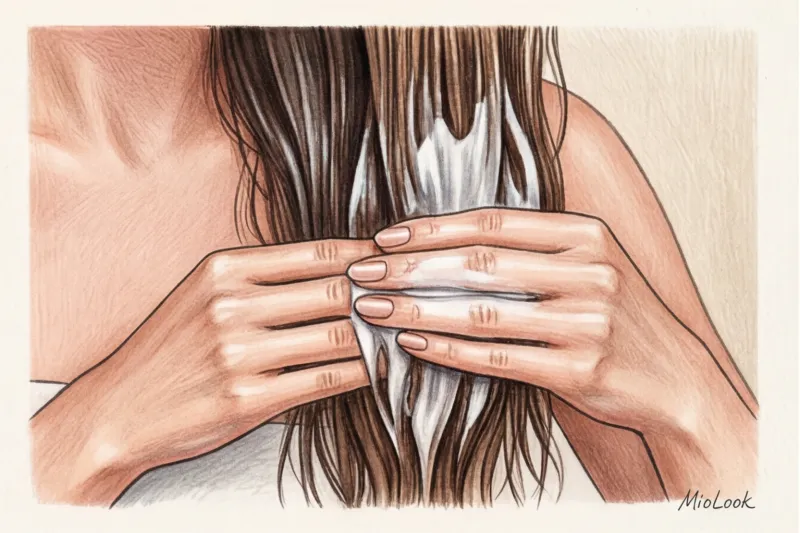
According to hair preparation protocols from leading global academies (such as Vidal Sassoon and Toni&Guy), it's the acidic environment of a quality conditioner (pH 4.5-5.5) that smooths the cuticle and neutralizes the alkaline effects of water and shampoo. It's not the proverbial ice-cold shower.
Apply the product strictly from the ear line down. If the conditioner gets on the roots, say goodbye to volume and hello to washing your hair the next morning.
Your perfect look starts here
Join thousands of users who look flawless every day with MioLook, combining perfect hair and a stylish wardrobe.
Get access — €0.99 onceChoosing products: choose shampoo for the scalp and conditioner for the ends
The most common mistake in the store is buying shampoo "for dry, damaged ends" when you actually have an oily scalp. Remember the golden rule of colorists and stylists:
- Shampoo is selected ONLY according to scalp type (cleansing).
- Conditioner and mask are selected based on the condition of the hair (reconstruction).
If you have oily roots and dry, bleached ends, you need a sebum-regulating or basic clarifying shampoo and a powerful lipid mask for the lengths. Mixing these two responsibilities results in a nourishing shampoo overloading the roots with oils, causing a "grubby head" effect by evening.
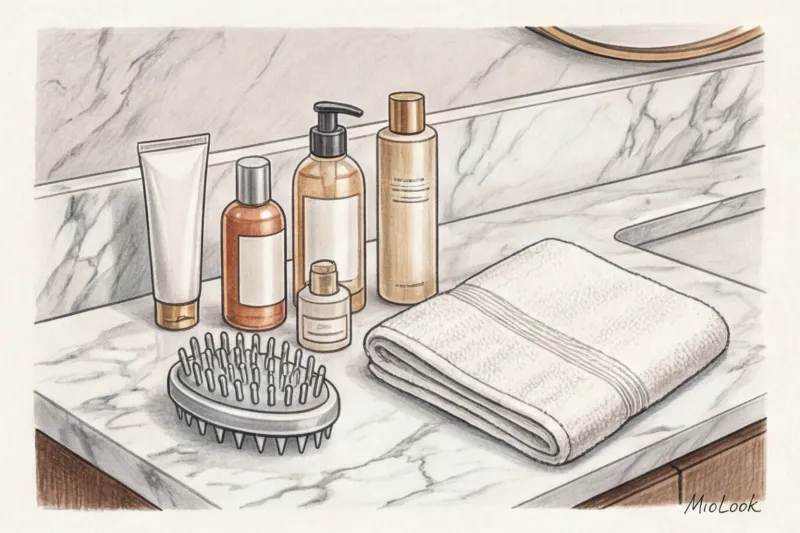
An unkempt head of hair instantly ruins even the most expensive look. You can wear a flawless €800 Max Mara suit, but if your ends hang like dry, lifeless icicles due to improper washing, the overall impression will be ruined. Cleanliness and a healthy shine are a basic indicator of status, especially if you choose strict styling for the office or style Old Money.
Checklist: The Perfect Hair Wash Routine for Long-Lasting Style
To reinforce this material, I've put together a short algorithm for you that will help transform washing your hair into professional preparation for the perfect hairstyle:
- Comb dry hair with a soft brush.
- Wet the cloth thoroughly under warm water (35-37°C) for one minute.
- Lather a drop of shampoo in your palms and apply to the roots.
- Rinse your scalp twice with your fingertips.
- Squeeze out excess moisture thoroughly with your hands and then pat dry with a towel.
- Apply conditioner (at least 10-15 cm from the roots) and leave for 2-3 minutes.
- Rinse thoroughly with cool (not ice-cold!) water.
If you frequently use dry shampoos, texturizers, or gels, incorporate a deep-cleansing shampoo (DCS) or an acid scalp peel into your routine every 1.5–2 weeks. This will prevent buildup (makeup residue) and restore natural lightness to the root zone.
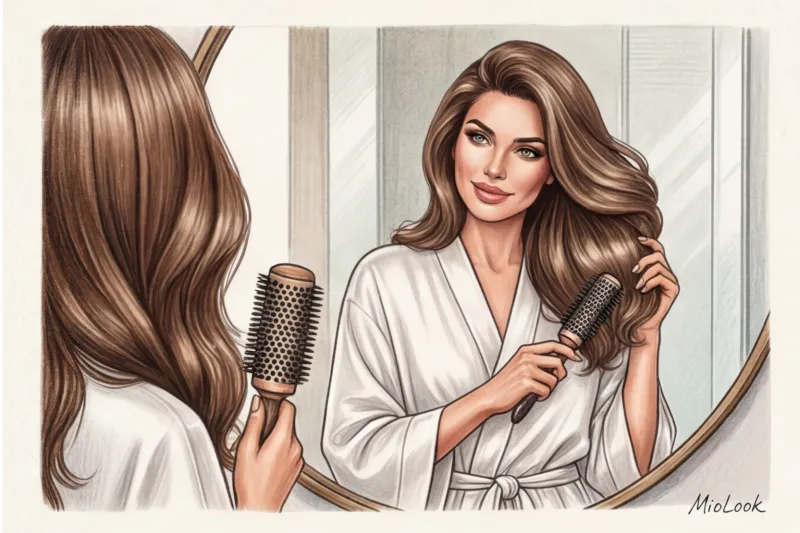
When might these rules not work? If you have extremely bleached level 10 blonde hair, it's in the "cotton wool" stage. This type of hair can literally break at the slightest touch when wet, and requires a pre-washing technique (applying a protective oil before it gets wet) before a regular wash. But for 95% of women, the above method will be a real revelation.
A luxurious hairstyle doesn't start with a hot curling iron or expensive hairspray. It starts with water, the right shampoo, and careful cuticle care in your bathroom.