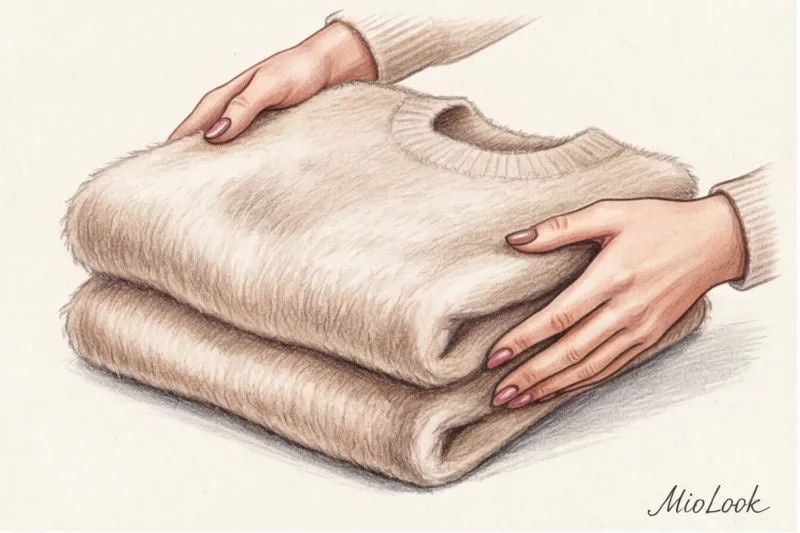
A couple of years ago, a client came to me almost in tears. Her luxurious $800 cardigan, purchased just a season earlier, had become stiff, scratchy, and dull. The reason? She was convinced she was taking excellent care of it, meticulously dry-cleaning it every two weeks. This is the most common and most expensive mistake in caring for luxury knitwear.
If you want to know, How to wash a cashmere sweater To ensure it only gets softer with each passing year, we'll need to understand the physics and chemistry of this amazing fiber. We've covered in more detail how to distinguish a reputable item from a disposable one even when trying it on in our a complete guide to choosing quality cashmere Today, let's talk about how to save your wardrobe investments from ruin.
Why the "Dry Clean Only" Label Is Lying (and Why Cashmere Loves Water)
You've probably noticed: 90% of cashmere items from the mass market and middle segment (from Zara to Massimo Dutti) are emblazoned with a categorical inscription Dry Clean Only It sounds authoritative, but in reality, it's a legal ploy. Brands are simply absolving themselves of liability for throwing a sweater in a 60-degree dryer alongside jeans.
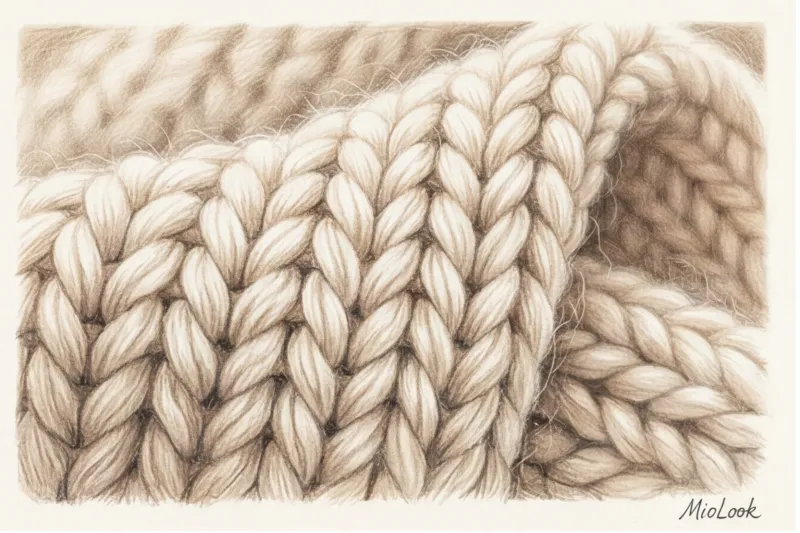
Let's look at some anatomy. Cashmere is the combed undercoat of mountain goats. Each hair is only 14–19 microns thick (for comparison, a human hair is about 70 microns thick). Like our hair, this animal protein desperately needs moisture and nourishment. In nature, this function is performed by the animal's sebum, and in yarn, by residual lanolin (animal wax).
Insider fact: When talking to buyers at Italian yarn mills like Cariaggi and Loro Piana, I heard the same rule over and over again. Dry cleaning is a slow death for natural down. Perchloroethylene and other harsh solvents used in dry cleaning mercilessly wash out the lanolin. The fiber dries out, becomes brittle, and the sweater begins to pill. Water, on the other hand, forces the twisted yarn to open up, restoring its original volume and fluffiness.
Preparation: What You Need to Know Before Washing a Cashmere Sweater
Before washing, do a quick inspection. Never wash cashmere with other fabrics—only on its own or with identical cashmere items of a similar shade. Carefully inspect the garment for snags: when wet, a loop can slip and turn into a real hole.
But the most important rule of preparation lies in the chemistry. It's strictly forbidden to use your usual laundry detergent capsules or powders.
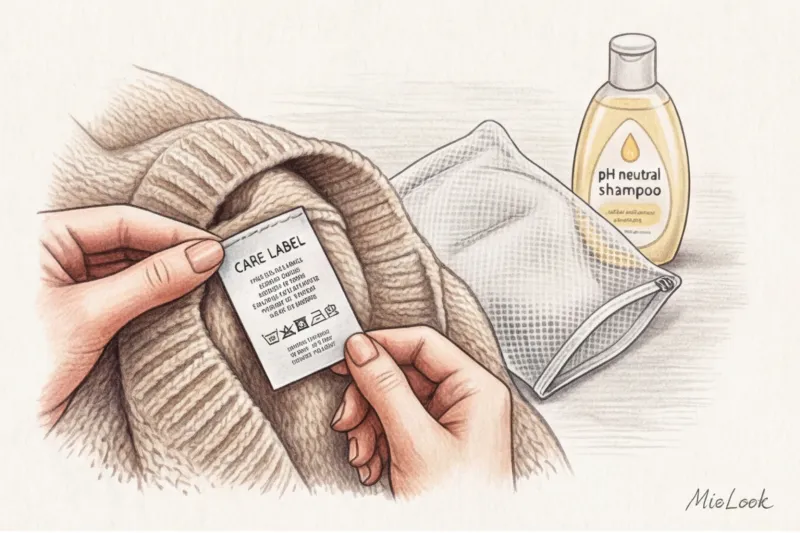
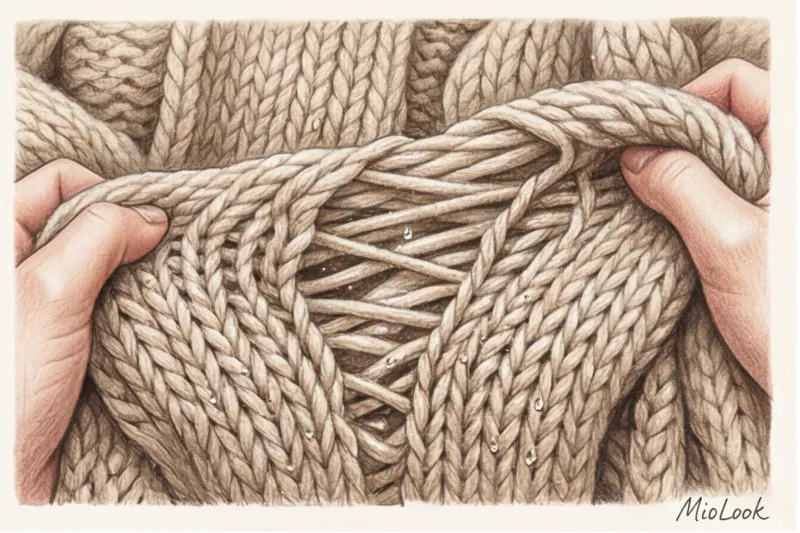
Did you know why regular laundry detergent is so effective at removing blood or sauce stains? It contains enzymes called proteases, which are programmed to break down protein compounds. The problem is that cashmere (keratin) is 100% animal protein. Regular laundry detergent literally "eats" your sweater, making the threads thinner with each wash.
Choosing a Detergent (pH is Crucial)
According to the Cashmere Manufacturers Institute (CCMI) standards, the ideal washing environment for this fiber is neutral or slightly acidic (pH around 7.0). The alkaline environment of ordinary soap destroys the fiber's structure.
- Ideal choice: Specialized cashmere shampoos with added lanolin (for example, from The Laundress or local eco-friendly brands) replenish the lipid barrier of the fiber.
- Budget alternative: A high-quality baby shampoo with a neutral pH. As long as it doesn't sting your baby's eyes or dry out their hair, it's also great for goat hair.
- Strict prohibition: Fabric softeners create a silicone film on the surface of the fibers, which binds the delicate down. The sweater will lose its airiness and warmth.
Your ideal image
it begins Here
Join thousands of users who look flawless every day with MioLook. Plan your looks and keep track of your care in one app.
Get access — €0.99 onceHand Washing: A Stress-Free Step-by-Step Guide
The main fear when washing wool is shrinkage. Many people think that hot water causes shrinkage. This is only half the truth. The real cause of so-called "felting" (when a sweater becomes like thick felt) is temperature shock. If you wash an item in warm water and rinse it in ice-cold water, the keratin scales will suddenly close and cling tightly to each other.
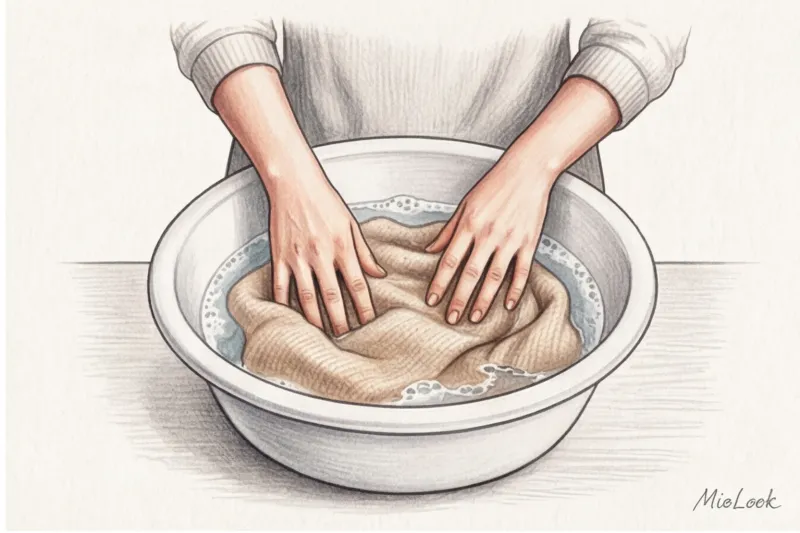
Step-by-step instructions for hand washing:
- Fill a clean basin or sink with water at a temperature of exactly 20-30°C (it should feel slightly cool to your hands).
- Dissolve the detergent to before you lower the sweater into it.
- Submerge the sweater in water. The technique here is "light massage." Gently squeeze the sweater, forcing the soapy water through the fibers. No rubbing! Friction in water is a guaranteed way to cause deformation.
- Let the sweater “float” for 10-15 minutes.
- To rinse, drain the water and fill it with new water - absolutely the same temperature Press gently on the sweater until the water runs clear.
- Spin: Gather the sweater into a ball and gently press it against the sink wall. Never twist the item into a spiral.
Can you machine wash cashmere? (Spoiler: yes)
It sounds like heresy to many purists, but machine washing is often safer than hand washing. I once had to rescue a client's wardrobe after she scrubbed coffee stains so aggressively with her hands that she had felted her sweater on the stomach. By switching her to machine washing, we solved the problem.
Why could a washing machine be better? The drum ensures even weight distribution and centrifugal force with minimal spin. With our hands, we often pull on one edge of a wet, heavy garment, deforming the hinges.
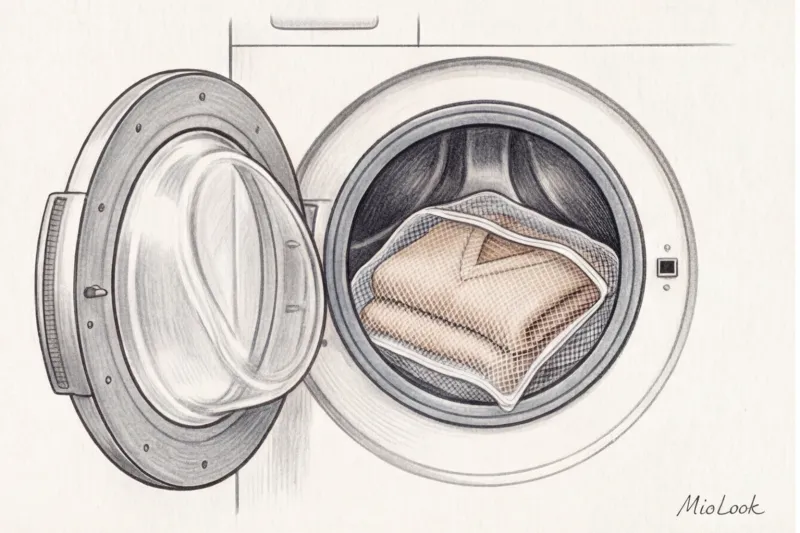
But there is a limitation: This method does NOT work for cashmere with leather inserts, heavy metal hardware, or intricate embroidery. It's best to take such items to a reputable eco-dry cleaner (wet cleaner).
Mandatory rules for the machine:
- Always turn the sweater inside out (this will protect the right side from chafing).
- Use a sturdy mesh laundry bag that's the exact size of the folded sweater. The item shouldn't hang loosely in it.
- Never wash a single sweater in an empty drum—it will bang against the walls. Add a couple of clean towels (not terrycloth, as they will leave lint) to create a soft cushion.
Machine settings that will save your premium knitwear
Use only certified "Wool" (Woolmark) or "Hand Wash" programs. These programs provide a "rocking" motion instead of a full rotation. The spin cycle should either be turned off completely or set to a strict limit of no more than 400 rpm. Make sure the machine does not perform an additional rinse with ice-cold tap water.
The Art of Drying: How to Avoid Turning a Sweater into a Dress or a Baby Top
If you've successfully washed your cashmere, don't relax yet. Drying is the stage where 50% of items are ruined. The physics of the process are simple: a wet cashmere sweater weighs 3-4 times more than a dry one. Gravity is your worst enemy here.
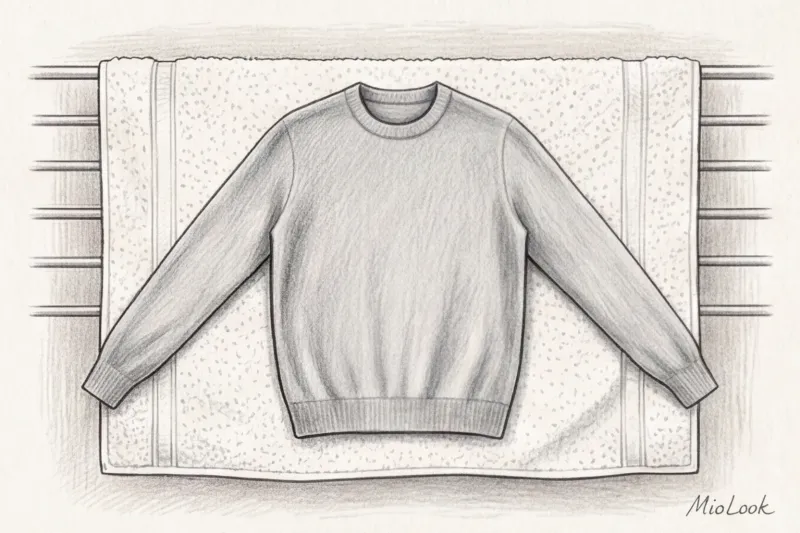
First, remove excess water using the "roll method" (or burrito method). Lay a thick terry towel on the floor. Place the sweater on it, straighten it out, and roll them together into a tight roll. Then gently press down on the roll with your weight. The towel will absorb 80% of the moisture without deforming the sweater.
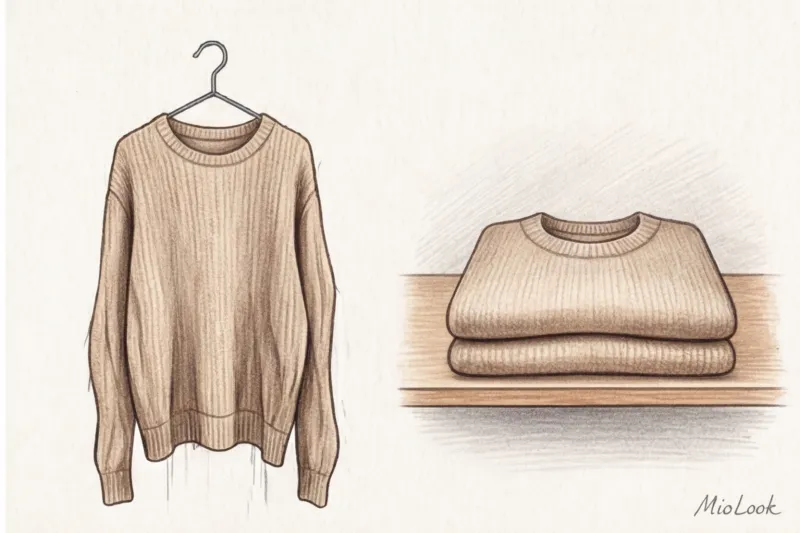
Next, choose a horizontal surface away from radiators and direct sunlight. A mesh drying rack with air circulation underneath is ideal. Hang-drying is a major no-no. One hang-dry will stretch the shoulder seams so much that you'll have to throw the garment out.
Blocking: Returning the correct geometry
Blocking is a professional term in the knitwear world that means shaping a wet garment into the desired shape. Cashmere is very flexible when wet.
Take a tailor's tape measure (life hack: measure your favorite perfectly fitting sweater to (Wash and write down the measurements: sleeve length, armhole width). Lay the damp cashmere on the dryer and gently adjust it to these measurements with your hands: using a patting motion, push the fibers together if the sweater has stretched, or gently pull it in width if it has shrunk. Leave it to dry completely.
Access to MioLook for €0.99 — one-time payment
A smart AI stylist will help you find the perfect everyday look and organize your luxurious knitwear.
Get access — €0.99 onceRemove pilling and achieve a final shine (Instead of an iron)
Many people panic when they see pilling on a $500 sweater. Relax: absolutely any cashmere will pill; it's a characteristic of fluffy yarn. It's just a matter of speed. As we discussed in the article about creating a capsule wardrobe Premium brands use long fibers (up to 40 mm), which rub against each other less, so pilling occurs less frequently.
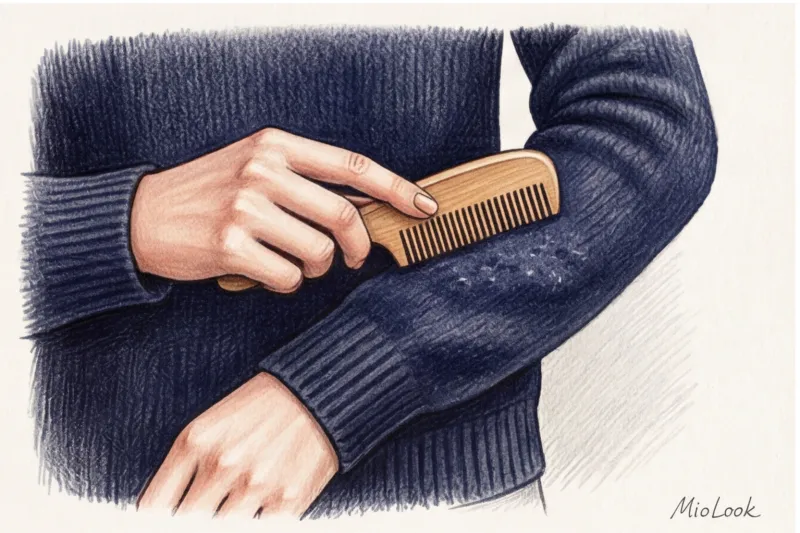
To remove pilling, I strongly recommend avoiding electric machines unless you're a professional. Their blades can undetectably cut healthy threads, thinning the fabric. Use a special cashmere comb (a cedar comb with a metal mesh). Lay the sweater flat on a table, hold the fabric taut with one hand, and lightly run the comb in the direction of the nap with the other.
And finally, ironing. An iron (especially with a high-pressure soleplate) will irreversibly flatten the voluminous down. A steamer is the only option! Steam is cashmere's best friend. It works like a salon blow-dry: it lifts the pile, makes the sweater fluffy, and also disinfects it.
Checklist: A Routine for Caring for Cashmere Between Washes
To reduce the need to worry about how to wash a cashmere sweater, care for it properly while wearing it. One study on fabric durability shows that washing it too frequently reduces the lifespan of natural knitwear by half.
- The 4-5 Sock Rule: Wash cashmere no more than every 4-5 full washes unless there are obvious stains. See the appendix. MioLook By the way, it’s convenient to keep track of how many times you’ve worn a specific item from your base.
- Give your fibers a rest: Cashmere has a "shape memory," but it needs time to recover. Never wear the same sweater two days in a row. Let it rest for 24-48 hours, and it will return to its original volume on its own.
- Airing instead of washing: If your sweater has absorbed a restaurant smell, simply hang it (briefly on a thick, soft hanger or draped over the back of a chair) on the balcony or in the bathroom, where there's a lot of steam. The smell will disappear.
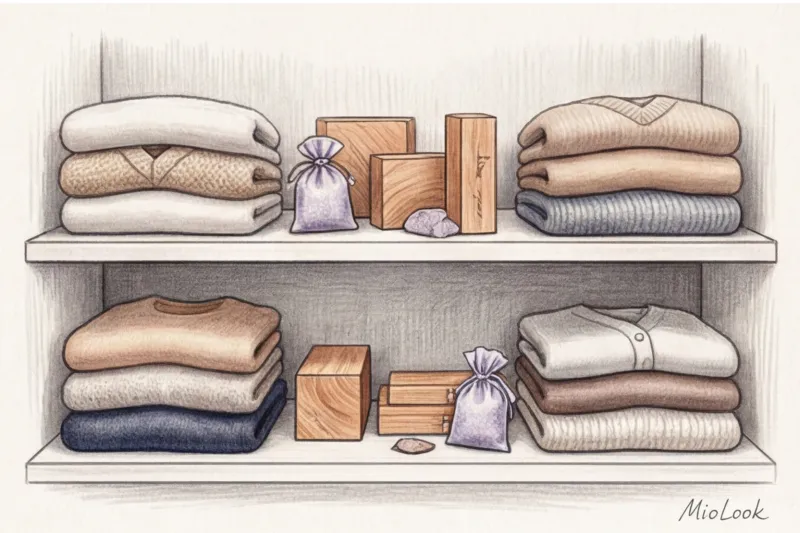
- Proper storage: Store knitwear folded only. Don't stack 10 items at a time—the bottom items will become compressed under the weight of the top ones (maximum 3-4 sweaters per stack). To protect against moths, use natural cedar blocks and lavender sachets.
Remember the most important thing: cashmere is a living material that reciprocates care. Replace harsh dry cleaning with cool water and the right shampoo, and your sweater will keep you warm and looking luxurious for decades to come.