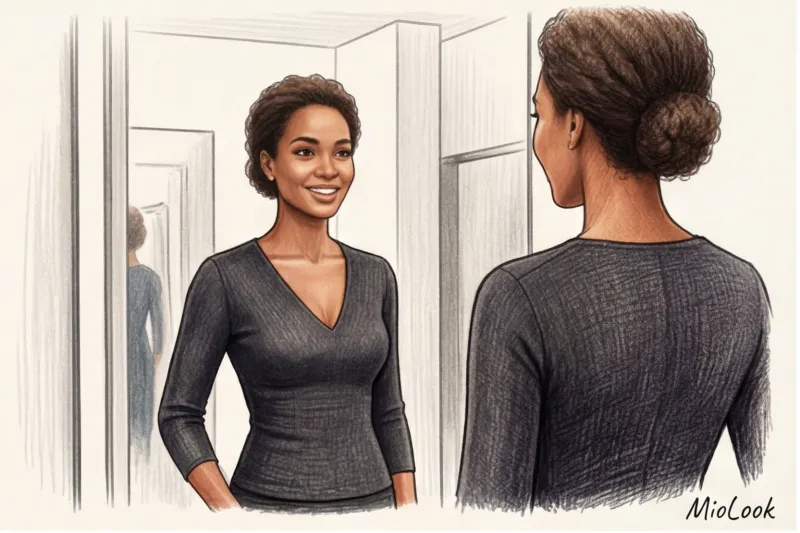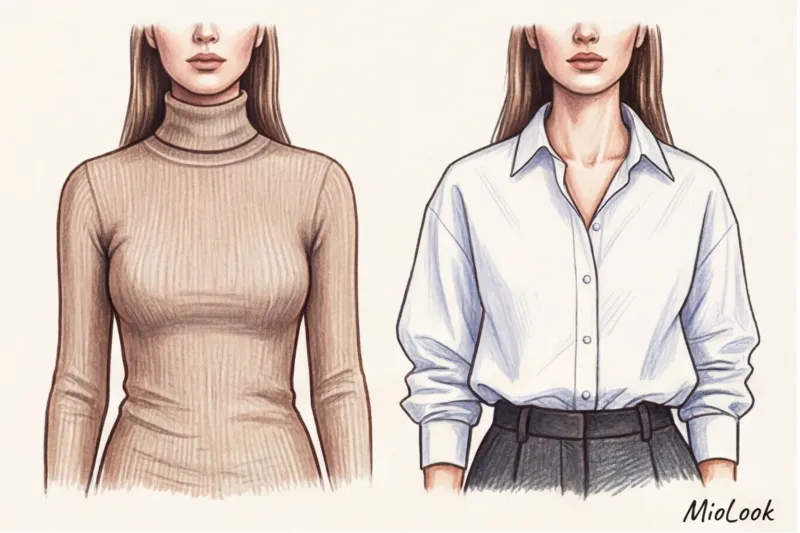
Last week, my client Anna (32) ceremoniously tossed three aggressive push-up bras in the bin right in the fitting room of COS in London. We'd just picked out the perfect, thick shirt for her, and for the first time, she saw in the mirror a harmonious, voluminous silhouette that didn't require her to suffocate in a foam vice. It was a moment of epiphany: to make breasts appear larger, they shouldn't be squeezed and exposed. They need to be properly "packed."
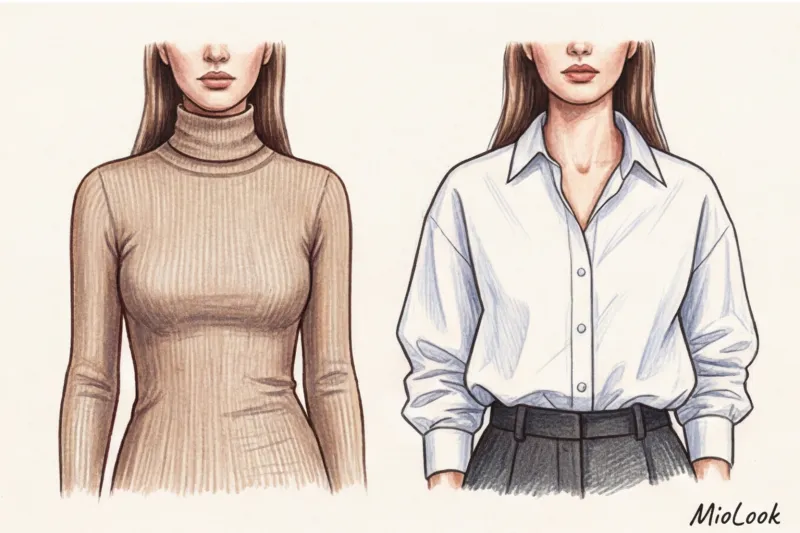
In 12 years of working as a personal stylist, I've realized one thing: women with smaller breasts make the same mistake. They try to squeeze what they have, hoping to emphasize their shape. But the secret lies elsewhere. If you're looking for ways to... How to visually enlarge your breasts , you'll have to forget about fine knitwear and turn to the architecture of the cut. We've covered the basic principles of working with proportions in more detail in our complete guide to visual correction of the figure with the help of clothing.
Let's look at how fabric density, a rigid frame, and strategic air space between the body and the garment create the illusion of volume much more effectively than any underwear tricks.
The End of the Push-Up Era: Why Skinny Clothes Don't Work Anymore
Remember those ribbed turtlenecks so popular in mass-market fashion? They're the worst enemy of a small bust. Thin, stretchy knitwear works like a second skin. It honestly and uncompromisingly conveys your true contours to others, at a 1:1 scale. Against the backdrop of your chest and shoulders, a tightly clad, small bust appears even smaller.
Aggressive push-ups paired with such clothing create an unnatural "shelf effect." It looks outdated and, frankly, cheapens the look. Modern aesthetics are built on casual elegance, not a show of effort.
"True volume is not created by underwear, but by the air under the right fabric."
In my practice I use simple two-finger rule There should be enough room for two fingers to fit between your décolleté and the fabric of your clothing. This gap, this strategic air space, is what the brain of the person looking at you interprets as body volume. If the fabric doesn't fit snugly, the eye assumes the space underneath is full.
Your perfect look starts here
Join thousands of users who look flawless every day with MioLook. A smart AI stylist will analyze your figure and select clothes that create the perfect proportions.
Get access — €0.99 onceFabric architecture: how the density of materials creates the illusion of volume
The great Cristóbal Balenciaga once revolutionized fashion by cutting clothes so they stood apart from the woman's body, creating their own independent form. This architectural principle is your main weapon.
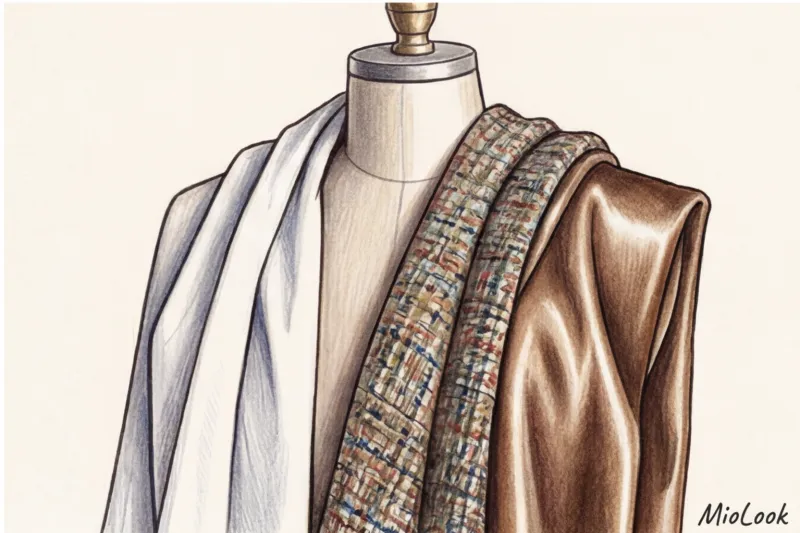
You need fabrics that act as a frame. They shouldn't flow, leak, or sag. If you pick up a shirt by the hangers, it should hold its shape even in the air.
- Cotton poplin: Look for shirts with a density (GSM - grams per square meter) of 120 g/m² or more.
- Thick linen: Not the kind that is translucent in the sun, but a heavy, suit-like one.
- Tweed and suit wool: Ideal helpers for jackets.
Let's compare in numbers: a structured shirt made of thick cotton from Massimo Dutti (costing around €70-€80) will visually add at least half a size to your bust due to its shape. Meanwhile, a thin viscose top for €15 will only highlight the lack of volume.
Shine and texture: light and shadow are on your side
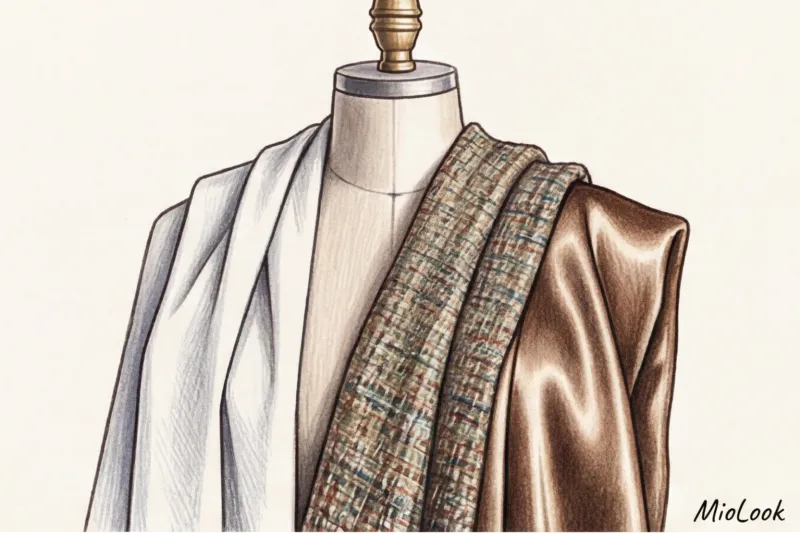
When it comes to evening or formal looks, chiaroscuro comes into play. Thick, heavy satin or high-quality silk are highly reflective. A glare on the prominent part of the bust visually enhances its prominence. The key is to avoid stretching the fabric.
Textured fabrics work even more directly. Bouclé, chunky cable knits (Aran patterns), or corduroy with a large rib add physical volume in centimeters. The sheer thickness of the yarn works to your advantage.
Topography of the cut: how to visually enlarge the bust with lines and details
Anything at chest level draws the eye. But it's important not to overdo it. Childish, tiny ruffles, cheap lace, and chaotic flounces often create the "I'm trying too hard to look bigger" effect, which has the opposite effect.
Instead, use geometry and detailing borrowed from the utilitarian style:
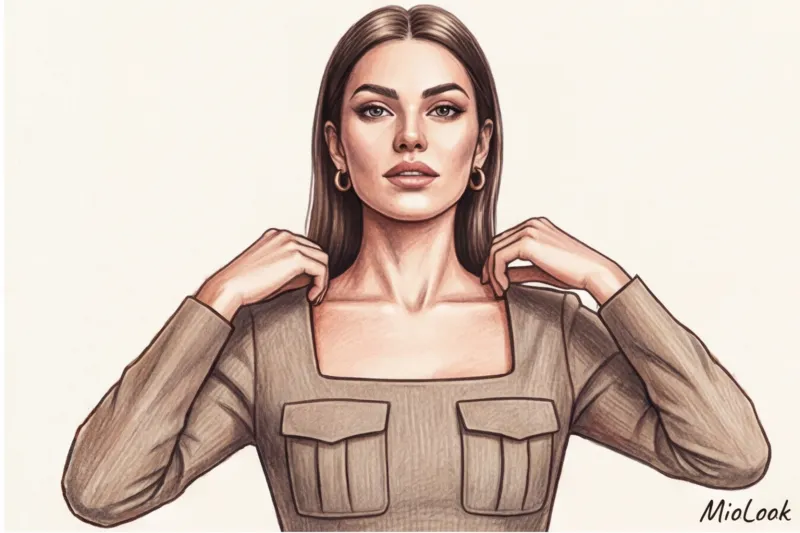
- Symmetrical chest pockets: Note the safari-style shirts. An interesting historical fact: large chest pockets on military jackets were originally designed to make soldiers' chests appear broader and more impressive. This works just as well on women.
- Yokes and tucks: Vertical folds running from the shoulders down create the correct topography.
- Geometry of cutouts: Forget about a deep V-neck if you want to appear fuller. Your choice is boat neck , which horizontally widens the chest line, or square neckline (bob) The latter works wonders, revealing the collarbones and creating the illusion of fullness in the décolleté area.
Access to MioLook for €0.99 — one-time payment
A smart AI stylist will create the perfect look based on your individual measurements and goals. Upload your items and receive ready-made combinations every day.
Get access — €0.99 onceStrategic Layering: Creating 3D Effects Without Excess Weight
Layering is a favorite trick of stylists. When we layer clothes, we create depth. Visually, the bust is brought to the forefront.
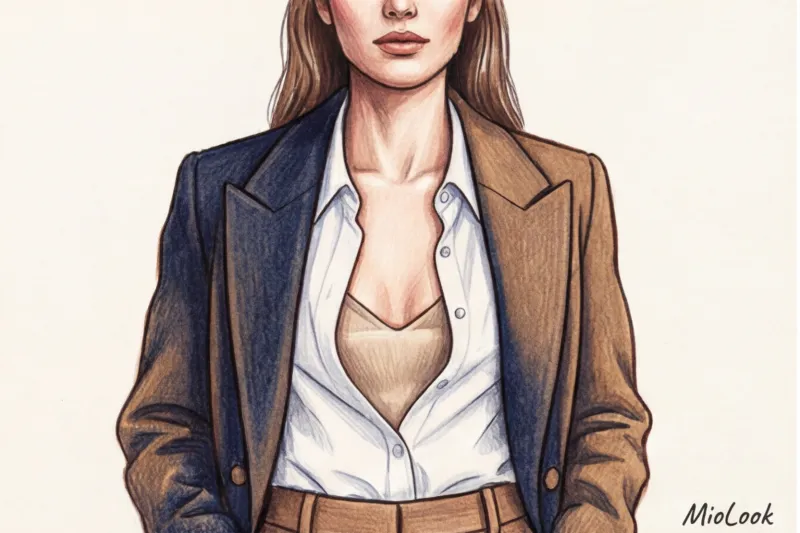
Here's a fail-safe look that you can put together at any European mass market like Zara in 15 minutes:
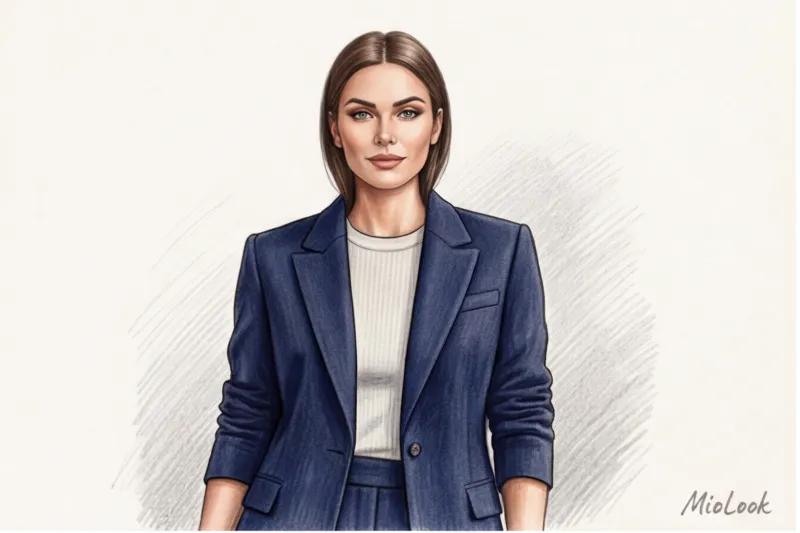
Take a basic, sleek top (preferably a light color). Layer a structured, pinstripe shirt over it, leaving it unbuttoned to the waist. Layer a thick, darker blazer over that. This contrasting layering—light on the inside and dark on the outside—works like contouring in makeup. The lighter area in the center visually pops out.
I would like to point out separately suit vests By wearing a tight vest over a loose blouse, you create a subtle corset effect: the blouse's fabric gathers at the chest, creating beautiful, voluminous folds, while the stiff edge of the vest secures this structure.
Prints and Color: Optical Illusions in Action
You've probably heard the common myth: "horizontal stripes make you look fat." The truth is much more interesting.
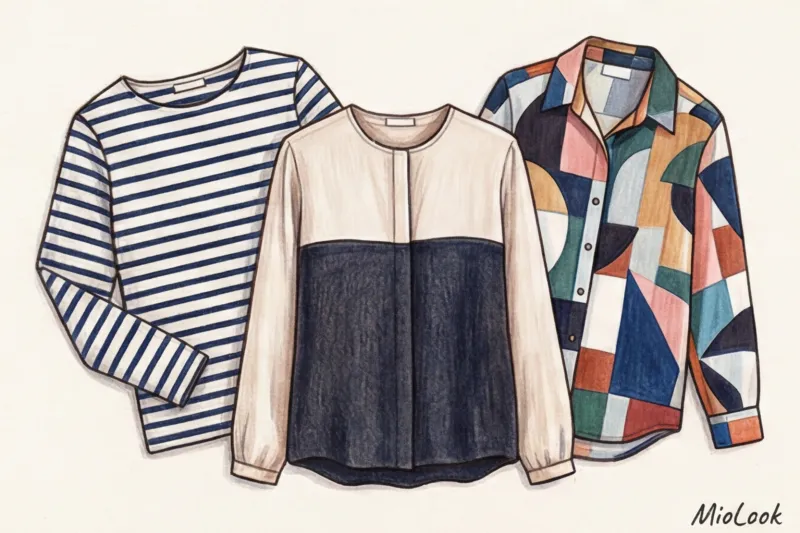
Back in 1867, German physicist Hermann von Helmholtz described an optical illusion, proving that a square filled with horizontal lines appears taller and wider than the same square with vertical lines. That's why the famous Breton striped shirt is your best friend. But there is a nuance: To widen only the chest area, and not the entire waist, choose jumpers where the stripe runs only along the top (from the collarbone to the middle of the chest), and the bottom remains solid.
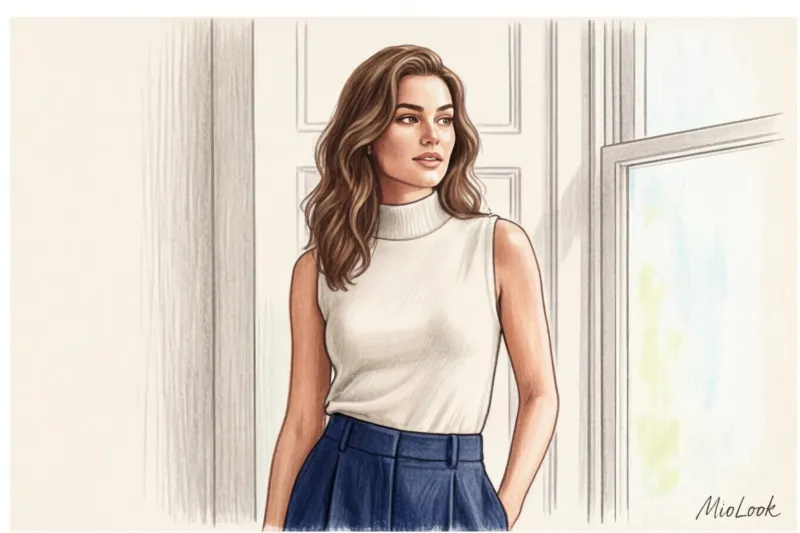
It also works flawlessly. color blocking The rule is simple: light adds volume, dark reduces volume. A white, cream, or pastel top paired with dark blue trousers or a black skirt shifts the focus upward and balances proportions.
If you love prints, opt for large abstract or geometric patterns in the portrait area. Small florals (millefleur) can get lost and visually compress the space.
Checklist: 5 Basic Items That Will Add the Necessary Volume
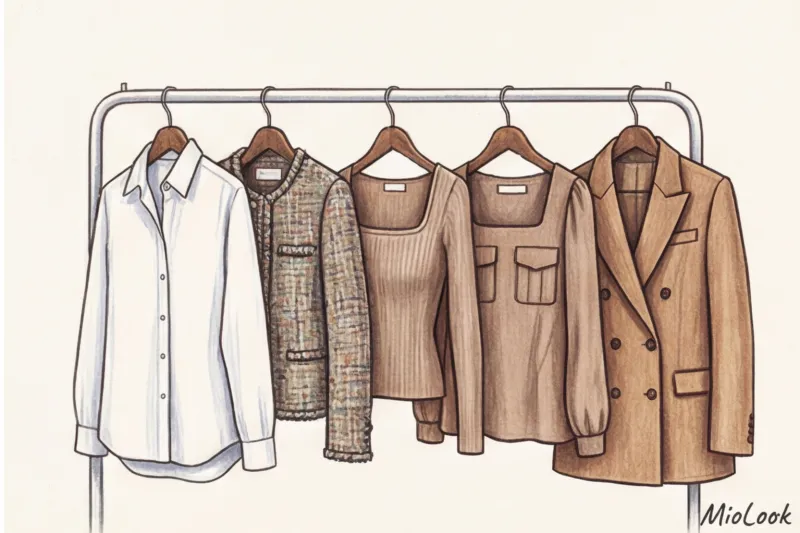
If I were asked to keep only five tops in a client's wardrobe with a small bust, my personal must-have list would look like this. Each of these items is worth every euro spent:
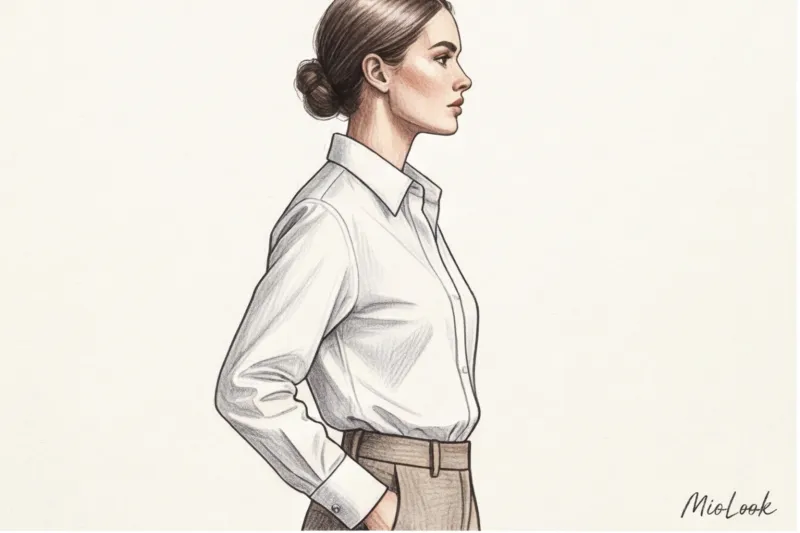
- Thick white oversized shirt. Important: oversized garments should be structured (like a man's shoulder), not loose. Look for cotton labeled non-iron—it's usually stiffer. Expected budget: €50–€90.
- Straight cut tweed jacket. Chanel-style. The dense, loose fabric adds at least 1.5 centimeters of actual volume above your bust. Price: €80–€150.
- Top with a square neckline (bob) made of thick knitwear. For example, Milano jersey. It beautifully contours the collarbones and creates a horizontal line above the chest. Budget: €30–€60.
- Blouse with large chest pockets. Made from cupro or thick viscose silk (it's important that the pockets don't sag). This is an ideal option for an office dress code. Budget: €60–€100.
- Double-breasted jacket with a clear shoulder line. Two rows of buttons and a double layer of fabric on the chest (using a wrap) is a mathematically precise way to add width and volume in the desired area. Budget: from €100.
Ready to start updating your wardrobe?
Try the MioLook plan for free—no commitments required. Create a virtual capsule wardrobe of those five essentials and see how they pair.
Get access — €0.99 onceRelationship with the overall architecture: posture and proportions
I can find you the most expensive architectural shirt from the Jil Sander collection, but if your shoulders are rolled inward and your back is hunched, the magic won't work.
According to research in nonverbal communication and body aesthetics, approximately 80% of the visual volume of the upper body depends on the shoulder line and posture, not the size of the breasts themselves. A straight back, an open chest, and lowered shoulder blades are the cheapest, fastest, and most effective lift available to everyone.
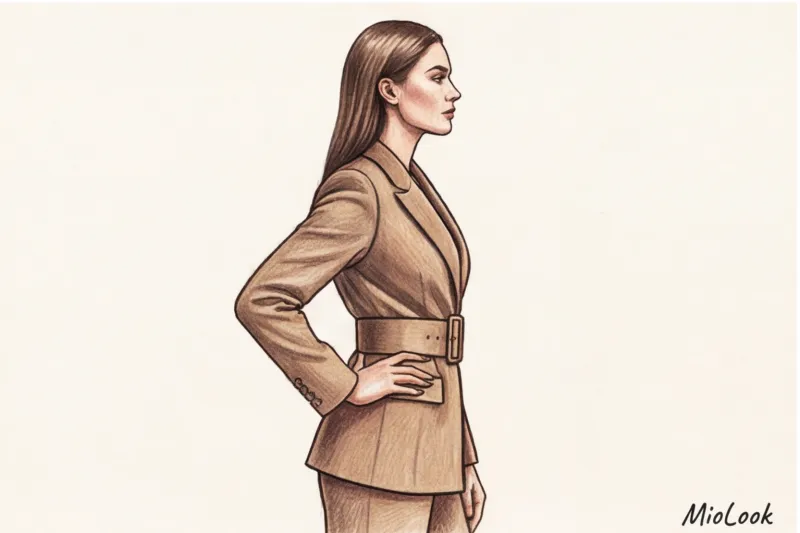
And finally, in my work, I long ago abandoned the outdated "fruit typology." We are not pears, apples, or inverted triangles. We are women who work with lines, volume, and balance. A bust always appears larger in contrast to a narrow waist. Accentuate your waist with a good mid-width leather belt, put on a structured jacket, and square your shoulders—and your silhouette will instantly transform.
Clothes aren't a cover for the body. They're a tool for manipulating others' gazes. By stopping trying to squeeze what you don't like and starting to build an architecture around yourself, you gain absolute stylistic freedom.