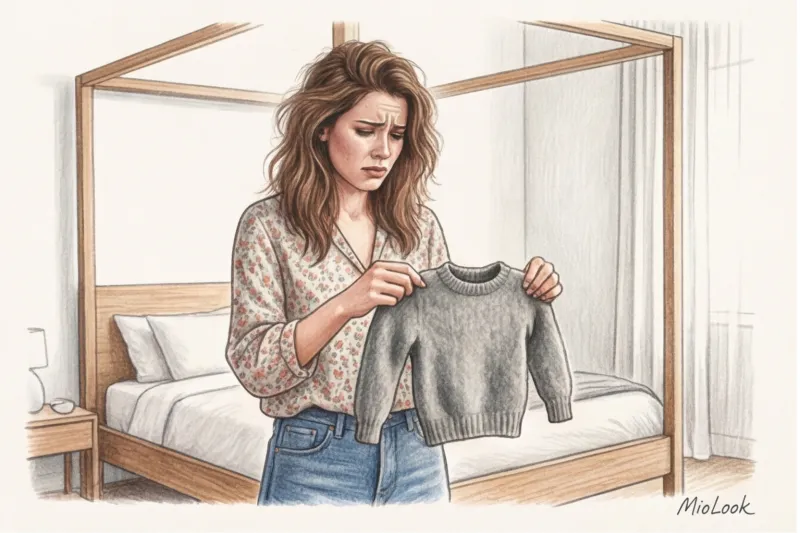
It's a familiar feeling: you take your favorite €150 COS jumper out of the washing machine, and suddenly it looks like it could only be worn by your five-year-old nephew. Your heart sinks. Your first instinct is to try to stretch the wet fabric as hard as you can while no one's looking. Stop. As a colorist and stylist who works with fabrics every day, I can tell you for sure: brute force is the last thing your clothes need right now.
Over 12 years of practice, I've saved dozens of clients' wardrobes from the consequences of poor washing. The good news is that approximately 70% of items carry dangerous labels. Dry Clean Only It can be revived at home if you understand the structure of the thread. We've covered the basic principles of handling different materials in more detail in our The Complete Guide to Proper Clothing Care: Stylist Tips.
Today, we won't be talking about the banal "just pull the sleeves." We'll examine the mechanics of shrinkage from a fiber perspective and borrow professional secrets from clothing designers to save your favorite sweater, jeans, or silk blouse.
Anatomy of a Disaster: Why Do Clothes Shrink Two Sizes?
To cure a "disease," you need to understand its nature. Clothing labels often over-cautious, but they don't lie: water and temperature do change the structure of fabric. However, this happens in different ways.
According to textile technologists, the natural and acceptable shrinkage of high-quality cotton or linen during the first wash is 3–5%. This is physiologically normal. However, if an item has lost 15–20% of its volume, three of the fabric's main enemies have come into play: sudden temperature changes, aggressive spinning at high speeds, and the hot air of a tumble dryer.
The difference between plant and animal fibers is colossal:
- Compression (cotton, linen): When wet and then dried hot, the threads, which were artificially stretched during weaving at the factory, tend to return to their original, shorter state. They simply "compress" like springs.
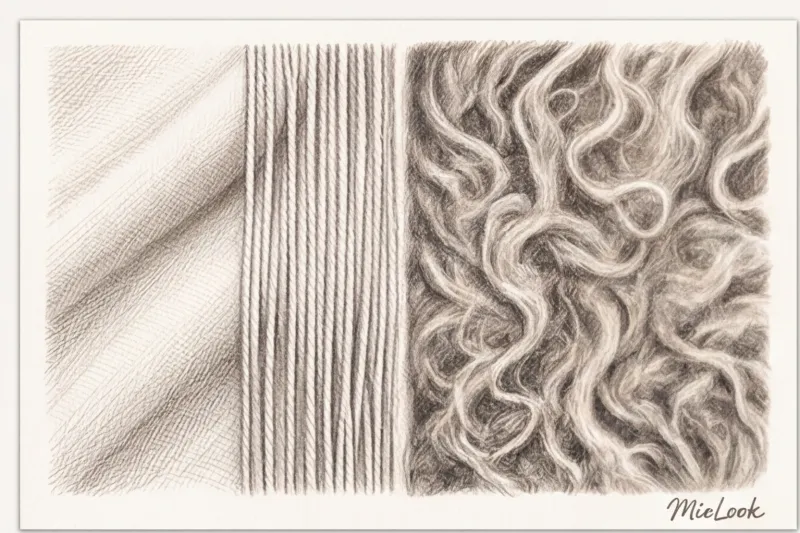
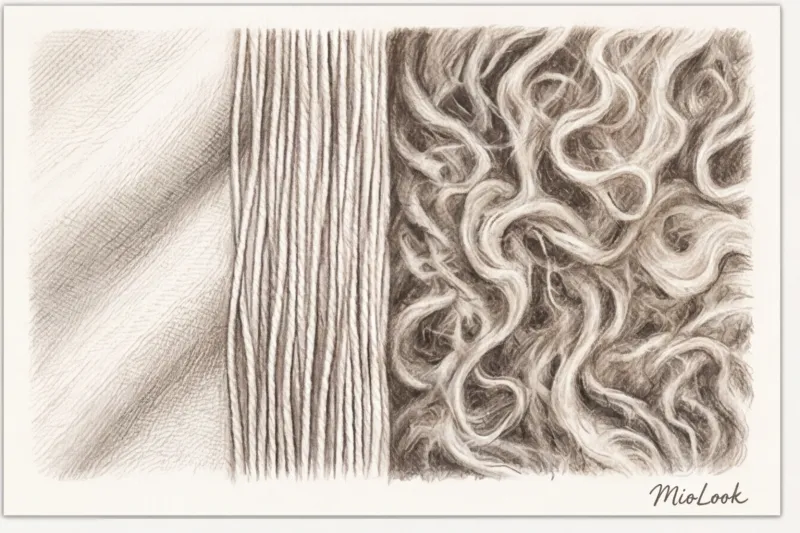
- Felting (wool, cashmere): Under a microscope, wool fiber looks like a pine cone covered in scales. According to The Woolmark Company, when water temperatures change (for example, washing in warm water and rinsing in ice water) and when subjected to friction, these scales open and tightly adhere to one another. The fiber doesn't just shrink—it changes its structure.
Emergency help: what to do if your item has shrunk after washing
First, What to do if an item has shrunk after washing — Keep your hands away from the central heating radiator. Never attempt to dry the damaged item on a heater, heated towel rail, or in a tumble dryer. Exposure to hot, dry air will permanently set the shrinkage, making the process irreversible.
Give yourself 10 minutes to assess the scale of the problem. Check the seams: if the threads (often made of synthetics that don't shrink) are rippled and the fabric between them is pulled tight, we need to work on loosening the fibers. Gently tug the edge of the fabric—if it retains any elasticity, we have a chance.
Prepare a resuscitation kit:
- A wide basin or a clean bath;
- Two or three large, highly absorbent terry towels;
- Stainless steel dressmaker's pins (T-shaped);
- The correct relaxant (depends on the fabric composition).
Your perfect wardrobe starts here.
Tired of remembering which items shrink and which require dry cleaning? Digitize your wardrobe and save care instructions for each item using artificial intelligence.
Get access — €0.99 onceSaving Wool and Cashmere: The Hair Conditioner Method
This method is based on simple biology. Wool and cashmere are made of animal protein (keratin), whose structure is almost identical to human hair. What do you do when your hair becomes tangled and stiff after a harsh shampoo? That's right, apply conditioner.
I remember a case from my work: we were putting together a capsule wardrobe for a client, and an hour before she was scheduled to fly to an important conference, the housekeeper mistakenly washed her new Massimo Dutti merino sweater (worth about €120) at 40 degrees. It shrank a size and a half. We saved it in 40 minutes with a hair mask.
How does this work:
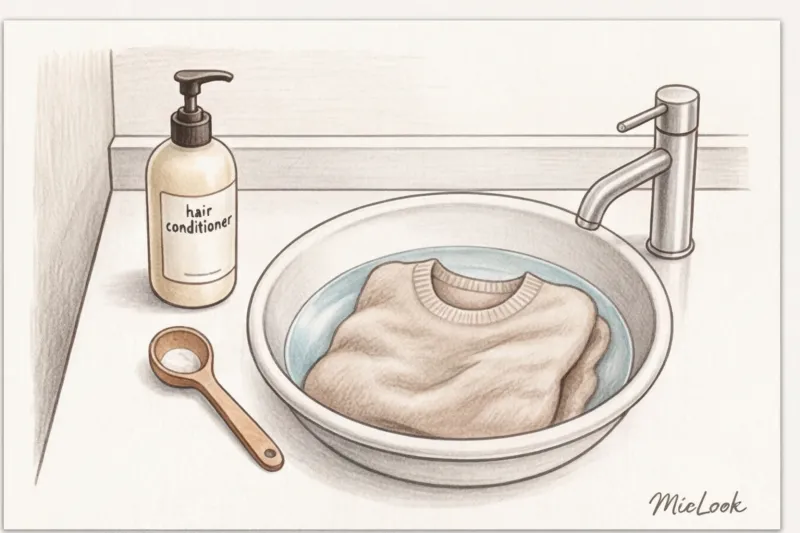
- Fill the basin strictly cool water (about 20–25 degrees).
- Dissolve 2-3 tablespoons of a good hair conditioner in water. Tip: products containing silicones (dimethicone) work best here, as they literally coat every micro-scale of the hair, making it slippery.
- Soak the sweater in the solution for 15-20 minutes. Do not rub!
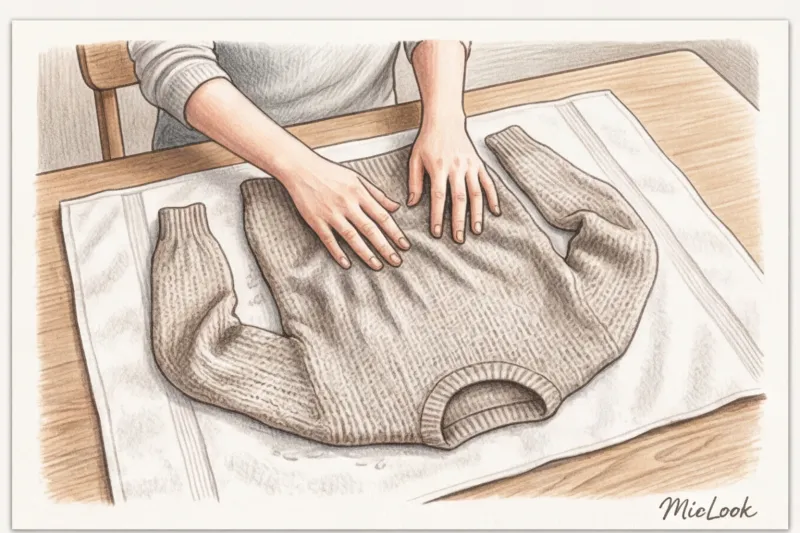
- Remove the item and gently squeeze out the water. No wringing! Roll the sweater into a roll inside a dry terry towel and gently squeeze to absorb the moisture.
Professional blocking (form setting)
And now comes the most important step. The biggest myth I hate is: "If a garment has shrunk, you just need to stretch it out with your hands." In reality, harsh stretching will permanently distort the proportions. You'll stretch the sweater widthwise, but it will become short, or you'll stretch the sleeves to the knees, turning the garment into a shapeless sack.
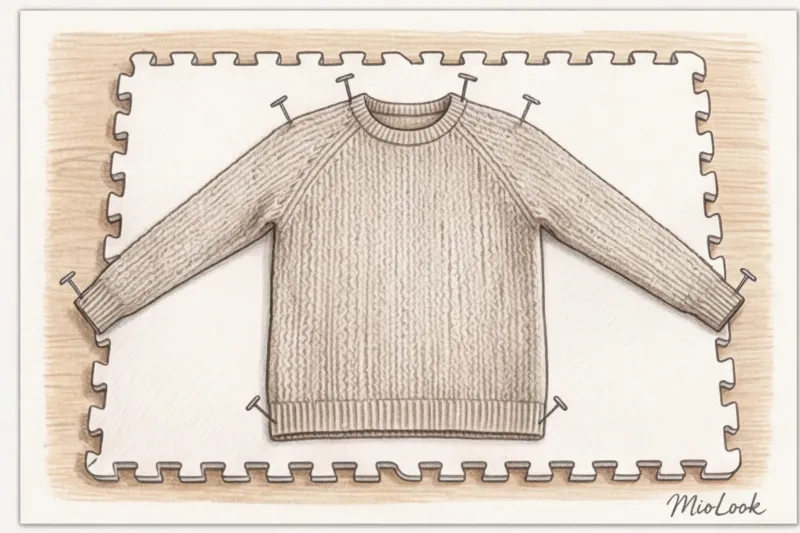
The secret of professional knitters is blocking Lay the damp, conditioner-treated sweater on a soft surface (a foam camping mat or a thick towel on your bed works well). Take stainless steel pins and begin pinning the sweater at the appropriate points: first the shoulder seams, then the armholes, and finally the elastic at the bottom. Stretch it evenly, pinning every centimeter symmetrically. Let it dry horizontally.
How to restore the size of cotton, linen, and denim
Plant fibers require a different approach. Here, our goal is to loosen the tightly coiled cellulose. And baby shampoo is ideal for this.
I've personally tested several brands of shampoo to save basic cotton T-shirts. The secret is that baby shampoos use the mildest surfactants (surface-active agents) possible, which don't aggressively strip away oils but instead gently penetrate the fiber structure, causing it to relax. Use about one tablespoon of shampoo per liter of warm water. Soak the item for 30 minutes, rinse, and block dry.
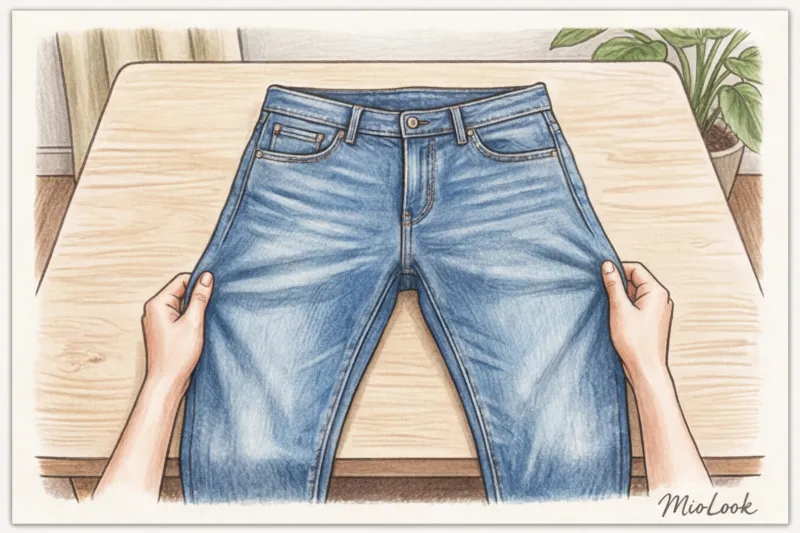
Insider tips for the perfect fit of jeans: Denim has its own unique behavior. If your jeans have shrunk, don't try to stretch them out on the floor. The best way is to put them on while slightly damp. Yes, it's uncomfortable. But your body heat and natural movements, combined with the damp fabric, will stretch the denim to fit your figure.
Important note: 100% hard cotton stretches more easily and holds its shape longer than denim with 1-2% elastane. The latter reacts to body heat within just 15 minutes of damp wear.
If a linen jacket has shrunk, soaking it entirely can be dangerous for the backing materials (lining, collar glue). Steaming is the solution: hang the garment on a wide hanger, cover it with a damp cheesecloth, and steam it with a powerful steamer, gently pulling the fabric downwards.
Capricious viscose and delicate silk
Viscose is one of the most tricky materials. You've probably noticed that when wet, it becomes stiff, like cardboard. Due to its chemical properties, wet viscose loses up to 50% of its strength.
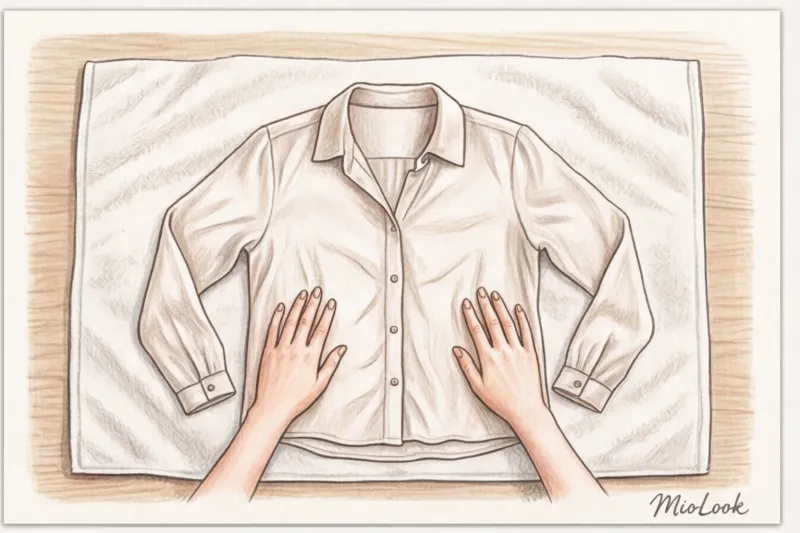
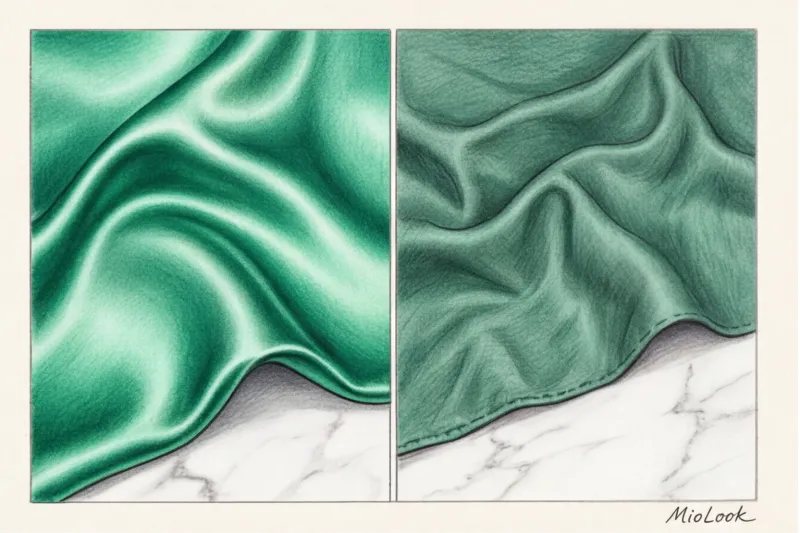
As a stylist, I must warn you: roughly stretching wet viscose will cause micro-tears in the threads. The garment won't tear immediately, but it will develop a whitish fuzz, the fabric will lose its shine, and it will look cheap. Viscose should be straightened exclusively with smoothing motions on a flat surface.
Silk is a different story. To restore the elasticity of a shrunken silk blouse in the €100–€300 price range, use white vinegar. The mild acidity (2 tablespoons of white vinegar per 5 liters of cool water) restores the silk's natural structure and brings back its luster. After rinsing, lay the blouse flat to dry, without any tension.
Access to MioLook for €0.99 — one-time payment
Organize your wardrobe intelligently, from storage to capsule collections. A smart AI stylist will find the perfect look in just a few clicks.
Get started with your wardrobeThe Bitter Truth: What Things Can't Be Saved
Let's be honest. Any expert who promises that "everything can be restored" is lying. Sometimes it's better to admit defeat and send the item for recycling than to ruin your image with stretched, misshapen rags.
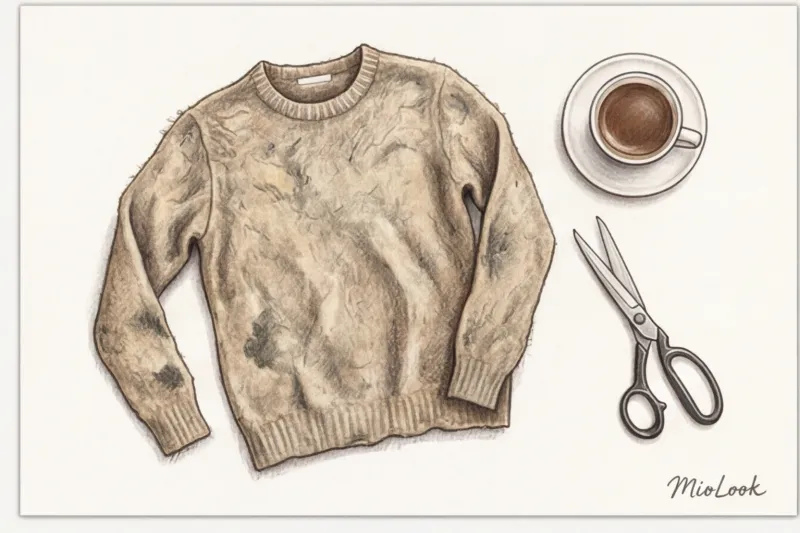
Here are three scenarios when it's easier to let go of something:
- Felted wool. If your cashmere sweater hasn't just shrunk, but has become stiff, thick, and rigid (the scales are tightly interlocked at the micro level), it's irreversible. No amount of silicone will unstick this monolith.
- Molten elastane. If you accidentally wash synthetic workout clothes or skinny jeans at 90 degrees, the elastane threads inside the fabric will literally burst and melt in the boiling water. The garment will become wavy and won't iron out.
- Asymmetrical deformation on budget knitwear. If your T-shirt is lopsided, with the side seam facing your stomach, it means the manufacturer didn't cut it along the grain to save fabric. Once the factory finish washes out, the fabric will return to its natural position. Stretching it is pointless—the seam will shrink back after the next wash.
Smart Care: A Checklist to Prevent Shrinkage
Saving clothes is an art, but preventing disasters is a sign of a respectable approach to your wardrobe. Quality items last for years if you follow a few subtle rules.
First, invest in laundry bags. Shrinkage is often caused not only by temperature but also by the mechanical friction of the drum. A laundry bag reduces this friction by half.
Secondly, 30°C is the new gold standard for 80% of your wardrobe. According to research by laundry detergent manufacturers (2023), modern enzymes in liquid gels effectively remove stains at 30°C. Washing at 40°C and 60°C is only necessary for bed linen, towels, and heavily soiled baby items.
Third, sort items not only by color but also by weight. Heavy, damp jeans in the drum will literally crush thin cotton T-shirts, damaging their structure.
Maintaining your wardrobe becomes much easier when everything is structured. In the app MioLook You can digitize your clothes and always have at your fingertips not only ready-made looks but also an understanding of what makes up your wardrobe. After all, true style isn't about the number of new purchases, but about how well-groomed and expensive the clothes you wear look.
"It's not your sweater's fault it shrunk. It's just a chemical reaction. Knowing how to manage this reaction is what separates a conscious consumer from a victim of everyday circumstances."
So, remember the most important rule: if an item has changed size, don't pull it out in a panic. Arm yourself with conditioner, pins, patience, and blocking technology. Your favorite cardigan or jeans will thank you for your gentle approach.