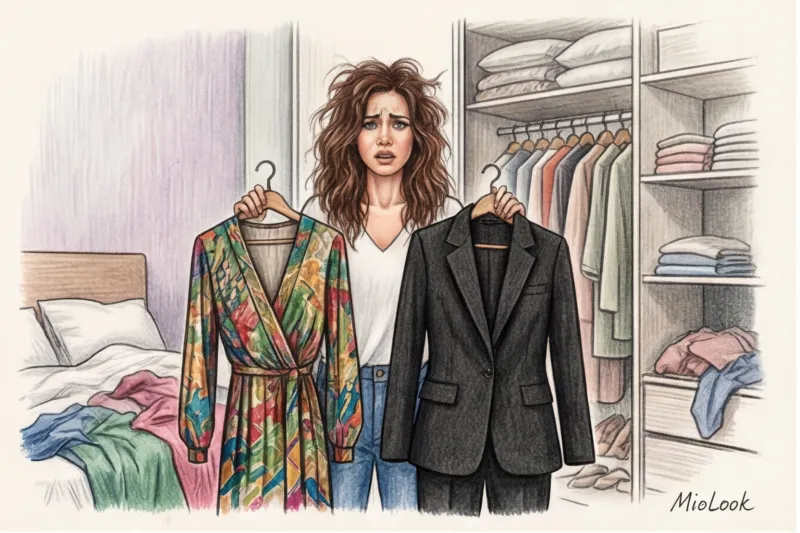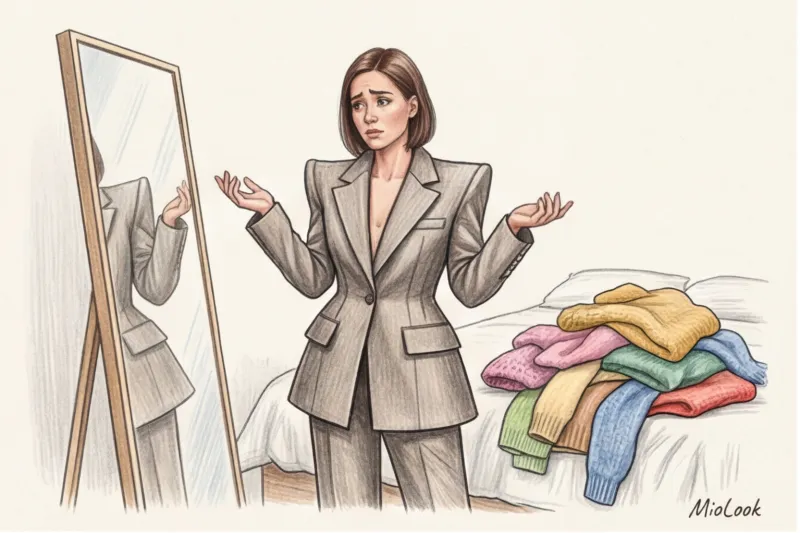
Let's be honest. Six months ago, my client Anna received a long-awaited promotion to department head. That same evening, pumped with adrenaline and eager to embrace her new role, she spent about €800 at Massimo Dutti, buying half the "stern boss" collection. Structured jackets, pencil skirts, and crisp shirts. Guess what happened next? Six months later, those items are still hanging in her closet with the tags still attached. Anna returned to her favorite Uniqlo cashmere sweaters and loose trousers because her real schedule consisted of Zoom calls and running up and down the halls, not boardroom meetings.
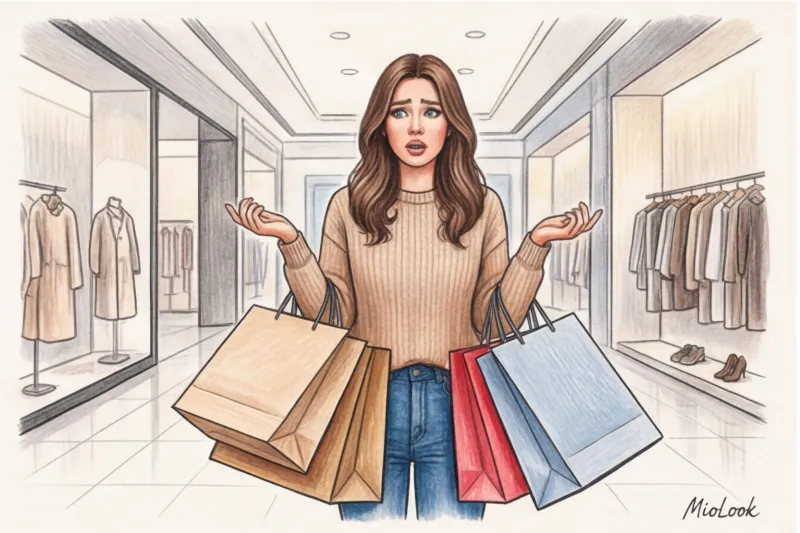
This is how 70% of attempts to "start life with a clean slate" through shopping end. You wonder, How to try a new clothing style , you go to the mall, buy a capsule, and... don't wear it. We've covered why this happens in more detail in our complete guide to a radical change of image without unnecessary expenses.
Over 12 years of working as a personal stylist in Europe, I've developed a golden rule: a style change should be an evolution, not a revolution. Instead of lugging a mountain of clothes to the checkout, I teach my clients to use the "microdosing" method, find "bridge pieces," and utilize virtual fitting rooms. And today, I'll tell you how to test-drive a new look with zero risk to your budget.
Why We Buy Unnecessary Items: The Psychology of Image Shifts
The desire to completely update your wardrobe rarely arises without a reason. It's usually a sign of internal change: a new job, a breakup, a move, or simply fatigue from the routine. We want to buy more than just different pants; we want to buy a "new version of ourselves."
The main pitfall here is Pinterest boards. In my experience, eight out of ten girls confuse the idea of "I like this aesthetic in the photo" with the reality of "I'd be comfortable living in this every day." In the picture, a silk slip skirt with a vintage T-shirt looks like Parisian chic. In reality, when you're going down the subway on a chilly November morning, it feels like a cold disaster.
According to a 2024 McKinsey & Company study, the return rate in online retail reaches 40%, with consumers citing 'the product's inconsistency with their lifestyle' as one of the main reasons. People order fantasy and return an inconvenient reality.
Mass-market stores like Zara and H&M capitalize on these fantasies perfectly. Affordable prices tempt us to buy a ready-made look straight from a mannequin. "Only €150 for a complete look? I'll take it!" we think. But style doesn't come from blindly copying a mannequin. It comes from adaptation.
How to Try a New Clothing Style: The Microdose Method
If you're used to wearing casual clothes and then go out tomorrow in a total grunge look, your brain will sound the alarm. You'll feel like you're wearing a fancy dress. To avoid this resistance, I use the "microdosing" method: we incorporate elements of the new style in increments of no more than 10-15%.
Your perfect look starts here
Join thousands of users who look flawless every day with MioLook.
Get access — €0.99 once
Step 1: Virtual fitting and digital stylists
The safest step is to test silhouettes without even going to the store. Today, AI algorithms can superimpose new styles directly onto your photos. My clients often use MioLook to see how a hyper-voluminous down jacket or an asymmetrical dress will look on them.
This method has a fair limitation: virtual fitting won't show The tactile properties of the fabric or the actual weight of the garment are all factors that influence your opinion. It doesn't work for everything. But it does a fantastic job of assessing proportions. You'll instantly understand whether the trendy low-waist style is making you look shorter, and whether a deep V-neckline suits your face shape. The cost of a mistake is zero euros.
Step 2: The One-Accessory Rule
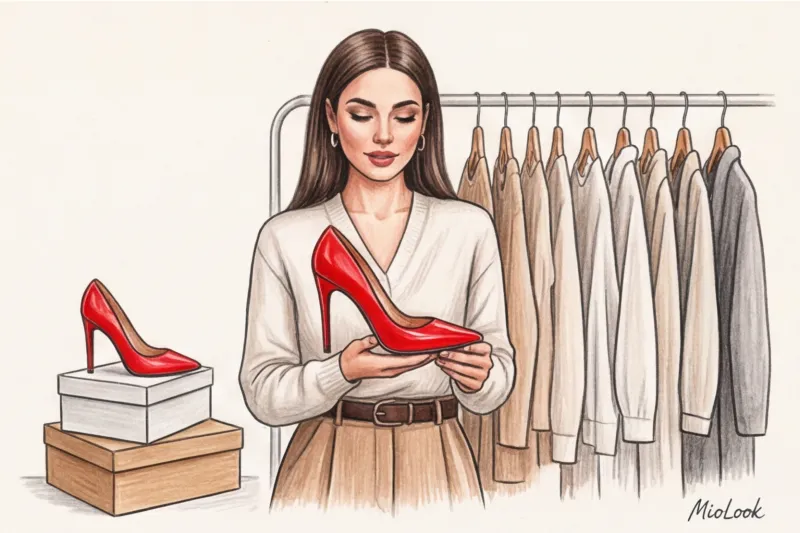
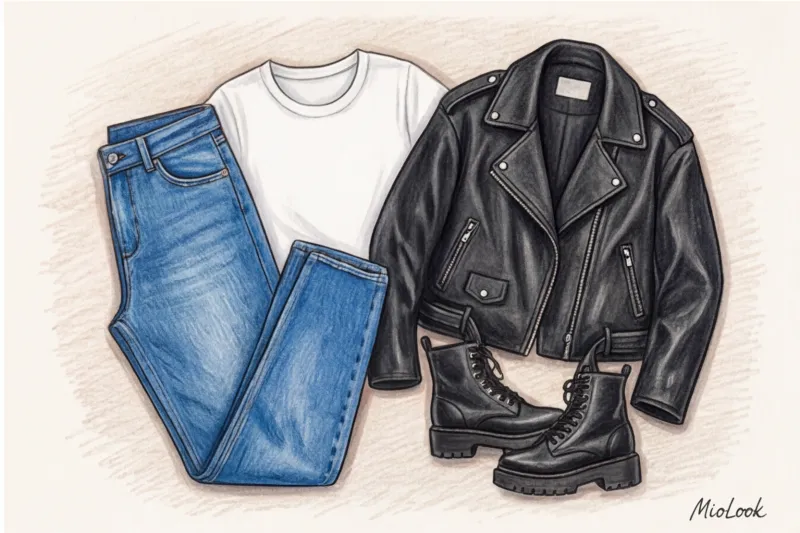
You don't have to change everything at once. Accessories set the tone for your look. Want to embrace a boho or western aesthetic? Keep your usual straight jeans and white top, but add suede Cossack boots and a belt with a chunky buckle. Want to embrace elegant minimalism? Swap your sports backpack for a geometric tote bag.
One distinctive accessory works like a spice: it changes the taste of the entire dish, but the base remains yours, familiar and safe.
The biggest mistake a beginner can make is why you shouldn't start from scratch.
The most damaging myth peddled by glossy magazines is that "to change your style, you need to rebuild your basic wardrobe." It's counterintuitive, but it's the worst thing you can do with your money.
Why? Because basic pieces lack character. If you decide to be "edgier" but start by simply buying another gray T-shirt or slightly wider blue jeans, you won't get any emotional response. You'll see the same old you in the mirror. This leads to disappointment: "I spent €200, bought five things, and I still look boring."
The concept of “bridge pieces”
Instead of a new base, you need a "bridge piece." This is an accent piece with a complex cut or texture that will connect your old, boring wardrobe with the new style you're striving for.
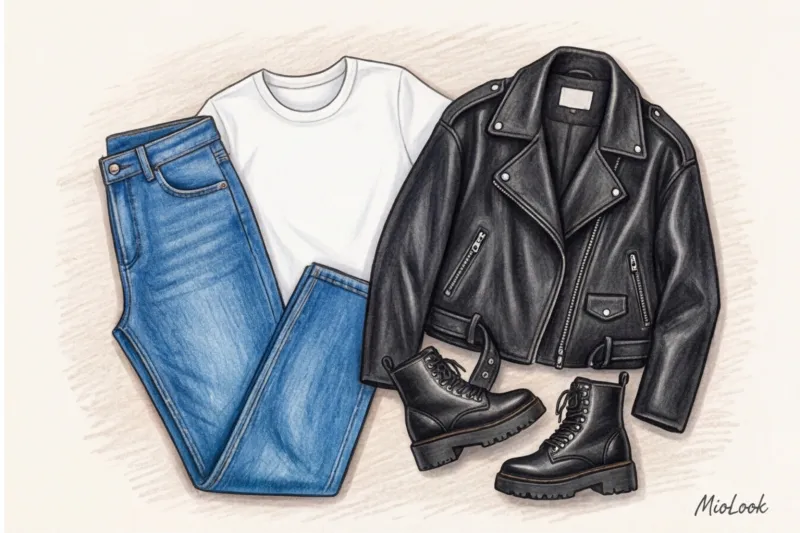
Let's say you want to transition from a sporty look to smart casual. Your bridge piece is a well-tailored, slightly oversized jacket made of a good wool blend (say, around €120-€150). You throw it on over your old leggings and hoodie, and the look instantly comes together, becoming urban and on-trend.
Invest in one statement piece, not a dozen cheap, bland t-shirts to try out.
Test Drive in the Fitting Room: How to Use Stores for Free
One of my favorite techniques we use with clients is a trip to the mall solely for fitting. We go to COS, & Other Stories, or Massimo Dutti (brands with good cuts and understandable textures) with one goal: to create three or four total looks in a style completely uncharacteristic for the client.
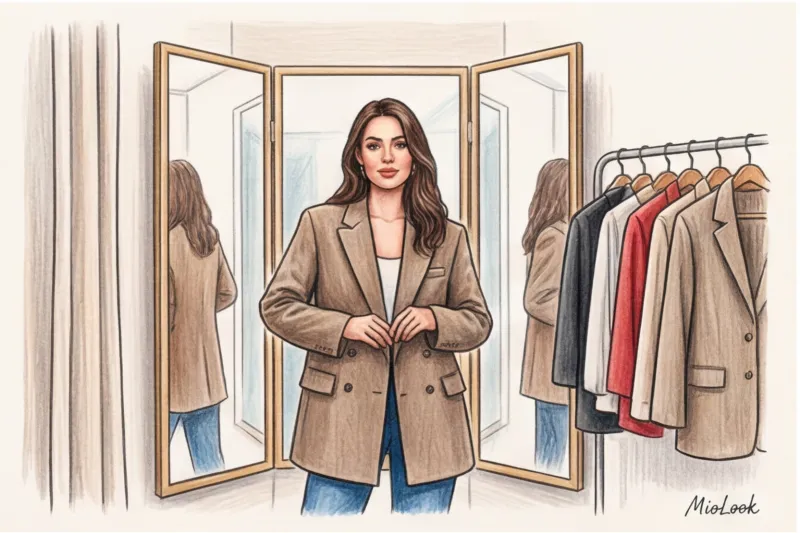
Here's how it works in practice:
- You take things that you haven’t even looked at before (complex draperies, bright colors, unusual lengths).
- Change your clothes and take high-quality photos in the mirror. Stylist's tip: Hold your phone at belly button level to avoid distorting the proportions of your legs, and take photos in a relaxed pose, not standing at attention.
- And now the main thing is - You take it all off and leave the store empty-handed.
Why is this crucial? Dopamine is in control in the fitting room. The lighting is adjusted to make things appear more appealing. Open these photos exactly 24 hours later. The emotional intensity will subside, and you'll look at yourself with a clearer perspective. You'll immediately see where fabric wrinkles oddly on your thighs, and what color makes your face look tired. This will save you from dozens of useless purchases.
Eco-Friendly Alternatives: How to Try New Styles Without Shopping
According to a 2023 report by the Ellen MacArthur Foundation, the global fashion industry burns or landfills one truckload of textiles every second. A significant portion of this waste consists of items bought "just to try," worn once, and forgotten in the depths of a closet.
Testing style by endlessly buying cheap mass-market items isn't just a blow to your wallet, it's also irresponsible to the planet. There are much smarter ways.
Clothing rental and rental services
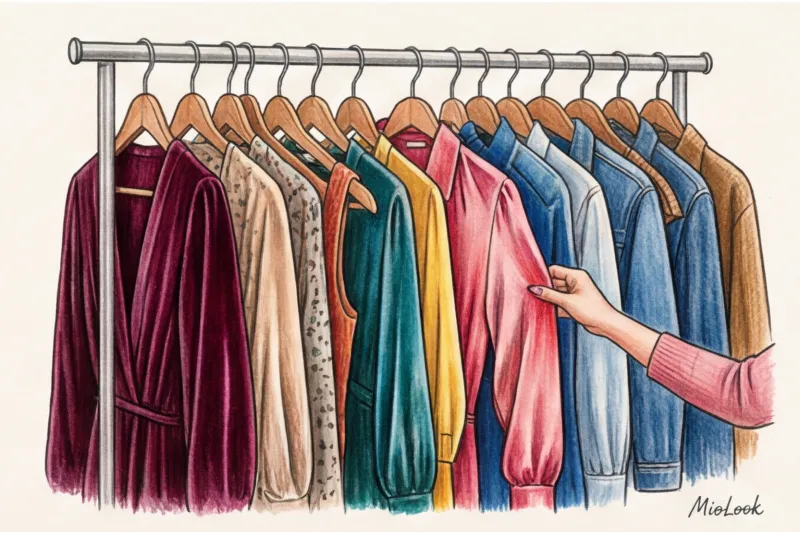
If your new style involves a complex cut, extravagance, or an evening aesthetic, renting is your best friend. Why buy a velvet tuxedo for €250 if you're not sure you'll wear it in real life? Rent it for the weekend for €30. You'll be able to "live" in the look, wear it to dinner, and experience how people react to it and how you feel about it. If you happily return it two days later and breathe a sigh of relief, great, you've saved €220.
Resale, vintage, and swap parties
European platforms like Vinted or Vestiaire Collective are ideal for fashion experimentation. You can find a designer or simply a quality piece for €30–€40 instead of the original €150. The main advantage of reselling is that if the item ultimately doesn't suit you, you can sell it on the same platform, losing literally pennies on the difference.
And swap parties (clothing exchanges with friends or in local communities) allow you to update your wardrobe for free. It's the perfect environment to snag a friend's leopard-print skirt that you'd never have dared to pay for at the checkout at the store.
Checklist: 5 questions before paying for a new style
Even if you've skipped the virtual fitting room stage, waited 24 hours after taking a selfie in the store, and still find yourself at the checkout (or clicking the "Checkout" button), ask yourself these five tough questions. This checklist saves my clients from 80% of impulsive decisions.
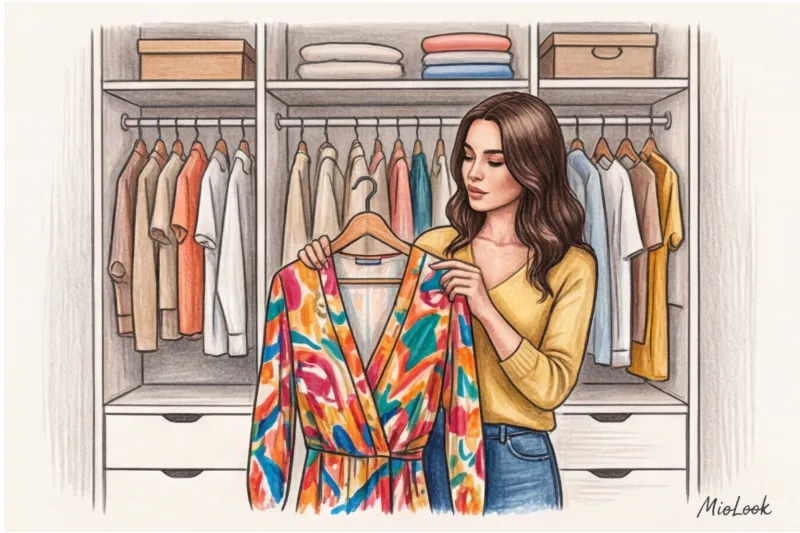
- Where exactly will I wear this in the next 7 days? If your answer begins with the words "someday, if I'm invited to..." - put the item back on the hanger.
- What three old things from my closet does this go with? A new item should fit into your reality. If you need to buy new shoes, a top, and a coat in addition to new pants, that's not a bridge item; it's a financial black hole.
- Do I like the thing itself, or the lifestyle it conveys? Be honest with yourself: are you buying that linen suit because it fits you well, or because you want to teleport from your stuffy office to your villa in Tuscany?
- Is it comfortable for me to sit, bend over, and walk quickly in it? Clothes shouldn't dictate how you move. If a new skirt only allows you to stand up straight, it will become a museum piece in your closet.
- If I change my mind about wearing this style, can I easily sell/give away this item? High-quality cuts and understandable fabrics (cotton with a weight of at least 180 g/m², good viscose, heavy denim) will easily find new owners. Cheap, acid-colored polyester from fast fashion will go straight to the landfill.
Access to MioLook for €0.99 — one-time payment
A smart AI stylist will choose the perfect look for you and help you avoid unnecessary expenses.
Get access — €0.99 onceFinding your personal style isn't a test where you have to get it right the first time. Treat it like a research lab. Test hypotheses using apps, measure your feelings with microdoses, and never buy fantasy over reality. Start with one right "bridge item," and you'll be surprised how easily and organically your reflection in the mirror changes.