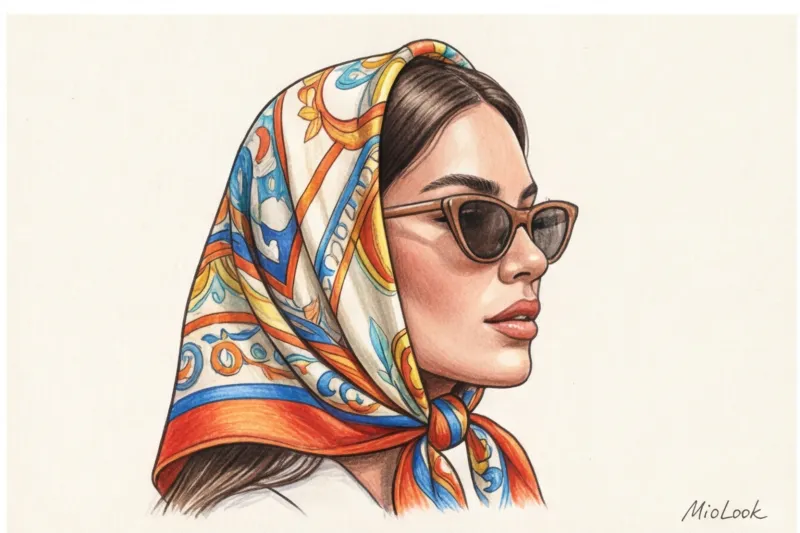
Exactly 65 grams. That's how much a classic 90x90-centimeter silk bob weighs. Sounds like a small amount? But those 65 grams can completely transform the architecture of your face, hide a bad hairstyle, and instantly elevate a basic look to Mediterranean chic.
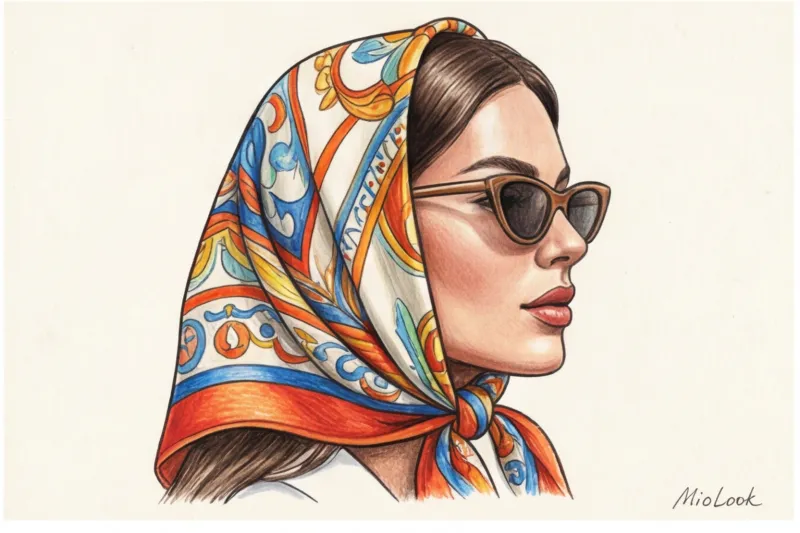
Over 12 years of working as a personal stylist, I, Isabella Garcia, have realized one thing: every other client asks how to tie a headscarf beautifully. We're used to perceiving this piece of silk as simply a bright spot. We discussed this in more detail in our the complete guide to the art of stylish image , but today I suggest looking at the scarf differently - as a full-fledged tool for correcting proportions.
More than retro: why a silk headscarf is a modern form of style
Historically, headscarves served a purely utilitarian purpose—protecting aristocrats' hair from dust while riding in open-top convertibles. Today, they're the ultimate marker of status and relaxed confidence. According to Lyst data for 2024, searches for silk bobs increased by 47%, finally elevating them from a strictly beach accessory to the streets of major cities.
While working in Paris, I was fortunate to have the opportunity to explore the vintage archives of the House of Hermès. I held in my hands a thick silk twill from the 1950s and understood the main secret of the legendary French and Italian women. status accessories They never look like a woman spent two hours trying in front of the mirror. All the magic lies in the slight carelessness.
"A scarf doesn't have to lie perfectly flat. A stray strand, a slightly asymmetrical knot—it's this architectural freedom that makes the look lively, not mothballed," says Isabella Garcia.
Basic Geometry: How to Choose the Right Size and Fabric
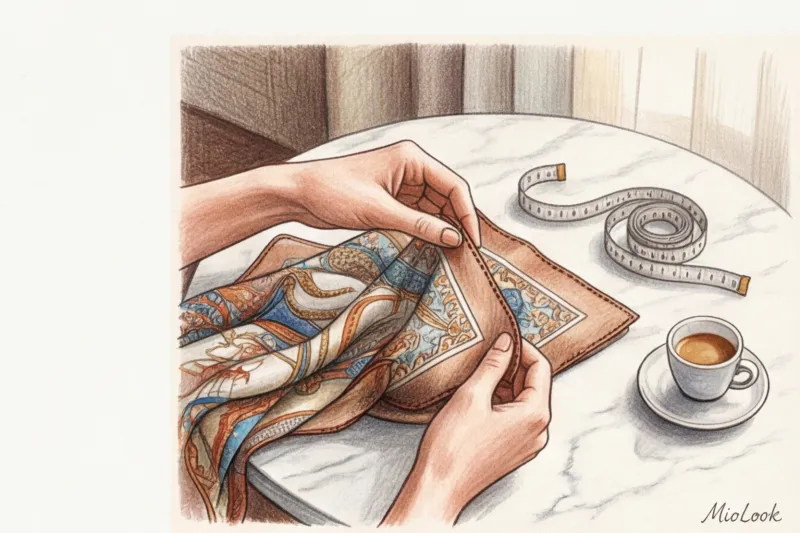
The biggest mistake I see on the streets is trying to tie a thin twill scarf or a huge winter stole on the head. Geometry requires precision.
- 50x50 cm: It's only suitable for folding into a narrow band (headband). It's impossible for an adult woman to tie it into a full-fledged headscarf.
- 70x70 cm: The perfect size for a classic bandana that leaves the back of the head exposed.
- 90x90 cm: The gold standard (the very same Hermès format). Allows you to create Hollywood knots and voluminous turbans.
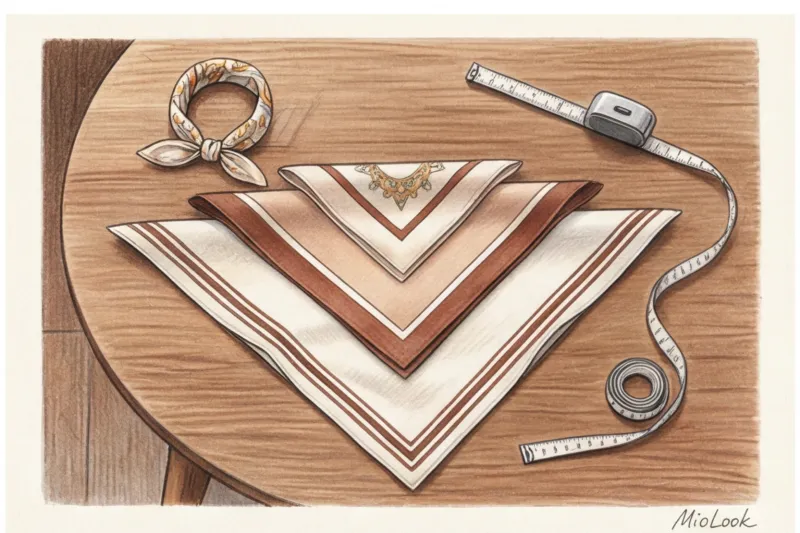
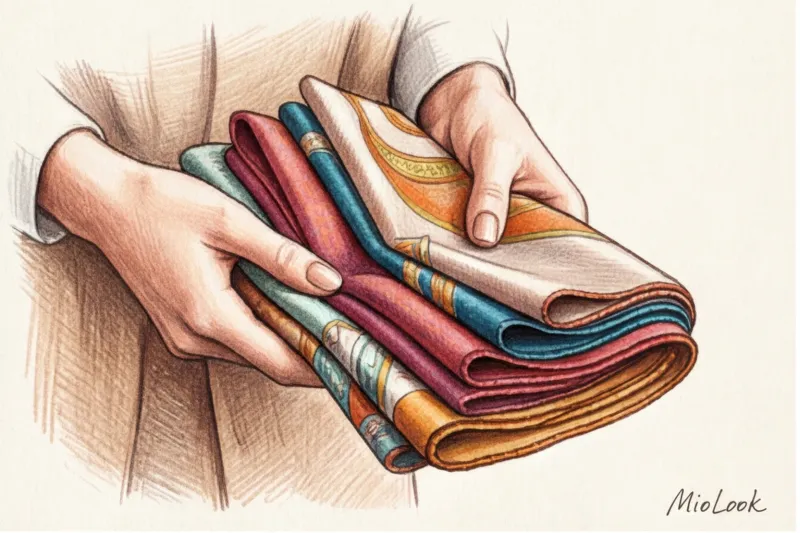
As for the fabric, there is a strict limitation: Chiffon is the worst choice for beginners. It's beautiful, but it's incredibly slippery. Start with silk twill (its finely ribbed twill weave creates the necessary grip) or high-quality cotton. Budget-friendly viscose (€30–€80) from brands like Massimo Dutti or COS works great, and if you're ready to invest, vintage silk options start at €500 and last for decades.
Access to MioLook for €0.99 — one-time payment
A smart AI stylist will select the perfect look based on your accessories.
Get access — €0.99 onceClassic scarf (Babushka): how to tie a scarf beautifully without looking outdated
The "granny boy" style, ironically launched by A$AP Rocky several years ago, has become a staple in women's street style. But the line between being ultra-fashionable and looking like a grandma standing in your driveway is a fine one.
Step by step technique: Fold a square scarf (70x70 or 90x90 cm) diagonally into a triangle. Drape it over your head and tie the ends under your chin in a soft double knot.
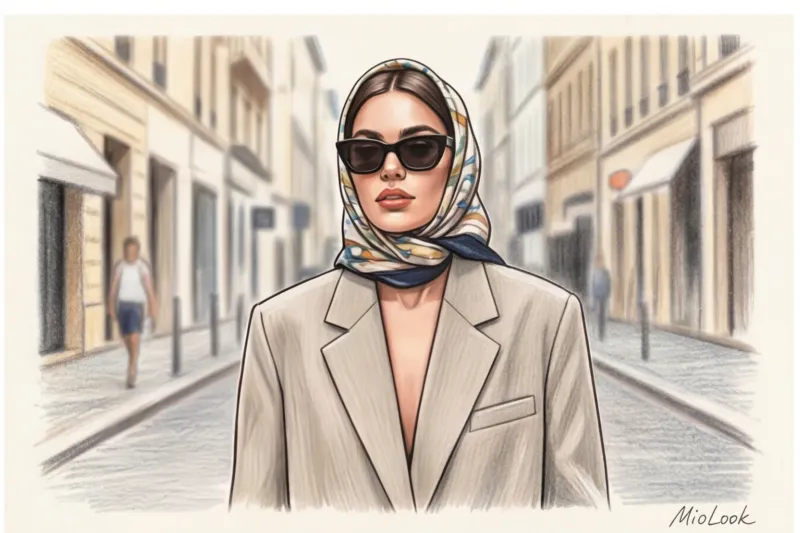
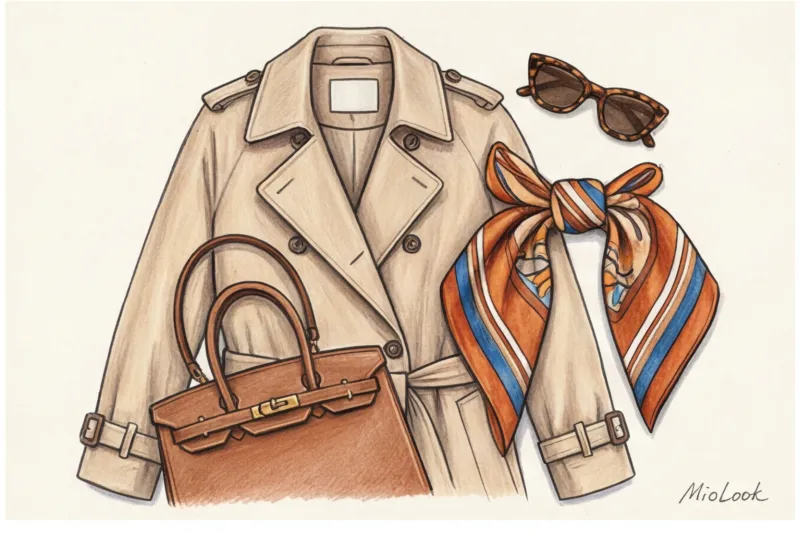
Stylist's secret: to avoid a comical effect, move the fold line of the fabric 2-3 centimeters above the hairline. Your roots and parting should be visible! One of my clients (a 35-year-old top manager) loves to use this trick on Fridays. We integrated a silk scarf into her wardrobe using the following formula: voluminous men's trench coat + scarf + massive black sunglasses This immediately lowers the level of office seriousness.
Grace Kelly's Hollywood Chic: Elegance That Saves Your Hair
This style was invented for driving in open cars—it secures hair firmly, protecting it from the wind. Unlike a simple headscarf, the Hollywood knot visually elongates the face and accentuates the cheekbones by creating a crisscross effect on the fabric.
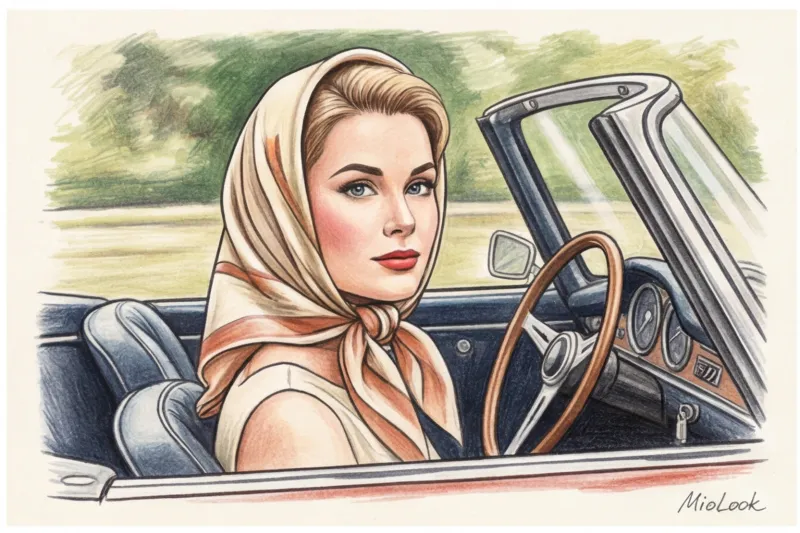
Fold a 90x90 cm scarf into a triangle. Drape it over your head, but don't tie the ends under your chin. Instead, cross them there, pull them back, and tie them in a knot at the nape of your neck (over the free corner of the triangle).
In my experience, this knot literally saved a shoot once. My client and I were on the outdoor terrace of a restaurant in Milan when a strong wind blew, and her perfect salon-style hairstyle turned into chaos in two minutes. I pulled a silk bob from my bag, tied it in a Grace Kelly style, and released a few strands around her face—and the look turned out even more cinematic than originally planned.
Your perfect look starts here
Join thousands of users who look flawless every day with MioLook
Get access — €0.99 onceThe Statement Turban: A Bold Statement for Vacation and the City
The turban is a statement of confidence. Yves Saint Laurent made it iconic in the 1970s, and today's Saint Laurent runway stylists continue to use this technique to create volume without weighing down the look.
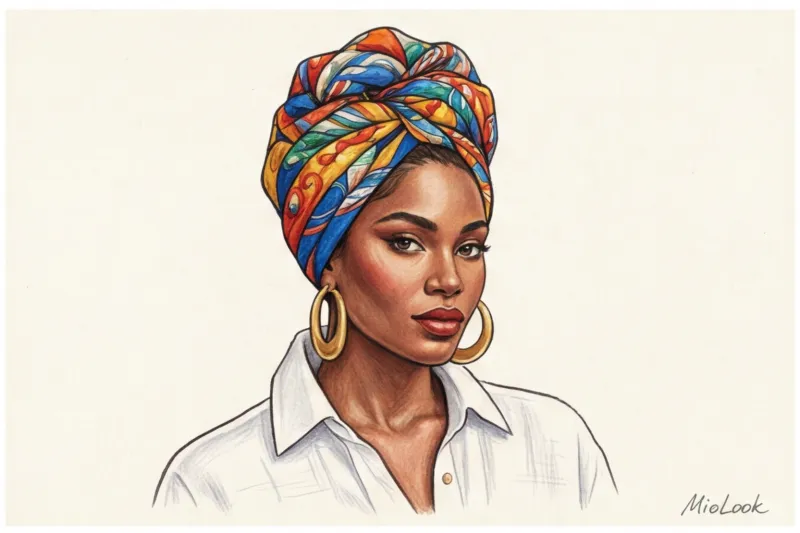
You'll need a large scarf (at least 90 x 90 cm). Drape it over your head from the back (so the ends hang over your forehead). Twist the ends into a tight braid just above your forehead, spread them apart, pull them to the back of your head, and tuck the ends under the scarf.
The main rule for styling a turban: play with contrasts. Never wear it with ethnic sundresses, unless you want to look like a fortune teller in a circus tent. A turban requires crystal-clear minimalism: a crisp white menswear shirt, a linen pantsuit, or a tailored jacket.
Wide headband and bandana: integrating the scarf into smart casual and office wear
If large shapes are still unfamiliar to you, use a scarf as an architectural detail in your hairstyle. Fold a 70x70 cm square diagonally, then fold the corners inward until you have a smooth band 4-5 cm wide.
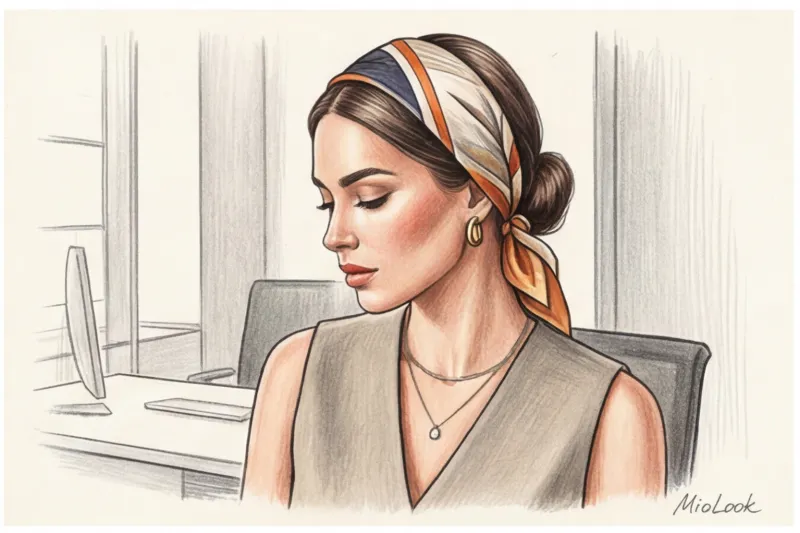
Tie a ribbon over loose hair or a low, sleek bun. Important: the knot should always be at the nape of the neck (hidden under the hair), not on top of the head like a bow. A bow on top is too simplistic and creates a childish, "Minnie Mouse" look, while a sleek silk band evokes a French chic aesthetic.
This technique is especially loved by my clients in creative professions. In the article about beauty master image We mentioned that keeping your hair off your face is a hygiene requirement. A headband allows you to comply with the dress code while remaining elegant. smart casual for women.
The Stylist's Main Secret: Why Silk Slips From Hair and How to Stop It
Now let's debunk the main myth that keeps many people from wearing silk scarves. Most women believe that to prevent a scarf from slipping down the back of their head, it needs to be tied as tightly as possible. This doesn't work. A tight knot will only provoke a headache, and smooth silk will still slide along the anatomical curve of the skull.
I call my method of securing it "the yacht test"—if the scarf holds up in the sea breeze, it'll last all day at the office. The secret consists of two steps:
- Texture: Silk hates freshly washed, smooth hair. Apply a matte dry shampoo or a texturizing spray with sea salt to the roots. This will create micro-friction that will catch the fabric.
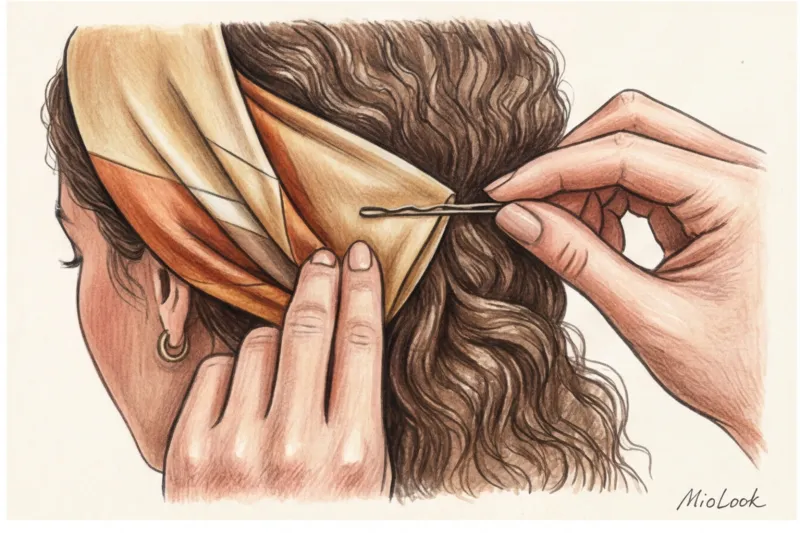
- Invisible anchor: Take two regular matte bobby pins (matching your hair color). Once the scarf is on, carefully pin the edge of the fabric at your temples or behind your ears, crisscrossing it into your hair.
Checklist: 5 Steps to the Perfect Headscarf Look
To easily turn theory into your morning routine in 3 minutes, save this short checklist:
- Preparing the base: Lightly spray texturizing spray at roots.
- Balance of proportions: If the scarf is voluminous (for example, a turban), the bottom of the look should be elongated (palazzo pants, heels).
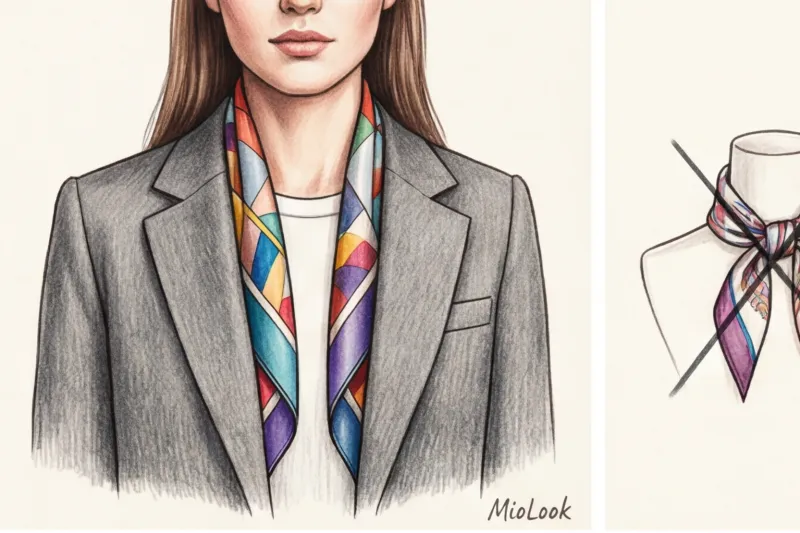
- One accent rule: If the silk has an active print (leopard, geometric, paisley), the outerwear should be plain.
- Shield from uncertainty: Sunglasses with horn or black frames are a must-have accessory, linking the retro accessory with modernity.
- Psychology of wearing: We tied it up and forgot about it.
The most destructive element to chic is a woman who constantly fidgets, adjusts, and tugs at her outfit. A headscarf demands proper posture and inner calm. Allow the fabric to live its own life: let the wind shift a corner slightly, let a stray strand of hair escape near your face. It's precisely in this subtle imperfection that true personal style lies.