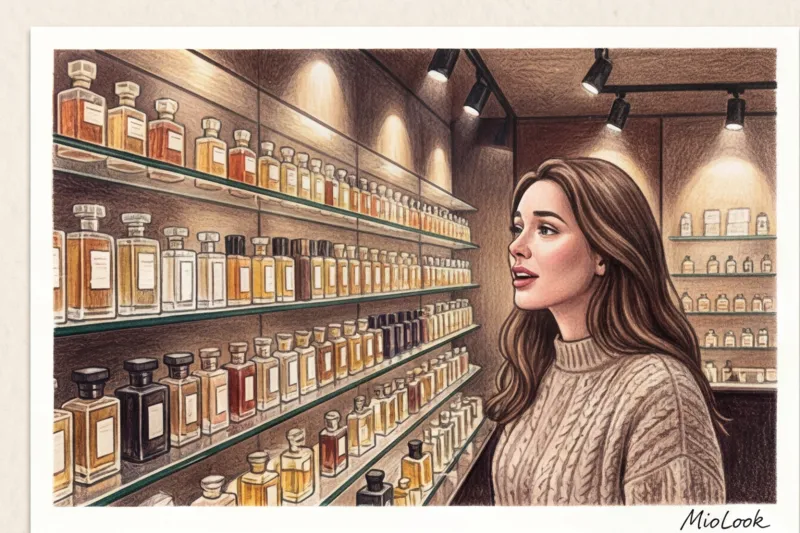
Last year, I conducted a professional experiment: I tracked my clients' perfume purchases for 12 months. The results surprised even me. It turned out that 80% of fragrances bought spontaneously after five minutes at a beautiful display ended up gathering dust on the shelf for years. Women spent hundreds of dollars on bottles that later gave them headaches or simply didn't fit their style.
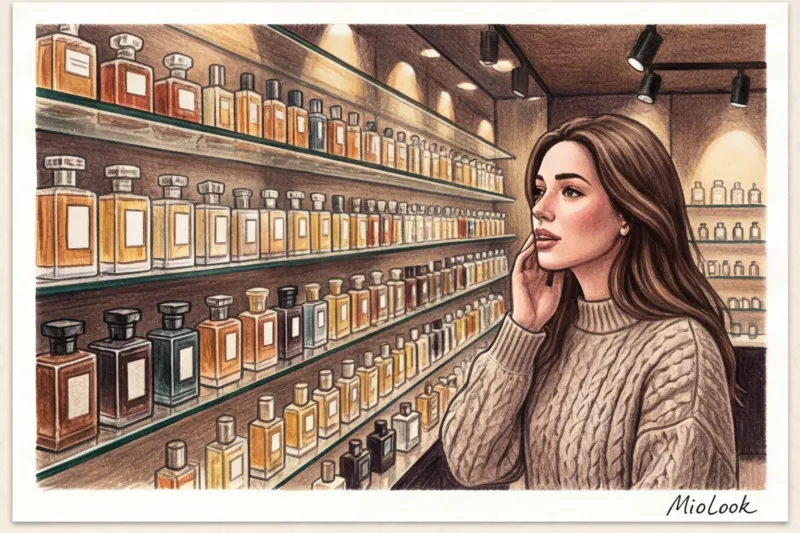
Perfume is an investment in your personal brand, just like a perfectly tailored jacket or a quality leather bag. Yet, for some reason, we approach clothing choices with a cool head, while buying perfume is often a frenzy. We've shared more about how to systematically navigate base notes and avoid mistakes in our a complete guide to perfume families In this article, I'll share an algorithm that will help you test fragrances like a professional stylist, relying on data rather than emotion.
Why We're Wrong: Olfactory Physiology and Marketing Traps
The main reason for unsuccessful purchases lies in the physiology of our nose and clever perfume marketing. Brands are well aware of how the human brain works and optimize fragrance formulas for quick sales.
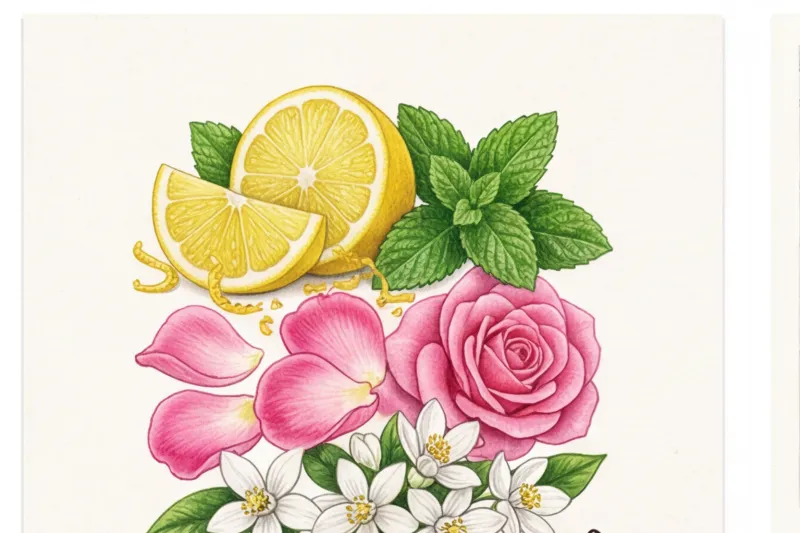
The "top note" phenomenon is the main pitfall of perfume boutiques. Those sparkling citruses, juicy berries, and light florals you smell in the first 15 minutes after spraying make up only 10-20% of a fragrance's lifespan. Yet, it's these opening accords that generate 90% of impulse purchases. You pay for a beautiful 15-minute illusion, but you'll end up with a dense, heavy base that only unfolds on your way home.
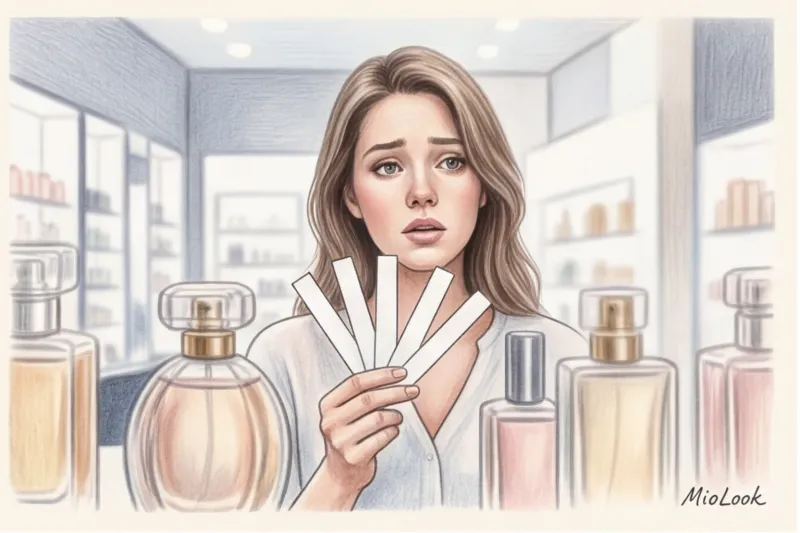
The second problem is olfactory fatigue. The human nose can adequately perceive and analyze no more than three or four complex compositions at a time. After that, the receptors become blocked, protecting the brain from information overload. All subsequent aromas merge into a single, indistinct blur.
How the atmosphere in a boutique makes us buy
A perfume shop is a hostile environment. Bright, directional spotlights, elevated temperatures, and rhythmic background music artificially induce a feeling of mild stress and urgency in shoppers. But worst of all is the cloud of scents hanging in the air.
When you test a delicate floral scent in a store where you've already been sprayed with a dozen heavy oriental compositions, your brain perceives a distorted picture. You're not smelling the pure perfume, but rather its mixture with the olfactory "white noise" of the boutique.
Access to MioLook for €0.99 — one-time payment
A smart AI stylist will create the perfect look and help you integrate your new perfume into your wardrobe.
Get access — €0.99 onceThe biggest myth of perfume shops: why coffee beans don't work
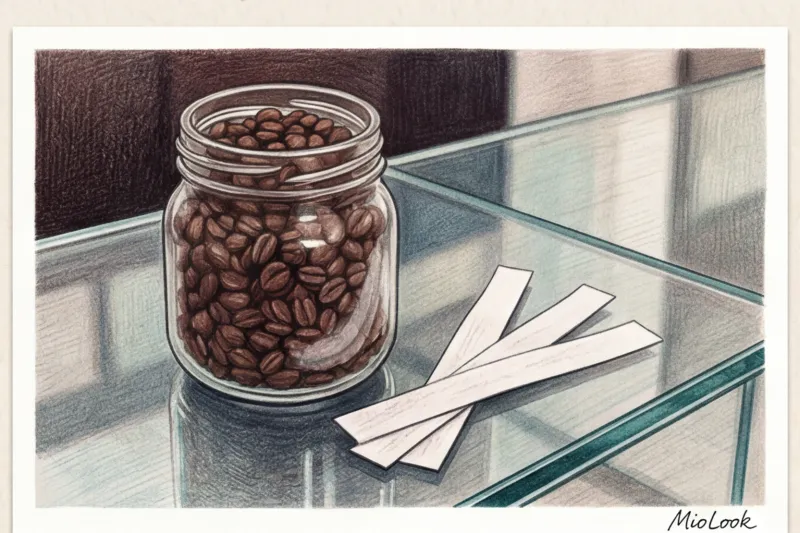
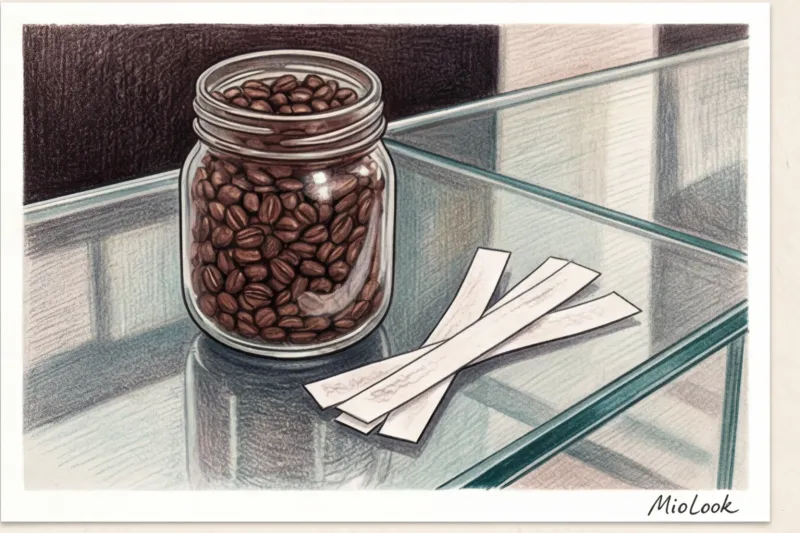
Have you noticed the jars of coffee beans placed at every stand? The consultants solicitously invite you to smell them to "cleanse your senses." As a specialist in the architecture of style and perception, I have a duty to debunk this myth.
Scientific fact: coffee doesn't cleanse your sense of smell. Roasted coffee beans have an incredibly complex chemical profile, consisting of hundreds of volatile compounds.
Trying to "reset" olfactory fatigue with coffee is like turning up the volume on heavy metal to give your ears a rest after listening to pop music. You're simply delivering another powerful blow to your receptors.
What to do instead? Olfactory science offers three effective ways to "reset" your nose:
- Smell your own clean skin (For example, the inside of your elbow, where you haven't applied perfume.) Your own scent is a basic, neutral background for your brain.
- Bury your nose in woolen fabric Natural, undyed wool absorbs odors perfectly and gives the senses a break.
- Go out into the fresh air and drink some water A sip of clean water physically washes away odorant molecules from the back of the throat.
How to Smell a Fragrance in a Store: A Step-by-Step Strategy
If you want to know how to properly smell a fragrance in a store, stop treating it as a five-minute diversion. The testing process should be like trying on an expensive suit—you wouldn't buy a $500 jacket without checking out how it sits across the shoulders and how the fabric moves.
My main rule for my clients is the "3+1" method. During a single shopping trip, we test strictly no more than three fragrances on paper (blotters) and transfer only one (maximum two) to our skin.
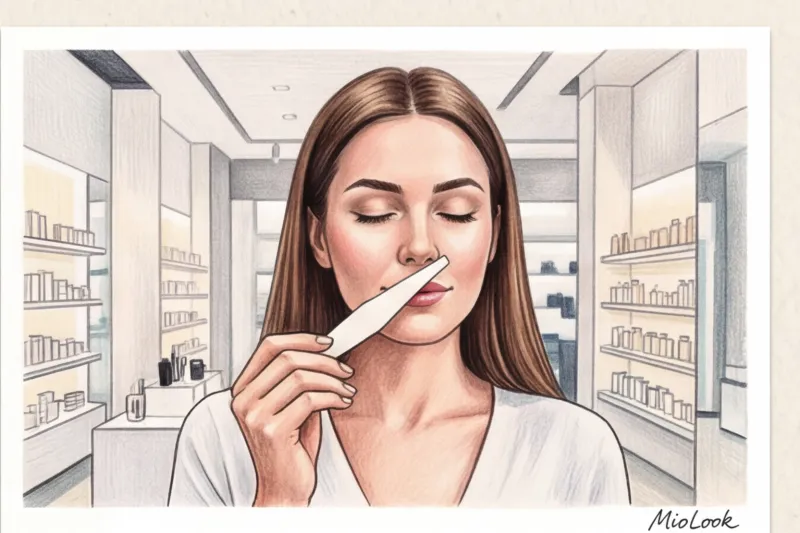
Step 1: Blotter (paper) - Primary filter
The paper is only needed to weed out options that are clearly unsuitable. Here's how to use it:
- Spray the perfume 15-20 cm away from the blotter. If you hold the spray bottle too close, the paper will become wet, and you'll only smell the pungent alcohol.
- Wait 10-15 seconds before applying the blotter to your nose. Allow the alcohol to evaporate.
- Be sure to sign the blotters! In an hour, you are guaranteed to forget where that amazing vetiver was and where that boring rose was.
Important limitation: This step is completely ineffective with so-called molecular perfumery (such as that of Escentric Molecules). Artificial molecules like Iso E Super are virtually odorless on paper—they require body heat to develop.
Stage 2: Skin - Individual Chemistry
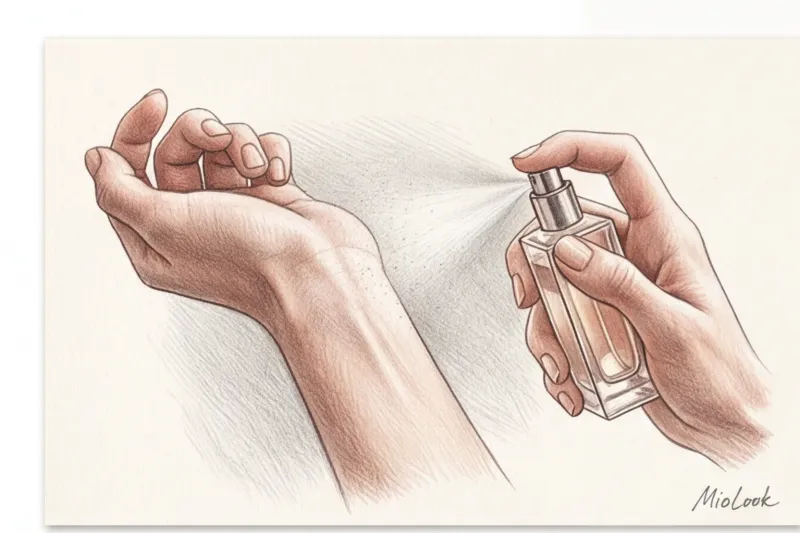
If the fragrance passes the "paper casting," spray it on your wrist or the crook of your elbow. Then leave the store.
According to IFRA (the International Fragrance Association), your skin's pH level, temperature, and even hormone levels can alter a fragrance's performance (its projection and sillage) by 30%. On cool, "aristocratic" skin, white flowers can sound crisp and clear, while on warm skin, they transform into a heavy, indolic, suffocating cloud.
The 8-hour rule kicks in: you should wear the fragrance all day. Listen to how it performs in the cold, in a warm room, and most importantly, whether you're satisfied with the base note, which will linger into the evening.
5 Critical Mistakes When Testing Perfume
Even with a good grasp of theory, it's easy to get carried away by emotions. Check yourself for these five common mistakes.
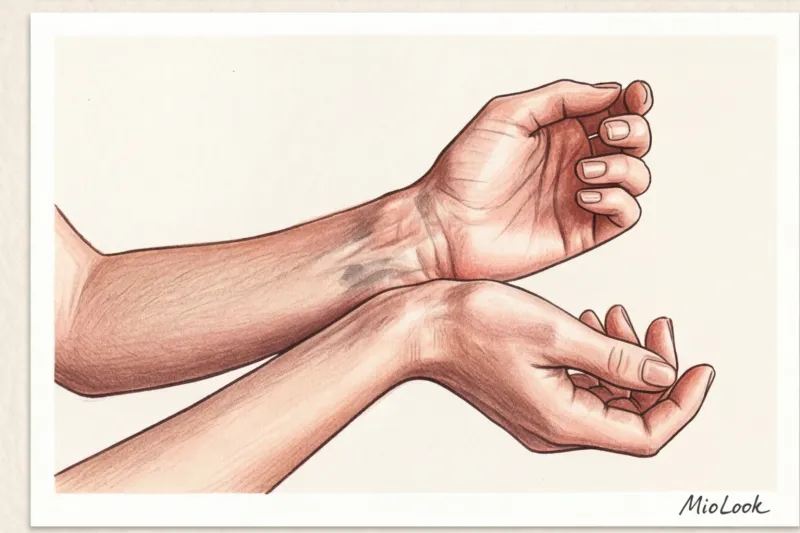
Mistake 1: Rubbing the fragrance between your wrists.
This is a classic. When you rub your wrists together, the friction raises the skin's temperature. You literally "burn" and break the fragile molecular structure of the top notes, causing the scent to move unnaturally quickly to the base. Simply spray and let it dry naturally.
Mistake 2: Testing while sick or tired.
Even a slight runny nose or simple lack of sleep can distort your sense of smell. If you're not feeling your best, postpone your purchase.
Mistake 3: Applying perfume before going to the store.
You won't be able to objectively evaluate a new composition if your scarf smells like yesterday's Baccarat Rouge.
Mistake 4: Ignoring seasonality and climate.
The physics of fragrance are simple: warmth enhances diffusion (sillage). One of my clients bought a luxurious, dense oud fragrance during a winter vacation in Dubai. Upon returning, she decided to wear it to her stuffy Moscow office in July. Her impeccable professional image was completely ruined—the scent literally suffocated her colleagues at the meeting. Heavy resins and amber require cool air, while citrus and aldehydes work better in the heat.
Mistake 5: Buying “like a friend.”
A scent that garners compliments on your coworker might smell plasticky or sour on your skin. Always test perfumes on yourself.
Your perfect look starts here
Join thousands of users who look flawless every day with MioLook. Plan your wardrobe and match fragrances to your looks.
Get access — €0.99 onceIntegrating Perfume into Your Wardrobe: A Stylist's Method
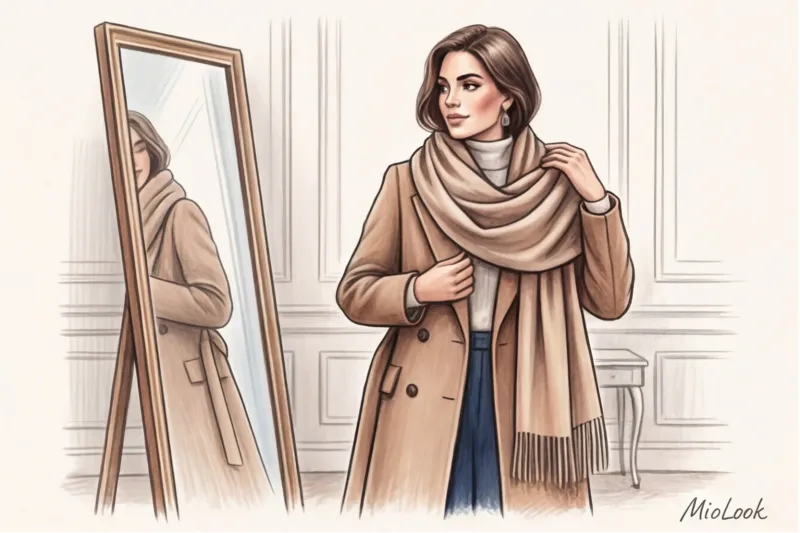
As a practicing stylist, I view perfume as the finishing touch that brings the entire look together. According to the principles of Michael Edwards (creator of the famous "Perfume Wheel"), different fragrance families convey different emotional messages that should complement the texture of your clothing.
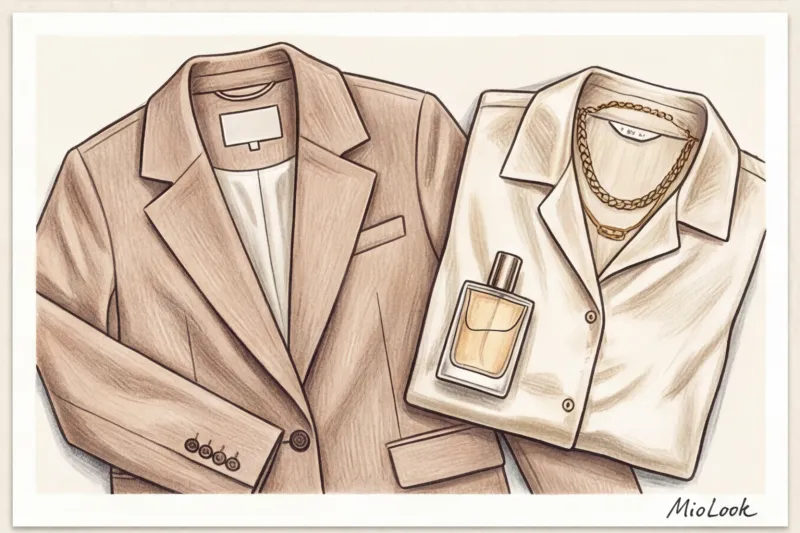
For example, flowing 19-mommie silk is ideally complemented by cool white florals or citrus. Meanwhile, dense English tweed or cashmere require warm support—woody notes, tobacco, or spices. Read more about how textures influence perceptions of status in the article. How to Look Expensive: Secrets of a Status Wardrobe.
My most advanced clients use the app MioLook to create the perfect "look + perfume" combinations. After uploading their capsule wardrobe to the virtual wardrobe, they add fragrance tags to specific looks. For example, for an interview at an IT company with a casual dress code (where you need to look put together but not too formal), the combination "white cotton shirt + jeans + a sophisticated vetiver perfume" works perfectly. You're not just dressing; you're programming the impression you'll make on others.
Checklist: How to Prepare for a Visit to a Perfume Boutique
To make your next perfume shopping an investment rather than a waste of money, save this checklist:
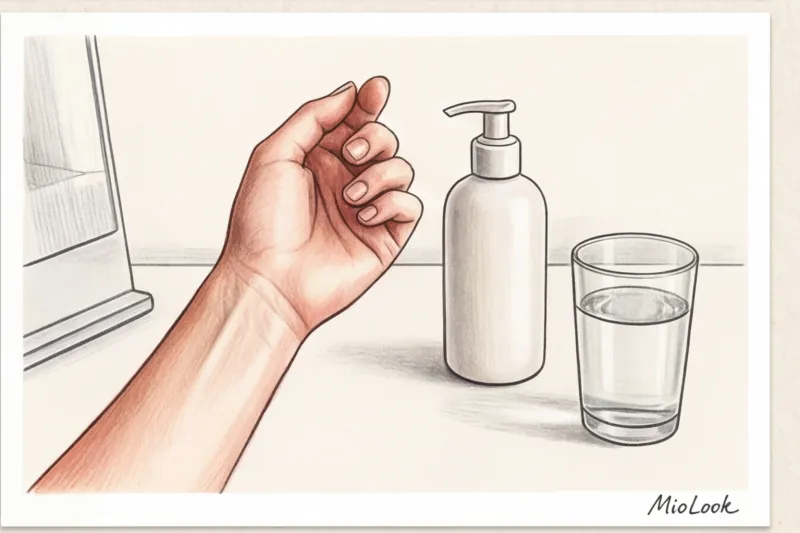
- No fragrances in the morning. Avoid perfumed shower gels, body lotions, and hairspray on the day of birth. Use neutral products instead.
- Choose the right time. The ideal time for testing is the first half of the day (10:00 to 12:00), when your brain and receptors are not yet overloaded with daytime stress and city smells.
- Full stomach and hydration. Hunger heightens your sense of smell, but it can also make you nervous (you'll subconsciously begin to look for gourmand, sweet notes). Be sure to have breakfast and drink a glass of water before entering the boutique.
- Notepad or notes on your phone. Write down: the name of the fragrance, the time of application to the skin and your associations every 2-3 hours.
Conclusion: From random purchases to a conscious olfactory wardrobe
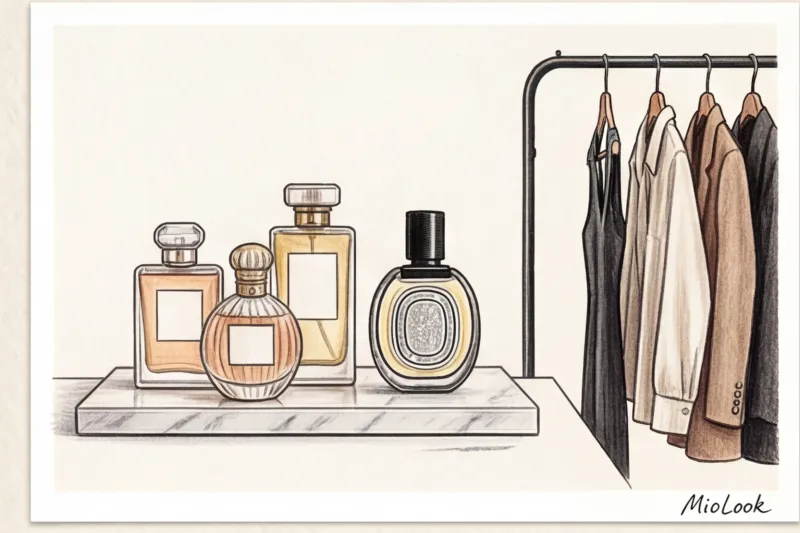
Buying perfume isn't a lottery, but an analytical process. By stopping buying flashy top notes and starting to test fragrances on your own skin for a full day, you can save tens of thousands of euro.
Your goal isn't to assemble a shelf of thirty random bottles, but a curated olfactory wardrobe of three or four compositions. Perfume is your invisible accessory. It enters the room a second before you and remains there long after you leave. Make sure it tells the right story about you.