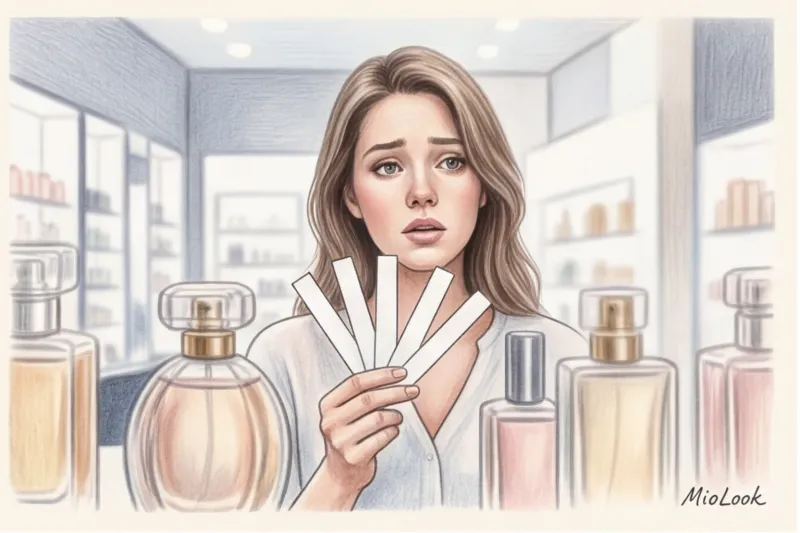
Last Friday, my client, nearly in tears, showed me her ruined silk blouse from a premium brand. The huge, permanent yellow stain on the collar wasn't caused by coffee or wine. It appeared after a perfume consultant at a boutique generously sprayed her with a new niche fragrance, saying, "Listen to how beautifully it will bloom on your clothes."
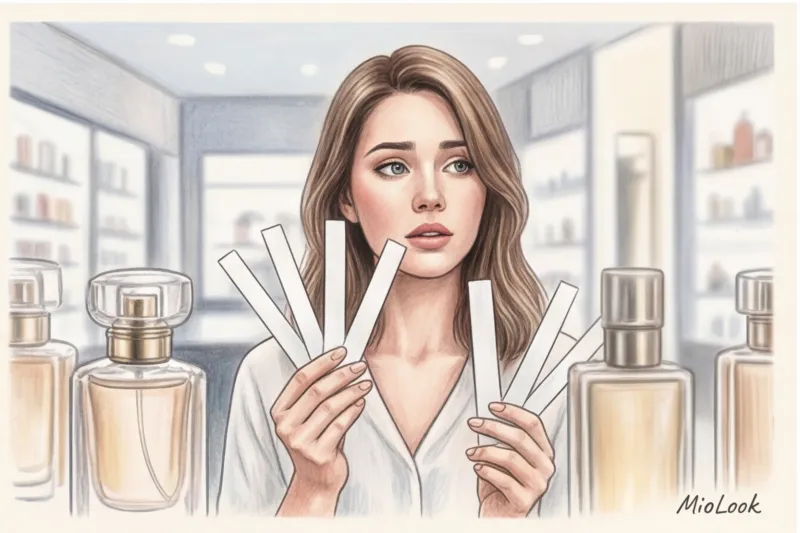
As a textile expert and stylist, I regularly encounter women not only buying the "wrong" fragrances, but also ruining their favorite items in the process. Perfume is a complex chemical substance, not just a pleasant-smelling bottle of water. And that, How to test perfume correctly , depends not only on your nose, but also on skin temperature, pH level, and even the fabric of your jacket.
Many people spend years searching for that one scent, making impulsive purchases after five minutes at the counter. We've covered why the concept of one scent for life is outdated in our guide. How to Find Your Scent: Secrets of the Perfumery Self Today, I propose looking at the process of choosing a perfume through the prism of chemistry, physiology, and materials science.
Why do we buy perfumes that later disappoint us?
It's a familiar situation: a fragrance seems divine in the store, you buy a bottle, and the next day it suffocates you to the point of giving you a headache. Why does this happen?
The entire perfume industry is built on marketing top notes. According to IFRA (International Fragrance Association), light volatile components—citrus, aquatic, green, and some floral notes—evaporate from the skin in just 10–15 minutes. They are what create that wow-factor that makes us reach for our credit cards.
"They sell the top notes, but you have to live with the base. Buying a perfume based on the first few minutes of its scent is like marrying someone based solely on their Tinder profile."
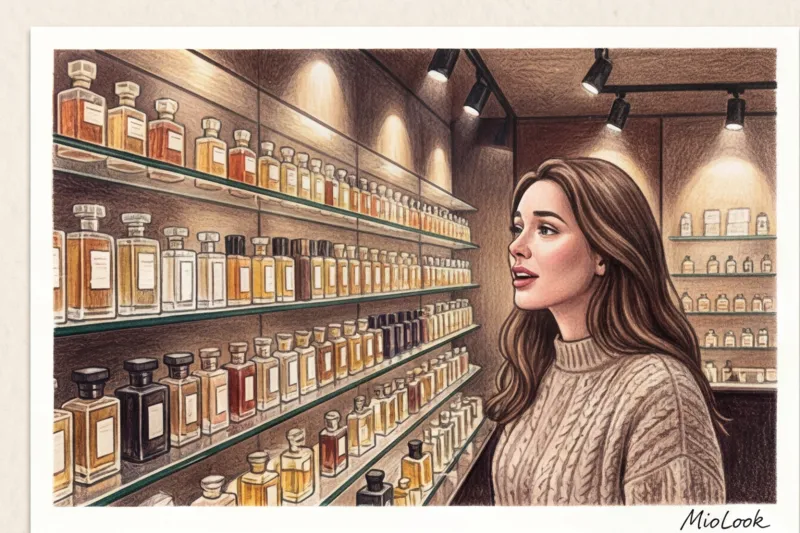
The second cause of disappointment is olfactory blindness. The air in perfume boutiques is oversaturated with molecules. Your brain, trying to protect your nervous system from overload, simply "turns off" the perception of part of the spectrum. You buy a fragrance, smelling only half of its true composition.
Access to MioLook for €0.99 — one-time payment
A smart AI stylist will select the perfect look to match your new perfume and mood.
Get access — €0.99 onceThe Biggest Mistakes: How Not to Test Perfume in a Store
In 12 years of working with personal style, I've seen plenty of rituals in perfume departments. Most of them are not only useless, they're harmful.
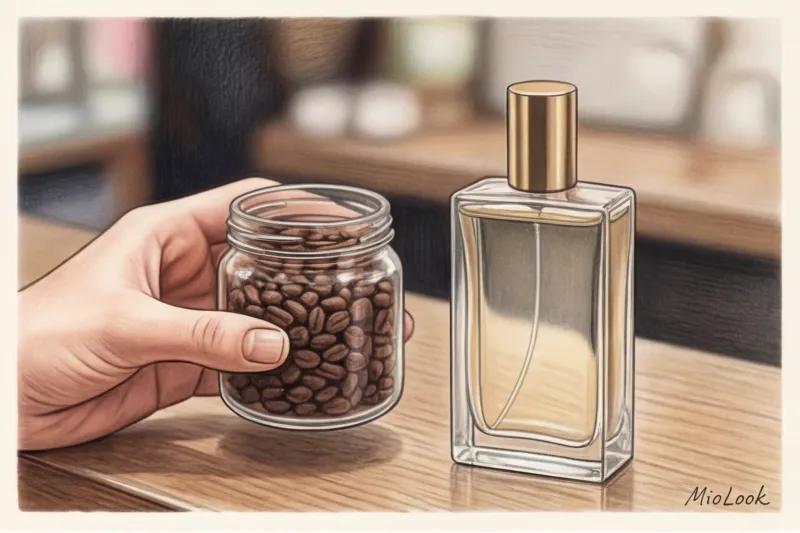
The Coffee Bean Myth
If a consultant offers you a jar of coffee beans to "cleanse your senses," politely decline. It may seem counterintuitive, but sniffing coffee between perfume tests is the worst thing you can do.
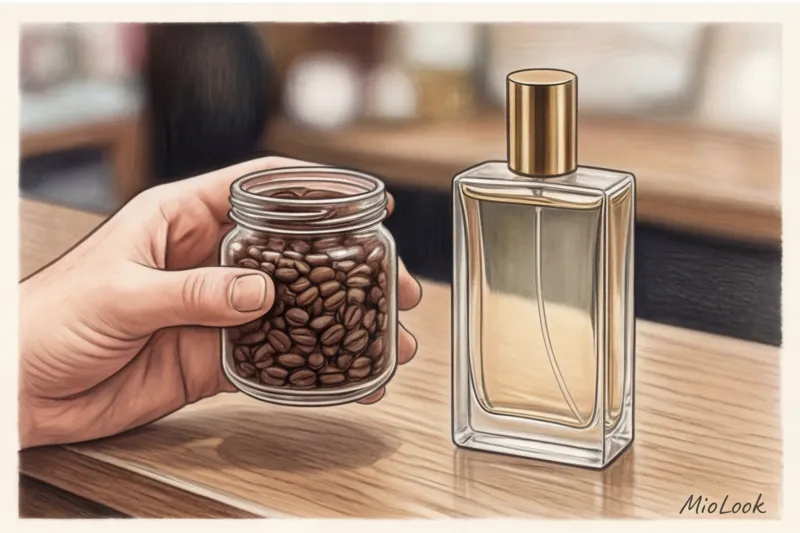
Research by the Olfactory Research Fund has proven that the aroma of roasted coffee contains over 800 volatile compounds. Instead of giving your nose a rest, you're delivering a final knockout blow to your tired receptors.
What to replace it with? Take a sip of clean water. Or, if water is unavailable, bury your nose in the crook of your elbow (if there's no perfume there) and take a few deep breaths. The scent of your own clean skin is the only real "reset" for your brain.
Rubbing perfume on your wrists
I often hear the phrase: "Don't rub your wrists, you'll break the fragrance molecules!" As someone who has studied fiber chemistry, I can tell you frankly: it's physically impossible to "break" a molecule by rubbing your skin. But rubbing perfume really isn't an option.
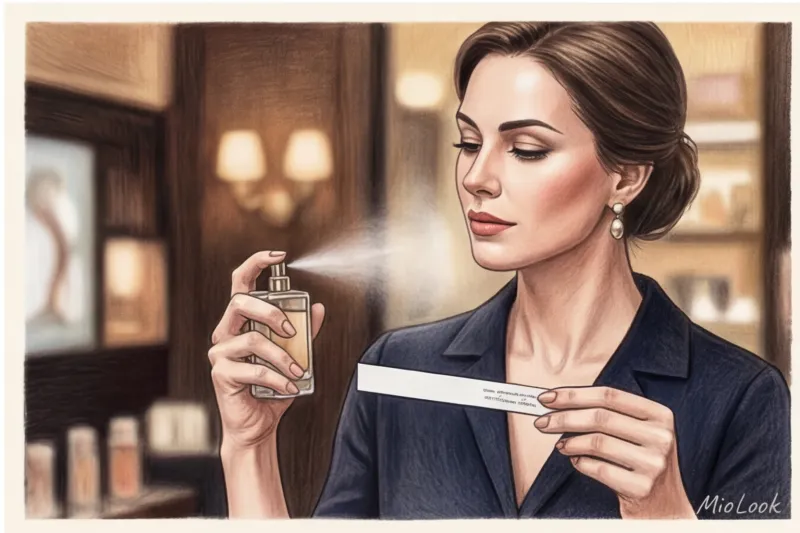
Why? Friction sharply increases the skin temperature in a localized area. This violates the laws of thermodynamics established by the perfumer: the top and middle notes evaporate extremely quickly, the composition blurs, and the fragrance sounds distorted. Let the liquid dry naturally.
Blind trust in paper
A blotter (paper strip) is great for a first try, to weed out options that are clearly unsuitable. But paper is dead. It doesn't have a temperature of 36.6°C, it doesn't produce sebum, and it has a neutral pH. On your skin, the scent will change beyond recognition.
How to Properly Test Perfume: A Step-by-Step Guide
When I accompany clients on perfume shopping trips, we always follow a strict protocol. It saves them from unnecessary expenses and headaches.
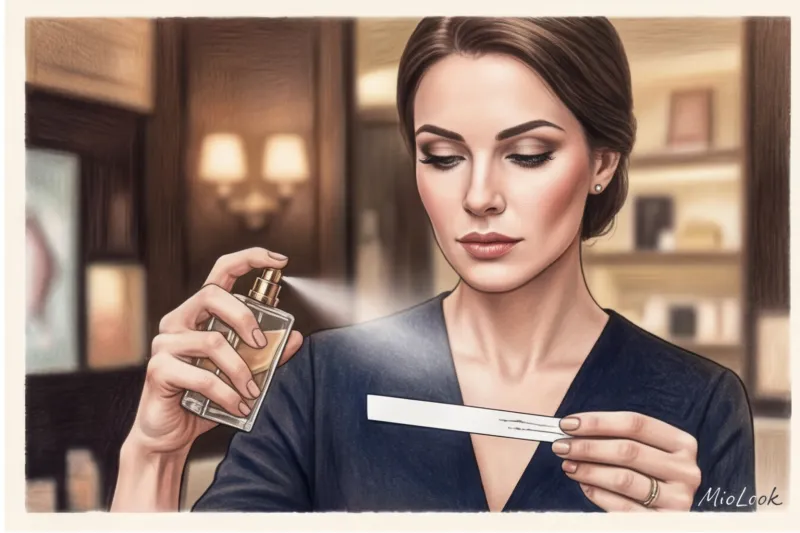
- Preparation. On the day of your shopping trip, use only neutral, fragrance-free shower gel. No body creams, and certainly no perfume.
- Working with blotters. Spray the fragrance onto the paper from a distance of 15–20 cm. This is critical: if you hold the bottle too close, the paper will become wet with alcohol, and you won't smell anything but ethanol.
- The rule of three finalists. The human nose can only adequately perceive 3-4 complex scents in a single visit. Choose 2-3 favorites on the blotters.
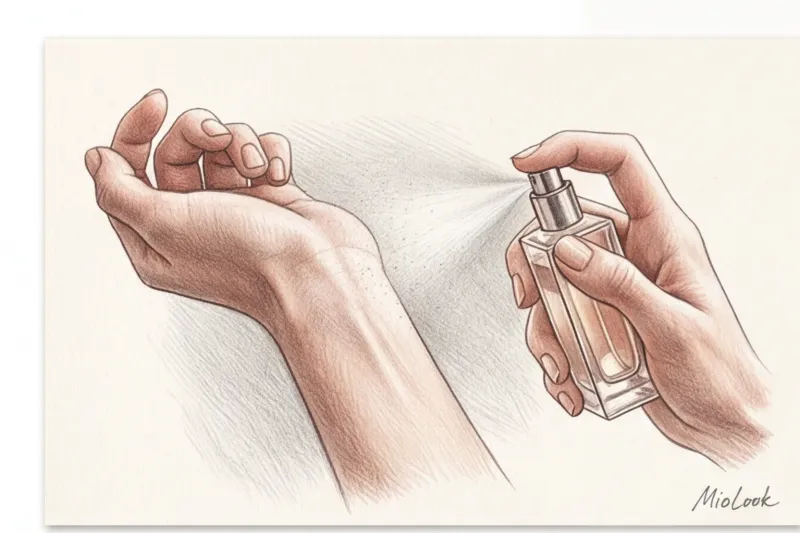
- Skin test. Apply the finalists to your pulse points: one on your left wrist, one on your right. If you have a third, place it on the crook of your elbow.
- Obligatory pause. Leave the store. Seriously, just go get a coffee or take a walk. You can make a decision after at least 3-4 hours, when the fragrance has settled on your skin and revealed its true base.
Important limitation: This algorithm doesn't work if you have a cold, an allergy flare-up, or sudden hormonal fluctuations. During these periods, your skin chemistry and sense of smell change dramatically.
Perfume and Fabrics: The Hidden Rules of Clothing Testing
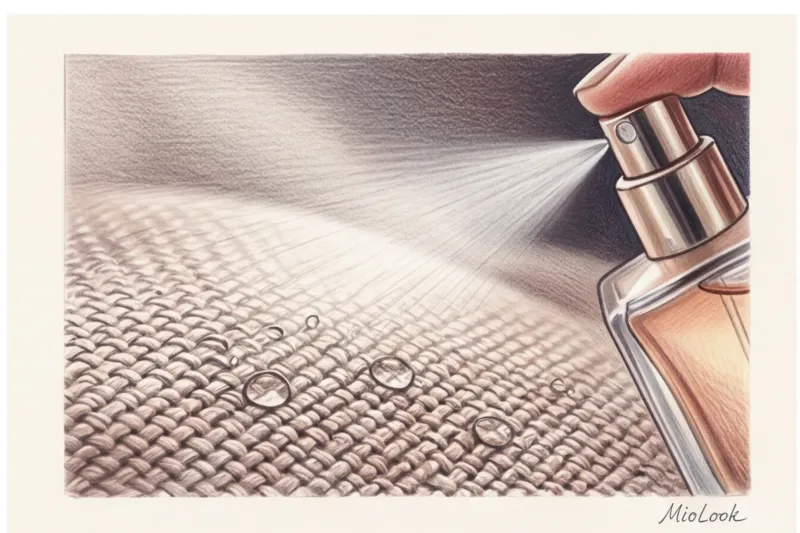
We've reached my favorite topic. As a textile expert, I'm obliged to warn you: Eau de Parfum contains 15% to 20% alcohol, plus essential oils and synthetic resins. This cocktail is detrimental to some fabrics.
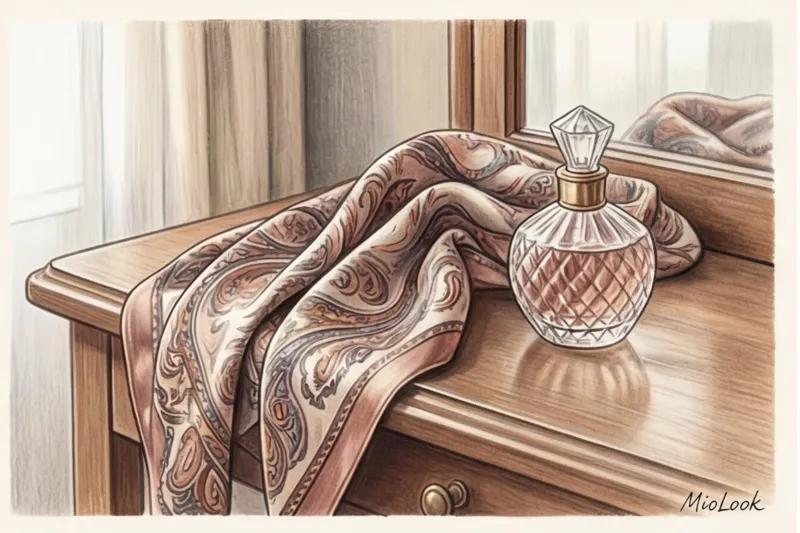
How different fibers react to perfumes
- Silk and wool (protein fibers). Never spray perfume directly on pearls! Alcohol destroys the protein structure, and oils leave yellow stains that no dry cleaner can remove. Perfume is also deadly to natural pearls—they become cloudy and die from the alcohol.
- Cotton and flax (cellulose fibers). They absorb fragrance well and retain it moderately. Cotton barely distorts the composition's sound.
- Polyester and acrylic (synthetics). They absorb moisture poorly, the aroma remains on the surface and often sounds sharper, “plasticky”, losing depth.
Life hack from a stylist: If you want your clothes to smell fresh but are worried about stains, spray perfume on the inside lining of your jacket (if it's viscose, not silk) or on the inside seams. Another elegant option is to spray perfume on a cotton handkerchief and place it in your coat pocket or purse. The fabric will scent the space without damaging your clothes.
Your perfect look starts here
Join thousands of users who look flawless every day with MioLook. Organize your wardrobe smartly.
Get access — €0.99 onceChecklist: The Perfect Trip to Find a New Fragrance
To avoid getting lost at the stands, save this short checklist. My clients often take a screenshot of this section before shopping.
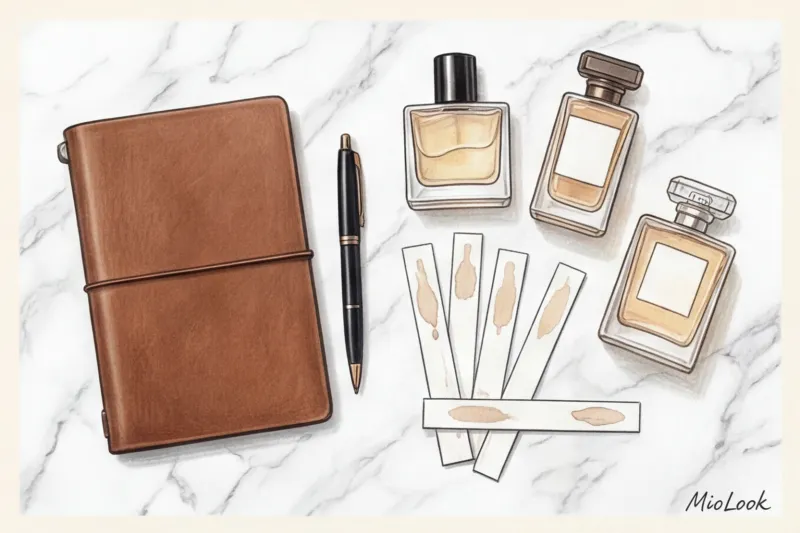
- Time: Go shopping in the morning (between 10:00 and 12:00). At this time of day, your olfactory receptors are most sensitive, and the air in boutiques is not yet oversaturated with scents.
- Inventory: Bring a regular ballpoint pen. Always sign the names on the blotters! An hour later, you'll never remember which was Tom Ford and which was Jo Malone. Also, bring a bottle of still water.
- One Night Rule: Never buy perfume on the day of testing. The scent needs to "sleep" on you. You need to find out how long it lasts, whether the base is irritating in the evening, and how it smells on your clothes the next morning.
Conclusion: Putting together a perfume wardrobe
Finding the perfect fragrance isn't a race, but a thoughtful exploration of yourself. Test perfumes on clean skin, don't trust the first 15 minutes of scent, save your silk blouses, and forget about coffee cans.
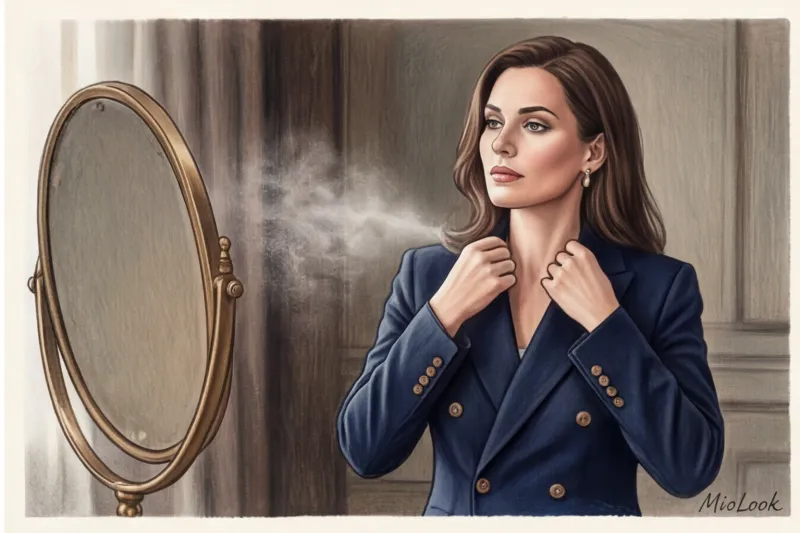
I always say that perfume is the invisible, yet most influential element of your style. It should work in synergy with your clothes. A tailored, heavy wool pantsuit calls for a structured chypre, while a flowing viscose dress is perfectly complemented by a delicate floral trail.
When creating capsule collections for clients, I always consider the olfactory component. If you want to learn how to masterfully combine fabric textures, silhouettes, and the overall mood of a look, try the "smart wardrobe" feature in MioLook Artificial intelligence will help you organize your belongings, and a scent chosen according to our rules will be the perfect finishing touch.