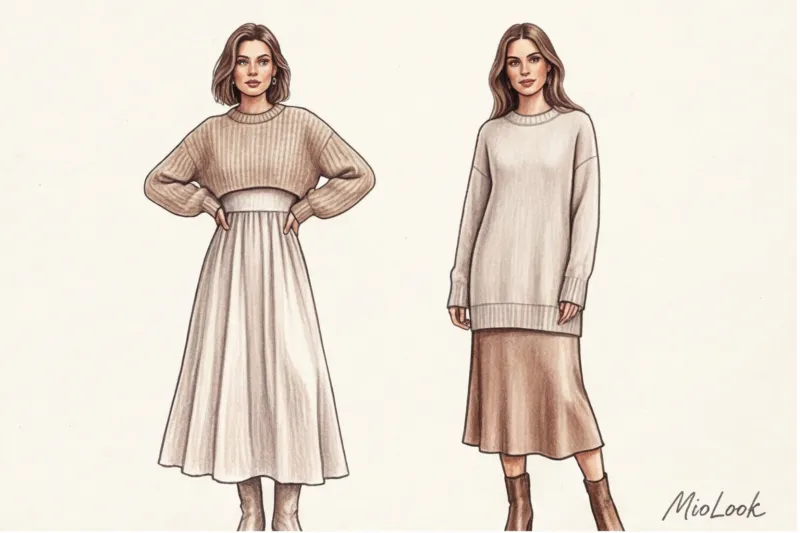
"I look like a rectangular closet in this," my client declared in despair, peeling off the luxurious cashmere sweater she'd tried to throw on over her favorite silk midi. It's a classic story. The desire to extend the life of summer garments during the cold season often comes crashing down on the harsh reality of looking in the mirror. Many people, when wearing a sweater over a dress, expect casual Parisian chic, instead end up with an extra five kilograms of visual weight and a complete lack of silhouette.
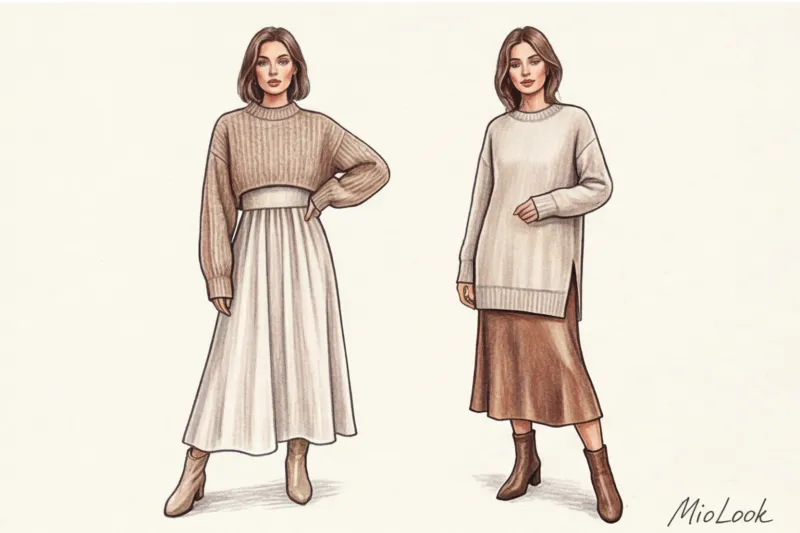
The problem isn't your figure or even the clothes themselves. The fact is, styling is half art and half applied physics. We've covered the basic principles of creating complex looks in more detail in our The complete guide to layering , and today I want to analyze the specific anatomy of one of the most popular, but insidious combinations.
Over 12 years of working as a stylist and going backstage at Fashion Weeks, I've realized the most important thing: to make a sweater look harmonious over a dress, you need to stop thinking in terms of "just throw one on top of the other" and start thinking in terms of proportions, the coefficient of friction of fabrics, and the architecture of the silhouette.
Silhouette architecture: why wearing a sweater over a dress sometimes makes you look fatter and sometimes slimmer
Backstage at the Jil Sander Fall/Winter 2023/24 show, I watched as the brand's stylists literally used a ruler to measure the length of knitwear on models. Why? Because the human eye perceives beauty through mathematics, specifically, through the golden ratio.
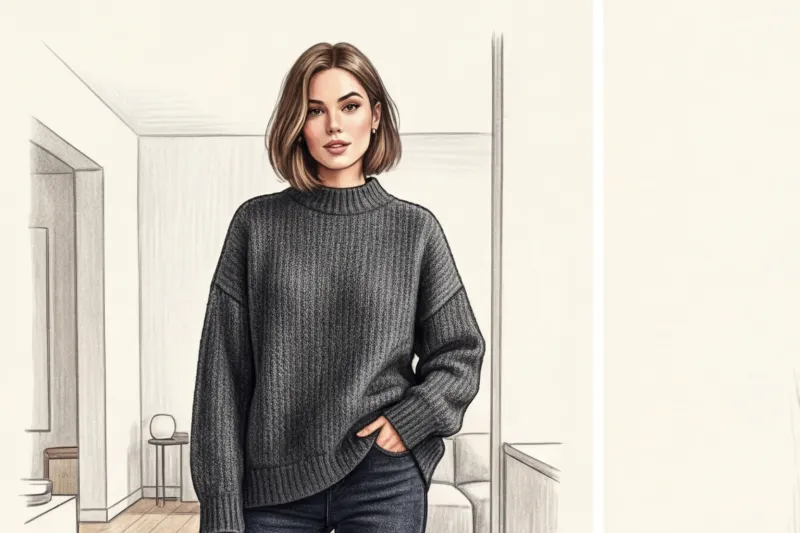
If your sweater ends right at the widest part of your hips, you visually divide your figure in half (a 1:1 ratio). This is the most uncomplimentary proportion of all: it cuts off height and makes the figure appear squat. The ideal volume distribution is 1/3 to 2/3. This means your knitwear should either occupy the top third of your silhouette (ending at the waist or just above), or, conversely, extend into a maxi format, leaving only a third of the dress at the bottom.
Long vs. cropped sweaters: which one to choose for your body shape?
A cropped sweater (to the natural waist) is the safest choice. It keeps your legs long and doesn't require any extra adjustments. However, if you choose a longer style, be careful.
- Danger zone: A mid-thigh length paired with a midi dress is guaranteed to shorten your legs by 10-15 centimeters.
- Longline Reception: A very long, loose tunic sweater (almost knee-length) over a flowing maxi dress. This combination elongates the silhouette with a continuous vertical line. This technique is often used in relaxed images for freelancers when you need comfort without sacrificing style.
Your perfect look starts here
Join thousands of users who look flawless every day with MioLook. A smart AI stylist will help you find the perfect proportions for your figure.
Get access — €0.99 onceThe Laws of Physics in Styling: How to Combine Textures to Make Them Work
In fashion design courses, students are taught the concept of "coefficient of friction," but this information rarely reaches consumers. And that's a shame. It's the physics of fabrics that determines whether your look will flow dynamically or remain rigid.
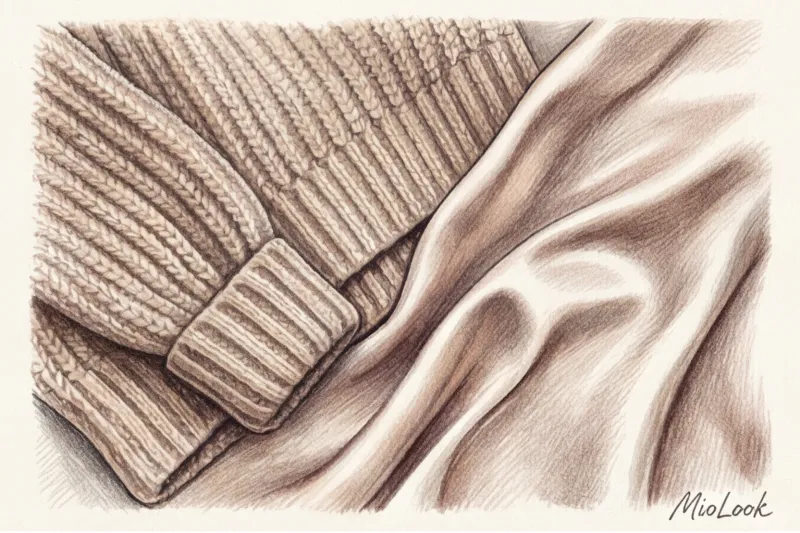
Divide all fabrics into "slippery" (silk, smooth viscose, satin, cupra) and "clingy" (cotton, linen, textured wool, bouclé). The main rule of layering: items will lay flat only if the bottom layer is smoother than the top.
If you wear a stiff cotton shirtdress under a thick-knit wool sweater, the fabrics will clash. The cotton won't slide under the weight of the wool and will bunch up at the waist and chest with every movement. Add to this the static electricity from cheap acrylic or polyester, and any design idea will be ruined. Choose natural fibers: they generate less static and drape better.
Texture combination matrix
To avoid making a mistake in a store (for example, at Zara or Massimo Dutti), keep these fail-safe combinations in mind:
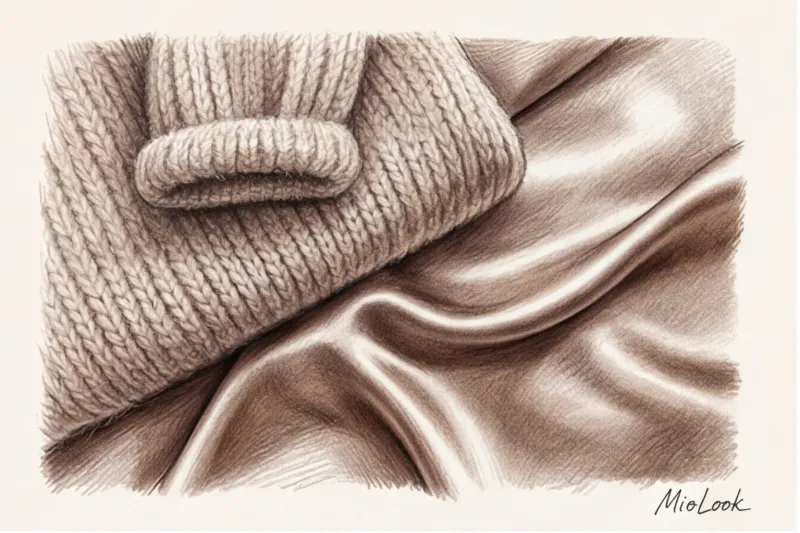
- Successful contrast: Fluffy mohair and heavy, smooth satin. The play of matte and glossy finishes always looks expensive.
- Balance of volumes: Smooth merino wool + pleating. The pleating itself sets the rhythm, so the top should be calm.
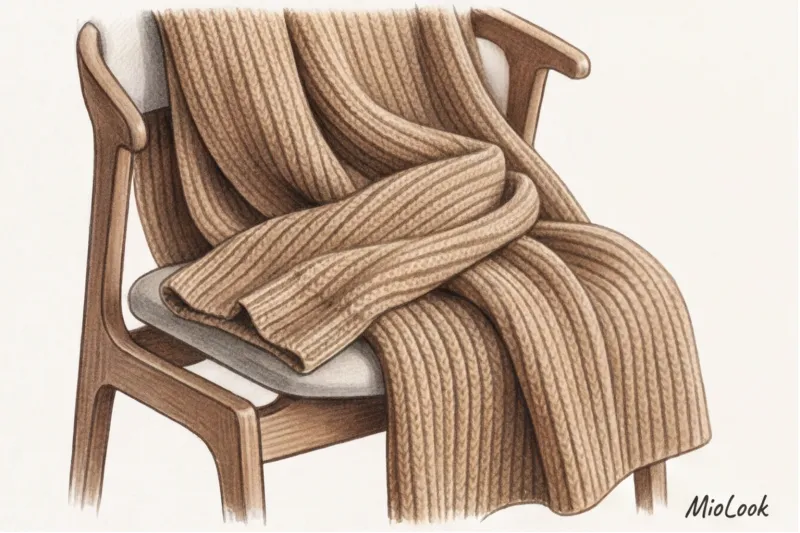
- High Risk (When it DOESN'T work): Chunky cable knit (aran) + ultra-fine, translucent chiffon. Heavy yarn will visually crush the weightless fabric, and the look will lose its coherence.
Sweater Over Slip Dress: The Evolution of the Trend and How to Avoid a Trivial Look
This duo has come a long way from the heroin chic of Courtney Love in the '90s to the intelligent minimalism of the 2020s. But today, it's not enough to simply buy a basic lingerie dress and throw on a pullover.
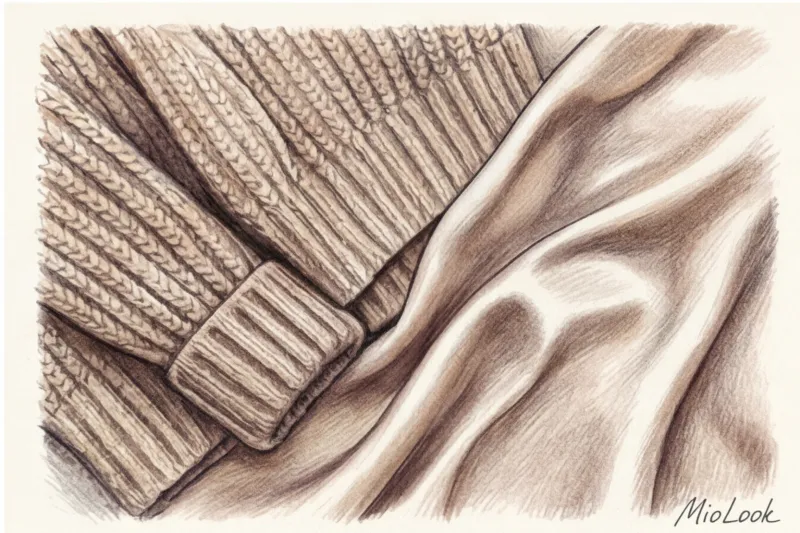
In my practice, I often see women trying to layer knitwear over thin polyester summer slips. Under the weight of the sweater, such a dress instantly clings to the legs, highlighting every nuance of the figure and underwear. A 2024 study by the WGSN Institute found that 68% of women avoid layering precisely because of the fear of looking sloppy and highlighting flaws.
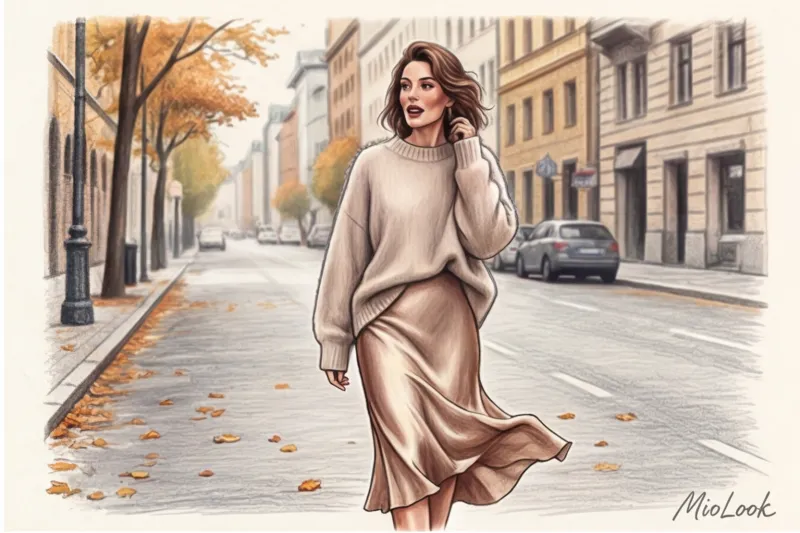
The secret lies in the density of the base layer. The ideal dress for layering is silk with a density of 19 to 22 mommes (a unit of measurement for silk density). This fabric has its own weight. Look for a bias cut—this allows the fabric to flow delicately along the body without creating tension. Yes, a good silk dress with a dense texture will cost at least €150–200, but it will pay for itself, becoming the basis for dozens of dresses. quick image transformations.
The "Magic Belt" Mistake: Debunking the Main Myth of Amateur Stylists
Go to Pinterest and you'll see thousands of tips: "Is your sweater too big? Just tie it around your waist with a belt!" As a practicing stylist, I can tell you this is the worst thing you can do with thick knitwear.
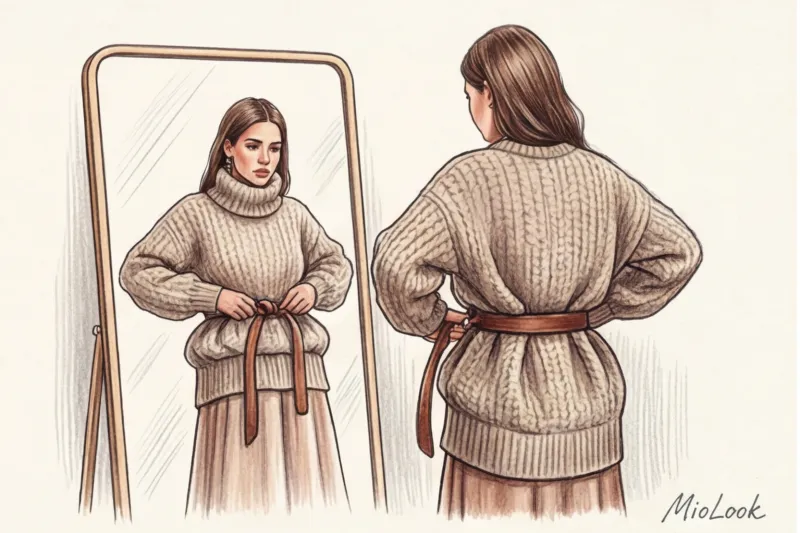
Let's get geometric. Thick yarn has volume. When you tie it with a thin or even wide belt, the excess fabric doesn't disappear—it bubbles above and below the belt. This creates a "caterpillar" effect. Visually, your waist doesn't become thinner; it becomes equal to your waist circumference plus two layers of thick knit. Your hips, meanwhile, appear wider.
"Wearing a belt over a bulky sweater doesn't create a waist. It creates the illusion that you have something to hide under the mountain of folds."
Instead of a belt, look for sweaters with an asymmetrical cut, side slits, or structured ribbing at the hem. Side slits are a brilliant invention: they break up the horizontal line at the hips and allow the dress to flow beautifully as you move.
Ready to get started?
Try a free plan - no commitment. MioLook analyzes your wardrobe and suggests stylish combinations, taking into account the rules of proportions and textures.
Get access — €0.99 onceThree Pro Ways to Tame Bulky Knitwear
If the belt is out, how can we define the waist and shorten the sweater to restore the 1/3 ratio? On set, we use three tried-and-true tricks.
Method one: invisible brooch. Gather a small fold of the sweater at the side (just above the waist) and secure it from the inside with a large safety pin. This creates a subtle, natural asymmetry and drape that looks as if you've casually tucked the sweater into a pocket (which, of course, the dress doesn't have).
Method two: hidden drawstring. Some high-end brands (like COS) offer sweaters with a drawstring sewn into the waist. You tighten it from the inside, and the sweater creates the perfect drape.
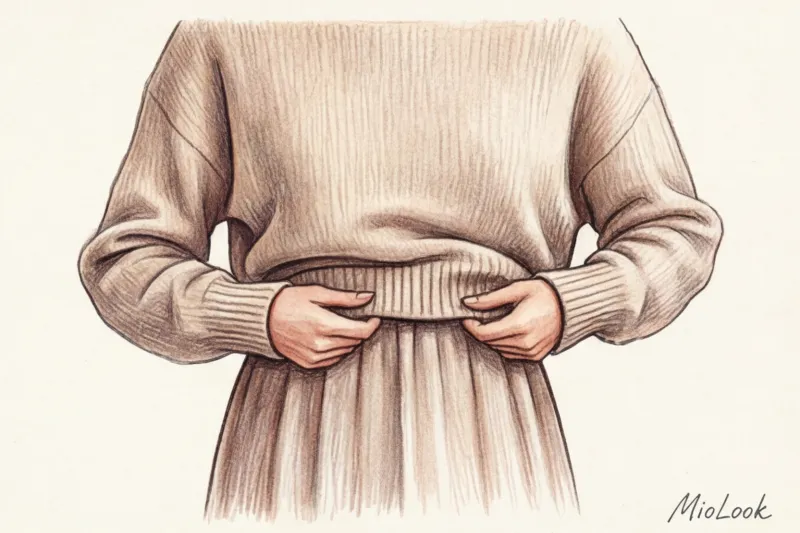
Hidden Belt Technique (Bra-Tuck and Elastic Band)
The most popular influencer trick is the bra-tuck technique. You wear a smooth sports bra underneath your sweater or tie a thin elastic cord around your waist. Then, fold the edge of the sweater inward and secure it with the cord.
When it does NOT work: I personally tested this trick at Paris Fashion Week with a very thick wool sweater. The result? A roll of thick fabric tucked inside created volume on my stomach, mimicking the fifth month of pregnancy. This method is only ideal for fine cashmere, viscose, or smooth-knit merino. For chunky yarns, use only an asymmetrical fold (on one side).
Choosing Shoes for a Layered Look: Balancing Visual Weight
Think of an architectural structure: if the roof is massive, the foundation must be proportionate. In personal styling, this is called visual weight distribution.
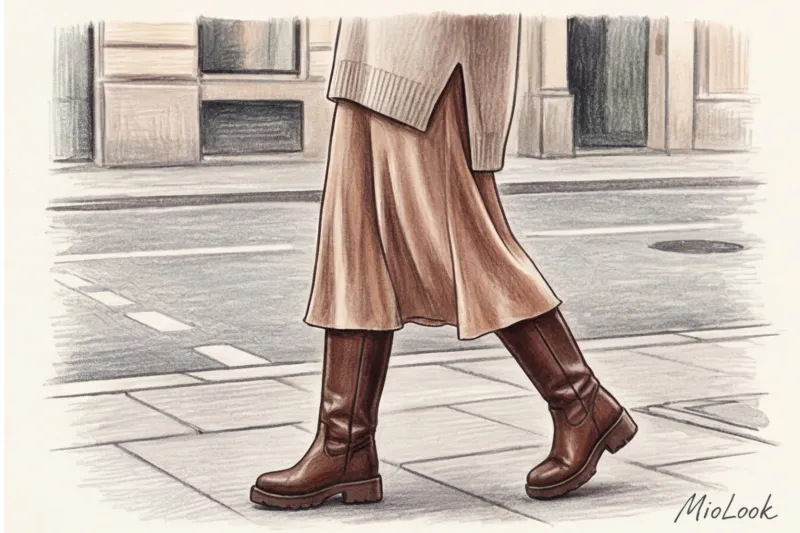
The sweater itself adds weight and texture to the upper body. If you wear delicate stiletto pumps or weightless ballet flats underneath this flowing silk dress, the look will be disharmonious. You'll look like a hut on slender legs.
A heavy top requires a solid base. Ideal companions for the "sweater over dress" formula in the €100–€300 price range:
- Knee-high boots: A wide shaft that extends under the dress's hem creates a continuous vertical line, which is incredibly slimming.
- Rough Chelsea boots or Martins: The contrast between the feminine dress and utilitarian shoes takes away any unnecessary pathos.
- Chunky loafers with socks: A great option for dry autumn or warm spring, maintaining the preppy aesthetic.
Checklist: Putting together the perfect sweater + dress look in front of the mirror
Theory is useless without practice. Before you leave the house, run through this professional checklist.
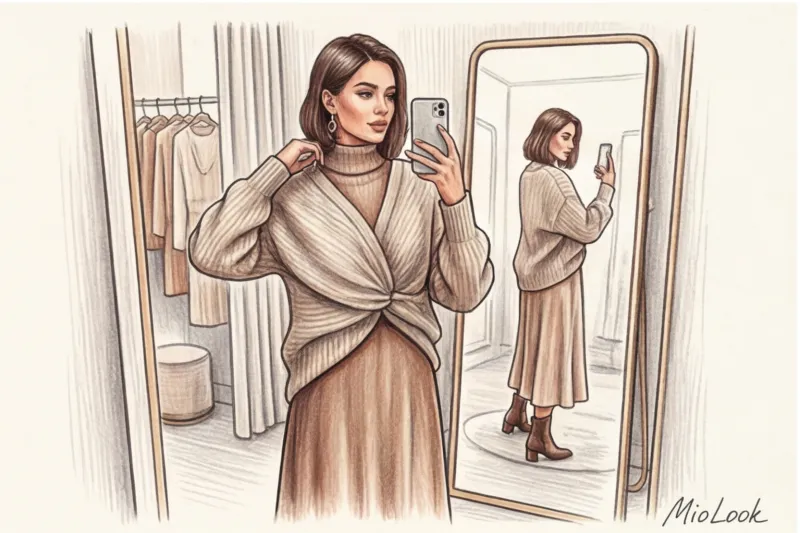
- Checking proportions: Where does the sweater's hem end? If it hits the widest part of your hip, tuck it in using the hidden waistband technique (bra-tuck) to the waist or higher.
- Checking invoices: Take a few long steps in front of the mirror. Does the dress slide or "stick" between your legs? If it slides, everything's fine. If it bunches up, it means there's not enough anti-static or the base layer is too textured.
- Checking the dynamics: Spin around. Layering should be fluid. Stiff, rigid pieces aren't suitable for layering.
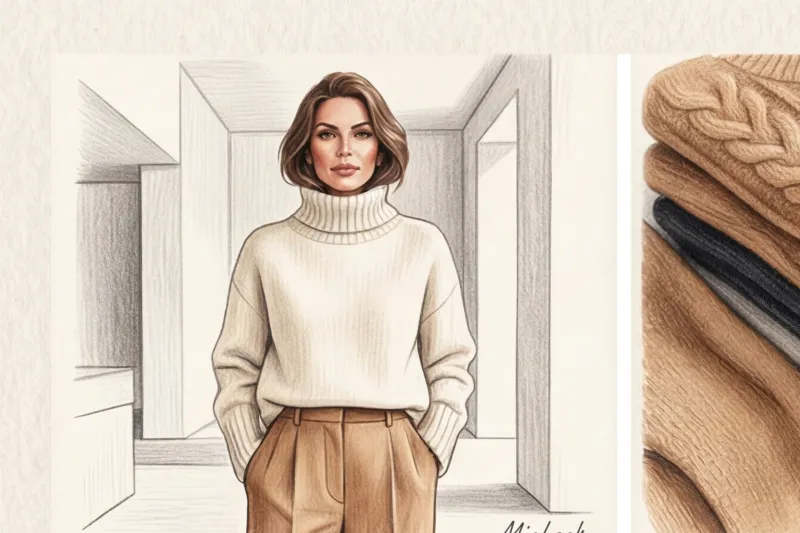
- Finishing Touch (Accessories): Since a turtleneck sweater covers your neck and creates a large décolleté, add a pendant on a long chain (below the bust). This will create an artificial vertical V-shape and visually elongate your neck.
Layering isn't about how many layers you can throw on. It's about how those layers interact with each other. Replace blindly following trends with an understanding of the physics of fabrics and your body's geometry, and then any knitwear, even the most oversized, will become your best ally, not your enemy.
Access to MioLook for €0.99 — one-time payment
Not sure if your favorite sweater goes with your new dress? Our smart AI stylist will find the perfect look based on your real wardrobe.
Get access — €0.99 once