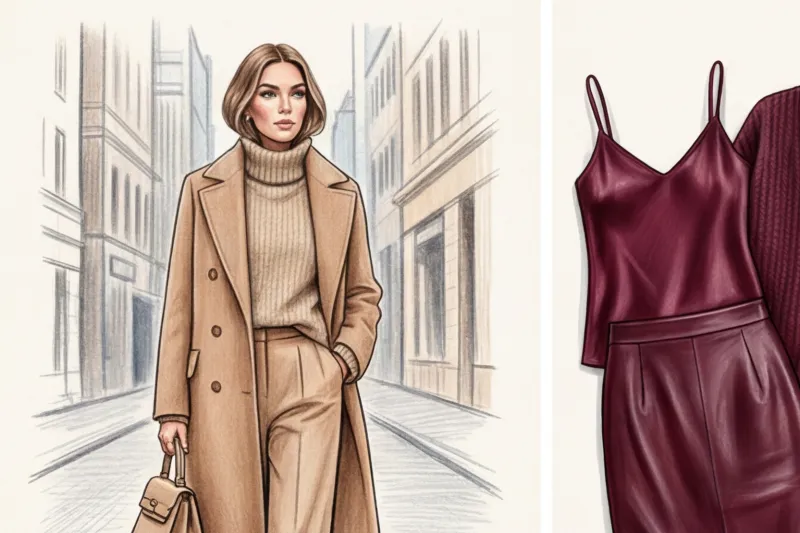
What Monochrome Clothing Actually Is (Spoiler: It's Not a Uniform)
Let's be honest. As a personal stylist, I most often encounter the same fatal mistake: a woman decides to dress in one color and starts frantically searching for things that perfect The shades match. Spoiler: it's stylistic suicide.
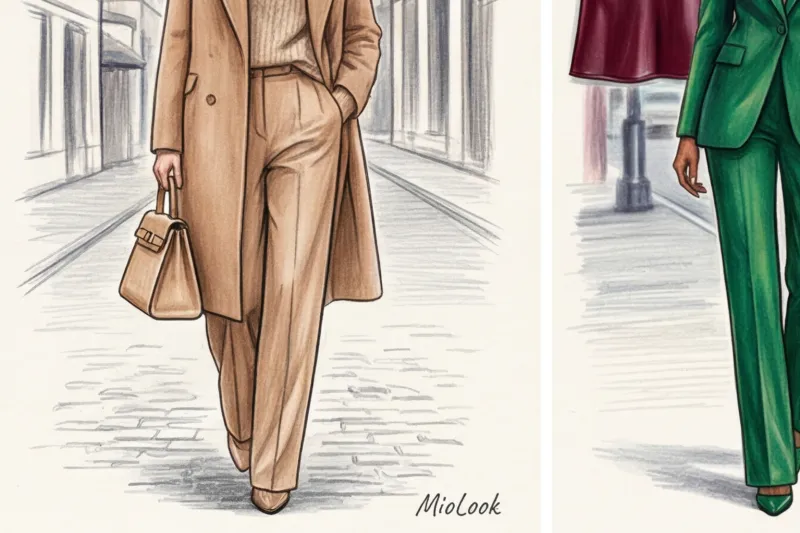
I remember my client Elena, a top manager in the IT sector. She spent three weeks—three full weeks!—trying to find a skirt in "exactly the right black" to pair perfectly with her favorite COS jacket. When she came to me with three bags of rejected items, I told her the truth: perfectly matching flat colors makes you look cheap. You start to look either like a flight attendant in uniform or like someone whose suit has faded in the wash. Just last week, we covered the rules of pairing and the Itten Circle in detail in our the complete guide to color combinations , and monochrome is subject to the same laws of physics.
The human eye can distinguish approximately 10 million shades. The slightest mismatch in pigmentation between two matte fabrics is interpreted by the brain as a mistake, wear, or untidiness. Retail statistics are merciless: according to Lyst's 2024 data, co-ordinated sets sell 40% better than separate items, yet 70% of women break up these sets at home for fear of looking "like they're in pajamas."
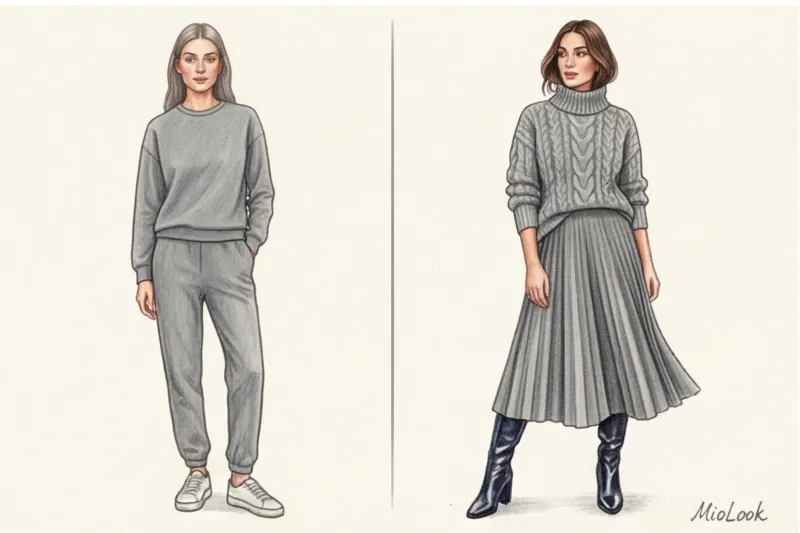
The secret to a luxurious look lies in the concept Tonal Dressing (tonal composition). A well-designed monochrome look isn't a single, monolithic blob, but rather a deliberate clash of different textures and a color gradient from light to dark.
The Rule of Three Textures: The Main Secret to a Fun Total Look
As soon as you remove color contrast from an outfit, all the visual weight falls on texture. If you wear smooth cotton pants with a smooth cotton shirt of the same color, the viewer's eye will get bored within a second—the outfit has nothing to grab onto.
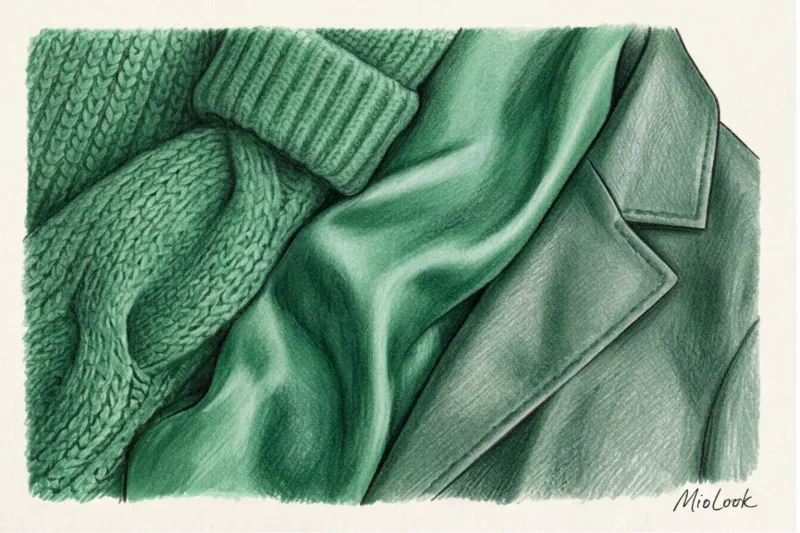
Johannes Itten proved in his legendary color theory, and textile engineers have confirmed: the same dye produces completely different reflections on pile, glossy, and matte surfaces. Silk reflects light, creating highlights and making the shade appear brighter. Velvet or suede absorb light, deepening the color. Matte wool produces an even, calm tone. By juxtaposing them, you create the illusion of multifaceted colors from a single pigment.
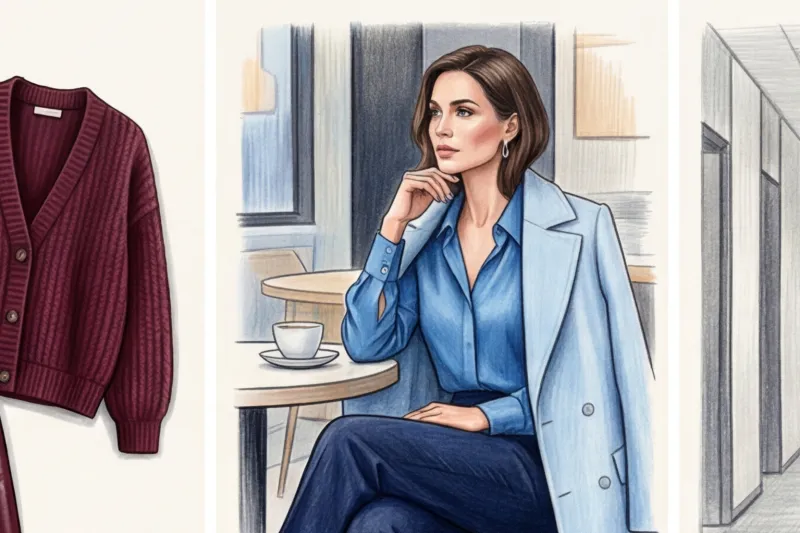
Working texture formulas from a stylist
To avoid racking your brain in front of an open closet, use my favorite combinations, tested on hundreds of clients (the rule here is simple: choose one shiny item, one fluffy/voluminous item, and one thick basic item):
- For evenings and dates: 19-22 momme silk (lingerie-style skirt) + chunky four-ply mohair or cashmere sweater + smooth nappa leather boots.
- For Casual Friday: Thick Japanese denim (jeans without fraying) + thin merino wool turtleneck + suede jacket or bag.
- For the wow effect: Top with sequins or metallic thread + matte trousers made of thick cotton (from 180 g/m²) + jacket made of textured tweed.
Access to MioLook for €0.99 — one-time payment
A smart AI stylist will select the perfect look based on your items and favorite textures.
Get access — €0.99 onceGradient Monochrome: Playing with Temperature and Saturation
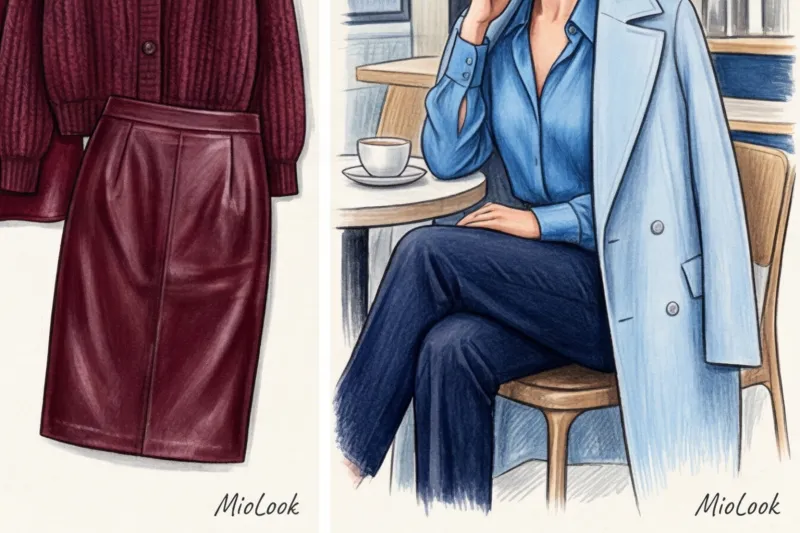
A gradient approach is a lifesaver when you want to create an outfit in your favorite color but are wary of looking overwhelmed. The trick is to take one color and use its "neighbors" by lightness. For example, from soft blue through cornflower blue to deep sapphire.
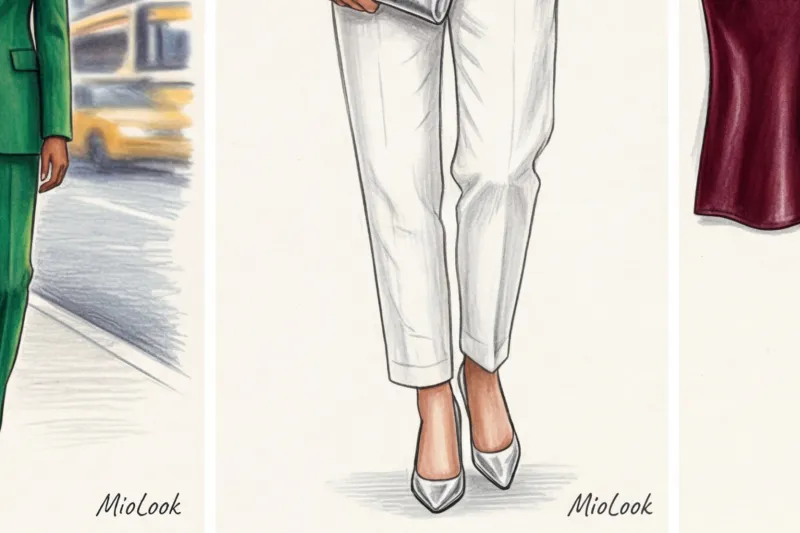
Here lies a powerful tool for body shaping: Light attracts attention and visually expands, dark - moves away and narrows Want to draw attention away from wide hips? Wear dark blue palazzo pants and hold a light blue silk top closer to your face. Want to add volume to narrow shoulders? Work the other way around.
Fair Limit: This gradient trick doesn't work on thin and shapeless fabrics (like cheap, see-through viscose jersey). Gradient requires a clear, structured cut, otherwise you'll look less like a style icon and more like a blur.
And the most important rule of temperature, which is often forgotten: never mix warm and cool undertones in the same monochrome. A warm tomato red next to a cool raspberry will create a disharmonious effect. When choosing a palette, rely on your own appearance color type.
A total look in basic colors: how to avoid the "gray mouse" effect
Basic colors in a monochrome look pose the greatest danger: they can make you invisible. Let's explore the three main pillars of a basic wardrobe.
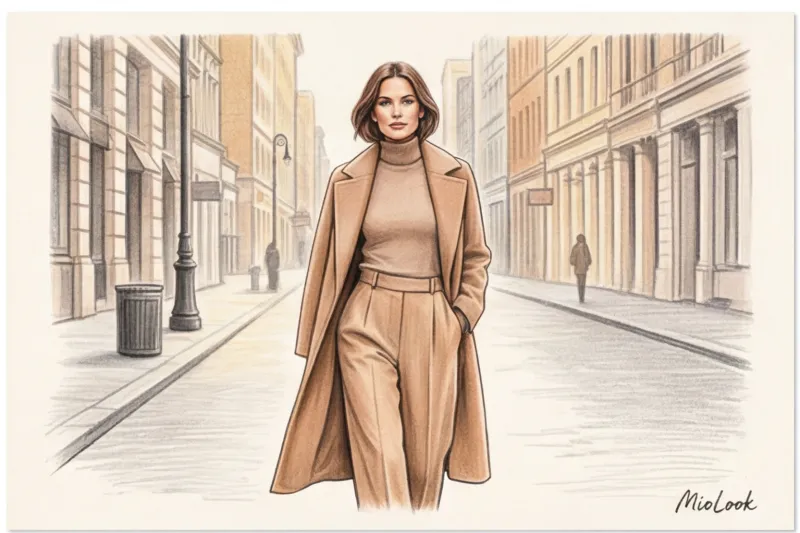
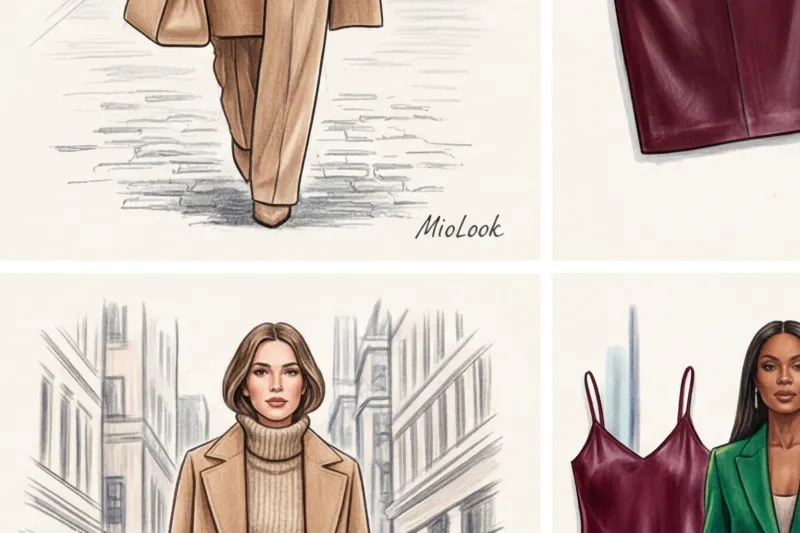
Total beige ("Quiet luxury"). The main mistake here is choosing a shade of beige that's an exact match to your skin tone. You'll blend into a single, bare spot. Clothes should be either two shades lighter or two shades darker than your complexion. If you have olive skin, look for a cool taupe. If you have fair, porcelain skin, choose a rich camel.
Total black (All-Black). I adore black, but I'll be honest: monochrome black requires the most expensive cut in your closet and flawless makeup. Black near the face draws out all the shadows, highlighting under-eye circles and nasolabial folds. If you're sleep-deprived and wearing a black cotton turtleneck, you've added five years to your age. The solution? A plunging neckline that reveals your collarbone or chunky, sparkly jewelry near the face.
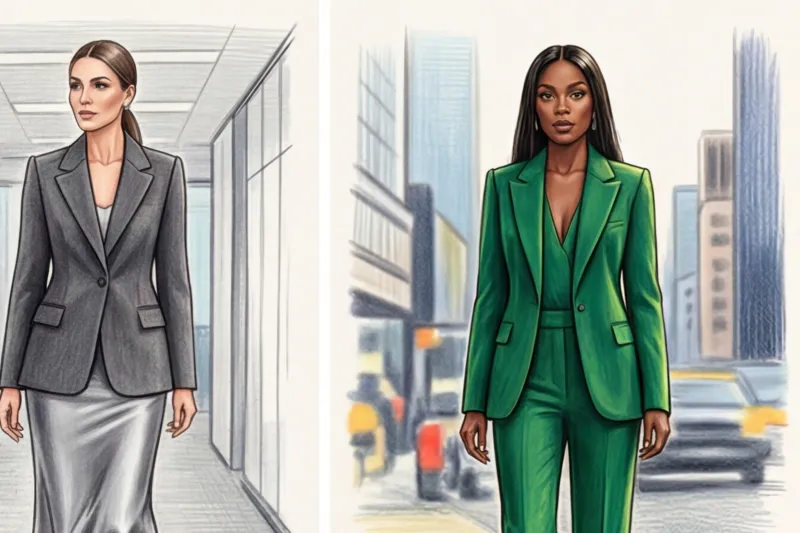
Total grey (Groufit). A 2023 McKinsey study on corporate dress codes found that gray is associated with maximum competence. To make a gray monochrome look like a million bucks for an important business meeting, pair a crisp charcoal jacket with a silver or tarmac-colored satin skirt. The melange thread and sheen of the satin will kill any office boredom.
Your perfect look starts here
Join thousands of users who look flawless every day by creating monochrome capsule makeup looks with MioLook.
Get access — €0.99 onceA Bright Monochrome Look: A Guide for the Bold
I'm Italian-Spanish at heart, and for me, color is a passion. The Mediterranean approach to color teaches us not to hide behind clothing, but to use it as a statement. Emerald, fuchsia, deep purple—in a total look, these colors act as armor.
A year ago, I was putting together a wardrobe for a client who was returning to work after three years of maternity leave. She felt insecure, slouched, and asked for "something discreet." Instead, we chose a terracotta three-piece pantsuit by Massimo Dutti. I literally saw her shoulders straighten and her posture change in the fitting room. The psychology of color (that same "dopamine dressing" trend Vogue wrote about) dictates its own rules: a person in bright monochrome is subconsciously perceived as a dominant, confident figure in a space.
If you're trying a bold, all-over look for the first time, start with deep, wine-toned shades like Marsala, burgundy, or deep emerald. They look just as classy as black, but they're sure to attract admiring glances.
Shoes and accessories: a fulcrum or an accent?
The most common question I get during my consultations is, "Isabella, should my shoes be red too if I'm wearing red?" Absolutely not! A precise match between shoes and clothes (unless it's a runway look) harks back to the prom aesthetic of 2005.
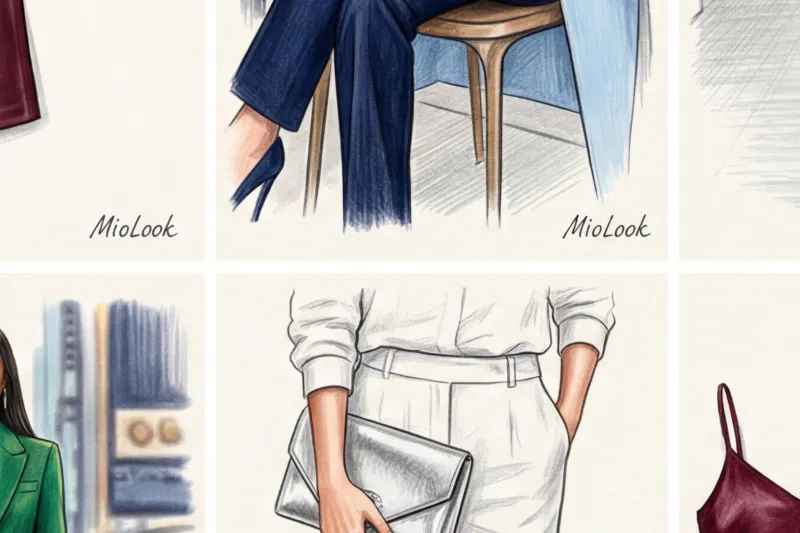
Shoes in a monochrome look should either be from a related palette (for example, burgundy shoes with a red suit) or provide an elegant contrast. My main style hack: Silver or gold shoes are the new neutral base Metallic reflects surrounding colors and blends into any, even the most complex, bright monochrome without overpowering it.
Use bags to enhance texture. A crocodile-embossed bag will complement a sleek pantsuit perfectly. And as for jewelry, it works as architectural dividers. If you're wondering, Can you wear gold with silver? In monochrome, large metal hardware or multi-layered chains help to create boundaries between similar shades of clothing so that the look doesn't clash.
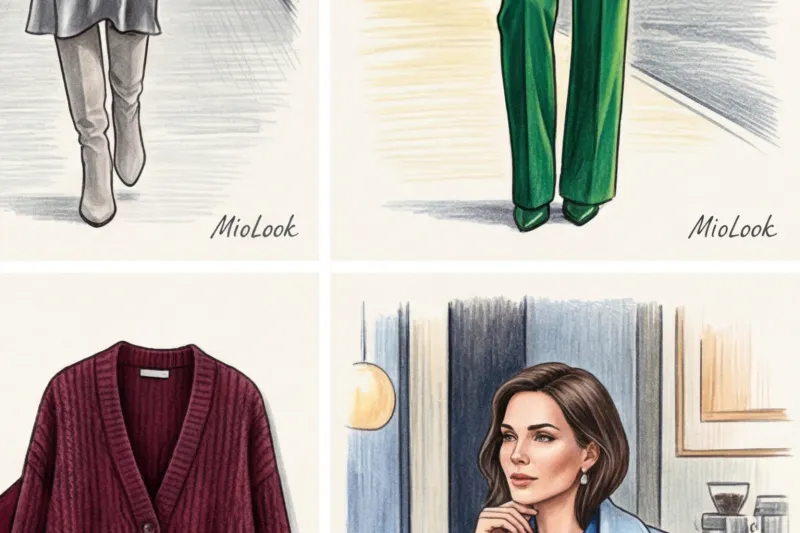
Checklist: 5 Steps to the Perfect Monochrome Look for Tomorrow
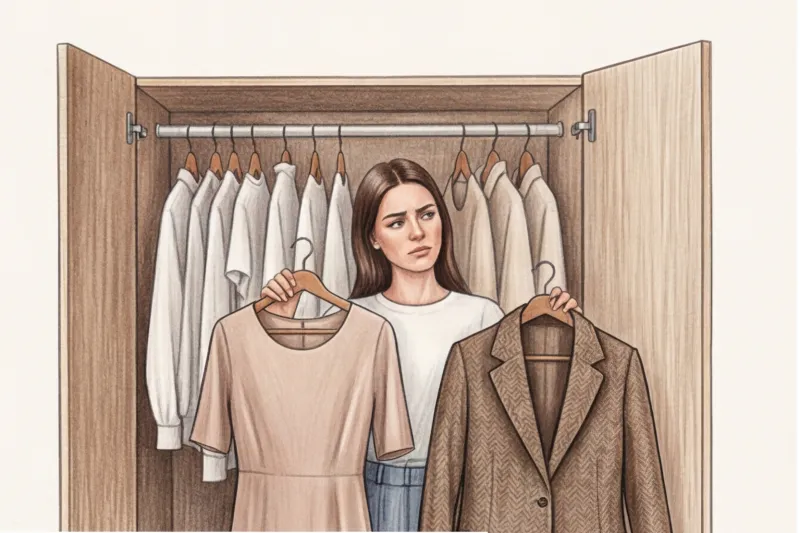
Open your closet right now. I bet you can put together a stunning outfit with what you already own! To make things easier, I recommend putting your items in the "smart wardrobe" feature in MioLook , but for now let's go through the steps:
- Select a base color. Start with the shade you have the most. Dark blue, chocolate, or burgundy are ideal for starting out.
- Review the shades. Get out all the items in this color. Don't try to find an exact match—select a range of colors from light to dark.
- Assemble a puzzle from three textures. Find one basic matte piece (like pants), one chunky/fluffy piece (like a sweater), and add a subtle shimmer element (like a silk scarf or satin bag).
- Choose contrasting shoes. Suede ankle boots in a related shade or metallic loafers.
- Add the finishing touch. Apply blush and lipstick that complement the temperature of your outfit to ensure your face doesn't get lost in the dramatic ensemble.
"A monochrome look is a test of your sense of style. It tests not your ability to match identical colors, but your ability to see the richness of undertones and textures within the same spectrum."
Remember: style isn't about strict textbook rules; it's about impression management. Stop searching for "that perfect black" for your skirt. Start mixing textures, playing with saturation, and your wardrobe will take on a whole new meaning.