Just last week, I was sorting through a top manager's wardrobe. Five identical, casual outfits, costing a total of about €2,500, lay on the bed. "Julia, why does this look so quietly luxurious on the Loro Piana models, but on me it looks like I'm sick and haven't left the house in three days?" she asked. The answer lay not in the figure, but in the fabric's engineering.
We're used to thinking that cozy things are created exclusively for relaxation. But the modern premium segment dictates different rules. To understand, What to wear with a knitted suit To look classy in the city, you need to abandon the clichéd "just add sneakers and a trench coat" approach. The secret lies in a carefully crafted contrast of textures, an engineered approach to yarn density, and the ability to integrate rigid elements into a soft silhouette.
We covered the basic principles of constructing such capsules in more detail in our complete guide. A Basic Knitwear Wardrobe: How to Put Together a Capsule And today I want to talk about how to turn a casual outfit into a valuable investment.
The Anatomy of 'Architectural' Knitwear: Why One Suit Looks Expensive, While Another Looks Like Pajamas
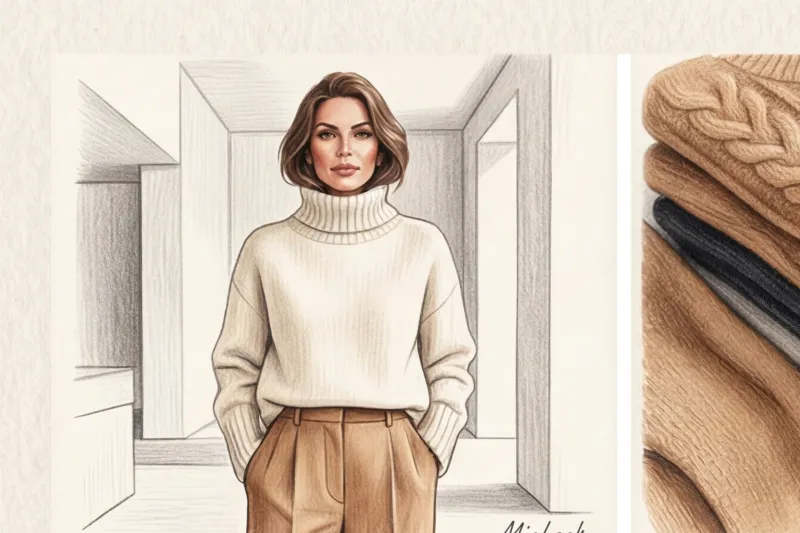
Luxurious knitwear is always the "architecture of coziness," where maximum comfort is encapsulated in a strict form. And 80% of the pajama effect that ruins the look is caused by an improperly cut shoulder girdle.
In premium garments, the shoulder seam adheres to a strict binary: it must either be perfectly positioned, or be exaggeratedly dropped. Any half-measures (like a seam that slips a couple of centimeters) visually cheapen the garment, creating the persistent feeling that you're wearing someone else's sweater.
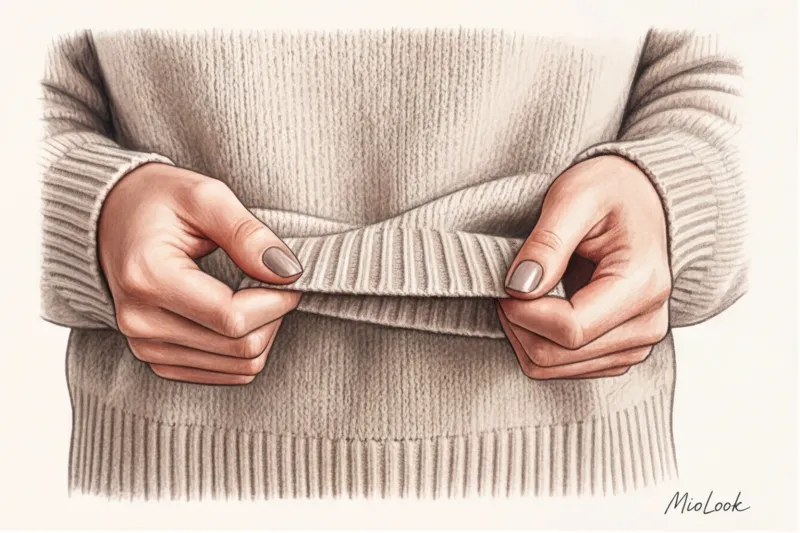
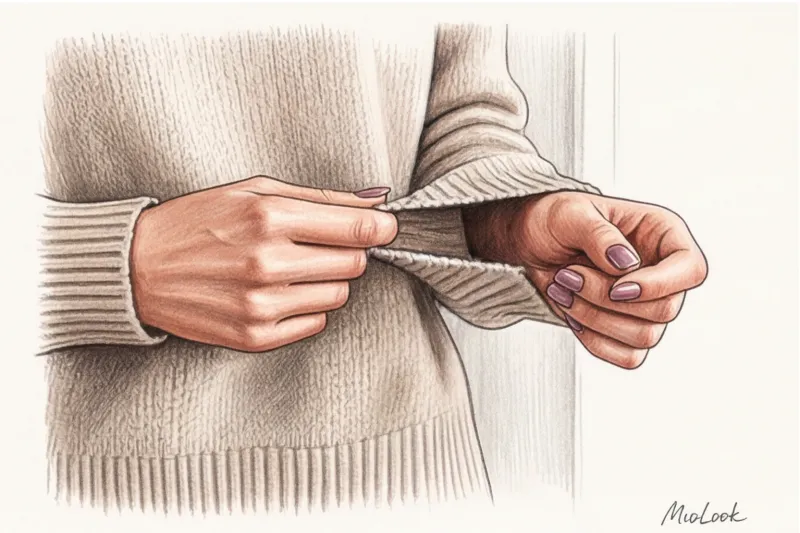
The second marker of status is engineered details. Over 12 years of working with luxury brands, I've developed a simple quality test that I make all my clients do before purchasing. Take the cuff of a sweater, stretch it tightly with your fingers, and then release it quickly. In high-end garments, the elastic will instantly snap back to its original shape with a resounding pop. If the cuff is "wrinkled" or wavy, the garment will stretch out after the first wash.
The secret to shape retention: knitting density and the right composition
The elasticity of the fabric directly depends on the density of the knitting, which technologists call the term gauge (machine class). Thin, loose knitwear of low knitting grades will inevitably highlight even the slightest imperfections of the figure, including the contours of underwear. Expensive clothing always has a noticeable weight.
"When assessing knitwear by touch, remember: incredible softness should never compromise elasticity. True luxury always has a slight spring under your fingers."
Historically, the best dimensional-stable yarns are produced in the Biella region of northern Italy. Mills use a special twist that locks the fibers together tightly, creating a smooth, almost serrated fabric.
Access to MioLook for €0.99 — one-time payment
A smart AI stylist will select the perfect everyday look and help you incorporate knitwear into your basic wardrobe.
Get access — €0.99 onceThe 100% Cashmere Myth: Why It's the Worst Choice for Trousers
Perhaps the most ingrained myth I have to combat during shopping trips is: "The more cashmere in the composition, the better." It's true, but only half true.
Cashmere is perfect for shoulder garments. But for knit pants, 100% cashmere is a disaster and a waste of money. Mountain goat fiber is incredibly soft, short, and has virtually no natural spring. Physics is unforgiving: pure cashmere pants will inevitably stretch out at the knees and become misshapen in the buttocks after exactly two hours of sitting at a desk or in a car.
When clients ask for a premium base, I always look for alternatives. The ideal investment is extrafine merino wool with 10-15% silk or even 5% elastane. The difference lies in the type of yarn. Cheap mass-market brands use carded (fluffy) yarn, which pills quickly. Premium brands use combed yarn—it's smooth, long-staple, holds a crease perfectly, even when ironed, and doesn't distort under tension.
What to Wear with a Knit Suit: Transforming Your Look from Casual to Smart
According to McKinsey's global "State of Fashion" report (2024), we're witnessing a definitive shift in the dress code paradigm: premium, comfortable clothing has become permanently integrated into office and urban style. But for this hybrid wardrobe to work for you, you need to know the most important rule of styling: play on contrasts of textures.
When deciding what to wear with a knit suit, remember this no-no: never combine soft with soft. Knit pants paired with a fluffy chunky knit cardigan, suede Ugg boots, and a soft scarf are a 100% guarantee you'll look like you just escaped from the bedroom. The look has no grip; it just "sags."
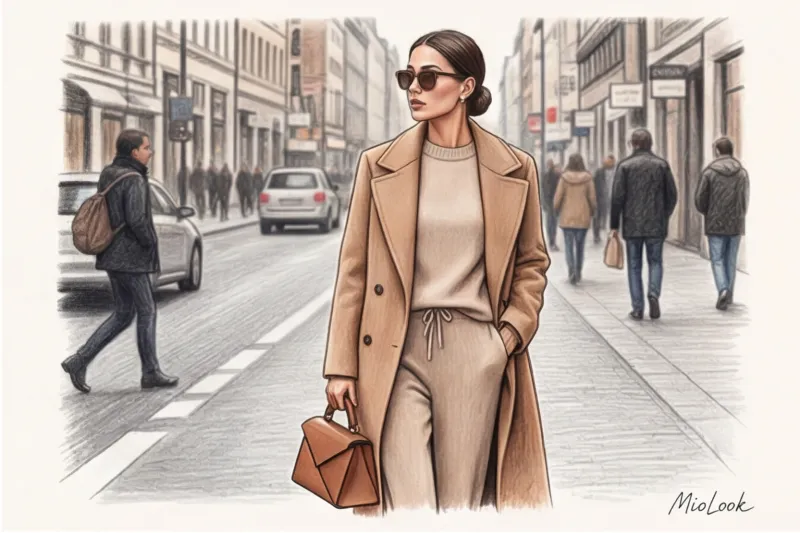
We need a "rigid frame." The softness of the wool requires a structured, shape-holding frame. Ideal companions:
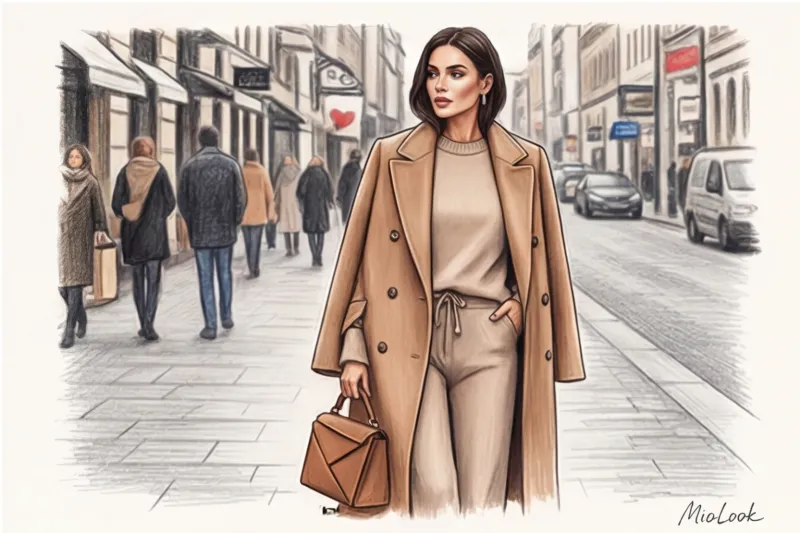
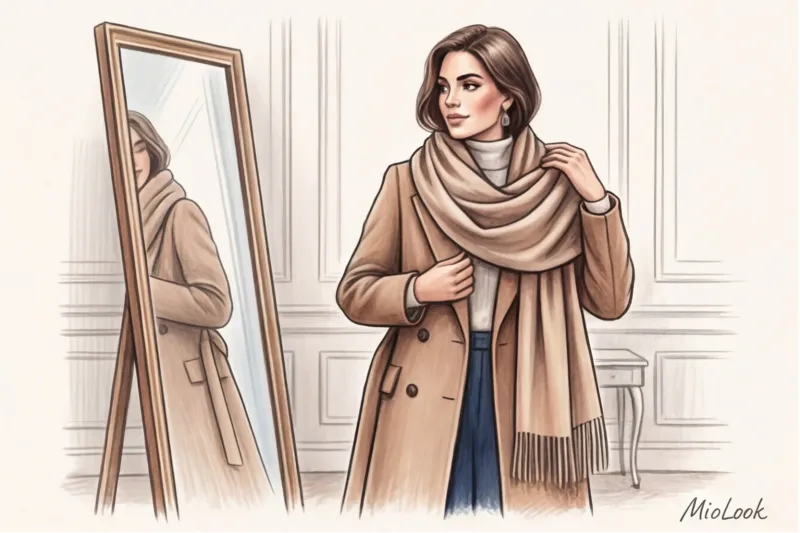
- A straight-cut men's coat with sharp, accentuated shoulders.
- A thick leather trench coat (the leather gives a wonderful highlight that contrasts with the matte wool).
- Jacket made of thick, almost cloth-like wool.
To avoid racking your brains over texture combinations every morning, I advise my clients to use MioLook — your personal AI stylist will easily suggest how to properly balance soft knitwear with structured pieces from your closet.
Outerwear: Rules of Lengths and Silhouettes
The length of outerwear in such outfits is uncompromising. It should either completely cover the top of the suit (a long maxi coat), elongating the silhouette into a single vertical line, or be radically shortened (a structured crop jacket ending at the waist). Avoid jackets that cut off the silhouette at the widest part of the hip—paired with thick knitwear, this will visually add at least 5 kilograms.
Shoes and accessories: status details that save a relaxed look
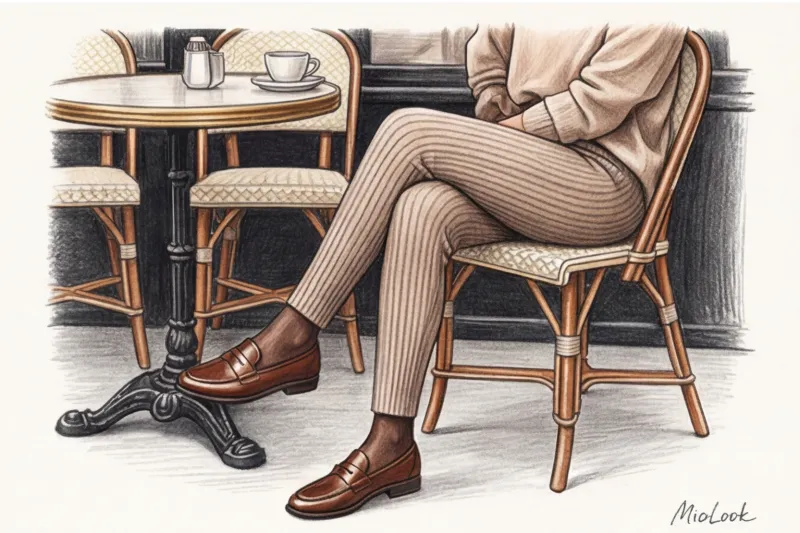
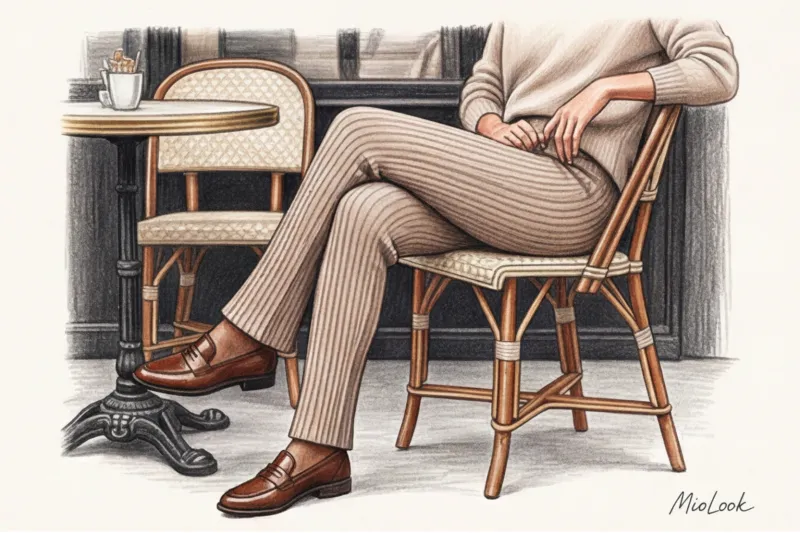
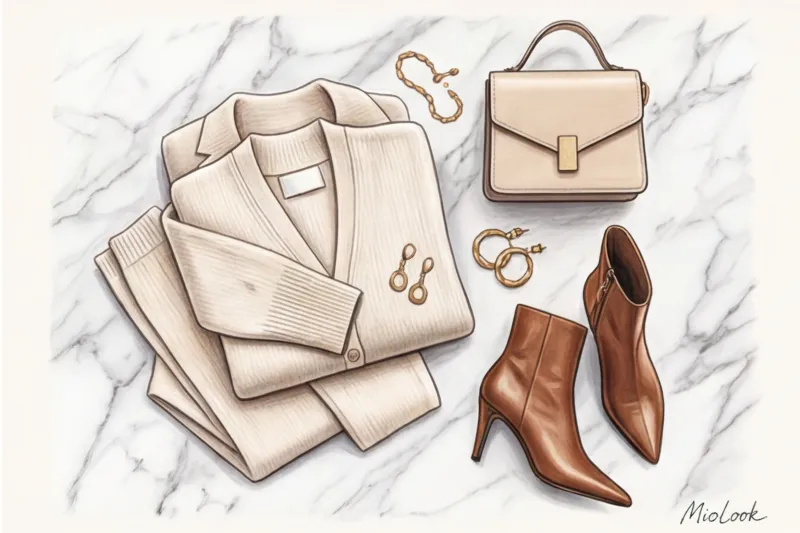
Shoes are the foundation of your look. If you want to elevate your suit to the smart category, ditch the shapeless, canvas sneakers. Replace them with polished leather loafers with a stiff sole, elegant kitten heels, or classic jockey boots that can be tucked into wide-leg knit trousers (yes, this style trick is back).
The bag should also create contrast. Avoid soft tote bags or fabric hobos. Opt for strict geometric shapes: box bags or structured totes made of smooth leather. The rigid geometry of accessories will instantly undermine the relaxed feel of a suit.
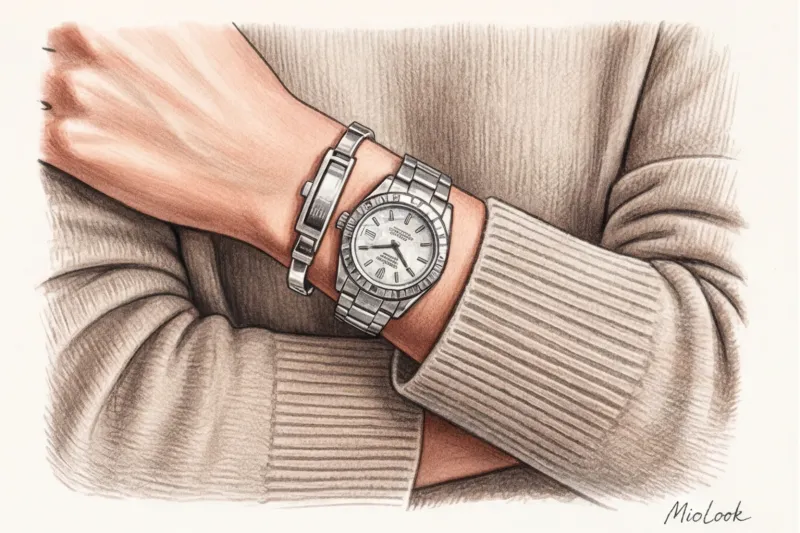
Jewelry styling deserves special attention. One of my favorite tricks, inspired by old-money aesthetics (think Gianni Agnelli), is wearing a chunky Swiss watch right over a tight sweater cuff. Add large, sleek metal drop earrings or a structured cuff, and the look instantly comes together.
Your perfect look starts here
Join thousands of users who look flawless every day with MioLook. Digitize your wardrobe in just a few clicks.
Get access — €0.99 onceThe Pajama Effect: A Checklist of Common Mistakes Before Going Out
Even the most expensive suit can be ruined by sloppy styling. Before leaving the house, check yourself with this checklist:
- Linen contours. If lace or seams are visible through the fabric, the knit is not tight enough to be worn on its own. Choose seamless, smooth underwear in a nude shade or wear a longer top.
- Thin ties on the outside. Cheap drawstring waistbands instantly evoke sweatpants. It's best to hide them under a longer sweater or invest in trousers with a wide, smooth elastic waistband without unnecessary hardware.
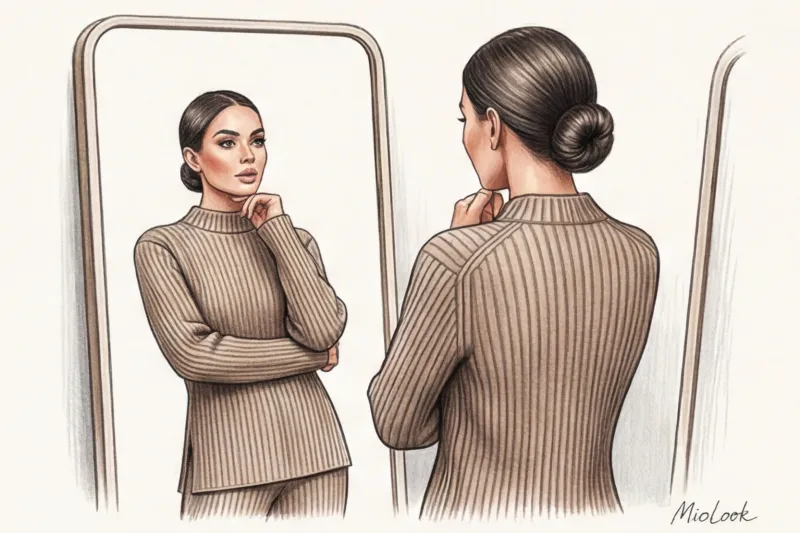
- Portrait zone. Let's be honest (and this is the very limitation stylists often keep quiet about): relaxed, light-colored knitwear is contraindicated for "no makeup, no styling" days. A soft, smooth complexion requires flawless skin, defined brows, and well-groomed hair (even in a sleek low bun). Otherwise, you risk looking like you're suffering from a cold.
Stylist's Summary: Invest in Quality, Not Quantity
In the world of consumerism, it's easy to succumb to the temptation to buy five inexpensive suits in different colors. But the math of wardrobe (the aforementioned cost-per-wear metric) is unforgiving. A mass-market knit suit made of acrylic and cheap cotton for €50 will lose its shape, pill, and become misshapen after three or four washes. You'll wear it maybe 10 times (the cost per wear is €5).
Meanwhile, an architectural suit made of extrafine merino wool and silk for €500 will last at least 5 years with proper care. Wearing it 40 times per season (200 times over 5 years) costs you only €2.50 per wear. And with each of those 200 wears, you'll feel confident, projecting your status and impeccable taste.
Invest in density, proper shoulder shape, and structured accessories. Make your comfort look expensive.