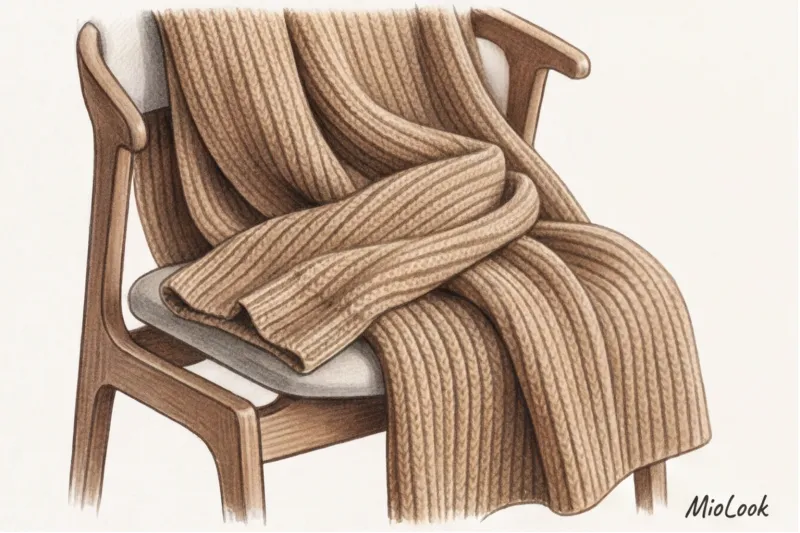
In my 14 years as a stylist, I've heard the phrase "knitwear makes me look fat" about a thousand times. Usually, this complaint stems from a classic story: buying a thin, mass-market stocking dress that mercilessly accentuates every little detail of the body, including the lace of your underwear. I've written in more detail about how a base is created in our The Complete Guide to a Basic Knitwear Wardrobe: How to Put Together a Capsule But today we'll talk about the most difficult and most rewarding element of this capsule.
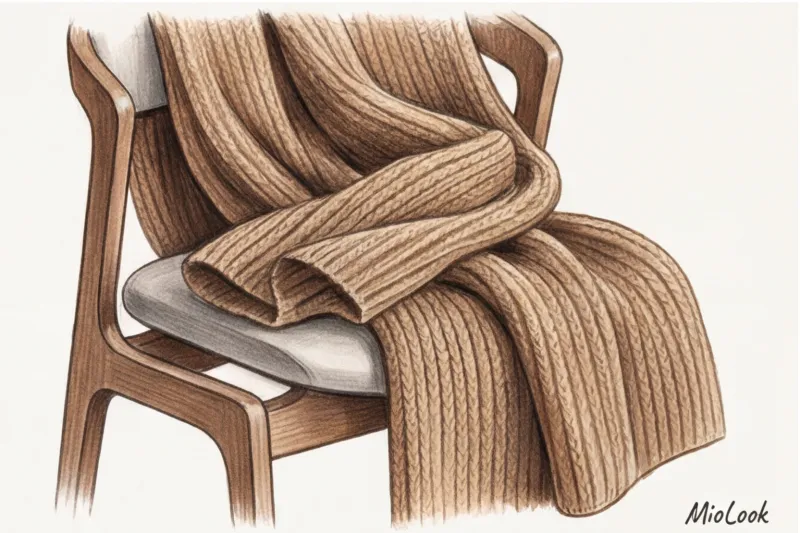
A knit dress isn't a shapeless sack for lazy weekends. It's a fully-fledged visual enhancement tool. The only question is whether you know how to choose the "architecture" of the fabric and understand What to wear with a knit dress To create a classy look, forget outdated rules about body types like "apple" and "pear." Today, we'll learn how to choose clothes like engineers.
The architecture of knitwear: why one dress is slimming, while another reveals all its secrets
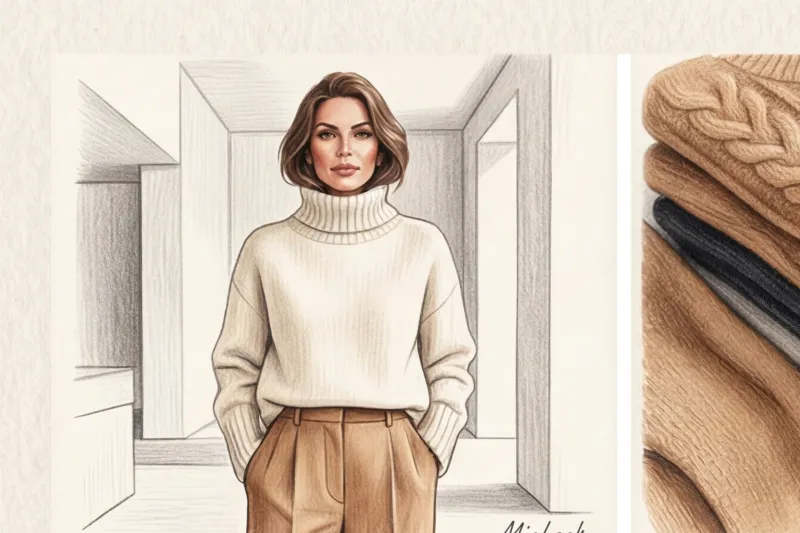
The biggest mistake 90% of women make is choosing a dress based on the pattern rather than the texture. But in knitwear, the cut is secondary. The knitting density and yarn composition are primary. If the fabric feels like a thin rag, no ingenious cut will save you.
In the textile industry there is a concept gauge (knitting machine class), which determines the thickness and density of the fabric. For a high-quality, shape-stable dress, look for items of class 12 and below—they're knitted with thicker yarn, with stitches that fit tightly together, leaving no gaps. Such a garment will act as a lightweight corset, smoothing rather than clinging to the body's contours.
Did you know that 100% cashmere is the worst choice for a bodycon dress? Yes, it's a luxurious material, but it's not very springy. After just two hours of wear, you'll develop elongated "bubbles" at the knees and elbows. The ideal formula I always look for on labels for my clients is wool, merino, or cotton with 5-15% silk, nylon, or elastane. This synthetic or silky "spring" is what returns the fabric to its original shape when you get up from a chair. In the €80-€150 price range, it's quite possible to find such formulas in brands like COS or Massimo Dutti.
"A vertical rib (noodles) is your personal Photoshop. But it only works under one condition: at the widest point of your figure, the rib shouldn't stretch flat. If the stripes are deformed, go up a size."
Your perfect look starts here
Join thousands of users who look flawless every day with MioLook. A smart AI stylist will analyze your wardrobe.
Get access — €0.99 onceThe main myth of style: does oversized clothing hide flaws?
One of my clients (a luxurious size 50) bought five shapeless, baggy dresses, sincerely believing they concealed her excess weight. This is the most damaging misconception in modern fashion.
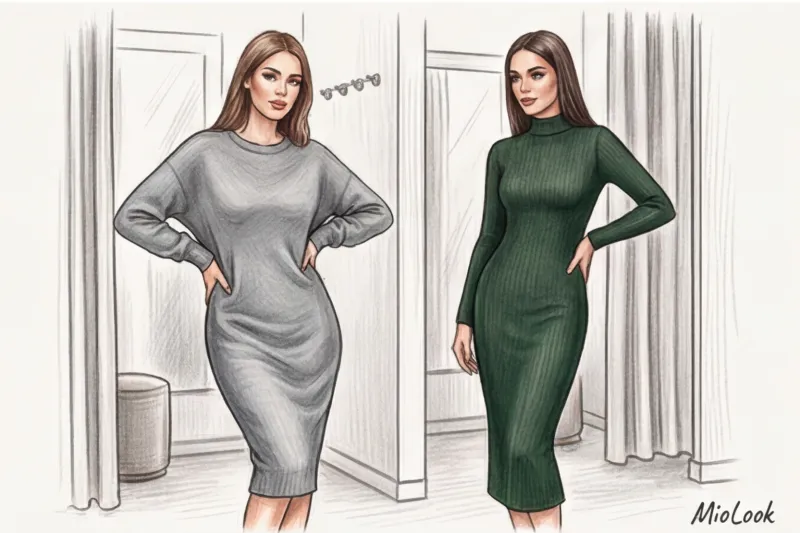
Let's look at the physics of the process. How does thin, oversized knitwear fit? It clings to the most prominent points of your figure (usually the bust or hips) and falls downward at a right angle. The fabric fills in all the natural hollows—the waist, the curve under the bust. The result is a monolithic, rectangular silhouette that visually adds 5 to 7 kilograms.
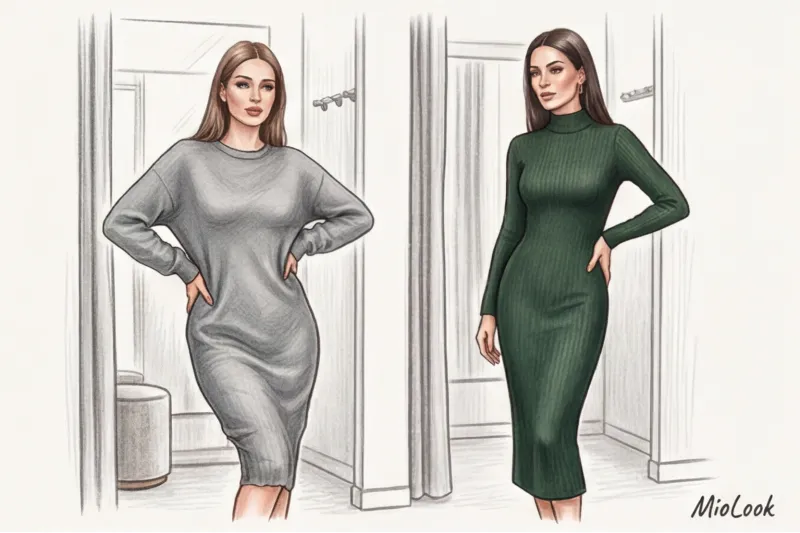
The WGSN trend study (2024) clearly shows a shift away from total oversize in favor of tailored comfort — tailored comfort. The rule of "air" between the body and the fabric remains: there should be 1-2 centimeters of space between you and the dress, but the silhouette should be semi-fitted. The fabric should hint at curves, not hide them in a bag.
How to choose the right knit dress style for your body type
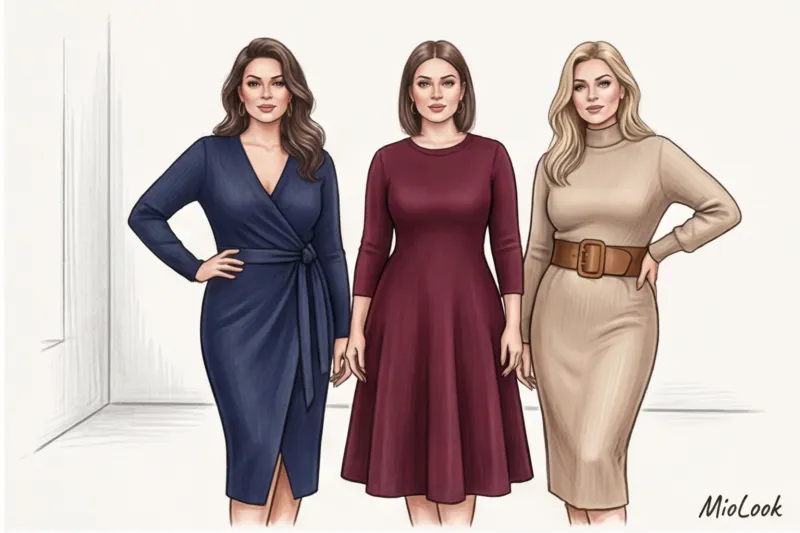
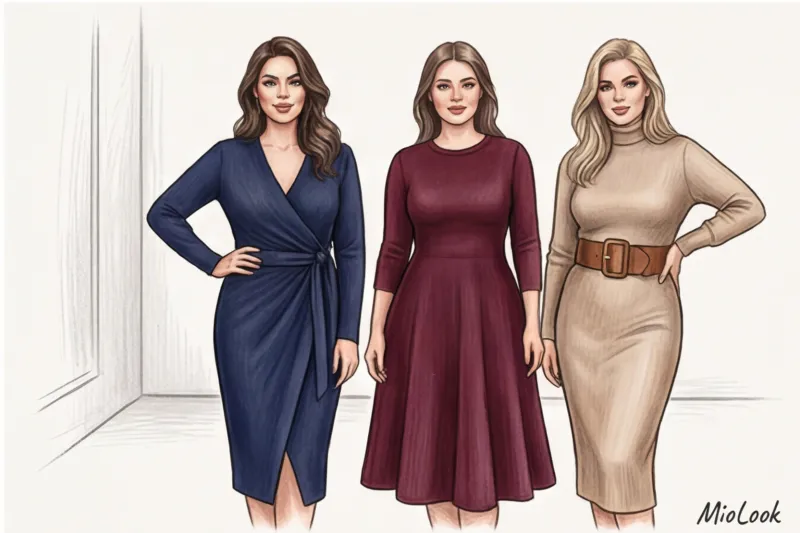
Forget fruit typology. We work with specific goals: what we want to tone down and what we want to highlight. If your main concern is your tummy, avoid straight-leg styles. Your best friend is a wrap dress made of thick knitwear (weight at least 350 g/m²) or a color-blocked style with dark panels on the sides.
Wide hips: balancing proportions
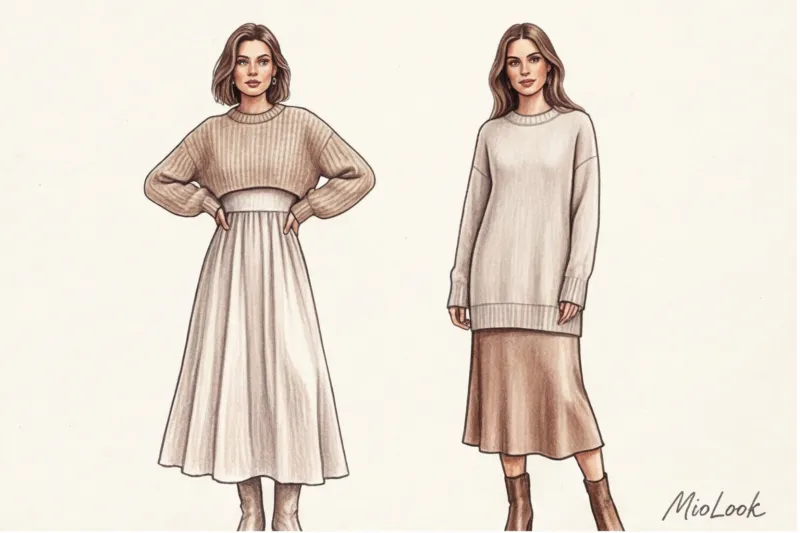
If the bottom is heavier than the top, our goal is to draw attention to the face. Choose A-line dresses with a pleated skirt (vertical pleats are great for elongating the figure) and a statement top. This could be a V-neck, a contrasting polo collar, or slightly voluminous sleeves. And the golden rule: no patch pockets at hip level. They always bulge in knitwear and add unnecessary inches.
No defined waist: creating architecture
A rectangular figure needs a waist that's defined. But there's a catch. Brands often include a soft tie belt made of the same material with their knit dresses. Throw it away immediately! By tying a soft knitted knot at the waist, you instantly transform a stylish dress into a bathrobe. I wrote about this in more detail in the article. How to wear a women's belt: You need a stiff, structured leather belt of medium width. The contrast of textures will create the desired illusion.
Access to MioLook for €0.99 — one-time payment
A smart AI stylist will select the perfect look for your figure, taking into account all the rules of wardrobe architecture.
Get access — €0.99 onceWhat to wear with a knit dress: stylish formulas and layering
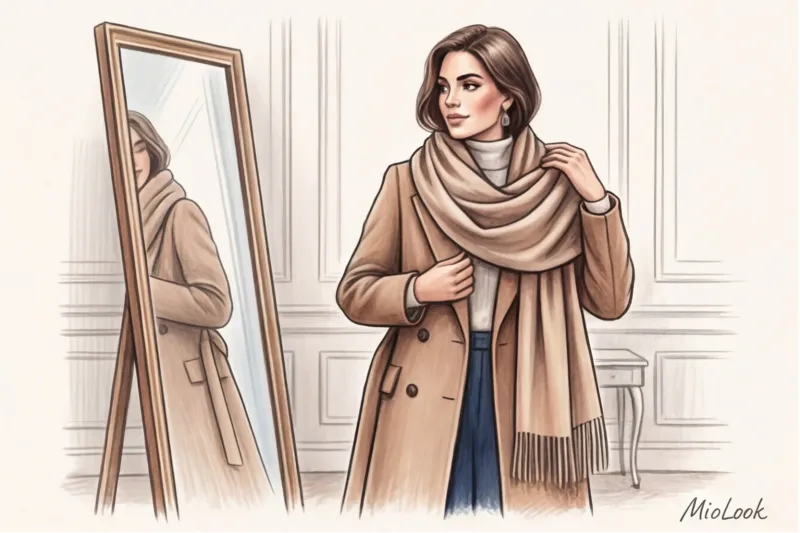
The dress itself is only 50% of your look. The rest is styling. visual correction of the figure with clothing There's an immutable law: softness should always be framed by hardness. If you wear a cozy dress, wrap yourself in a soft cardigan, and carry a shapeless bag, you'll look like you just rolled out of bed.
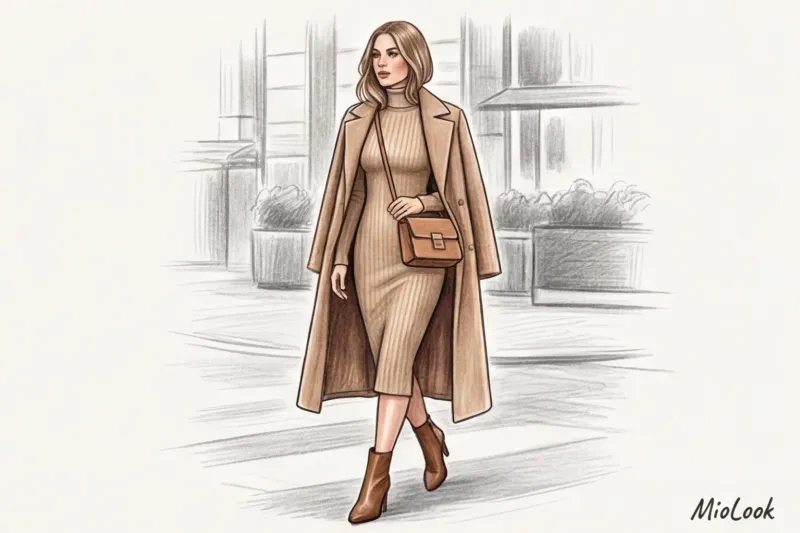
Knitwear requires structured companions. Leather, thick suiting wool, and stiff denim—these are your tools. A third layer (a jacket or coat), worn open, works like a scalpel: it literally "cuts away" your volume at the sides, leaving only a narrow vertical line of the dress visible down the center.
Business context: rigor and comfort
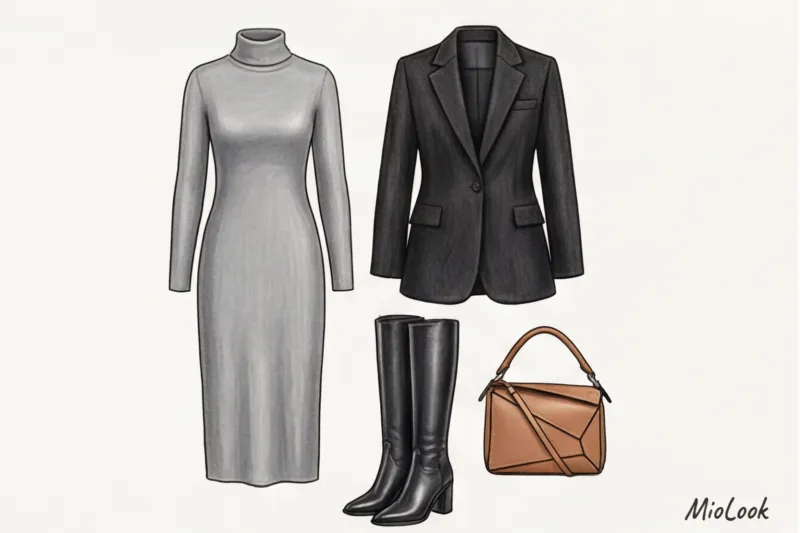
Integrating knitwear into a formal office dress code is easy if you follow two rules. First, choose a smooth knit (no cables or obvious ribbing) in neutral shades. Second, layer it with a structured jacket with a defined shoulder line. Complete the look with pointed-toe shoes—they add a dynamic stride and a more composed look.
And please pay attention to your tights. Shiny nude tights with a matte wool dress look cheap and outdated. Opt for thick matte options: graphite, dark chocolate, or classic black.
Casual: Urban relaxation without the pajama look
For a weekend look, try a maxi dress, pair it with chunky lace-up boots, and a leather biker jacket. The contrast between a feminine silhouette and rugged leather always looks stylish. If it's chilly outside, try this hack with a chunky sweater over a dress: wear a thin belt over the dress, put on the sweater, and tuck the front edge neatly into the belt. This will define your waist without adding bulk to your tummy.
Shoes and accessories: how to avoid the "went out in your house clothes" effect
I've already mentioned that soft calls for hard. This is rule number one for accessories. No hobo bags, soft backpacks, or fabric shoppers. A knit dress requires a bag that sits securely on a table—a rigid geometric shape (square, baguette, trapezoid).
Shoes should pull the look together. If we're talking about a midi length, the ideal partner is a pair of tube-style boots that extend under the hem of the dress. Have you ever noticed how a 5-centimeter gap between the hem of the dress and the top of the boots visually cuts off your legs and makes you look shorter? A single color scheme (for example, a burgundy dress and burgundy boots) can visually elongate your height by a couple of centimeters without any heels.
Ready to get started?
Try the MioLook free plan—no commitments required. Digitize your wardrobe and discover new combinations in seconds.
Get access — €0.99 onceStylist Checklist: 4 Fitting Room Tests
I go through this checklist with every client during my shopping experience. Remember it, and you'll never again spend money on something that disappoints you after the first wash. Thin, mass-market clothes (usually in the €30-€50 range) fail these tests 80% of the time.
- Light test. Before going into the fitting room, hold the hem of your dress up to a window or a bright light. If you can clearly see the outline of your hand through the fabric, the sun will reveal all of your underwear.
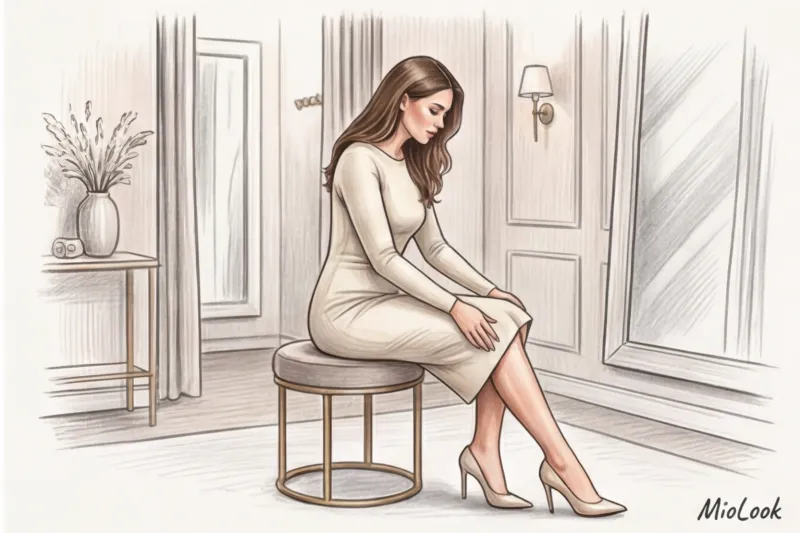
- Squat test (the most important). Put on the dress, sit on the pouf in the fitting room, and sit for two minutes, checking your phone. Stand up and look at your knees and buttocks. If there are any elongated "bubbles" that don't disappear within five seconds, take it off and leave. The fabric won't hold its shape.
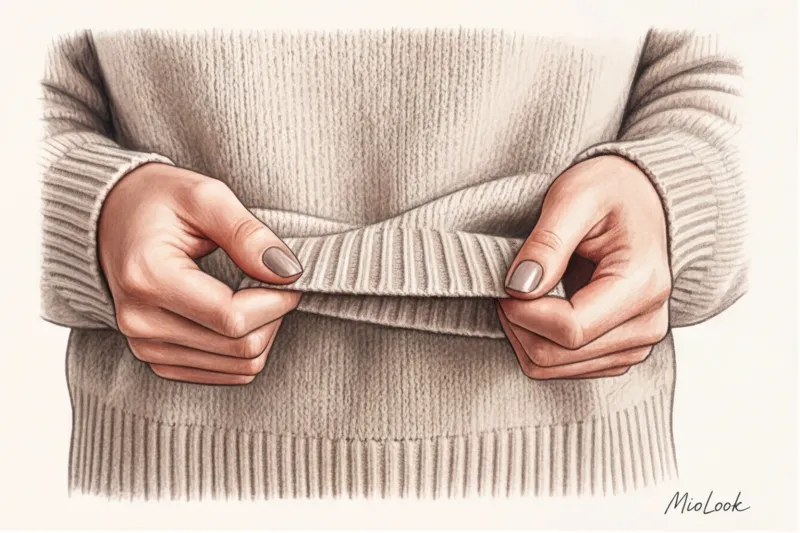
- Friction test. Rub the edge of the fabric (for example, on the inside seam) discreetly between your fingers for about ten seconds. If the fibers immediately begin to clump, hard pills will form under the arms and in the area where the bag rubs after two weeks of wearing it.
- Back test. We often only evaluate ourselves from the front. Turn your back to the mirror. Thin knitwear has a sneaky tendency to cut into your back, creating the illusion of a "caterpillar" shape even on a slim figure, accentuating the lines left by your bra. If you can see the contours of your underwear, the dress doesn't suit you.
A knit dress is an investment in your everyday comfort. Stop buying thin, shapeless pieces for just one season. It's better to take the time to find one perfect, thick, architectural piece with the right composition that will last for years and garner compliments every time you walk into a room.