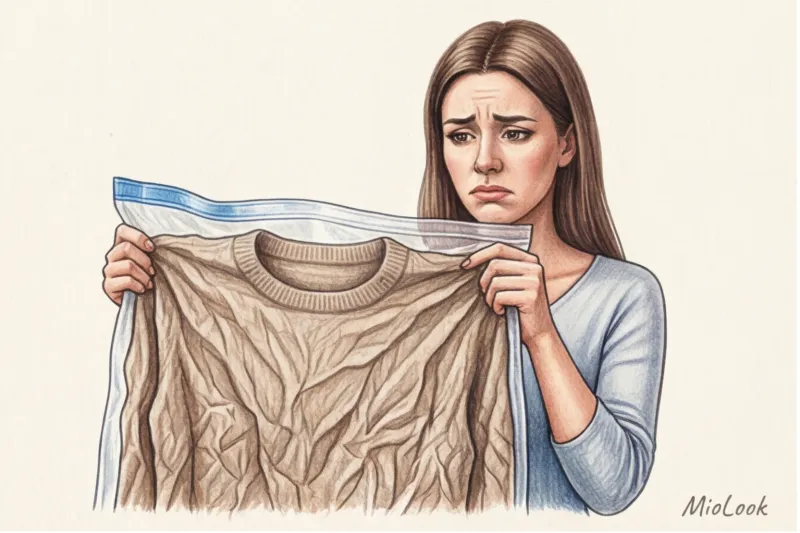
I still remember that sound...
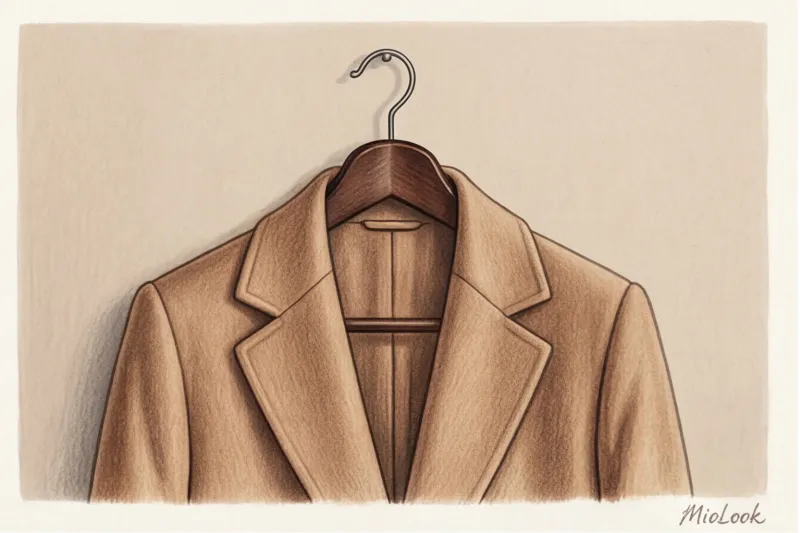
The rustle of thick plastic, the hiss of escaping air, and before my very eyes, the luxurious, voluminous camel-colored Max Mara coat, purchased by a client in Milan for €1,500, turns into a flat, lifeless pancake. "Look, Isabella, how convenient! My entire winter wardrobe fits in a single drawer under the bed," she declared proudly.
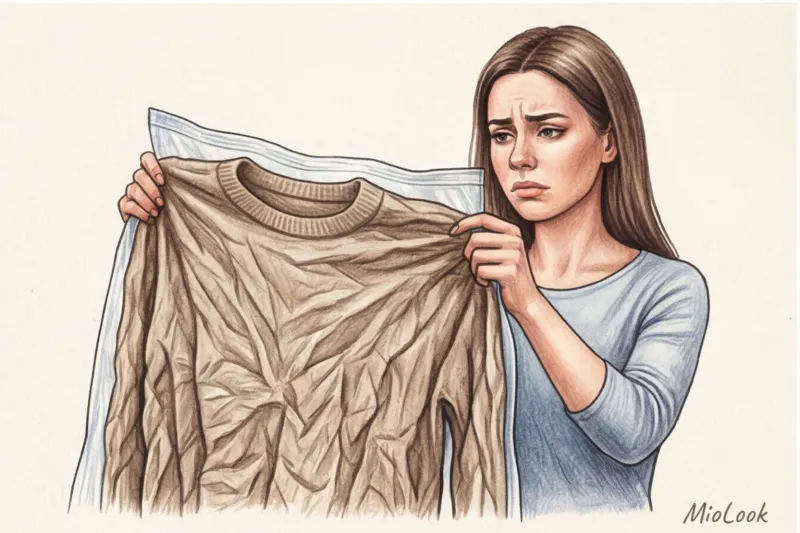
Five months later, when the cold weather arrived, we took the coat out. It was dead. The natural wool with added cashmere had developed stiff, unsmooth creases. The design had collapsed. The fibers had literally been broken by the vacuum pressure, and not a single steamer in the world could restore the garment to its original appearance.
Every spring, millions of women make the same mistake: they don't think about How to properly store winter clothes , and choose "putting it out of sight" over proper preservation. We discussed the basic principles of preserving the quality of fabrics in more detail in our the complete clothing care guide But seasonal wardrobe changes are a science in themselves.
As a personal stylist, I encourage you to abandon the consumerist attitude toward your clothes. Storing your wardrobe is an investment ritual. And today, I'll share with you the methods museum archive curators use to ensure your sweaters and coats last for years without losing their luster.
The Biggest Mistake of Spring: Why Vacuum Bags Are Ruining Your Wardrobe (and How to Properly Store Winter Clothes)
Let's bust the biggest myth among space planners right away: vacuum bags are a brilliant invention for synthetic blankets, pillows, and bedding. But they are an absolute, merciless killer of premium textiles.
Why? It's all about fiber physics. According to official recommendations from The Costume Institute and data from The Woolmark Company consortium for 2023, natural wool, cashmere, and silk are active materials that critically need to "breathe." Keratin, the protein that makes up wool hair, contains natural moisture. When you remove oxygen and compress a garment, the following happens:
- Dryness and brittleness: Without adequate air circulation, fibers become brittle. Next winter, your favorite sweater will start to pill mercilessly just from rubbing against your bag.
- Physical deformation: The folds baked under the pressure of the plastic break the structure of the thread at the micro level.
- Greenhouse effect: If there's even 1% moisture left in the bag, by October you'll have a persistent musty smell or, worse, mold spores.
"Pressing cashmere is like trying to keep a croissant fresh by sitting on it. It takes up less space, but you won't enjoy it as much."
The Clean Slate Rule: Prep and Wash (What We Learned from Fabric Composition)
"I only wore this sweater once in March, it's clean, ready to put away" is the most expensive phrase in fashion history. It's the one that costs you moth-eaten clothes.
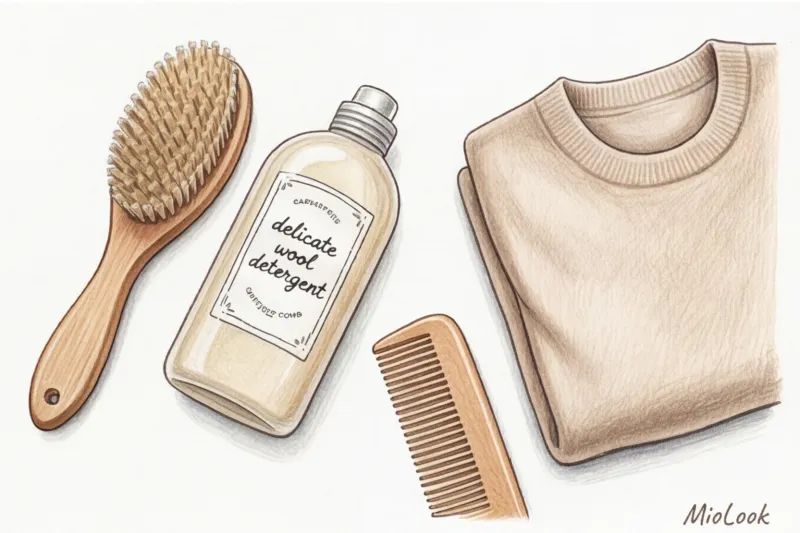
A study by entomologists reveals a shocking fact: 80% of damage from clothes moths is not due to the insects' affinity for wool itself. The moth larvae feed on remnants of human sebum (sebum), micro-droplets of sweat, perfume and particles of epidermis, which remain on collars and cuffs as an invisible layer.
It's important to use critical thinking here. Many clients blindly trust the "Dry Clean Only" label. But in my experience, high-quality mid-priced winter items (such as heavyweight COS or & Other Stories sweaters) handle delicate hand washing very well. My personal gray COS merino jumper has lasted six seasons without losing its shape, thanks to proper hand washing before summer hibernation.
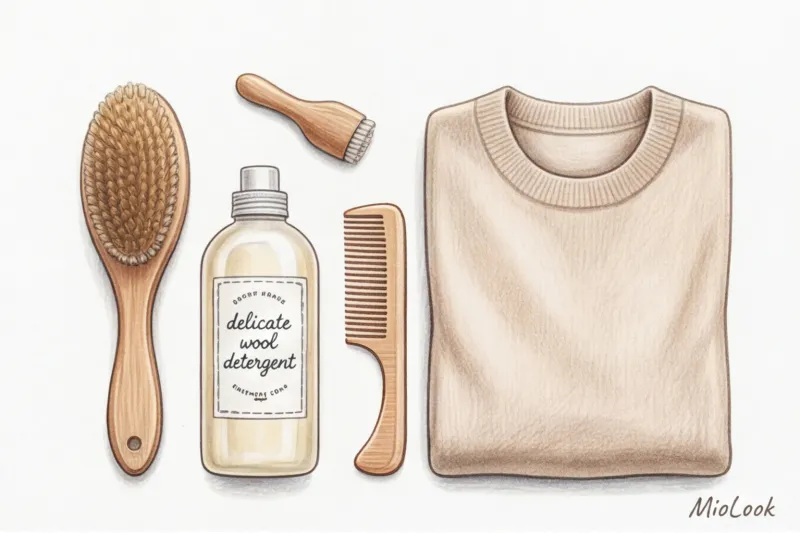
Golden rule: Before storing, clean the item. If you wash knitwear at home, use only liquid detergents for wool and dry it flat on a towel. Even the slightest moisture in the fibers will cause rotting in a closed closet.
How to Properly Store Winter Clothes: A Guide to Materials and Styles
I always divide my winter wardrobe into three categories: what hangs; what lies; what holds its shape. Over 12 years of working as a stylist, I have developed the ideal Isabella's Formula A clean garment + the right cover + insect protection = eternal youth for the fabric. Let's see how this works in practice.
Knitwear, cashmere and chunky knits
Any knitted sweater, cardigan or wool dress should be stored strictly horizontally If you leave a heavy sweater hanging on a hanger for six months, gravity will stretch out the shoulder seams and permanently distort the silhouette.
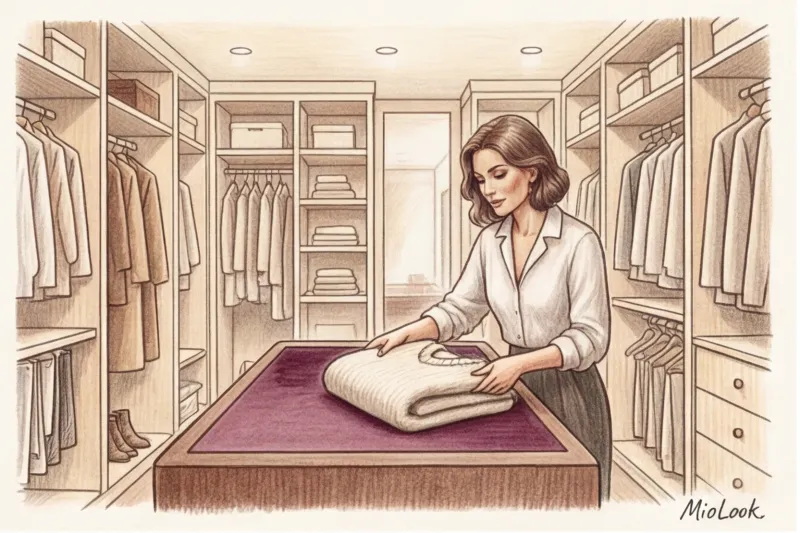
- Folding technique: Fold knitwear into a "roll" (like Marie Kondo's method) or a classic square, but be sure to interlace the folds with acid-free tissue paper. This reduces friction and prevents creases.
- Package: Use only bags made of breathable cotton or linen. Avoid plastic containers with tight lids! The fabric must be ventilated.
Down jackets, coats and sheepskin coats
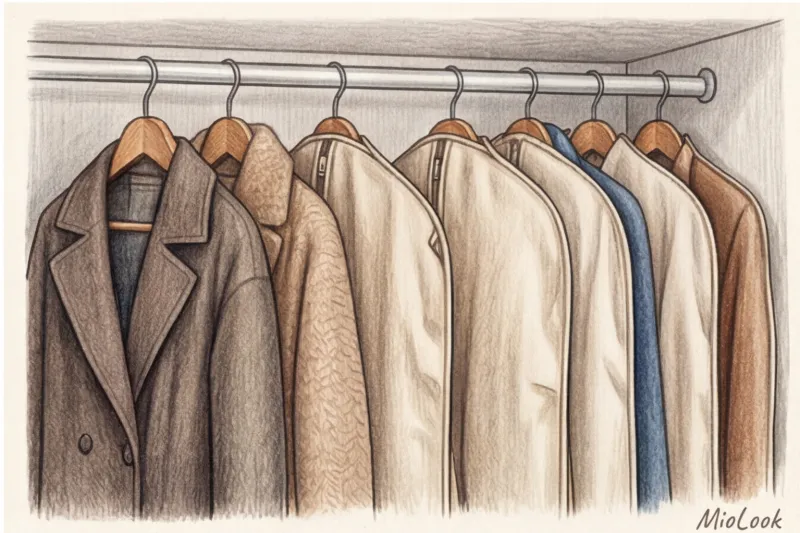
Outerwear is the architecture of your look. To prevent your coat's shoulders from flopping, you need the right hangers. Forget those thin metal ones from the dry cleaner! Invest in wide wooden hangers (wing width at least 4-5 cm) that fit your shoulders precisely.
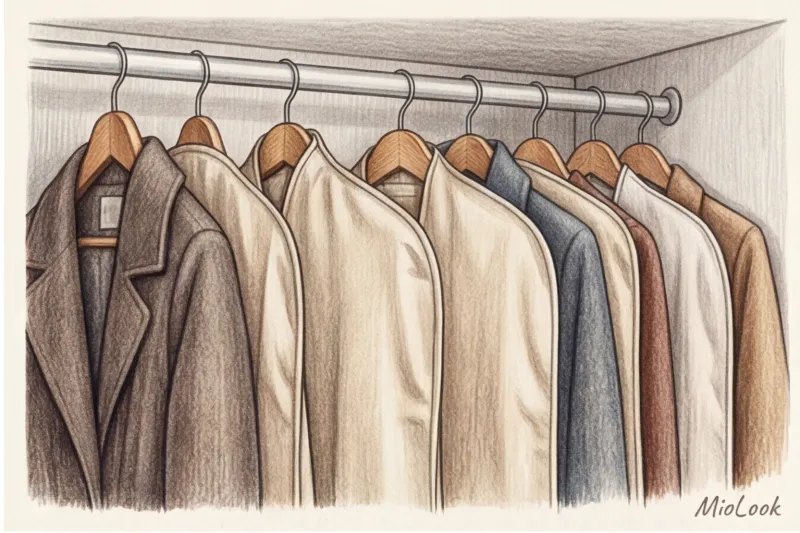
Garment covers should be made of spunbond or dense cotton. They protect against household dust but allow air to pass through. Here's a less obvious tip for down jackets: every two months, even in summer, take out the down jacket and lightly fluff it with your hands. This will prevent the natural down from compacting and losing its insulating properties.
Winter footwear and leather accessories
Salt and chemicals left on leather will literally burn away the paint and dry out the material over the summer. Before storing, shoes should be washed and a thick layer of deeply moisturizing cream or wax should be applied.
A must-have for tall boots and shoes is a shoe tree made of unvarnished cedar. They not only maintain the shoe's shape, preventing deep wrinkles on the leather, but also absorb residual moisture. Be sure to stuff bags tightly with kraft paper (avoid newspaper, as printing ink may bleed onto the lining).
Access to MioLook for €0.99 — one-time payment
A smart AI stylist will select the perfect look for any season, taking into account your wardrobe and style.
Get access — €0.99 onceAesthetic protection: how to protect your wardrobe from moths without the smell of mothballs
Every time I walk into someone's closet and smell the pungent odor of mothballs, I want to open all the windows. Grandma's mothballs are not only hopelessly outdated and soak into fabrics that even niche perfumes can't mask them, but they're also considered toxic in many countries.
I prefer a Mediterranean approach to clothing protection. My personal ritual is creating natural sachets. I mix dried lavender, rosemary sprigs, and cloves in small linen bags. This scent evokes the purity of Provence, and moths hate it.
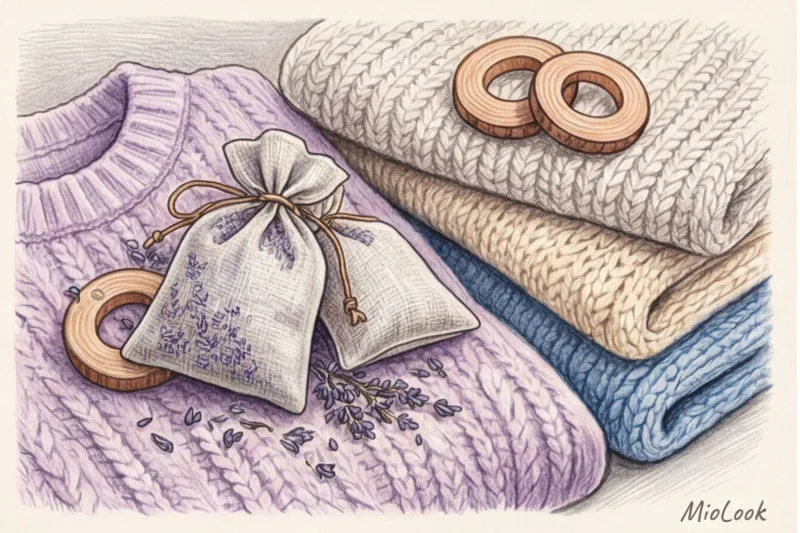
Another elegant option is cedar rings that go on a coat hook and cedar balls for coat pockets. Stylist's secret: To keep your cedar working year after year, lightly sand it with fine-grain sandpaper once a season and add a drop of natural cedar essential oil.
Important limitation: Let's be realistic. These methods (lavender, rosemary, cedar) work solely as a preventative measure. They repel adult moths. If moths have already laid eggs in your sweater, no herbs will help—only a deep professional dry cleaning will save the item.
Organization of space and digitalization of the wardrobe with MioLook
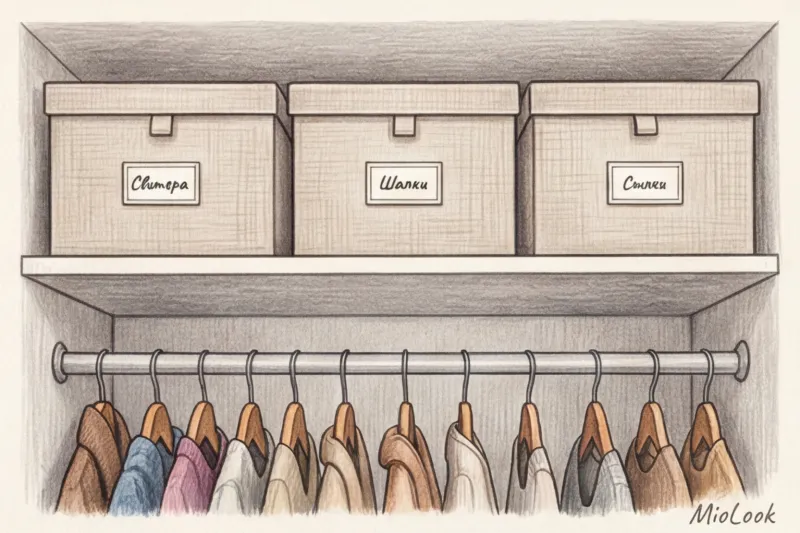
Where you store your clothes is just as important as what they're packed in. Never store luxury clothing on unheated balconies, in garages, or in damp basements. Temperature and humidity fluctuations are a surefire way to develop a musty odor. Ideal locations include the top shelves of deep closets, mezzanines, or special storage compartments in beds with lift-up mechanisms.
But there's one more step that separates a neat girl from a style guru. Digitization before conservation.
Have you ever seen this situation: in August, during the final summer sales, you see a stunning graphite cashmere turtleneck for 60% off. You buy it. But in October, when you're unpacking your winter boxes, you find the exact same one you bought a year ago? To avoid such financial mistakes, I highly recommend using electronic wardrobe.
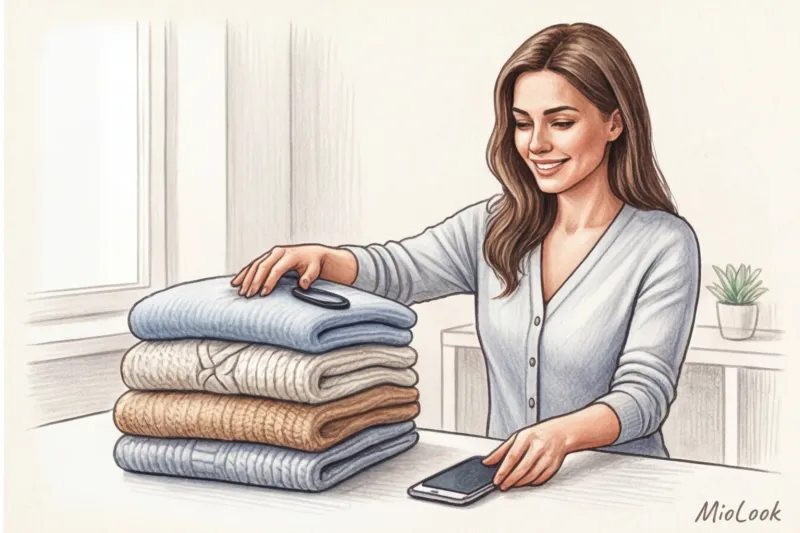
Before you put the item in the box, take a photo of it. Upload the photo to MioLook and tag them "winter/put away." This way, even when your sweaters are physically unavailable, they remain in your visual database. You'll be able to plan your fall capsule collections this summer, create precise shopping lists, and only buy what you truly need to complete your look.
Checklist: 5 steps to perfect winter preservation
To make sure this knowledge doesn't just remain theory, let's turn it into a clear algorithm. Set aside one weekend in mid-spring and follow these 5 steps:
- Inspection and revision: Set aside any items you haven't worn all winter (perhaps you should sell or donate them), and check the rest for pilling (use a machine to remove it) and loose buttons.
- Total cleansing: Wash knitwear, dry clean heavy coats and down jackets, and clean your shoes.
- Digitization: Upload clean items to the MioLook app to control your base.
- Correct packaging: Hang outerwear in breathable covers on wide hangers; fold knitwear in fabric bags lined with tissue paper.
- Aroma protection: Arrange lavender sachets and cedar balls.
Look, I understand the temptation to just throw everything into bags in 15 minutes. But let's do the math: a good basic down jacket costs around €400. If you store it incorrectly (vacuum-packed or balled up), the filling will bunch up, and the jacket will lose its shape within two seasons. The cost per wear (CPOW) is high. By spending two hours properly preserving it, you extend the life of that down jacket by 4-5 years, saving hundreds of euros on a new one.
Treat your things with respect, give them air to rest, and they will respond with a flawless appearance on the very first day of next winter!
Your ideal image begins Here
Join thousands of users who look flawless every day with MioLook. Digitize your wardrobe and create capsule collections in one click.
Get access — €0.99 once