I recently reviewed the wardrobe of a client, a senior manager at a major IT company. Opening the door to her luxurious bathroom, I froze: proudly sitting on the sunlit marble windowsill was a bottle of Maison Francis Kurkdjian Baccarat Rouge 540, worth around €300. The client complained that she had bought a counterfeit—after just two months, the luxurious scent began to smell of burnt rubber and harsh rubbing alcohol. But the store wasn't the culprit. The harsh truth is that the "Pinterest aesthetic" is the quickest and surest way to ruin an expensive fragrance.
For me, as a stylist, perfume isn't just cosmetics. It's a high-budget investment, a full-fledged wardrobe item, and your "invisible accessory." We discussed this systematic approach in more detail in our a complete guide to creating a perfume wardrobe If you have more than one bottle in your collection, but several compositions for different purposes and seasons, they are used up more slowly. This means the question of How to properly store perfume , it becomes a question of protecting your investments.
Perfume as an investment: why it's important to know how to properly store perfume at home
Imagine buying a €2,000 Max Mara cashmere coat or a Chanel bag. Would you throw them on a damp bathroom floor? Leave them to bake in the sun? Of course not. But for some reason, that's exactly how we treat perfume, which often costs more per milliliter than gold.
Perfume is a living, unstable chemical substance. It's a cocktail of alcohol, distilled water, and dozens (sometimes hundreds) of natural essential oils and synthetic molecules. This balance is fragile. Any aggressive external influence triggers irresistible chemical reactions. Over 12 years of practice, I've seen dozens of clients throw away damaged bottles of Tom Ford and Byredo simply because they didn't understand the basic laws of physics and chemistry.
Access to MioLook for €0.99 — one-time payment
A smart AI stylist will select the perfect look and help you organize your wardrobe down to the smallest detail.
Get access — €0.99 onceThe Main Enemies of Fragrances: What's Killing Your Perfume Wardrobe
To understand how to save your collection, you need to know your enemy. The International Fragrance Association (IFRA) regularly publishes data on the stability of fragrance compositions, and these figures are merciless to our everyday habits.
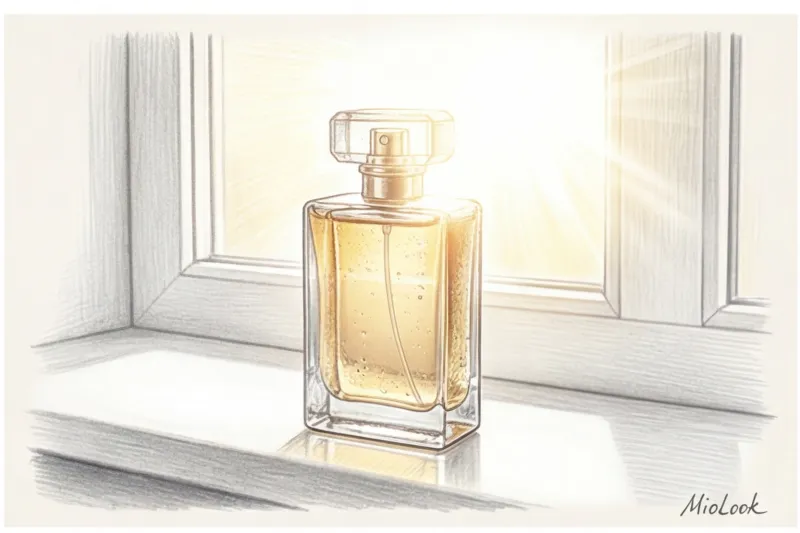
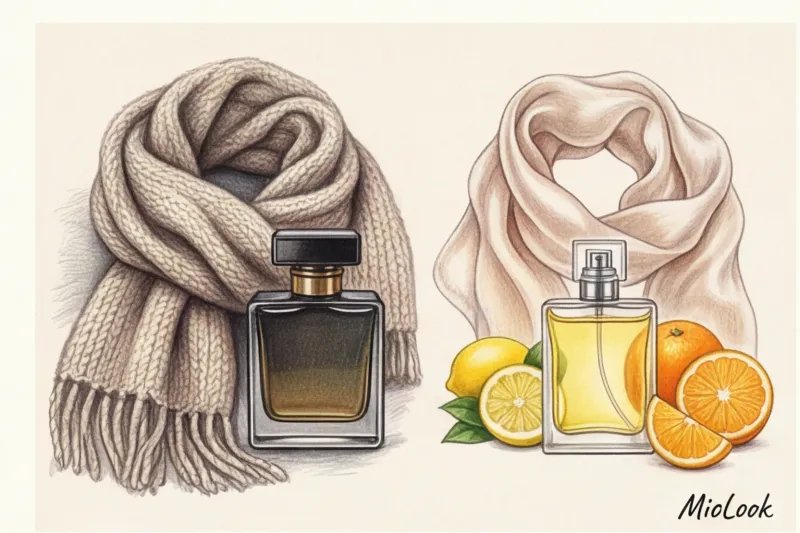
- Ultraviolet (photo-oxidation): Direct sunlight can destroy up to 40% of a perfume's original olfactory pyramid. According to perfume chemists, light top notes (especially citrus, aldehydes, and delicate floral accords) are completely degraded by UV rays in just 48–72 hours.
- Temperature changes: The main problem isn't the temperature itself, but its instability. Temperature fluctuations of more than 5–7°C trigger accelerated oil oxidation. The liquid expands and contracts, drawing in microdoses of oxygen through the atomizer.
- Oxygen and humidity: The air inside a half-empty bottle is already working against you, but if you add high humidity to the mix, the microscopic metal parts of the spray mechanism begin to oxidize, ruining the scent of the liquid inside the tube.
The bathroom is the worst place for a bottle.
I strictly forbid my clients from keeping perfume in the bathroom. During a shower, the temperature in the small room fluctuates between 20°C and 30°C or more in just ten minutes. Steam permeates everything. It was this "tropical sauna" effect that ruined my client's €300 niche fragrance. Humidity destroys the formula, and constant heating and cooling literally separates the essential oils.
Aesthetics vs. Preservation: The Vanity Myth
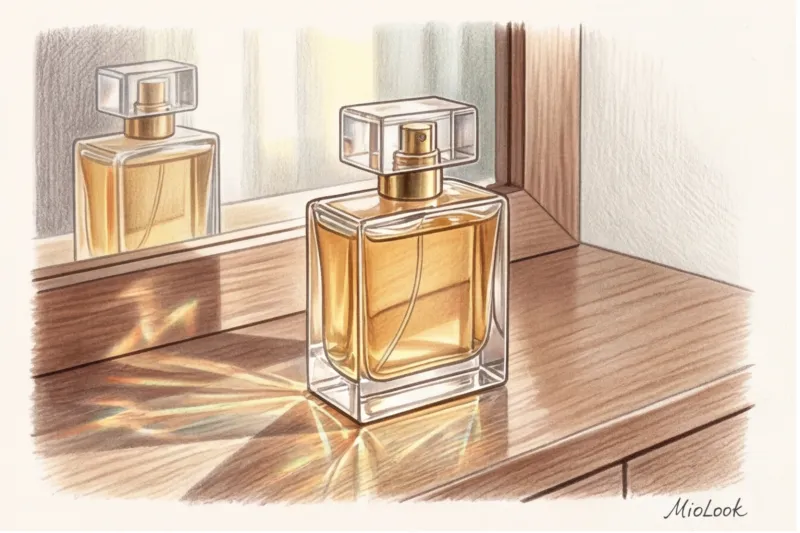
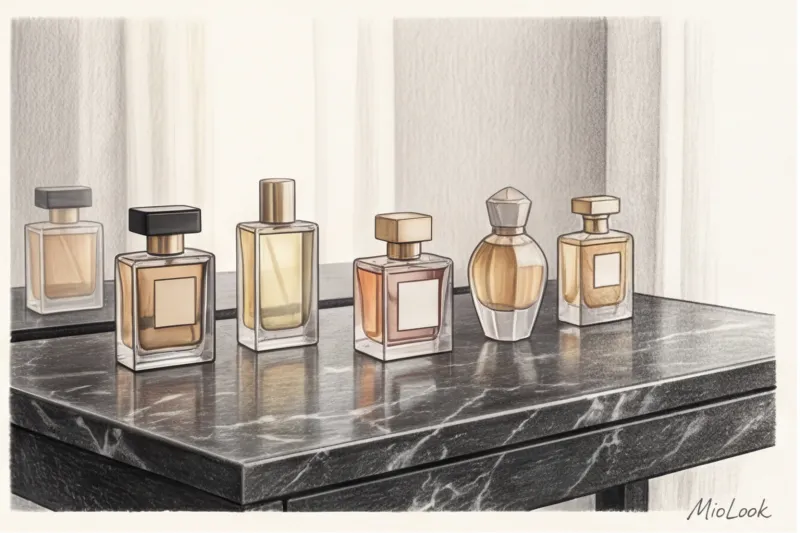
If you open Pinterest, you'll see thousands of photos of perfect bedrooms, where bottles of Chanel, Dior, and Jo Malone are beautifully arranged on the vanity right by the window. Forget that image. Even thick, tinted glass doesn't protect the liquid from heating. A beautiful tray of perfumes exposed to the light is a graveyard of scents. The glass acts like a lens, creating a greenhouse effect inside the bottle.
Refrigerator: salvation or death sentence?
There's a persistent rumor among collectors that perfume should be stored in the refrigerator with food. This is a dangerous myth. Yes, cool temperatures slow down chemical reactions. But if you use fragrance every day, taking it from the refrigerator (where it's 4°C) to your room (where it's 22°C) creates a monstrous temperature shock. Condensation immediately forms on the glass.
The only exception is if you bought a rare vintage perfume "as a spare" and don't plan to open it for years. Even then, you'll need a wine cooler with a constant, vibration-free temperature of 12–14°C, not a regular household refrigerator.
Where and how to properly store perfume: step-by-step instructions
So, if the bathroom and windowsill are out, where do our fragrant investments fit in? The ideal microclimate for perfume is a dry, completely dark environment with a stable temperature of 16–22°C.
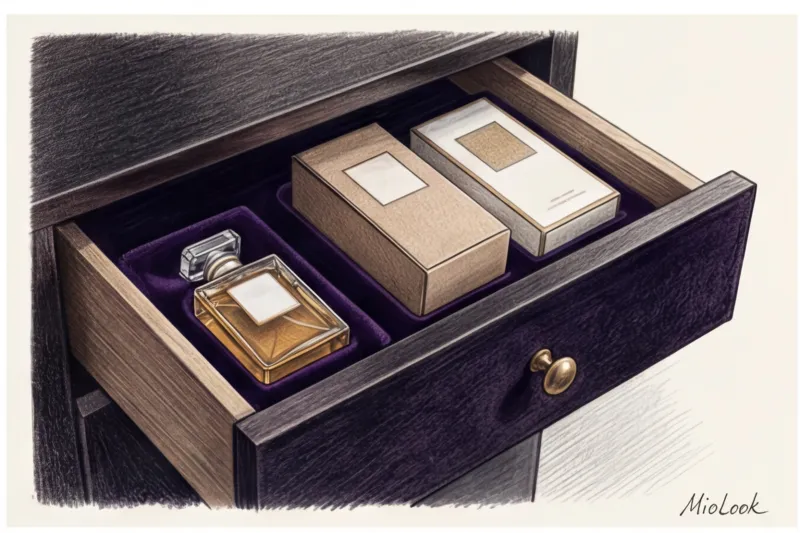
- Keep the original boxes: Cardboard packaging isn't trash—it's the best armor for your perfume. It provides additional thermal insulation and blocks 100% of light. I require all my clients to store their bottles in boxes. If that seems inconvenient, consider getting a beautiful opaque organizer or box.
- Vertical position only: Unlike wine, which is stored horizontally to allow the cork to wet, perfume should always stand upright. The smaller the surface area of contact between the perfume liquid and the air inside the bottle, the slower the inevitable oxidation process.
- Keep away from batteries: The bottom drawers of a chest of drawers in a bedroom are usually ideal, provided they are not adjacent to radiators or pipes.
Your perfect look starts here
Join thousands of users who look flawless every day with MioLook. Manage your style and wardrobe with just one click.
Get access — €0.99 onceHow to organize a perfume shelf in a closet
As a stylist, I integrate perfume into my clothing storage system. A closet or dressing room is the ideal place. It's always dark, dry, and free of sudden temperature changes.
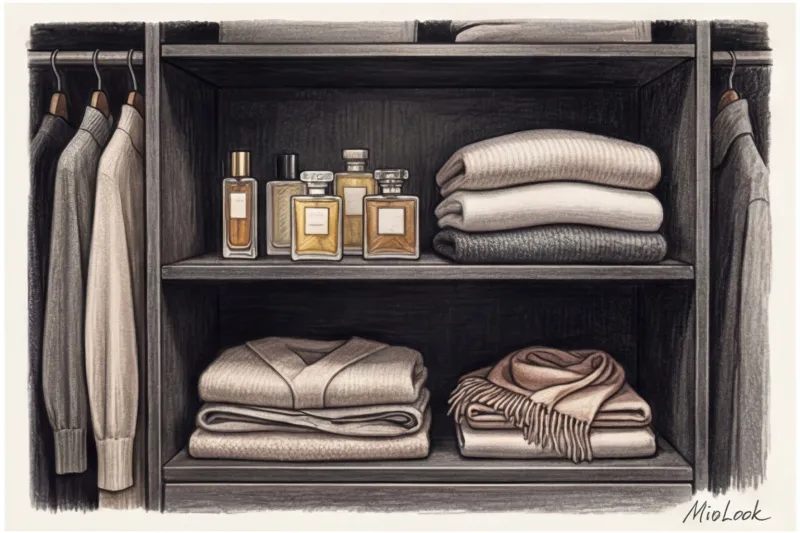
I use my signature method of "stylistic grouping." Since we choose fragrances to match a look, it makes sense to store them next to matching clothing. For example, heavy woody perfume with notes of oud and vetiver They sit perfectly next to the shelf where I keep my oversized cashmere sweaters and tweed jackets. And I display light floral and citrus arrangements in boxes next to the section of silk blouses and summer dresses.
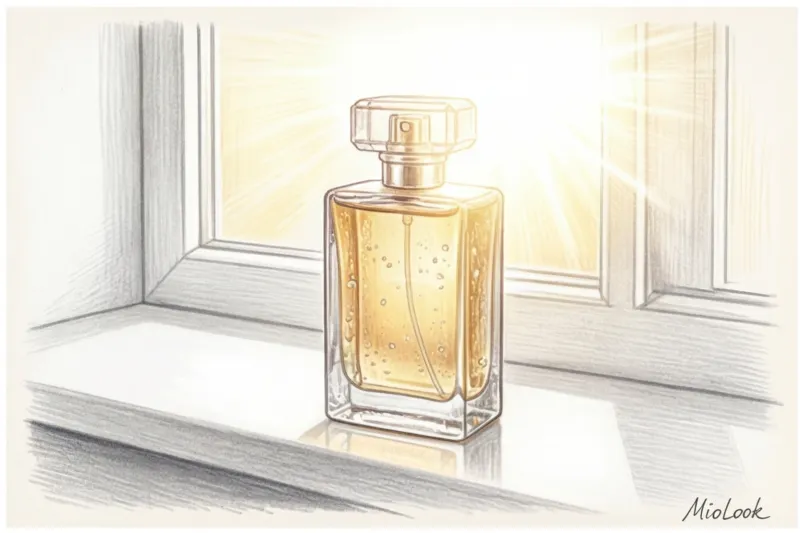
Important caveat: Never spray perfume directly inside a closet. Fabrics (especially wool and fur) absorb odors quickly. If you accidentally spray a heavy amber scent on your coat, dry cleaning is the only way to remove it.
Perfume Expiration Date: How to Tell When a Scent Has 'Dead'
On boxes purchased at European mass-market stores or luxury boutiques, you'll often see expiration dates of 36 or 60 months (3-5 years). Brands are legally obligated to list these dates. In reality, if properly stored in a closet, perfumes last for decades. Vintage fragrances from the 1980s still sell at auction for hundreds of euros and smell amazing.
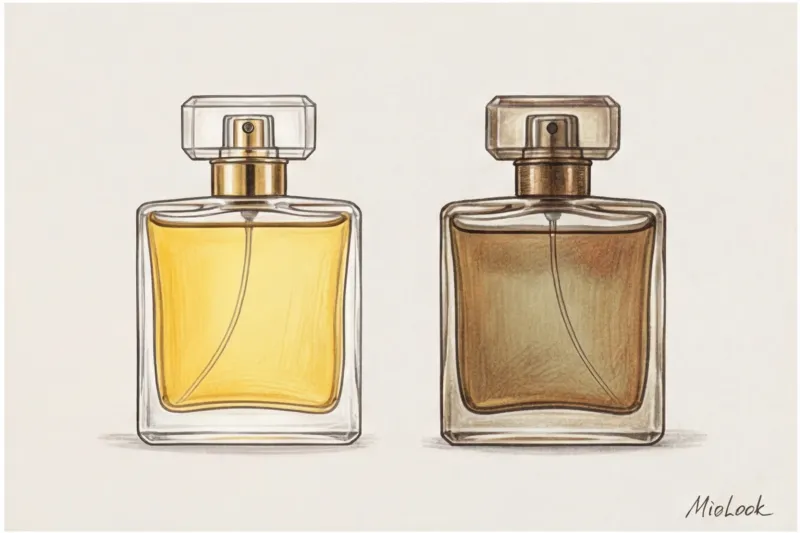
How can you tell the difference between normal and spoiled wine? I teach my clients to distinguish between two processes: maceration and oxidation.
- Maceration (infusion) is the norm. If your fragrance with strong vanilla, patchouli, or resin notes has darkened over time (becomes a cognac color), don't worry. This is a natural process, and it often makes the scent deeper and more lasting.
- Oxidation (spoilage) is a death sentence. If the liquid becomes cloudy, a flaky sediment appears at the bottom, and the consistency becomes thick and oily, it’s time to throw out the bottle.
The main test is always the olfactory (smell) test. A bad perfume gives itself away right from the start: instead of beautiful citrus or floral notes, you're hit with a sharp odor of nail polish remover, vinegar, rancid sunflower oil, or wet cardboard.
Safe Use: Should You Transfer Perfume to an Atomizer?
Many women carry their favorite full-size 100 ml bottle in their everyday bag. This is a huge mistake. In the bag, the fragrance constantly shakes (hello, air bubbles and oxidation), overheats from your body, and suffers from changes in outdoor temperatures.
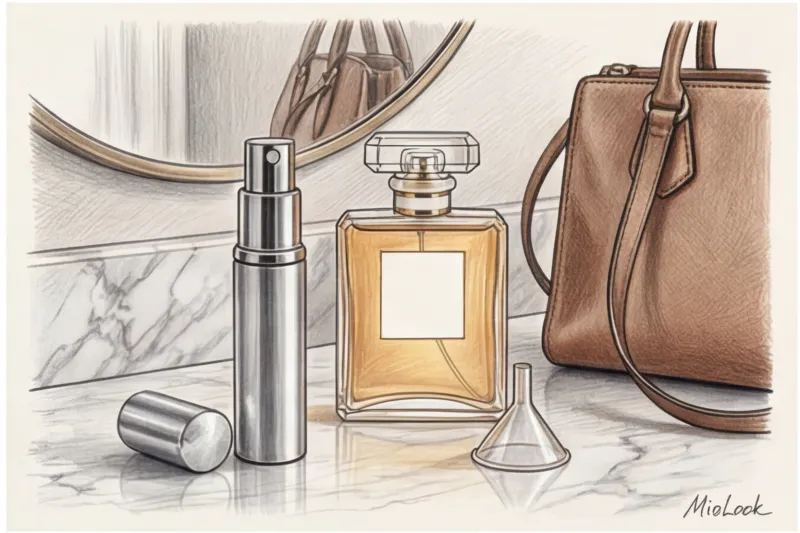
My solution for clients with busy schedules: keep the heavy glass source bottle at home in a dark cabinet, and carry a high-quality 5 ml travel atomizer with you.
Transfer perfumes carefully, minimizing contact between the liquid and air. Don't try to "spray" from a large bottle into a small one—you'll lose the top notes in the process. Use atomizers with a special valve at the bottom (they draw the liquid directly from the removed atomizer) or a regular syringe. And never mix different perfumes in the same bottle—even a microscopic drop of the old scent will distort the new one beyond recognition.
Ready to get started?
Try the MioLook free plan—no commitments required. Organize your accessories and looks in the convenient app.
Get access — €0.99 onceChecklist: A Quick Audit of Your Perfume Wardrobe
Enough theory. If you've read this far, it's time to save your collection. Set aside 15 minutes tonight and conduct a rigorous audit using my checklist.
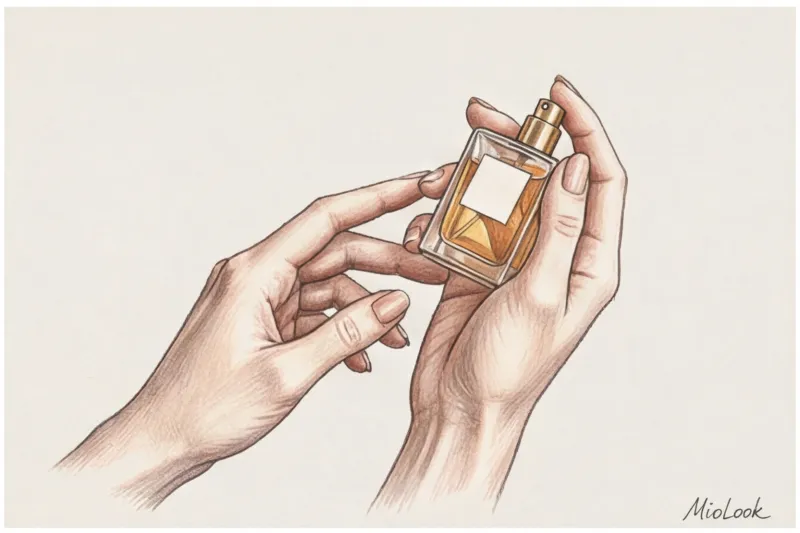
- Evacuation: Immediately remove all bottles from the bathroom, open shelves, and windowsills. Wipe them with a dry cloth to remove dust.
- Test drive: Check the color and consistency of the liquid. If the fragrance has been sitting unused for a long time, spray 2-3 times into the air (not on your skin!). This is necessary to clear the plastic tube of any stagnant and possibly oxidized microdoses of perfume.
- Search for reservations: Find any cardboard boxes you can find. If you don't have any, clear out a dark drawer in your dresser or dedicate a closed shelf in your closet specifically for fragrances.
- Optimization: Choose one "go-to" everyday scent for the office or meetings, carefully pour 5 ml into a travel atomizer, and tuck it into your bag. Store the main bottle in the dark.
Treat your perfume bottles with the same respect you would for luxury shoes or jewelry. Darkness, peace, and a stable temperature are the three pillars that ensure the longevity of any bottled masterpiece. Remember: a properly stored fragrance will not only delight you for years to come, but is also guaranteed to blossom on your skin exactly as its creator intended.