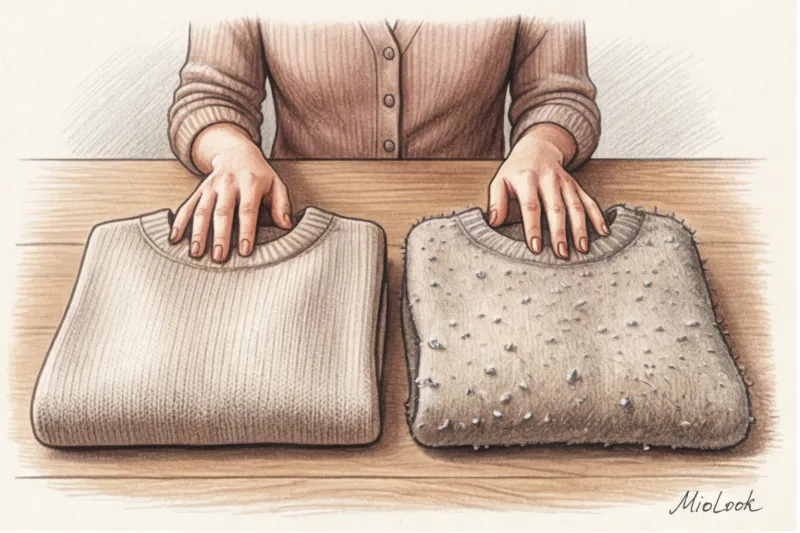
One of my clients literally cried during a wardrobe review. A month ago, she bought a jumper for 300 euros from a well-known European brand, and after two weeks of casual office wear, it looked like a stray cat had been sleeping in it for years—the sleeves and sides were covered in stiff pills. Meanwhile, my vintage sweater, found in a Parisian thrift store eight years ago for next to nothing, still looks impeccable.
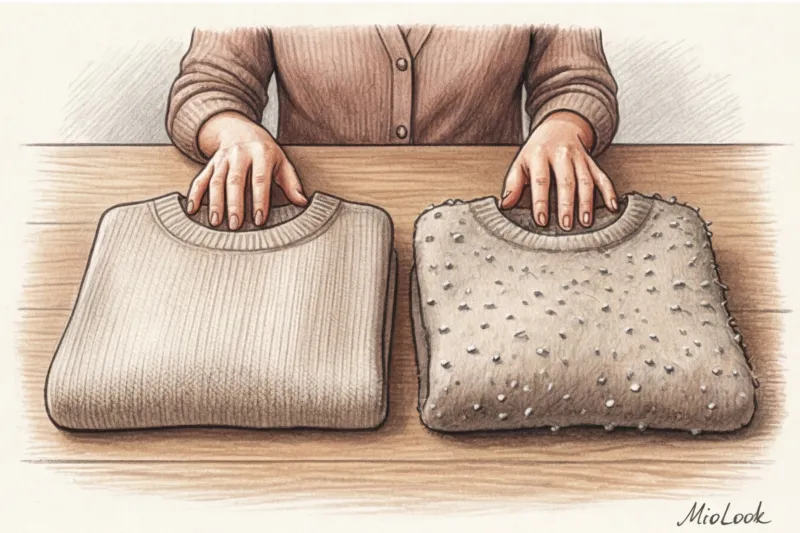
Have you ever wondered why this happens? Why a high price tag no longer protects us from disappointment? The fast fashion industry has masterfully counterfeited the visual attributes of luxury while skimping on the invisible foundation—the quality of raw materials. So the question arises, How to check if cashmere is natural and durability before you spend half your salary on it is more relevant today than ever.
We have already discussed brands and pricing in more detail in our The Complete Guide to Choosing Quality Cashmere: Stylist Tips In this article, I'll share the tools of a professional buyer: we won't be burning threads right on the sales floor (we'll save that for a home lab), but we'll learn to read fabric with our hands and eyes.
Why the price tag no longer guarantees cashmere quality
To understand why modern knitwear deteriorates so quickly, we need to take a look behind the scenes at production. Factories purchase raw materials by weight. Combing the mountain goat's down is only half the battle. Next, the raw materials need to be cleaned and sorted.
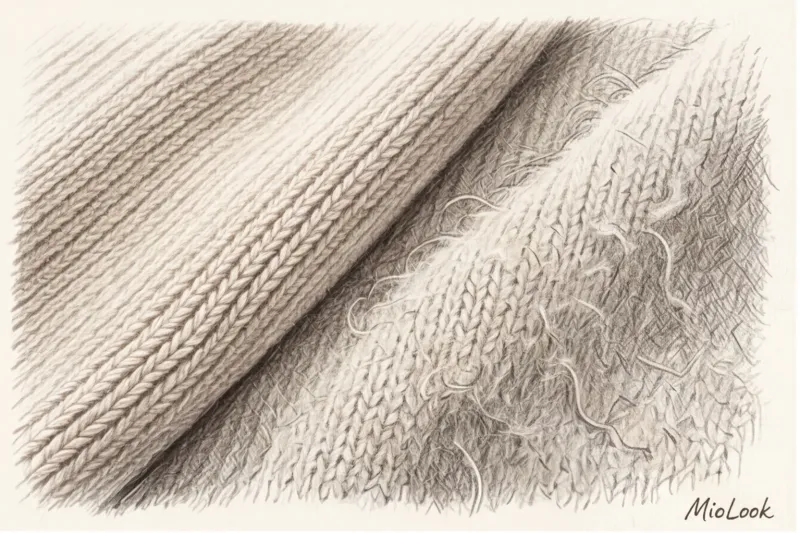
Mass-market brands buy the cheapest, shortest down (often leftovers or rejects from premium manufacturers). Because the hairs are short, they cannot be reliably woven into a thread. With the slightest friction, these "tails" come loose and form pilling.
According to the Cashmere and Camel Wool Institute (CCMI) in 2023, the thickness of premium down must be strictly between 14 and 15.5 microns. For comparison, the thickness of a human hair is approximately 75 microns. But even more important is the staple length: high-quality fiber is between 34 and 38 millimeters.
Italian manufacturers like Cariaggi and Loro Piana ruthlessly discard short fibers. Mass-market manufacturers use them, liberally treating them with chemicals to conceal the yarn's fuzziness at the retail stage.
The illusion of "incredible softness": the main mistake of beginners
Here's the most counterintuitive insight that sales associates will never tell you. Have you ever noticed how some sweaters feel as soft as a cloud on the hanger? Well, here's the thing: Cashmere that's too soft and fluffy in the store is a red flag..
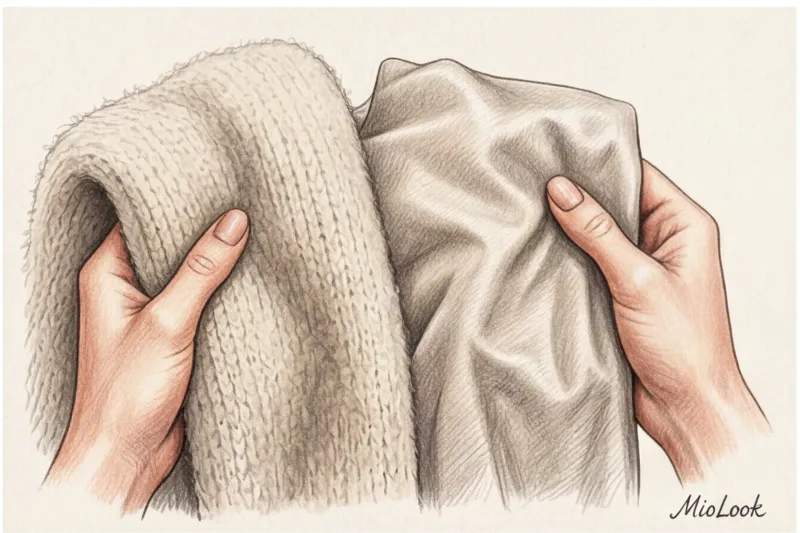
High-quality yarn made from long fibers, tightly twisted into a thread, initially feels a bit dry and even dense to the touch. It "opens up" and releases that famous soft fluff only after the first proper wash. Excessive store-bought softness is achieved in two ways: either by using ultra-short fibers (which will immediately pill) or by liberally impregnating them with chemical softeners (silicones), which will wash off upon first contact with water, leaving you with a shapeless rag.
Your digital wardrobe
Stop buying things that quickly become unsightly. Plan your purchases consciously with a smart AI stylist.
Get access — €0.99 onceThe Anatomy of a Thread: How to Check Cashmere for Naturalness Right in the Store
Since no one will allow you to set fire to a sweater in the fitting room of Zara or Massimo Dutti, we need tactile tests that buyers use at specialized exhibitions.
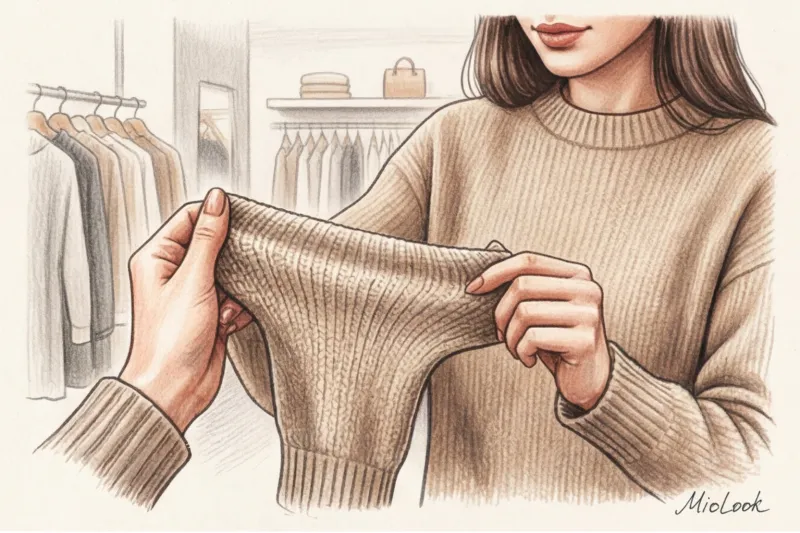
1. The Snap Test
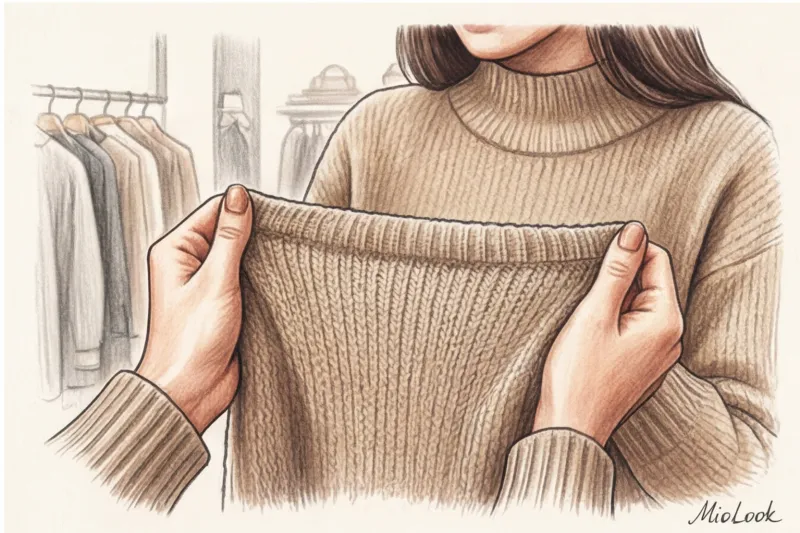
Take the edge of the garment (for example, a cuff or hem) and gently but firmly stretch it apart, then release. A high-quality garment with a tight twist will spring back and instantly return to its original shape. If the fabric slowly "slips" back or, worse, remains stretched in a wave, it's either loosely twisted or contains a high percentage of cheap synthetics.
2. Estimation of the gun length
Look at the surface of a new garment in profile. The pile (fuzz) above the main knit should not exceed 1-2 millimeters. If a sweater looks "shaggy" already on the shelf, its life will be bright but short. Long fuzz = fast and aggressive pilling.
3. Heat transfer test
Genuine mountain goat down is a smart temperature regulator. Apply the fabric to sensitive skin (such as your neck or inner elbow) for 10-15 seconds. The natural material instantly accumulates your heat, creating a dry and comfortable feeling. If you feel a "greenhouse effect" or dampness after a few seconds, it means the fabric contains hidden acrylic or polyester.
Visual Transmission Test
Pick up the item and look through it at a bright store light. What do you see?
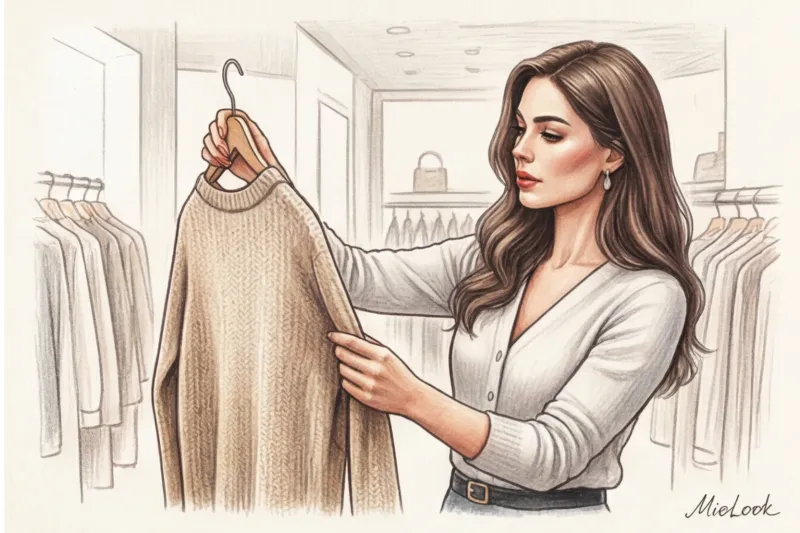
We evaluate the uniformity of the knitting. There should be no bare spots, knots, or sharp variations in thread thickness. High-quality knitwear with good density transmits minimal light. If a sweater is shimmering like gauze, the manufacturer has skimped on the raw material. Such a garment will not only fail to keep you warm, but will also lose its shape after the first season.
Reading the Label Like a Professional Buyer: Ply, Gauge, and Hidden Percentages
The label "100% Cashmere" isn't enough. Marketers know we're looking for that line and are ready to sell us 100% cashmere garbage. The real indicators of quality are hidden in other terms.
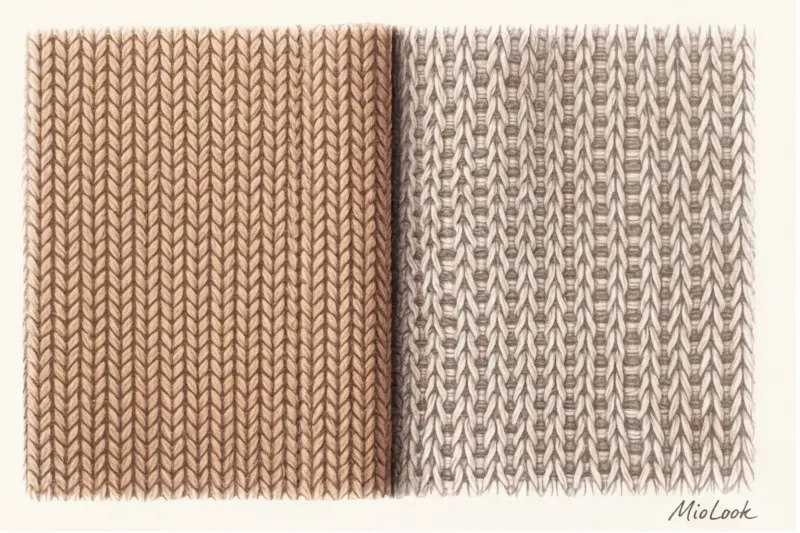
Look for the mark Ply (number of strands of yarn). The gold standard for a basic chunky sweater is 2-ply (double-ply yarn). Two threads are twisted together, compensating for each other's tension. Technological tests show that 2-ply lasts 40% longer than single-ply yarn, which is prone to seam distortion and rapid wear.
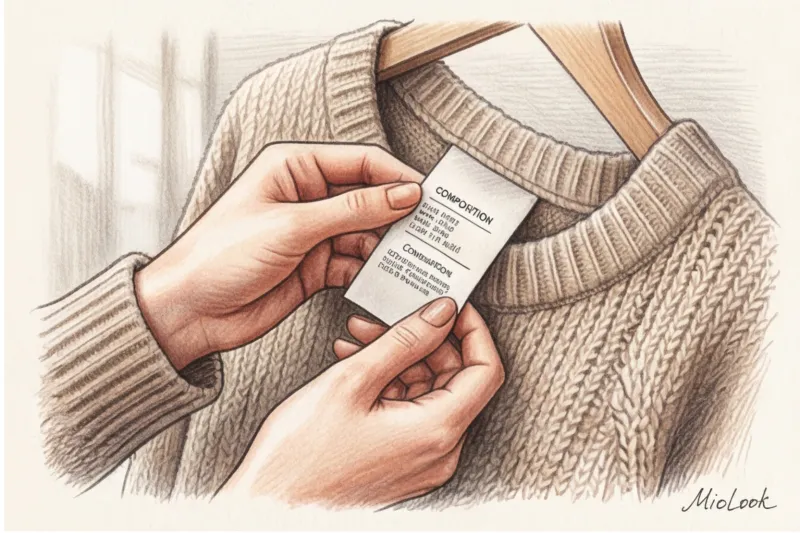
Another important term is Gauge (knitting machine class or knitting density). The higher the number (for example, 12gg), the finer and denser the fabric. For a winter sweater, 7-12gg is ideal.
Beware of the trick called Cashmere Blend According to the laws of many countries, a brand has the right to put this phrase on the front of the label, even if it only contains 3% of the precious down. The remaining 97% will be made up of cotton, viscose, or polyester. When my clients and I collect a status wardrobe on a budget , we always carefully read the fine print on the back.
Home Lab: How to Distinguish Real Cashmere from Fake Cashmere After Purchase
Let's say you already have the item at home. The first few weeks of wearing it will tell you everything about it. Here I should point out an important limitation that glossy magazines often gloss over. I'll be honest: it shrinks. absolutely any Natural knitwear. These are the laws of physics. The difference lies in the nature of the pilling.
On a high-quality sweater, pilling rarely appears locally (in places of strong friction - under the arms or from the strap) business leather bag ) and, most importantly, they can be easily removed with a machine or comb without damaging the fabric itself. Cheap yarn becomes covered in stiff pills all over the chest and back, and trying to cut them off thins the fabric itself.
If you have a spare piece of thread (often supplied with the button), run test by fire:
Hold a match to the thread. Natural animal hair burns slowly, smells like burnt hair or horn, and the ash easily crumbles into dust between your fingers. If the thread melts, emits black smoke, smells like plastic, and leaves a hard plastic ball, it contains synthetics that the manufacturer hasn't mentioned.
Reaction to the first wash: the moment of truth
Washing premium knitwear isn't stressful, it's a spa treatment. It's the water that helps the fibers adjust and reveal their true softness.
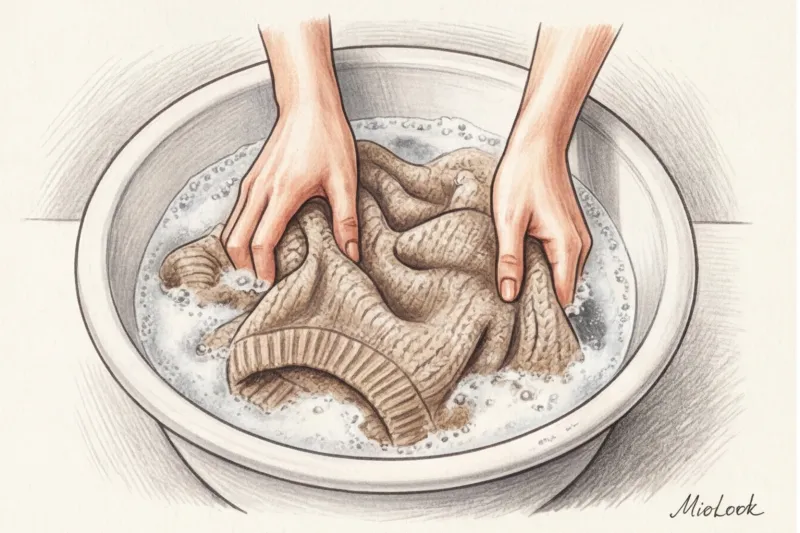
Wash the item in cool water (no hotter than 30°C) using a special liquid detergent or regular dye-free baby shampoo. Monitor the water. If it's heavily colored, cheap dyes were used, which can damage the fiber structure. If the sweater shrinks two sizes after drying flat or the seams are crooked, this is a clear sign of using unstable, short-length fabric.
Simplify your wardrobe workflow
Upload your items into the app, and the AI stylist will suggest dozens of new combinations from what you already have.
Try MioLookCashmere Blends: When Impurities Are a Benefit, and When They're a Deception
In the fashion world, it's common to demonize blended fabrics. But in my experience, a well-crafted blend can sometimes work even better than a pure base. The key is to understand the chemistry of the process.
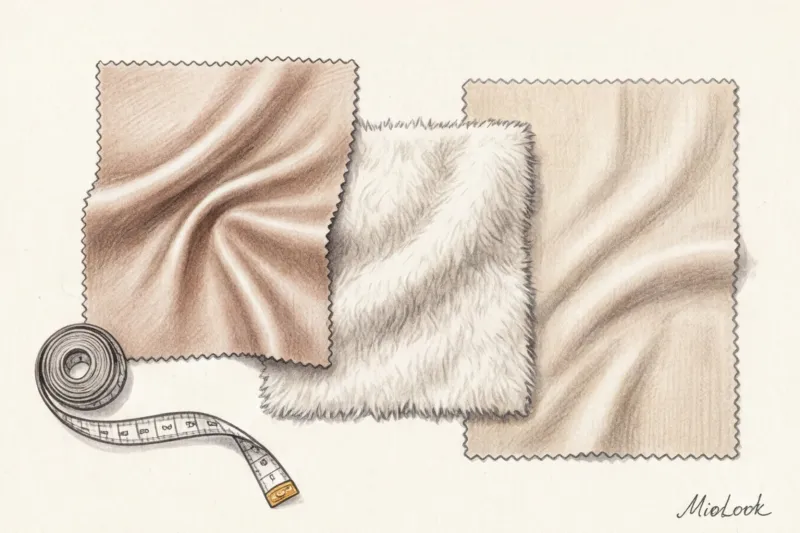
- Cashmere + Silk: The perfect combination for a classy wardrobe. Silk acts as reinforcement—it holds the garment's shape, adds durability, and a subtle, elegant sheen. These pieces are perfect for all-season wear.
- Cashmere + Merino wool An excellent budget compromise. Merino wool provides density and durability, while the addition of 20-30% mountain goat down provides the necessary softness.
- Cashmere + Viscose / Polyester / Acrylic Toxic combinations. These artificial and synthetic fibers have completely different structures and shrinkage rates. They will behave differently when washed, leading to deformation. Furthermore, acrylic acts like sandpaper on delicate down, significantly accelerating its deterioration.
Smart Shopping Checklist: 5 Steps to Buying a Sweater
To avoid having to remember complicated formulas, use this algorithm the next time you go shopping:
- Studying the label: We are looking for a minimum 2-ply mark and a fair composition (either 100% or a mix with silk/merino).
- Visual lint test Let's look at the profile. Is the fluff more than 2 mm? Let's put it back on the hanger.
- Let's do "The Snap Test": Stretch the cuff slightly and release. Wait for it to instantly return to its shape.
- We check it against the light We evaluate the knitting density against a lamp background. If there are any bald spots, we move on.
- Let's go to the men's department My favorite insider lifehack. Last winter, I conducted a personal experiment: I bought a basic men's jumper at a mass-market store and compared it with a women's equivalent from the same brand. The men's one weighed 40 grams more and had a tighter twist, yet was absolutely identical in price. Women's knitwear is often made looser for the sake of "softness," sacrificing durability.
Stylist's Summary: Investing in Knitwear Wisely
In the world of conscious consumption, the mathematics of style are very simple. It's better to buy one thick, impeccable merino sweater for $100 than to spend the same amount on cheap Chinese cashmere that will die in one season.
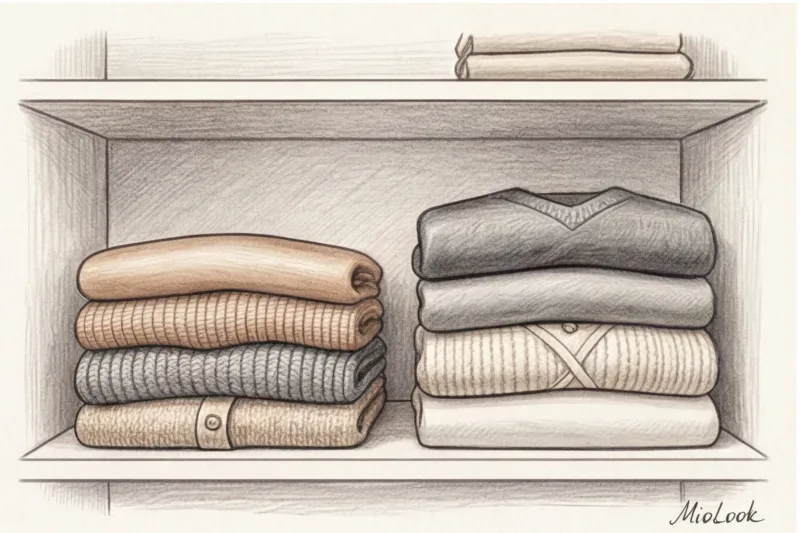
High-quality knitwear isn't just clothing. It's the foundation of your visual status and physical comfort. Treat your basics like an investment. Spend an extra 10 minutes in the fitting room, practice tactile testing, and you'll find that perfect piece that will delight you for years to come, remaining flawless.