My client Anna cried right in front of the boardroom. She was wearing a flawless Jil Sander wool suit and... a pair of completely ruined, ugly, rippled thousand-euro Prada loafers. The night before, she'd found a "brilliant" article online, put on thick, damp socks, squeezed into the stiff shoes, and spent half an hour warming them with a hot hairdryer. The result: melted factory glue, overdried leather with microcracks, and an irreversibly deformed last.
If you are conscious about creating your wardrobe, the question of How to soften leather shoes or a jacket, should be addressed professionally. In my 12 years as a stylist, I've seen dozens of investment pieces ruined simply because their owners tried to speed up natural processes. We've already discussed the basic principles in more detail in our a complete guide to caring for leather items , but today I want to look at the problem of rigidity.
The Anatomy of Stiffness: Why Status Skin Takes Time
Let's be clear: if new premium shoes feel stiff, it's not a defect. It's a sign of sophisticated manufacturing technology. Research by the Leather Working Group (2024) confirms that premium vegetable-tanned leather is inherently 15-20% denser than chrome-tanned leather. It isn't subjected to aggressive chemical treatment with chromium salts, so it retains its natural elasticity.
Furthermore, high-quality shoes (especially those with a Goodyear welt) have a complex architecture. The rigid heel counter and reinforced toe are made of thermoplastic or several layers of pressed leather. Their job is to support the shoe's frame for years, preventing the shoes from becoming shapeless slippers.
"Breaking in expensive shoes isn't torture, but a process of delicately familiarizing the material with your anatomy. The leather needs to remember your foot."
According to the British Shoemakers' Guild, almost 70% of discomfort during the first month of wear is due to the adaptation of these structural elements. Trying to aggressively soften them means destroying the shoe's structure.
How to Soften Leather Shoes: Methods That Won't Ruin Your Investment
I always recommend my clients start with the "15-minute rule." Don't try to wear a new pair of shoes straight away for an eight-hour workday. Put them on at home, preferably in the evening (when your feet naturally swell and expand by half a size), and walk for exactly 15 minutes. Do this for three to four days in a row. This is the most gentle method.
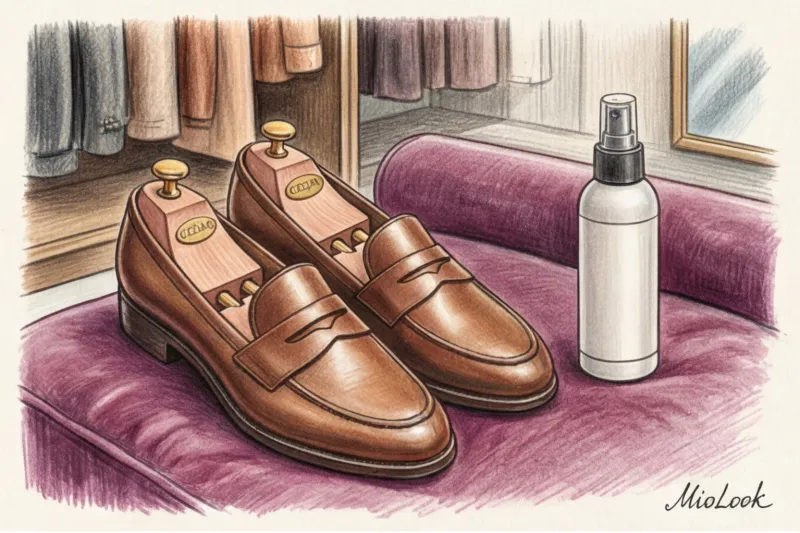
If your shoes still feel tight on the sides, the big guns come in: wooden shoe trees with an expansion mechanism. Note: these should be made of unpainted Canadian cedar, not mass-market plastic springs. The screw mechanism allows you to expand the shoe tree literally a millimeter a day.
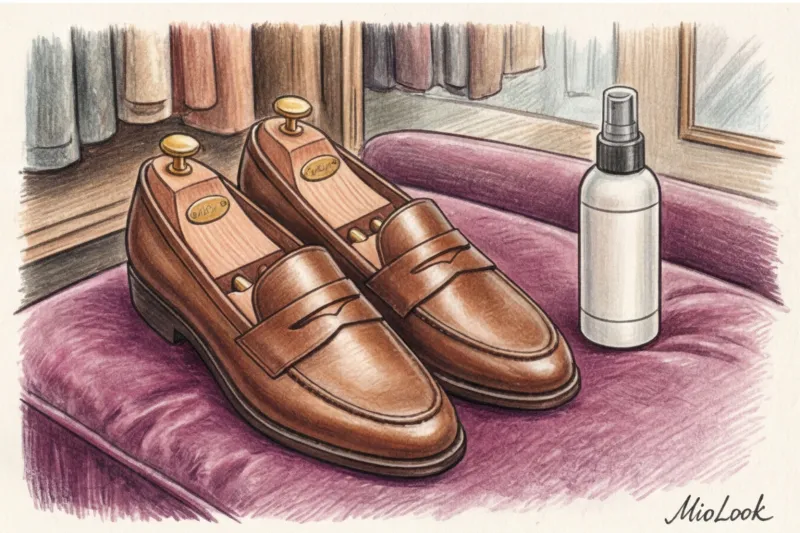
To enhance the effect, use professional stretching sprays, such as those from the French brand Saphir. How do they work? They don't contain harsh solvents. They contain special oils that chemically relax the collagen fibers of the flesh side without damaging the surface pigment.
Mechanical vs. Chemical Stretching: Which to Choose?
In fact, they work in tandem. The spray makes the leather supple, and the shoe tree creates the desired shape. If you have problem areas—for example, a protruding bunion (hallux valgus) or sensitive little toes—use shoe trees with special, pinpoint attachments. You apply the spray locally inside the shoe, insert the shoe tree with the attachment onto the bunion area, and leave it on for 24 hours. This is precision work that will save your feet from calluses.
Your perfect look starts here
Join thousands of users who look flawless every day with MioLook. A smart AI stylist will help you integrate new items into your wardrobe.
Get access — €0.99 onceDangerous Internet Myths: What Not to Do with Expensive Leather
Remember my client Anna's story at the beginning of this article? A hair dryer and thick, damp socks are the worst things you can do to your high-end shoes. Let's look at popular life hacks that are guaranteed to ruin your investment.
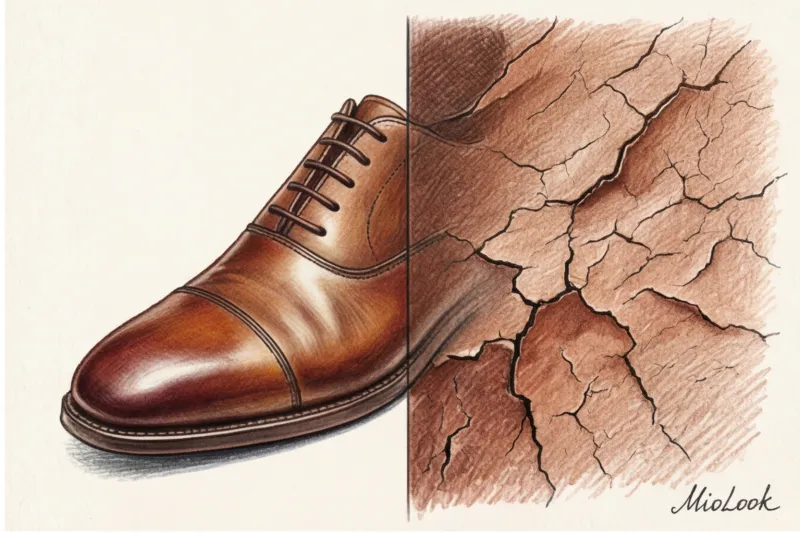
- Myth #1: Heating with a hair dryer. Thermal shock instantly evaporates the natural oils from leather, making it brittle as paper. Furthermore, at temperatures above 60 degrees Celsius, shoe glue begins to melt, and the sole will simply separate from the upper within a couple of weeks.
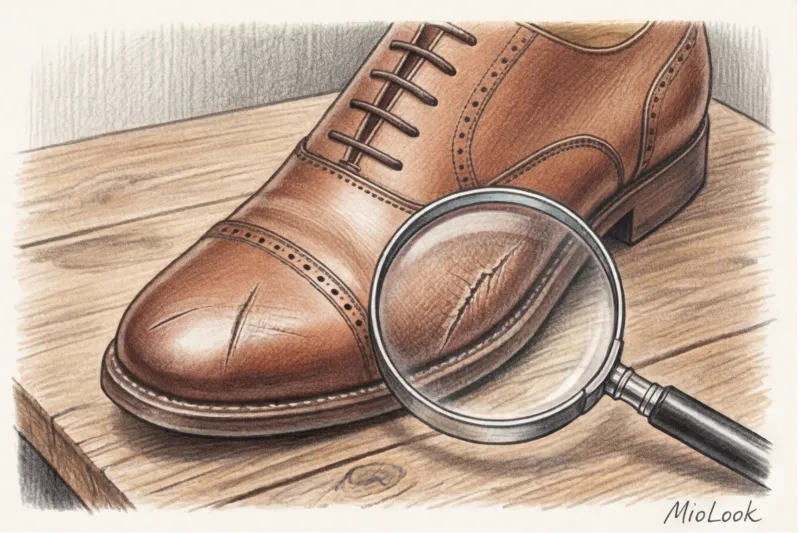
- Myth #2: Freezing with a bag of water. The physics of the process are simple: water expands by approximately 9% when it freezes. The problem is that ice expands unpredictably and in all directions at once. This colossal pressure tears the cotton seams and leaves microcracks in the smooth grain leather.
- Myth #3: Alcohol, vodka and castor oil. Alcohol instantly dissolves the factory finish (coating) on leather. Your shoes will be covered in whitish stains that no polish will cover. Castor oil, on the other hand, permanently darkens the leather and makes it sticky—street dust will stick to your shoes, forming a dirty crust.
The only real exception when alcohol might work is when breaking in cheap pressed split leather without a delicate finish. But for premium nappa or calfskin, this is a death sentence.
How to soften a stiff leather jacket: saving the silhouette
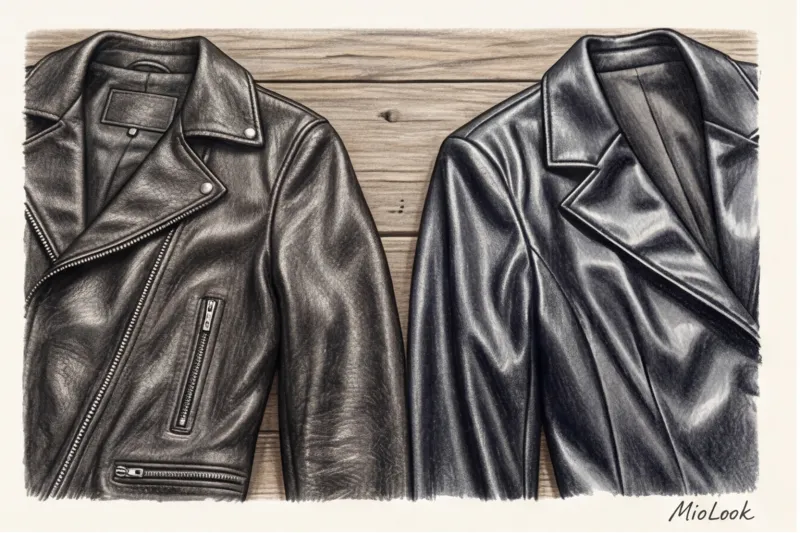
Clothing leather is fundamentally different from shoe leather. It's thinner and more flexible, but it has another problem: it's larger and lined. A year ago, I found a stunning men's biker jacket from the '80s in a vintage boutique in Milan. It was so thick it practically stood on the floor by itself.
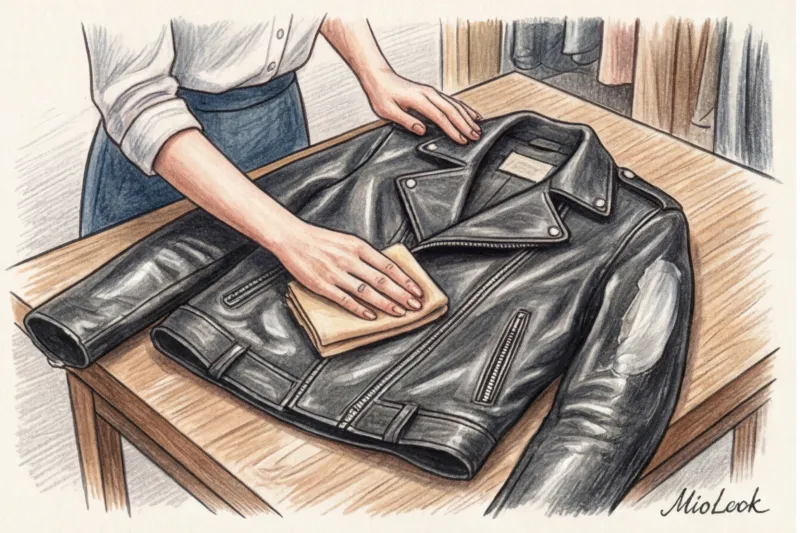
To restore your jacket's elasticity, you don't need stretchers. What you need are powerful moisturizing conditioners with natural beeswax, lanolin, or mink oil. I applied a generous layer of conditioner and left the jacket for 24 hours to absorb the oils.
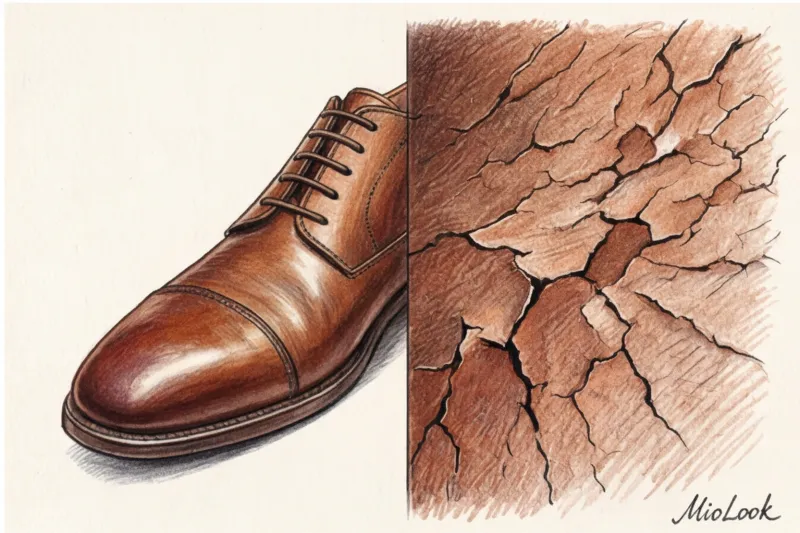
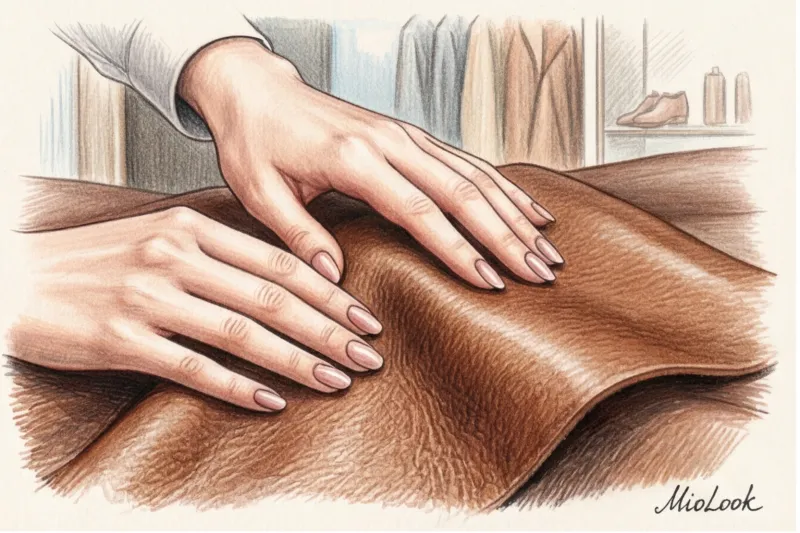
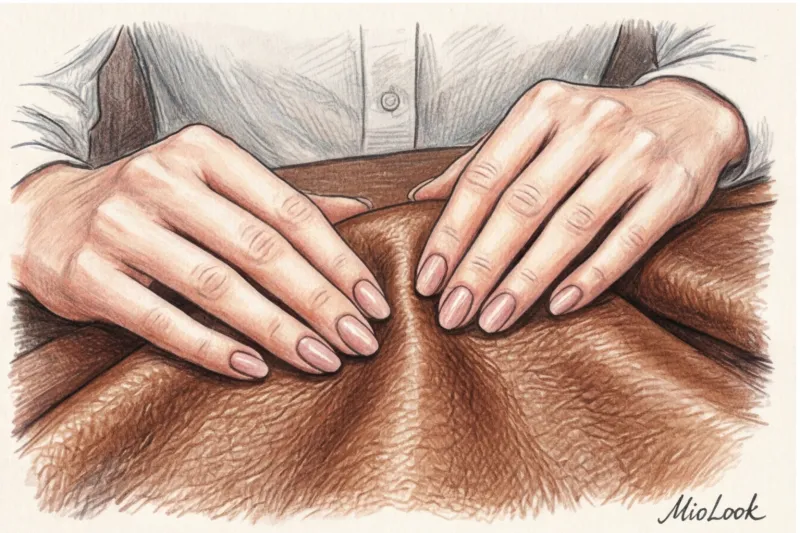
For localized softening of the toughest areas—the stand-up collar, elbows, and armholes—the "hand massage" technique works great. Apply the conditioner to your hands and literally knead the skin with your fingers, like dough, for 10-15 minutes. The warmth of your hands melts the wax and penetrates deeper into the pores. While your jacket is hanging, you can upload a photo of it to MioLook to put together a dozen stylish looks with her in advance.
The Line Between Discomfort and the Wrong Size: When to See a Professional
There is one golden rule that I tirelessly repeat to every client during my shopping tour: the skin stretches in width by a maximum of 5-7%, but it never stretches in length.
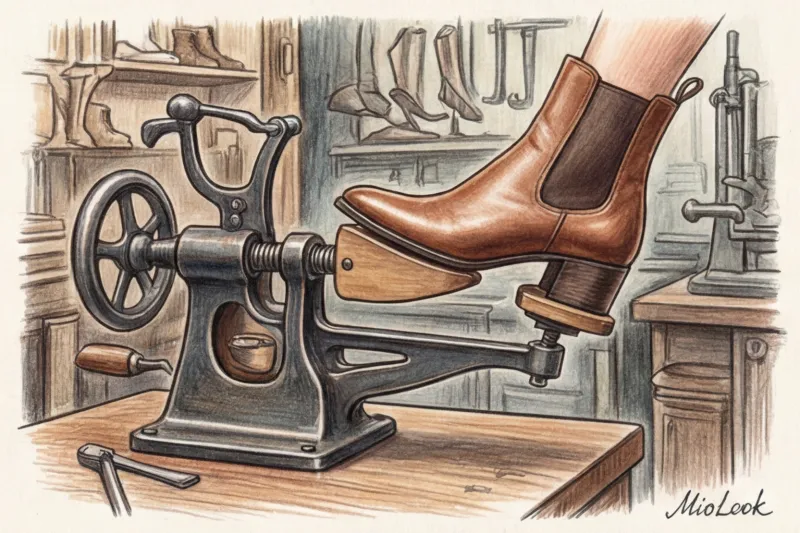
If your shoes are pressing on your toes at the front, it's not a stiffness issue. They're the wrong size, and you should return them to the store. As noted by engineers at the Italian Vibram factory (2024), any attempt to mechanically lengthen the last inevitably results in the sole separating from the welt or the toe being deformed.
When home sprays don't help with the width, it's time to see a professional shoemaker. They use stationary equipment: heavy metal machines with precision tension control. The professional stretching process takes 2 to 4 days. The leather is moisturized with special compounds, gently stretched, allowed to dry, and then the process is repeated. Don't rush the shoemaker—rushing the process can cause the stitches to come apart.
Checklist: How to choose leather items that are inherently comfortable
The best way to avoid suffering with stiff leather is to properly assess its potential before you even look in the mirror at the boutique. Here are three rules that will save you both time and money:
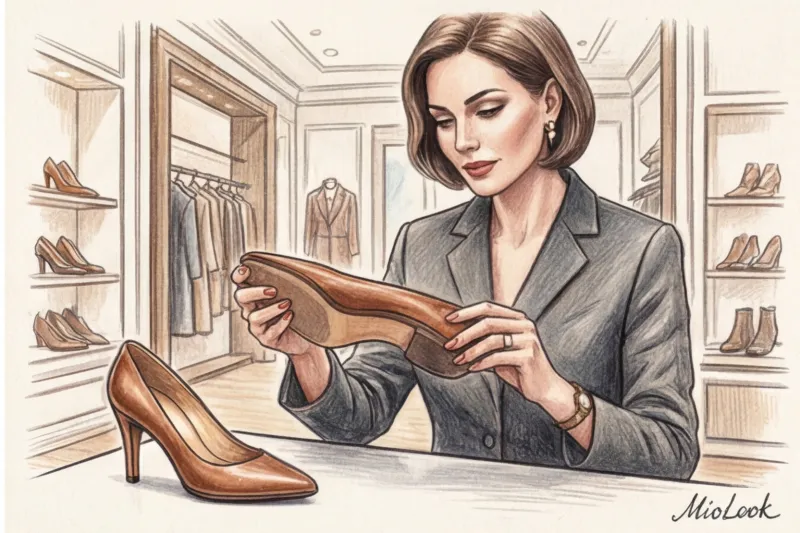
- Assess your skin type. Nappa or deerskin are incredibly soft and fit your foot within a couple of days. Patent leather or polished leather (spazzolato), on the other hand, are coated with a layer of polyurethane. Polyurethane has no stretch whatsoever. If these shoes feel tight when you try them on, they'll always feel that way.
- Check the seams and lining. Very often, it's not the upper leather itself that's causing the pressure, but a stiff inseam or a synthetic lining that doesn't stretch. Make sure the shoe's interior is lined with soft calfskin.
- The timing of the fitting is everything. Only go shopping for fashionable shoes after 4:00 PM. Trying on shoes in the morning can be deceiving: your feet haven't swelled yet, and what seemed perfect at 10:00 AM will look like a Spanish boot by evening.
Investing in your wardrobe requires not only money but also knowledge. Treat genuine leather with respect, avoid aggressive online experiments, and your clothes will reciprocate, becoming more comfortable and beautiful with each passing year.