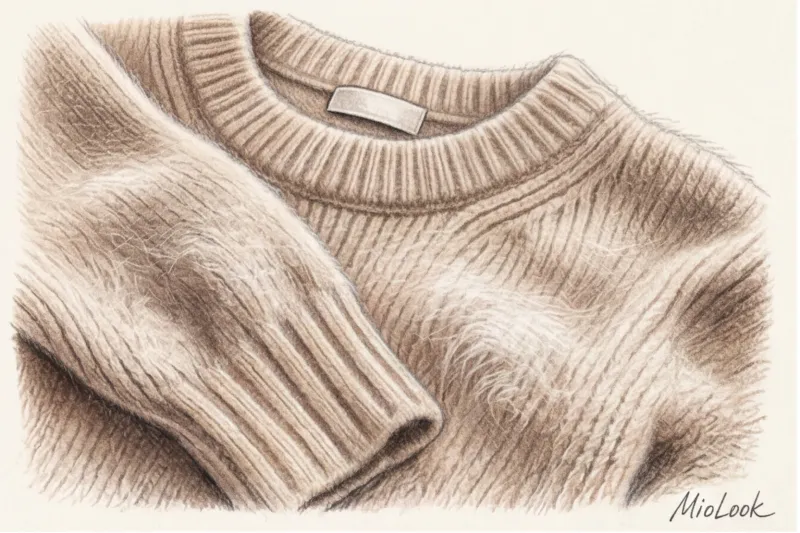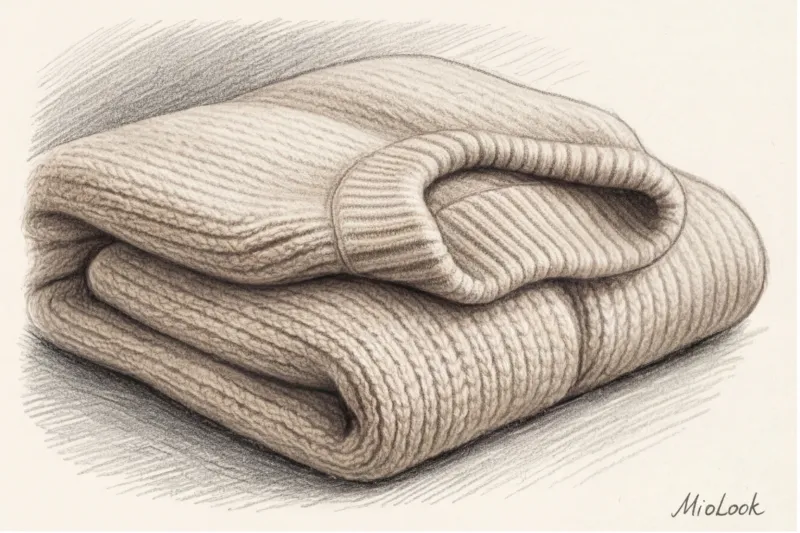
Last Friday, a client came to me for a wardrobe review with a vintage Loro Piana cashmere sweater. The garment, inherited from her mother, looked like it had been smashed by a lawnmower: microscopic holes gaped at the elbows, and the fabric itself had been reduced to a muslin cloth. It turned out that the night before, she'd decided to take advantage of a popular internet life hack and "shave" the sweater with a regular pink Gillette razor.
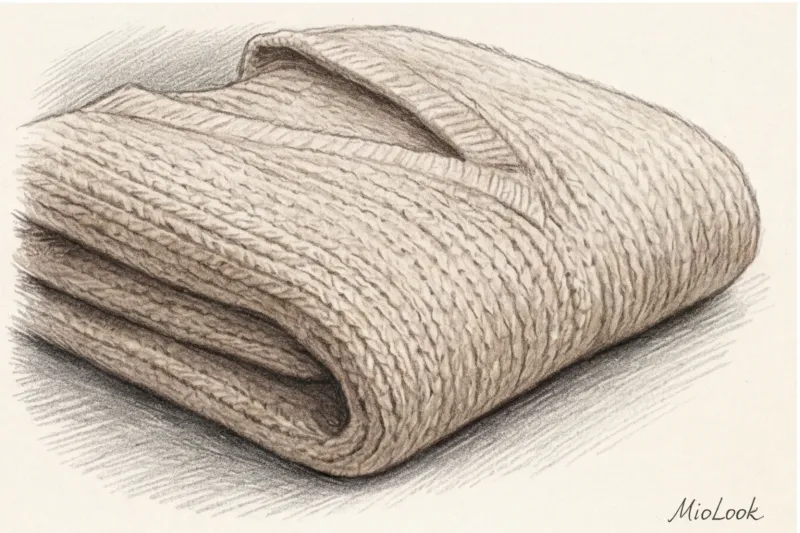
For me, as a stylist working with premium knitwear, this is a real tragedy. I get asked about how to remove pilling from clothes every week. But instead of treating the symptom with barbaric methods, we need to understand the very nature of the fabric. We discussed yarn quality standards in more detail in our The Complete Guide: How to Choose Quality Cashmere (Stylist Tips) Today, I'll teach you professional knitwear care that will extend the life of your favorite items for decades.
The Anatomy of Pilling: Why Does Pilling Actually Occur?
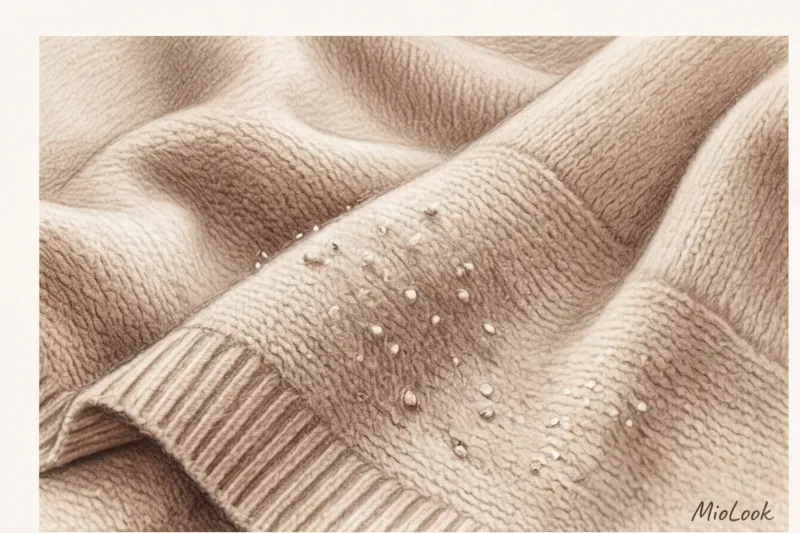
Let's forget the marketing myths and turn to physics. Pilling isn't always a sign of a cheap item. It's a natural process in which short fibers are released from a loosely twisted thread under friction and tangle into small balls.
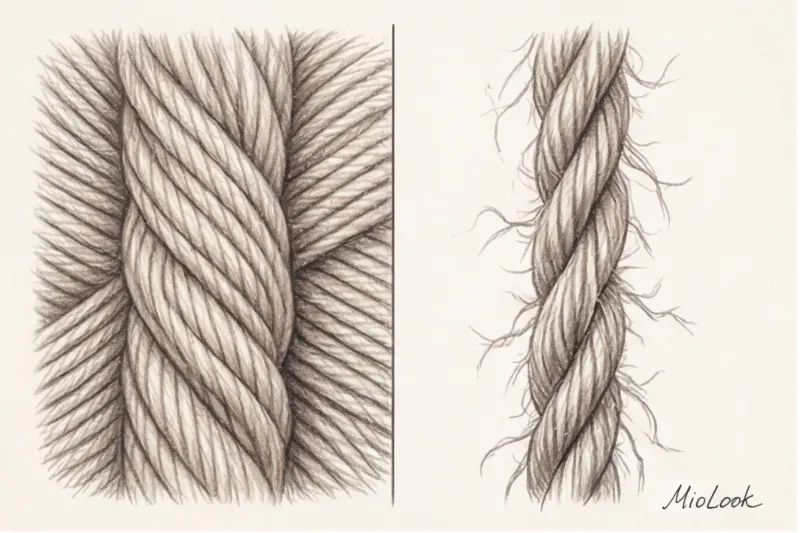
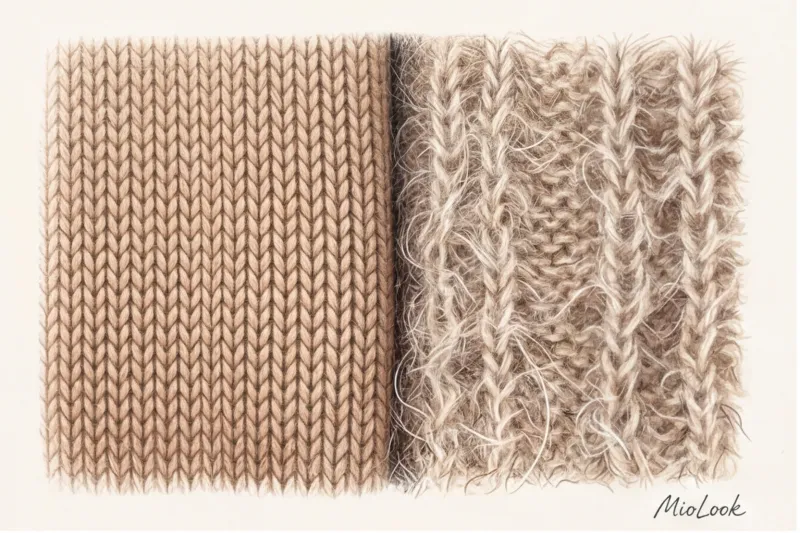
Have you ever noticed that a mass-market jumper becomes covered in untidy knots after just one week of wear? According to the Cashmere Manufacturers' Institute (CCMI) standards, premium brands use long fibers (34 to 38 mm) for their yarn. Mass-market brands, on the other hand, often buy so-called "tow"—short hairs 15–20 mm long. According to the laws of textile engineering, the shorter the fiber in a yarn, the more easily it will be released from the surface with the slightest friction.
"Pilling is an indicator of the yarn's architecture, not just its composition. You can buy 100% wool, but if the yarn is loosely spun from short fibers, it's destined to pill."
The "blooming" effect of expensive cashmere: when pilling is normal
This is where things get interesting. My clients are often alarmed when a premium cashmere sweater (for which they paid a hefty sum) starts to pill slightly within the first month of wear. I always reassure them: this is the initial pilling, or "blooming" effect.
Even expensive yarns retain loose micro-hairs. With the first few wears and proper washing, these come to the surface, creating a light, luxurious fuzz. Your task is to gently remove these initial pillings with a special comb. After 3-4 washes, this process will cease, and the sweater will reveal its true softness, becoming virtually indestructible.
Access to MioLook for €0.99 — one-time payment
A smart AI stylist will find the perfect look for your well-groomed essentials.
Get access — €0.99 onceThe Biggest Mistake: Why You Shouldn't Use a Razor to Remove Pilling from Clothes
Let's get back to the story of the ruined Loro Piana. Using a regular razor on knitwear is a crime against your wardrobe. Here's why.
The razor blade is not selective. As it passes over the surface, it not only cuts away tangled fluff (pilling) but also damages carrier thread The knitting process itself. You're literally making micro-cuts in the healthy fibers. Research shows that with each such aggressive "cleaning," a sweater loses up to 3-5% of its weight.
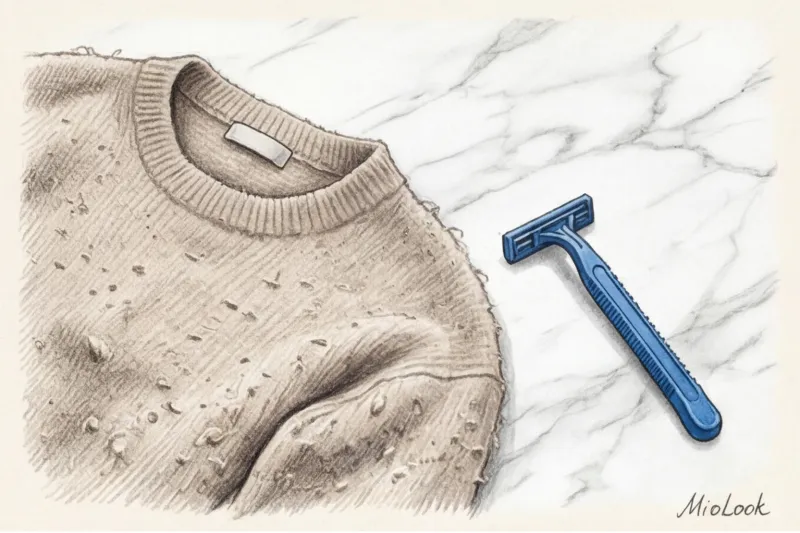
What happens next? The damaged yarn weakens, releasing new short ends. As a result, within a week, the pills in the same spot will triple. And within a month, a hole will appear in the armpits or elbows. The same goes for advice on using a pumice stone, hard tape, or, even more bizarrely, sandpaper. All these methods irreversibly destroy the architecture of the knitted fabric.
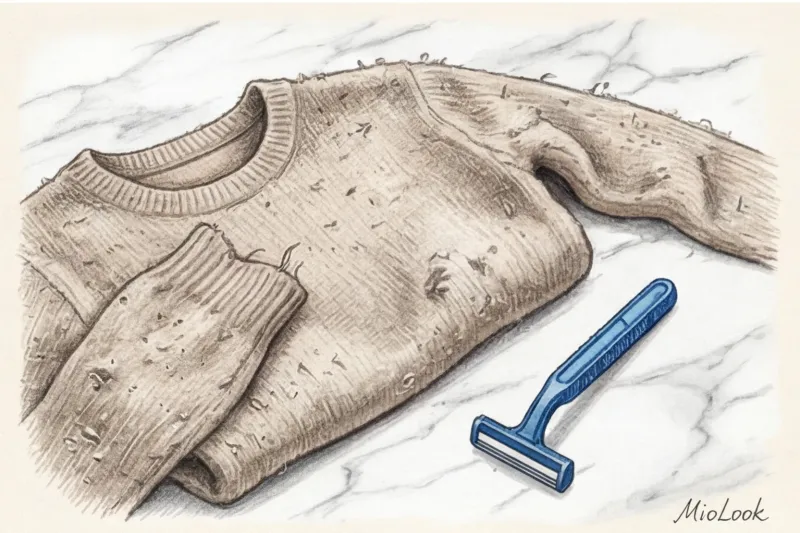
A Stylist's Arsenal: Professional Tools for Cleaning Knitwear
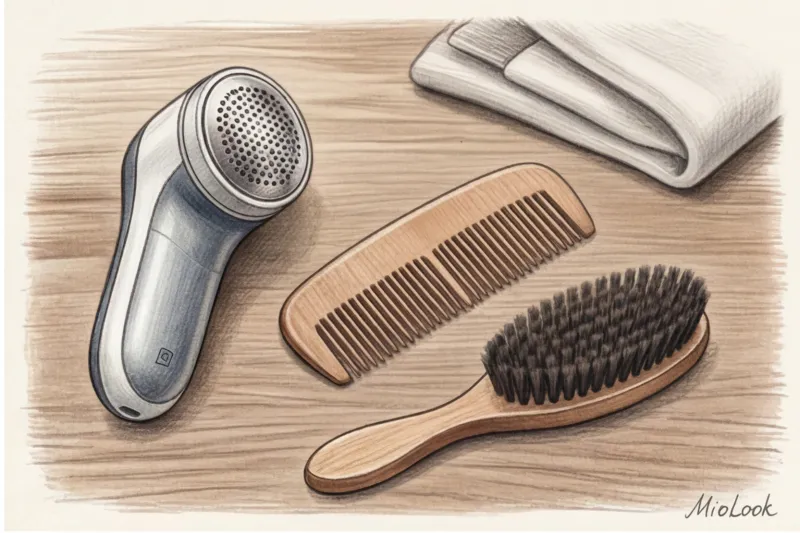
There's no room for random items in my work case, which I take to shoots and wardrobe reviews. Here's what I recommend as a replacement for straight razors:
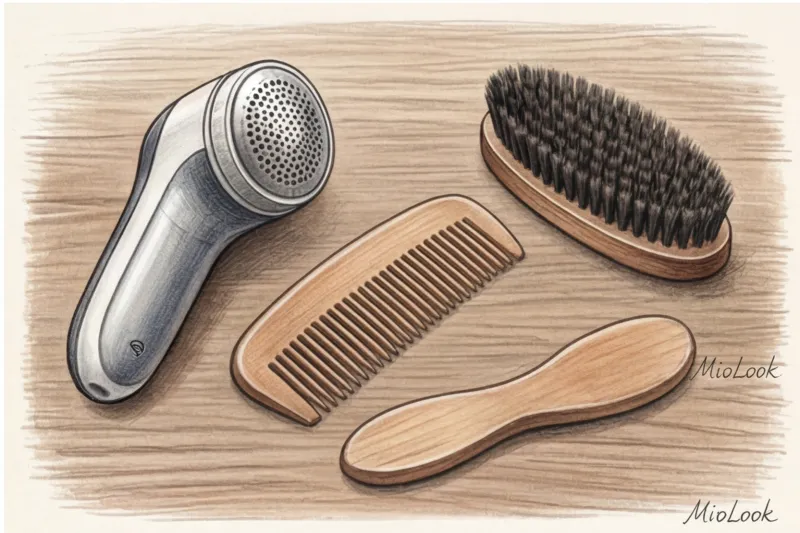
- Cashmere Comb: Ideal for fine, smooth knits, its fine metal or plastic teeth catch only tangled fuzz without damaging the main thread.
- Natural bristle brush: Indispensable for regular care. Brushing your sweater with a boar bristle brush after each wear will help untangle the fibers before they become tangled.
- Sweater Stone: This is a piece of porous volcanic glass. It works great on coarse, thick, chunky wool (but is absolutely not suitable for fine cashmere!).
- Electric Shavers (Fabric Shavers): Acceptable, but only high-quality ones (for example, from Steamery or Philips), with an adjustable height protective net.
Important limitation: Never use electric clippers on items made of fluffy mohair or alpaca. The blades will cut off their natural hair, and the item will lose its texture forever, turning into a stiff, tacky mess.
Step-by-step protocol: how to safely remove pilling from a sweater
Textile conservators in museum archives work with fabrics according to strict protocols. I've adapted them for home care. This procedure will take about 15 minutes.
- Preparation: Only clean washed and completely dry items. Moisture makes fibers elastic and vulnerable to stretching. Provide bright daylight.
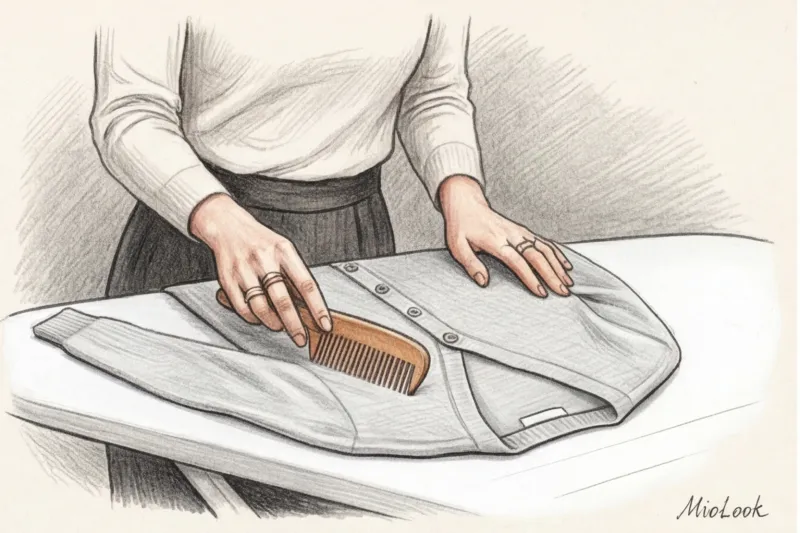
- Layout: Never dry-clean a sweater hanging or on your lap. Lay it on a flat, hard surface (an ironing board is ideal). The fabric should be slightly taut to prevent it from getting caught in the washing machine or snagged by the comb.
- Technique of movements: If using a comb, use short, firm strokes 5-7 cm long without applying much pressure to the fabric. Move strictly in the direction of knitting (top to bottom), not across the grain.
- Finish: After removing the pilling, brush the sweater with a soft clothes brush to remove dust and smooth the nap.
Your perfect look starts here
Join thousands of users who look flawless every day with MioLook, finding the best combinations for their well-groomed knitwear.
Get access — €0.99 oncePrevention strategy: how to wash and wear clothes to prevent pilling
According to the WGSN (2023) report on garment durability, over 60% of knitwear is discarded due to loss of appearance (pilling) rather than actual wear. However, pilling can be delayed.
I call it "right hip syndrome" During wardrobe audits, I can accurately identify the type of handbag a client carries. Those who wear stiff crossbody bags always end up with pilling on the right (or left) side of any sweater. A bag strap can act as an abrasive. Rough outerwear linings (especially cheap polyester) and car seat belts are also dangerous neighbors.
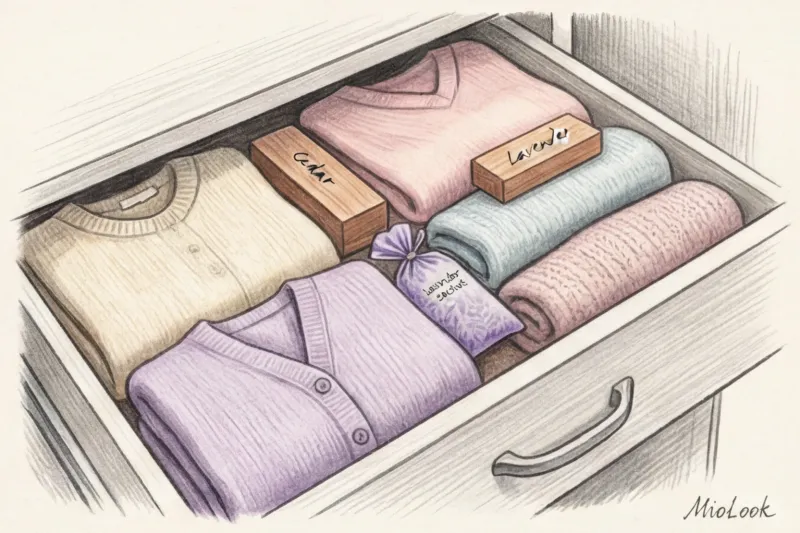
Follow the 24-hour rule. Natural wool has a spiral structure with a memory effect. After a day of wear, the fibers need a rest to allow the springs to regain their shape. Avoid wearing the same jumper two days in a row.
Washing is also crucial. Always turn knitwear inside out—let the backing absorb the friction in the drum. Use only liquid detergents for silk and wool. And most importantly: never use fabric softener Conditioners coat the threads with a silicone film, making them slippery. The hairs begin to slip out of the twist, and the sweater begins to pill instantly.
Wardrobe Investments: How to Choose Pilling-Free Knitwear at the Shopping Stage
As a buyer, I always test items in boutiques before buying. The ideal way to clean an item is to avoid buying one that's sure to turn into a washcloth. When collecting capsule wardrobe Invest in the right thread architecture.
Perform a twist test. Take the fabric between your thumb and index finger and gently rub the layers together in a circular motion for about 10-15 seconds. If lint begins to form on the fabric while still in the store, return the item to its hanger.
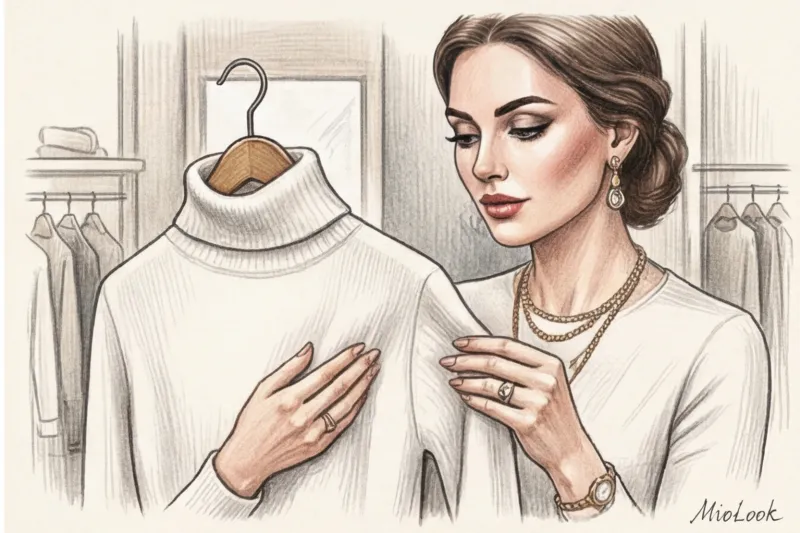
Look for "2-ply" or "3-ply" on the tags of premium brands (or ask a sales associate). This refers to the number of strands in the yarn. Double or triple twist makes the yarn much denser and more resistant to abrasion than single (1-ply).
Lastly, beware of "traitorous blends." Combining natural wool with acrylic (for example, 70% wool, 30% acrylic) is the worst possible combination. Acrylic fibers are incredibly strong. When they pill with wool, they form so-called "anchor pills." These are impossible to remove by hand—they cling tenaciously to the fabric, pulling entire loops along with them.
Caring for your wardrobe requires mindfulness. Treat natural knitwear with the same care you would your own hair. Avoid harsh cleaning products, let your garments rest, and choose the right shampoos (liquid laundry detergents)—and your investment in quality will pay off with years of impeccable appearance.