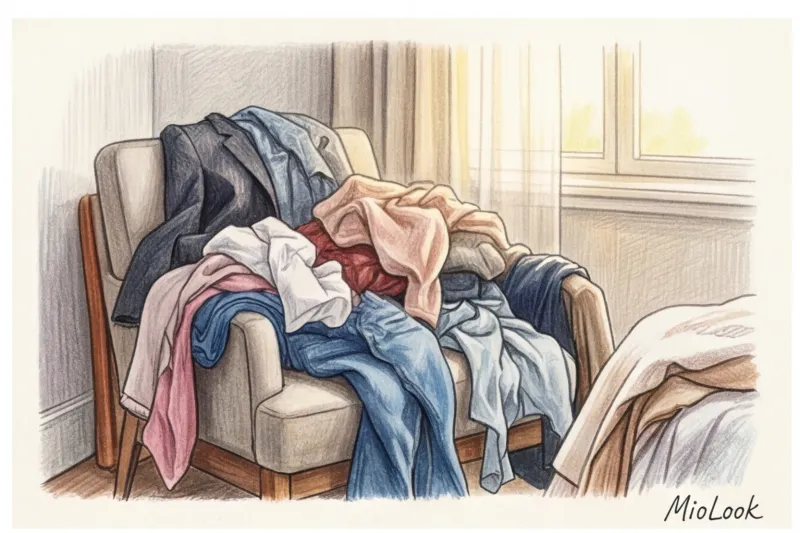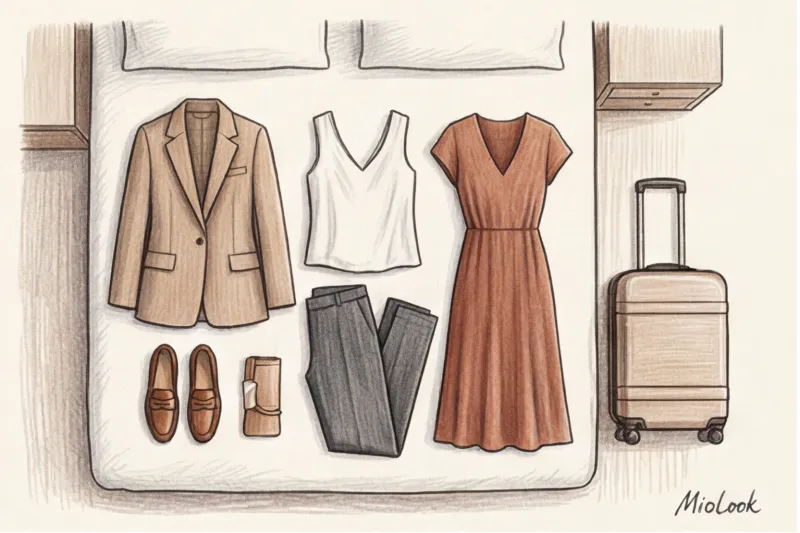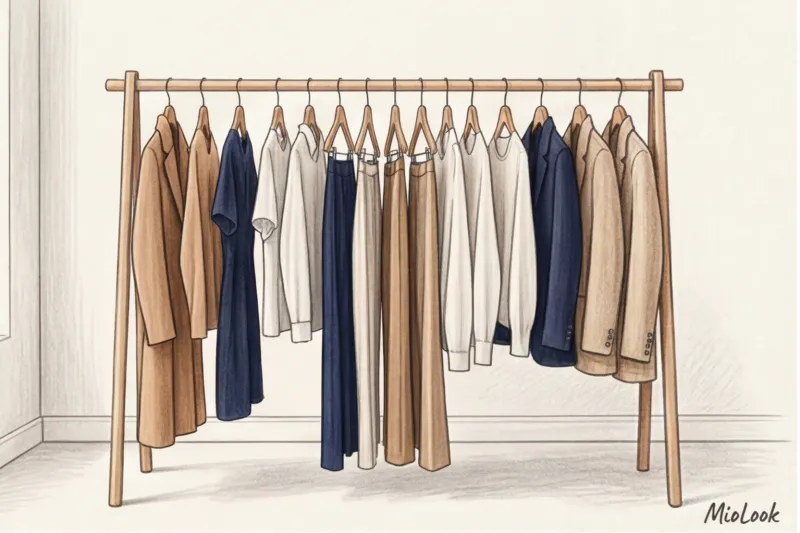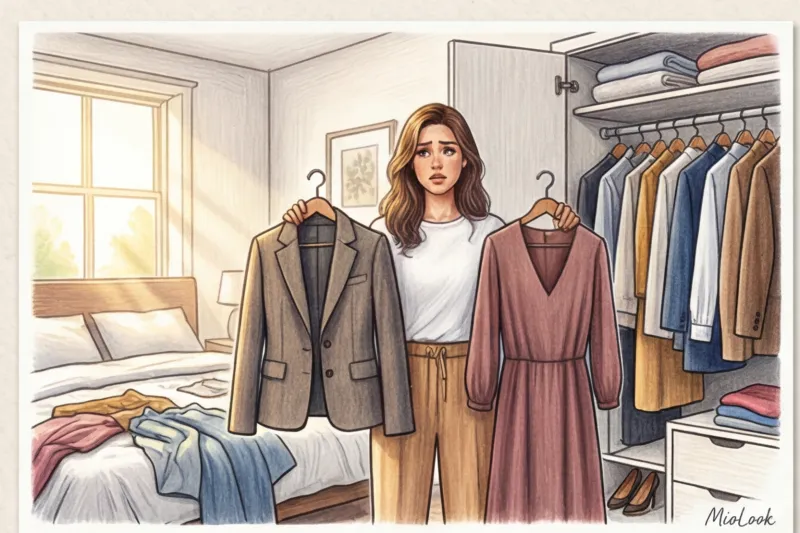
Have you ever noticed this feeling? You're standing barefoot on a cold floor, staring into a packed closet, and the only thought pulsing through your head is, "I have absolutely nothing to wear." According to a large-scale Marks & Spencer survey, women spend an average of 17 minutes each morning choosing clothes. Seems like a small amount? But those minutes add up to four full days (96 hours) a year wasted on stress and rummaging through hangers.
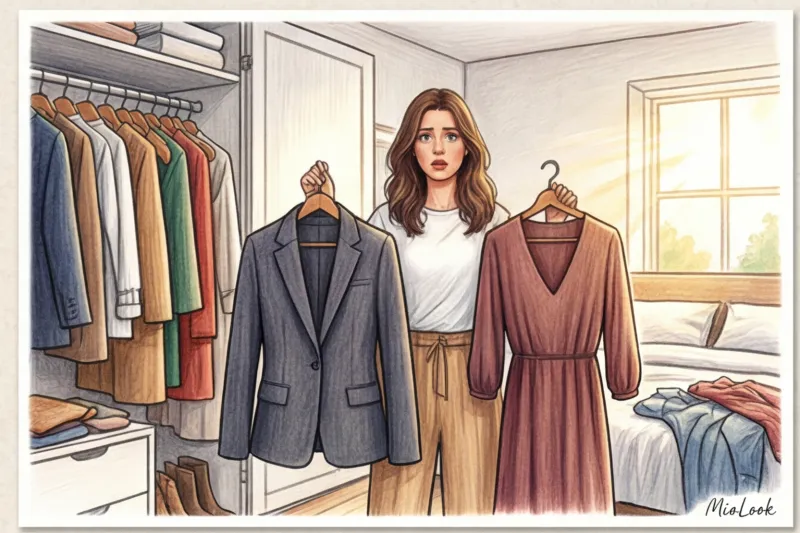
People often come to me with a request, How to plan your wardrobe for the week to regain your morning peace and time for a delicious coffee. Interestingly, we easily learn to optimize other areas of our lives. We discussed this in more detail in our The complete guide to the travel wardrobe planning app — after all, a digital approach reliably prevents overweight luggage. It also saves you from morning chaos and the notorious "closet full of clothes for your imaginary life, but nothing to wear to the office" syndrome.
Morning Paralysis: Why We Lose 4 Days a Year in Front of an Open Closet
Why do we freeze even when we have dozens of great things to wear? Psychologist Roy F. Baumeister coined a very precise term for this condition: "decision fatigue." Our brain has a strictly limited amount of willpower per day. Every micro-decision—whether to wear a skirt or trousers, black pumps or beige loafers—burns up this resource even before you've opened your work email.
Over 12 years of practice, I've seen this hundreds of times. One of my clients, Elena, a top manager at a fintech company, had a magnificent wardrobe of expensive suits (the total cost of her basic office capsule suit exceeded €5,000). Yet, she was consistently late for morning meetings at least three times a week. She was paralyzed by the fear of looking "out of place" or "too boring." Until we implemented a flexible planning system, she continued to impulsively buy new clothes, sincerely hoping that another silk blouse would miraculously solve the problem.
Access to MioLook for €0.99 — one-time payment
A smart AI stylist will choose the perfect look for you.
Get access — €0.99 onceThe "Sunday Prep" Myth: How to Plan Your Weekly Wardrobe Without Stress
You've probably read the "golden rule" of time management in glossy magazines: pack five outfits for the entire work week and diligently hang them on a chair on Sunday evening. As a practicing stylist, I can officially declare that this advice is hopelessly outdated and often simply doesn't work.
Firstly, it ruins your weekend evening with a dreary routine. Secondly, it completely ignores the human factor. A woman is not a mannequin. On Wednesday, your mood might change, the weather might suddenly change (they promised sunshine, but instead it turns to freezing rain), or you might simply wake up slightly bloated and absolutely refuse to wear the tight pencil skirt you'd so presumptuously planned for Sunday.
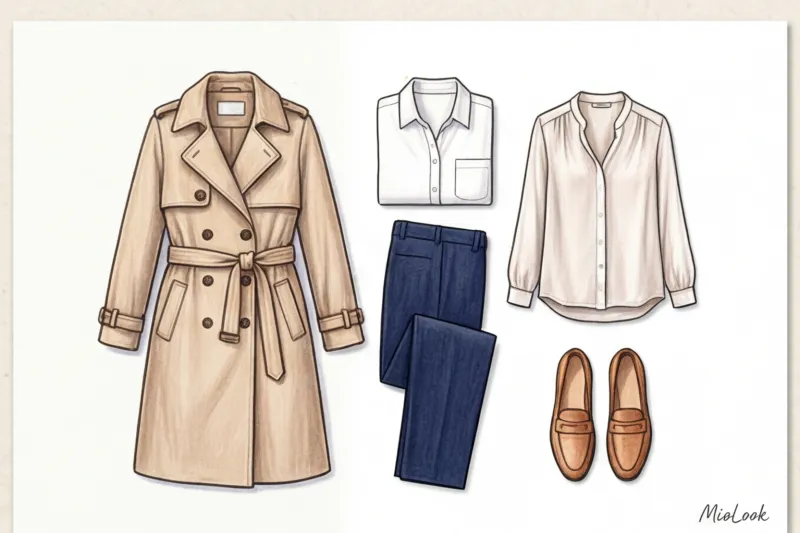
Instead, I offer my clients the "3+2 Matrix" concept (3 rigid outfits + 2 flexible ones). You plan three rigid outfits for days with important presentations or meetings. Then, for the remaining two days, you assemble a "flexible pool" of interchangeable items. This gives the brain the illusion of choice (which instantly reduces stress), but physically limits that choice to three or four proven items.
Rigid wardrobe planning fails for the same reason strict diets do—they leave no room for your natural emotional and physical fluctuations.
Stylist Strategy: Formula for Looks Based on Energy Level and Color
As a certified colorist, I always teach how to use clothing as a tool for managing your mood. According to the PANTONE Color Institute (and numerous studies in color psychology), shades directly influence our heart rate, hormonal levels, and concentration. Your clothing choice should strictly correlate with your energy curve throughout the week.

Monday and Tuesday: Powerful looks and clean lines
These are days of peak concentration and the launch of new processes. Your energy levels are still high after the weekend, so your clothes should help you maintain focus, not make you feel lazy. Use the concept of power dressing to quickly get back into the work rhythm.
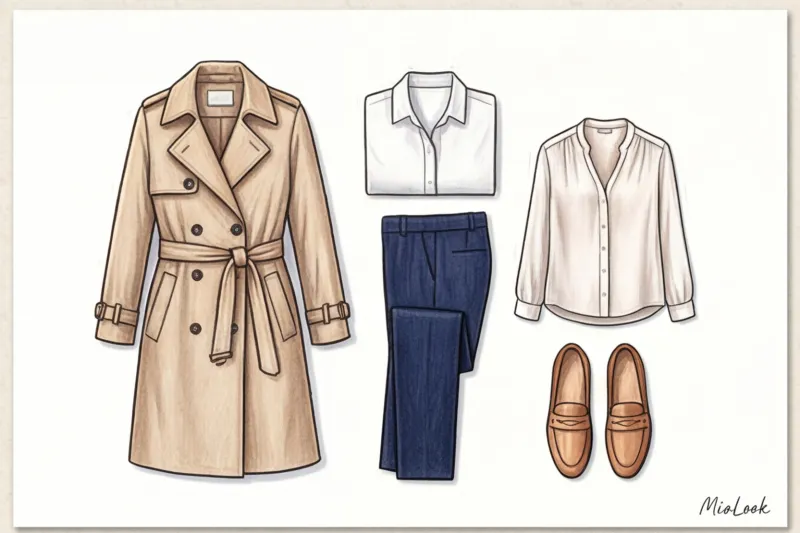
- Colors: Monochrome, deep navy blue—it's subconsciously perceived by others as authority and reliability. Graphite and cool beige also work well.
- Forms: Architectural cut. Choose dense fabrics that hold their shape well: wool crepe, gabardine.
- Practice: A pantsuit with a defined shoulder line literally forces you to physically straighten your back and brace yourself.
Wednesday and Thursday: Color to Maintain Focus
Wednesday is the midpoint of the week and the peak of cumulative fatigue. If you wear a dull gray sweater on this day, your face will look haggard and pale. Now is the time to find the right color to maintain a fresh appearance.
- Colors: Emerald, rich burgundy, deep terracotta. These shades illuminate the skin and energize without the overpowering, overpowering aggression of overt red.
- Forms: Softer, more enveloping textures. Thick knits, flowing silk.
- Practice: A silk blouse in a rich, complementary shade paired with basic straight trousers.
Friday: Smart Casual Without Losing Your Status
Friday is a day for a natural transition from work tasks to personal plans and evening meetings. However, I often see a mistake here: employees come to the office in baggy, cozy hoodies, completely losing their professional appearance.
The secret key is the right denim. If you're wearing jeans to the office, they should be a crisp dark indigo color with no fraying, embellishments, or holes. Be sure to pair them with a structured jacket to instantly elevate the look from relaxed to elegant smart casual.
Access to MioLook for €0.99 — one-time payment
Start creating perfect images with the help of artificial intelligence
Get access — €0.99 onceWork Capsule Math: 5 Things That Will Save Any Morning
The above strategy won't work if you don't have the right technical foundation in your closet. This foundation should consist of items you can reach into with your eyes closed and are guaranteed to coordinate with each other.
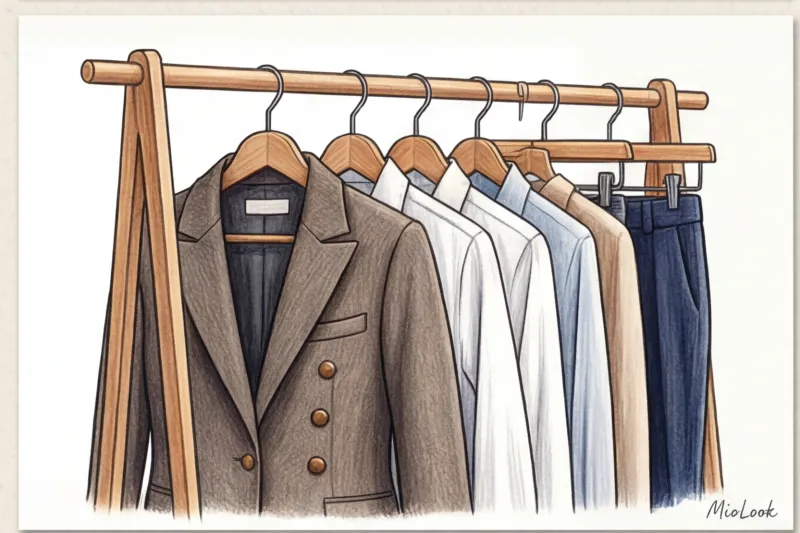
Let's permanently replace the abstract phrase "high-quality fabric" with concrete physical parameters. Here are 5 lifesavers that are objectively worth spending between €100 and €300 per unit, because their cost per unit (CPW) will approach zero:

- Structured Jacket: A semi-fitted silhouette made from a wool blend (with the addition of 2-5% elastane to ensure the fabric does not restrict movement at the computer).
- Ideal trousers: Straight or trendy palazzo pants made from wrinkle-resistant fabric (look for crepe twist or viscose).
- Silk blouse: Choose thick silk (at least 19 momme) that flows delicately but does not show through the contours of your underwear at all.
- Thick basic t-shirt: Only cotton with a density of at least 180 g/m² - this T-shirt keeps its shape, does not stretch after the first wash and does not look like underwear.
- Status loafers: Leather, with a slightly thick sole, they will save you on days when you don’t have the physical strength to wear heels, but the dress code requires closed shoes.
The golden rule for stylists: for every one "bottom" (pants or skirt), there should be at least three different "tops." A well-designed wardrobe of just 12 such carefully chosen pieces easily yields over 35 unique combinations. But let's be honest: this approach doesn't work if your corporate dress code (for example, at a bank or government agency) requires a regulated uniform of a specific color, with no room for deviation. In that case, your only personal freedom is in choosing your glasses, watch, and bag.
Digital Order: Why an App Replaces a Stylist and Saves Money
Remember: we've long been accustomed to digitizing our finances, counting steps, and monitoring calories, but for some reason, our wardrobe stubbornly remains a "blind spot" where chaos reigns. Digitizing clothing instantly removes this enormous cognitive load.
Instead of standing sadly in front of the shelves, you simply open the "smart wardrobe" feature in MioLook While you're in the taxi home from work or drinking your morning coffee on Saturday. The virtual fitting room allows you to try out dozens of unexpected combinations in 5 minutes, without even taking your clothes out of your closet.
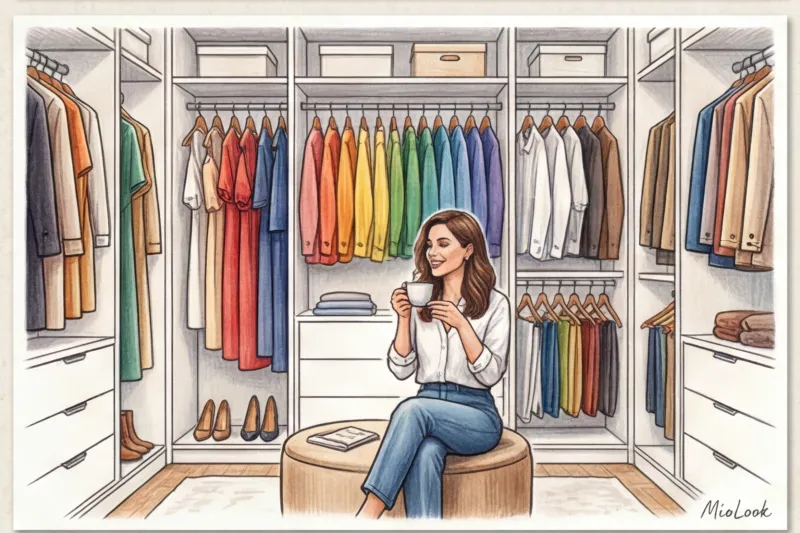
Plus, digital planning ruthlessly reveals the true wear and tear of your clothes (the famous Cost Per Wear metric). When an impartial app shows you've worn a trendy, sophisticated €200 blouse just once in six months, while comfortable, basic €80 trousers have worn them 40 times (reducing the cost per wear to €2), your approach to shopping and sales changes forever.
Checklist: 4 Steps to a Perfect Morning Routine
It's time to move from inspiration to action. Here's a concrete, step-by-step plan for this weekend that's guaranteed to transform your daily routine:

- Step 1: Digitization of the database. Take out and photograph your 10-15 most important work items in good daylight. Upload them to the app. This will take about half an hour, but will save you dozens of hours of sleep in the future.
- Step 2: Create 5-7 "safe" images. Create emergency kits right in your virtual planner for when you're critically oversleeping. Save them in a separate "Emergency" folder.
- Step 3: Evening reconciliation (in one click). The day before work, simply open the weather forecast and check your schedule (is there a challenging presentation or routine laptop work coming up?), then choose a ready-made look from the app. No real fittings or piles of clothes on your bed.
- Step 4: Seasonal separation. Put away (both physically and digitally) anything that's out of season, requires dry cleaning, minor repairs, or shortening. Only items that are 100% ready to wear should be accessible.
The secret of stylish, confident, and always on-time women isn't sacrificing sleep and waking up at 5 a.m. to achieve the perfect hairdo or find the perfect shoes. Their secret lies in a working system that doesn't require daily struggles. When you stop treating your wardrobe like a complex puzzle that must be solved from scratch every morning and turn it into a manageable, digital matrix, you regain control. Clothes are meant to help you achieve your goals, not steal your precious four days of life every year.