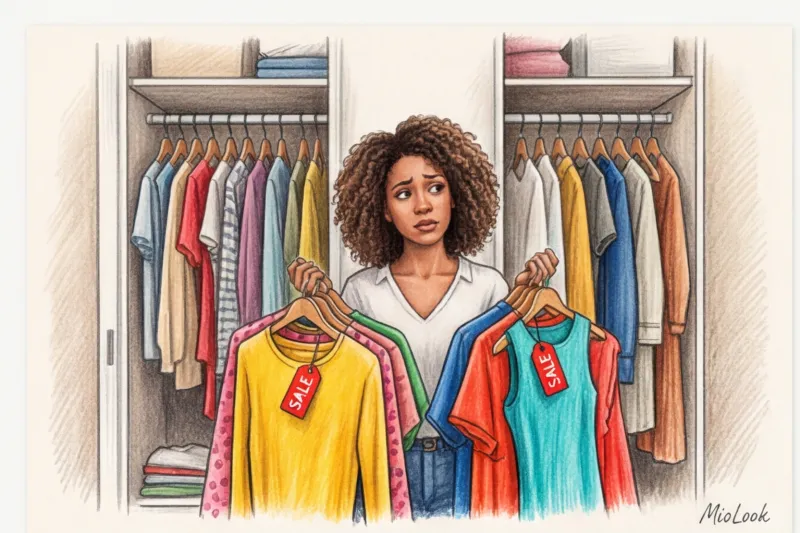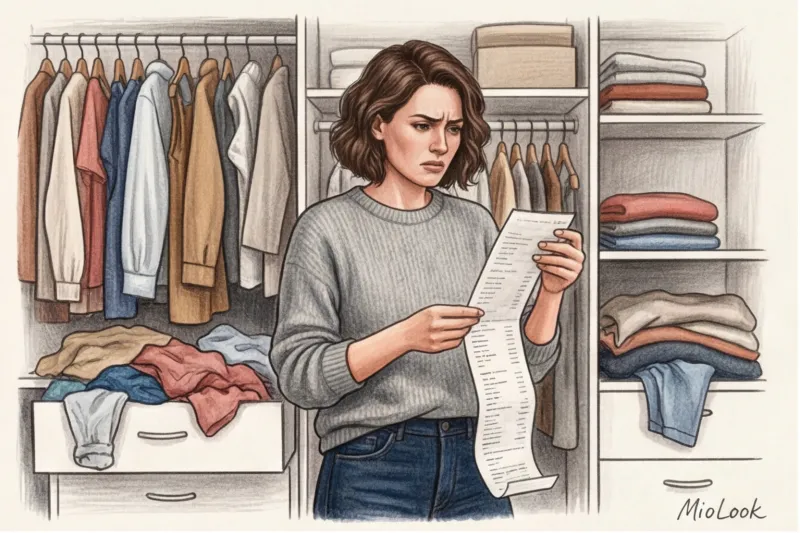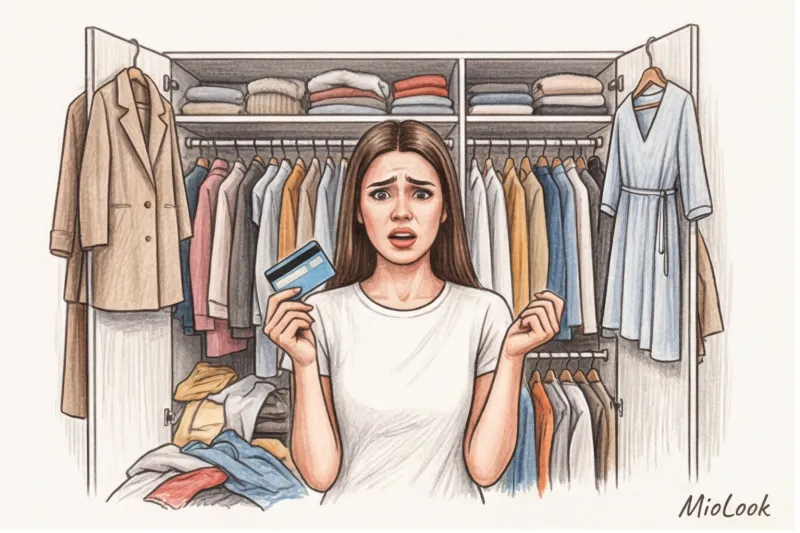
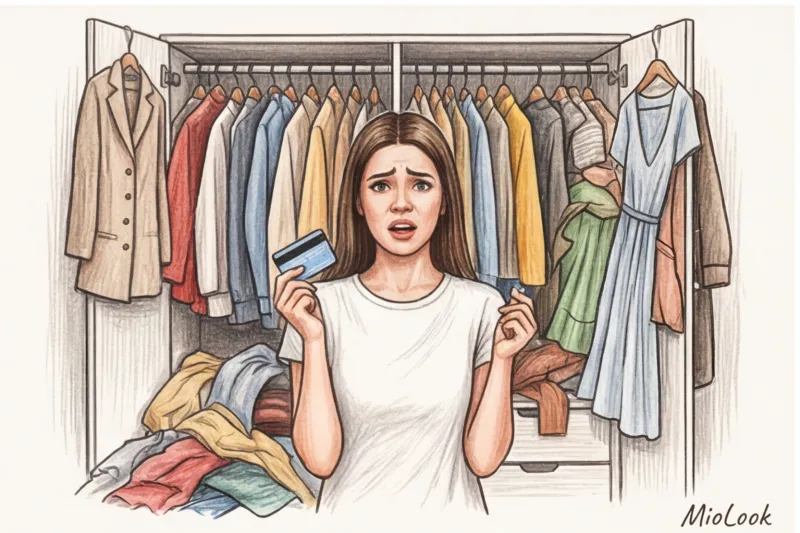
Do you know what the most common complaint is during a first style consultation? The woman opens a closet, where hangers are literally spilling out, surveys the mountains of textiles, and sighs, saying, "I spend a fortune on clothes, but I have absolutely nothing to wear." It's a classic paradox of modern consumerism: we buy more, spend more often, yet our level of satisfaction with our appearance is approaching zero.
When we discuss, How to plan a clothing budget Most financial advisors suggest the standard approach of setting aside 10% of your salary as a "shopping allowance." I strongly disagree with this approach. As a stylist and textile expert, I suggest looking at your wardrobe not through the lens of limitations, but using the concept of "wardrobe depreciation." Your budget is an investment portfolio, where the quality of fabric and cut directly impact your financial return.
We talked in more detail about why we buy unnecessary things and how to break this vicious circle in our the complete guide to emotional shopping Today, we'll talk about raw numbers, the mathematics of style, and how to make every cent work for your personal brand.
The Illusion of Savings: Why Our Closets Are Full, But Our Wallets Are Empty
The fast fashion trap slams shut. A brand offers you an ultra-fashionable top for just €15. Your brain instantly calculates the benefit: it's cheaper than a business lunch at a restaurant! Dopamine rushes, and the purchase becomes easy and painless. But let's look at the real cost of this "savings."
According to a major 2023 report by the Ellen MacArthur Foundation, the lifespan of clothing has decreased by 36% over the past 15 years. The industry has conditioned us to think that clothing can be discarded after a few washes. The average mass-market T-shirt is now worn only 7-10 times before losing its shape, fading, or pilling.
When you buy cheap, you pay twice, or even three times. You pay for the item itself, then waste time trying to get it looking presentable (the endless ironing of cheap viscose), and when it's completely worn out, you go buy a new one. This cycle drains your budget much more than a one-time purchase of an expensive but high-quality item.
Access to MioLook for €0.99 — one-time payment
A smart AI stylist will select the perfect look for every day and help you avoid unnecessary spending.
Get access — €0.99 onceHow to Budget for Clothing: The Wardrobe Investment Method
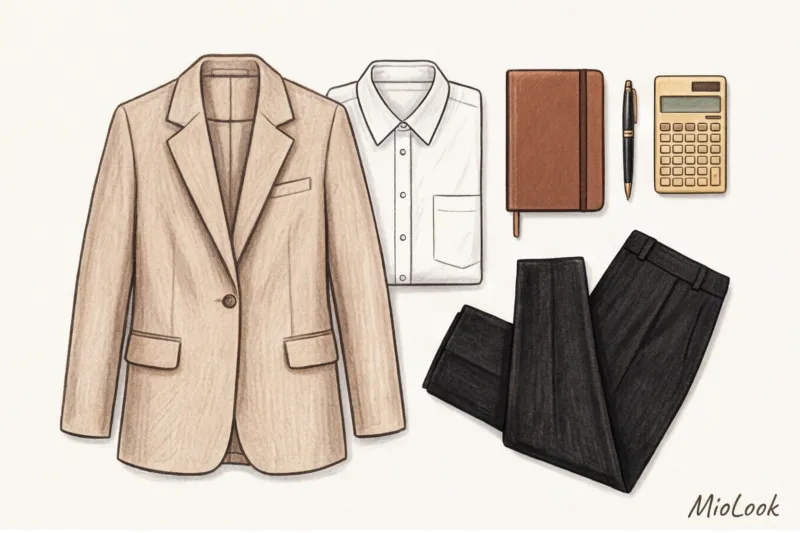
Abandon rigid limits that only make you want to break them. Start treating clothing purchases as an investment in your comfort and status. A stylist's key tool in this regard is the Cost Per Wear (CPW) formula.
To calculate the CPW, you need to divide the item's price by the expected number of days you'll wear it. And here lies the main mistake of beginners: they forget about a hidden variable—the durability of the fabric. You can't simply divide the cost of a sweater by 90 days of winter if the fabric won't survive even the tenth wash.
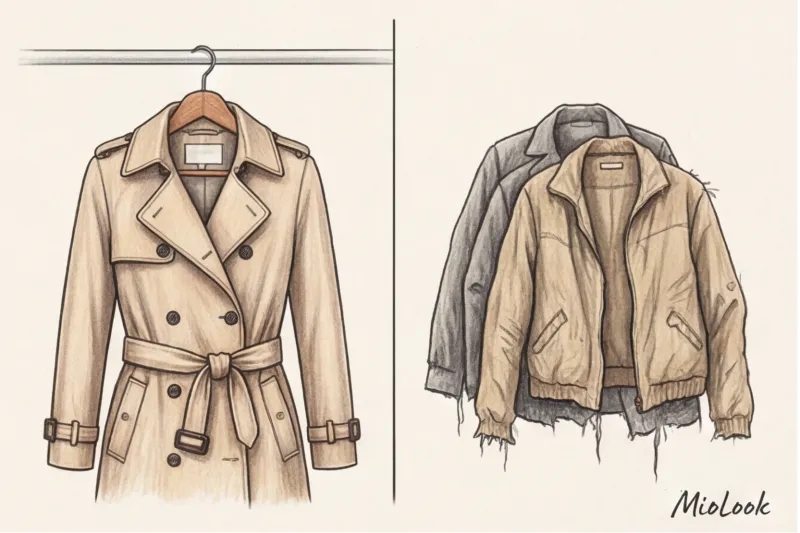
"A cheap item made from poor fabric always has the highest cost per wear in your closet. It's ironic, but a basic jumper for €150 costs you less than a trendy top for €15."
Let's do the math. You buy a 100% acrylic sweater for €25. Due to the nature of the short synthetic fibers, it will pill after just three wears. Total: €25 / 3 = €8.30 per wear. Now let's take a basic 100% merino wool sweater for €120. With proper care, you'll wear it at least 50 times over two to three seasons. Total: €120 / 50 = €2.40 per wear.
When it does NOT work: The CPW formula does not apply to evening and wedding dresses. If you're buying a dress for a special occasion, you're paying for the experience, photos, and memories, not for practicality.
The 70/30 Rule: Balance Between Base and Trends
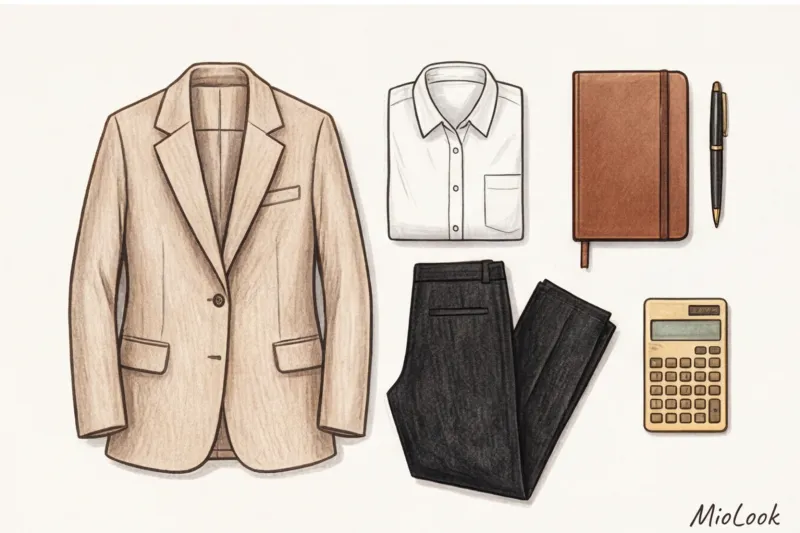
To ensure your budget doesn't stretch too thin, I recommend my clients adopt a 70/30 ratio. Around 70% of your annual budget should go toward wardrobe essentials—pieces that shape your silhouette and are worn frequently. Here, we choose high-quality fabrics, impeccable cuts, and a calm palette. For these pieces, we look to mid-range brands (COS, Massimo Dutti) or premium stores.
The remaining 30% is your experimentation fund. Microtrends, crazy neon colors, statement jewelry. This is where you can and should indulge in mass-market options like Zara or H&M. If leopard-print tights go out of style in a month, you won't regret spending €10. This ratio serves as an excellent hedge against impulsive spending large sums on "disposable" season hits.
Life Chart: How to Distribute Money Based on Your Daily Life
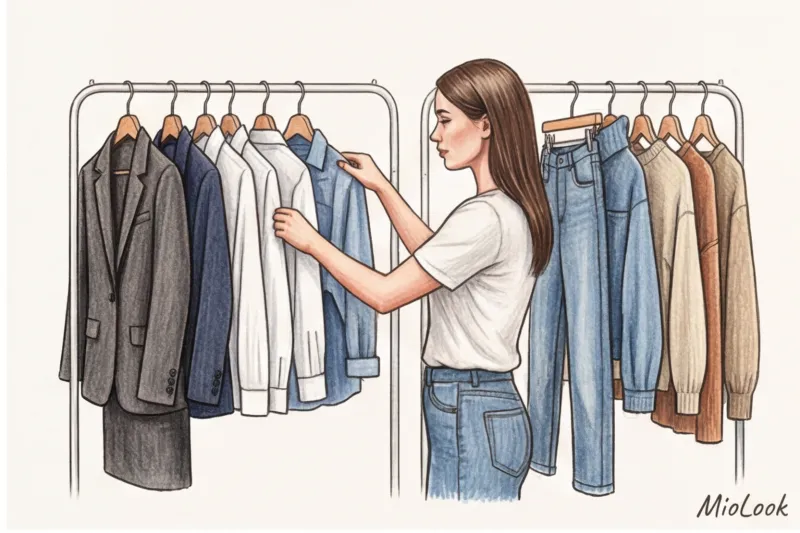
One of my clients spent around €1,500 a year on shopping. While sorting through her wardrobe, I discovered a stunning collection of flowing dresses, linen shorts, and straw hats. The problem was that she worked at a bank with a strict dress code and took vacations for exactly 14 days a year. The rest of her budget was used for her office attire (which she wore 240 days a year)—cheap knitwear and synthetic pants, which were unbearably stuffy.
This is the most common financial mistake: buying clothes for the life you dream of, not the one you're living. To solve this problem, draw your "life diagram."
- Take a piece of paper and draw a circle (your average month).
- Divide it into sectors based on percentages: office work, remote work, walks with children, sports, evening outings, dates.
- Now superimpose this diagram on your budget.
If you spend 60% of your time in the office, then 60% of your money should be invested in business suits, quality shirts, and comfortable, stylish shoes. Sequined dresses for New Year's parties should account for no more than 5-10%.
Your perfect look starts here
Join thousands of users who look flawless every day with smart capsules from MioLook.
Get access — €0.99 onceThe Sale Myth: Why Discounts Eat Up Your Budget
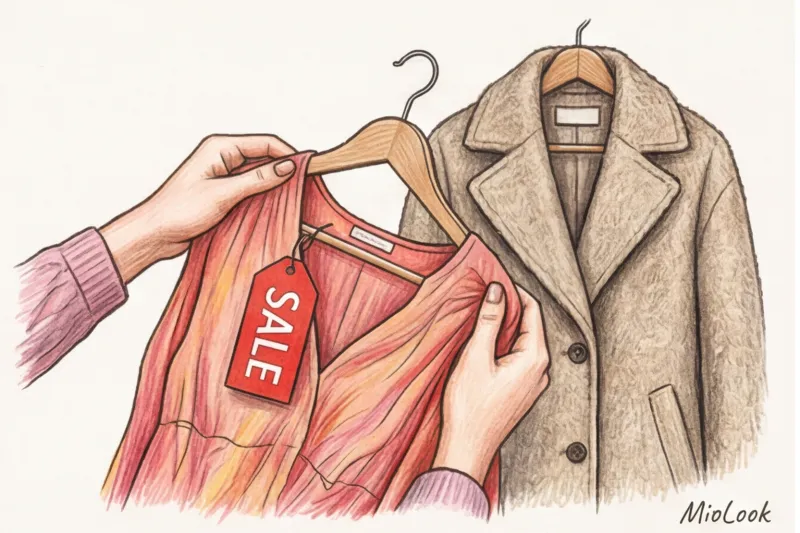
I often say something marketers don't like: sales are the main enemy of your wardrobe budget. They're not an act of charity on the part of retailers, but a financial tool for clearing out unsaleable inventory.
The psychology of discounts works flawlessly. The brain perceives a crossed-out price tag as an urgent call to action. We don't buy the item itself; we buy a sense of cleverness ("Wow, I snagged that cashmere at 70% off!"). Behavioral economics research confirms that 80% of items purchased at a discount of more than 50% are worn by their owners less than three times.
During sales, we often fall victim to the "orphan item" effect. You buy a complex asymmetrical fuchsia skirt for €20 (it was originally €90!). You bring it home and realize there's no matching top. You go to the store and buy a top for €50, then some shoes for €80 to complete the look. Total: €150 in "savings."
Use the "full price" rule I teach all clients: If you're not willing to buy this item right now at 100% of its price, you don't need it even with an 80% discount.
Pre-purchase checklist: a textile audit that will save you money
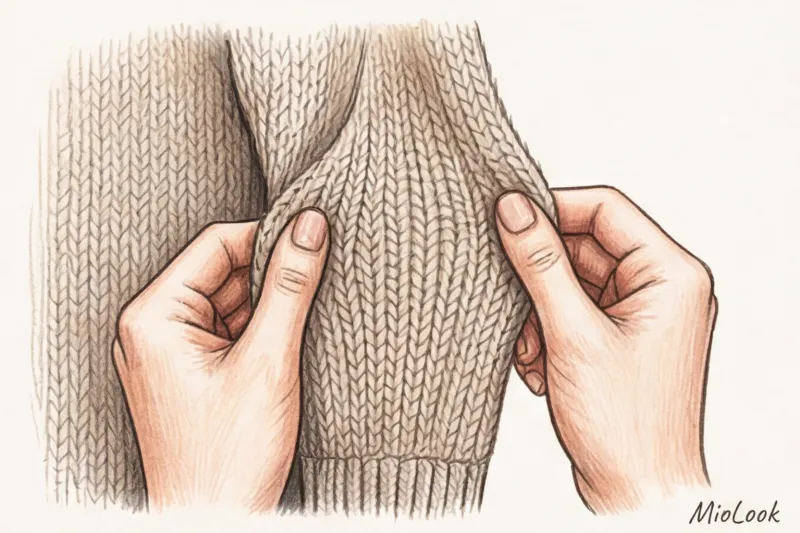
Over the years of working with fabrics on set, I've developed an automatic habit of scanning a garment with my hands before looking at the price tag. No brand will write on the label, "This shirt will stretch after washing." You have to be able to tell for yourself.
Before you head to the checkout, do a quick textile audit:
- Crunch test: Squeeze the edge of the fabric tightly in your fist for 10 seconds and release. If it's hopelessly wrinkled, it'll require a morning steaming session and will lose its presentable appearance by the time you get to work. Leave it at the store.
- Fabric density assessment: Hold the fabric (especially T-shirts and shirts) up to a light source. If you can clearly see the outline of your fingers through it, the material is less than 150 g/m². Such an item will quickly become covered in pinholes. Look for heavyweight cotton.
- Checking the seams: Gently tug the fabric sideways near the side seam. If you see any gaps or loose threads, the seam will unravel after a couple of weeks of wear. A quality garment will have dense, close stitches (ideally, a closed hem or French seam).
- Reading labels: All-natural fabrics are great, but 5-10% elastane, nylon, or polyamide in trousers or a jacket is a blessing. They'll keep your knees and elbows from stretching. However, if you see 80% acrylic or polyester in your winter clothing, you're looking at a financial hole that won't keep you warm but will make you sweat.
Smart Control: How Technology Helps You Stay Within Limits
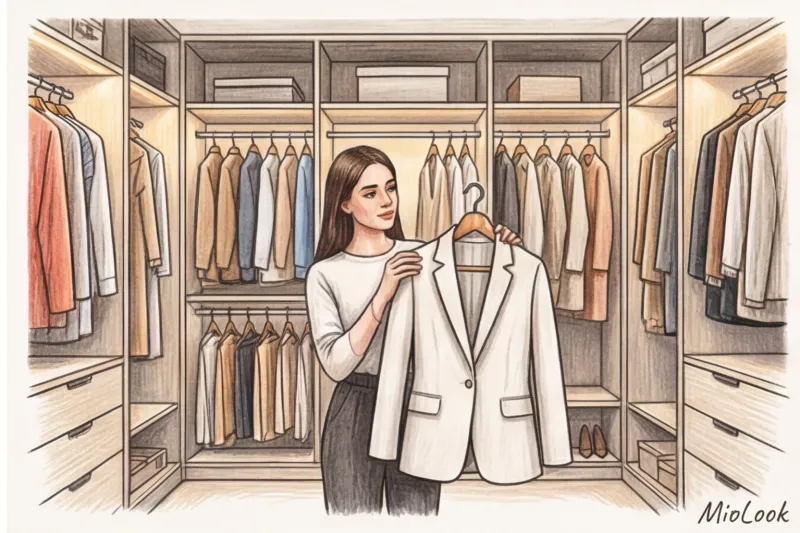
Stylists used to recommend using complex Excel spreadsheets to manage your wardrobe. Today, this process has become much simpler and more elegant. The main reason for budget overruns is buying duplicates. We simply can't remember what's hanging in the far corner of our closet on the top shelf.
When I first convinced a client to digitize her closet, we were surprised to discover she had six identical navy blue turtlenecks. She'd buy a new one every time she felt like she had "nothing to wear under her jacket."
This is where technology saves real money. Using an app MioLook You can take photos of all your items and upload them to a virtual closet. Before buying your next pair of black pants, you open the app and create a collage with your existing blouses and shoes. If the new item doesn't create at least four or five new outfits with your current wardrobe, the purchase is canceled.
Visualizing what you ALREADY HAVE instantly reduces the level of shopaholism and helps you plan targeted, truly necessary purchases.
Summary: Financial Freedom Through Mindfulness
Budgeting for clothing isn't about strict restrictions or denying yourself small pleasures. It's about respecting your own hard work and the desire to look expensive and classy without relying on credit cards.
To change your financial habits today, take three simple steps. First, draw your "life chart" and honestly examine where your time is spent. Second, digitize your current wardrobe to avoid buying duplicates. And third, before you go to the checkout, divide the price of the item you like by the number of days you can realistically wear it. I'm sure you'll be pleasantly surprised by the math behind style.