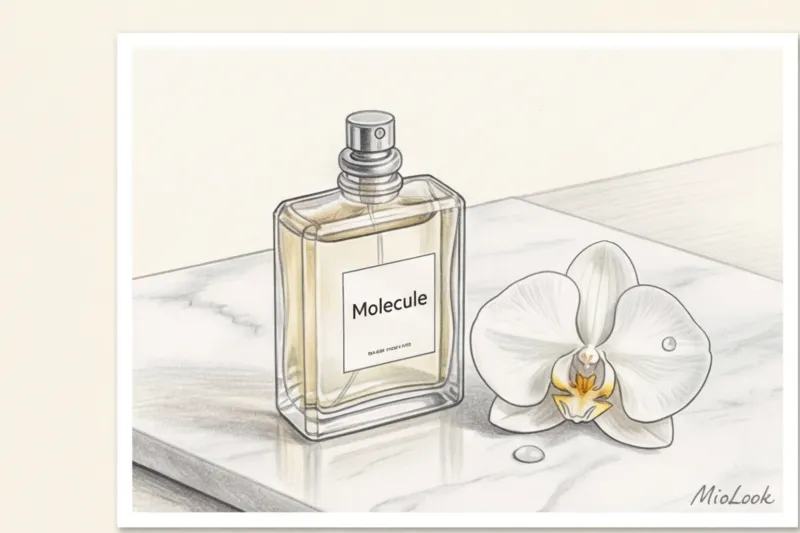
In twelve years of working as a personal stylist, I've learned one ironclad rule: a look doesn't end where the last button of your blazer fastens. True elegance always leaves an aftertaste. And more often than not, that aftertaste is olfactory. Fragrance structures your look just as architectural tailoring structures your silhouette. We've covered the basic principles of creating a fragrance wardrobe in more detail in our article. The complete guide to the art of leather veneering.
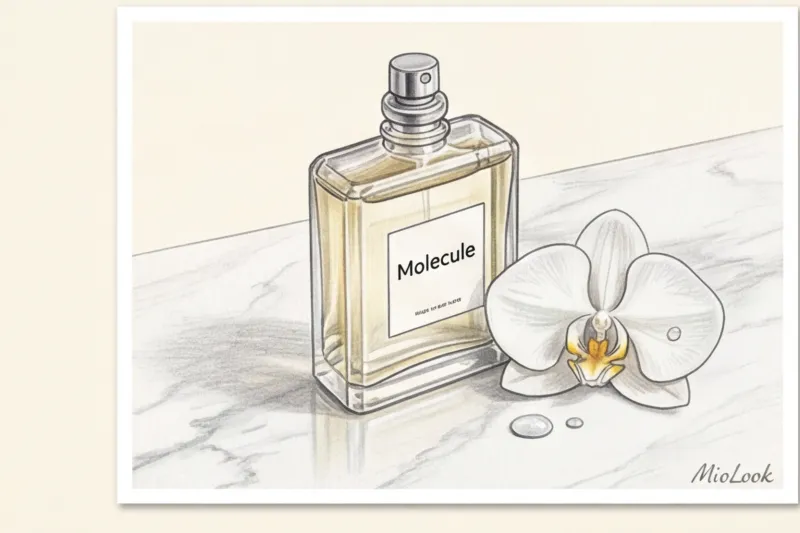
Today, minimalist perfumery has become a new status symbol. And the most common question I hear from clients while sorting through their cosmetics shelves is: What perfumes can the molecule be mixed with? To achieve a unique, expensive, yet not overpowering sillage? Many perceive Escentric Molecules simply as a "booster" for their favorite perfume. But as a stylist, I suggest viewing this bottle differently. It's your basic white silk shirt. A primer. The perfect canvas that can either save a failed perfume or irrevocably ruin a masterpiece.
The Iso E Super and Ambroxan Phenomenon: Why Molecule Is the White Shirt of the Perfume Wardrobe
In 2006, perfumer Geza Schoen revolutionized the world with the release of Molecule 01, a fragrance composed of exactly one synthetic component: Iso E Super. Until then, perfumery had been built on the principle of a complex pyramid: top notes, heart, and base. Schoen, however, offered the world a "perfume without perfume."
Chemically, Iso E Super and Ambroxan (the base of Molecule 02) are large, heavy molecules. They evaporate from the skin extremely slowly. Moreover, these components have a unique property: they pulsate. You may lose the scent after ten minutes, but your companion will detect a subtle woody-amber trail from two meters away. For this molecule to fully develop, it requires warmth—36.6 degrees Celsius or higher.
"Iso E Super isn't so much a scent as an effect. It creates an aura that makes people turn their heads, but they don't even know what you smell like," noted the brand's creator, Geza Schoen.
In styling, we use basic pieces to "calm down" a complex look. If you're wearing a statement sequin skirt, you need a simple cashmere sweater to avoid looking like a Christmas tree. Molecule performs the same function in an olfactory wardrobe—it brings the whole composition together, adding airiness and modernity.
How Pheromones Work in a Bottle: Science Without Marketing Myths
Let's be honest: the myth that Molecula contains genuine pheromones that make the opposite sex fall head over heels is a brilliant marketing ploy. Science is adamant: human pheromones have yet to be isolated in pure form, and synthetic analogues have no proven effectiveness.
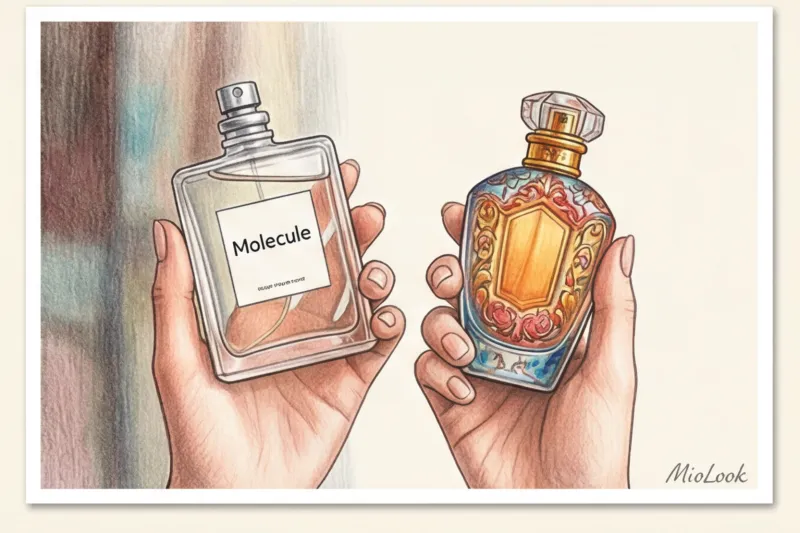
The real effect lies elsewhere. These molecules blend with your natural pH and body odor, creating a "your skin, only better" effect. You smell clean, freshly ironed cotton, warm wood, and slightly salty. It's this physicality that evokes subconscious attraction in others, not magical aphrodisiacs.
Access to MioLook for €0.99 — one-time payment
A smart AI stylist will select the perfect look to pair with your new perfume.
Get access — €0.99 onceThe main rule for a stylist: what perfumes can you mix with Molecule?
If you are wondering, What perfumes can the molecule be mixed with? , remember the golden rule of leering: combine the complex with the simple Molecule is a mono-aroma, the perfect framework. Therefore, it works flawlessly with soliflores (single-note fragrances) and light, volatile compositions.
One of my clients, a partner at a major law firm, adored the heavy, prestigious Tom Ford Oud Wood. But for morning court sessions, this perfume was too aggressive—it literally "entered the room" before she did. We solved this problem in a minute: one spray of oud and two sprays of Molecule 01 on top. The molecule worked like an eraser, blurring the oud's harsh edges, adding oxygen and transparency. The scent became politically correct without losing its character.
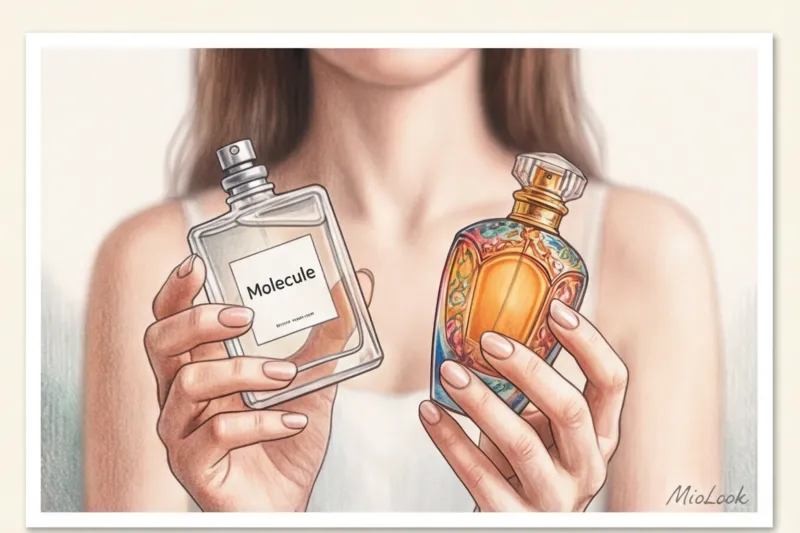
Furthermore, molecular fragrances act as an excellent primer. Citrus notes (bergamot, lemon, neroli) are chemically very volatile—they disappear from the skin within an hour or an hour and a half. If applied over a base of Iso E Super, the heavy molecule will "bind" the lighter citrus esters, prolonging their scent by two to three times.
Olfactory mud: what you absolutely should not mix with
There's a dangerous misconception that Molecule improves absolutely everything. This isn't true. According to a 2023 report by The Fragrance Foundation, the popularity of layering has led consumers to frequently ruin expensive fragrances by mixing incompatible ingredients.
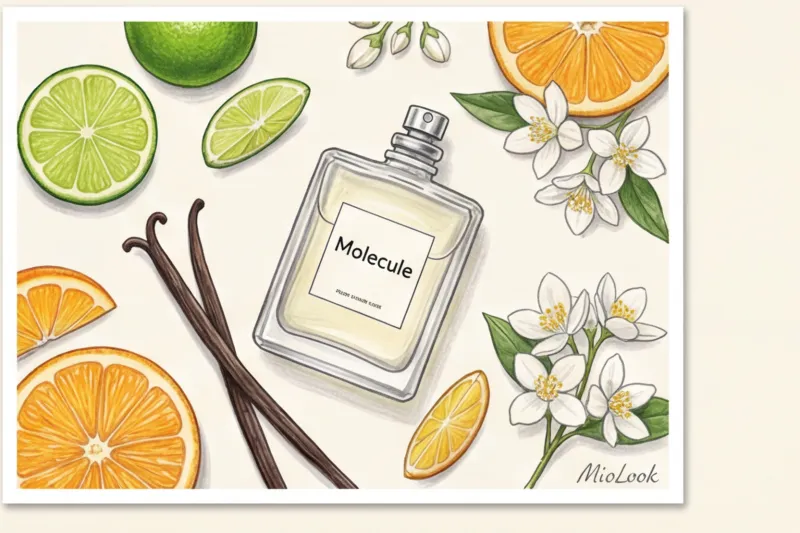
I strongly advise against mixing base molecules with complex, multi-component niches. If you apply Molecule 02 over Baccarat Rouge 540, Amouage Interlude, or heavy resinous extracts from Nasomatto, you'll get "olfactory mud." Perfumers spend years perfecting the balance in such complex formulas. Adding a powerful dose of ambroxan will simply destroy this fragile architecture, producing a sharp, itchy chemical scent that will give everyone a headache.
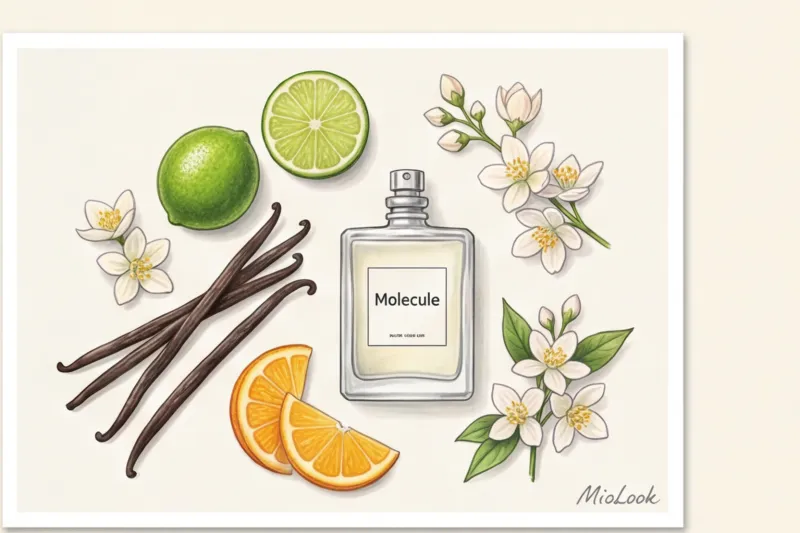
Top 5 Win-Win Combinations: Recipes from My Perfume Bar
Over years of experimenting on myself and my clients, I've developed several formulas that work flawlessly. Here are the five best combinations for your olfactory wardrobe:
- Molecule 01 + Light colognes (eg Jo Malone Wood Sage & Sea Salt). Ideal for the office, the molecule extends the life of short-lived colognes by adding a woody texture.
- Molecule 02 + Gourmand (vanilla, almond, coffee). Ambroxan has a salty, mineral undertone. If your vanilla perfume seems too cloying, Molecule 02 will work like a pinch of sea salt in caramel—it will cut the excess sweetness and make the scent more grown-up.
- Molecule 01 + White flowers (jasmine, tuberose). White floral fragrances often have a retro, "grandmotherly" feel. Woody synthetics instantly modernize them, creating a crisp, cool finish.
- Molecule 02 + Fruity notes (fig, peach). This combination creates the stunning effect of an expensive body cream or lotion. It smells clean and well-groomed.
- Escentric 04 + Woody notes (sandalwood, cedar). Javanol (the basis of the fourth molecule) combined with natural sandalwood creates an incredibly prestigious, dry trail that is ideal for business negotiations.
I once had a client receive a luxurious, yet suffocatingly sweet fragrance with a hint of praline. Wearing it unadulterated to an office with a strict dress code was considered impolite. We tried a micro-dose of it under a cloud of Molecule 02. The salty ambroxan transformed the composition so much that her colleagues began asking if she'd bought an exclusive niche fragrance.
Your perfect look starts here
Join thousands of users who look flawless every day with MioLook.
Get access — €0.99 onceApplication Technique: How to Layer Fragrances on Your Skin
Even perfect ingredients can be ruined by improper technique. The main rule of layering is: "heavy down, light up" First, you spray a heavier scent, let it settle for 1-2 minutes, and only then apply a lighter one.
But in the case of Molecule I prefer spatial layering You don't have to spray perfume on the same spot on your wrist. Apply your main fragrance to your pulse points (sternal notch, wrists), and spray the molecule in a cloud on the back of your neck and under your hair. As you move, the scents will mingle in the air, creating a shimmering, voluminous trail.
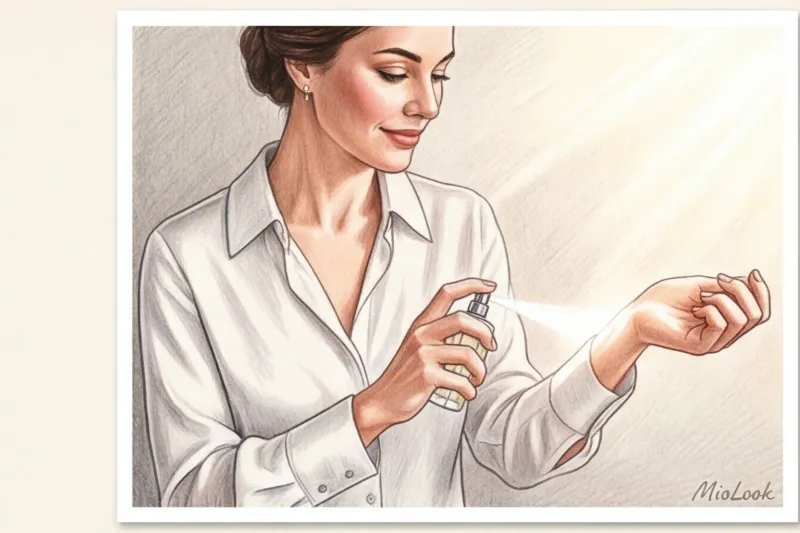
My personal experiment proved the importance of moisturizing. When I layered fragrances in the humid Mediterranean climate of Alicante, the sillage lasted until evening. But as soon as I returned to the dry, air-conditioned office environment of Madrid, the perfume began to fade within three hours. The secret is simple: molecules don't stick to dry skin. Always apply perfume over a base, unscented moisturizer—this will create a lipid mantle for the scent to cling to.
Perfume capsule: putting together a basic wardrobe of fragrances
As a stylist, I think in capsules. In the app MioLook My clients not only create visual wardrobes but also plan which scent will complement a specific look. A perfume capsule works according to the same principles of conscious consumption: you don't need 20 bottles to smell different every day.
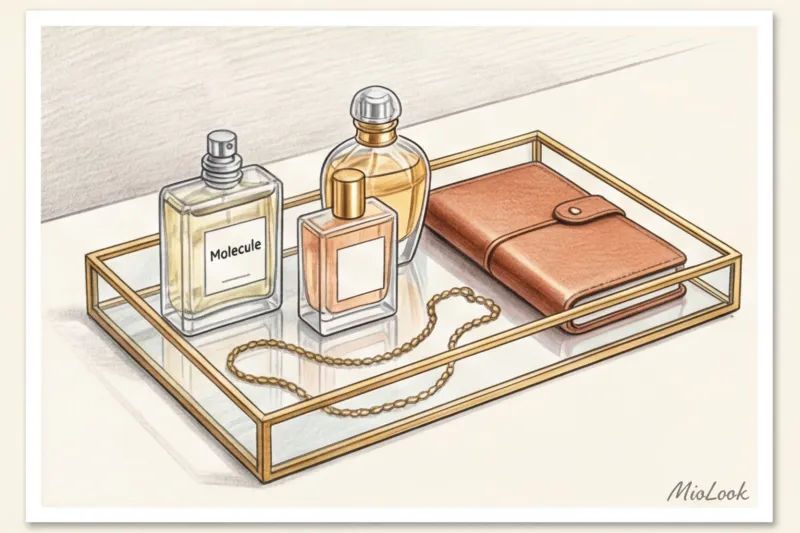
The formula for the perfect mini perfume capsule consists of just three bottles:
- Base: A bottle of Molecule 01 or 02 (your perfume blazer).
- Freshness: A light citrus, green or aquatic scent for the morning and sports (your “white T-shirt”).
- Density: A deep woody, floral or leathery scent for the evening and important meetings (your “little black dress”).
With just three bottles, you get up to seven unique combinations (each individually, molecule with fresh, molecule with dense, fresh with dense, and all three together). This not only saves money but also allows you to be the director of your own image.
Checklist: How to Find Your Unique Pairing with Molecule
Theory is dead without practice. If you're ready to find your perfect combination, follow this short checklist. But remember one strict rule: never test molecule-based mixes on a paper blotter at the store.
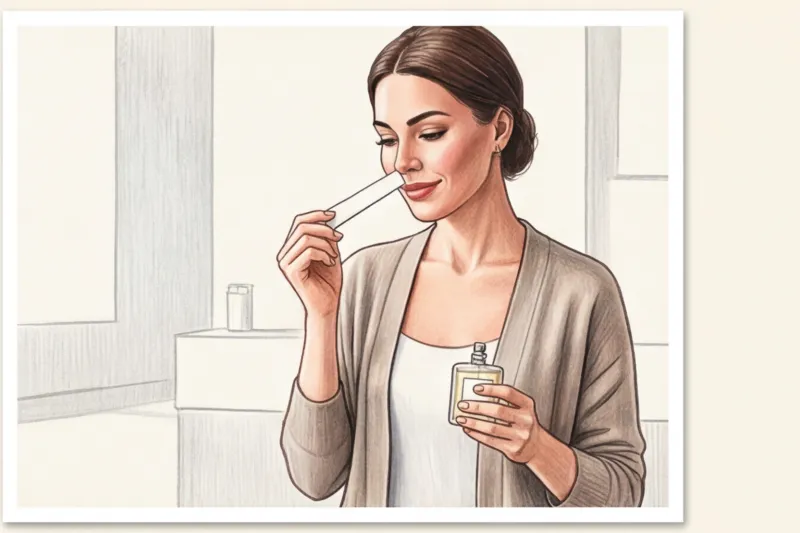
- Only leather. The paper doesn't have a temperature of 36.6 degrees Celsius or its own pH. The Iso E Super blotter smells faintly of cardboard.
- The 15-minute rule. Apply the mixture to your wrist and leave the store. Allow the molecule to warm up and react with your skin. You can evaluate the results after 15 minutes.
- Fabric test. To understand how others will perceive you, apply the mix to your neck and tie a silk scarf around it. After an hour, remove the scarf and smell it—this is your true scent trail.
- Keep a diary. In the image notes function in MioLook I always recommend that my clients write down successful perfume combinations so they don't forget the proportions.
Perfumery is not a strict science, but an art of self-expression. Treat molecular scents as a tool that expands your possibilities, not limits them. Your perfect sillage is always the result of courage combined with knowledge of the basic rules of layering.