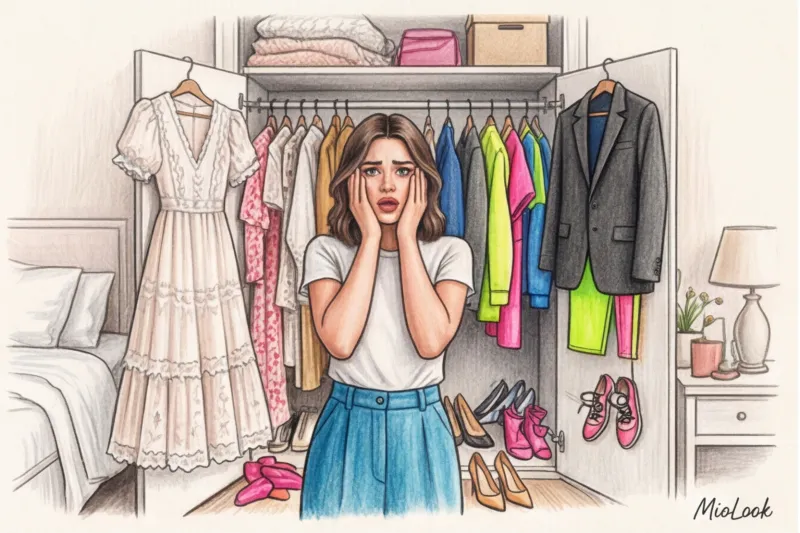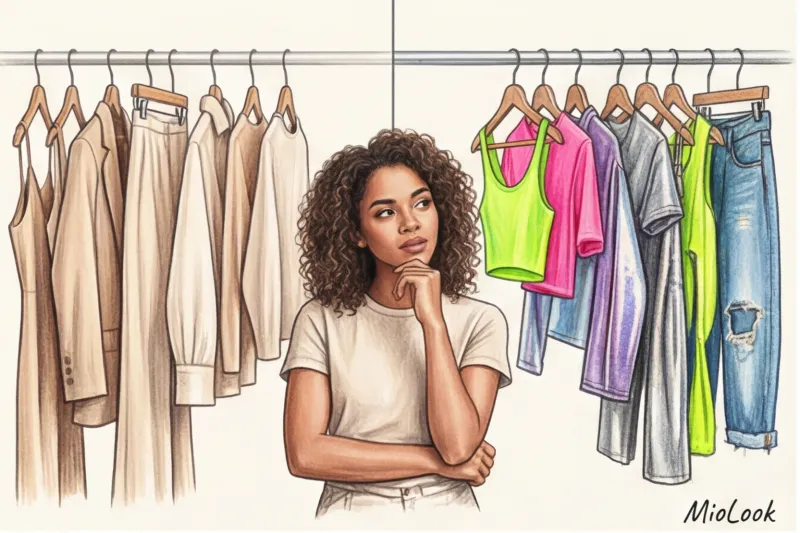
Have you ever noticed how often we stand in front of an open closet, where a smart cashmere jacket hangs primly on one hanger, while metallic cargo pants, reminiscent of the 2000s, brazenly gleam next to it? For a long time, glossy magazines taught us that to understand how to combine clothing styles, you need to wear basic pieces and add just one "crazy" detail. As a colorist and practicing image consultant, I can confirm that this rule is hopelessly outdated.
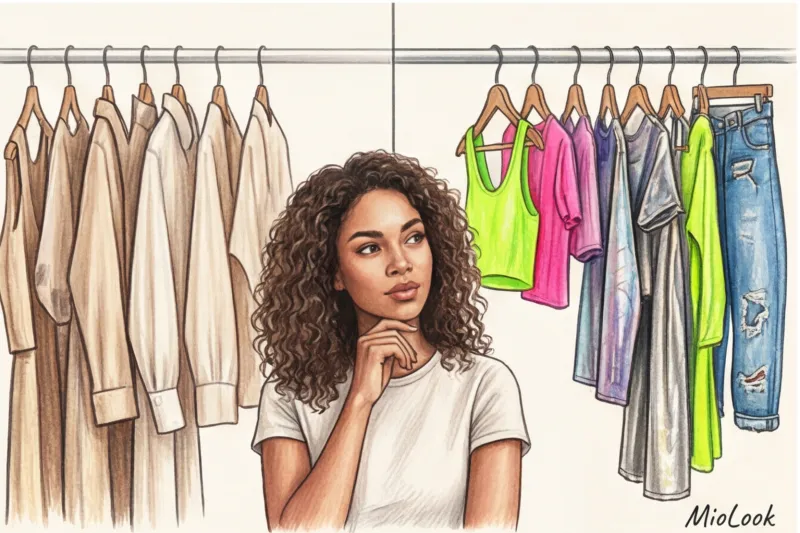
The best, most delicious, and eye-catching eclecticism occurs when two aesthetics, absolutely equal in strength but opposite in meaning, collide. For example, a Victorian lace blouse and biker leather pants. And the secret to why this looks like street style straight out of Fashion Week on some, while on others it looks like the result of a hasty get-together in the dark, has nothing to do with innate taste. It's all about the mathematics of color and texture.
The Anatomy of Eclecticism: Why the "Wear Your Best" Rule No Longer Works
According to WGSN's 2024 data, the average modern woman combines 3-4 different micro-aesthetics in her wardrobe. We no longer define ourselves by the single words "classic" or "sporty." We discussed this phenomenon in more detail in our the complete guide to fashion aesthetics , where they analyzed how internet culture has fragmented fashion into dozens of "cows" (core).
The line between tasteless hodgepodge and deliberate eclecticism is incredibly fine. Our brain is designed to constantly seek visual harmony. When we look at a person, our eyes try to latch onto a system, a pattern. Without a system, the image is perceived as visual noise, causing a subconscious rejection. Eclecticism is not chaos. It is controlled chaos, held together by a rigid internal framework.
Core Aesthetics Psychology in One Wardrobe
Why do we so desperately want to be an Old Money lady today and a Y2K rebel tomorrow? Fashion researchers agree that eclecticism today is a tool for therapeutic escapism. In an era of total instability, we reclaim control over reality, if only through clothing. By mixing and matching the incompatible, we literally piece together our identity, communicating, "I'm complex, I'm diverse, and I have a right to be."
Basic Principles: How to Combine Clothing Styles Using Color Theory
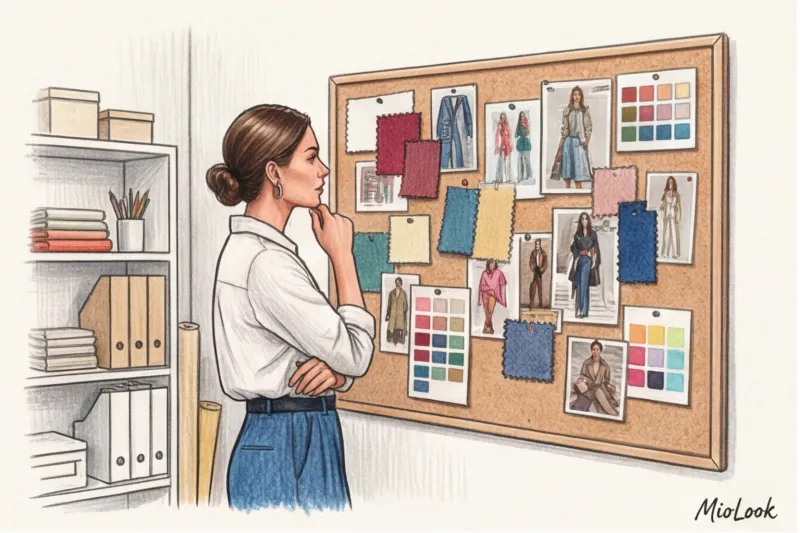
Instead of hackneyed advice, I offer my clients my signature "Color Bridge" method. As a certified color analyst, I draw on Johannes Itten's color theory, adapted for modern styling. The idea is simple: you can blend even the most polarizing aesthetics without visual noise if you connect them through a common color temperature or similar saturation.
One day, I decided to try an experiment: I paired neon lemon sneakers (the ultimate sporty street style) with a sharp Chanel-core tweed jacket. Sound like a disaster? But it worked perfectly. Why? Because the tweed weave contained a cool, yellowish undertone that perfectly matched the sneakers' neon color. Color became the bridge that brought these two worlds together.
Monochrome or all-over color is the best canvas for beginners. If you're hesitant to mix styles, create an entire look in a deep burgundy or chocolate shade. When the color is consistent, you can pair a silk skirt with a chunky fleece jacket with impunity.
The rule of contrasting textures
The most common mistake I see on the street is trying to mix different styles using items made from the same fabric. For example, classic trousers made from a smooth suit and a sports top made from a smooth synthetic. The look ends up looking flat.
In eclecticism, an iron formula works: Smooth + Rough, Dense + Flying The fabric must balance the stylistic clash. Rough denim weighing 14 ounces or more requires a soft, flowing silk pairing. Fluffy mohair begs for smooth, matte leather. It's the difference in texture that gives the look that special "high-end" quality.
Your perfect look starts here
Join thousands of users who look flawless every day. A smart AI stylist will help you create eclectic capsule wardrobes from your items.
Get access — €0.99 onceThe 70/30 Formula: The Gold Standard for Mixing Fashion Aesthetics
Forget the 50/50 rule. It visually cuts the figure in half and creates a conflict where items literally "shout" at each other, trying to steal the spotlight. In 2024, the industry finally switched to the 70/30 formula (which, incidentally, replaced the more conservative 80/20 formula of the 2010s).
How does this work in practice? You choose a dominant aesthetic that will occupy 70% of your body, and an accent aesthetic that will occupy the remaining 30%.
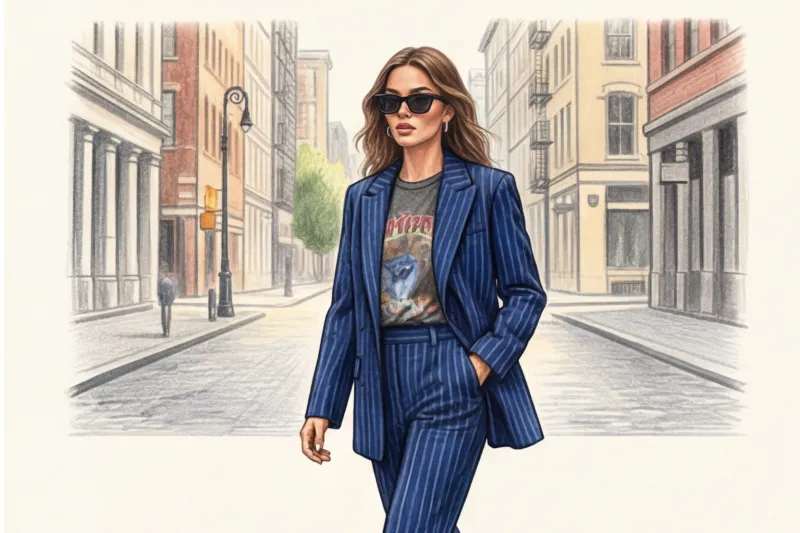
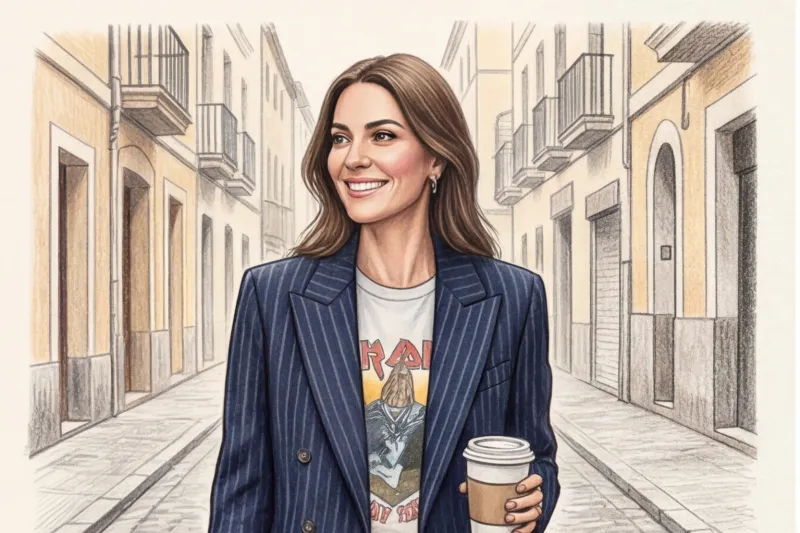
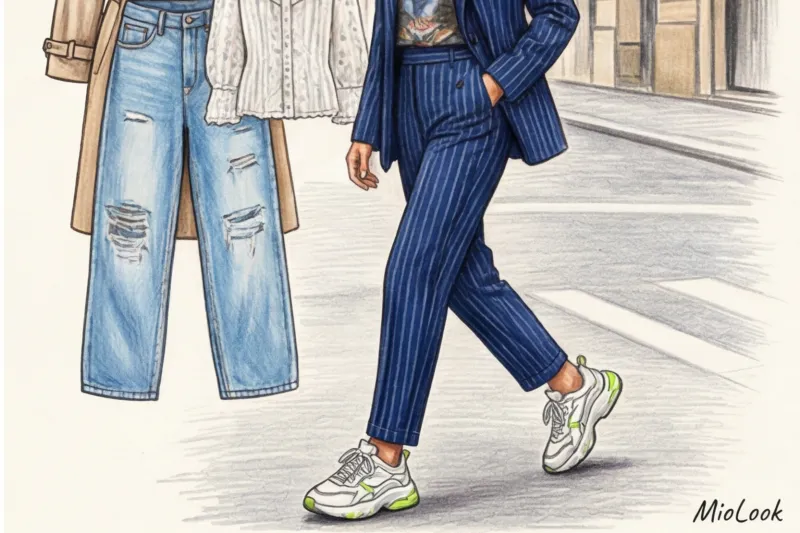
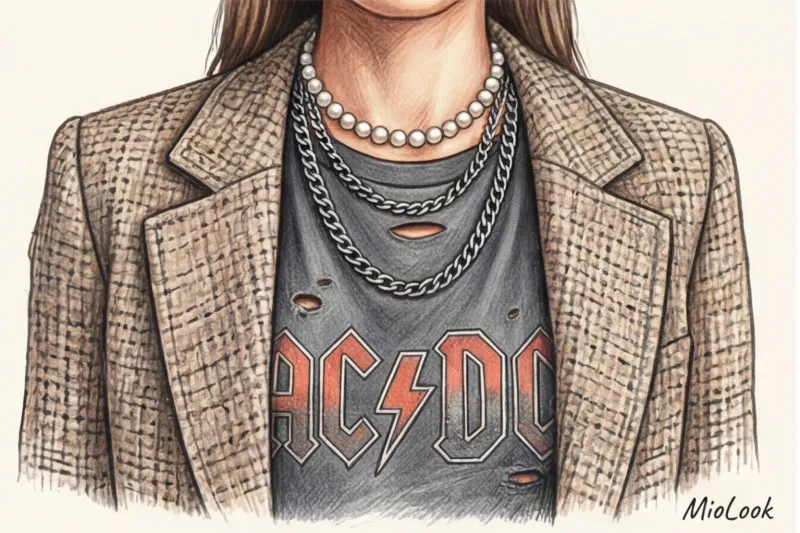
Let me share a real-life example. I had a lawyer client with a strict dress code who deeply adored the grunge aesthetic but was worried that she looked too boring in the office. We applied the 70/30 rule. The base (70%) was an impeccably tailored, loose-fitting graphite pantsuit. And we incorporated grunge (30%) through the details: instead of a shirt, we wore a heavy, boiled cotton T-shirt with barely noticeable scuffs at the neckline, and instead of pumps, we wore chunky leather loafers with chunky soles. Formally, the dress code was followed, but the overall look changed dramatically.
Breaking Down Popular Mixes: Weaving Y2K, Old Money, and Grunge
Let's take a look at how the color bridge method and the 70/30 formula work in real-life combinations this season. Items carry a strong semantic code, and our task is to become a competent director for them.
Quiet Luxury + Sporty Chic (Athflow)
One of the most comfortable, yet dangerous, combinations. How do you wear a cashmere coat, joggers, and statement sneakers without looking like you're going out to the grocery store in your pajamas?
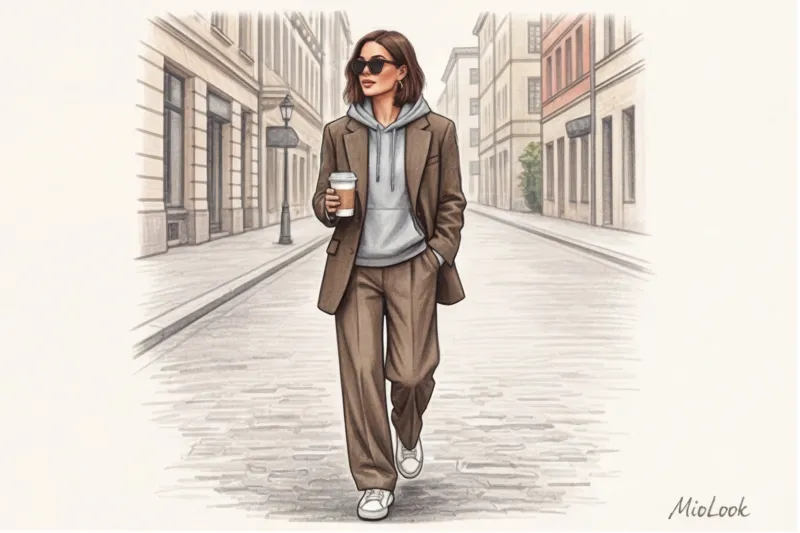
The secret lies in the rigidity of your outerwear. Your coat (an Old Money staple) shouldn't feel like a soft robe. It should have a defined shoulder line (ideally a British collar) and hold its shape. This structure instantly "pulls" relaxed joggers together. Add a geometric bag, and the sporty bottoms will begin to feel like a wry accent, not laziness.
Romance + Rough Grunge
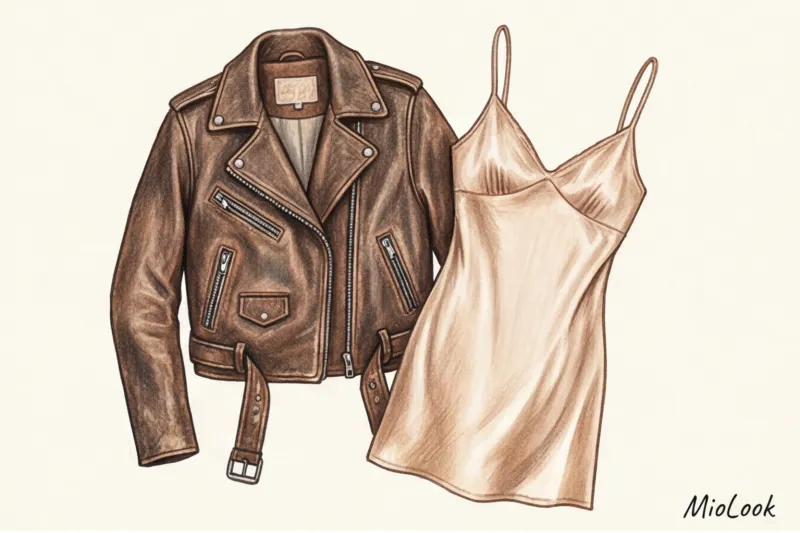
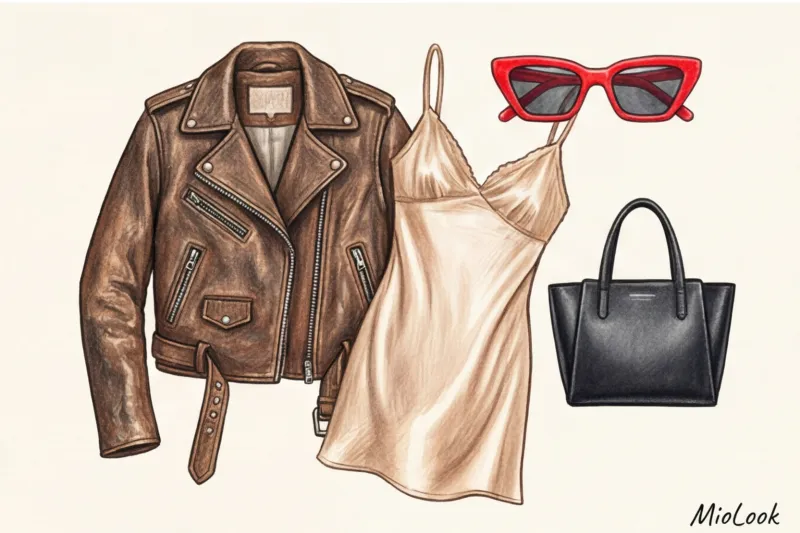
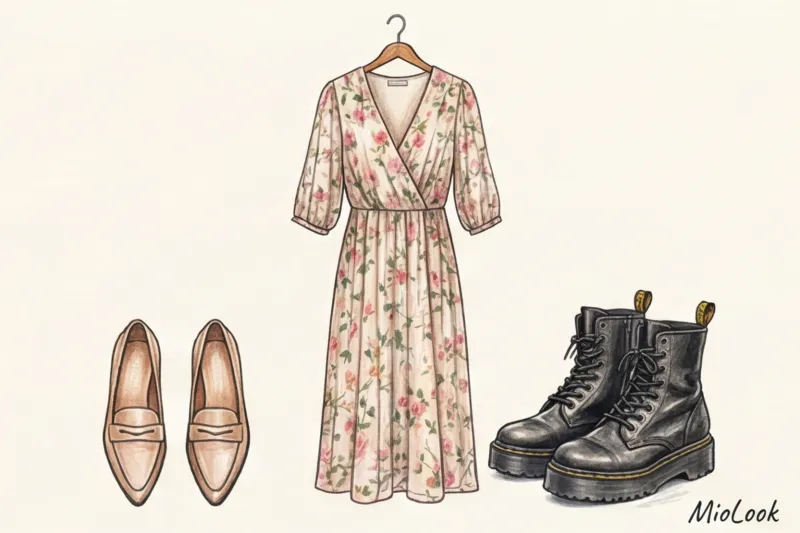
A classic look: a silk slip dress and heavy combat boots. It's important to pay attention to proportions and volume.
Fair Limit: This technique works terribly on petite women if the hem of a heavy boot ends at the widest part of the calf and the dress reaches just above the knee. This visually cuts off the legs. To remedy the situation, choose maxi-length dresses (so that the hem slightly covers the boot shaft) or wear thick tights that match the boot, creating a continuous vertical line of color.
Ready to start experimenting with style?
Try MioLook's free plan—no strings attached. Upload photos of your items and watch how AI combines sporty chic with classic styles.
Get access — €0.99 onceThe biggest mistakes beginners make: what you absolutely mustn't do
As an image consultant, I often debrief clients after they've read questionable advice online. Let's take a hard, yet well-reasoned look at the main myths of eclecticism.
- The myth that you need to match your bag and shoes. In the context of mixing styles, this is a killer look. If you're wearing a romantic dress and rugged grunge boots, absolutely avoid a grunge bag with studs! This will shift the 70/30 ratio toward 50/50. The bag should either support the base (the dress) or be a neutral buffer (a minimalist, unadorned tote).
- Using more than three aesthetics at the same time. If you're wearing cargo pants (Y2K), a tweed jacket (Old Money), cowboy boots (Western), and a baseball cap (Sport), you're not a street style icon; you look like you robbed a theater costume department. Two aesthetics are perfect. Three are for the sophisticated. Four is a guaranteed failure.
- The danger of "traitorous things". Eclecticism demands impeccable craftsmanship. Cheap hardware will always give you away. Flimsy plastic zippers, overly yellow, samovar-like "gold" on buttons, or uneven stitching will ruin the magic of contrast. A cheap item might get lost in a basic outfit, but in an eclectic one, it will take center stage.
Darina Marchenko's Checklist: How to Create an Eclectic Look in 5 Minutes
Next time you stand in front of your closet and think, "I want to wear everything at once, but I want it to look good," just go through this process. You can even take a screenshot.
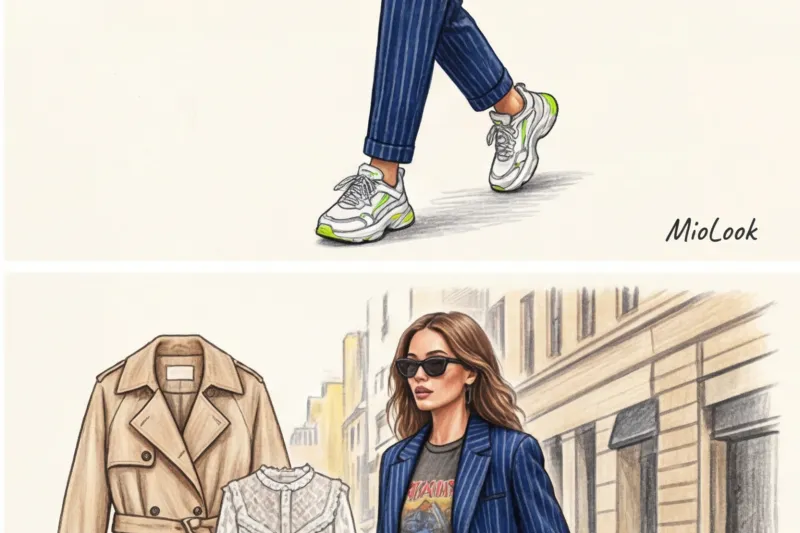
- Step 1: Selecting the base (70%). Decide what your main mood is today. Let's say it's strict minimalism. Choose wide-leg classic trousers and a basic shirt.
- Step 2: Implementing the accent (30%). Let's add something from a different genre. Let's say it's a vintage, distressed, grunge-style biker jacket.
- Step 3: Checking the color bridge. Let's look at the shades. Cool gray suit? So the biker jacket shouldn't be warm brown, but graphite, black, or a cool gray-beige shade. Let's tie them together with color.
- Step 4: Texture analysis. The trousers are smooth, the biker jacket is textured and distressed. The contrast works! The look is complete.
Eclecticism isn't a talent you have to be born with; it's simply a skill in proportion and a keen eye. And to protect yourself from unsuccessful purchases and bold but unworkable combinations, I recommend using the virtual fitting room feature in MioLook Digitize your wardrobe and let algorithms suggest those subtle color combinations between your Y2K tops and classic jackets. Believe me, your closet holds many more stylish combinations than you might imagine.