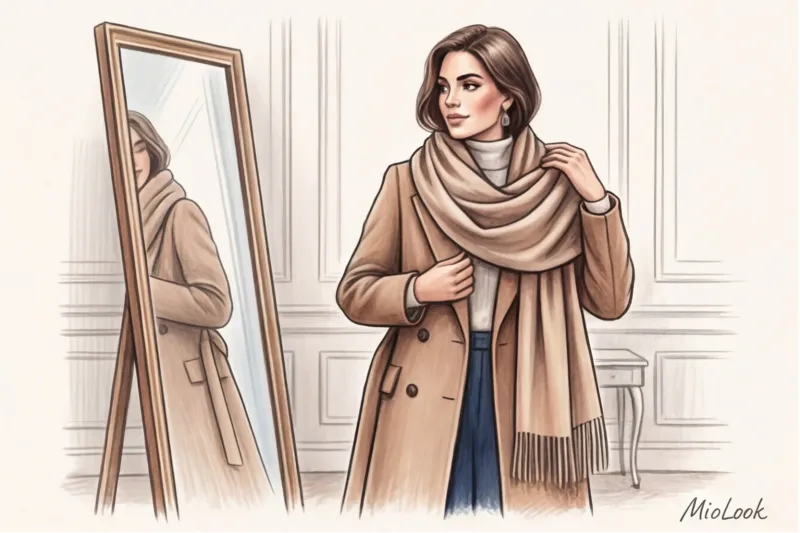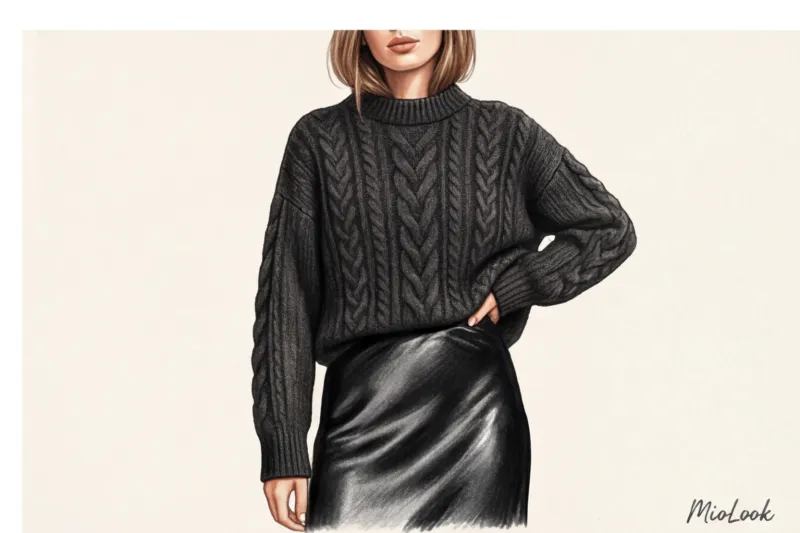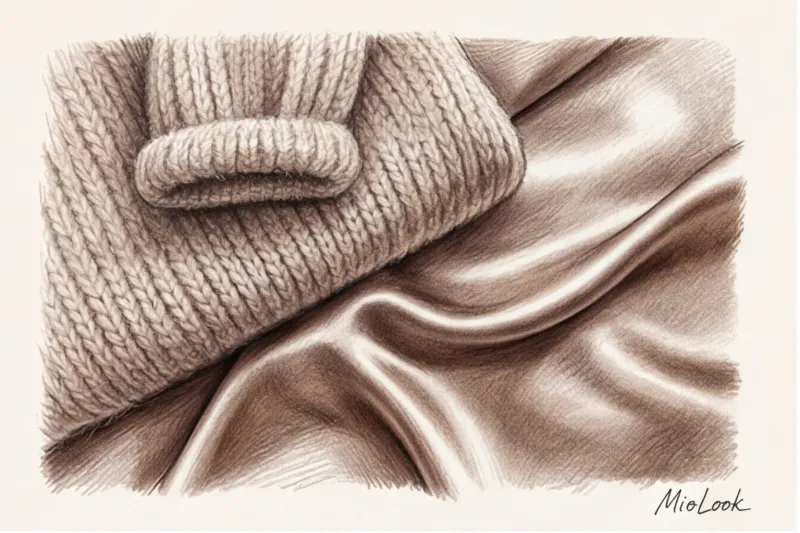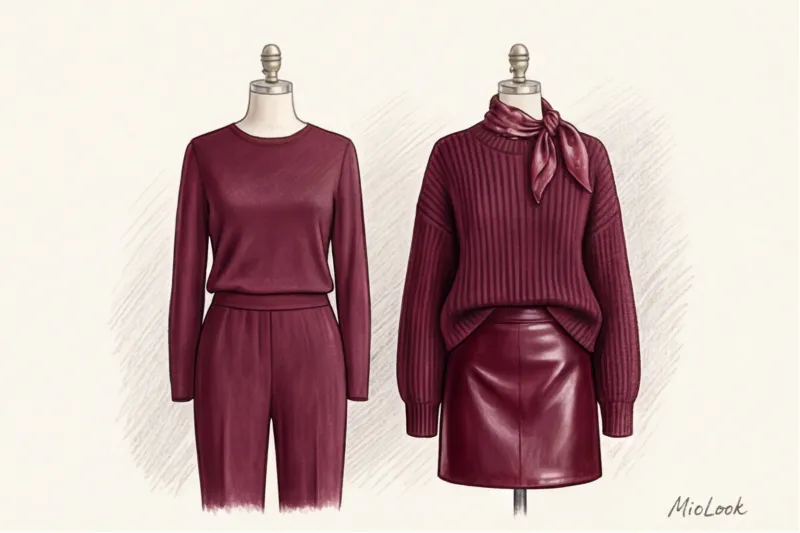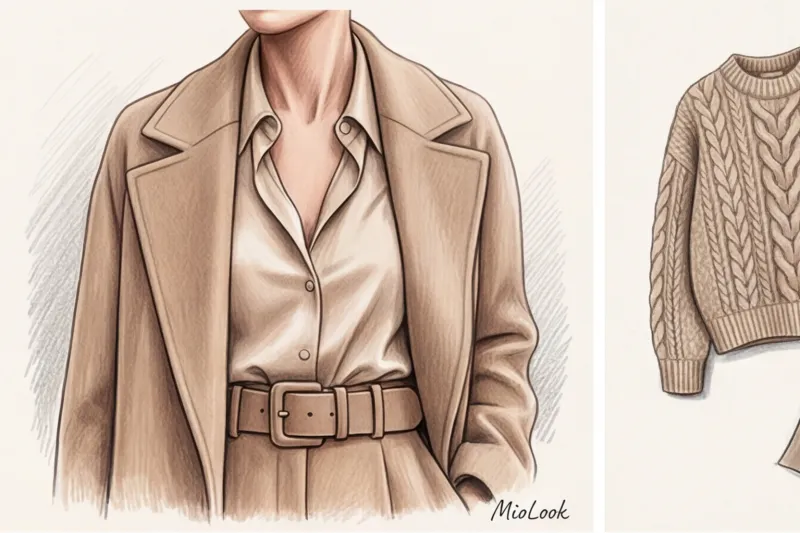
Backstage at The Row show in Paris a couple of years ago, I witnessed a curious scene. The Olsen sisters were putting together an all-black look for a model. They wore a cashmere coat, a top of the finest silk, and trousers of matte grained leather. No logos, no prints, no embellishments. But the monochrome was captivating. It was then that I became convinced once again: the secret to "quiet luxury" lies not in the price tag, but in the micro-conflicts of texture.
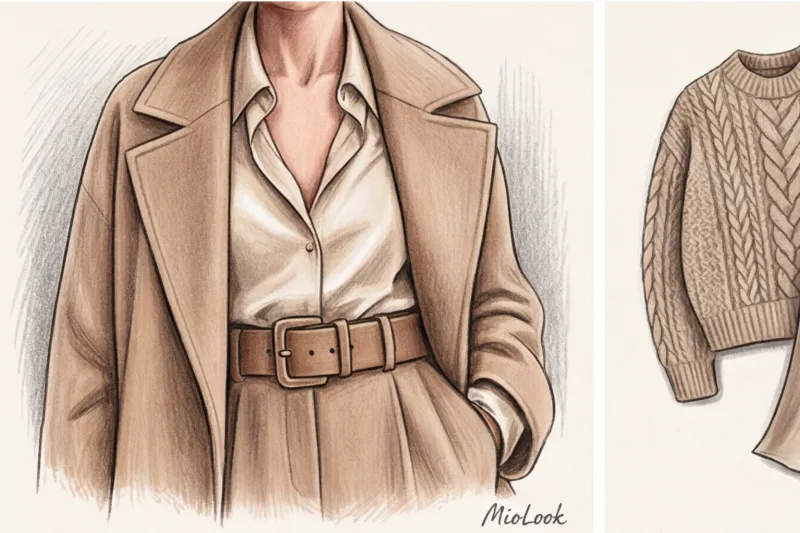
We have already discussed in more detail how to work with patterns on fabric in our a complete guide to the rules of a stylish print capsule But how do you combine fabric textures in clothing if you prefer pure colors? Most women still work with this tool blindly. Let's translate intuitive styling into the precise mathematics and physics of materials.
Why texture is more important than color: the anatomy of an "expensive" look and how to combine fabric textures in clothing
There's a persistent myth: to look expensive, items must be made of a single, smooth fabric. For example, the ideal suit is made of fine wool. In reality, a mono-texture, print-free garment 90% of the time looks like a flight attendant uniform or a banal mass-market item. True luxury is always built on the juxtaposition of matte and shiny, rough and soft.
The pure physics of visual weight and how the human eye interprets light reflection are at work here. According to a large-scale eye-tracking study by WGSN (2023) in fashion retail, textured contrast increases the time the eye spends on an image by as much as 40%. Smooth, matte fabric absorbs light, serving as a backdrop. Shiny fabrics (satin, silk) reflect it, acting as a highlighter. Fleecy fabrics (cashmere, bouclé) diffuse light, creating the illusion of soft focus.
The stylists' top secret: if you're afraid of bright colors and only feel comfortable in beige, gray, or black, play with textures. Even in the €50–€150 price range, you can create an outfit that will visually feel like heavy luxury simply by pairing the right materials.
The Holy Trinity: How to Stylishly Combine Leather, Silk, and Chunky Knits
The British tailoring school (Savile Row) has a fundamental principle for the architecture of any complex suit: "frame, air, volume." Translating this to women's everyday wardrobe, we arrive at a benchmark stylistic combination that never fails. It's leather, silk, and voluminous knitwear.
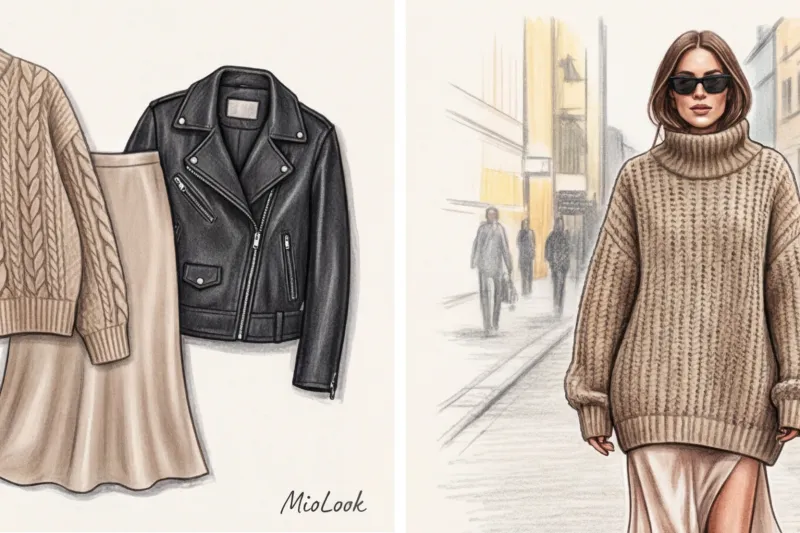
Why these? Because they offer maximum contrast across three parameters: temperature (cold/warm), rigidity (dimensional stability/flow), and light reflectivity (matte/shiny). Let's examine each element of this triad.
Skin: the structural framework and foundation
Leather is always about form and boundaries. A smooth or grainy texture creates rigidity and literally "pulls together" a relaxed silhouette. In styling, we often use leather to take on the childishness or romanticism of other pieces.
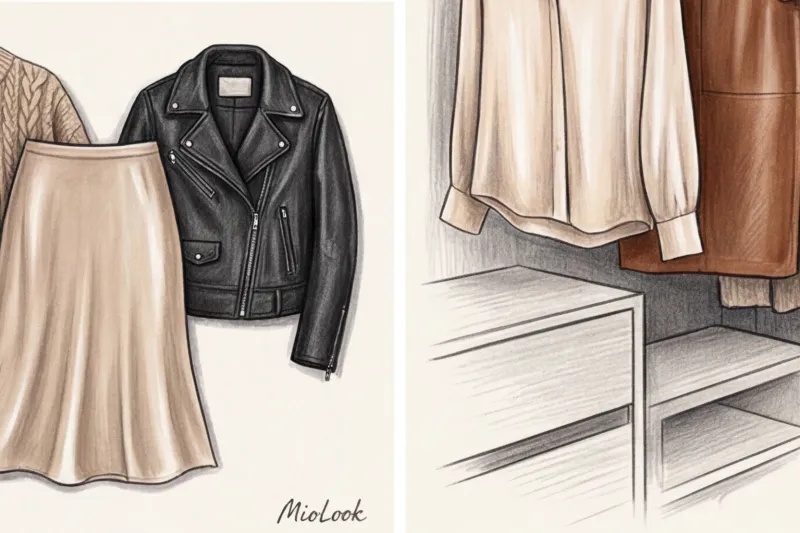
My personal secret when choosing clothes: matte leather always looks more classy than glossy leather in daytime looks. Pants made of matte leather (or high-quality faux leather with a minimum density of 300 g/m²) ground the look, adding confidence.
Silk and satin: air, highlights and dynamics
If leather is the foundation, then flowing fabrics are the air. Silk softens rigid materials and adds that dynamism to the walk that captivates the eye.
Place silk strategically. If you have a tired complexion or dull skin, place a silk blouse closer to the portrait area; it will act as a light reflector. If you want to add a touch of lightness to heavy hips, try a bias-cut silk midi skirt.
Chunky knit: comfort, volume, and tactility
There's a huge difference between fine knits that hug the body and full-on chunky knits. Aran cables, pronounced ribbing, or bouclé add essential tactile depth to a look.
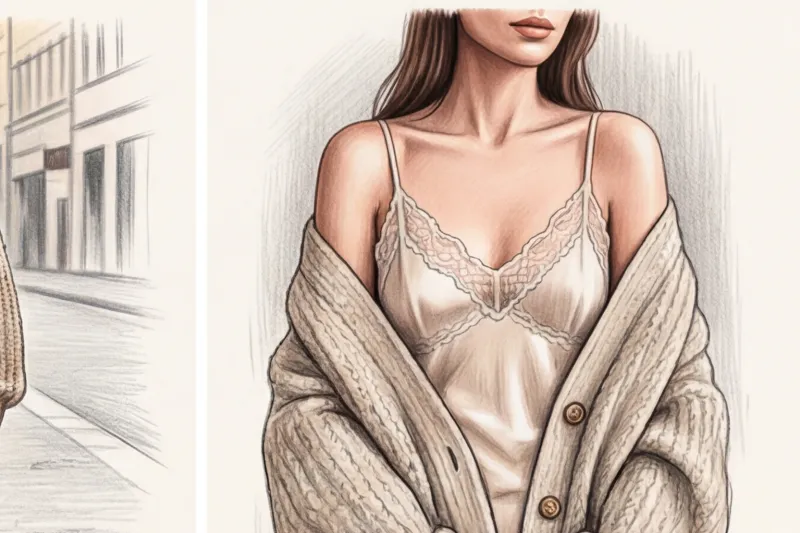
But balance is key here. A voluminous sweater demands a show-off of the most graceful parts of the body. Rolled-up sleeves (exposed wrists) or leather ankle boots with a slim ankle are essential, otherwise the texture will simply "eat up" your figure.
Your ideal image begins Here
Join thousands of users who look flawless every day with MioLook. Artificial intelligence will help you create the perfect makeup look based on your skin tone.
Get access — €0.99 onceThe Mathematics of Style: The 60/30/10 Formula in Working with Materials
Interior designers have long used the 60/30/10 rule for distributing color in a room. My fellow stylists and I have adapted this ratio to textures in wardrobes. If you mix leather and silk in a 50/50 ratio, the look will visually "cut" the figure in half.
- 60% - basic, matte or neutral texture. This is your canvas. For example, a wool suit, heavy denim, or a cashmere coat.
- 30% - antagonist texture. A flowing silk blouse under a matte jacket or a voluminous fluffy cardigan over sleek trousers.
- 10% - accent texture (highlights). Patent leather shoes, a crocodile-embossed leather belt, metal fittings or a satin scarf around the neck.
"I recently worked with a client, an IT executive. Her wardrobe consisted of perfectly tailored, yet completely sleek suits. The look felt flat. We simply swapped out the fabric pencil skirt for a matte leather one in the same navy blue, adhering to the 60/30/10 rule (60% matte jacket, 30% leather, 10% sheen silk top). The silhouette didn't change, but it instantly boosted her status."
Temperature dissonance: can you wear summer silk with winter wool?
One of the most frequently asked questions: is it appropriate to wear summer fabrics in winter? The answer: not only is it appropriate, it's one of the key stylistic moves of the decade.
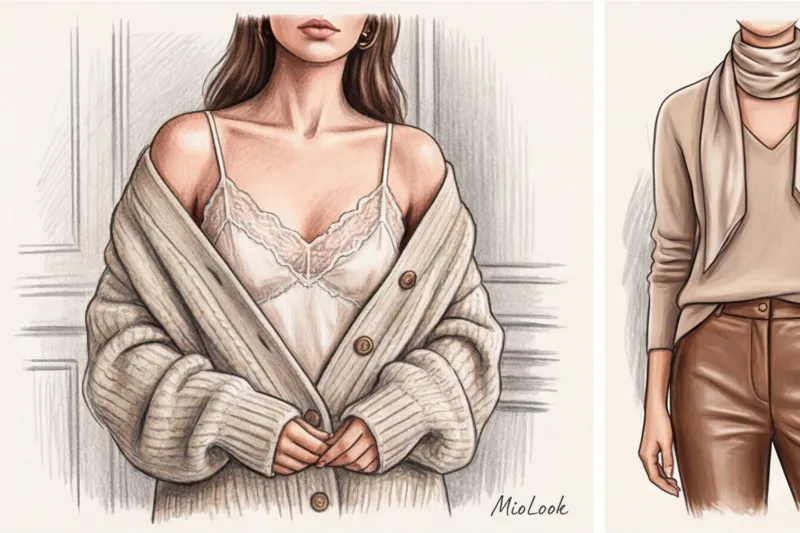
Phoebe Philo's archive collections from the Celine era (2015–2017) forever legitimized silk slip dresses paired with chunky, chunky-knit sweaters. This temperature dissonance works because there's a common thread between summer and winter textures. Typically, it's either color (monochrome softens the seasonal clash) or thick, matte tights that match the shoes.
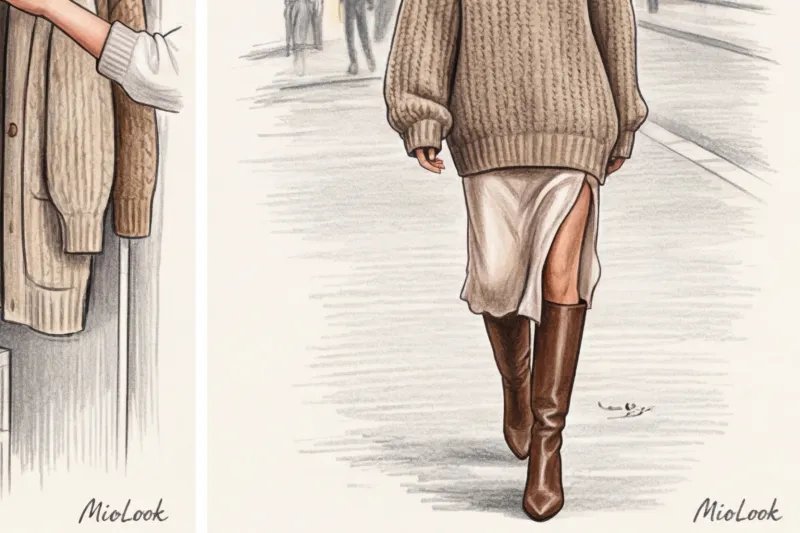
Leather is the perfect transitional material here. Throw a voluminous wool cardigan over a silk dress and cinch the waist with a crisp leather belt—and the look instantly moves from "hastily thrown together" to "thoughtfully planned."
Common mistakes beginners make: when playing with contrasts turns into chaos
Let's be honest: playing with textures requires a keen eye. Sometimes the desire to create something "complex" leads to visual noise. Here are the three main mistakes I constantly see on the streets:
- Competition of prints and complex textures. This is my main caution as a stylist: if the texture is complex (leopard print, sequins, embossed leather), the cut should be as simple as possible. No ruffles on a leather jacket or complex asymmetry on a fuzzy sweater.
- Cheap polyester instead of silk. The artificial "glassy" sheen of polyester ruins the elegance of natural wool or leather. If you're on a budget, it's better to choose high-quality viscose (from €40) with a delicate satin finish than cheap, shiny polyester.
- Incorrect knitting scale. The rule of contrast doesn't work equally for all body types. If you're shorter than 160 cm, a sweater with hyper-voluminous cables will simply "swallow" you. Choose a medium-textured knit (for example, ribbed cashmere).
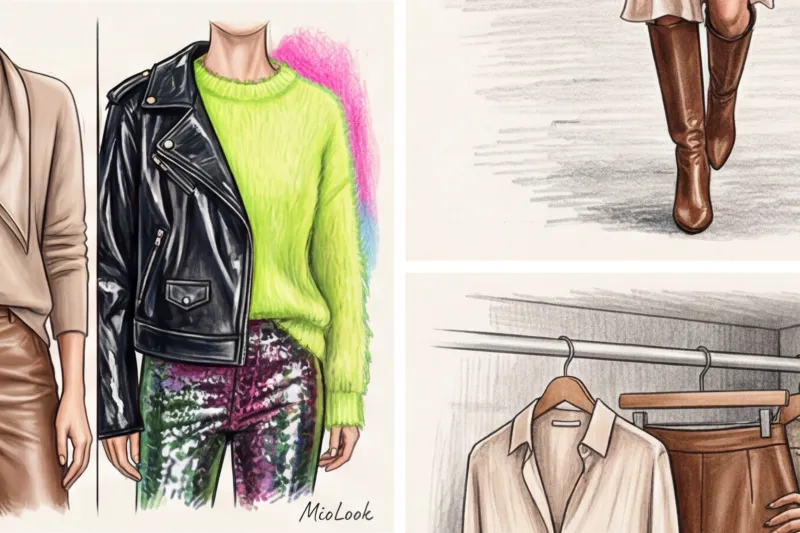
How to salvage a look if you've gone overboard? Use the "turn down the volume" rule. Replace the most vibrant item (like patent leather boots) with a matte alternative, and the tension will immediately subside.
Access to MioLook for €0.99 — one-time payment
A smart AI stylist will create the perfect look for you. Analyze your clothes, plan looks, and play with textures without buying anything extra.
Get access — €0.99 onceA practical checklist: create a textured look in 5 minutes
To avoid spending hours trying on clothes in front of the mirror, you can digitize your wardrobe in advance. I often recommend this to clients. the "smart wardrobe" feature in MioLook , where you can visually mix textures on your phone screen. But if you're standing in front of an open cabinet right now, go through this checklist:
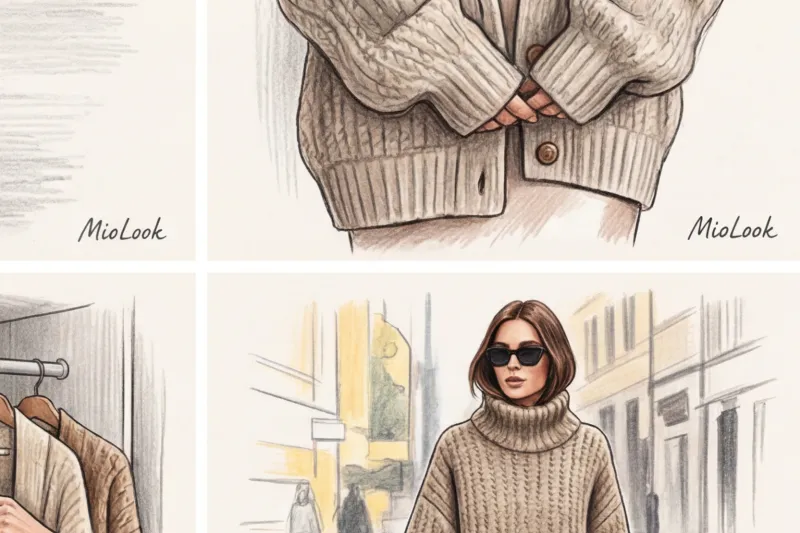
Step 1: Select the foundation (60%). Choose the most "boring," basic, matte item. For example, straight-leg blue jeans or suit pants.
Step 2: Add antagonist (30%). Ask yourself: what's the complete opposite of the first item? A flowy silk top begs to be paired with stiff denim. A fluffy mohair sweater pairs with tailored trousers.
Step 3: Tie the layers together. Add an element that combines these two extremes. For example, layer a matte jacket over a silk top.
Step 4: Finish the look with a highlight (10%). Add an accessory with a contrasting texture—a patent leather bag, a smooth leather belt, or large metal earrings.
Textures are your most powerful, yet most underrated, tool. Forget the fear of "incompatibility." Allow the dense to coexist with the transparent, and the hard to embrace the soft. It is in these controlled conflicts that a truly individual, vibrant, and prestigious style is born.