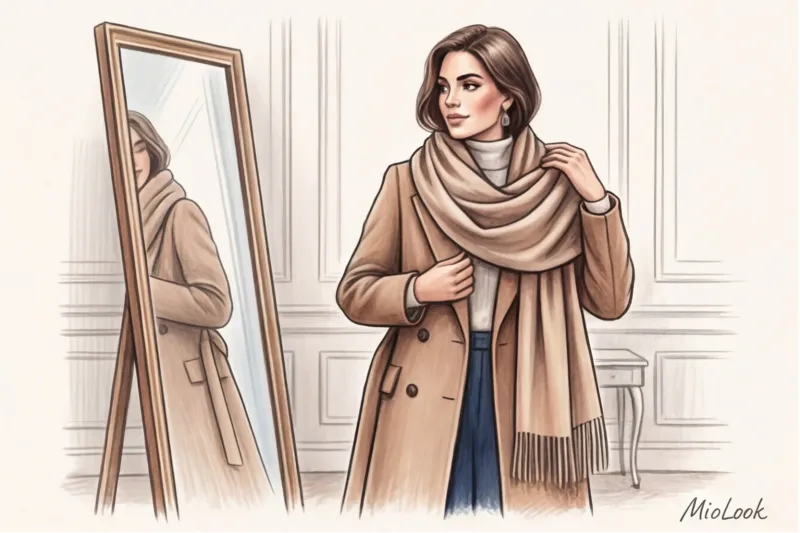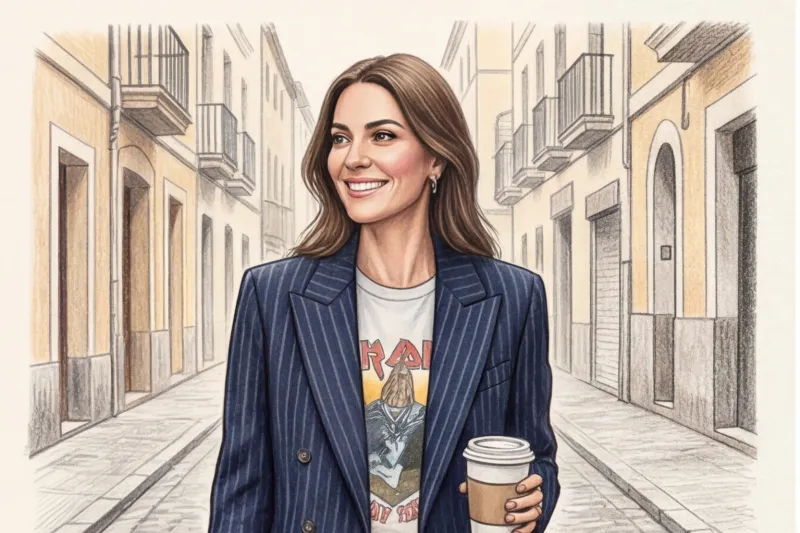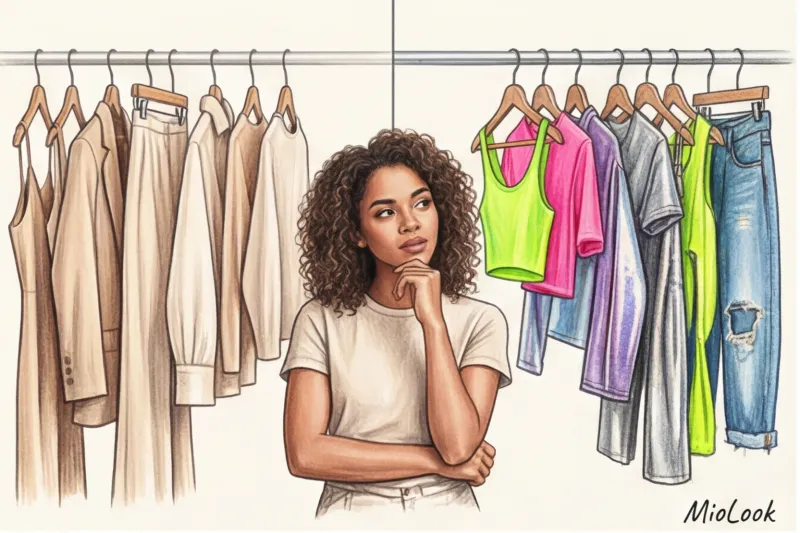
One of my clients, a top manager at an IT company, once opened two completely different closets for me. One was filled with impeccable "armor": tailored pantsuits, pencil skirts, and silk blouses. The other was pure sport: hoodies, thick joggers, and chunky sneakers. And then came the classic complaint: "I have absolutely nothing to wear on a casual Friday; I'm either too formal or I look like a teenage skater." In two hours of reviewing, we didn't buy a single new item, but we ended up with 24 fresh, stylish looks. The secret was to make these two warring camps work together.
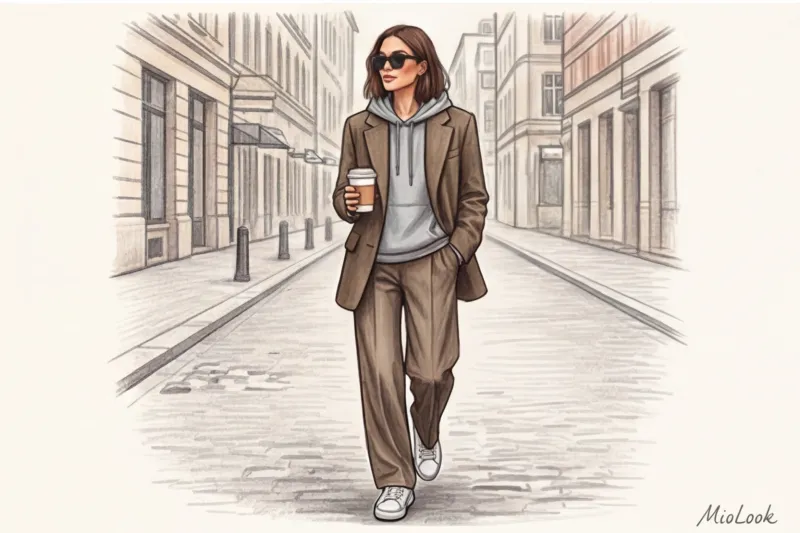
If you've been racking your brains over how to mix styles without looking like a city nut, forget the concept of "creative chaos." True eclecticism is rigorous mathematics coupled with a knowledge of textile balance. We've covered the origins of each style in more detail in our The Complete Guide to Women's Clothing Styles: How to Find Your Look , and today we'll talk about how to make them sound in unison.
The Anatomy of Eclecticism: Why 'Pure' Styles No Longer Work
Attempts to maintain a consistent head-to-toe aesthetic today seem forced and a bit outdated. Over 12 years of working as a stylist, I've uncovered a dismal statistic: women who try to create a 100% "clean" wardrobe (all classics or all boho) are four times more likely to suffer from wardrobe burnout. They constantly feel like their look lacks life.
There's scientific and social justification for this. McKinsey's "State of Fashion 2023" report clearly documents the shift to a hybrid lifestyle. The blurring of boundaries between office, home, and social life has led to the collapse of rigid dress codes. We need clothes that adapt to the pace of the day, not dictate it.
Dressing in a monotonous style can detract from a look's dynamism. A romantic floral dress paired with delicate ballet flats and a ruffled cardigan can make a grown woman look like a childish porcelain doll. But pair this dress with a rugged leather jacket and heavy boots, and you'll create a deep, modern, and independent look.
Access to MioLook for €0.99 — one-time payment
A smart AI stylist will select the perfect look.
Get access — €0.99 onceThe 80/20 Rule: The Gold Standard for Mixing Styles
The biggest mistake I see beginners make is the 50/50 ratio. Half of the pieces are grunge, the other half are business casual. Visually, it looks like you got dressed in the dark or are performing in a theatrical production. The secret is the 80/20 rule.
- 80% of the image (canvas) is formed from one restrained, basic direction.
- 20% of the image (spice) — this is an accent detail from a completely different, contrasting world.
The mathematics of style are relentless: if you wear classic straight jeans, a loose-fitting white shirt, and loafers (80% base), and throw on a complex cardigan with ethnic fringe (20% accent), the look will come together perfectly.
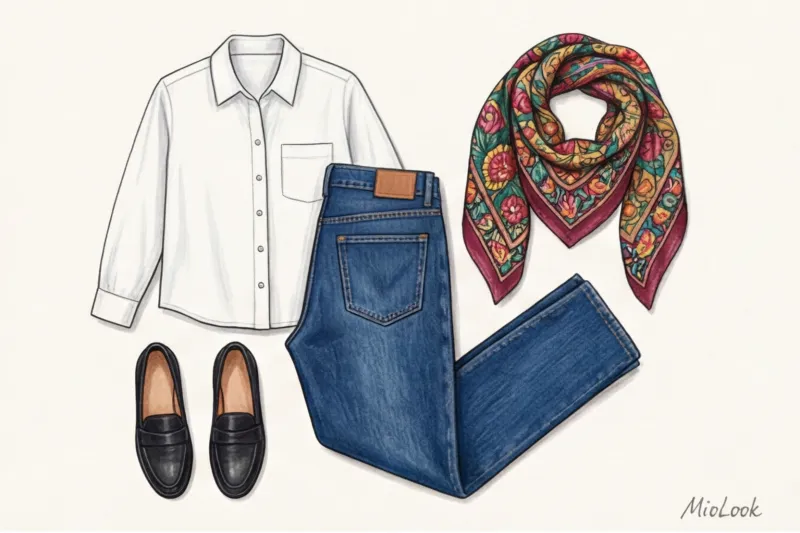
Base and Accent: How to Avoid Looking Like a City Crazy Girl
Here lies the most counterintuitive styling insight: The most stylish eclecticism is built from boring things The idea that mixing styles requires strange, bright, asymmetrical pieces is a dangerous myth.
"For a complex accent to really shine, it needs absolute silence in the background. If you bought incredible leopard-print Cossack boots, wear them with a very simple black slip dress or straight denim, not a red sequined skirt."
If you have trouble keeping this proportion in mind, try MioLook — The app's smart algorithm helps you visualize the percentage of basic and accent pieces in your look before you even take them off the hangers.
Texture Theory: The Invisible Glue of an Eclectic Look
We're used to thinking that things coordinate (or don't coordinate) based on color. But the science of textiles and the laws of clothing design tell us otherwise: mixing styles begins with fabric density. Different materials behave differently in static and dynamic situations.
I often conduct a "sensory test" with my clients. I ask them to close their eyes and touch two items simultaneously. If the fabrics clash under their fingers—one is too slippery, the other is as stiff as cardboard (for example, cheap chiffon and stiff patent leather)—they won't mesh well together in the final look without a "transition" layer.
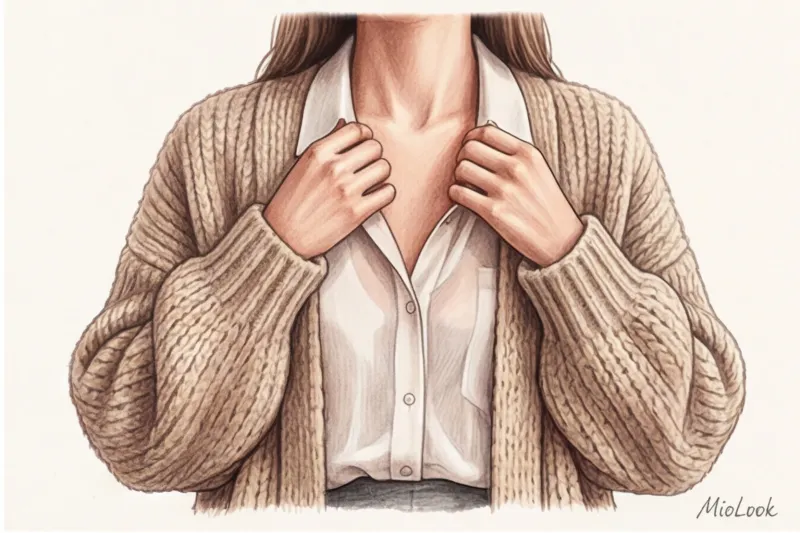
Contrast of density: silk and rough wool
Perfect eclecticism adores contrasting textures. A sheer matte silk dress looks stunning with a chunky knit sweater. A heavy cotton shirt (180 g/m² and above) pairs beautifully with smooth leather.
But there's a strict limitation. You can't mix thin, flimsy knits with heavy, textured bottoms (for example, chunky 14-ounce jeans or heavy leather). The thin fabric will visually "sag" under the weight of the bottoms, making the upper body look disproportionately small and the garment itself appear cheap.
The Eco-Friendly Aspect: Why Quality Fabrics Blend Better
Cheap synthetics have a distinctive glassy sheen that ruins the magic of eclecticism. High-quality natural fibers—linen, merino wool, organic cotton—have a refined matte finish that harmonizes the look.
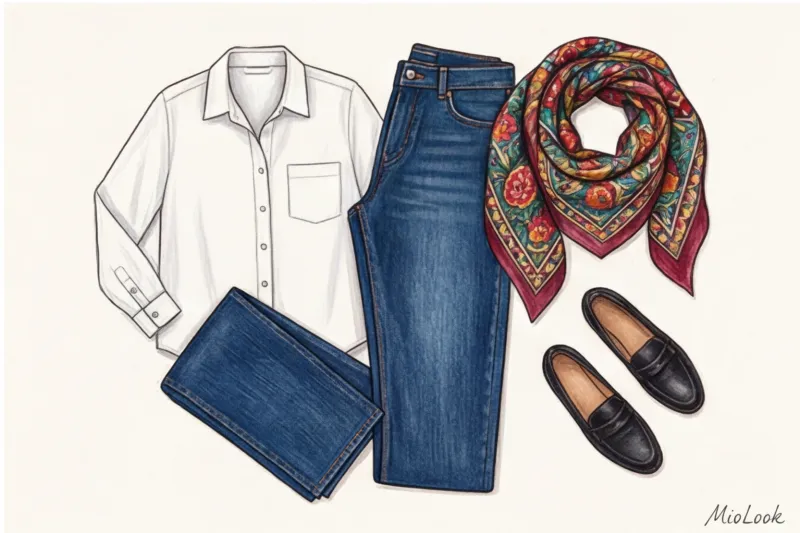
A basic cotton T-shirt for €40 made from a dense material will blend more seamlessly with a business suit than a 100% polyester blouse for €20, which becomes electrified and disrupts the silhouette.
Your perfect look starts here
Join thousands of users who look flawless every day with MioLook.
Get access — €0.99 onceThree Proven Formulas: How to Mix Styles in Clothing for Beginners
Theory is great, but let's move on to practice. I give these three formulas as "homework" to all my clients after their first closet overhaul.
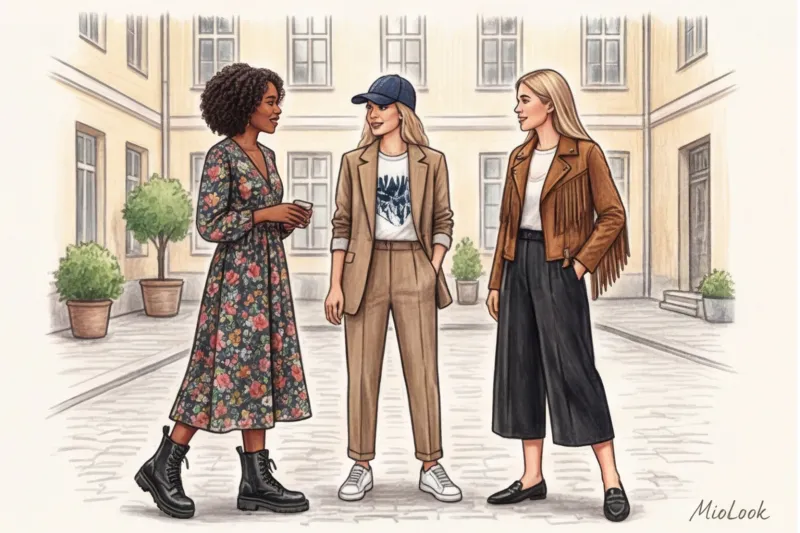
Sporty chic + strict classics
The safest and most modern mix for the city. It works on the contrast between relaxation and composure.
- Formula 1: Basic grey joggers made of thick fleece + men's structured blazer (with a clear shoulder line) + white T-shirt + kitten heel pumps.
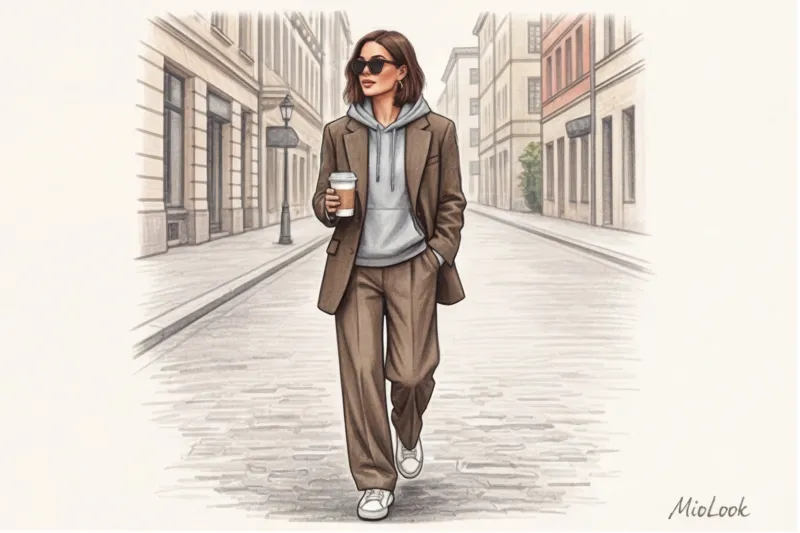
- Formula 2: A classic two-piece suit in graphite or beige + chunky sneakers + a basic hoodie under the jacket. For information on how to layer these pieces without losing proportions, read our article about layering in clothing.
Romance + grunge or military
This formula balances the excessive sweetness of feminine pieces with aggressive, masculine elements.
- Formula 1: A semi-sheer chiffon midi dress with a small floral print + heavy lace-up combat boots (Martins) + a voluminous sweater.
- Formula 2: Victorian lace turtleneck blouse + chunky leather biker jacket + distressed straight jeans.
Ethnic/Boho + Minimalism
Pure boho often looks like you're heading to Coachella. Keep it grounded with minimalism.
- Formula 1: A laconic midi slip dress in a neutral shade + suede Cossack boots.
- Formula 2: A crisp white shirt (like from the men's department) + straight jeans + a complex chunky knit cardigan with an ethnic pattern or fringe.
The Anchor Method: How to Combine Mismatched Items into a Cohesive Ensemble
When you combine elements from polar opposite worlds, they need a "negotiator"—a visual bridge that will convince the viewer that these elements weren't just a coincidence. Professional stylists call this the law of overlap.
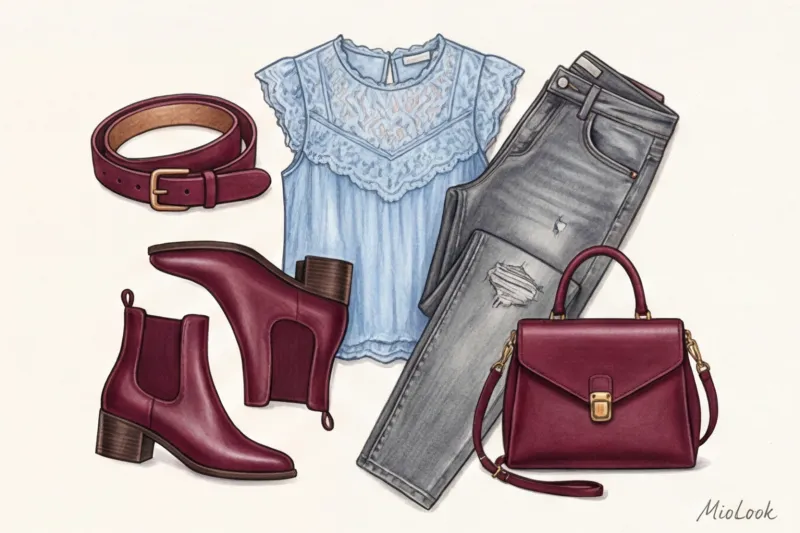
Color anchor: Let's say you're wearing a smart gray pencil skirt and a sporty sweatshirt. To create a cohesive ensemble, the sweatshirt's print color (for example, burgundy) should be repeated in your shoes, bag, or even lipstick. The color ties the disparate elements together like a strong nautical knot.
Metal anchor: Hardware is a powerful tool. If your rugged, grunge boots have a silver zipper and rivets, complement this metal with the cool shine of minimalist silver earrings or a belt with a silver buckle over a romantic dress. Matching metals subconsciously conveys thoughtfulness.
Common Mistakes: What to Avoid When Mixing Aesthetics
Let's be honest: eclecticism isn't for everyone, and it's not always the case. If your wardrobe is 90% rhinestones, acid prints, complex asymmetrical cuts, and guipure, mixing styles won't work. You'll end up with visual noise. A cool mix requires a high-quality, unadorned base (that same 80%).
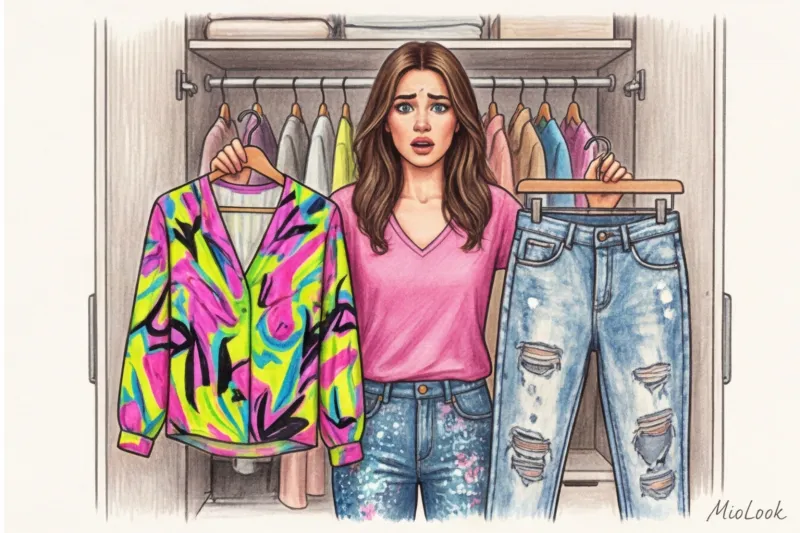
Here are the three main traps that newbies fall into:
- Too many accents. Trying to combine a business suit, sneakers, a fringed bag, and a neon cap? Your eye doesn't know what to focus on. Leave just one out-of-place element.
- Volume discrepancy. Eclecticism calls for a fresh air. A tight sports bra and a skinny pencil skirt look vulgar. Rule: combine skinny with voluminous. A skinny crop top calls for wide-legged, pleated trousers.
- Buying "eclectic" things. The worst thing you can do is buy a denim jacket with lace and rhinestones already sewn onto it. Such a piece has no potential for combination. Create an eclectic look yourself by mixing a clean denim jacket with a separate lace shirt.
Checklist: Closet Review for Eclectic Looks
The financial benefits of mixing styles are colossal. According to my calculations, cross-styling reduces your cost-per-wear (cost per outfit) by an average of 60%. Instead of buying another €150 dress that you'll wear twice (cost per outfit = €75), you take an old dress, mix it with a hoodie and Cossack boots, and wear it 30 more times (cost per outfit drops to €5).

Where to start right now?
- Take out all your seasonal items and separate them into two piles: “strict/basic” and “relaxed/accent”.
- Take the most boring, formal item from the first pile (for example, suit pants).
- Force yourself to try them on with the three most illogical tops from the second pile (hoodie, denim shirt, Victorian blouse).
- Take a photo of the result. The eye needs time to adjust to the new proportions.
If the process seems overwhelming, I recommend Digitize your wardrobe with MioLook When all your things are on your phone, you can put together outfits on the subway, in line for coffee, or before bed, testing out the craziest combinations on the screen before trying them on in real life.
Remember the key: eclecticism doesn't require a huge budget. It requires the courage to look at a familiar gray turtleneck and old jeans in a new way. Start by swapping out just one detail in your usual outfit—for example, pumps for sneakers—and you'll feel your wardrobe breathe new life.