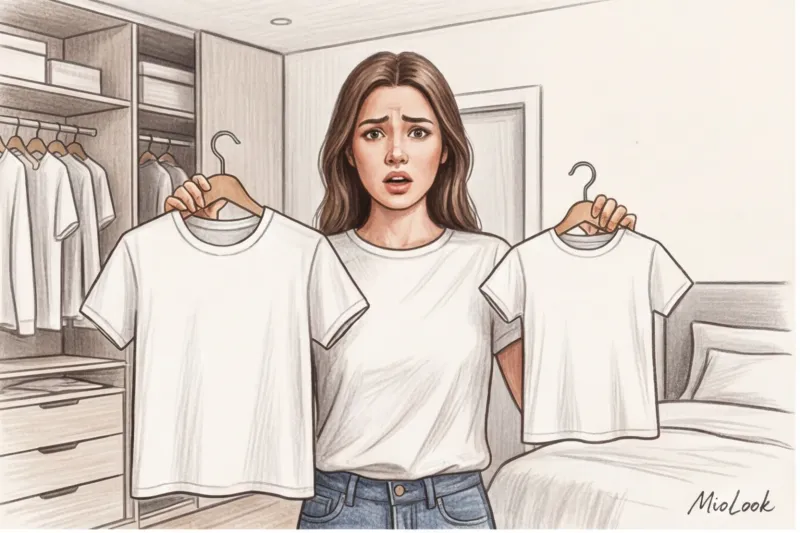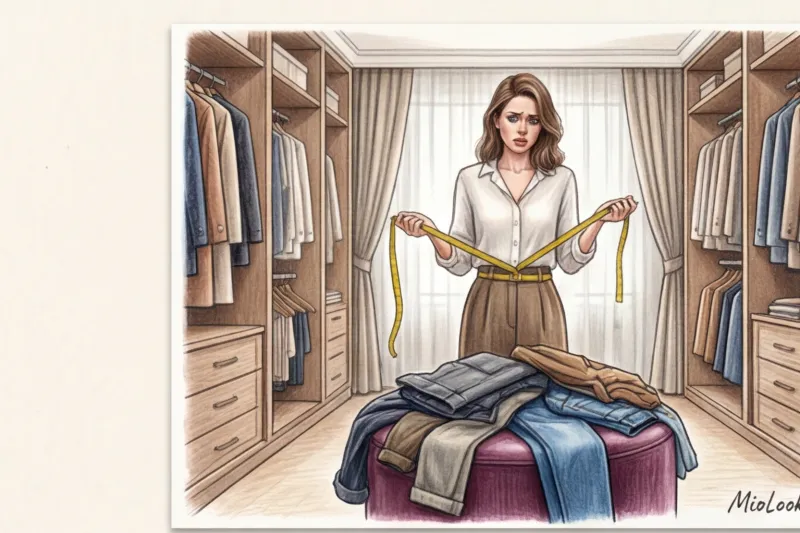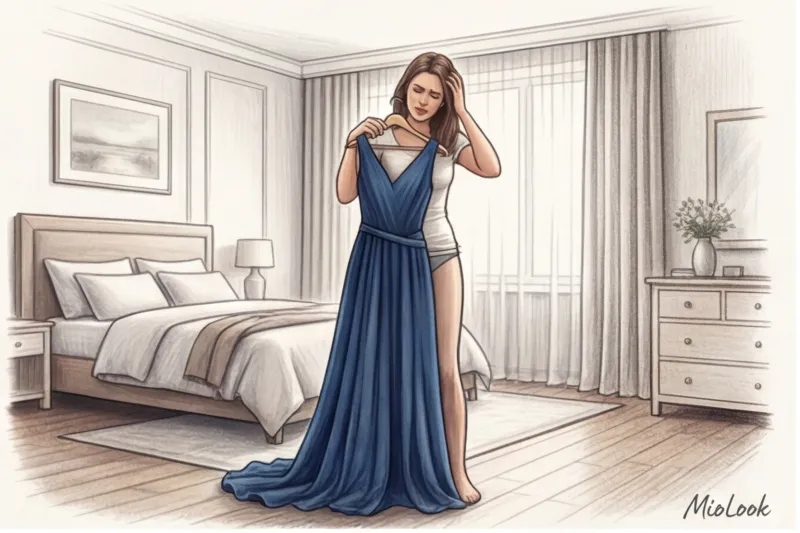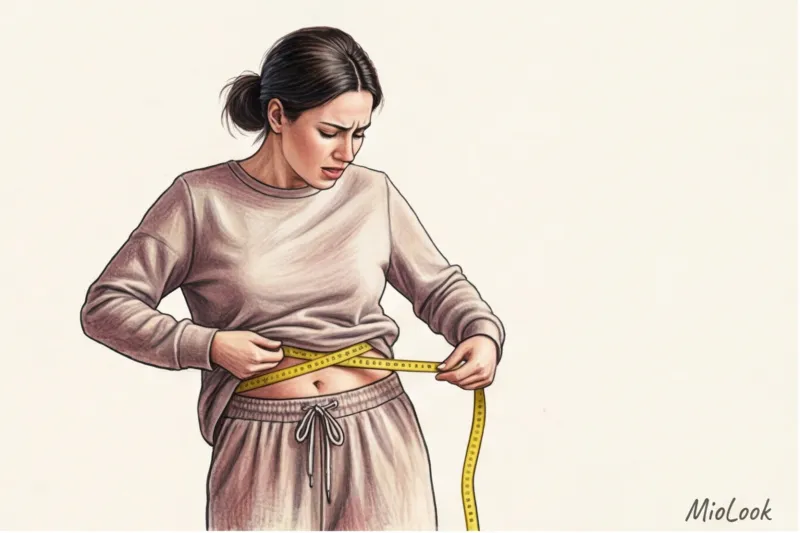
Do you know why 70% of online clothing returns are due to incorrect sizing? It's not that we're choosing S, M, or L incorrectly. The problem is that these letters themselves have long since lost their physical meaning. I've seen hundreds of women order a dress in their usual size 44, only to receive something they couldn't lift their arms in. Artificial intelligence is changing the rules of the game, but for it to work for you, it requires utmost honesty.
We have written in more detail about why standardization is outdated in our A complete guide to the AI-powered clothing app MioLook And in this article I will show, How to take proper measurements for buying clothes so that your digital stylist can forever save you from tedious fittings and the frustration of unpacking orders.
Why an AI stylist needs your exact measurements: moving away from the dictatorship of sizes
According to a McKinsey analytical report (2024), standardization of sizes in the mass market has completely collapsed. Zara, COS, and H&M sizes can vary by 4-6 centimeters within the same size M. Brands manipulate so-called "vanity sizing," attaching an S tag to items that 10 years ago would have been considered a solid L.
In the MioLook app we use the concept digital twin It's not just a set of numbers, but a mathematical model of your body. How does it work? You enter your anatomical measurements, and the algorithm compares them with real-world size charts from over 500 brands, taking into account fabric properties. The neural network automatically understands that for a comfortable fit on a stiff poplin shirt, you need to allow for an ease allowance of +4 cm, while for a viscose top with 5% elastane, +1 cm is sufficient.
It's important to understand the difference here: we're taking measurements not for creating a pattern In traditional tailoring, the tailor calculates the allowances themselves. The app, however, requires your bare, anatomical data. The algorithm will automatically calculate all allowances for fit and comfort. Even if you order a basic long-sleeve top for €30 or a structured jacket for €250, the AI will select the exact size from a specific brand that will fit your body type.
Anatomy of a Mistake: Why 80% of Women Measure Themselves Incorrectly
Statistics are relentless: WGSN data shows that 8 out of 10 women wear the wrong bra size due to systematic errors in underbust measurements. The psychology of measurements is a delicate matter. We're afraid of seeing a larger-than-expected number on the tape measure.
The biggest and most paradoxical mistake when taking measurements is trying to be "smaller." By sucking in your stomach, standing up straight (if you don't walk like that in real life), or pulling the tape too tight, you're literally defeating the algorithm. The AI calculates a comfortable fit based on your measurements. Give it too low a measurement, and you'll get recommendations for clothes you can't sit in or breathe in.
I had a classic case in my practice. My client, Anna, entered a waist size of 68 cm when setting up her profile, although her actual relaxed waist measurement was 73 cm. As a result, all the pencil skirts the stylist recommended were digging into her sides. As soon as we entered the correct 73 cm, the algorithm began suggesting items with the correct darts—Anna began to look visually slimmer, even though her profile measurement was higher!
"AI needs the naked truth, not your ideals. Centimeters are just a prompt for the neural network, not an assessment of your attractiveness."
Another common problem is corset syndrome (tightening the tape measure) and measuring over everyday clothing. Regular, tight jeans can easily add 2-3 centimeters to your hip measurement. Therefore, you should only measure yourself wearing thin, smooth underwear.
Access to MioLook for €0.99 — one-time payment
A smart AI stylist will select the perfect look based on your exact measurements and eliminate size issues.
Get access — €0.99 onceA step-by-step guide: how to take proper measurements for clothing purchases
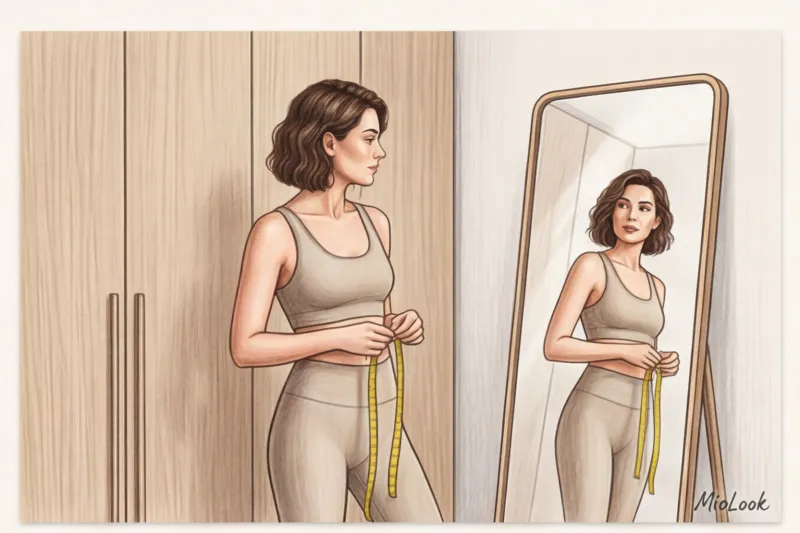
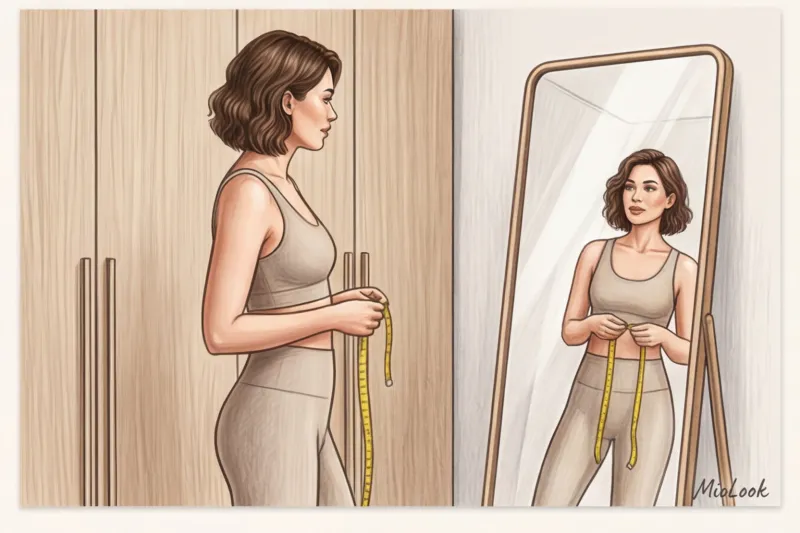
This algorithm is specifically adapted for entering data into smart apps. Prepare a soft (not stretched!) measuring tape and stand in front of a full-length mirror. Wear basic underwear without push-ups or any other supportive elements.
Chest and underbust measurements (creating a base for the top)
For measurement chest circumference Find the most prominent points. The main secret: the tape should go strictly horizontally down your back. Stand sideways to the mirror and check—most often, the tape slips treacherously down your shoulder blades. Don't pull it too tight; it shouldn't flatten your chest.
Underbust circumference Measured on a half-breath. This is critical for choosing rigid, structured garments and a properly cut bodice. If you measure yourself on a deep exhale, garments with a fixed waistband (such as slip dresses) will prevent you from breathing normally after lunch.
True waist (forget about the rise of jeans)
Many people confuse their waistline with the rise of their favorite jeans. The anatomical waist is the narrowest part of the torso, typically located 2–3 cm above the navel.
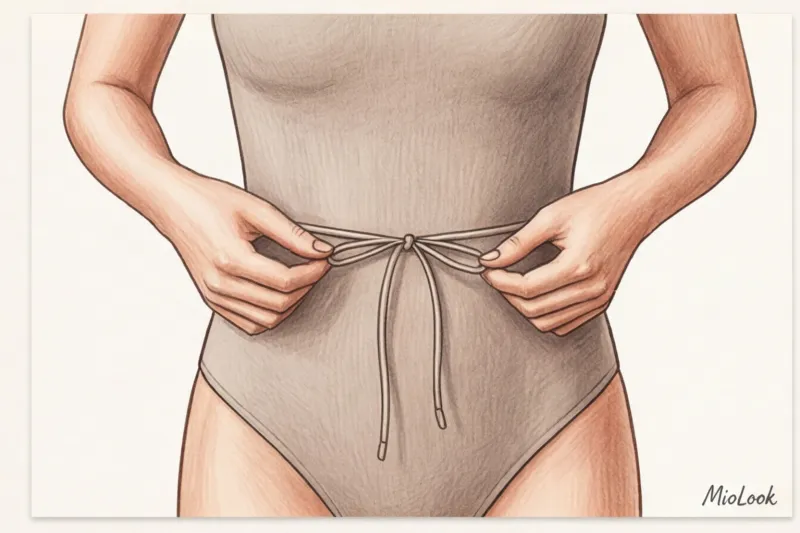
If you have trouble visually finding your waist (which is perfectly normal for those with an apple or rectangle body shape), use my favorite life hack. Take a regular string or thin elastic band, tie it around your stomach, and then tilt it to the side a couple of times. The elastic will slide in and lock into place at your true waistline. This is where you should place the tape measure. The rule of thumb is that you should be able to fit one finger comfortably between the tape and your body.
Hip circumference (the key to perfect trousers)
The tape should be placed across the fullest part of your buttocks, maintaining a horizontal line. Be sure to check the measurement while moving: clasp the tape with your fingers and try to move it slightly up and down. It should slide easily without getting stuck.
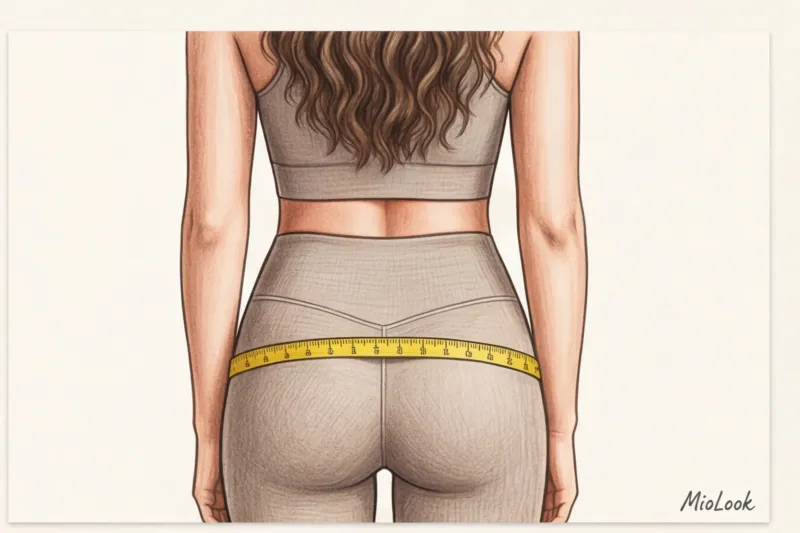
Important point: take into account the "saddlebag" effect. If the widest part of your body is below Measure along the pelvic bone line (the breeches area). Over 12 years of work, I've noticed that ignoring this parameter is the number one reason why palazzo pants stretch unattractively in the groin area. MioLook's AI takes this into account and immediately rejects poorly designed patterns.
Additional parameters for the MioLook profile
To create a full-fledged digital profile, you will need a few more numbers:
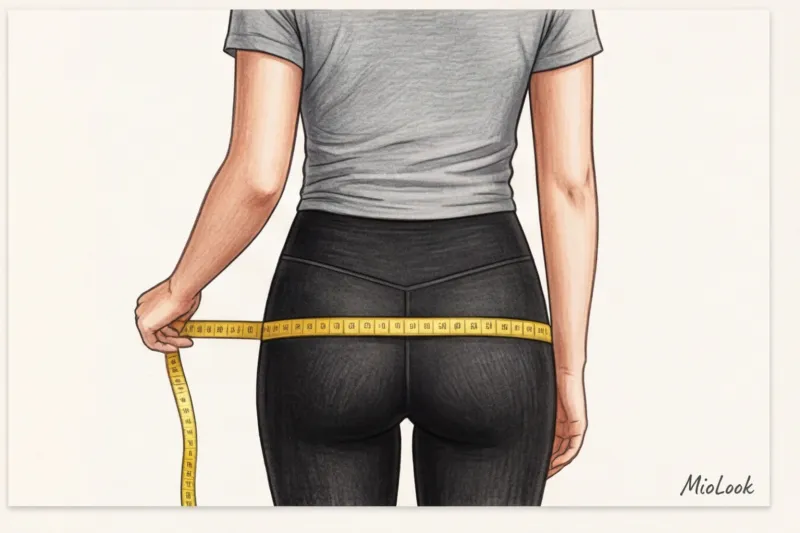
- Height: A basic parameter that determines proportions (midi length, darts placement).
- Shoulder width: Measured from one shoulder point to the other across the back. This is a lifesaver when buying jackets and coats.
- Inseam length: Measure from the crotch to your desired trouser length along the inside of your leg. Don't buy jeans online without this number!
These parameters allow MioLook virtual fitting room calculate visual proportions mathematically precisely.
How to set up an app profile: from numbers to a smart wardrobe
Once you've recorded all the numbers, it's time to transfer them into the digital realm. The MioLook interface is intuitive: in the profile section, you simply enter your metrics. But there's one setting that changes everything— Fit Preferences.
Your measurements are one thing, but how you like to wear clothes is another. In the app, you can tell the AI that you prefer oversized jackets (and the algorithm will add the appropriate size to your database) and tailored jeans.
To test how critical accuracy is, I conducted a personal six-month experiment. I created two profiles: in one, I entered honest measurements, and in the other, I subtracted 2 cm (that same "feminine trick"). The results were astonishing. In the "distorted" profile, the algorithm consistently suggested jackets that bunched up under the arms and trousers with unsightly pockets. The honest profile ensured a perfect fit (the fit rate was 95%).
How often should you update your data? My recommendation: once per season (spring-fall) or if your weight has changed by more than 3 kg. It takes 5 minutes but saves hours of returning packages to online stores.
Your perfect look starts here
Join thousands of users who look flawless every day with MioLook. Create your digital profile now.
Get access — €0.99 oncePre-Measurement Checklist: 5 Golden Rules for Smart Shopping
Before you pick up your feed, run through this checklist. I recommend taking a screenshot so you always have it handy:
- Measure yourself in the morning on an empty stomach. By evening, our bodies swell, and our waist circumference can increase by 2–4 cm due to digestion. Morning provides the most objective basis.
- Use only the correct tape. No construction tape measures or old, stretched-out granny tape measures. They're a big liar.
- Stand up straight, but relaxed. Your posture should be natural. If you slouch in everyday life, maintain a natural posture when measuring your shoulders and back.
- Breathe evenly. Never hold your breath while attaching the tape.
- Round up. If you got 93.4 cm, feel free to write 93.5 cm. When it comes to a comfortable fit, rounding up is your best friend.
Limitation of the method: This approach and AI algorithms work brilliantly for brands that adhere to cutting technology (from mass-market brands like Uniqlo to premium brands). But it doesn't work for ultra-fast food brands from dubious platforms that cut by eye and sew clothes without patterns from the cheapest synthetics—there, no measurements can prevent a poor fit.
Numbers that work for you, not against you
It's time to rethink our attitude toward clothing sizes. We're used to judging ourselves by labels: if I don't fit into a size M, then there's something wrong with me. This is fundamentally wrong. Clothing size is a problem with a particular brand's fit, not your body.
Your anatomical centimeters aren't a grade. They're high-precision code for a neural network. Pass this code on. To the AI stylist MioLook , and let technology take care of the tedious work of selecting the right patterns. All that's left for you is the most enjoyable part—enjoying the things that seem to be created especially for you.