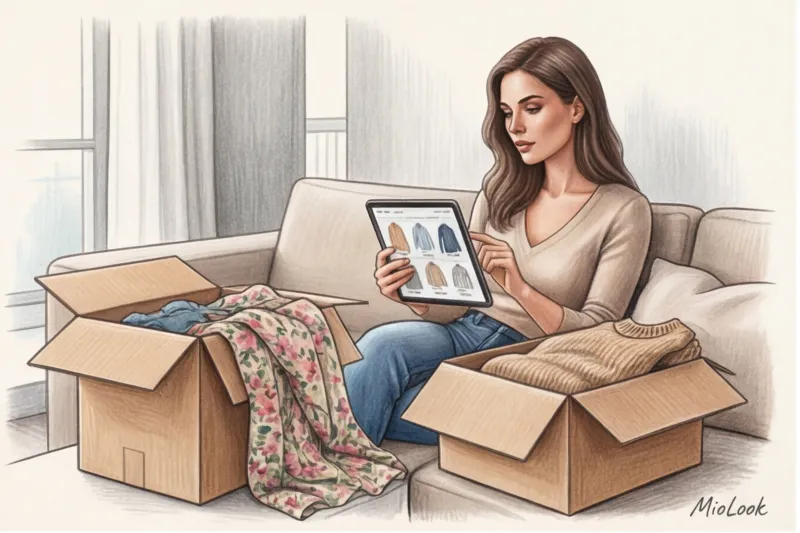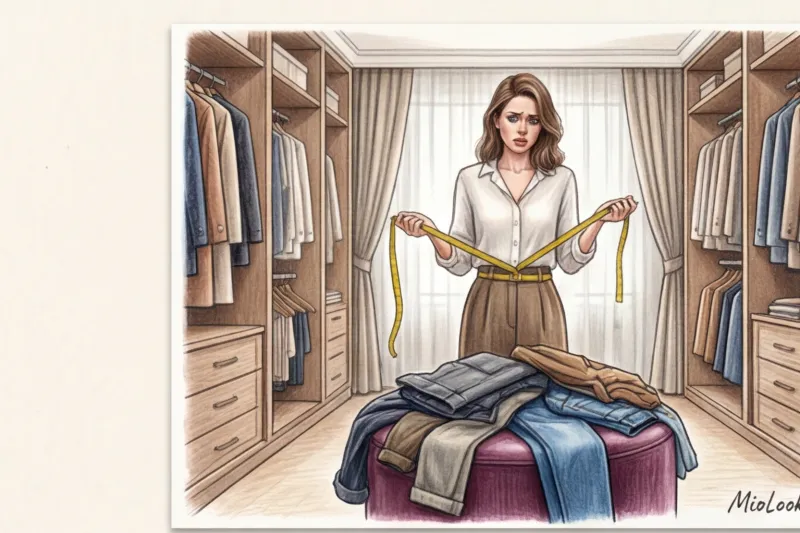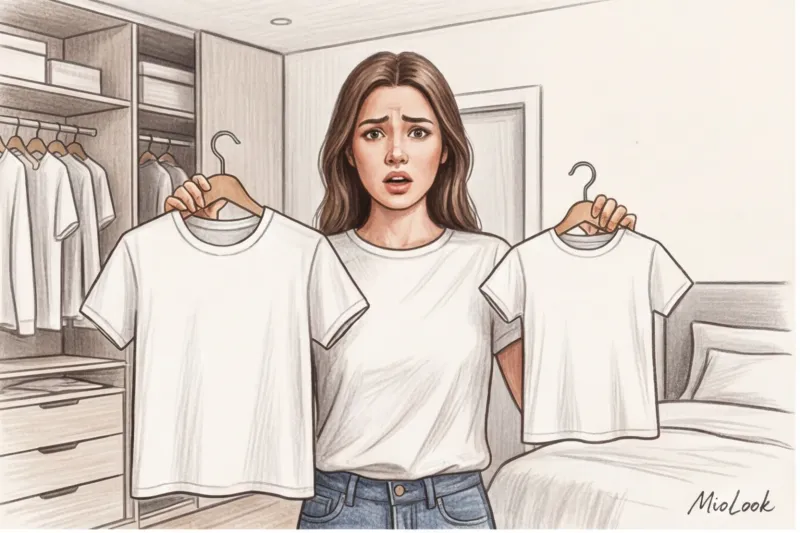
According to McKinsey's 2024 analysis, up to 40% of online clothing orders are returned to the warehouse. And the main reason isn't a defect, a logistical error, or a dislike of the color. It's a simple matter of "the size isn't right." In 14 years of working as a personal stylist, I've realized one thing: the problem isn't our bodies. The problem is that we try to squeeze our unique anatomy into generic letter-size boxes.
Before we get into it, How to take measurements for clothing To forget about returns forever, it's important to understand one thing. We've covered the psychology of online shopping in more detail in our The complete guide to perfect, no-return shopping , but today we'll talk about the pure mathematics of your wardrobe. You don't have "your size." You only have your unique measurements.
Letter Illusion: Why the Familiar S, M, and L No Longer Work
I'll let you in on a secret: my closet is currently filled with clothes labeled from XS to L. And they all fit me perfectly. How is this possible? The answer lies in a marketing term. vanity sizing (size vanity). Brands intentionally understate the numbers on tags to make customers feel slimmer and more willing to spend money.
A study of the international clothing design standard ISO 8559 shows that patterns have changed beyond recognition over the past 20 years. Today, a size "M" at a mass-market brand like Zara or H&M can differ by 4-6 cm in circumference from the same size at premium brands like COS or Massimo Dutti. You're not buying a size; you're buying a look.
That's why knowing your exact measurements in centimeters is the first and most important step to creating a functional, smart wardrobe that works for you, rather than draining you of money on shipping ill-fitting items.
Access to MioLook for €0.99 — one-time payment
Start creating perfect looks with the help of artificial intelligence and forget about the problem of “nothing to wear”
Get access — €0.99 onceTools: What you need to take clothing measurements without mistakes
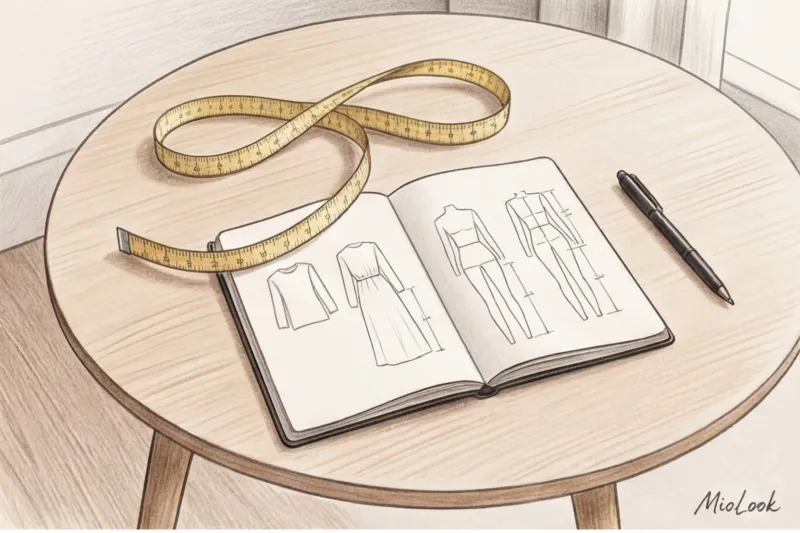
One of my clients once ordered a stunning pair of Italian jeans for €180, having taken her own measurements first. They were off by about two inches at the waist. It turned out she'd measured herself with a thick piece of string and then held it against a stiff school ruler. This error cost her the cost of international shipping.
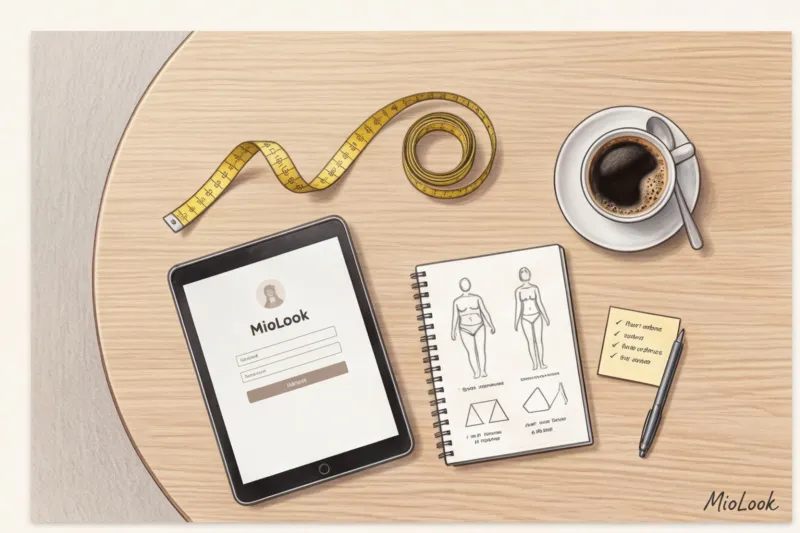
To take an accurate measurement, you only need four things:
- New tailor's tape (centimeter). The key word is - new Old tape measures handed down from grandma stretch over time and become misaligned by 1–2 centimeters. Tape measures and rigid rulers are strictly prohibited—they don't conform to the contours of the body.
- Full-length mirror. You should be able to see your posture and how horizontal the band is.
- A thin elastic band or tape. A regular cord about a meter long (I'll explain below what it's needed for).
- An application for digitalizing your wardrobe. Forget about papers that get lost. I recommend immediately entering your data into your digital profile in the app. MioLook so that AI can more accurately select images for you.
Three golden rules before you pick up a tape measure
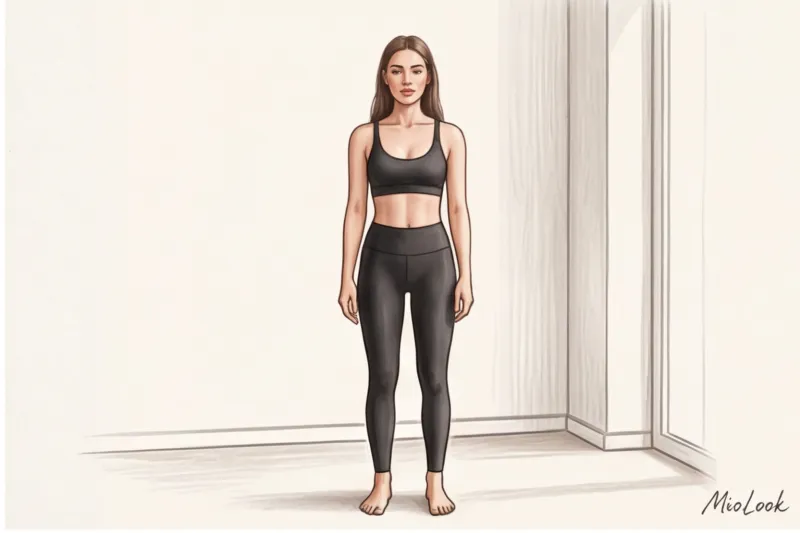
If you think your measurements are immutable, I'm going to disappoint you (or make you happy). Our body is a dynamic system. Here are three rules without which any measurements are meaningless.
Rule #1: Time of day matters. Avoid measuring yourself early in the morning on an empty stomach unless you plan to wear the item exclusively before breakfast. A healthy person's waist size fluctuates by 2-4 centimeters throughout the day. The ideal time to take measurements is midday or early evening.
Rule #2: The Lingerie Factor. You should measure yourself wearing the exact type of underwear you plan to wear with your future purchase. A push-up bra and a flat sports bra will result in a difference of up to 3–5 cm in chest circumference. This is critical when choosing sheath dresses or fitted shirts.
Rule #3: Get rid of the “sucked-in belly syndrome.” This is the most common and serious mistake. Pulling in your stomach and holding your breath in front of the mirror is a guaranteed way to buy something that will dig into your sides. You buy clothes to live in, work in at the computer, and sit comfortably after dinner at a restaurant. Breathe freely and stand in your natural posture.
A step-by-step guide: how to take basic measurements correctly
The basic "three" (chest, waist, hips) is the foundation. 90% of online stores ask for these three figures. The process will take you no more than five minutes if you follow the algorithm.
Chest circumference (BC): finding the right horizontal line
Wrap the tape around the widest part of your chest. The tape should be strictly horizontal: at the front, across the fullest part of your chest, at the sides, across your armpits, and at the back, across your shoulder blades.
A stylist's secret: the tape shouldn't sag down your back, but it shouldn't flatten your chest either. Keep your arms straight while measuring. Getting this perfectly horizontal is difficult on your own, so it's best to ask someone to help or carefully monitor the line in a mirror.
Waist circumference (WC): where it's actually located
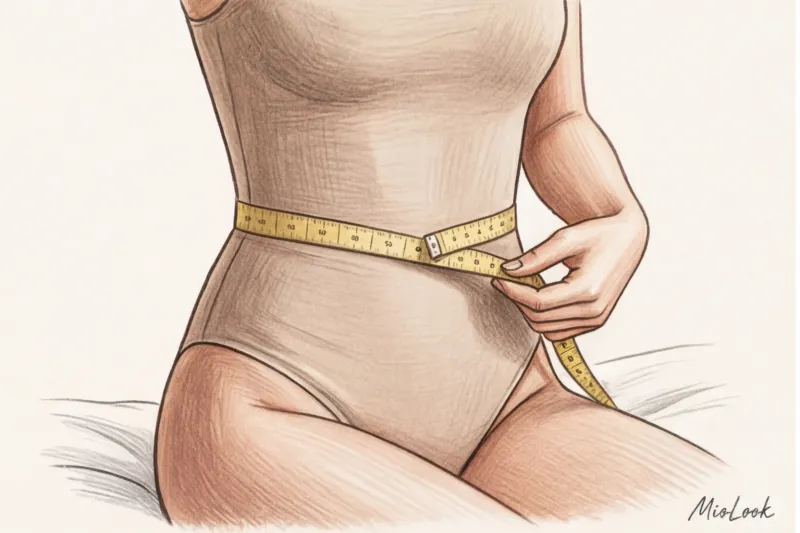
Let's bust a myth right now: the anatomical waist is NOT where your belly button is. And it's definitely not where the waistband of your favorite mid-rise jeans is.
Your true waist is the narrowest part of your torso. How can you find it accurately? Take that thin elastic band or piece of string, tie it loosely around your stomach, and simply walk around the room for 2-3 minutes, bending over a couple of times. The elastic will naturally move to the narrowest part. This is the line you should use to measure.
Hip circumference (HC): taking into account anatomy
The tape should run across the fullest part of your buttocks. However, there's an important caveat for those with a pear-shaped figure (where your hips are significantly wider than your shoulders).
Often, the widest part isn't at the buttocks, but slightly lower, in the so-called "breeches" area. If this is the case for you, measure along this widest line. And remember: when measuring, your feet should be together, not shoulder-width apart.
Level UP: additional measurements for complex cuts
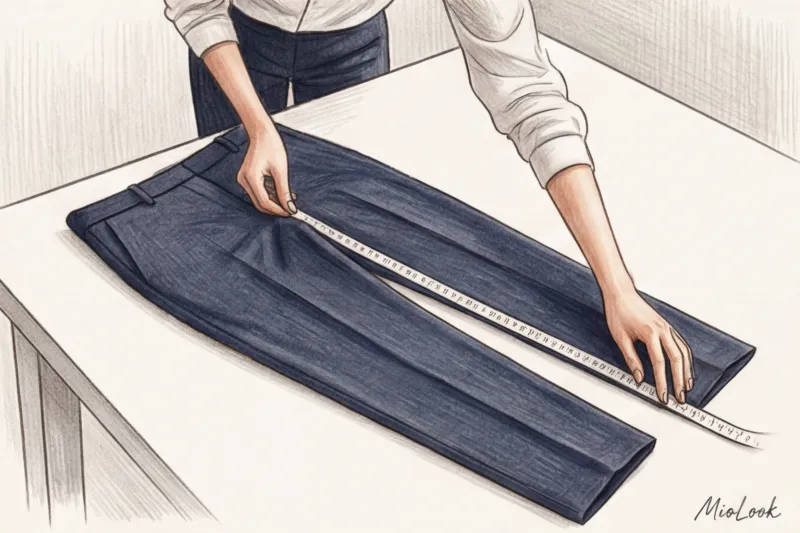
Basic measurements are sufficient for purchasing knitwear or simple dresses. But if you're ordering a structured jacket for €200 or palazzo pants, you'll need additional information.
Shoulder width. This is the most important measurement for the fit of jackets and coats. If the shoulder seam slips 2 centimeters toward the neck or hangs limply on the arm, even a luxurious garment will look sloppy. It's measured from one shoulder bone to the other.
Let me clarify right away: taking your own shoulder measurements reliably is practically impossible (due to posture distortion). Here's a life hack: take your most perfectly fitting jacket, lay it on a flat table, button it, and measure the distance between the shoulder seams. That's your ideal measurement.
Sleeve length. Measure from the shoulder bone to the wrist. Important: your arm should be slightly bent at the elbow at this point, otherwise the sleeve will be short when you reach for your coffee.
Inseam length. The secret to choosing the perfect pair of trousers without having to take them to a tailor. Measure along the inside leg seam: from the crotch to your desired length (depending on whether you'll be wearing them with heels or flats). International stores often list this measurement as "Inner Leg Length."
Your perfect look starts here
Join thousands of users who look flawless every day with MioLook.
Get access — €0.99 onceBody Measurements vs. Product Measurements: The Secret to Ease Allowance
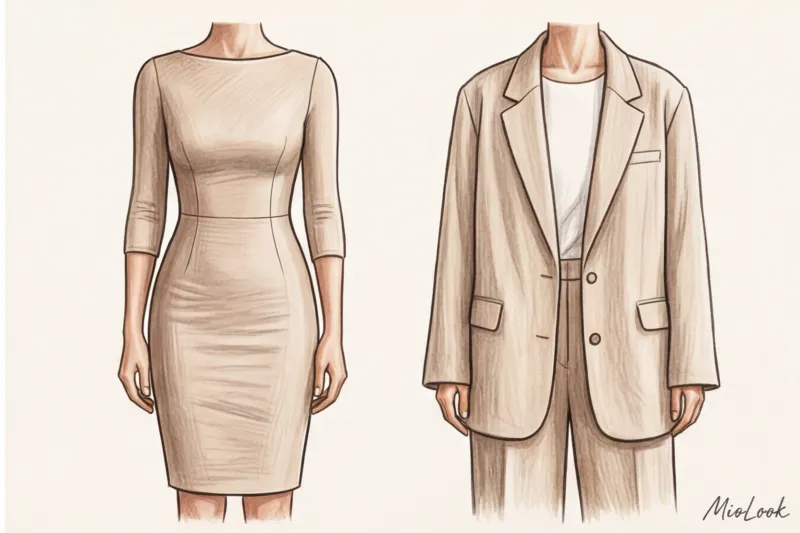
This is where the real magic of design begins, something 90% of style blogs gloss over. Why, if your hips measure 96 cm, won't you fit into a non-stretchy skirt that's also 96 cm?
The answer lies in the professional term - ease allowance The human body is not monolithic. When you sit, your hips expand. When you breathe, your chest expands.
There are two types of measurements:
- Body measurements: your pure anatomical parameters.
- Garment measurements: the width of the item itself, laid out on the table.
If the online store indicates Garment measurements , you need to apply some math depending on your desired fit. For a slim fit, the garment should be 2–3 cm wider than your torso. For a regular fit, it should be 4–6 cm wider. For a fashionable oversize, the difference can be 10 to 20 cm.
How to use your own measurements in online stores
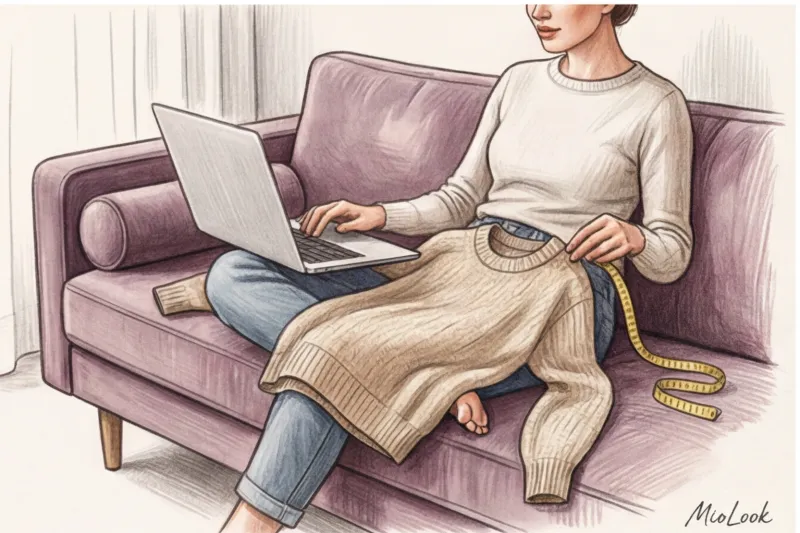
How do you use the resulting numbers correctly? First, forget about size converters. A European 38 (EU) is completely different from a Russian 38, and very different from a French 38. Always look for the "Size Chart" button on the website.
Secondly, pay attention to the "Model Parameters" section. Brands often write, "The model is 175 cm tall and is wearing a size S." If you're 160 cm tall, a dress that hits mid-calf on the model will fit you like a full maxi.
Use technology to your advantage. Enter your measurements into the "smart wardrobe" feature in MioLook This will allow you to avoid having to remember the numbers and quickly check them while shopping on your smartphone.
Checklist: A Digital Passport to Your Wardrobe
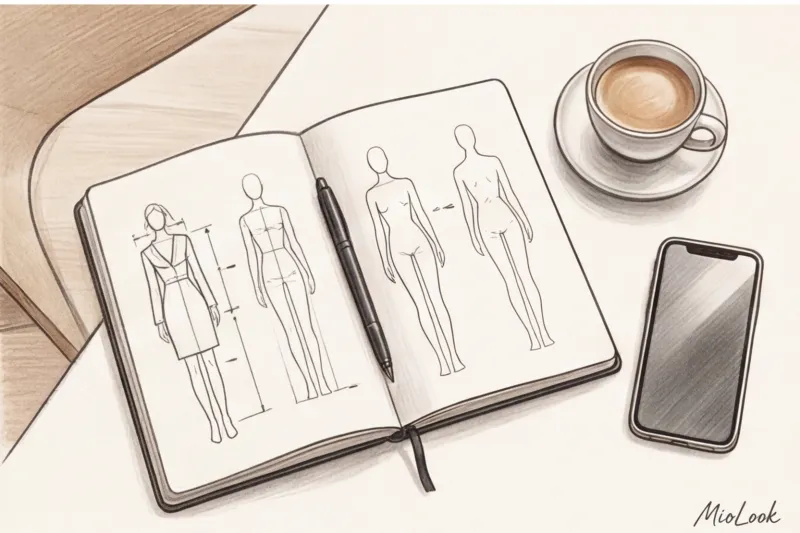
Let's move from theory to practice. If you've read this far, your task for the evening is to spend 10 minutes writing down the following parameters in your phone's notes or app:
- Height
- Chest circumference
- Waist circumference (natural!)
- Hip circumference
- Inseam length (for trousers)
- Shoulder width (measured using your favorite jacket)
One last important rule: update this data every six months or after any significant changes in weight. Our bodies are living beings, and they change under the influence of stress, diet, exercise, and hormonal cycles—and this is completely normal.
By stopping relying on the illusory letters S, M, and L and starting to trust objective centimeters, you move from emotional shopping to mindful shopping. You stop getting frustrated in fitting rooms and start investing in pieces that accentuate your beauty down to the millimeter.