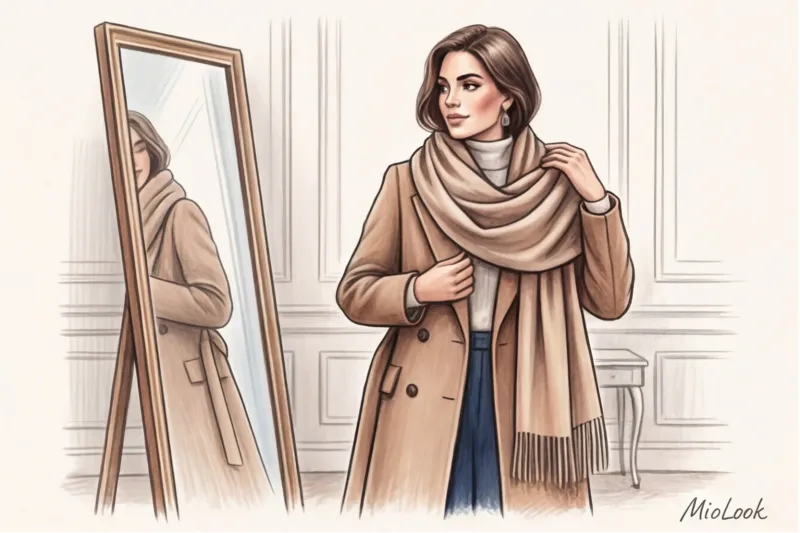
Have you ever noticed how often a luxurious cashmere coat loses all its luster the moment you pair it with the wrong ankle boots? We can spend weeks searching for the perfect cut of a trench coat or down jacket, but it's the lower third of the silhouette that truly makes or breaks the look.
In my practice, I constantly see the same mistake: a wardrobe is assembled in fragments. A jacket is bought separately, boots separately, and they only meet in the hallway in the morning, five minutes before going out. We've already covered a more systematic approach to the fall/winter season in our complete guide to basic outerwear and smart capsule collection Today, we'll examine the issue specifically: how to match shoes to outerwear, relying not on abstract "taste," but on the laws of proportion, biomechanics, and visual weight.
Silhouette architecture: how to match shoes to outerwear by length
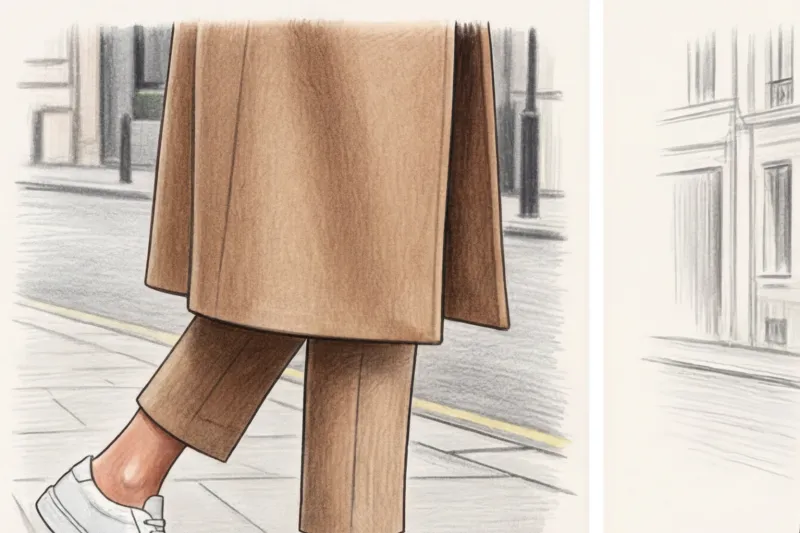
The main secret of stylists lies in the concept of "gap architecture"—the distance between the hem of your outerwear and the top of your shoe. This small area of the leg determines whether you'll look slim and tall, or visually lose a couple of sizes.
Last winter, one of my clients bought a stunning pair of ankle boots from Acne Studios for a hefty price. But when she paired them with her favorite double-breasted midi coat, she visually shrank three inches. Why? Because a strip of leg, clad in contrasting tights, formed between the hem of the coat and the hem of the ankle boots. The silhouette was "cut" horizontally three times: by the hemline, the line of the tights, and the line of the shoes.
The "Danger Zone" Rule for Midi and Maxi Coats
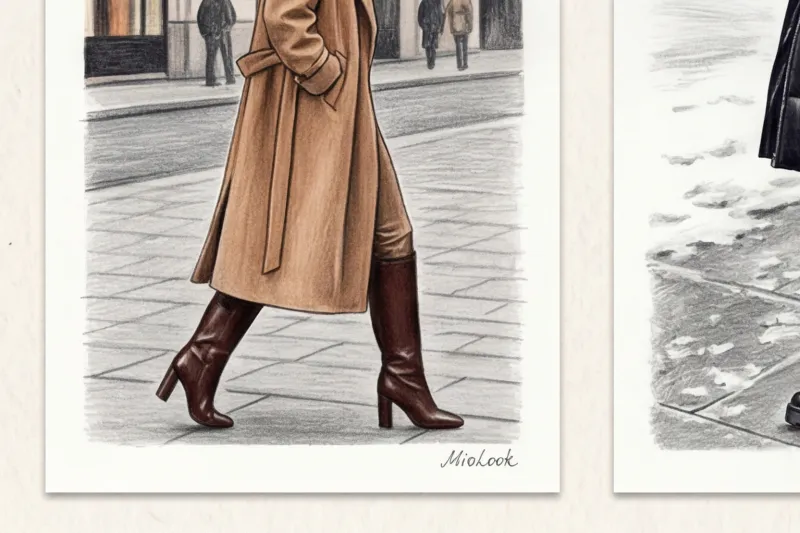
For midi lengths (below the knee but above the ankle), the gold standard is the overlap rule. Shoes should extend at least 2-3 centimeters under the coat hem. Tall tube boots or over-the-knee boots are ideal, creating a continuous vertical line.
If you prefer ankle boots, the 15-centimeter rule comes into play: the gap between the shoe and outerwear shouldn't split your shin in half. To avoid the appearance of a cut-off leg, tights or pants should strictly match the color of the shoes. Black ankle boots require thick black tights, not nude ones.
Short jackets and down jackets: a balance of proportions
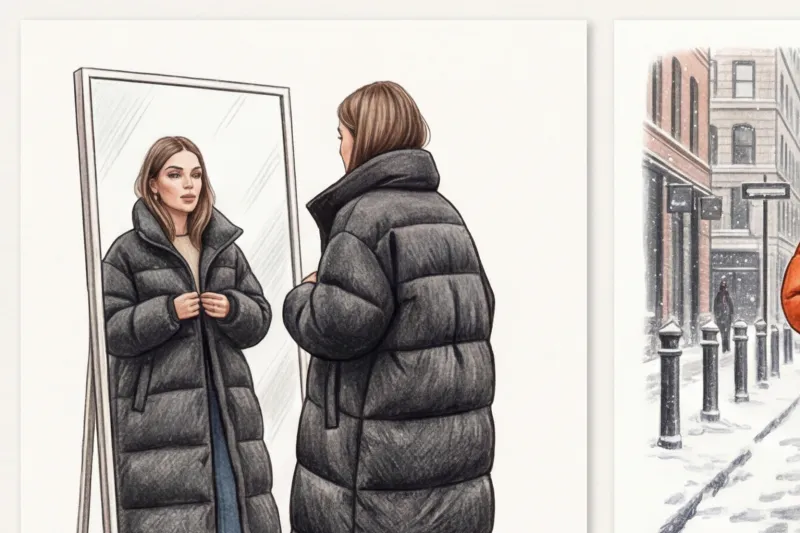
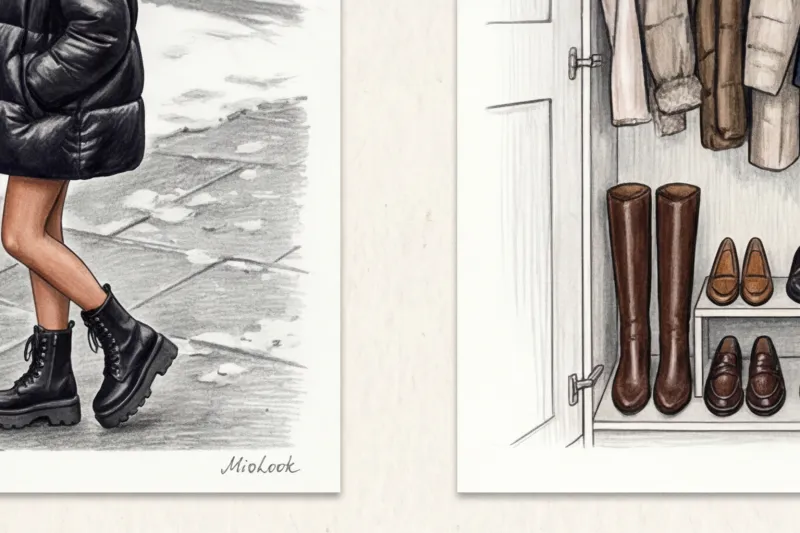
With cropped jackets, the rule of compensation applies: the more voluminous the top, the more accentuated and "heavy" the shoes can be. However, there's a trap here that I call the "Mickey Mouse effect."
Imagine: a short puffer jacket, tight skinny jeans, and chunky moon boots or oversized platform boots. The figure becomes a ball on thin legs with enormous feet. The only exception to this rule is a deliberately exaggerated avant-garde style in the spirit of the Balenciaga shows. In real life, especially if we consider Office wear for plus-size women and style secrets Such a contrast in volume is strictly contraindicated. Choose straight trousers that slightly cover chunky shoes, balancing out the silhouette.
Access to MioLook for €0.99 — one-time payment
A smart AI stylist will select the perfect look based on your proportions and the outerwear you have.
Get access — €0.99 onceVisual Weight: Why a Chunky Down Jacket Requires the Right Sole
In styling, there's a concept called "visual weight." It's not about kilograms, but about how heavy, dense, and bulky a garment appears. Winter outerwear, by default, has a tremendous amount of visual weight.
When you wear an oversized down jacket or a voluminous faux fur coat with dainty stiletto boots, you defy the laws of physics in the eye of the beholder. Your appearance appears unstable, your figure bulky, and your legs painfully thin. A bulky top needs to be grounded.
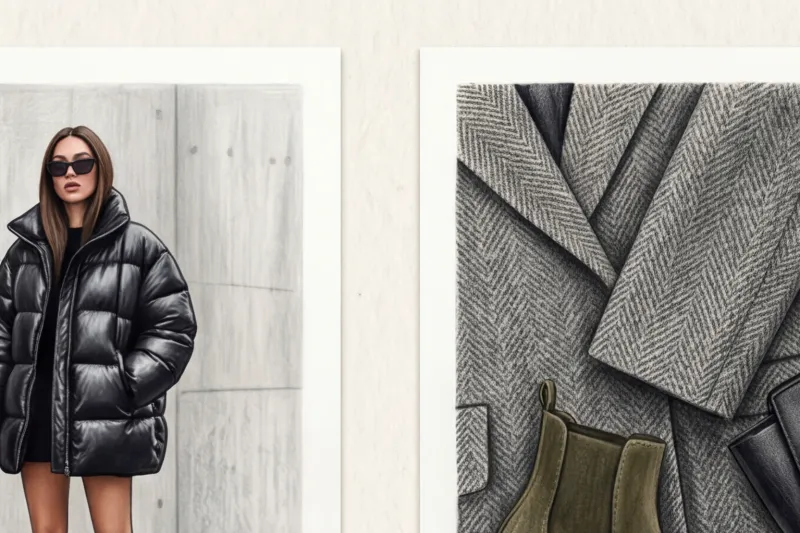
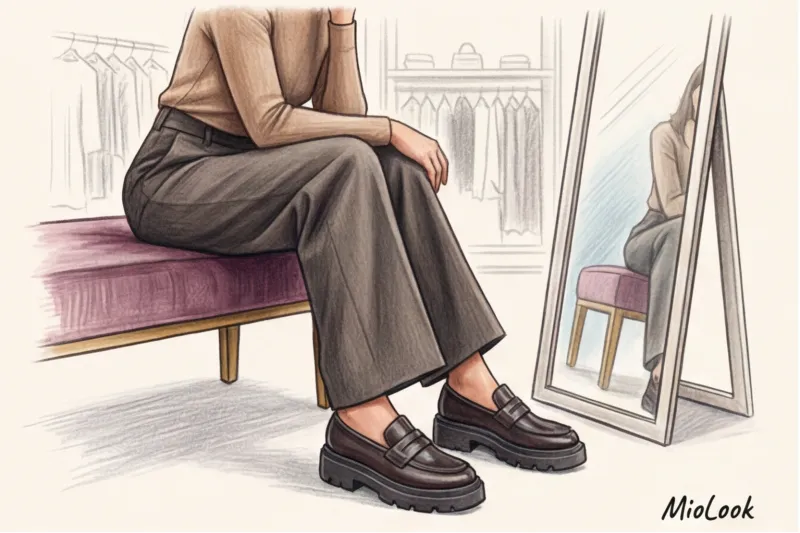
- Tractor sole: The perfect companion for parkas and quilted coats.
- Platform: Works great with long down jackets, lifting you above the slush and balancing out the volume.
- Chunky sneakers: Salvation for short puffer jackets in a sporty-chic style.
According to the laws of biomechanics and visual perception, massive shoes combined with a voluminous upper paradoxically make the figure itself (your ankles and calves) appear more fragile and graceful in contrast.
A combination of textures: leather, suede and high-tech fabrics
Many are wary of mixing different materials, preferring to play it safe. But let's be honest: the combination of a smooth leather coat and boots made of the same smooth leather often looks less like a stylish choice and more like a secret service uniform from a '90s movie.
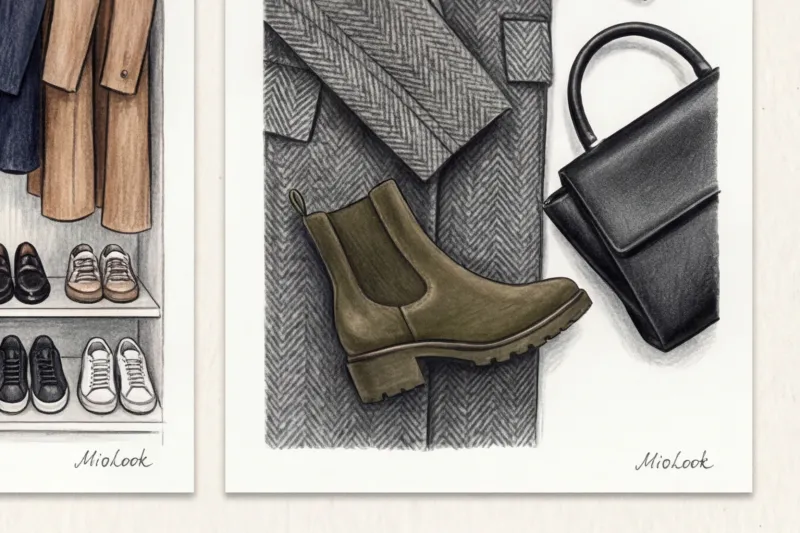
Ideal, expensive style (that same old-money aesthetic) is always built on a clash of textures. Different materials absorb and reflect light differently, creating depth in the image.

- Wool coat + smooth leather: A classic, win-win contrast. Matte, light-absorbing wool and shimmering leather create a dynamic effect.
- Nylon down jacket + suede: Smooth, often shiny nylon is perfectly soothed by the noble, velvety texture of suede shoes.
- Eco-fur + patent leather: A bold combination for those who are ready to play with the maximum contrast of fluffy and glossy.
"Texture speaks louder than color. You can wear all black, but if it's black cashmere, black silk, and black suede, the look will be considered a work of art"—I always repeat this rule during wardrobe reviews.
Outdated color myths: should you match your shoes to your coat?
It's time to dispel one of the most persistent myths: matching shoes exactly to your coat or bag is an outdated rule. Today, a perfectly shade-on-shade combination betrays a lack of self-confidence and makes a look look flat and plasticky.
According to the Pantone Color Institute (2024 Layering Trends Report), modern visual aesthetics rely on the principle of "related contrast" rather than direct copying. If you have a beige coat, don't look for beige boots. Choose chocolate, caramel, or deep burgundy.
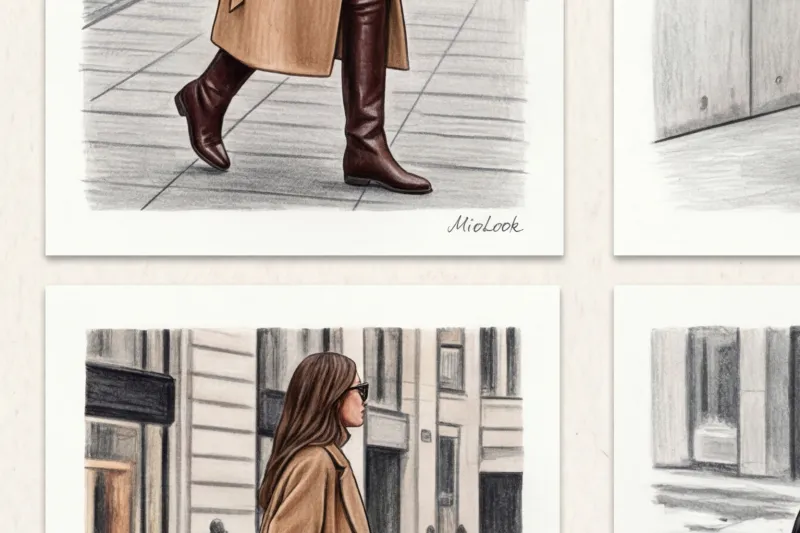
I recommend using the principle neutral grounding Black shoes aren't always versatile; they often look too harsh with light-colored outerwear. Swap black for burgundy (oxblood), emerald, or dark chocolate. These shades work as basics and pair with 90% of your wardrobe, but they look a hundred times more sophisticated and expensive.
Your perfect look starts here
Join thousands of users who look flawless every day with MioLook. Upload your items and let AI create the perfect color combinations.
Get access — €0.99 oncePracticality vs. Trends: Shoes for Outerwear for Real Life
As a textile quality expert and wardrobe practitioner, I always calculate the efficiency of a garment. You can buy stunning ankle boots with thin leather soles to go with your winter coat, but their efficiency will be zero in -10°C weather and chemicals on the sidewalks.
Research in clothing ergonomics (specifically, data from the Journal of Thermal Biology from 2023) shows that up to 30% of heat loss occurs through the feet when in contact with frozen asphalt, even if the sole thickness is less than 2 centimeters. No wool coat or down jacket filled with natural goose down will protect you from the cold if you're standing on thin soles.
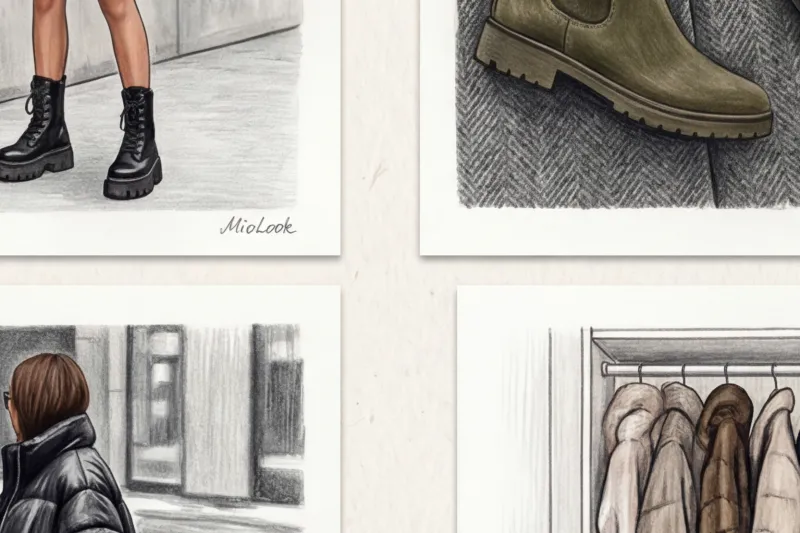
The choice of materials also strictly depends on your lifestyle:
- Lady driver: If you spend the winter driving, your main enemies are creases in your right toe from the pedals and temperature fluctuations. Smooth genuine leather withstands temperature fluctuations from -10°C (14°F) outside to +22°C (72°F) inside best. In such conditions, eco-leather often cracks at the folds after just one season.
- Pedestrian: Your enemy is urban slush and salt. I personally tested various water-repellent nano-impregnations for suede in Berlin and Moscow winters. My verdict: a high-quality impregnation (applied in three layers before the first wear) makes suede more resistant to chemicals than cheap smooth leather. However, for long walks, it's better to choose shoes with a rubberized bottom edge (overshoe).
Stylist Checklist: 5 Steps to Take Before Buying a New Pair
Before investing in a new pair of shoes for the season, I always run my clients through this short filter. This prevents impulse purchases that then end up collecting dust in the closet for years.
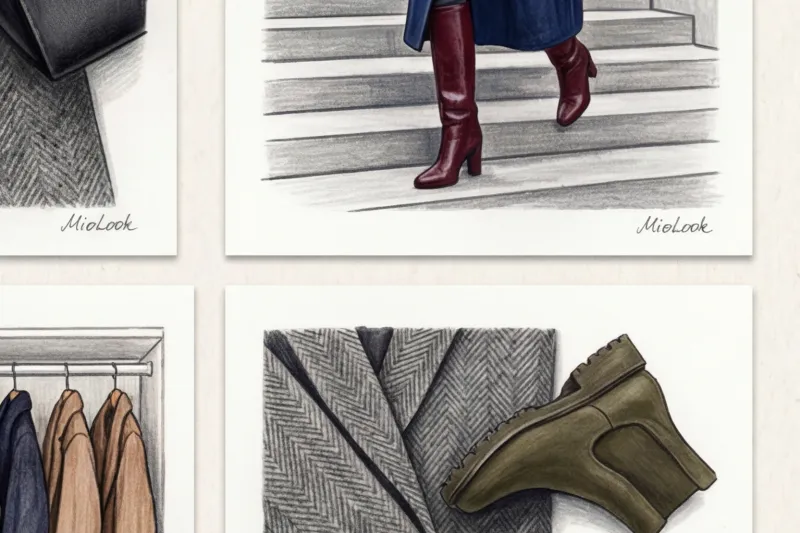
- Dominant Length Analysis: Open your closet. Do you have more thigh-length jackets or midi coats? If it's the latter, you absolutely need thigh-high tube boots, not more short boots.
- Visual weight rating: If your favorite down jackets are oversized, look for shoes with a chunky sole (at least 3 cm).
- Thermoregulation test: Can you stand at a bus stop in these shoes for 15 minutes? If the soles are thin, they're only suitable for taxis.
- Compatibility test (without direct copying): Do your shoe colors match 80% of your bags and hats without matching them tone-on-tone? If you've chosen a deep wine or chocolate color, the answer is probably yes.
- Digitization before purchase: Don't rely on your imagination. Upload a photo of your desired pair and your current coat. MioLook A virtual try-on will immediately show you whether this length is out of proportion.
Ready to get started?
Try the MioLook plan for free—no strings attached. Organize your wardrobe and stop second-guessing yourself in the mirror.
Get access — €0.99 onceChoosing shoes to go with outerwear isn't magic or an innate talent. It's simple geometry and an understanding of the properties of materials. Stop searching for the perfect color match and start thinking in terms of volumes, textures, and silhouette architecture. Once you shift your focus from "does this color match?" to "is this gap and visual weight harmonious?", your winter wardrobe will be fully functional.