Portrait Zone Architecture: Why It's So Important to Understand How to Match Jewelry to a Neckline
Do you know where your conversation partner looks for the first 15 seconds of a conversation? Spoiler: not at your new shoes. Eye-tracking research is adamant: about 80% of visual attention goes to the so-called "portrait zone"—the area from the crown of the head to the bust line.
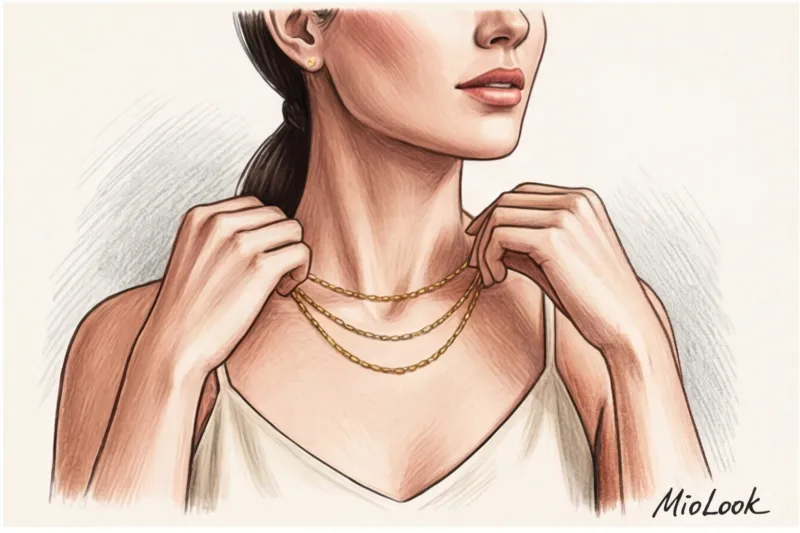
We often spend months choosing the perfect investment in a basic wardrobe - I wrote about this in more detail in our The Complete Guide to Essential Bags , but we quickly throw on the first necklace we see before leaving the house. After all, how you choose jewelry to match your neckline determines whether your look will look like a carefully crafted architectural composition or a random collection of shiny objects.
Over 14 years of working as a personal stylist, I've realized one thing: jewelry isn't just decoration. It's a tool for attention. In art, there's a concept called "negative space"—the emptiness surrounding an object. In style terms, the exposed skin in your décolleté is this negative space. A necklace or pendant shouldn't simply dangle around your neck; it should skillfully cut, fill, or accentuate this emptiness.
The Biggest Myth of Stylistics: Why the "Like for Like" Rule No Longer Works
Let's leave the "like attracts like" rule behind forever. You've probably read this advice in old magazines: a V-neckline calls for a check-shaped pendant, a square neckline for a rectangular pendant, and a round neckline for a round neckline. Today, perfectly matching shapes betrays an old-fashioned approach and looks downright boring.
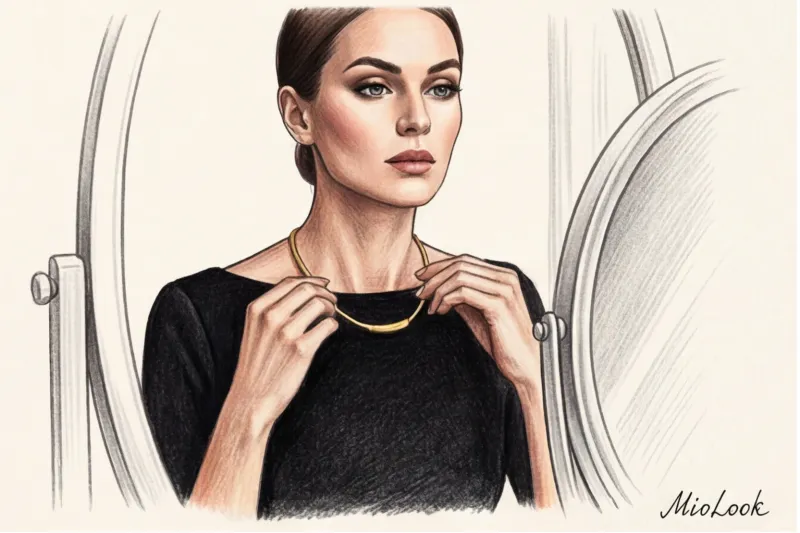
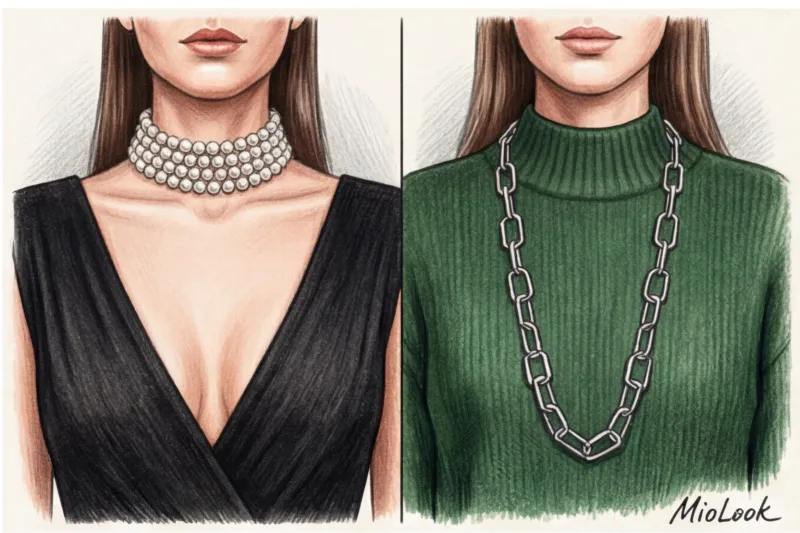
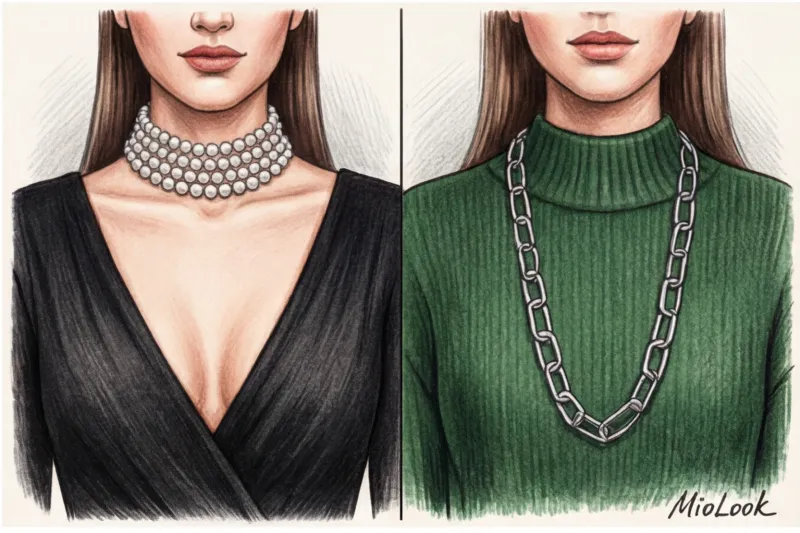
The sharpest, most modern looks are built on the geometry of contradictions. Wear a crisp, smooth metal choker hoop under a deep V-neckline. The contrast of the soft, sloping neckline and the sharp horizontal line at the neck creates a fashionable dynamic that simply can't be achieved by copying the shape of the collar.
But let's be honest: this rule of fashionable contrast doesn't work everywhere. If you have a strict, conservative dress code (for example, in banking), a stiff metal headband paired with an open neckline will look too aggressive. In such situations, a classic strand of pearls remains the safest choice.
Access to MioLook for €0.99 — one-time payment
A smart AI stylist will select the perfect look and help you place the right accents in your portrait area.
Get access — €0.99 onceA stylist's cheat sheet: how to match jewelry to basic dress and top necklines
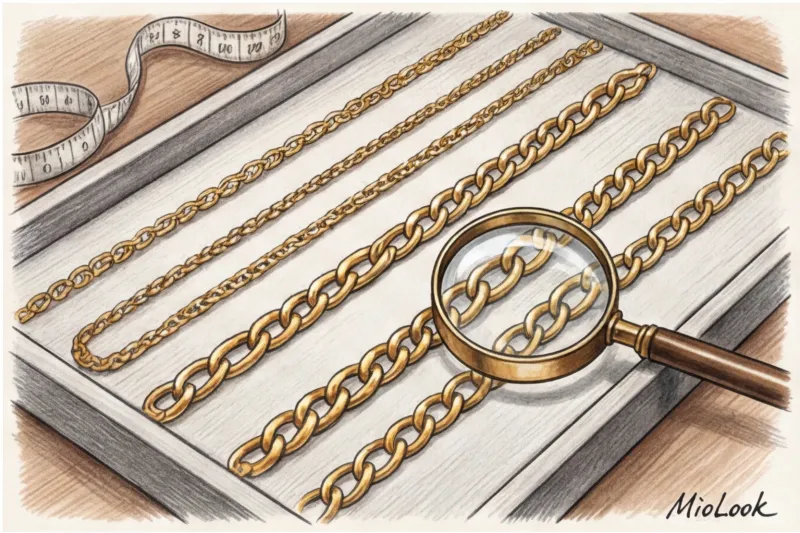
To be on the same page, let's recall the international jewelry length classification. Without these basic numbers, any styling becomes akin to guessing in a mirror:
- Collar (Collard): 30-35 cm - fits tightly around the neck.
- Choker (Чокер): 35-40 cm - lies at the base of the neck.
- Princess: 40-45 cm is a classic length that falls exactly on the collarbones.
- Matinee (Matinee): 50-60 cm - falls to the chest line.
- Opera (Opera): 70-90 cm - a long sautoir that reaches below the chest.
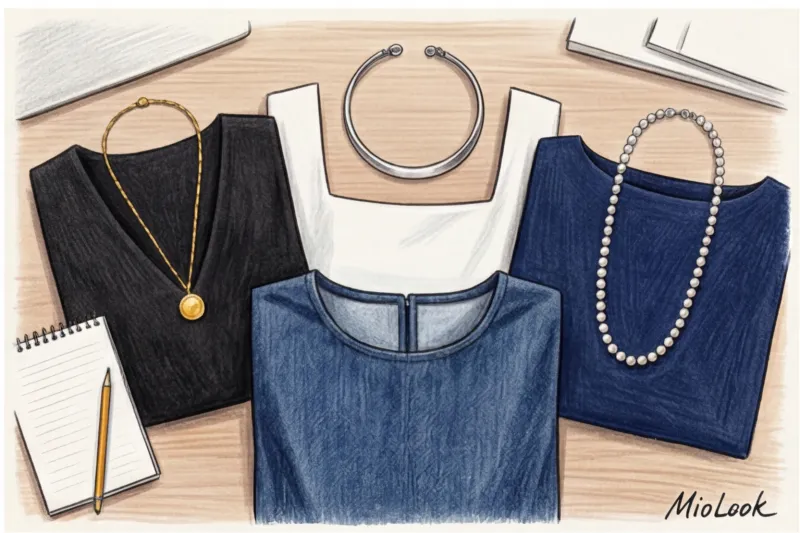
V-neck: from basic elegance to fashionable provocation
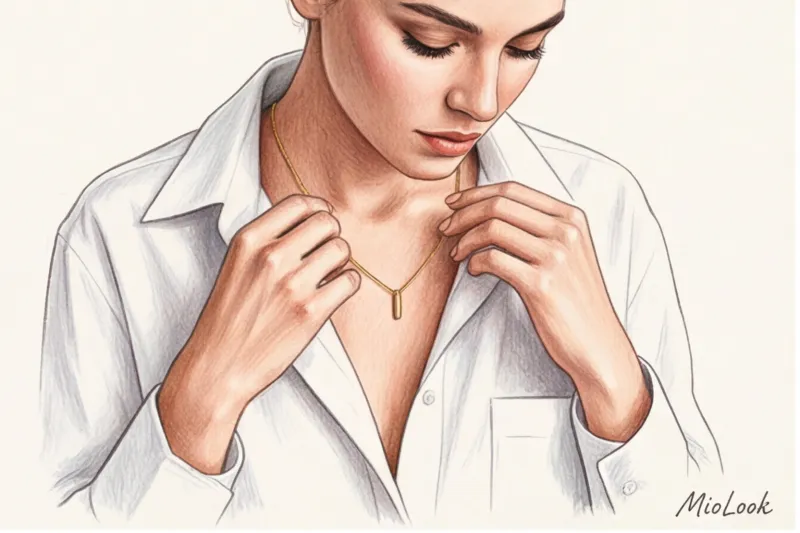
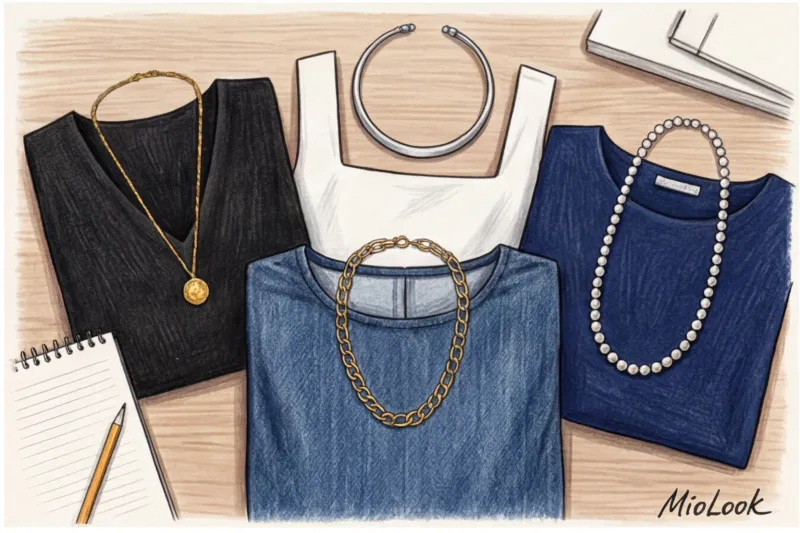
The most common mistake when working with a V-neck is choosing a pendant that's too long and ends up hidden under the dress fabric. If you're putting together an outfit and thinking, What to wear with an oversized blazer to the office When wearing a V-neck top underneath, use a Princess length (40-45 cm). The pendant should end exactly 2-3 cm before the beginning of the fabric.
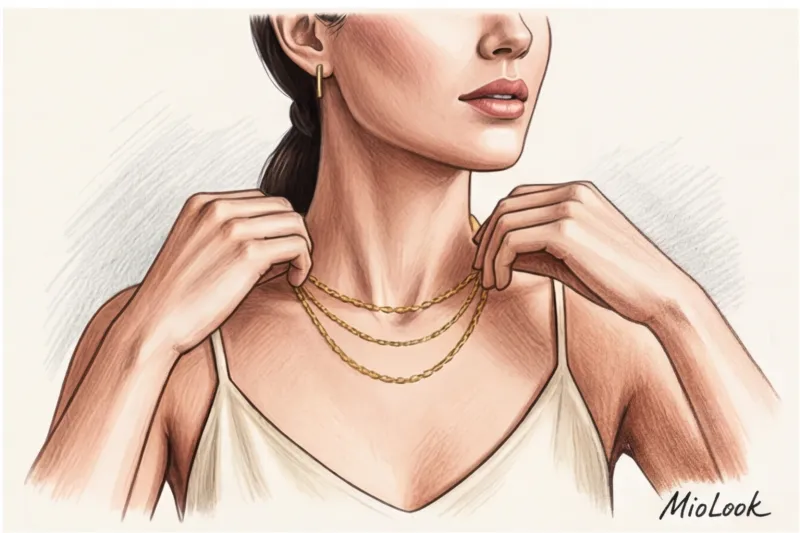
A trendy alternative for the daring: multi-tiered chains of varying thicknesses that fill the entire open space of the neckline.
Round and boat necklines: playing with neck proportions
A boat neckline absolutely abhors thin chains with single pendants. As you move, they inevitably slip under the edge of the fabric, disrupting the clean horizontal line of the neckline. My go-to for a boat neckline is to accentuate the ears (large vintage clip-on earrings) or an asymmetrical brooch on the shoulder.
But a crew neck requires a necklace that fits on top Fabrics. Chunky, short, tightly woven chains work great here, visually becoming part of the garment itself.
Square neckline and corsets: strict geometry
A square neckline calls for angularity or a completely free collarbone. A plastron necklace, filling the neckline almost like chainmail, or short geometric pendants are ideal. Avoid long, dangling chains—they ruin the beautiful horizontal line of the neckline, which is precisely what the square neckline was created for.
Asymmetry, one-shoulder necklines and turtlenecks
An asymmetrical cut is a statement piece in itself. The strict "no necklace" rule applies here. Avoid creating a visual distraction around your neck; instead, add a chunky cuff to your open hand.
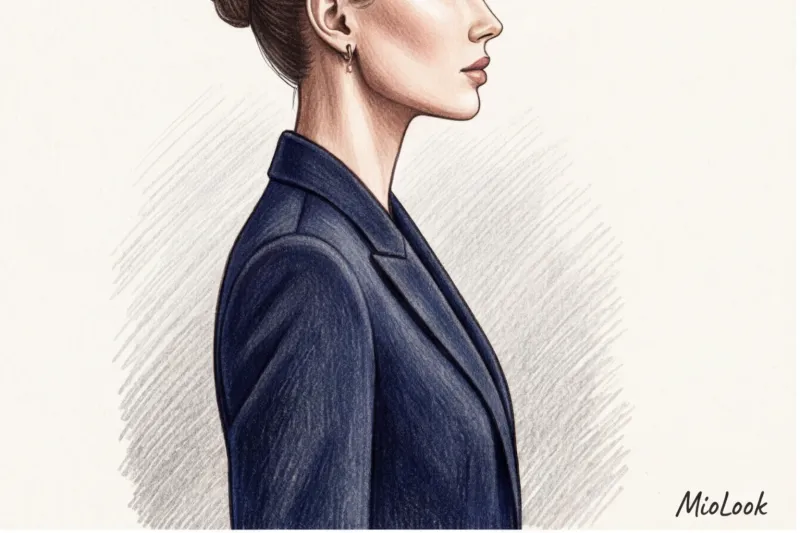
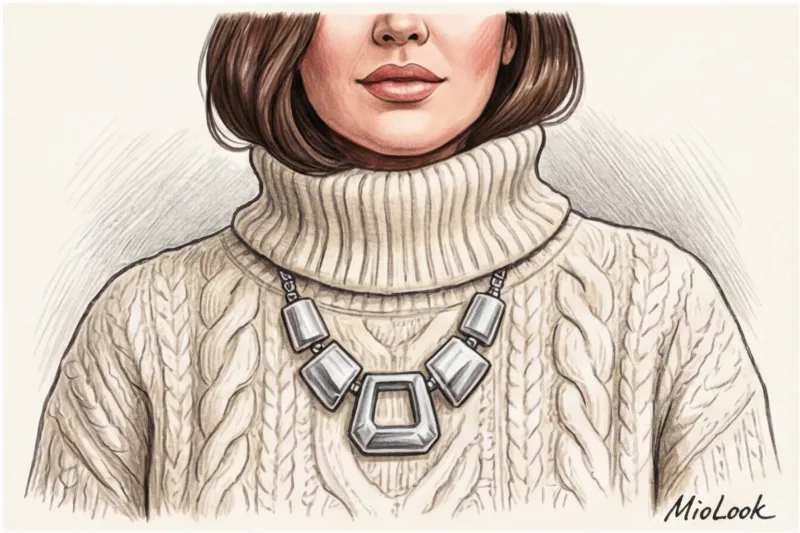
Turtlenecks are a matter of pure physics. Long sautoirs (Matinee and Opera lengths) worn over a turtleneck create the classic Müller-Lyer optical illusion. Two downward lines visually elongate the silhouette of the neck and torso, making you appear slimmer and taller.
Hidden Factors: How Height, Bust Size, and Fabric Texture Change the Rules
One of my clients, who has a voluptuous figure and a D+ bust, couldn't figure out for a long time why her outfits looked sloppy. It turned out she was wearing 50cm long necklaces (Matinee). With a full bust, such pendants simply fall into the cleavage, distorting the bust line and looking inappropriately provocative. We often discuss this. business style for plus size women , but we forget about this detail. The problem was solved instantly: we replaced all the chains with 45 cm lengths, which rest directly on the collarbones, bringing the focus back to the face.
Anatomy dictates its own rules. Over the years, I've developed a strict rule: a standard choker (35-40 cm) visually "cuts" the neck if its length from chin to collarbone is less than 9 centimeters. Unless you have a swan-like neck, ditch the chokers in favor of V-shaped pendants.
The texture of a fabric also has weight—literally and figuratively. Last year, during a fitting, a heavy cast brass necklace literally pulled and distorted the neckline of my client's delicate silk slip dress. The weight of the metal should always match the weight of the fabric. Silk with a density of 19-22 momme pairs well with fine knitwear and pearls, while heavy tweed or chunky knits can easily support massive chains.
Investing in the Portrait Zone: How the Premium Base Differs from the Mass Market
According to McKinsey's 2024 State of the Fashion Industry report, consumers are increasingly turning away from mountains of cheap costume jewelry in favor of "demi-fine" jewelry—mid-priced pieces made from high-quality materials. And this is a strategically sound decision.
Cheap hardware with a yellow, acid-washed finish can visually ruin a thousand-dollar dress. If you're not ready to buy pure gold, invest in vermeil (vermeil—925 sterling silver with a gold plating of at least 2.5 microns) or high-quality cast brass. They have a refined, subdued shine and the right physical weight, ensuring the jewelry sits smoothly on the body rather than bulging with every breath.
Your perfect look starts here
Join thousands of users who look flawless every day. Let artificial intelligence help you. MioLook to put together the perfect combinations for you.
Get access — €0.99 onceMioLook Checklist: 5 Steps to Check Your Look Before Leaving the House
Before you step inside, do a quick check of your beauty routine in front of the mirror. Here are four steps I make every client take:
2 Centimeter Rule (Tangent Rule): The jewelry should never line up exactly with the neckline. Leave at least 2 centimeters of exposed skin between the pendant and the fabric, or let the necklace rest comfortably on top of the garment. A borderline position creates visual noise.
- Soloist Test: Who's the star of your look? If your top has a complex, asymmetrical, draped neckline, jewelry should remain silent (opt for stud earrings). If your top is basic, a necklace deserves a solo appearance.
- Testing in motion: Lean forward and reach for an imaginary cup of coffee. Does the pendant slip under the fabric and not return to its place? Then the length is incorrect.
- Balance of fittings: Does the temperature of the metal on your neck match the hardware on your bag and belt? A deliberate mix of silver and gold is a great trend, but it should look intentional, not accidental.
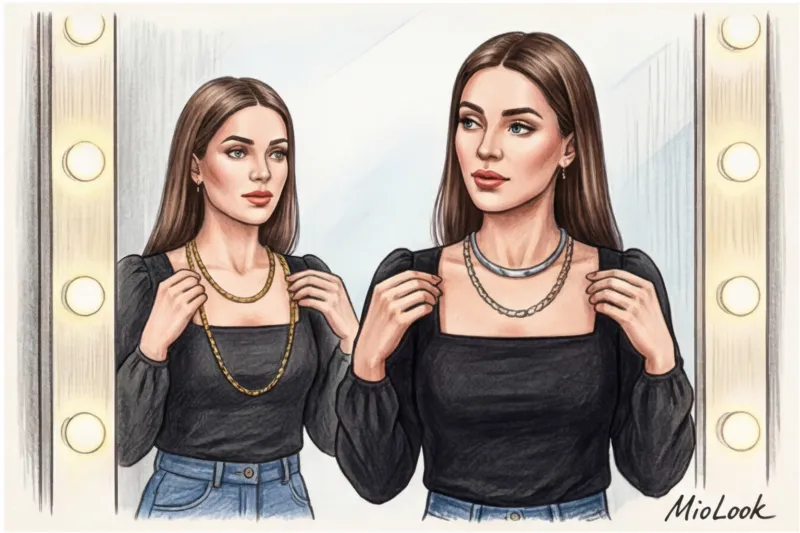
Your style isn't a strict mathematical formula, but a language you speak to others. A well-chosen piece of jewelry can elongate your neck, accentuate your collarbones, and make your eyes sparkle. But if you're unsure about your necklace when you stand in front of the mirror, take it off. Sometimes the most powerful, luxurious, and captivating accent in a portrait photo is pure, exposed skin and a touch of highlighter on the collarbones.