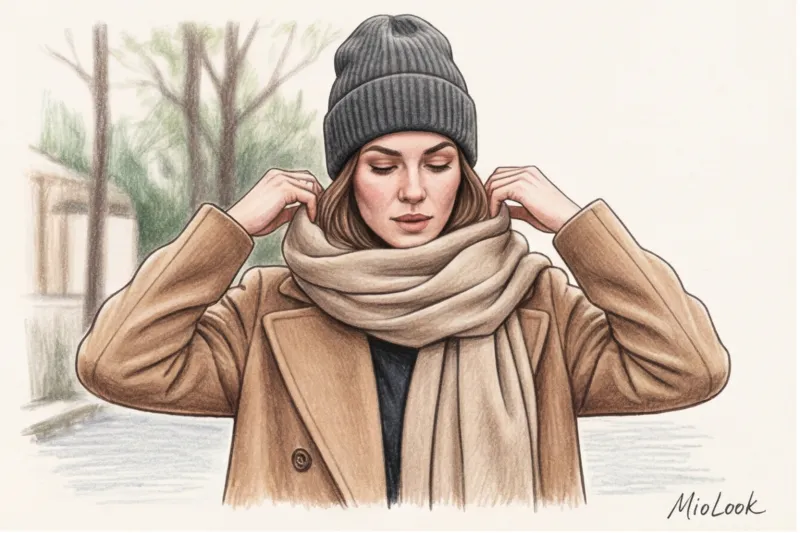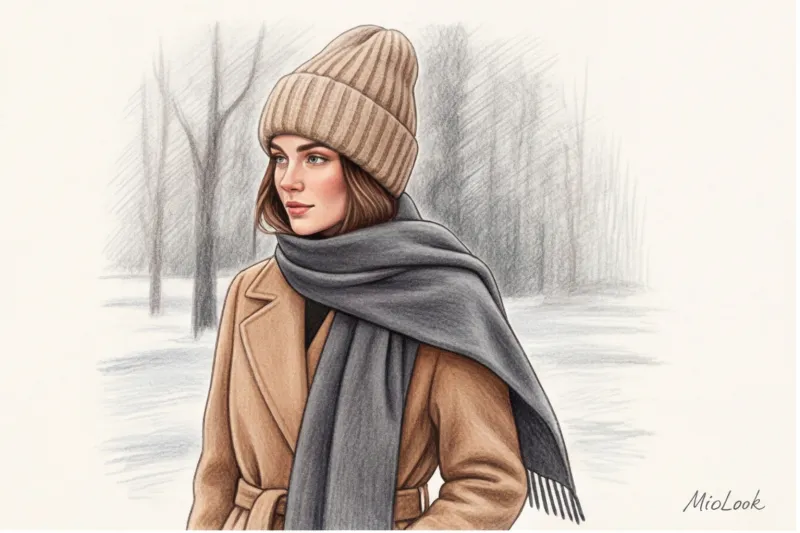
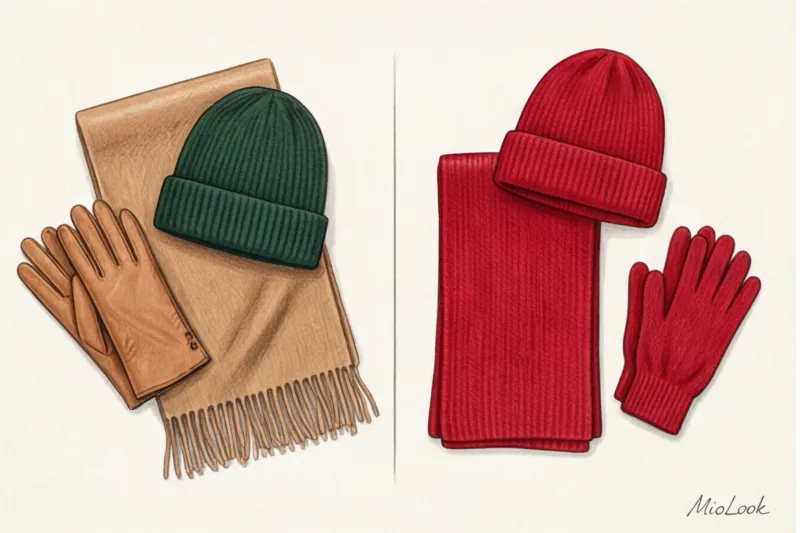
Remember those gift boxes on the shelves of mass-market stores before the New Year holidays? A hat, scarf, and gloves, all knitted from the same yarn in an absolutely identical pattern. For many women, the question of How to combine a hat and a scarf , ends up buying such a ready-made set. It seems convenient and saves time in the morning. But let's be honest: as a stylist who has been working with premium wardrobes for over twelve years, I must say bluntly: nothing destroys the status of your winter coat more quickly and mercilessly than a matching set of accessories.
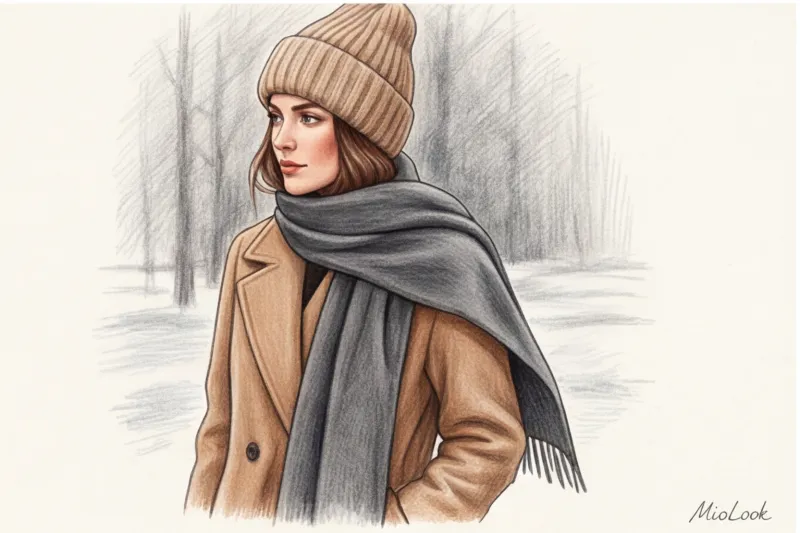
We have already discussed in more detail the mathematics of complex images and the rejection of outdated rules in our The complete guide to combining accessories without overloading Today, we'll explore winter gear not as a functional addition, but as an independent investment piece for your style.
The "first-grader mom" effect: why matching outfits cheapen a look
People buy ready-made outfits, sincerely believing it's a sign of thoughtfulness. In reality, identical hats, scarves, and mittens create the effect of "a first-grader's mom," thoughtfully dressed by relatives to ensure she doesn't freeze. This approach deprives the look of individuality and conveys to others that you've delegated your taste to a factory machine.
One of my regular clients, a top manager at a major IT company, once showed up to a meeting wearing a luxurious €3,000 Max Mara cashmere coat. It had a perfect cut, a refined camel hue, and a bright crimson knitted set (a hat with a pom-pom and a snood scarf), bought in a hurry for €30. Her luxurious coat was instantly "lost." The human eye is lazy: it doesn't notice the quality of a complex cut, but rather the brightest and simplest feature—in this case, a single block of cheap acrylic yarn.
According to research by the WGSN agency (2023) on the visual perception of clothing, the human brain subconsciously associates mixed, complex textures with "high cost" and custom tailoring. At the same time, uniform synthetic textures are immediately perceived as mass-market.
How to Pair a Hat and Scarf: The Basic Rule of Three Textures
Forget the tired advice from glossy magazines of the 2000s about finding the perfect color match. Today, it's all about contrast of textures The blend of smooth, fluffy, and matte creates that visual depth that separates sophisticated style from dullness.
Synthetics (acrylic, polyester) absorb and reflect light evenly, creating a flat look. Natural fibers—Mongolian cashmere, dense merino wool, angora—have a microtexture. Their fibers refract daylight differently, creating elegant shadows. When you wear a smooth wool coat, you need accessories that complement its texture, not blend in with it.
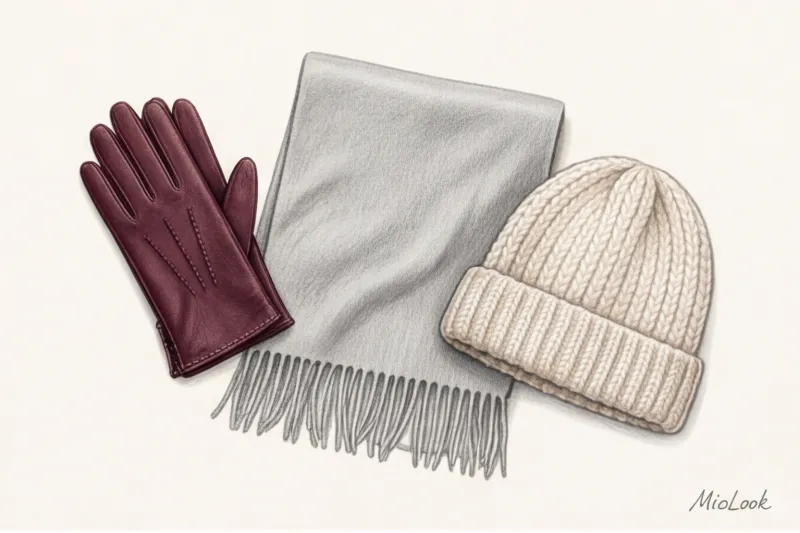
A play on contrasts: cashmere, leather and chunky knits
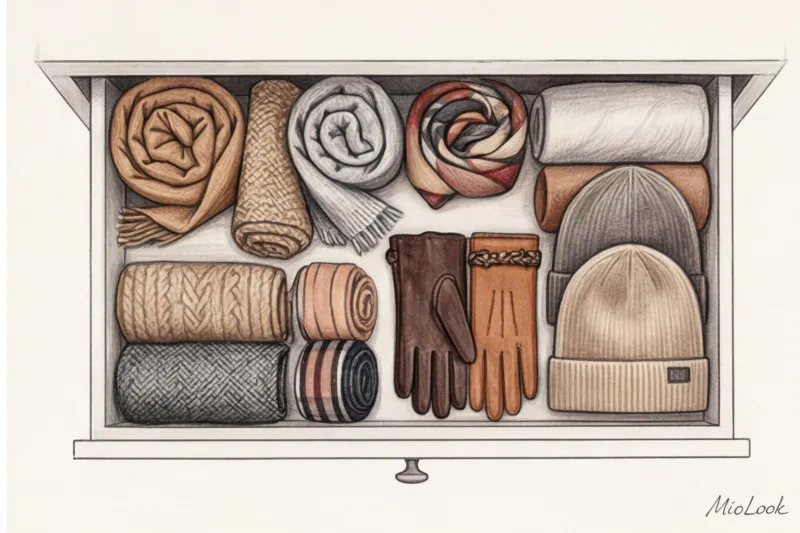
While rummaging through my winter accessory drawer, I once again caught myself thinking: my most successful, compliment-winning looks revolve around one simple formula. I take vintage textured peccary leather gloves (inherited from my Italian aunt) and pair them with a modern, oversized scarf from Acne Studios.
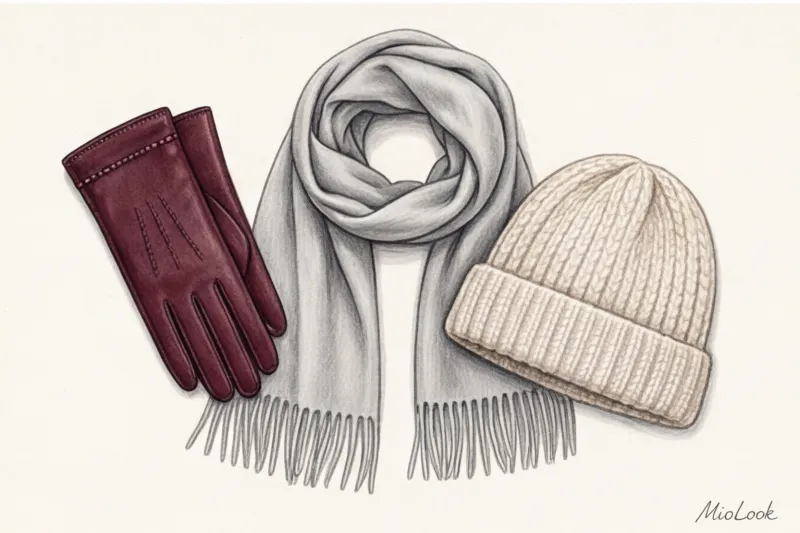
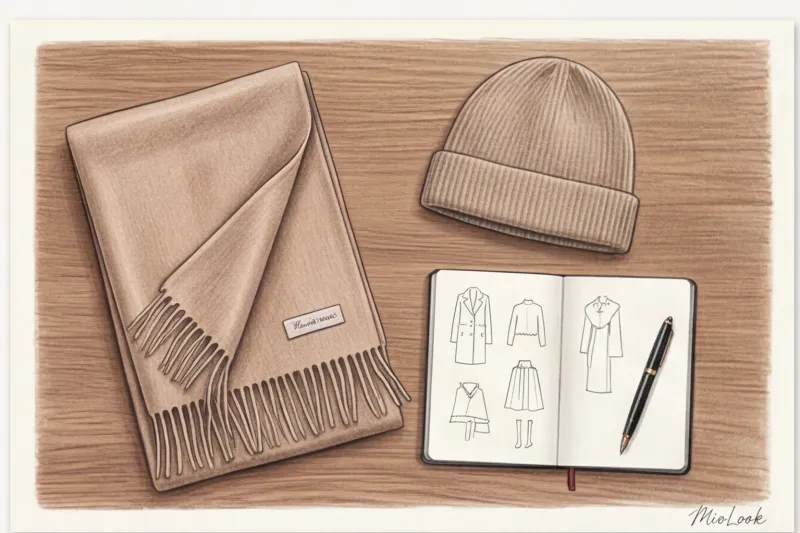
Want to instantly up the style ante? Swap your children's knitted gloves for high-quality leather ones. And pair a smooth, tightly woven cashmere scarf (likely from Loro Piana or its high-quality equivalents) with a chunky, deliberately chunky knit beanie. This contrast of materials—smooth and voluminous—is the stylist's secret.
Color harmony without direct copying
Color coordination doesn't mean blind copying. Use the rule of analogous colors (those adjacent on the color wheel) or stretching a single color. For example, pair a caramel scarf with chocolate gloves and a beige hat.
The classic 60/30/10 rule works great, adapted for winter. Let 60% be the color of your coat, 30% a contrasting but subdued shade of your scarf, and 10% a bright accent on your hat or gloves.
Investing in Warmth: Which Winter Accessories Are Worth the Money?
In the world of premium styling, we constantly use the concept of cost-per-wear. And this is where math completely debunks the myth of the benefits of cheap sets.
Let's do the math. You buy a luxurious cashmere scarf for €300. With proper care, you'll wear it for at least 5 seasons, wearing it about 150 times per winter. Total: €300 / (150 * 5) = 0.40 € per exit And yet he looks flawless every day.
Now let's take a set from a mass-market store for €50. After a month of daily wear, the acrylic becomes covered in pilling, and the hat loses its shape from snow and washing. You throw it away at the end of the season (or save it for "trips to the dacha"). Total: €50 / 150 = 0.33 € per exit in an unkempt state. The difference in price per day of use is minimal, but the difference in impression is colossal.
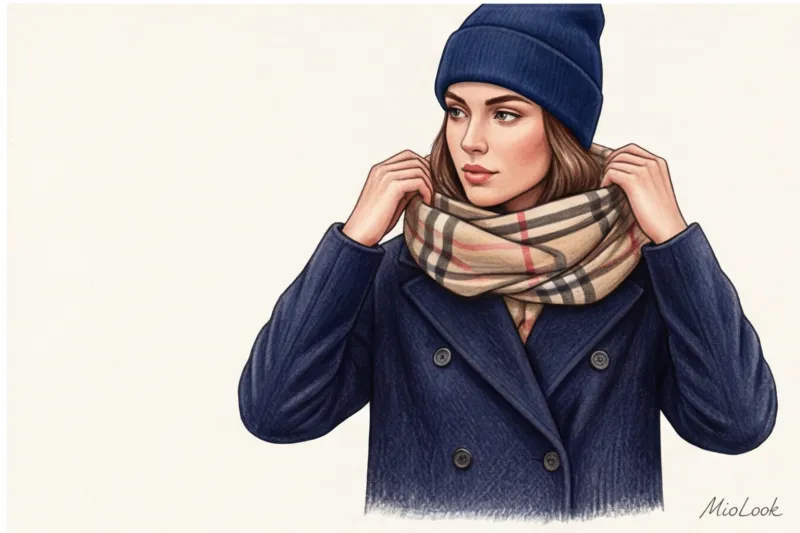
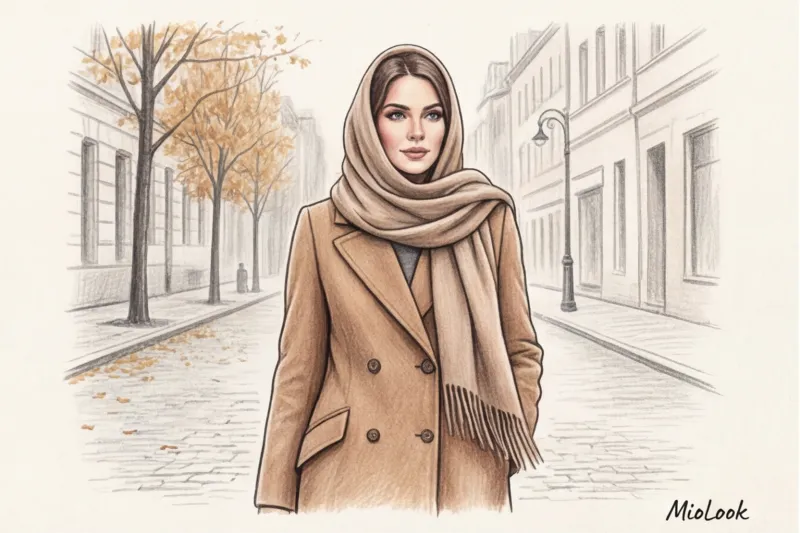
A scarf is the most important investment. It sits closest to the face, frames it, and takes up the largest visible area after the coat. Skimping on it means ruining the portrait area.
Access to MioLook for €0.99 — one-time payment
A smart AI stylist will select the perfect look based on your wardrobe and suggest which accessories to add.
Get access — €0.99 onceHow-to: 4 Elegant Ways to Style Winter Accessories
To make it easier for you to apply this knowledge tomorrow morning, I have compiled four ready-made schemes for different life scenarios.
- Tonal layering (For office travel). We choose items in the same color scheme but different lightnesses. Add a light gray smooth scarf and a graphite cashmere beanie to a dark gray wool coat. The difference of two or three tones creates a refined monochrome frame.
- Accent Scarf Pattern (For Sunday Brunch) The coat and hat remain neutral (for example, black and white), and the scarf takes over the entire look. It could be a huge stole in a rich emerald or fuchsia hue. The scarf is the star here.
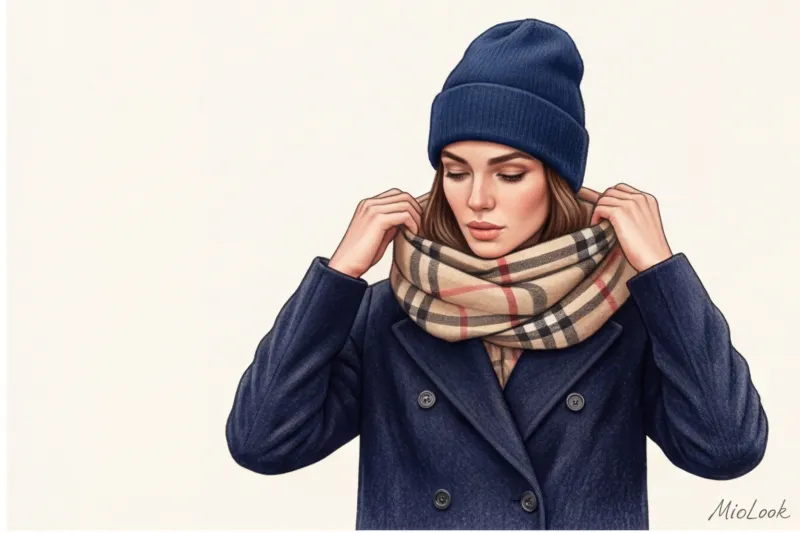
- Classic Heritage (For business trips and meetings). We choose a high-quality scarf in a classic check pattern (tartan, Prince of Wales). The secret is to choose a hat that matches the color exactly. least noticeable The shade in the scarf pattern. If the checkered pattern is beige and brown with a thin burgundy stripe, wear a burgundy smooth hat.
- Textured block (For evening outings). This scheme is built purely on the sense of touch. A smooth cashmere coat, leather gloves, a fluffy alpaca hat, and a thick, smooth-knit scarf. Everything is kept in a dark palette (like navy blue), but the varied textures make the look a delight to behold.
Key Mistakes to Avoid When Choosing a Hat and Scarf
When working with clients' wardrobes, I regularly encounter the same stylistic pitfalls. Here are three key mistakes we correct immediately.
Mistake 1: Buying things from one stand. Merchandisers in stores deliberately display items from the same collection next to each other. But buying a hat and scarf from the same brand with the same logo or pattern kills the variety in your wardrobe. Learn to mix brands: the Scandinavian minimalism of COS pairs perfectly with classic Massimo Dutti.
Mistake 2: Ignoring your skin undertone. A scarf acts as a photographer's light reflector. As the PANTONE Color Institute (2024) notes, shades placed directly near the face can either illuminate the skin, giving it a rested appearance, or mercilessly highlight under-eye circles. Never buy a scarf without trying it on in daylight. If you have a cool undertone, avoid mustard and red scarves near your face.
Error 3: Distortion of the silhouette by excessive volume. Large, chunky knit hats and blanket scarves don't suit everyone. I should make a disclaimer: my advice about avoiding giant scarves doesn't work for petite, slender women in oversized down jackets—they need that volume to balance their proportions. But 90% of the time, if you're wearing a classic structured coat, an overly bulky snood will turn you into a neckless snowman.
A Stylist's Checklist: How to Assemble Your Perfect Winter Outfit
A basic winter wardrobe isn't built on quantity, but on compatibility. Follow this simple plan to cover your accessory needs for years to come:
- Step 1: Outerwear audit. Consider the collar shape of your coats and down jackets. Wide, thick scarves are recommended for English collars, while thin cashmere or silk-wool options are recommended for high-neck jackets.
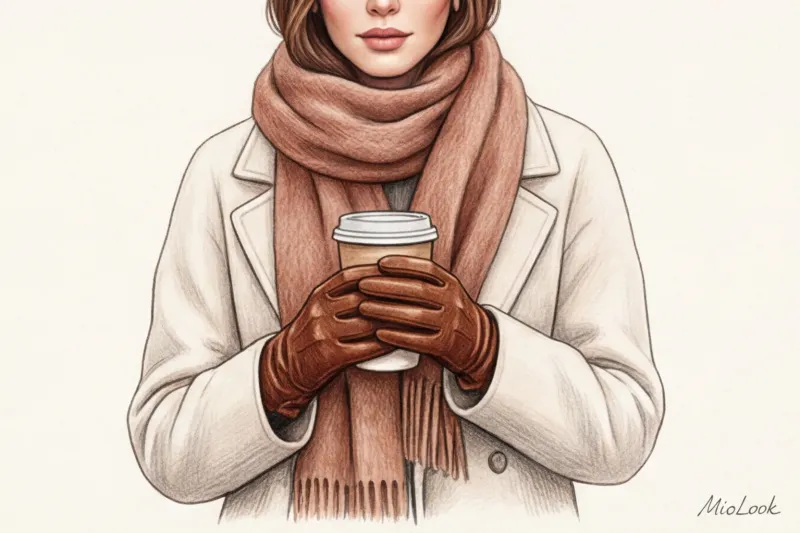
- Step 2: Invest in leather. Buy one pair of perfect gloves made of genuine matte leather in a neutral color, but not black. Deep burgundy, chocolate brown, or dark khaki are ideal choices. They'll match 99% of your outfits.
- Step 3: Gather a trio of scarves. You'll need: one solid neutral (base), one with a classic print (check/houndstooth), and one bright accent (for days when you want to lift your spirits).
- Step 4: Simplify the headers. Choose simple beanies without pom-poms, rhinestones, large logos, or complex embellishments. The simpler the hat, the more expensive it looks.
True luxury is the freedom to mix and match consciously. When you stop hiding behind safe but boring factory-fitted outfits, your style gains a uniqueness that can't be found in a box.
Your perfect look starts here
Join thousands of users who look flawless every day with MioLook. Upload your accessories to your virtual wardrobe and create new combinations with a single click.
Get access — €0.99 once