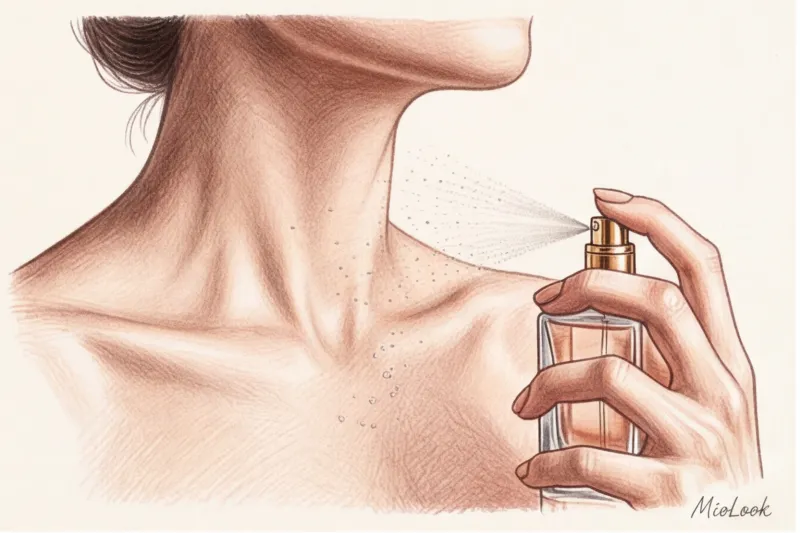
Clients often come to me with the same complaint. One of them recently purchased the iconic Baccarat Rouge 540 by Maison Francis Kurkdjian—an extract renowned for its phenomenal, almost eternal longevity. But on her skin, this luxurious scent disappeared without a trace within just two hours. She was convinced she had purchased a fake. However, the problem lay elsewhere entirely—her skin's damaged lipid barrier.
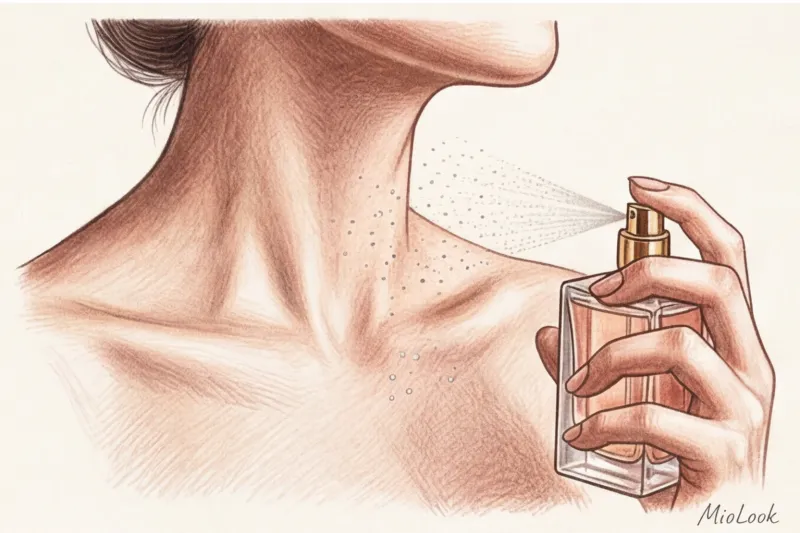
We're used to spending hundreds of euros on niche perfumes, forgetting the main rule: a scent smells exactly as its "canvas" allows it to. If you're looking for a way, How to make perfume last longer on your skin Forget about constantly refreshing your scent throughout the day. The secret lies in properly preparing and layering your perfume over the right skincare base. We discussed the concept of blending fragrances in more detail in our the complete guide to the art of leering , and today I will talk about the technical side of the issue.
The Anatomy of Longevity: Why Does Skin Eat Expensive Fragrances?
To understand why perfume doesn't last, it's important to remember some basic chemistry. Perfume compositions are lipophilic, meaning the essential oils cling to fats, not water. When you spray perfume on dry, dehydrated skin, the molecules have nothing to cling to—the alcohol evaporates instantly, taking the precious essential oils with it.
A study by cosmetic chemists published in the Journal of Cosmetic Science (2022) clearly demonstrates the difference in evaporation rates. Volatile citrus notes (the top chord of the fragrance pyramid) disappear from dry skin within 15-30 minutes. But if applied to a moisturized lipid base, their lingering effect is extended to two hours. Hydrated skin retains any fragrance 30-40% longer.
"Dry skin literally 'drinks' the oils from your perfume, trying to compensate for the lack of its own lipids. As a result, all that's left of the complex olfactory pyramid is a vague base."
Your skin's acid mantle (pH) and body temperature are also crucial. On hot skin, fragrances are more vibrant but fade faster. On cold skin, they are monotonous but last longer. The right cream acts as a buffer, balancing these factors and ensuring the perfume smells exactly as the perfumer intended.
How to Make Perfume Last Longer on Your Skin: The Perfect Base Rule
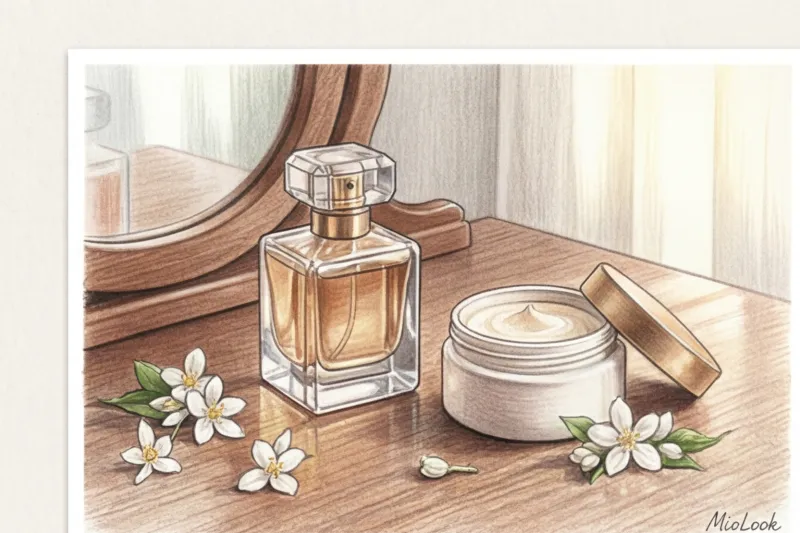
In makeup, we always use a primer before applying foundation. Perfume requires exactly the same approach. A base cream or lotion acts as a perfume primer: it smooths the skin's microrelief, seals in moisture, and creates the lipid film that holds the fragrance molecules.
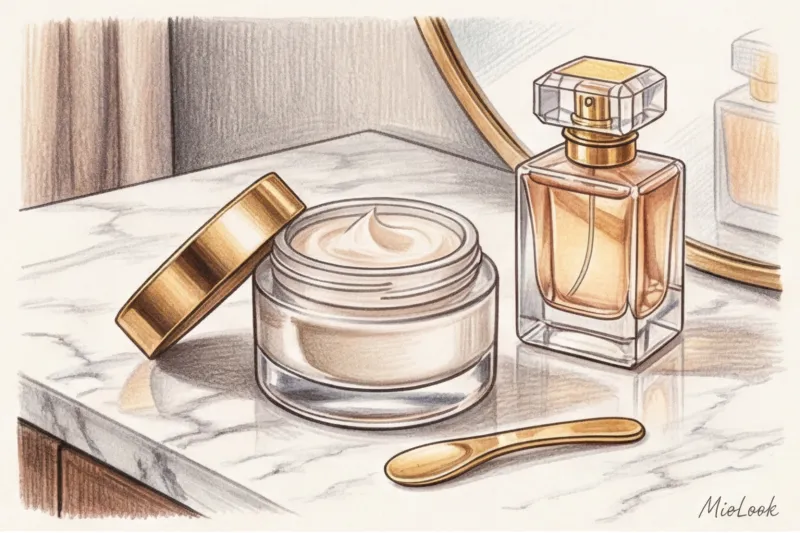
But not every texture is created equal. Over 12 years of working as a stylist, I've developed a clear rule for choosing a base for my clients, which depends not only on their skin type but also on their wardrobe. If you're wearing a silk blouse from Loro Piana, we never use pure body oil—it will inevitably stain. In this case, we choose a lightweight emulsion.
Lotion, cream or oil: which works better?
Let's look at the penetrating power of different textures:
- Lotion: Contains up to 70-80% water. It absorbs quickly and is ideal for hot summers, but has the worst scent retention due to its low fat content.
- Cream: A perfect balance of water and oils (emulsion). Suitable for most situations, it perfectly fixes perfume and does not stain clothes.
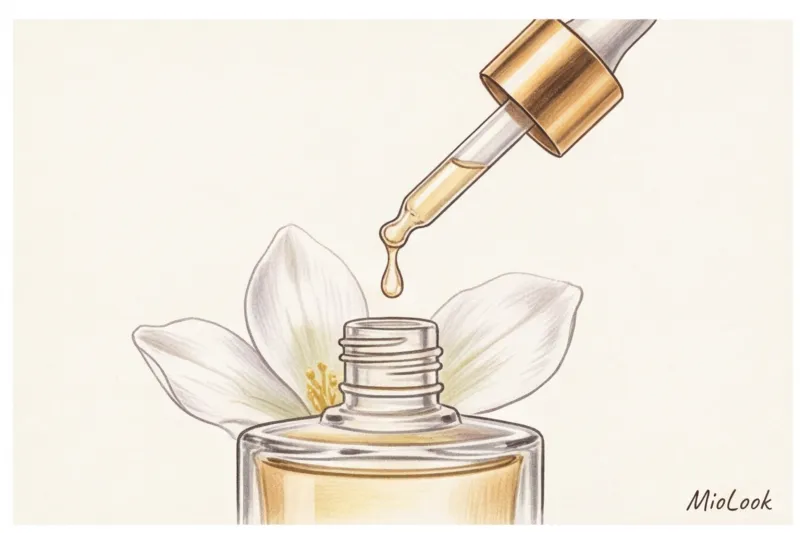
- Oil (squalane, jojoba): Pure lipids. Absolute champions in fragrance retention. Squalane and jojoba oil are biocompatible with our natural sebum; they don't sit like a greasy layer, but rather integrate into the stratum corneum.
Access to MioLook for €0.99 — one-time payment
A smart AI stylist will create the perfect look and help you organize your wardrobe based on your favorite fragrances.
Get access — €0.99 onceThe Vaseline Myth: Why a Popular Life Hack Is Killing Niche Perfumes
If you spend time on TikTok or Instagram, you've likely seen this viral tip: "Put a drop of Vaseline on your pulse points before spraying perfume, and it will last forever." As an expert working in the premium segment, I have to warn you: this is a crime against sophisticated perfumery.
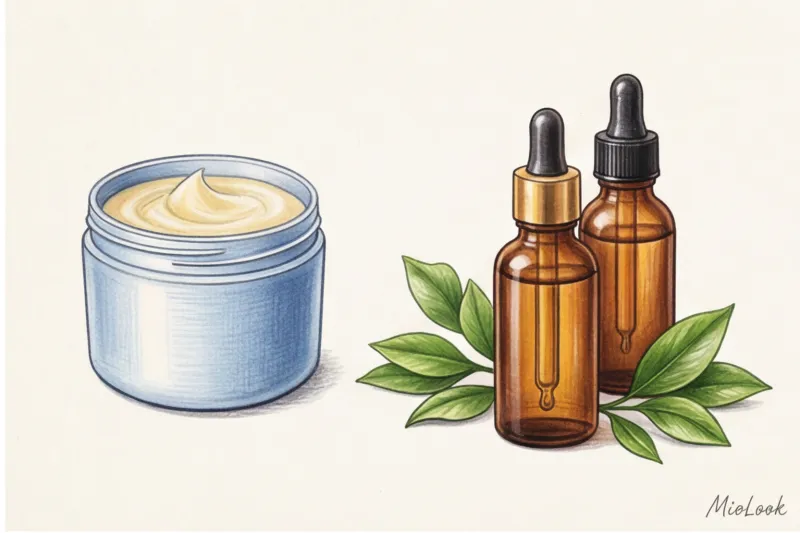
Why is this a bad idea? Vaseline is petrolatum, a petrochemical product. It has a 100% occlusive effect. Simply put, it creates an impenetrable greenhouse film on the skin. Yes, perfume molecules will physically stick to this ointment and won't escape. But perfume is a living substance that requires your body heat to properly evaporate and develop.
By applying perfume to Vaseline, you block heat transfer. As a result, complex fragrances with notes of oud, natural musk, ambergris, or resins simply can't warm up. They don't reach the heart stage, but remain flat, harsh, and synthetic. You gain longevity at the expense of the composition's beauty. Replace Vaseline with a drop of natural squalane—the hold will be the same, but the fragrance will be able to breathe.
The Art of Layering: Layering Perfume onto Scented Cream
Layering is the ultimate in perfumery. You have two options: use the same brand's fragrance line (Matching) or create your own unique blends (Mixology).
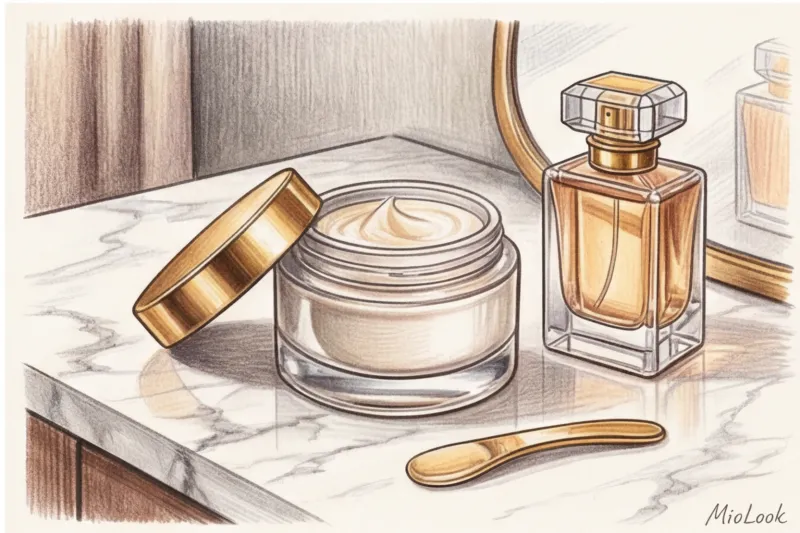
Using a body lotion from the same line as your perfume is the safest option, guaranteed to prolong sillage. But the real magic begins when you start mixing different profiles.
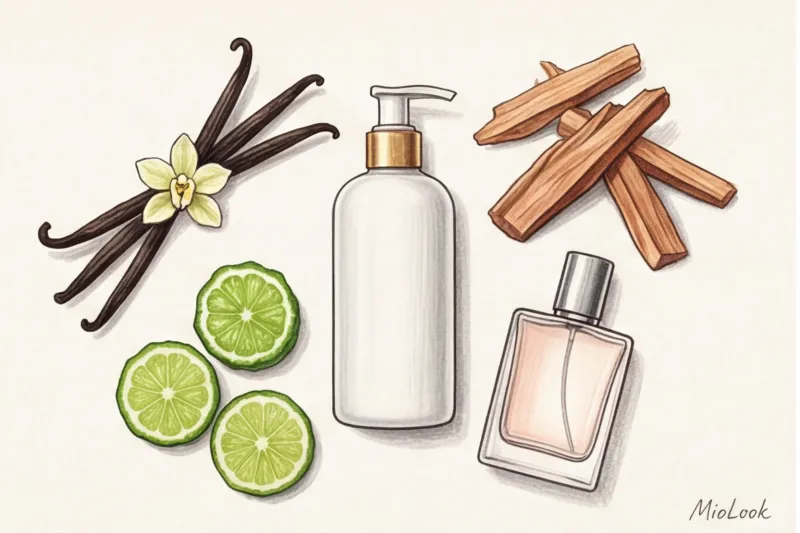
In my experience, the most complimentary trails are born from contrasts. Here are three fail-safe combinations that I regularly create for my clients:
- Warm and dry: A dense cream with a note of bourbon vanilla or almond, combined with dry woody notes (sandalwood, cedar, vetiver). Vanilla softens the spiky woods, giving the scent an incredibly classy feel.
- Freshness and indole: Citrus lotion (bergamot, grapefruit) + heavy white floral scent (tuberose, jasmine). The citrus prevents the florals from overwhelming the surrounding area.
- Molecular amplifier: If you're hesitant to mix scents, take a fragrance-free base cream (like CeraVe) and add a couple of sprays of molecular perfume (Iso E Super or Ambroxan). Apply to your body, then spray your base perfume over it. The scent will fill the room.
How to Avoid Overdoing It: Balancing Intensity
There's a strict 80/20 rule in layering. Your mix should be 80% neutral or soft base notes (in a cream) and 20% bold accent fragrance. If you take a cream with a killer patchouli scent and spray a powerful oud extract on top, you'll create an olfactory commotion. The scents will clash with each other, causing headaches for both you and those around you.
Your perfect look starts here
Join thousands of users who look flawless every day with MioLook.
Get access — €0.99 onceStep-by-step ritual: apply perfume like an expert
Durability depends not only on What you apply, but also How You do it. When I prepare clients for long social events where the scent needs to last from 7 pm to 3 am, we strictly adhere to this timing.
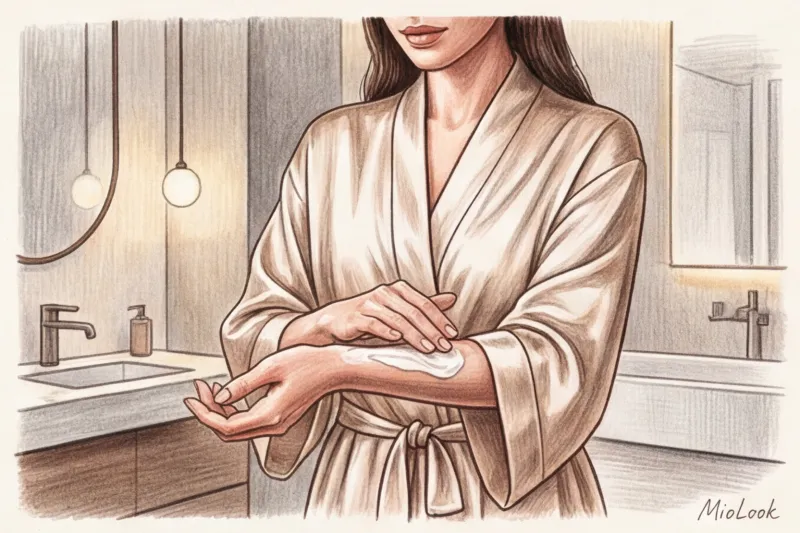
Step 1: Steaming. Take a warm shower. Your pores will open, and your skin will be ready to receive care.
Step 2: Apply base (3-minute rule). Don't pat dry. Apply a lipid cream to slightly damp skin. Water + lipids = maximum hydration.
Step 3: Waiting. Let the cream soak in for at least 5-7 minutes. If you spray perfume on sticky, unabsorbed cream, the alcohol will react with the emulsifiers, and the scent may be distorted.
Step 4: Strategic points. Did you know that your wrists are the worst place to apply perfume if you work in an office? Within an hour, the scent will wear off on your keyboard, mouse, and desk. Instead, apply perfume to:
- Back of the neck (under the hairline): Hair holds scents perfectly, and when you walk, you will leave a luxurious trail behind you.
- Elbow bends: The skin there is thinner and the veins are closer - an ideal heat generator.
- Under the knees: Warm air rises from the bottom up, enveloping you in a fragrant cocoon throughout the day.
Errors that destroy the loop
Even the most expensive extract can be ruined by improper handling. According to the International Fragrance Association (IFRA), over 60% of people apply perfume incorrectly, which critically reduces its longevity.
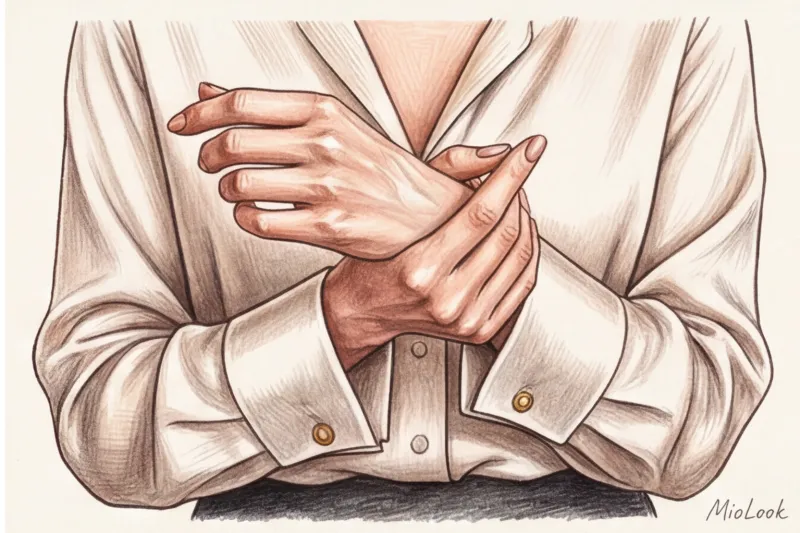
What should you absolutely not do?
- Rub your wrists against each other. This is the most common and most damaging mistake. Perfume has a fragile molecular structure. Aggressive friction creates an unnatural temperature spike that literally "burns" the delicate top notes. The scent immediately sinks into the base and sounds crumpled. Just spray and let it dry.
- Enter the "perfume cloud". Spraying perfume into the air and stepping gracefully into the cloud makes for a striking film shot, but it's a waste of product in real life. Eighty percent of the molecules will settle on the floor and furniture, leaving only a tiny amount that will reach your skin, disappearing within half an hour.
- Apply perfume to dirty skin. Sebum, sweat, and remnants of last night's perfume react chemically with alcohol. The result is a distorted scent and zero longevity.
Checklist: 5 steps to an endless and prestigious trail
Let's summarize a practical lesson you can apply tomorrow morning before leaving the house. A beautiful trail isn't magic, but physics and the right routine.

- Moisturize from the inside: According to dermatologists, skin that's dehydrated from the inside can't maintain its lipid barrier, even with cream. Drink plenty of water.
- Choose the right base: Replace light summer lotions with thick cream-emulsions with ceramides or squalane in the fall and winter.
- Avoid Vaseline: Do not block the development of notes with occlusive oil products.
- Observe the timing: Apply the cream to damp skin after showering, wait 5 minutes, then spray perfume.
- Do not rub: Allow the fragrance to dry naturally on strategic points (back of neck, elbows).
Investing in premium perfumes only pays off when you know how to wear them. Try incorporating this lipid cream ritual for at least a week, and you'll notice how even the most capricious and fleeting scents in your collection will begin to smell refined, deep, and, most importantly, long-lasting.