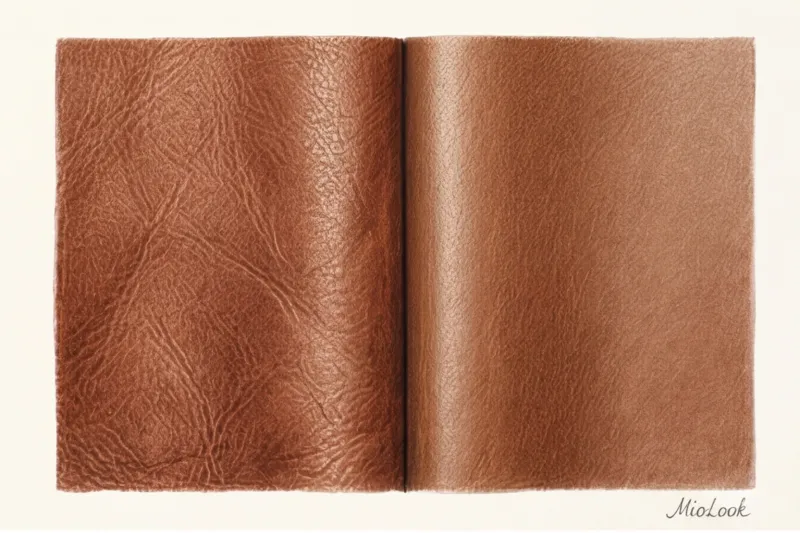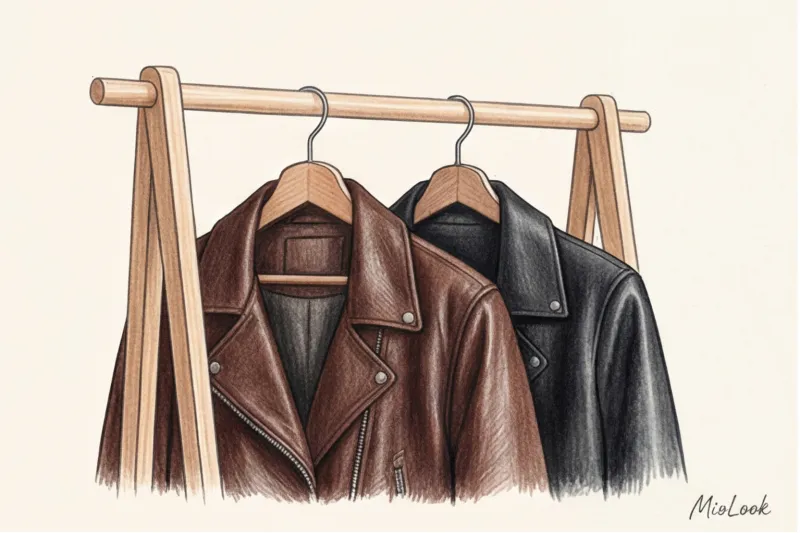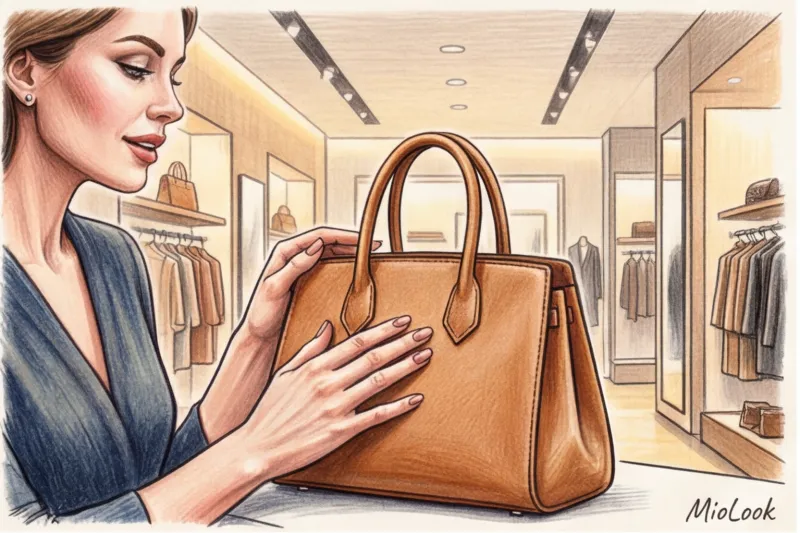
One day, a client of mine brought in a crossbody bag for a wardrobe review. She'd bought it at a Milanese sale, proudly labeled "100% Genuine Leather." She was thrilled with the investment, but after just a month of heavy wear, the strap had cracked, revealing a strange, fuzzy base at the corners. The bag turned out to be made of cheap, pressed split leather. That's when we raised a crucial question: How to distinguish genuine leather from artificial leather in the context of modern mass-market tricks, when visually materials have become practically identical.
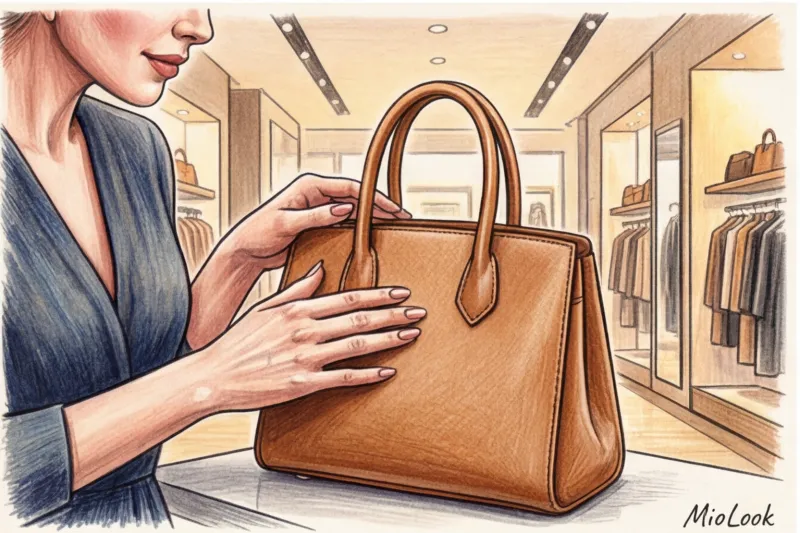
As a personal stylist, I constantly see the disappointment of women who overpaid for the illusion of quality. Understanding textures is the foundation of a smart wardrobe. Incidentally, I've written in detail about how to salvage and maintain the look of your existing status investments in our a complete guide to caring for leather items.
Today, we won't be talking in abstract terms. I'll teach you "tactile intelligence"—the ability to sense the quality of a material with your fingertips right at the rail in a boutique, without raising any suspicions from the consultants.
Forget matches and water: why old-fashioned methods no longer work
Open any article online, and you'll be advised to set fire to the hem of your jacket with a lighter or drip water on your bag. Now imagine trying to find matches in a Massimo Dutti store or pouring mineral water on your shoes in a boutique. At best, you'll be asked to leave; at worst, you'll be forced to pay for the damaged goods. Moreover, modern polymers are often impregnated with water-repellent compounds, so a drop of water will roll off cheap faux leather just as easily as premium nappa leather.
The second dangerous myth is relying on smell. Over 12 years of shopping experience, I've seen dozens of situations where consultants breathlessly let clients smell a bag: "Do you smell this noble aroma? It's Italy!" The harsh truth is that Chinese factories began adding fragrances reminiscent of expensive car interiors to polyurethane five years ago. Meanwhile, cheap genuine leather often smells of harsh chemicals due to the aggressive chrome tanning process.
Even a leather sample tag in the shape of an animal skin is no longer a guarantee. Fast fashion brands are legally attaching a piece of genuine leather to a polyurethane bag to create a false sense of premium quality. The only solution is to develop a tactile awareness.
How to distinguish genuine leather from faux leather right in the store: 3 legal tests
The magic lies in the physics of materials. Natural animal fibers have a unique bond structure that behaves differently in static and dynamic conditions. Synthetics, no matter how high-tech, have a linear polymer lattice. The main rule of my stylistic formula: we always evaluate a thing holistically. One characteristic can deceive, three – never.
1. Heat Test: The Magic of Thermoregulation
Genuine leather is a living organ originally designed for thermoregulation. Place your open palm on the surface of a jacket or bag and press firmly for 5-10 seconds. Genuine leather will absorb your body heat almost instantly, warming it up while remaining completely dry under your palm.
If you're using eco-leather or faux leather, the surface will feel cooler for much longer. After a few seconds, you'll feel a slight greenhouse effect—your palm will begin to sweat slightly, because synthetics (even high-quality ones) don't wick away moisture as quickly.
Limitation of the method: This test does NOT work if you have genuine leather coated with a thick layer of acrylic paint (so-called corrected leather or pigmented leather). Under a layer of plastic, it will behave like synthetic leather.
2. Tension and wrinkle test: reading the drawing
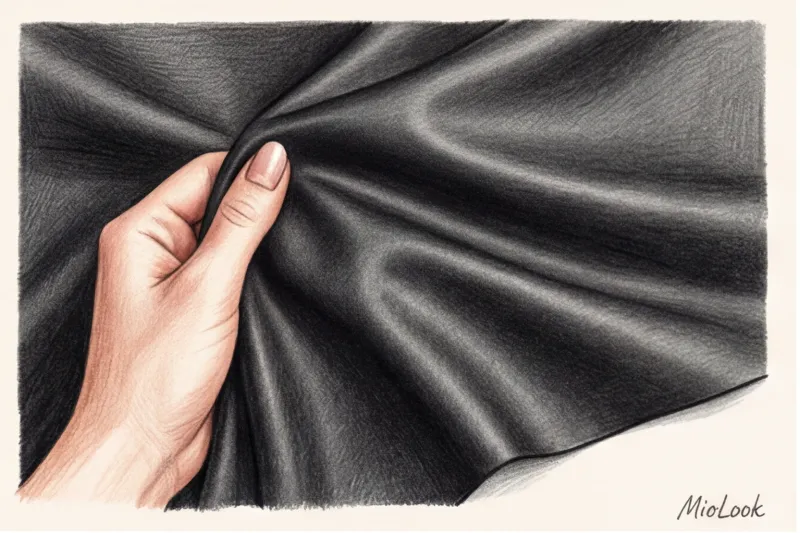
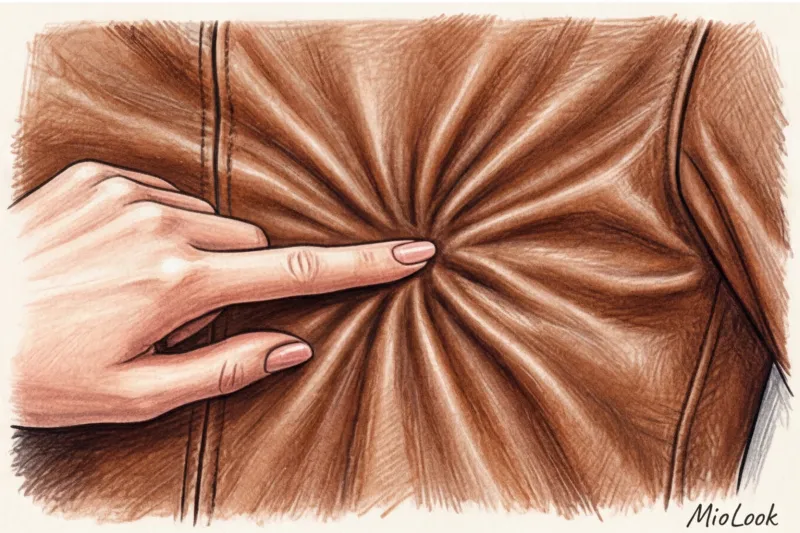
This is my favorite technique. Lightly but firmly press the pad of your index finger onto the surface of the item. The natural material around your finger will gather into natural, fine wrinkles that radiate outward. As soon as you remove your finger, the surface will quickly but smoothly smooth out.
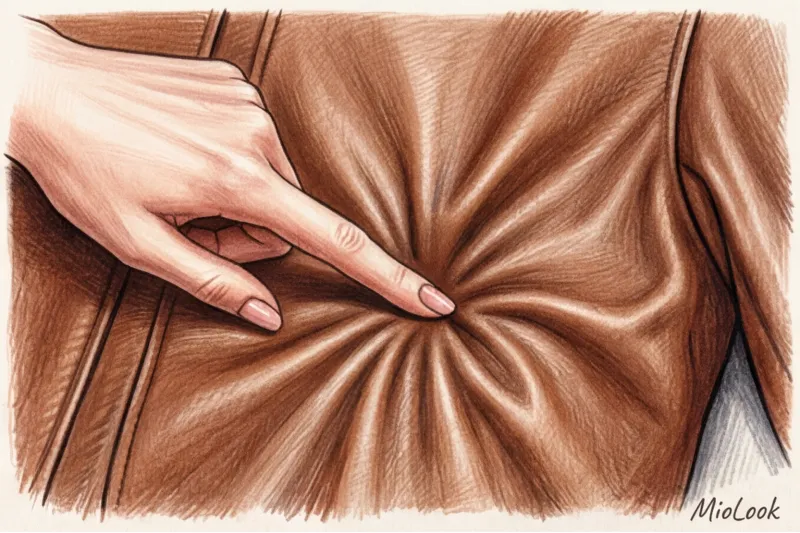
Synthetics behave differently: they either don't wrinkle at all, bouncing like a rubber ball, or they form unnatural, deep folds. If you gently tug on genuine leather (especially pull-up leather), it will change color slightly at the point of tension due to the movement of oils and waxes within the structure. Polyurethane simply stretches, maintaining a dull, uniform color.
3. We study the back side, cuts and pores
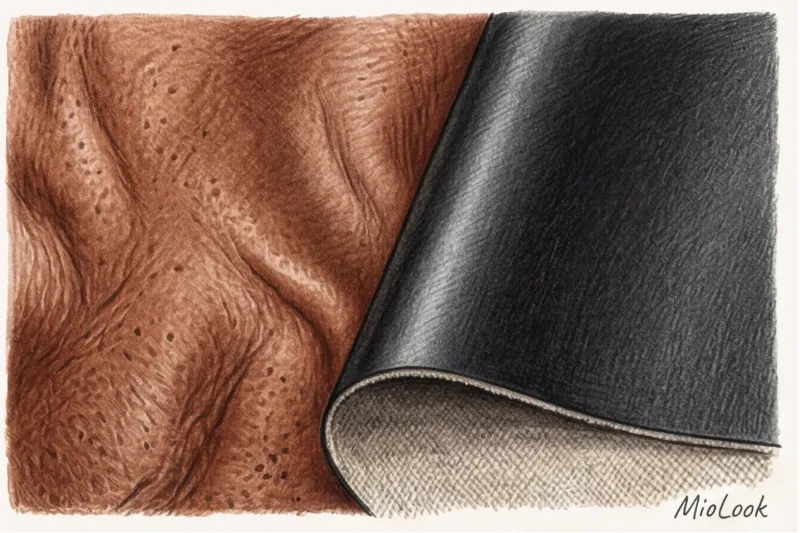
Find the open edge—usually near the zipper, on the inside of the strap, or at the base of the handles. On a natural material, you'll see a single layer of suede grain that blends smoothly into the smooth surface.
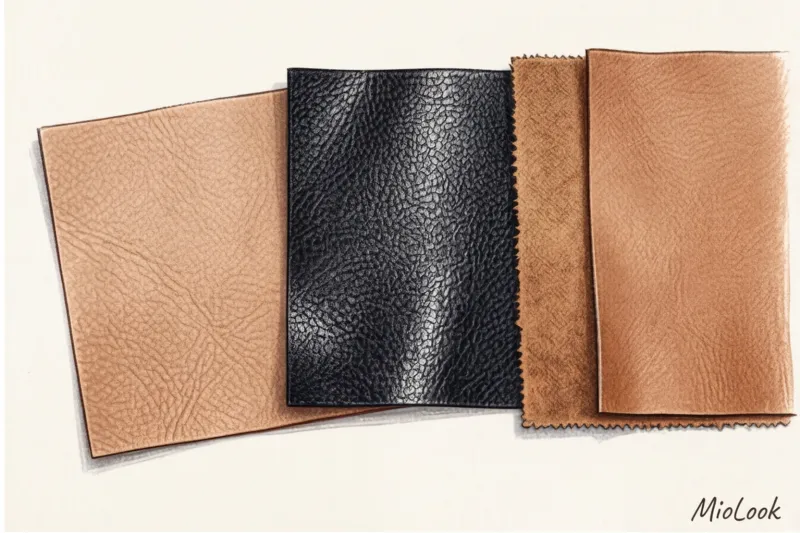
When cross-sectioned, faux leather always reveals a "layered pie": a top film coating and a fabric base (knitted mesh or non-woven fabric). Also, look closely at the pore pattern. If the pattern is perfect, symmetrical, and repeats with alarming precision every 5 centimeters, you're looking at a factory-printed mold.
Organize your leather wardrobe
Forgetting which bags and jackets you already own? Upload them to your virtual closet, and the neural network will suggest dozens of new combinations with your items.
Create a virtual wardrobeEco-leather, faux leather, and split leather: understanding the terminology
Not all faux leather is created equal. To avoid falling victim to marketing hype, it's important to clearly distinguish between the three categories of materials that rule the fashion industry today.
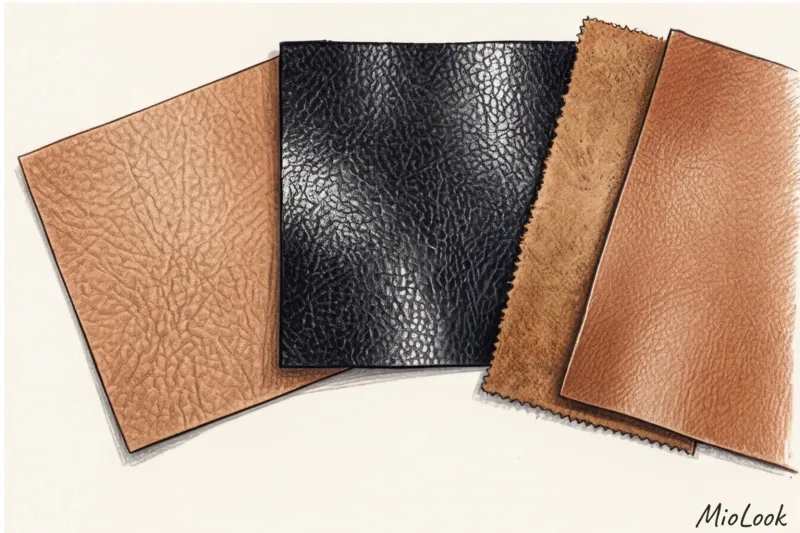
- Leatherette (PVC). The cheapest and most toxic type of plastic. It doesn't "breathe" at all, becomes stiff in sub-zero temperatures, and quickly cracks. If the label says PVC, leave the item in the store.
- Eco-leather (PU / Polyurethane). This is a high-tech microporous polymer applied to a cotton base. According to the WGSN research agency, modern types of polyurethane can imitate the tactile properties of nappa leather by 95%. High-quality eco-leather can withstand up to 50,000 abrasion cycles according to the Martindale test. It's an excellent choice for trendy, intricately tailored garments.
- Split leather and pressed leather. The main trap for buyers. They take the scraps and the loose lower layers of the hide, grind them into dust, mix them with synthetic glue, and cover them with a polyurethane film. By law, the manufacturer has the right to label it "Genuine Leather," although in fact it's leather chipboard that will fall apart within a season.
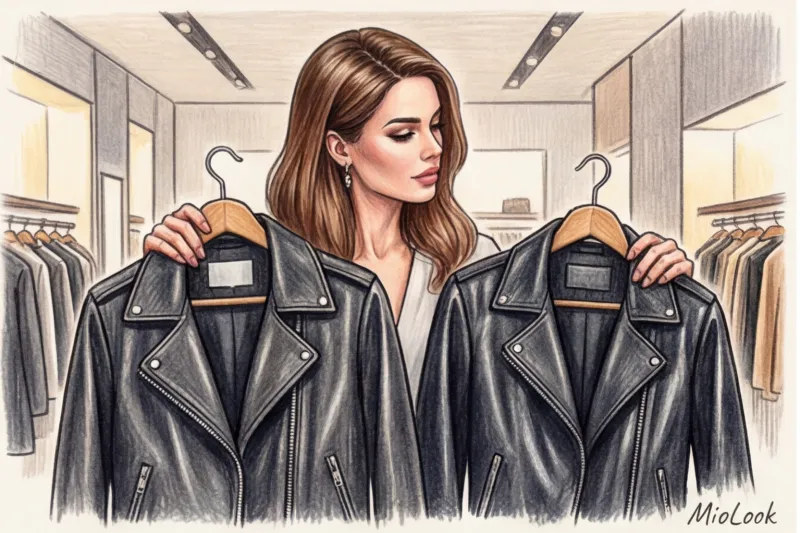
The Price Trap: Why Cheap "Real Leather" Is Worse Than High-Quality Eco-Leather
There's a deep-rooted investment paradox: many women are willing to buy a glaringly ugly, poorly made split leather bag for $50, just so long as it's labeled "genuine leather," while ignoring a perfectly tailored faux leather backpack for the same price.
As a stylist, I'm categorically against this approach. My formula is simple: It's better to buy perfect polyurethane that honestly fulfills its function than cheap leather that desperately pretends to be luxury..
Premium brands have long proven that synthetic materials can be a status investment. A prime example is Stella McCartney and their patented Alter Nappa material. Their faux leather bags cost over $1,000 and last for years without losing their shape. Nanushka uses a similar strategy with their signature vegan leather, which drapes softer than silk.
Why is it better to choose premium eco-leather? For statement trousers with a complex cut, colorful trench coats, pleated skirts, and one-season pieces (like metallic tops).
Why do you need ONLY genuine leather? For basic everyday bags with a rigid shape, classic shoes (loafers, Chelsea boots, Oxfords), and biker jackets that you plan to pass on as an heirloom.
Access to MioLook for €0.99 — one-time payment
A smart AI stylist will analyze your proportions and select the perfect leather-textured looks in just a few seconds.
Get access — €0.99 onceA stylist's checklist: what to look for when buying status items
When you're building a foundation and ready to invest in a major purchase, simply checking the material by touch isn't enough. The quality of a garment is determined by the assembly details.
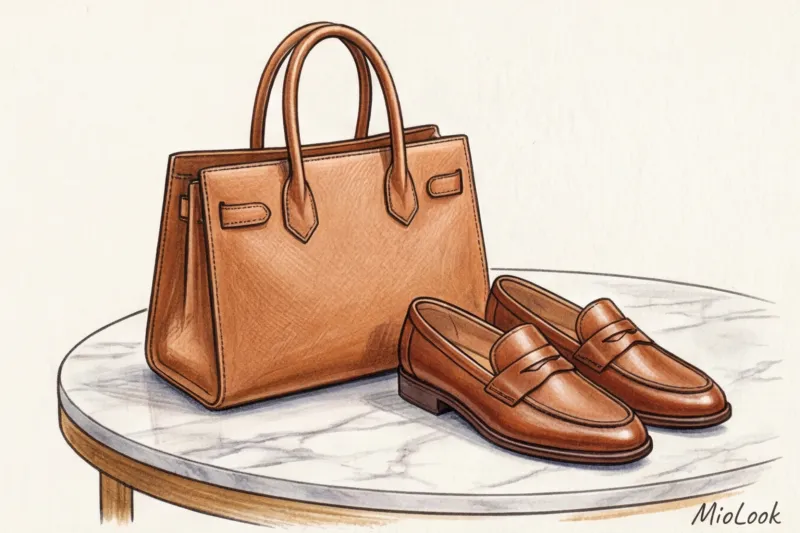
- Shoes are a no-compromise zone. You can buy shoes where the upper is made of satin, fabric or even polyurethane, but the lining and insole Always Shoes should be made of genuine leather (ideally, chevrolet—goatskin). This is a matter not only of status but also of foot health. Synthetic materials inside will lead to blisters, disruption of the microflora, and swelling.
- Bags and sealed sections. Pay attention to the finish of the strap's edge. In expensive products, the edge is carefully sealed with several layers of special paint. In cheap mass-market products, the edge is either simply folded and stitched, or coated with a thick layer of rubber that will peel off in chunks in the cold. If a brand is LWG (Leather Working Group) certified, it's a sure sign of high-quality, environmentally friendly and ethical production.
- Weight of outerwear. A genuine leather biker jacket or trench coat made from thick cowhide will always be noticeably heavier than its polyurethane counterpart. If a bulky "leather" jacket feels like a feather, it's synthetic.
If you're unsure how to integrate a new leather texture into an existing capsule collection, don't guess in front of the mirror. You can always take a photo of the item in the fitting room and upload it to the "smart wardrobe" feature of the MioLook app The neural network will instantly show which of your items this texture will look most flattering and expensive with.
Summary: A conscious choice for your style
In the modern fashion industry, there are no "good" or "bad" materials. There are only inconsistencies between the material's suitability for the intended purpose and the stated price. Knowing how to distinguish between polyurethane, split leather, and full-grain leather is your personal defense against the marketing ploys of brands trying to sell plastic at a luxury price.

Style isn't just labels on clothes; it's intelligence embodied in fabric and texture. I'm giving you a little homework assignment for tonight: open your closet, take out three of your favorite bags or pairs of shoes, and test them using the stretch and warmth methods. You'll be surprised at how many new insights your own hands will reveal about your wardrobe.