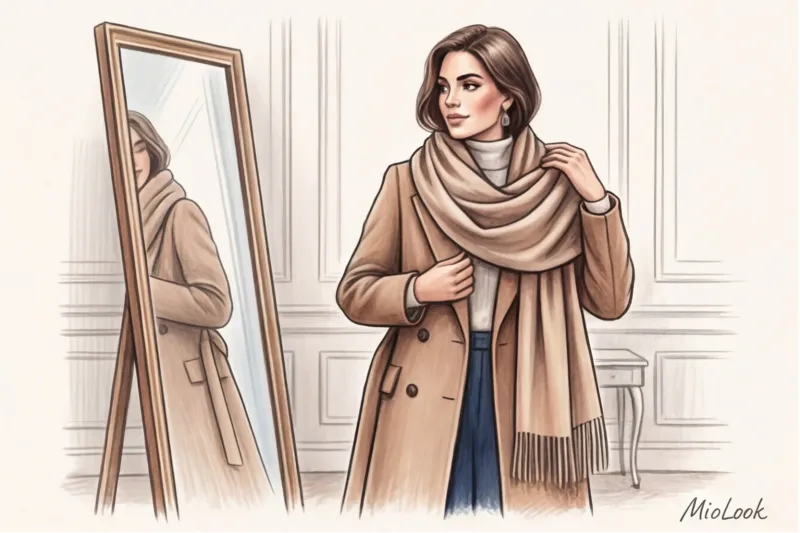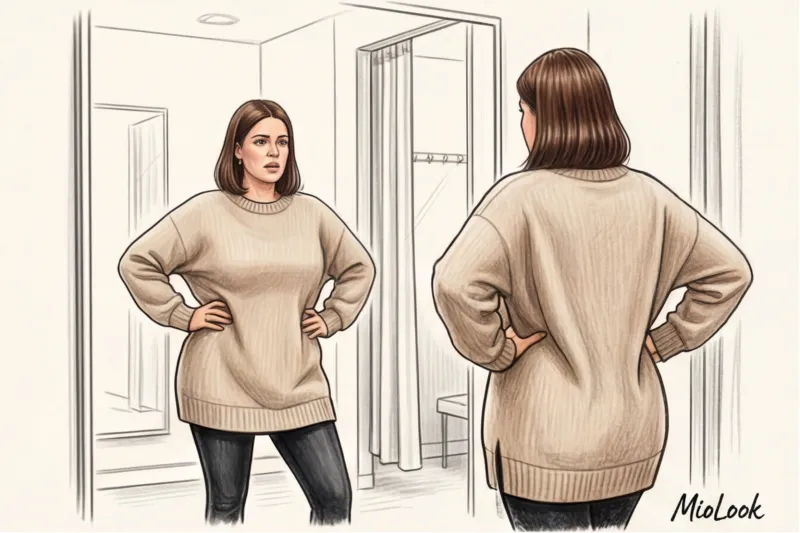
How many pairs of shapewear are in your dresser? In 14 years as a personal stylist, I've seen hundreds of women's wardrobes, and the scenario is always the same: a stunning figure hidden behind black leggings, shapewear shorts, and oversized sweaters. When people come to me with a request How to hide wide hips First of all, I forbid the word "hide." We will not hide anything. We will build the architecture of the silhouette.
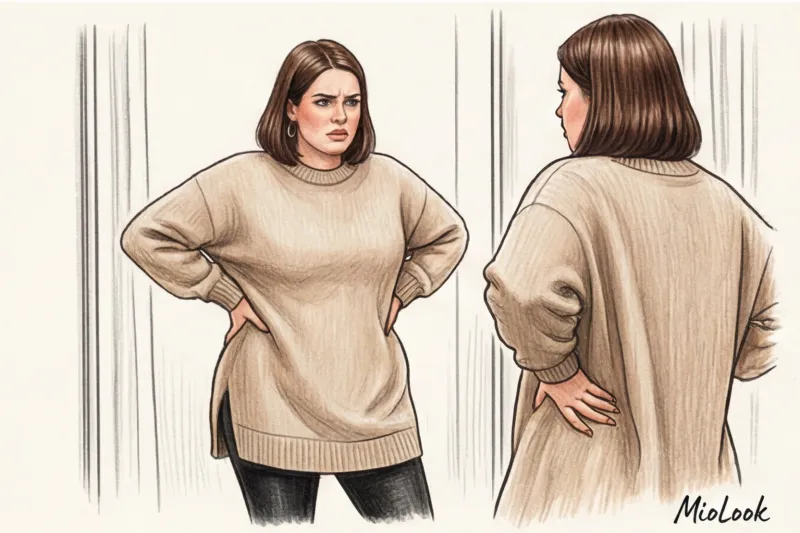
We discussed the basic laws of proportions in more detail in our a complete guide to visually correcting your figure with clothing Today, we'll discuss a specific challenge: how to shift the focus from a voluminous bottom and create the perfect balance using stiff fabrics, the right vectors, and optical illusions.
The biggest myth about how to hide wide hips: why oversized clothing doesn't work
Dividing women's figures into "apples" and "pears" is hopelessly outdated. Today, in professional styling, we use an architectural approach: the law of the golden ratio and mass balance. And herein lies the main mistake most women with voluminous bottoms make.
Trying to disguise our hips, we often wear a long, loose tunic or an oversized sweater. What happens geometrically? The fabric clings to your widest point (your hips) and falls straight down. Your silhouette visually transforms into a monolithic rectangle, the width of which is equal to the width of your hips. You literally "build up" your waist to its maximum size.
The other extreme is thick leggings paired with a voluminous top. I call this the "lollipop" effect. The thin knit clings to every nuance of the figure, and the contrast with the chunky sweater only highlights the difference in volume. Our app analytics MioLook reveals interesting statistics: users who switched from "hiding behind a robe" to "emphasizing structure" were 40% more likely to report being completely satisfied with their daily looks.
Access to MioLook for €0.99 — one-time payment
A smart AI stylist will analyze your proportions and select the perfect look that will highlight your best features.
Get access — €0.99 onceTop architecture: how to balance your figure and draw attention away from your bottom
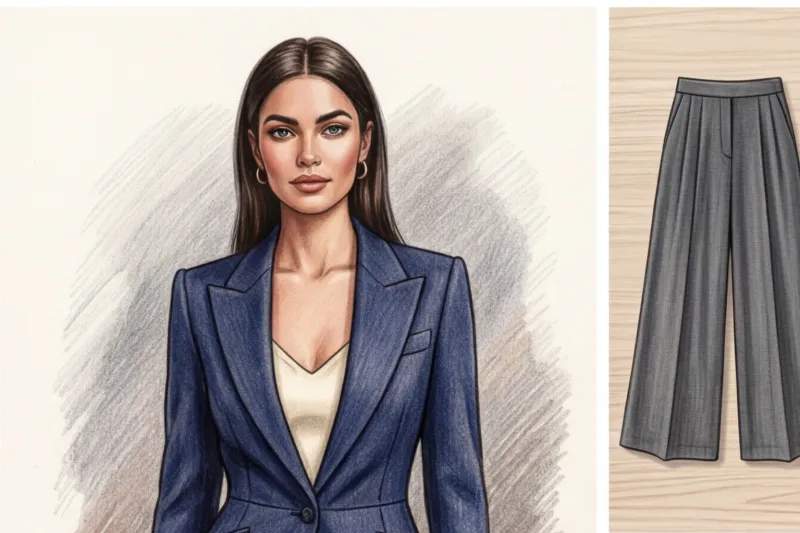
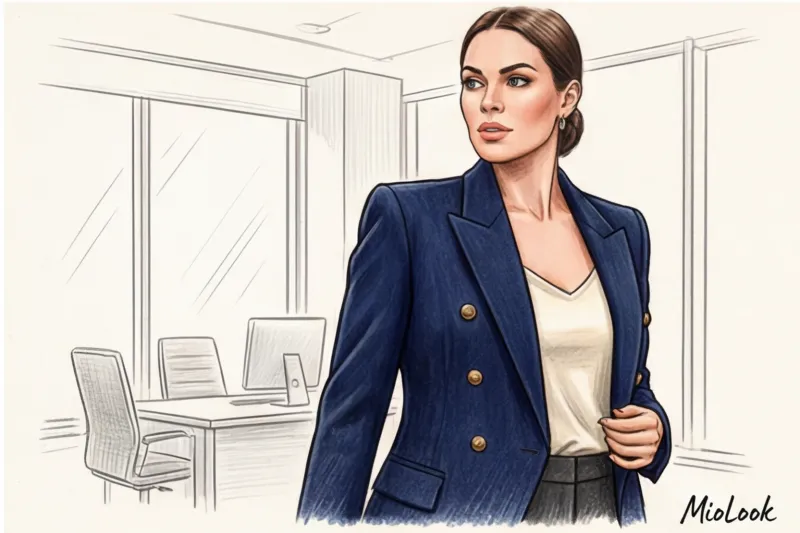
To make the bottom appear smaller, the top should be more prominent and textured. This is a basic rule of visual balance. Our goal is to broaden and strengthen the shoulder girdle so that the hips appear as a harmonious part of the hourglass silhouette.
"We can't cut off volume at the bottom, but we can add architectural weight at the top. The right jacket can change not only proportions but also posture."
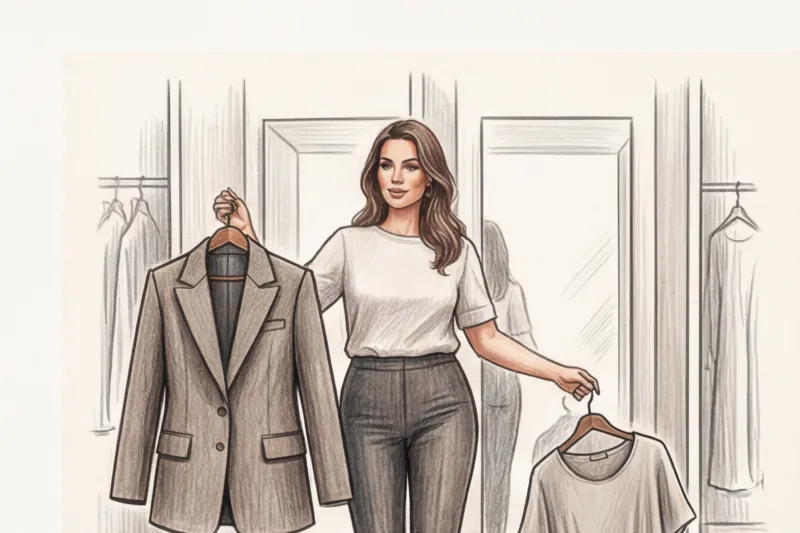
One of my clients, Marina, had worn only soft knit cardigans for years. When we found her the perfect double-breasted jacket in thick wool (around €120 at Massimo Dutti) with a sharp shoulder, she burst into tears in the fitting room. A week later, she threw out five pairs of shapewear shorts. The sharp shoulder created the perfect horizontal line that balanced her pelvis.
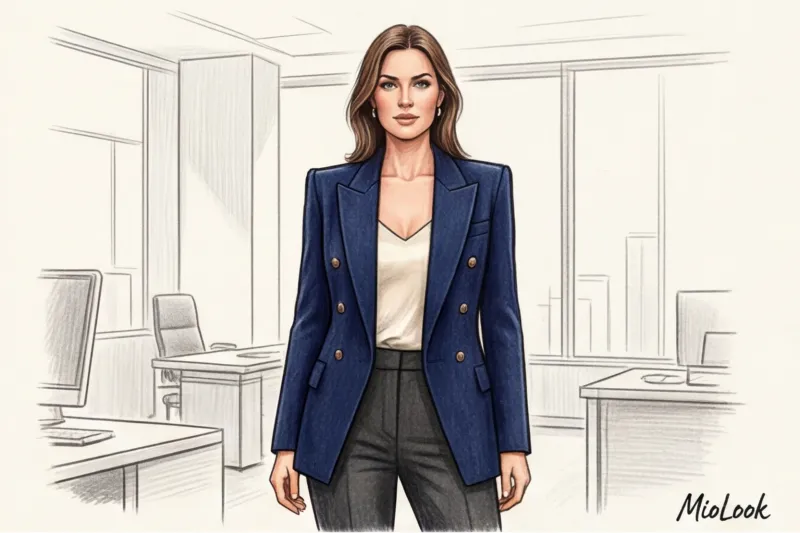
Secret tools of a stylist:
- Shoulder pads. Today, they're sewn into not only jackets but also basic T-shirts and long sleeves. It's a brilliant invention that instantly flatters the figure.
- Cutout shape. Avoid tight, round necklines. A deep V-neck, a bob, or an elegant boat neck will broaden the shoulders and elongate the neck.
- Accents in the portrait zone. Massive earrings, silk scarves, a brightly colored top—all of this makes the person you're talking to look into your eyes, not at your hips.
Trousers and jeans: the right styles for architectural correction
Have you ever noticed how your jeans fit perfectly on your hips in the fitting room, but bulge out at the waistband? This isn't a problem with you; it's a problem with industrial patterns. About 70% of mass-market trousers are cut with a waist-to-hip difference of just 25 cm (the standard 10 inches). For women with defined hips, this difference is often 30–35 cm.
My main piece of advice, which saves my clients a ton of stress: always buy pants that fit perfectly through the hips, even if they're a size or two too big at the waist. Then take them to a tailor. A waistband adjustment at a tailor costs around €15-€20, but this investment transforms regular €40 jeans into a bespoke piece. This trick is especially helpful if your body type is closer to Romantic Straight by Larson , where the difference in volumes is a characteristic feature.
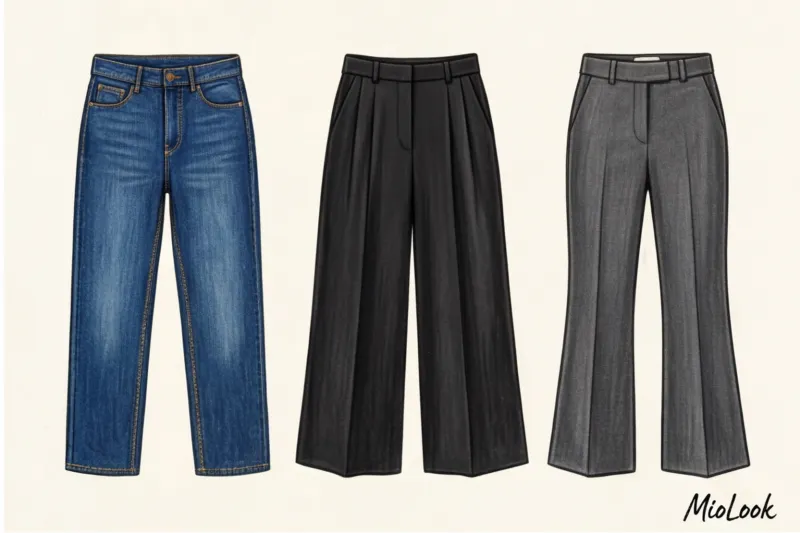
Straight, palazzo, and bootcut versus skinny
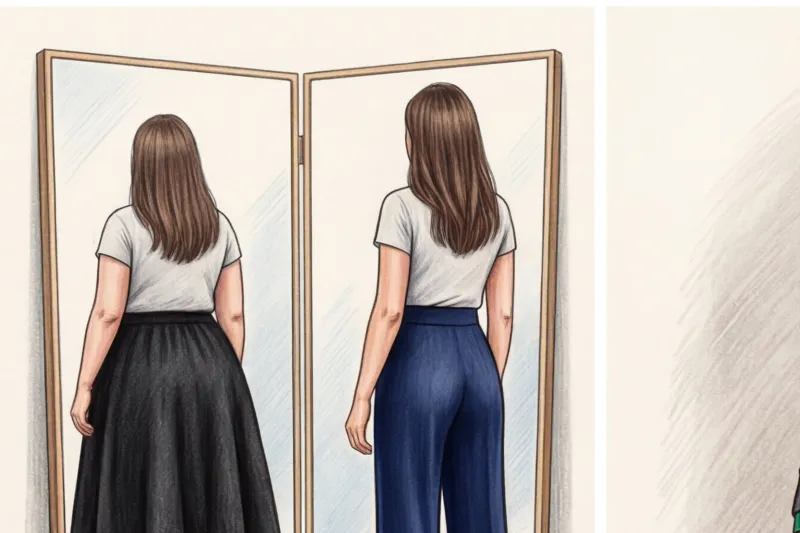
Avoid thin, flowy trouser fabrics in favor of materials that hold their shape (denim weighing 12 ounces or more, suiting wool, gabardine). Fabric density is more important than color.
- Palazzo pants with creases: An ironed or stitched crease acts as a continuous vertical line. It "cuts" the leg in half, elongating the silhouette.
- Bootcut style: A slight flare from the knee creates a mathematical balance for the hip width. This is a classic that's making a comeback for good reason.
- Skinny: In 90% of cases, they accentuate the bulk of your pelvis. But if you're not ready to give them up (a fair limitation—we all sometimes want to wear what we're used to), pair them with high tube boots and a long, structured, open-front jacket.
Your perfect look starts here
Join thousands of users who look flawless every day with MioLook. Upload your items and receive ready-made capsules.
Get access — €0.99 onceSkirts and dresses that create the right geometry
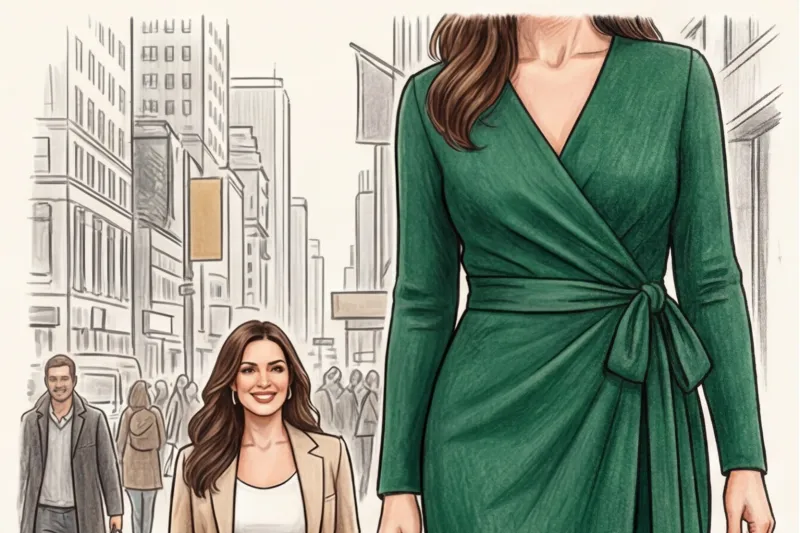
A wrap dress is a masterpiece of design. The diagonal line that runs across the torso breaks up the monolithic volume and creates a waist exactly where you need it. The key is to ensure the fabric is heavy enough to not flutter in the slightest breeze.
But the classic A-line skirt is often a failure. Women buy flared skirts made of soft viscose hoping to conceal their curves, but the fabric simply sits on the hips, accentuating them. Pro tip: an A-line skirt only works if it's made of a stiff material (heavy cotton, denim, leather). It should stand up on its own, defining its own shape, rather than clinging to yours. Clean lines are crucial here, which perfectly aligns with the principles of the style. Classic by Larson.
As for trendy silk slip skirts (cut on the bias): the thin, mass-market rayon will reveal even the slightest unevenness in the silhouette. If you want to rock this trend, choose a matte, thick viscose or layer it over a long, chunky knit sweater (remember to gather it in the front to define the waist).
Optical illusions: color, print, and texture
Clothing is a tool for manipulating light and shadow. Research in visual perception confirms that shiny textures (satin, patent leather, velvet) reflect light, visually adding volume and making objects appear closer. Matte fabrics (suited wool, suede, thick matte cotton) absorb light, making objects appear farther away and smaller.
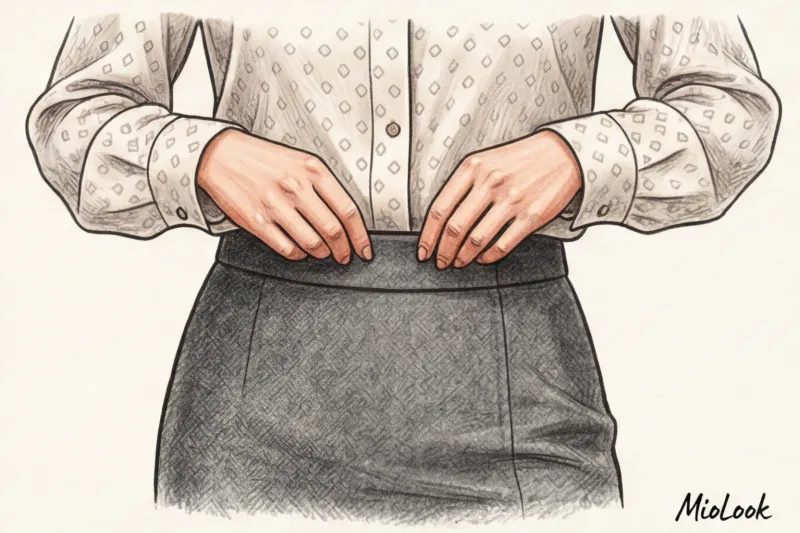
If you have wide hips, apply the rule of matte textures to your bottoms. You can wear white matte palazzo pants with a black satin blouse, and your hips will appear smaller than if you wore black satin pants with a white matte top. It's physics.
The size of the print deserves special attention. A small floral (millefleur) on the large hip area creates a rippled effect, making the area appear larger. Medium and large geometric prints, on the other hand, structure the silhouette. Color blocking, especially dark vertical inserts on the sides of a skirt or dress, can literally shave off several centimeters on each side.
Ready to start your transformation?
Try the MioLook plan for free—no commitments required. Save your favorite looks and plan your wardrobe wisely.
Get access — €0.99 onceA stylist's checklist: 5 shopping rules for those with a voluminous bottom
Over the years of shopping guides, I've come up with these rules that work without fail. Save them for your next shopping trip:
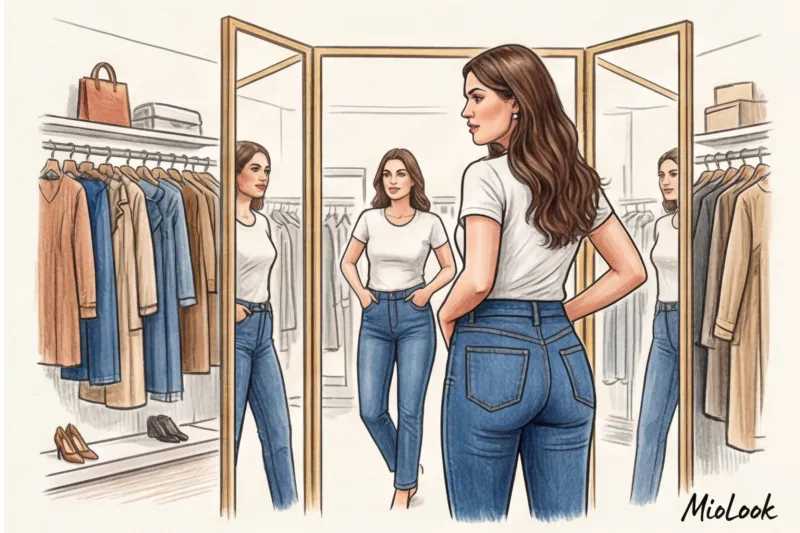
- Check your pockets. The placement and size of the back pockets on jeans are critically important. Small, high-set, or widely spaced pockets will make your butt look larger. Look for larger pockets located closer to the center seam.
- Watch the lengths. The length of a top (the hem of a jacket, the edge of a sweater, or the bottom of a shirt) should never end at the widest point of your hips. This is the most common mistake. The hem should either end above this line (at the waist/hipbone), or cover the crotch and extend lower.
- Look for items with darts. Ribbed knits will hug you like a caterpillar. Non-stretchy garments with well-defined darts at the waist and hips will create a refined, luxurious silhouette.
- Crease test. Squeeze the hem of the trousers in your fist for 5 seconds. If the fabric remains heavily wrinkled, it's too thin. The ideal fabric for the bottom is cotton with a weight of at least 180 g/m² or suiting blends that spring back and return to their shape.
- Invest in shoes. Shoes with a pointed or elongated almond-shaped toe, as well as a small heel or a stable wedge, visually lengthen the leg, thereby stretching and slimming the entire lower part of the figure.
Conclusion: From camouflage to attention management
Wide hips aren't a flaw to be frantically hidden under meters of black fabric. They're a sign of femininity and a stunning foundation for creating a luxurious silhouette. Look at style icons with similar figures—they don't wear slouchy outfits, they wear impeccable tailoring.
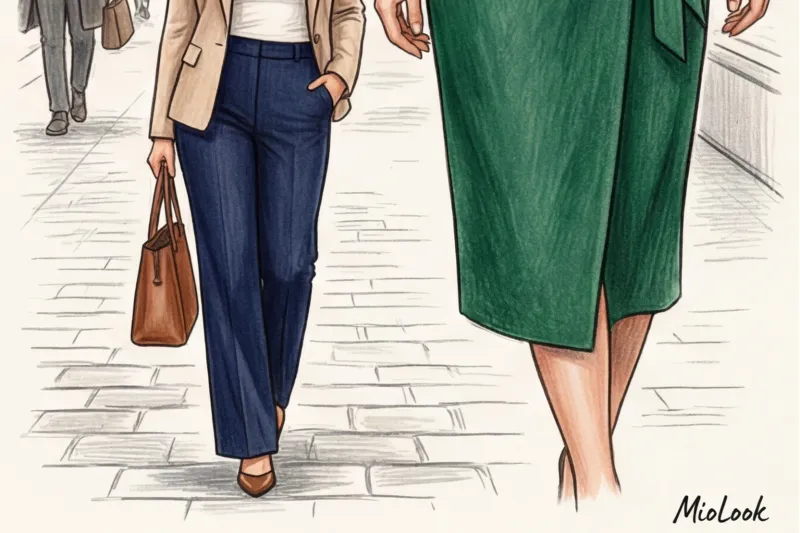
Your main goal is to carefully place visual accents. Create a strong shoulder girdle, choose thick, matte fabrics for bottoms, have your clothes tailored, and stop hiding. When you begin to analyze your closet through the prism of lines, textures, and architecture, rather than through the prism of insecurities, you'll see a completely different person in the mirror. And believe me, you'll really like this person.