Architecture, not camouflage: how to hide full arms without the "hoodie" effect
It's mid-July, and we're meeting a new client on the café veranda. It's 30°C outside, and she's wearing a thick, dark cardigan, buttoned up tight. To my cautious question about comfort, she replies, "I just can't show my arms." I see this fear all the time in my practice. Women have been googling for years about how to hide their full arms with clothing, and time and again they find the same destructive advice: wrap themselves in black, buy a shapeless dolman top, or pull on a tight turtleneck. We've already covered the anatomy of these mistakes in more detail in our a complete guide to visually correcting your figure with clothing.
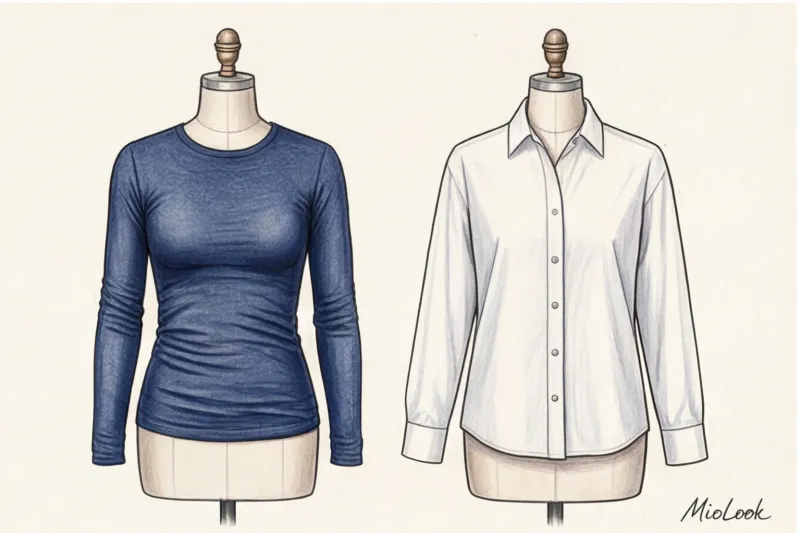
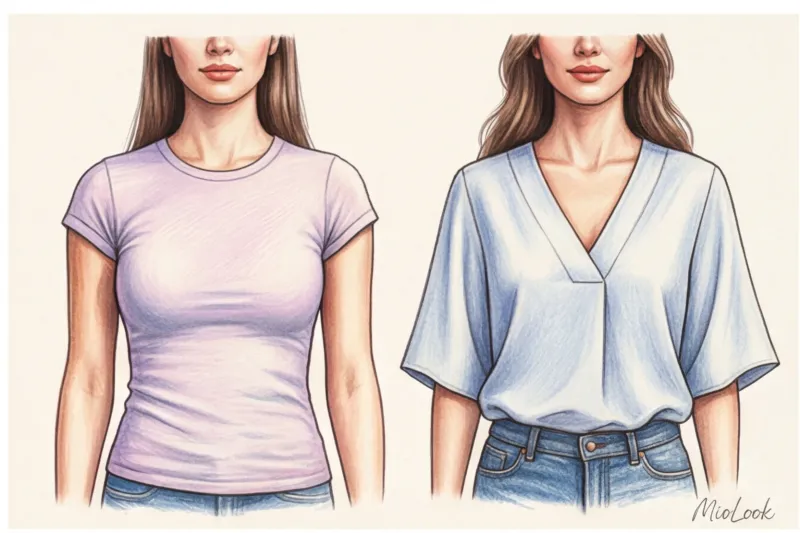
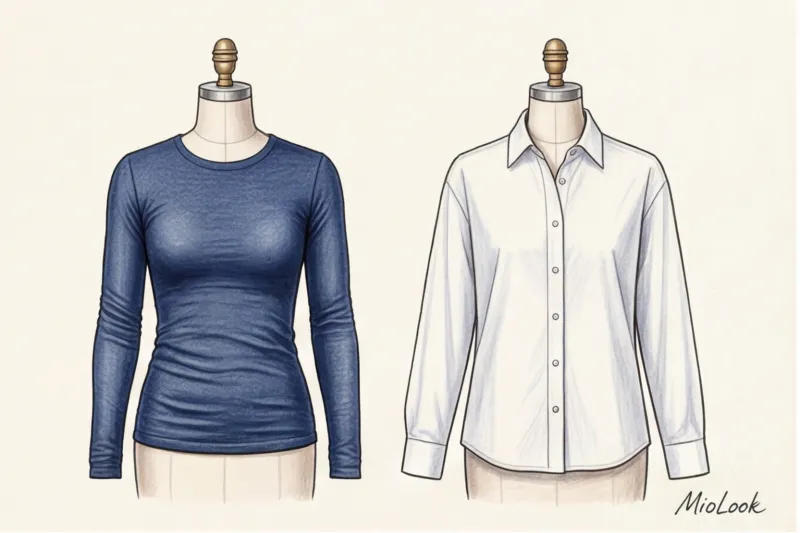
Over 12 years as a stylist, I've learned one ironclad rule: tight, long sleeves made of thin knitwear don't make you look slimmer. They act like sausage casings, treacherously emphasizing every millimeter of volume, every crease, and every contour of your underwear. One client of mine once admitted that she'd deliberately bought turtlenecks a size too small (M instead of L), believing the elastane would "tighten" her biceps. The effect was quite the opposite: the fabric stretched to a shine, making her arms appear even larger.
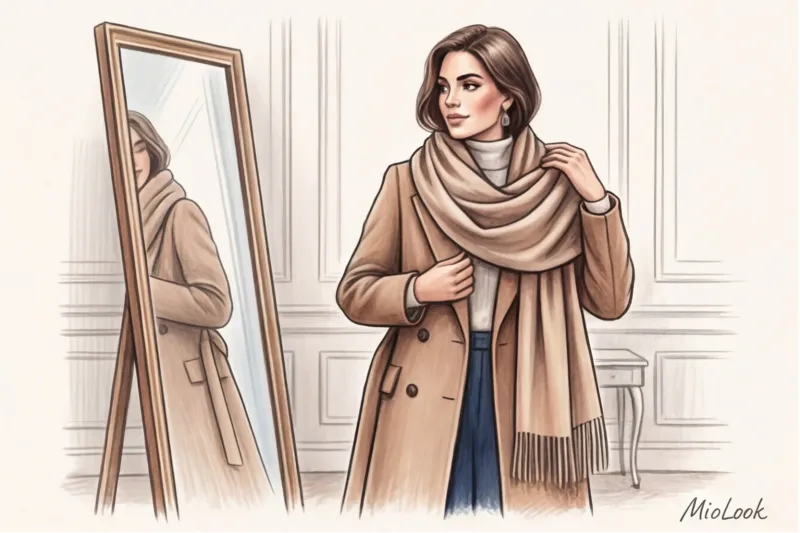
The secret lies not in concealment, but in an architectural approach to silhouette. We need "air"—that vital space between the body and the fabric. When clothing has its own clear framework, others perceive the shape of the garment, not the shape of your body underneath. Attempts to hide behind enormous batwing sleeves destroy the waist: visually, your torso merges with your arms into a single, bulky rectangle.
And don't forget about your posture. A hunched back and inward-turned shoulders automatically push your triceps forward, making your arm appear wider. Keeping your shoulders back and your armholes aligned properly does half the work for you.
Access to MioLook for €0.99 — one-time payment
A smart AI stylist will select the perfect look based on your body shape.
Get access — €0.99 onceHow to Hide Chubby Arms in Summer: Beat the Heat Without Losing Style
Forget the stereotype that with the arrival of summer, you have to risk heatstroke by wearing long sleeves. Arms can and should be covered with proper geometry, not layers of fabric.
This is where the "diagonal rule" comes into play. If the sleeve cut is completely straight and horizontal (called a cap sleeve or a cap sleeve), it visually cuts the arm exactly at its widest point. The human eye automatically interprets this horizontal line as an indicator of width. A diagonal cut, on the other hand, draws the eye downward, elongating and narrowing the silhouette.
But geometry is powerless if you choose the wrong texture. Cheap, thin viscose, which tends to droop, is your worst enemy. Replace it with fabrics that hold their shape: heavy linen, cotton poplin weighing at least 130 g/m², or ramie. These create a rigid, architectural outline.
Perfect Sleeveless Tops: The Secret to the Right Armhole
It sounds counterintuitive, but the best way to hide full arms in the summer is to... show them off with the right top. According to Lyst's global analytics report (2024), interest in halter neck tops has increased by 47%. And they're a brilliant visual enhancement tool.
The American armhole is cut diagonally toward the neck. It completely exposes the shoulder joint and collarbone—the most delicate bone structures in our body. The viewer's gaze is drawn to the center of the chest and face, completely ignoring the volume of the biceps. If you combine this with tops with slightly flared shoulders (with '80s-style shoulder pads), you create artificial geometry: against a broad shoulder, the arm will appear fragile.
One thing you should definitely avoid is thin spaghetti straps. The contrast between your thick arm and the strap on your shoulder isn't flattering. Choose straps that are at least 4-5 centimeters wide.
Autumn-Winter Wardrobe: Textures and Cuts that Shape the Silhouette
When the temperature drops, it's time to bring out the big guns. And that's where investing in quality pays off immediately. If you're looking for a way to collect wardrobe in the style of "quiet luxury" , start with the right knitwear. Flimsy acrylic for €20 will lose its shape after the first wash and hang limply on your arms. Your choice is smooth-twisted merino wool or dense cashmere (at least 250 g/m²). This material has enough weight to fall in beautiful folds.
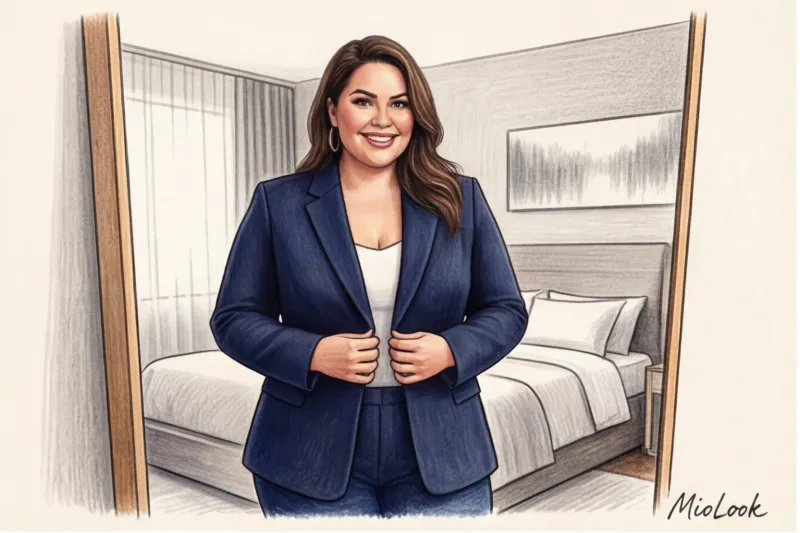
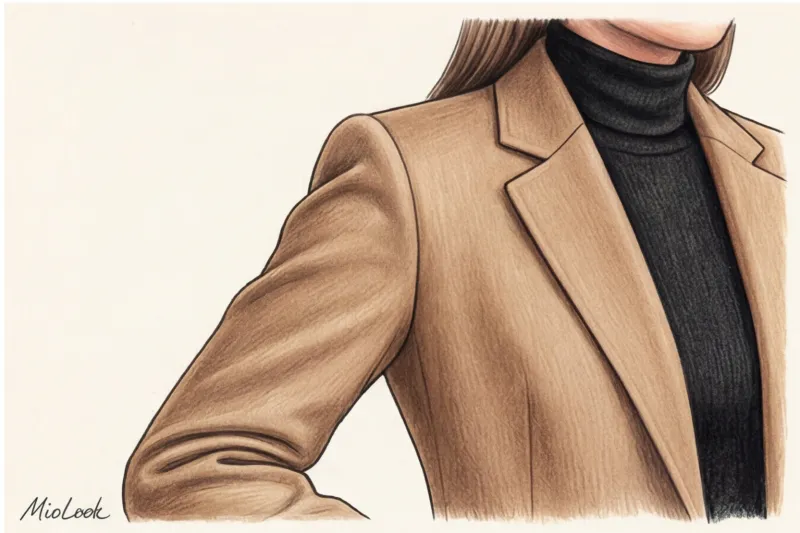
But the real magic happens when choosing jackets. Let's talk about the tailoring term "armhole height." In budget-friendly mass-market clothing, patterns are averaged out: to ensure a jacket fits as many different body types as possible, the armholes are made wide and low. As a result, when you raise your arm, the entire jacket drags with it, creating an ugly lump of fabric under your arm.
Premium brands (with Max Mara as the benchmark) use high set-in sleeves. The armhole is cut high and close to the armpit, and the sleeve itself falls vertically. This separates the arm from the chest. A well-cut jacket (in the €250 to €800 price range) allows for unrestricted movement while still creating a chiseled arm.
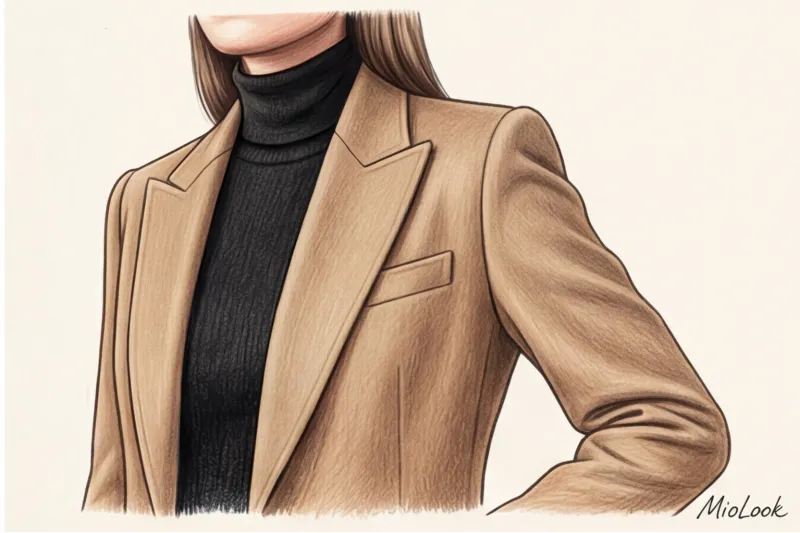
Another tried-and-true trick is a 3/4 or 7/8 sleeve length. By exposing the wrist (the narrowest part of the arm), you send a subconscious signal of fragility throughout your figure.
Your perfect look starts here
Join thousands of users who look flawless every day with the MioLook app. Digitize your wardrobe and get stylish combinations.
Get access — €0.99 onceAnti-trends and mistakes: 3 sleeve styles to avoid
Sometimes dressing stylishly after 40 It means ditching those "cute" details that can add age and extra pounds. A minimalist cut is refreshing, while excessive embellishment can make a silhouette look heavy.
- Puff sleeves with elastic on the biceps: This is a disaster for full arms. The elastic digs into the widest part, creating a sausage-like effect, and the voluminous bubble of fabric visually doubles the shoulder width.
- Short "wings" (cap sleeves): They end right at the level of the armpit - where the arm has its maximum volume.
- Thin turtleneck sleeves: As we have already found out, thin viscose is the worst enemy of correction.
To be fair, this rule doesn't work for all body types. If you have a pronounced pear shape with very narrow, sloping shoulders and wide hips, a tight puff sleeve can harmonize your proportions. But if your primary goal is to conceal the volume of your arms, you'll have to avoid heavily gathered shoulders.
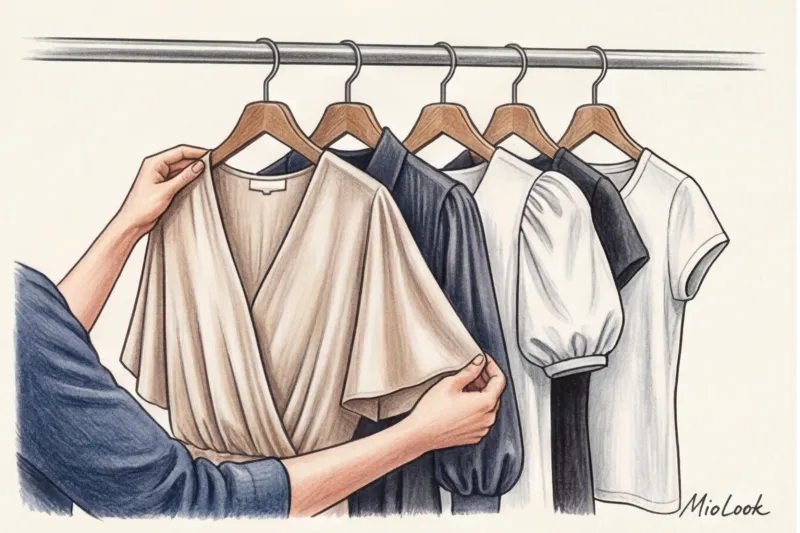
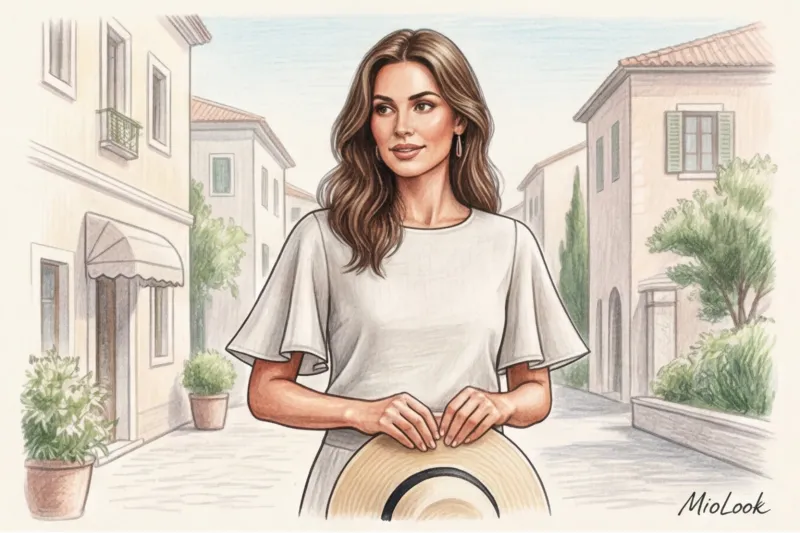
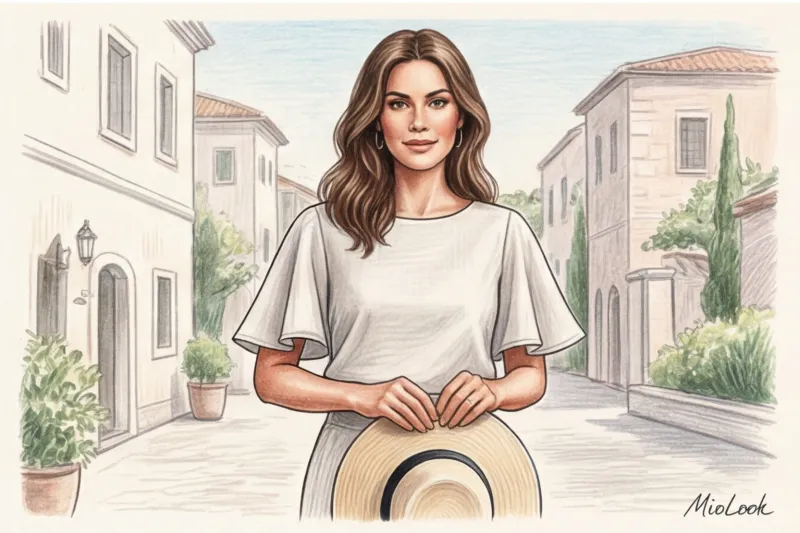
How to replace unsuccessful styles? Instead of children's puff sleeves, choose an elegant bell sleeve (flaring at the bottom) or a relaxed kimono cut. They create that all-important diagonal line.
Optical illusions: prints, color, and trim details
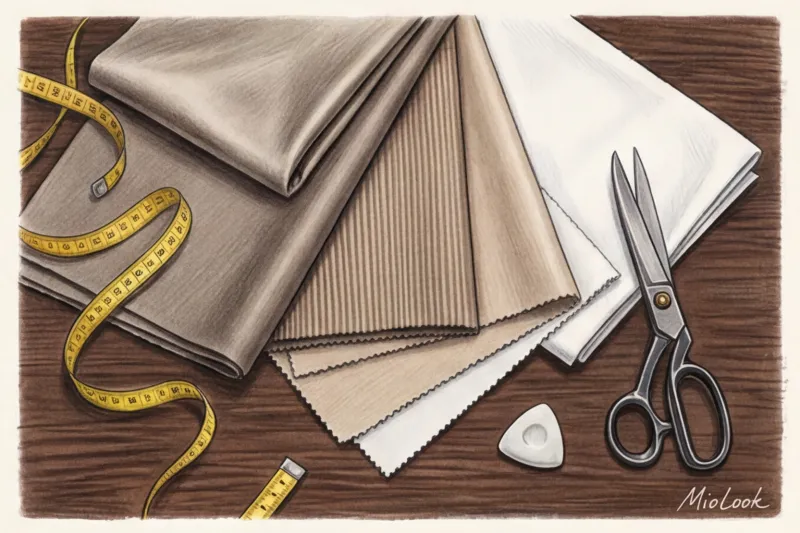
The rules of visual correction are deeply rooted in the laws of physics and light reflection. Shiny textures (satin, satin, sequins) reflect light in all directions, visually bringing objects closer and highlighting any micro-relief. Matte fabrics absorb light, creating a smooth, distant outline.
If you're investing in a silk blouse, look for a heavy, matte crepe de chine instead of a glossy silk. Pay attention to the fabric specifications: silk density is measured in momme. A 19-22 momme silk blouse will cost around €150-€300, but it will flow in a heavy wave, smoothing out any unevenness, unlike a budget 12 momme silk, which will cling to the skin.
Beyond texture, we can also direct attention through lines. Vertical color blocking, contrasting stripes on sleeves (in a sporty or sporty-chic style), or even long V-shaped pendants that draw the eye to the center of the chest—all of these work flawlessly.
Be careful with prints. Proportion is crucial: a small, frivolous flower on a large hand looks like wallpaper stretched over a rough wall. Choose medium- or large-sized abstract motifs that complement the scale of your appearance.
Stylist checklist: testing sleeves right in the fitting room
Theory is great, but how do you put it into practice? During shopping assistance, I always make clients complete three mandatory tests right in the fitting room.
- Pinch test: Lower your arm. Try pinching the sleeve fabric at bicep level. If there isn't at least 1.5–2 centimeters of clearance between your body and the fabric, the garment is too small or has an improper fit. Return it to the hanger.
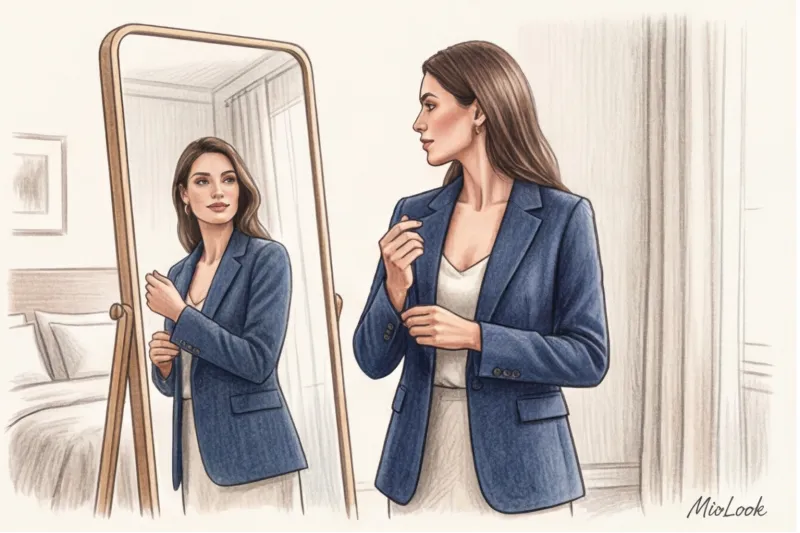
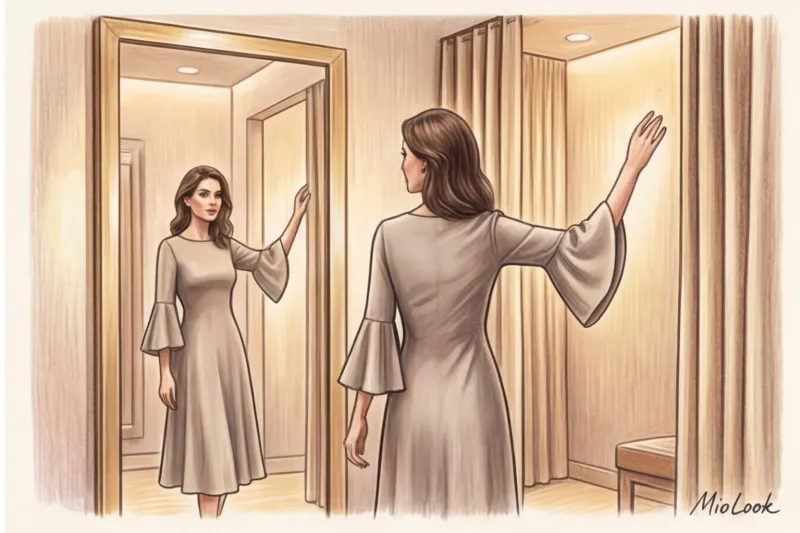
- Raised Hand Test: Raise your arms as if you were about to hug someone. If the armhole is narrow and properly cut, only the sleeve will rise. If the armhole is poorly cut, the entire bodice of the shirt or dress will fall behind your arms, exposing your midriff.
- Narrowest Point Rule: Go to the mirror and take a critical look at your arms. Find the widest part of your biceps. Your ideal short sleeve should end at 3 centimeters higher this zone, or by 3 centimeters below. Never - exactly on it.
If you find it difficult to analyze your images on your own, try MioLook This smart assistant allows you to upload your clothes and see from a distance which proportions really work for your figure.
Manipulating attention through clothing isn't magic, but geometry and knowing your proportions. Stop hiding your arms in shapeless cocoons and depriving yourself of comfort. Choose dense textures, high armholes, and the right amount of airiness in the silhouette. When your clothes have a clear architecture, you no longer need to camouflage anything.