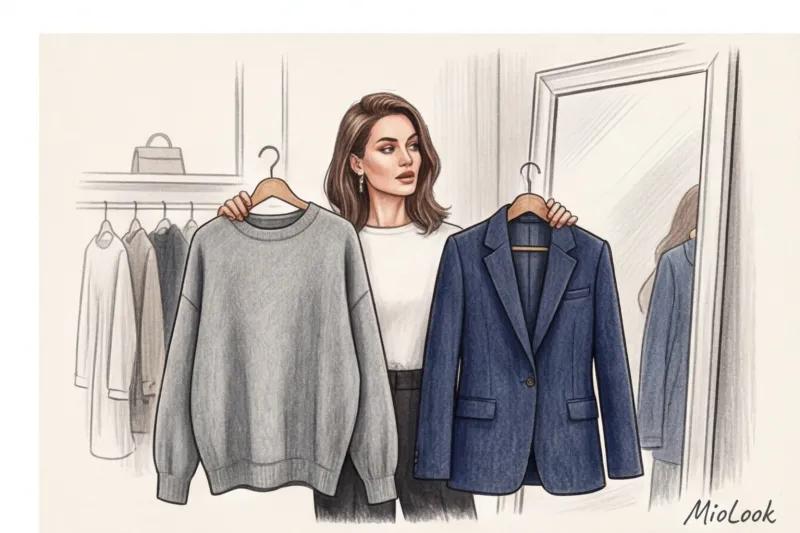

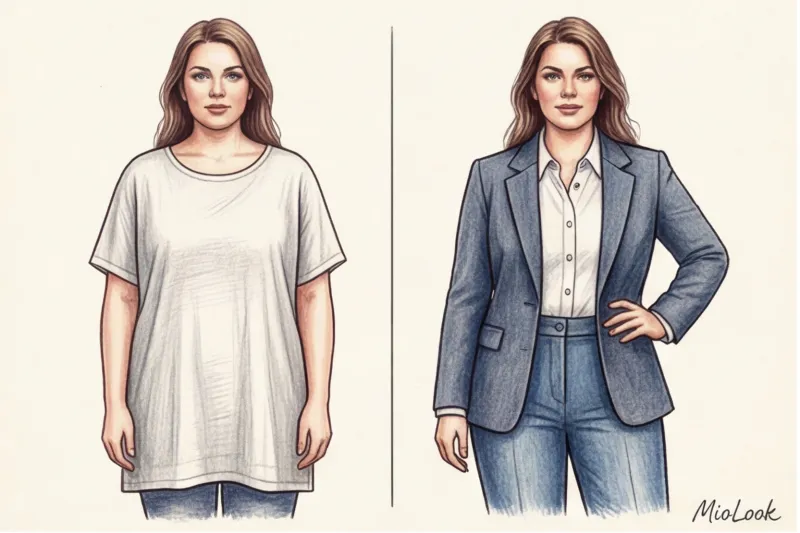
Over my 12 years of working as a stylist, I've seen the same scene hundreds of times. A client walks into the studio, nervously tugs at her shapeless, thin cardigan, and says, "Emily, I just want to hide this." She points to her waist.
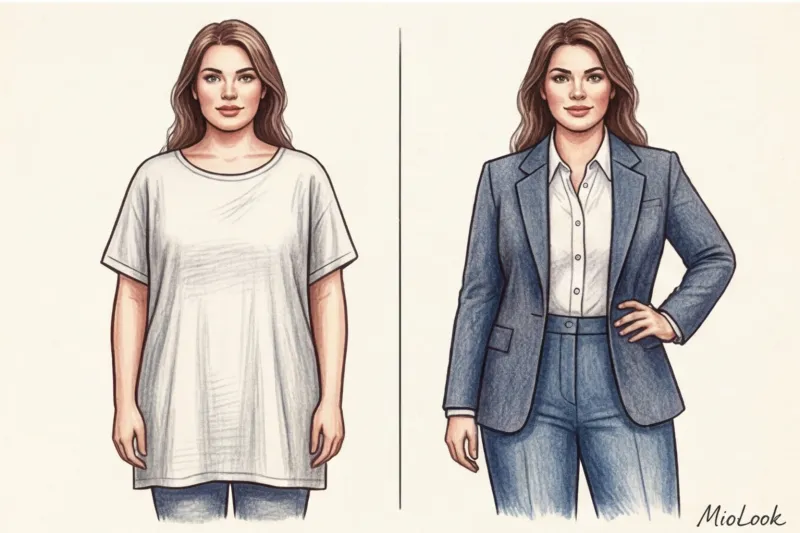
If you've ever Googled how to hide your belly with clothing, you've probably read the standard advice: wear black, buy oversized clothes, and choose empire-waist dresses. Let me be frank: most of this advice from the glossy magazines of the 2000s is hopelessly outdated. Moreover, it makes you look bigger. We've covered this topic in detail in our The Complete Guide: How to Dress for Plus-Size Women (A Stylish Plus-Size Guide) , but today we will focus on pure silhouette architecture.
We won't hide the body. We'll create a new contour using the laws of physics, tissue density, and precise visual illusions.
Why hoodies and oversized clothes only make things worse
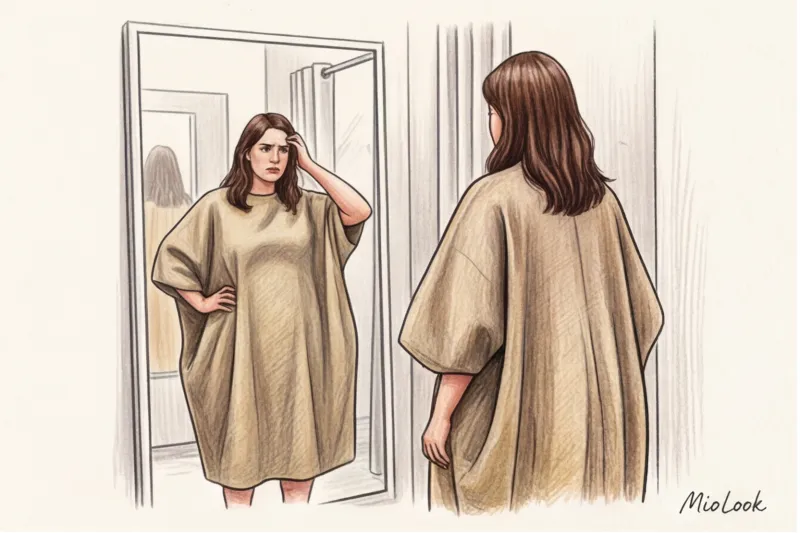
Let's conduct a thought experiment. Take a piece of thin fabric and drape it over a mannequin with a protruding belly. How will the fabric fall? Vertically downwards, from its widest point.
Oversized clothes without harsh lines don't hide volume. They flatter your figure into a monumental rectangle, completely depriving your silhouette of any dynamism. You gain the dimensions of your widest area (chest or stomach), while losing true proportions.
Instead of wrapping ourselves in robes, we need an architectural approach. Every silhouette requires a supporting framework.
Cutting Architecture: How to Hide Your Belly with the Right Fabrics
In construction, a building rests on steel structures. In styling, this role is played by dense materials. Forget the abstract and useless concept of "quality fabric." We need concrete numbers and textures.
The 200-gram rule: choosing the density
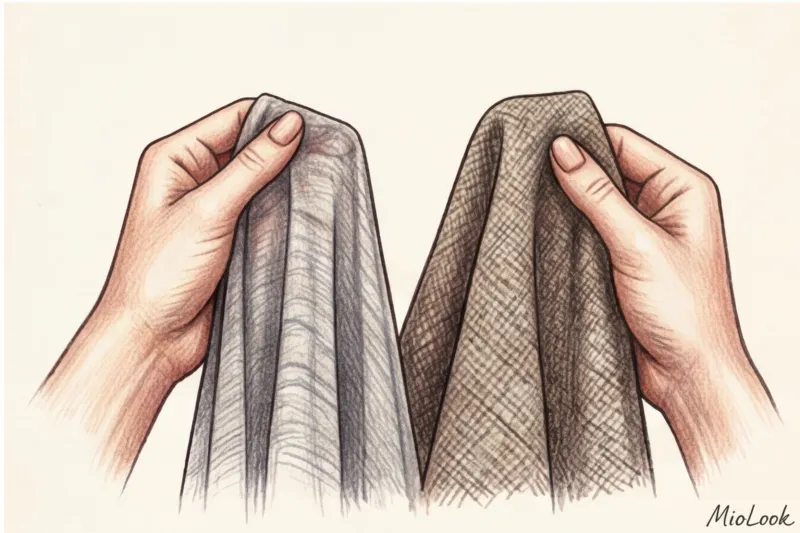
The main enemy of the waist area is thin viscose or cotton knitwear with a density below 200 g/m². This material acts like a second skin: it sinks into every fold, emphasizing even those uneven areas of the body that aren't actually there.
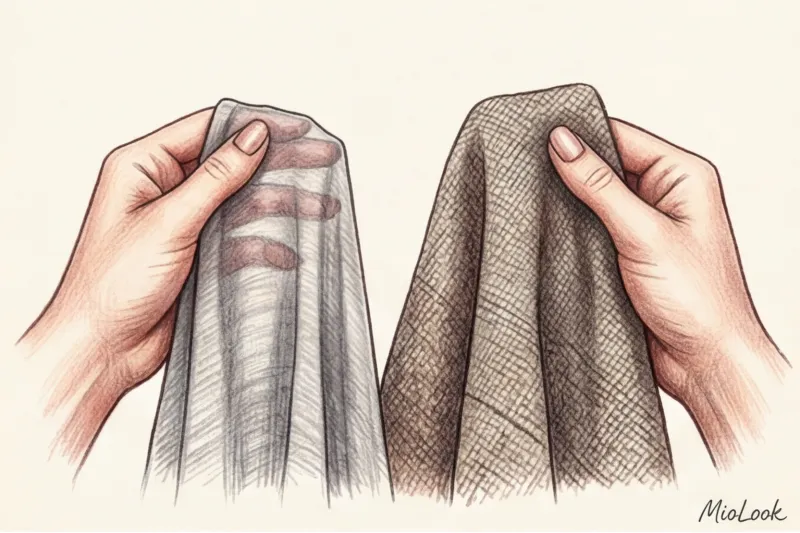
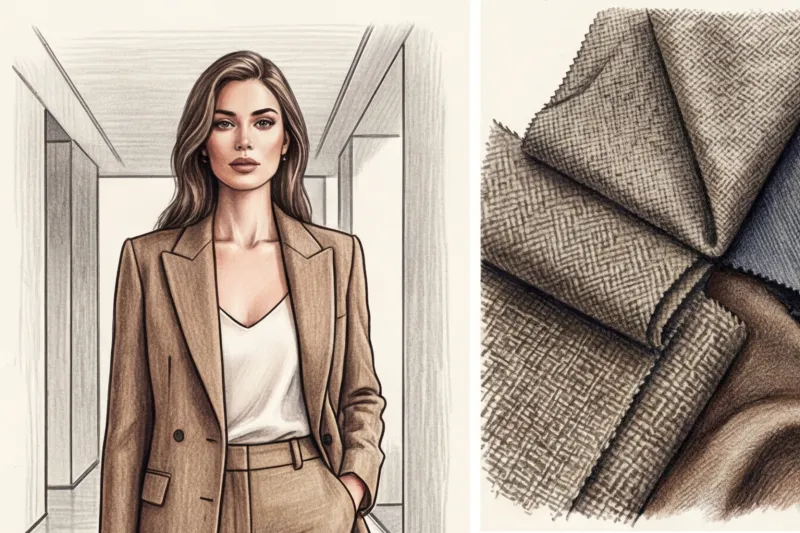
Remember the "200-gram rule." The fabric should be dense enough to hold its own shape, not cling to yours. Excellent examples include 12- to 14-ounce denim, gabardine, structured tweed, or heavy cotton. These materials act like a soft corset, creating a straight line from the bust to the hips, smoothing out any protruding features.
Matte vs. glossy textures
The second part of the architectural approach is working with light. Shiny fabrics (satin, silk, lurex, or sequins) act like mirror lenses. They reflect light in all directions, visually expanding the surface. If you wear a silk blouse over a problem area, it will add at least one size to your figure simply due to the physics of reflection.
Matte textures—wool, heavy linen, suiting viscose—absorb light. They make the silhouette's edges appear more defined, compact, and composed.
Access to MioLook for €0.99 — one-time payment
A smart AI stylist will select the perfect look based on your proportions and fabric density.
Get access — €0.99 onceSilhouette Geometry: 5 Stylistic Techniques That Work Without Failure
In optics, there's a phenomenon called the Müller-Lyer illusion: lines appear longer or shorter depending on the directional arrows at their ends. We'll apply this scientific principle to your wardrobe. People don't see your actual measurements, but the lines you're projecting.
Verticals and multi-layering
The most powerful adjustment technique is creating an unbuttoned vertical line. Wear a basic matte top and layer a structured jacket, a thick knit cardigan, or a long vest over it, leaving it unbuttoned.
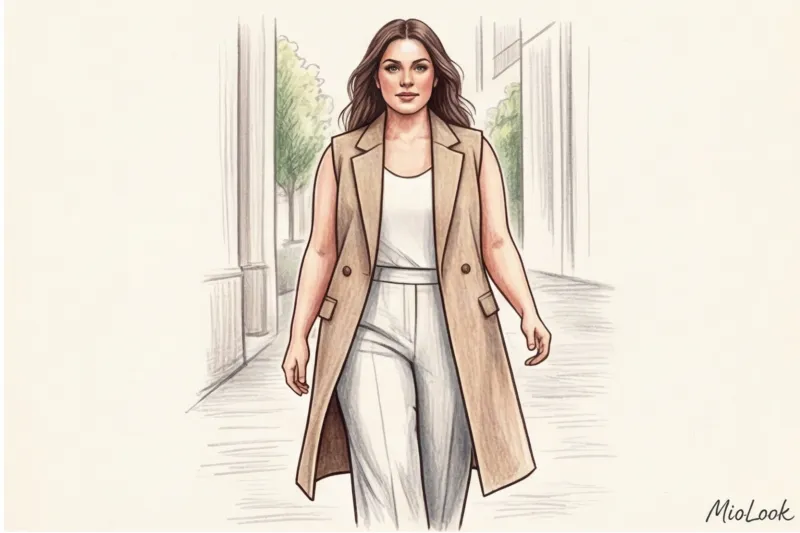
The color contrast between the inner and outer layers creates two vertical lines that literally "cut off" the sides. The observer's eye only notices the central stripe of color. For example, a deep emerald top inside and a sand-colored jacket outside work flawlessly.
Asymmetry and diagonal lines
Horizontal lines widen. Diagonal lines elongate. Wrap dresses or tops with asymmetrical draping break up the wide horizontal line of the stomach. Asymmetrical hemlines (longer at one end) draw the eye downwards, rather than lingering on the waist.
Correct fit of trousers and skirts
The statistics are relentless: approximately 80% of women wear pants that are the wrong rise. Low and even mid-rise pants often end right at the widest part of the stomach, creating the telltale "muffin top" effect (a roll of fabric hanging over the waistband).
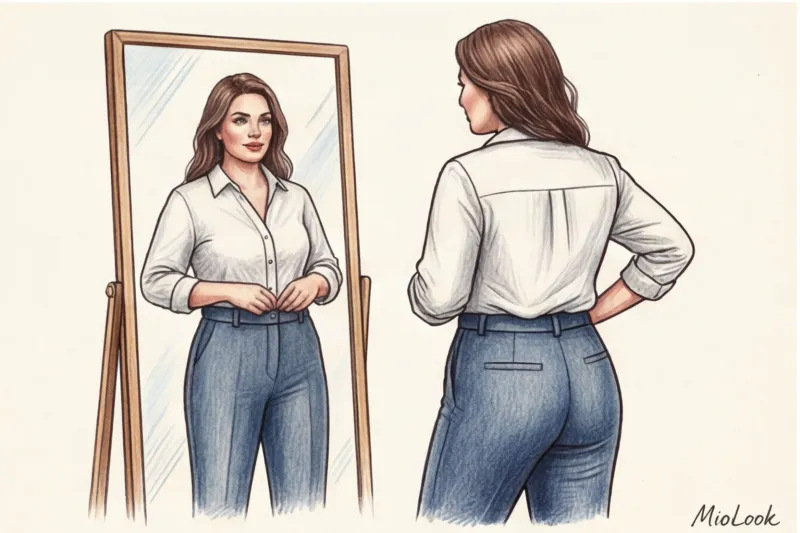
Choose a high-waisted bra made from a dense material. The waistband should sit at the narrowest point of your torso or just below your ribs. This will help support your tummy without squeezing.
To avoid the look being too covered, use the "French tuck" technique. I've personally tested this on dozens of clients: tuck in only 3-4 centimeters of the shirt in the center front, leaving the edges loose. This defines the waist but creates a concealing drape at the sides.
Fair Exception: This technique doesn't always work. If you have a pronounced apple-shaped figure with slender legs but a very full center, a French tuck can create unnecessary emphasis on your midsection. In this case, it's best to leave the top loose, but be careful about the length—it should end below the widest point of your hips.
Main mistakes: things that treacherously emphasize the sides
Now let's get rid of some dangerous stereotypes. Here are the things you should avoid if you want to correct your silhouette.
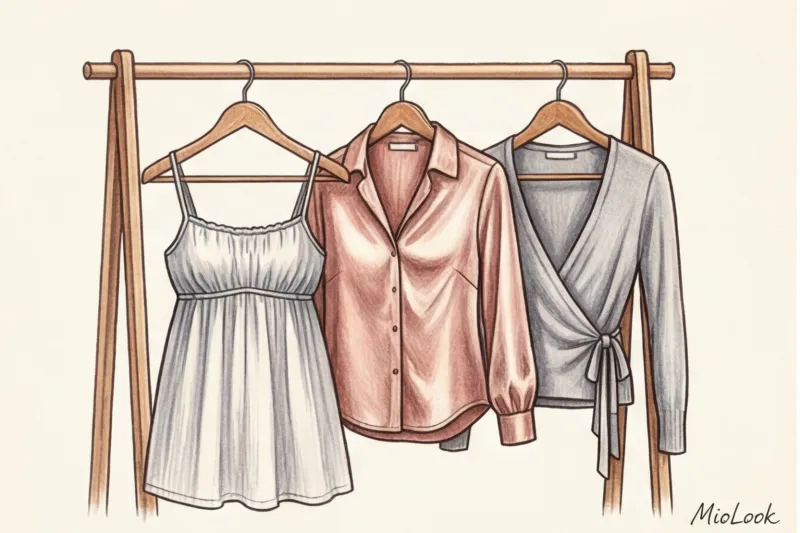
Firstly, empire-line dresses (cut just below the bust). This is the main paradox of fashion: a garment designed to conceal the belly is firmly associated with maternity wear. The generous gathers under the bust create a colossal amount of extra volume where it should be hidden.
Secondly, thin contrasting belts at the waist. If your waist isn't naturally defined, a thin belt will cut into your silhouette. If you choose accessories for office style , opt for a wide, structured belt that matches the color of the bottom layer.
Third, a sharp color block along the equator of the figure. A white untucked shirt, ending right at the stomach, paired with black trousers, creates a harsh horizontal line, making you look wider at the most unfavorable point.
Your perfect look starts here
Join thousands of users who look flawless every day with MioLook. Upload your items and get ready-made formulas.
Get access — €0.99 onceFocus points: distracting attention from problem areas
There's an ironclad rule of focal points in design. If you don't want people looking at your waist, give them something more interesting. Shift the visual weight to the portrait area.
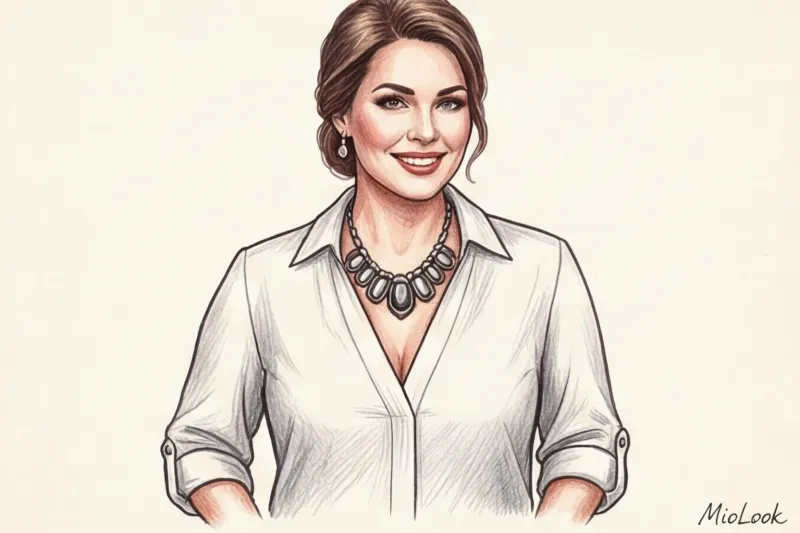
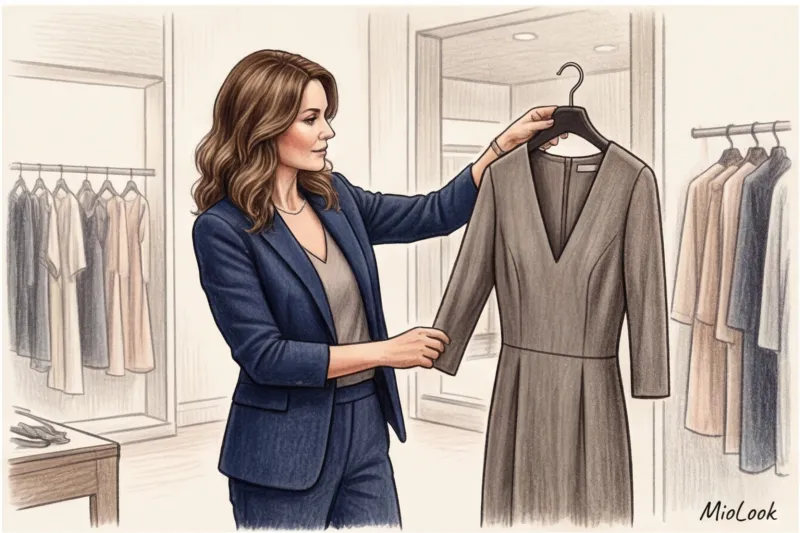
V-necklines work wonders for style. They reveal the collarbone (one of the most graceful parts of the body, no matter your weight) and visually lengthen the neck. Add simple yet striking jewelry—sculptural earrings or a geometric pendant.
Another surefire trick is to accentuate slender wrists and ankles. Roll up the sleeves of your jacket or shirt to ¾ length. When choosing office-style jeans Look for straight-cut styles that slightly reveal the ankle. This creates the illusion of a lighter overall figure.
Technology on guard of style: how a smart wardrobe solves the problem
Knowing the theory is only the first step. As the WGSN global consumer habits study (2024) shows, women spend an average of 15 minutes each morning struggling with their reflection in the mirror, trying on and frustratedly rejecting items that don't look right.
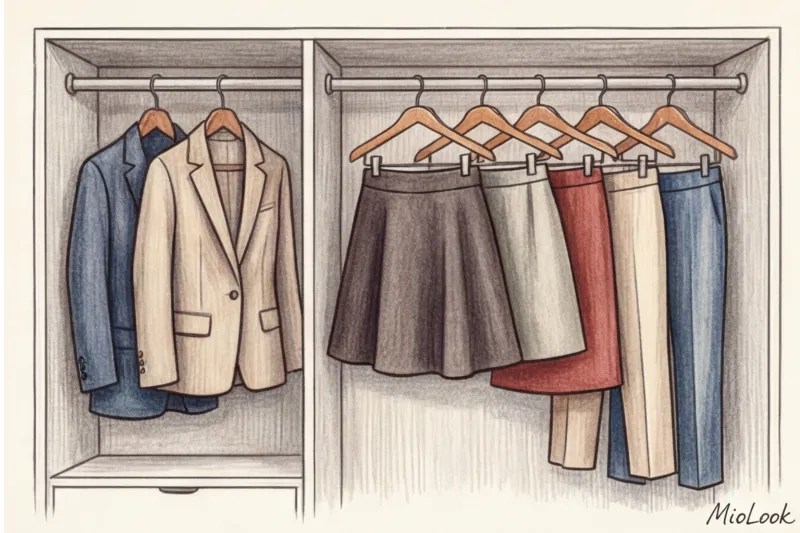
I always insist: digitize your closet. Using an app MioLook , you can create a "Shaped Capsule" category. Data analysis in the app will mercilessly reveal the truth: how many of your jackets are truly thick, and how many are that insidious, flimsy knitwear.
Create 5-7 ideal makeup looks in advance. When you have ready-made formulas on your smartphone, built on dense textures and precise vertical lines, you'll stop worrying in the morning and start enjoying your reflection.
Checklist: Creating the Perfect Look for Figure Correction
Before leaving the house, check your look against these five points, and you'll be 100% confident:
- Fabric density: Your top or jacket is not see-through, does not fall into folds and holds its shape (200 g/m² rule).
- Vertical line: The look features an unbuttoned top layer that creates two color borders on the sides.
- Confident landing: The waistband of trousers or a skirt securely holds the stomach in place, positioned on the narrow part of the body.
- Focus Shift: The attention is directed upwards (V-neck, expressive makeup) or to graceful wrists (¾ sleeves).
- One-piece bottom: The shoes are matched to the color of the trousers or your skin tone, which further elongates your height.
Don't try to hide behind shapeless meters of fabric. Choose the right density, create a tailored cut, and control the gaze. Proper styling isn't magic; it's precise geometry that works for you every day.