Do you know what item of clothing I most often toss when I clean out my clients' closets? Rigid shapewear and those notorious corset belts. Just last week, my client Anna, a department head at an IT company, admitted with a sigh of relief that by three o'clock in the afternoon she was ready to unzip her shapewear shorts right there in the conference room.
If you have ever searched online for advice on how to How to hide your belly with clothes I bet you've been offered two diametrically opposed, yet equally disastrous, paths: either slinking into tight spandex or hiding in an oversized black robe. Both options ignore the very nature of the female body. Our complete guide... visual correction of the figure with clothing I've already mentioned that true style begins with geometric cuts and personal comfort, not with trying to squeeze yourself into someone else's mold.
Over 12 years of working as a stylist, I've come to the conclusion that working with the waist area requires engineering principles. We'll utilize the architectural properties of fabric, the laws of optics, and, most importantly, consider the body's natural dynamics throughout the day. Let's explore how this works in practice.
The Biggest Mistake: Why Oversized and Aggressive Cinching Don't Work
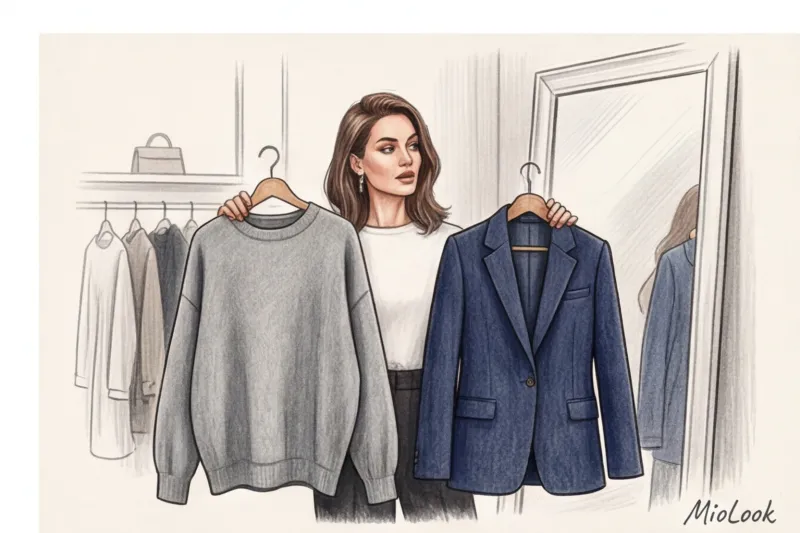
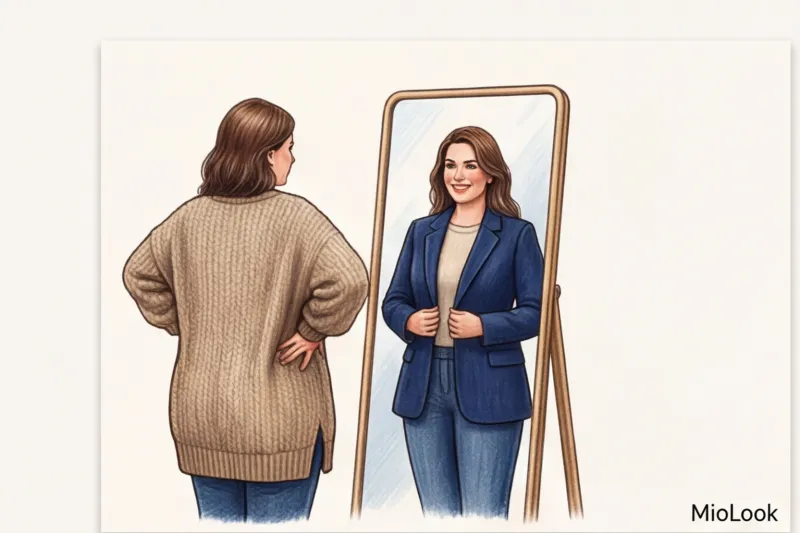
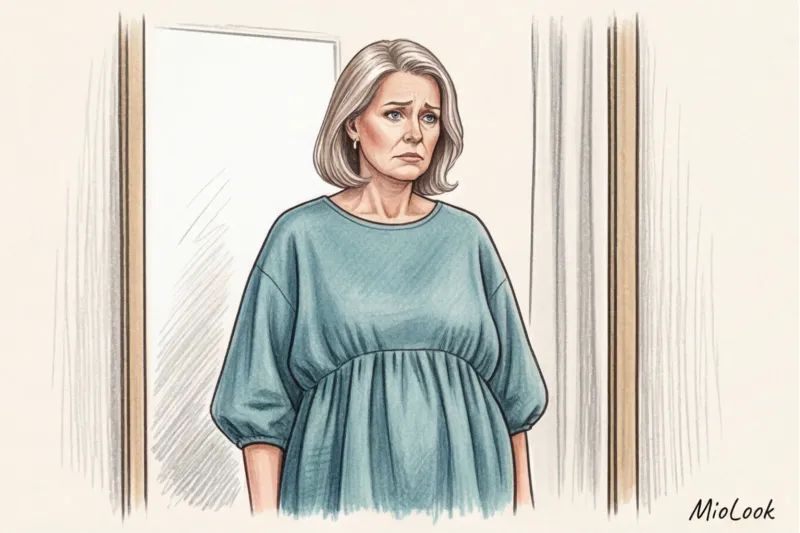
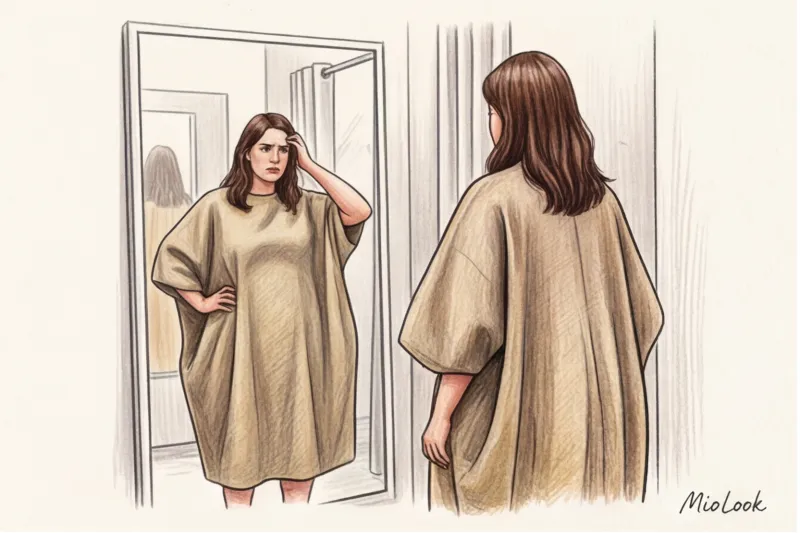
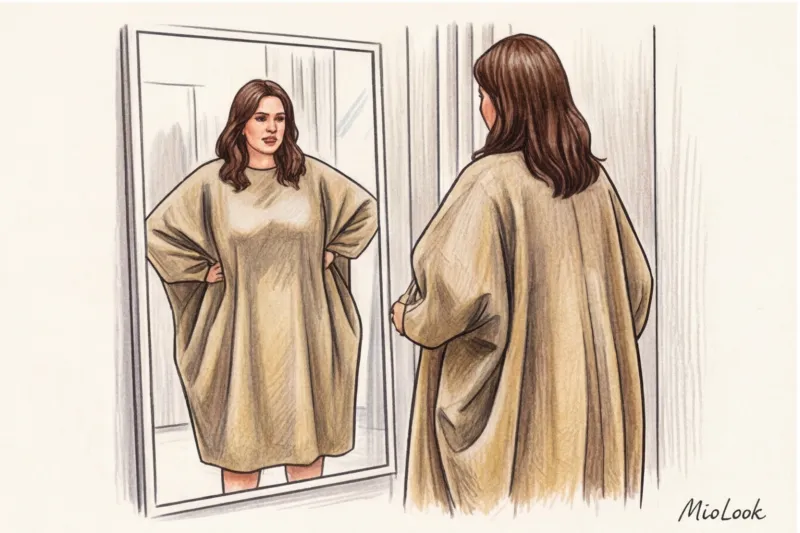
Let's start by debunking the main myth that daily ruins the silhouettes of millions of women around the world. Oversized hoodies don't hide imperfections. On the contrary, shapeless clothing flatters your figure down to its widest point (in this case, your belly), visually adding 5 to 7 kilograms.
When you wear a tent dress, you erase all natural curves. Your figure becomes a monolithic rectangle. The same goes for the other extreme—extremely high and tight skinny jeans. Thin, high-waisted denim acts like a noose: it pins the upper waist, pushing volume down and creating a "roll" effect on the lower abdomen.
"Aggressive compression doesn't remove volume; it merely pushes it elsewhere. A rigid corset will inevitably create rolls on the back or under the breasts, disrupting the body's natural proportions."
Instead of fighting your body, let's turn to the numbers. Our app's analytics MioLook A 2024 study shows that 68% of users report a dramatic increase in self-confidence when replacing compression garments with structured fabrics. Furthermore, a 2023 consumer research study from WGSN confirmed what I see every day: 8 out of 10 women experience physical discomfort at least once a day due to a digging waistband. Enduring pain for a flat stomach is an outdated concept.
Access to MioLook for €0.99 — one-time payment
A smart AI stylist will select the perfect look based on your individual proportions and comfort preferences.
Get access — €0.99 onceFabric architecture: density is everything
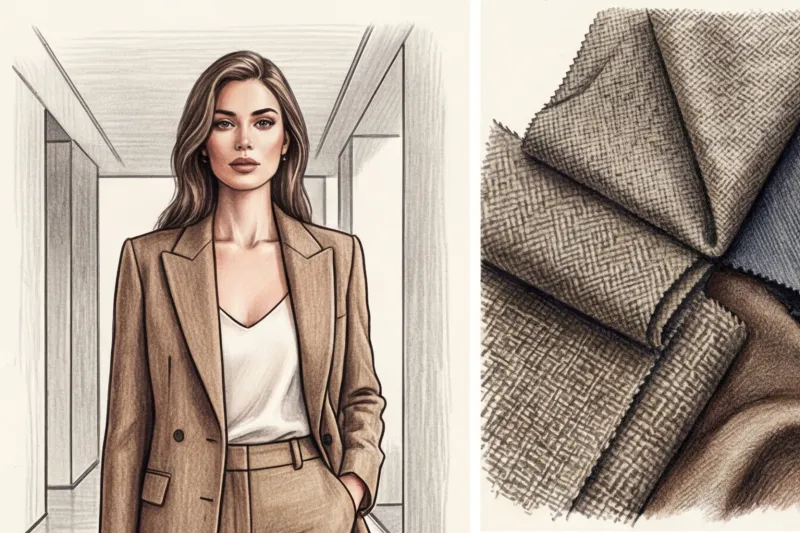
The secret to a luxurious, shape-shifting look lies in a simple rule: clothing should hold its own shape, not just cling to yours. I call this the "air rule." There should always be 1–2 centimeters of space between your body and the fabric. To retain this air as you move, the fabric must have a frame.
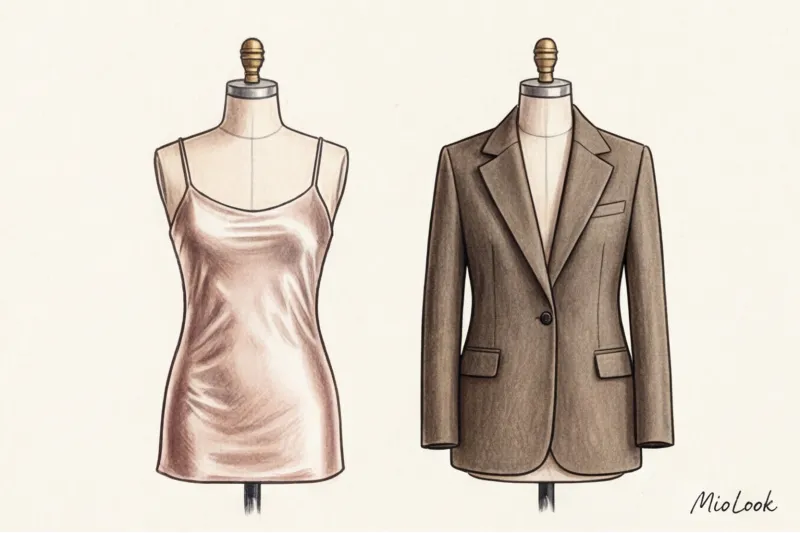
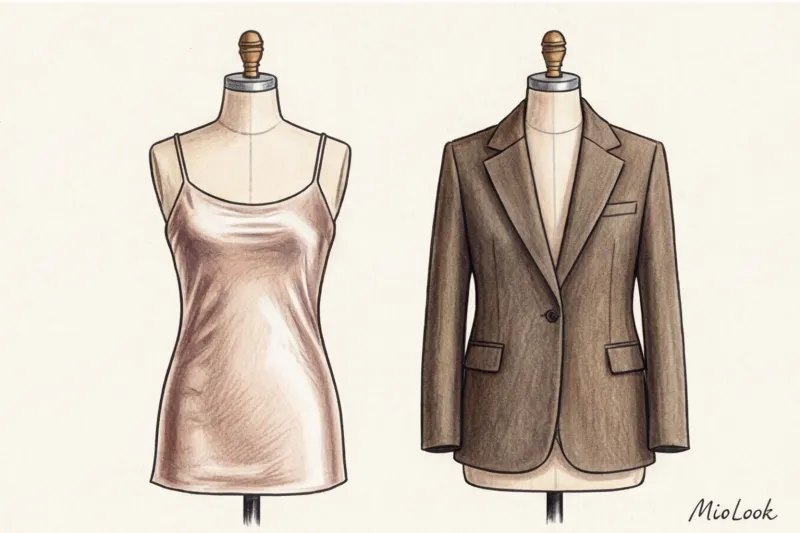
The second most important property is the ability to absorb light. Matte textures conceal uneven surfaces, while any shiny or reflective materials (satin, silk, lurex) act as a magnifying glass for even the slightest wrinkles.
What fabrics are treacherously emphasizing the belly?
- Thin viscose jersey. The fine rib knit is especially tricky. It stretches in the raised areas, making the stripes wider and accentuating the volume.
- Shiny satin, silk and satin. Even in loose slip dresses, these fabrics shimmer with every step, outlining the contours of the body.
- Thin stretch denim. Jeans that contain more than 3% elastane quickly lose their shape around the stomach and begin to cling to it like leggings.
Allied materials that "hold the frame"
- Thick cotton (from 180 g/m²). A high-quality cotton shirt maintains a straight silhouette. High-quality basic shirts of this type from brands like COS or Massimo Dutti typically cost between €60 and €90.
- Suit wool and tweed. A jacket made of good wool acts as a soft exoskeleton. It defines the shoulder girdle and falls in a perfectly straight line.
- Thick denim (100% cotton). Classic jeans without added stretch perfectly tighten the lower part of the abdomen in a natural way.
- Matte crepe and gabardine. Ideal for dresses and skirts - they drape beautifully and heavily without catching on underwear.
Geometry of styles: how to hide your belly with clothes without losing your waist
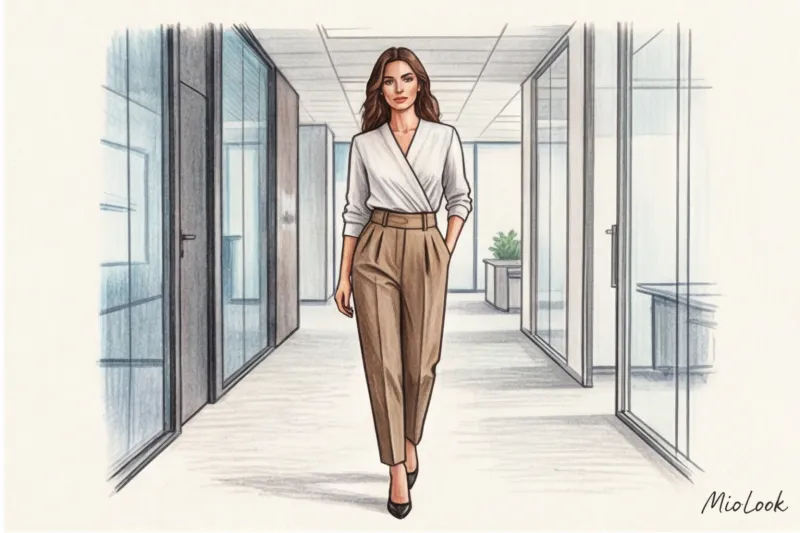
The right fit is a mathematical exercise, using darts and draping to create optical illusions. Let's start with pants. Forget about the extremely high-rise waistband that ends just below the ribs—it visually shortens the torso and makes the stomach look bulky. Your best friend is a mid-rise or slightly high waistband, where the waistband sits just a couple of centimeters below the belly button.
The real magic lies in the pleats on trousers. Many women are afraid of them, believing the folds of fabric will add width. In fact, deep front pleats create that lifesaving "air." They create volume right where the belly protrudes, while keeping the waistband narrow. The result is an elegant hourglass silhouette. We discuss proportions in more detail in this article. Larson's Classic: Style Rules for Perfect Proportions.
Asymmetrical elements work beautifully on the upper body. Wrap tops or dresses with diagonal draping literally "confuse" the eye. The diagonal line breaks the wide horizontal line of the stomach, making the waist appear smaller.
There is, however, an important limitation here. This advice doesn't work for all body types. If you have a pronounced "apple" shape (very narrow hips, slender legs, but a bulky top), too many deep pleats at the waist can make you look squat. In this case, it's better to choose straight-leg trousers without pleats, placing the emphasis on a long top layer.
Your perfect look starts here
Join thousands of users who look flawless every day with MioLook. Digitize your wardrobe and get ready-made capsule collections.
Get access — €0.99 onceOptical illusions: managing focus
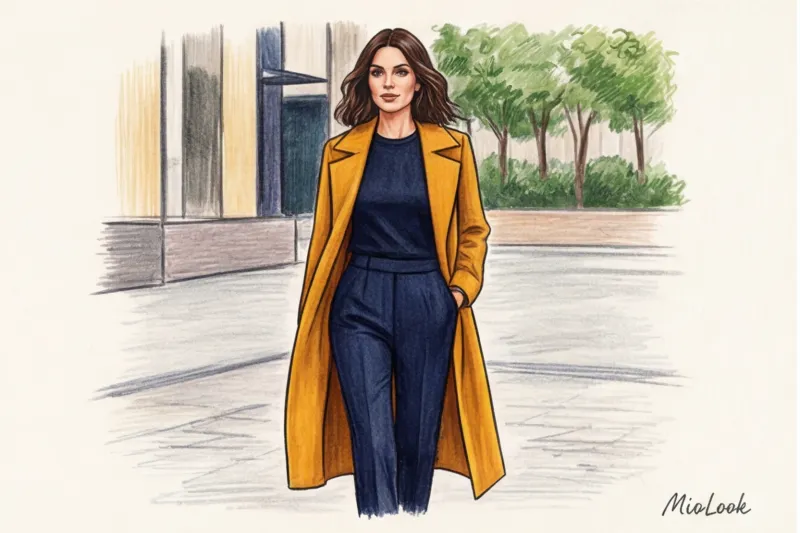
One of my favorite techniques, which I use at almost every shopping event, is the "Open Vertical" method. It's simple: you put on a base layer (like a top and pants), then layer a jacket, cardigan, or coat over it, leaving it unbuttoned. The hem of the top layer creates two distinct vertical lines that "cut off" your sides to the viewer.
When we analyzed the patterns of loaded images in the algorithms MioLook , the data showed impressive results. Adding just one contrasting vertical line (for example, a dark blue long vest over a light base) visually narrows the user's silhouette in the photo by 1-2 sizes. This is pure geometric style and visual figure correction.
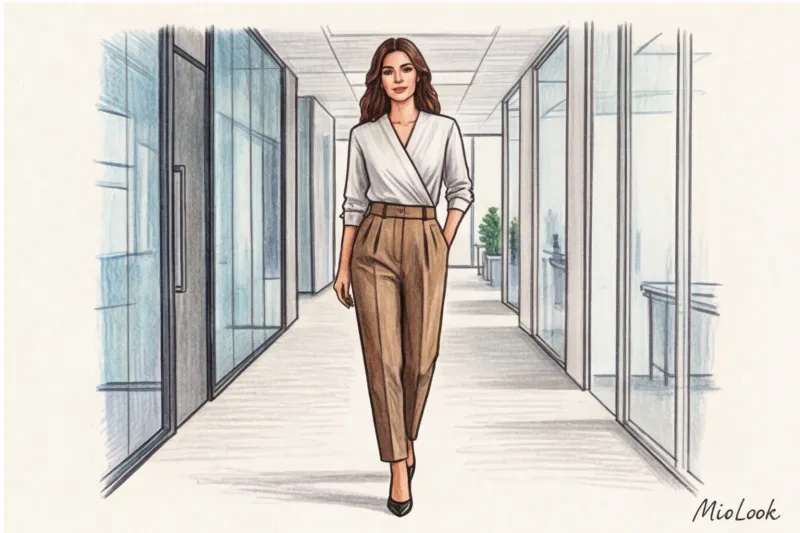
Another powerful technique is color blocking, or the rule of contrasting zones. If you don't want people looking at your stomach, give them something more interesting! Draw attention to your midsection with a beautiful V-neck, statement earrings, or a silk scarf. Or reveal your graceful ankles by slightly cuffing your pants and wearing statement shoes.
Dynamic wardrobe: when your belly size changes throughout the day
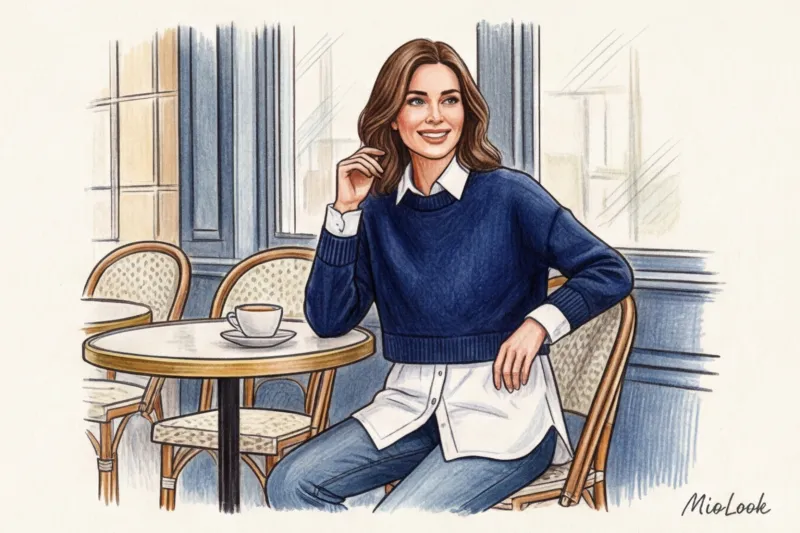
Now let's discuss something that glossy magazines prefer to keep quiet about. Our belly size changes throughout the day. Trying on the perfect pair of pants at 9:00 a.m. in the morning can turn into a chore after a big lunch by 3:00 p.m. Bloating is a normal physiological process, and your wardrobe should be prepared for it so you can confidently maintain your weight. business casual dress code until the end of the working day.
According to McKinsey's "The State of Fashion 2024" report, over 70% of women today prioritize physical comfort over strict dress codes. The industry has responded with excellent technological solutions. Look for pants with a hidden elastic waistband. Unlike old-fashioned elasticated pants, modern brands (from mass-market brands like Zara to premium brands priced at €200-300) sew elastic panels exclusively into the back or make them completely hidden within a seemingly rigid waistband.
The second life hack for a "dynamic" stomach is the "unbuttoned layering" technique. Wear a loose, heavy cotton shirt untucked, then layer a cropped sweater or suit vest over it. The sweater defines the waistline and proportions, while the loose hem of the shirt subtly conceals any fluctuations in volume below. It looks incredibly stylish and on-trend.
MioLook Checklist: 5 Steps to a Comfortable Look Before You Go Out
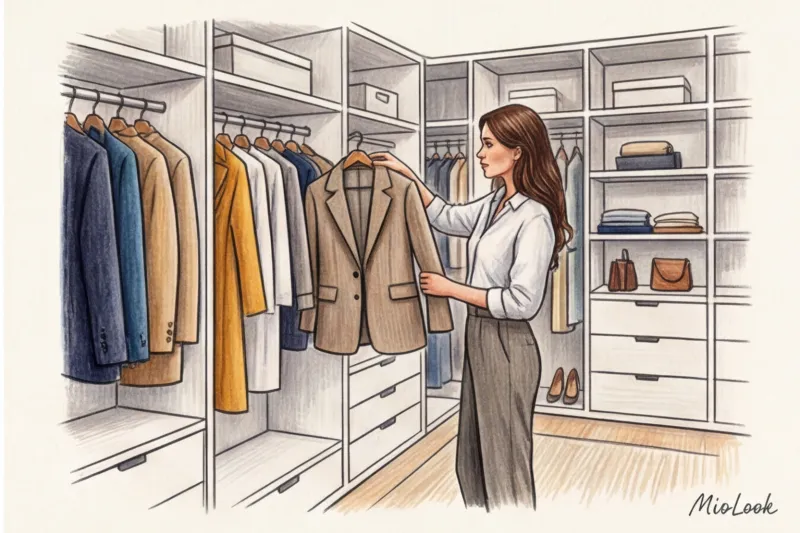
Theory is great, but style is tested by practice. Before leaving the house, run a quick self-assessment using this algorithm:
- Sit on a chair. Is your belt digging in? Can you sit like that for two hours at a work meeting? If the answer is "no," change your clothes. Clothing shouldn't hurt.
- Assess the silhouette in profile. Look in the mirror from the side. Does the fabric fall in a smooth line or does it cling tightly to your stomach, accentuating its lower half? If it does, add some thickness to the fabric.
- Check the verticals. Are there any lines in your outfit that elongate your silhouette from top to bottom? This could be an unbuttoned jacket, a long pendant, or creases in your trousers.
- Analyze the focus of attention. Where does your gaze fall the first second you look at yourself? If it's directly at a problem area, shift the focus higher (towards your portrait area) or lower (towards your shoes).
- Use your smartphone camera. Our eyes often deceive us due to our habit of looking at our own reflection. Take a quick photo in the mirror. The camera lens acts as an impartial observer and will immediately show where the proportions are out of balance.
Concealing your belly doesn't mean swaddling yourself in shapeless meters of black fabric or suffocating in a tight corset. The secret is to use clothing as a clever architectural design. Invest in thick, matte fabrics, choose the right pleated trousers, and don't be afraid to add vertical layers. Your comfort should always come first, because a woman who is truly stylish is one who is comfortable in her own clothes.