Busting the Myths: How Plus-Size Women Shouldn't Dress
Over 12 years of working as a personal stylist and colorist, I've noticed a disturbing pattern: 90% of my new plus-size clients (size 50 and up) come to me with a wardrobe that resembles a warehouse of shapeless dark tunics and slouchy dresses. Every time we discuss... How should plus-size girls dress? The first thing I hear during a consultation is, "I just want to hide it all." But the "hide your figure" paradigm is the most harmful myth, no longer applicable to modern styling. It's not only outdated, it produces the exact opposite of the intended effect.
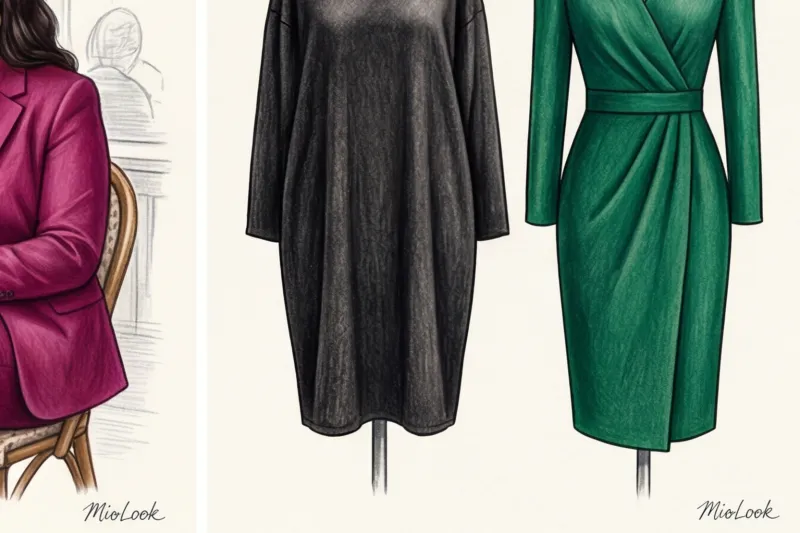
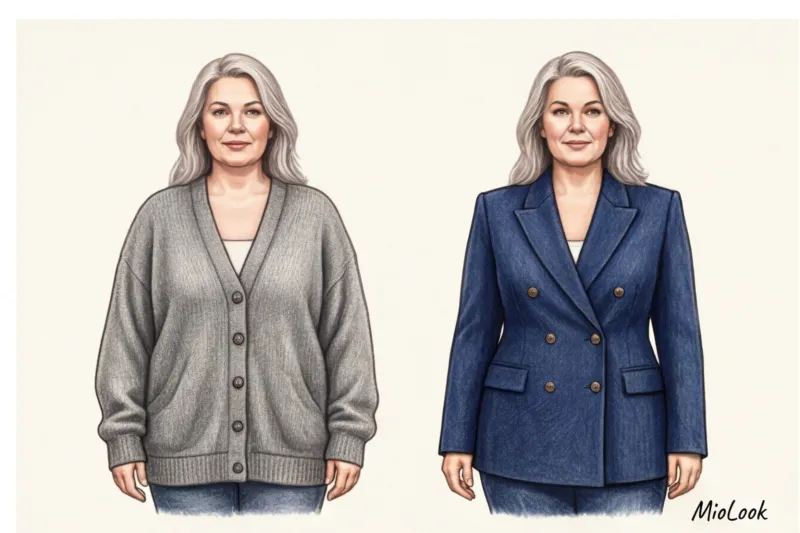
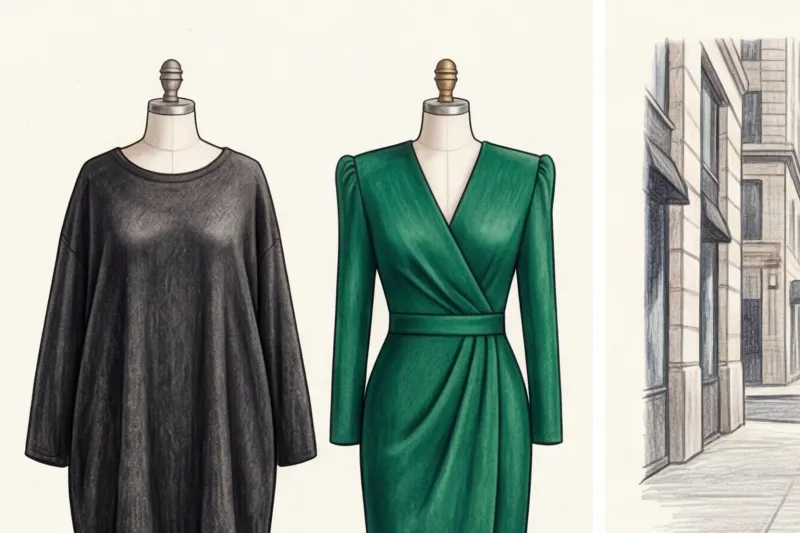
Let's look at this from the perspective of cut architecture. Any shapeless garment, devoid of darts and sharp lines, always conceals the narrowest part of your figure (usually the underbust, waist, or ankles) and visually adds volume to the widest point. If you wear a loose robe that hangs directly from your protruding chest or stomach, to others your entire silhouette becomes equal to the width of this widest point. Your figure instantly takes on a monumental appearance, turning into a heavy rectangle without any definition or movement.
The second main enemy of a stylish silhouette is thin viscose or cotton jersey with a weight of less than 200 grams per square meter. I completely understand why women gravitate toward such items: they stretch well, don't restrict movement, and feel safe. But in professional styling, "comfortable" doesn't always mean "beautiful." A flimsy cardigan or thin long sleeve top won't hold its shape. Such fabric acts like a second skin: it treacherously clings to every fold, digs into your underwear, and highlights even the slightest unevenness of your figure that you weren't even aware of. It's like trying to build a house without a supporting frame, simply by stretching fabric over branches. A silhouette needs density to create correct, clear lines. If you're unsure of the density of your basic pieces, take stock: MioLook smart wardrobe and create image collages—the app will help you look at your outfits from a different perspective and identify which items are truly holding up and which are long overdue for a replacement.
"Comfort in plus-size clothing should be achieved through proper fit and the percentage of elastane in dense fabric, and not through shapeless, flimsy material."
And here we come to the third, perhaps most painful, mistake: buying clothes a size (or even two) too small in the hopes of losing weight or "slimming." One of my clients stubbornly bought size 48 pants when she was actually a size 52, sincerely believing the stiff fabric would act as shapewear. But the physics of materials doesn't work that way. A garment that's too small will never make you look smaller. It will bunch up in tight horizontal folds at the crotch, the buttons at the chest will come apart, creating gaps, and the shoulder seams will creep up toward the neck. A small garment on a larger body only screams that the garment is literally bursting at the seams, creating a "caterpillar" effect. The perfect fit is when the fabric glides smoothly over the figure, without creating tension at any point.
The Oversize Trap and the Myth of "Slimming" Black
Many women confuse a proper semi-fitted fit with a total oversize. The difference between the two is stark. The proper "air" between your body and the garment is a gap of 2-4 centimeters. This creates the optical illusion that you're smaller than the clothes you're wearing. A baggy fit, on the other hand, is defined by a shoulder dropped to mid-forearm, a huge armhole reaching to the waist, and a complete lack of definition. This fit visually adds 10-15 extra pounds, turning a statuesque figure into a shapeless cloud of fabric.
Now let's address the biggest color misconception. It's commonly believed that black is a flawless, slimming color. As a colorist, I often explain the physics of color: black does indeed absorb light, but there's one critical detail—the quality and texture of the fabric itself. If you wear a black dress made of inexpensive, shiny polyester or fine knit, the fabric will begin to show off telltale glare in areas where it's stretched (on the stomach, hips, or chest). These glare instantly reveals actual volume, creating contrasting gray spots on the body's most prominent parts.
Black works as an ideal concealer only on dense, completely matte textures that completely absorb light (for example, high-quality suiting wool, heavy crepe, or dense linen). In practice, deep, complex shades are much more effective at creating a visual vertical line and narrowing the silhouette: rich navy, elegant burgundy, emerald, dark chocolate, or graphite. They don't emphasize creases as overtly as black, make the look significantly more expensive, and allow for a more elegant integration. bright accents in a business look or casual style.
Silhouette Architecture: The Main Secret of Plus-Size Style
My academic background in design gave me a tool I now use when working with every wardrobe. This principle sounds simple, but it forever changes the way we look at things: clothing should be treated like architecture When people ask me how plus-size girls can dress stylishly and without unnecessary fuss, I always start with building a framework.
Forget about items that simply cling or wrap around the body. Your main goal is to create an external frame for your figure. A soft, shapeless knit cardigan will obediently follow and accentuate every fold on your back because it has no structure of its own. In contrast, a thick wool suit jacket with shoulder pads or a stiff gabardine trench coat will hold its shape regardless of what's underneath. Carefully crafted cutting lines They create a new, toned silhouette. The body feels free within this "architectural structure," but the external appearance appears as composed and prestigious as possible.
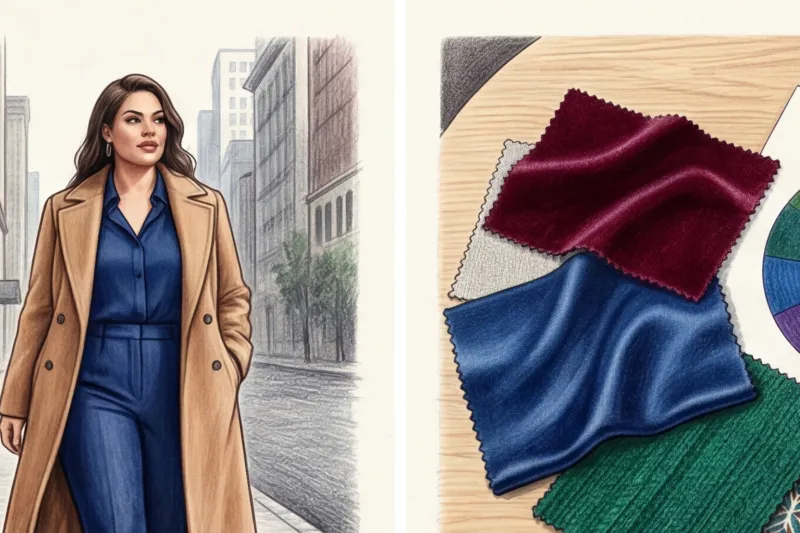
Another fundamental concept from the world of design that every woman should know is scale In styling, we call this the principle of proportionality. You know that common image: a gorgeous, statuesque plus-size woman carrying a micro-bag in the style of early Jacquemus or wearing a delicate chain with a tiny pendant? It's a fatal optical error.
The principle of proportionality is ruthless: a small crossbody bag with a thin strap, slung over a larger figure, visually makes that figure appear even larger solely through the contrast of scale. Against the backdrop of a tiny accessory, the body appears more massive. Choose proportionate details: if a bag, then a structured tote at least 35 centimeters wide (even in the $50-$150 range, you can find excellent rigid models); if prints, then large and expressive patterns; if jewelry, then chunky bracelets, large earrings, or a prominent watch with a wide strap.
Access to MioLook for €0.99 — one-time payment
A smart AI stylist will select the perfect look, taking into account your architectural lines and figure scale.
Get access — €0.99 onceFinally, we come to the most powerful tool: attention management. In visual art, there is a concept focal point The human eye is lazy: it looks exactly where it's pointed. If you wear a shapeless gray dress, people's gaze will wander randomly to the widest part of your figure. But if you skillfully create focal points, you become the director of others' attention.
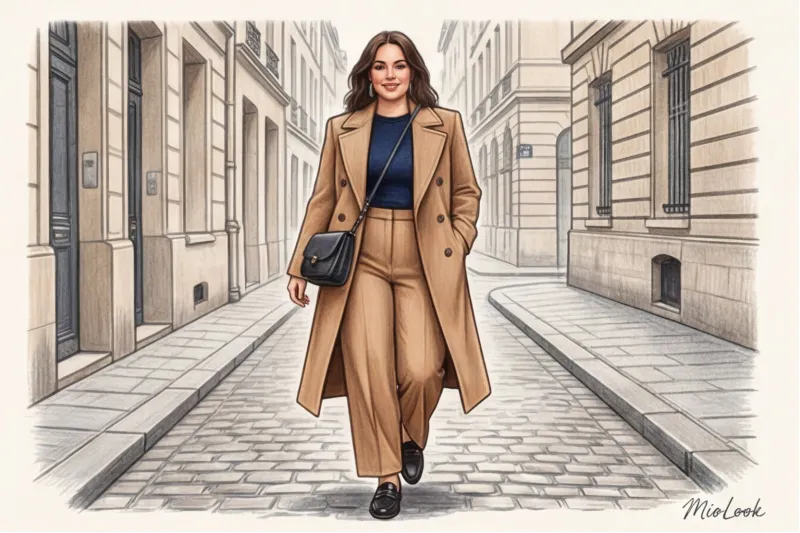
How does this work in practice? Our goal is to draw the eye to your absolute best assets. Do you have a beautiful bust? Use a V-neck or wrap top to accentuate your décolletage. The vast majority of plus-size women (especially those with an apple shape) have incredibly graceful legs. Show it off: wear cropped, straight-leg trousers that reveal slender ankles and add statement shoes like loafers with a chunky buckle. And, of course, focus on your portrait area. Bright lipstick, a large brooch pinned to the lapel of a jacket, or a silk scarf instantly and reliably draw the eye to your face.
Rule of thumb for today: When putting together your look in front of the mirror, ask yourself this question: "Where does my gaze fall in the first second?" If the focal point is on your stomach or hips, rather than your face, décolleté, or ankles, feel free to add an architectural accessory of the right scale.
Color Theory for Plus Size Women: A Colorist's Advice
My passion for painting and classical art gave me a crucial insight: what works on canvas also works flawlessly on the human body. When it comes to dressing for plus-size women, most advice boils down to the dreary rule "black is slimming." But as a certified colorist, I always start with the physics of light. Color isn't just paint on fabric; it's a wave of light that reflects off your clothes and right onto your face.
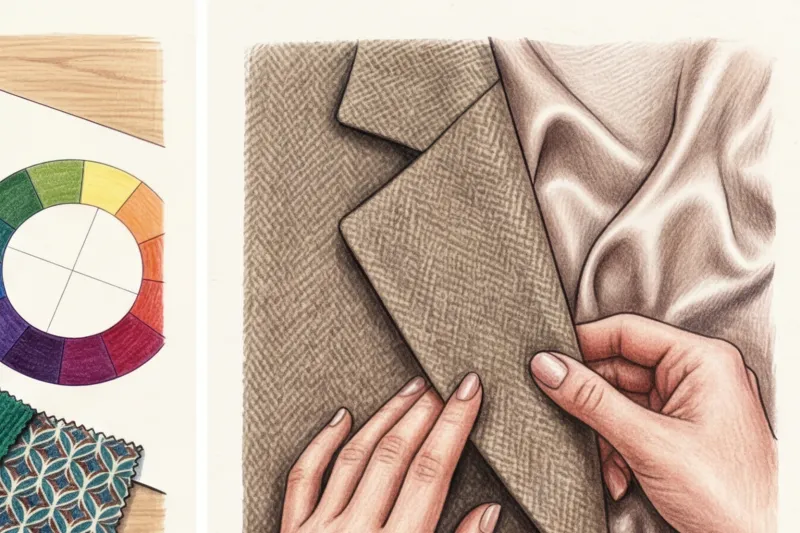
If you wear a "slimming" but dull and unflattering shade of black or earthy gray, right at the throat, it will cast a sickly greenish shadow on your chin and cheeks. As a result, your figure may appear slightly smaller, but your face will take on a tired, haggard appearance. A well-chosen palette works differently: it shifts the focus from your figure's features to the freshness of your face and the brightness of your eyes.
Proper color distribution It's based on a simple optical law: we place light or bright (accent) shades in the "portrait zone," and dark or muted shades in the "correction zone." For example, if you want to draw attention away from heavy hips, wear deep sapphire or chocolate-colored trousers and place a blouse in a refreshing shade (pearl, dusty pink, icy blue—depending on your skin temperature) near your face. Your interlocutor's gaze will automatically be drawn to the bright spot near your face.
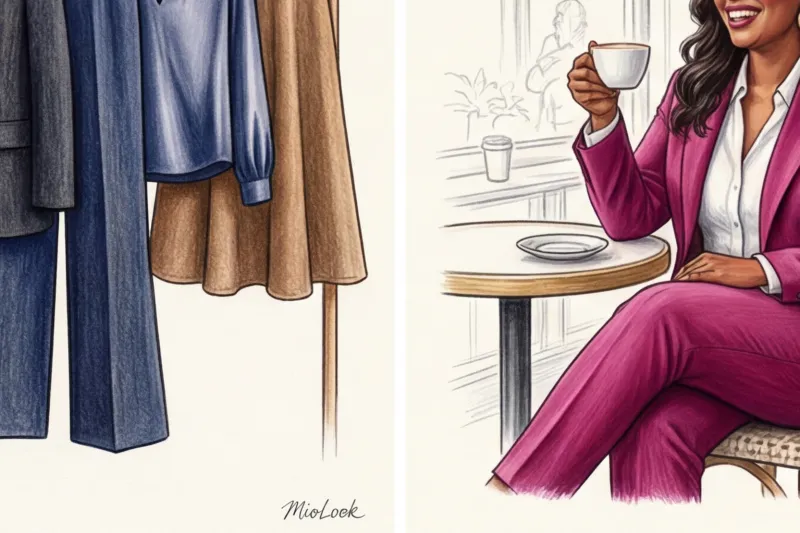
The next powerful tool is color vertical This is when your top and pants (or skirt) are matched tone-on-tone, creating a single, uninterrupted line. A monochrome look or a classic pantsuit draws the eye from top to bottom, without tripping over the horizontal boundaries between contrasting pieces. This visually elongates the silhouette, while minimizing volume. An investment in a high-quality suit in a deep shade (such as emerald or burgundy) for €150-250 made of dense viscose will pay for itself ten times faster than a collection of mismatched blouses.
"The human brain is lazy: it only reads the brightly lit edges of a silhouette, ignoring the darker areas. This should be exploited shamelessly."
It is on this particular feature of perception that the technique is built. color block with dark inserts on the sides The famous "illusion dresses," brought into fashion by Stella McCartney, literally create a waist where none physically exists. The center panel of the dress is made of a light or bright fabric, while the side panels are black or dark blue. From the front, only the light center panel, shaped like an hourglass, is visible. However, there's a caveat: this technique is contraindicated in those with pronounced hip asymmetry or if the side seams deform when walking—the illusion only works on smooth, shape-resistant fabric.
To avoid buying unnecessary items and learn how to create such striking monochrome blocks from your current arsenal, I recommend digitizing your items. Upload them to MioLook app — Its smart wardrobe feature is great for seeing which color schemes you already have and which elements (like the right dark trousers to go with your favorite light blouses) you're missing.
How to wear prints without making them look bigger
One of the most pernicious myths is that plus-size women shouldn't wear patterns at all. It's possible and appropriate, but with a mathematical approach to the scale of the print. The main enemy of a curvy figure is the tiny flower, known as a "millefleur." Placing tiny, scattered flowers over a large area creates a magnifying glass effect: against the backdrop of a microscopic pattern, the canvas (i.e., the figure) appears monumental. Medium and large patterns are your best bet. A proven rule of thumb for stylists: the size of one print element should be roughly the size of your fist.
The second important aspect is the choice of the design. In the battle of "Geometry vs. Romanticism," geometry always comes out on the side of plus-size. Why avoid delicate watercolor washes and vague floral motifs? Because the lack of clear boundaries in the design visually blurs the silhouette itself, making it appear looser and more voluminous.
Clean geometric lines, diagonal stripes, abstract brushstrokes with sharp angles, or the classic medium-sized houndstooth work as an architectural framework. They establish rhythm, create dynamism, and compose the figure, enticing the eye to read the fabric's structure rather than the volumes of the body beneath.
Ideal Fabrics for Plus Size: What to Buy and What to Avoid
Have you ever wondered why the same $150 sheath dress fits completely differently depending on whether it's made of thick gabardine or flowing viscose? The secret to dressing elegantly for plus-size women often lies not in the intricacies of the cut, but in the physical properties of the material itself on the hanger.
Stop being afraid of hard fabrics. Form stability should become your fashion religion. Your main goal is to create a clear frame that will dictate the silhouette, rather than cling limply to the body. Your best friends for this are: heavy cotton (such as 12-ounce denim or crisp poplin), linen with added viscose or lavsan (pure linen wrinkles too much and loses its shape by midday), classic gabardine, and high-quality suiting wool (marked Super 100s and above). These materials act like a lightweight, invisible corset: they smooth out the relief and maintain the designer's intended line geometry.
To avoid making a mistake when choosing something in the store, use my favorite "fist squeeze rule." Firmly squeeze the hem of the item in your hand for 5-7 seconds, then release. If the fabric immediately starts to wrinkle or hang limply like a rag, feel free to leave it on the hanger. It won't hold its shape. If the material springs back, it's a great buy.
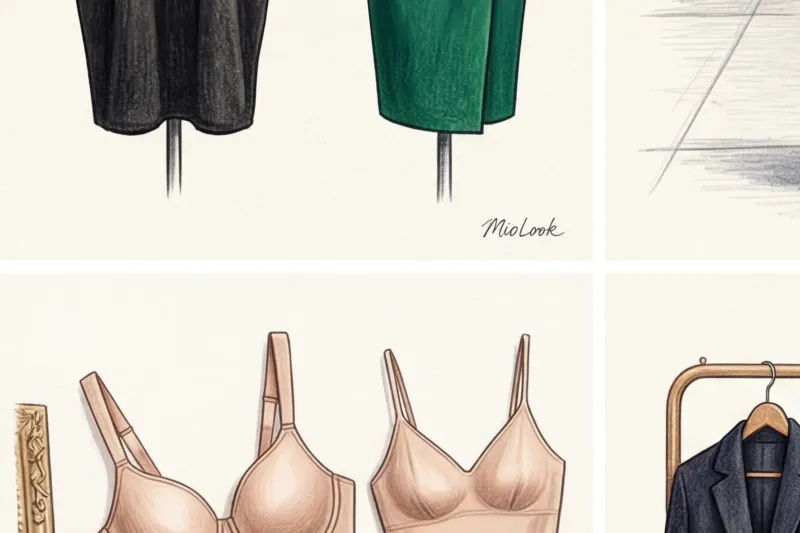
Now, about the main enemies of the architectural silhouette. Thin viscose knits (especially those that let the light shine through in the fitting room), satin, lurex, and velor work strictly against you. They have virtually zero density and maximum fluidity. Because of this, they treacherously highlight the slightest nuances: from the texture of lace lingerie to microscopic folds you didn't even know existed.
Here, the pure physics of light reflection comes into play. Glossy, shiny textures (silk, satin, sequins, velvet) reflect light in different directions. The human eye perceives these intense reflections as additional volume, visually expanding the area where the garment is worn. Moreover, the reflection concentrates at any curve, acting as a spotlight on uneven surfaces.
Matte textures—thick matte crepe, wool, and cotton—absorb light. They create a deep, even, and visually more compact silhouette without optical distortion. When choosing between a cheap, shiny blouse and a matte shirt made of thick cotton, always invest in the latter: the right fabric structure will do half the styling work for you.
Access to MioLook for €0.99 — one-time payment
Start creating perfect looks with the help of artificial intelligence and choosing items with the right texture.
Get access — €0.99 oncePlus-Size Wardrobe Essentials: Investing in the Right Fit
The foundation of any functional wardrobe is the capsule concept, first proposed in the 1970s by London boutique owner Susie Fox. But when we discuss how plus-size women should dress, the classic "10 essentials" lists from glossy magazines often fall flat. The reason is simple: standard wardrobe staples rely on neutral colors, while a plus-size capsule wardrobe should be built exclusively on impeccable cut and rigid textures.
Let's look at three fundamental investments that will form the foundation of your wardrobe and serve you for years to come.
Structured Jacket: Your Personal Volume-Cutter
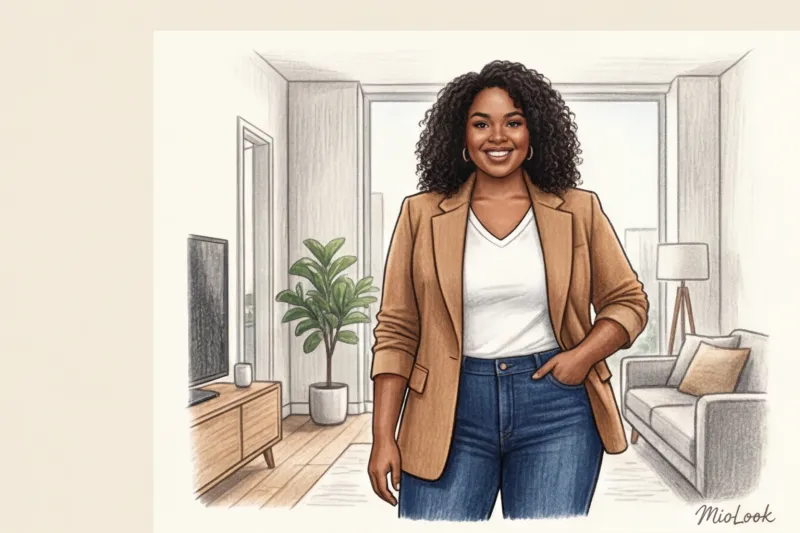
The perfect jacket is your number one purchase. Forget those snug, fitted jackets made of soft knit fabric that merely follow the contours of your body. We're looking for a straight-cut jacket, slightly longer (covering the widest part of your hips), and definitely one with a structured shoulder band.
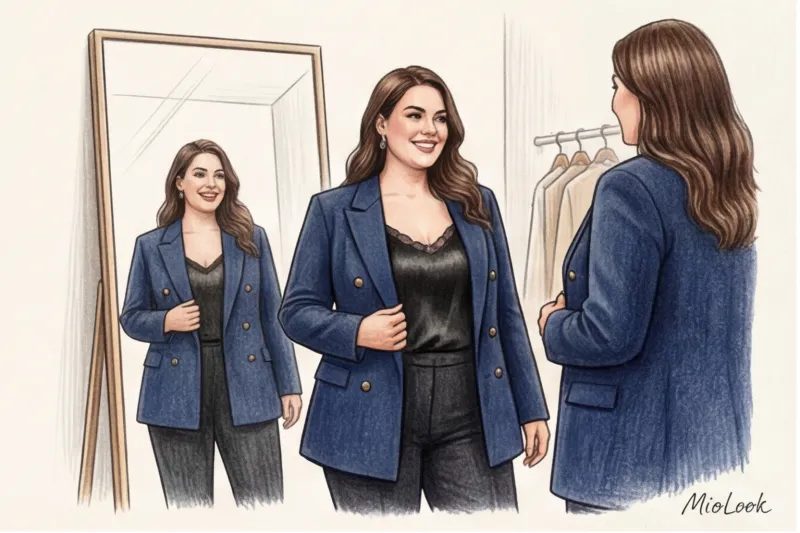
Why is this so important? Pure geometry is at work here. By wearing this jacket over a contrasting top and leaving it unbuttoned, you create a rigid, architectural frame. The jacket's straight sides literally "cut" excess volume at the sides, creating that elongating vertical line of color within. The shoulder pads balance the proportions, creating a defined shoulder line and drawing attention away from the heavy bottom. I'll be frank: Finding the perfect jacket in a mass-market store is difficult. If you have a large bust or sloping shoulders, buy a garment that fits well and confidently take it to a tailor for a back adjustment. This will cost an extra $30-40, but the results will be worth every penny.
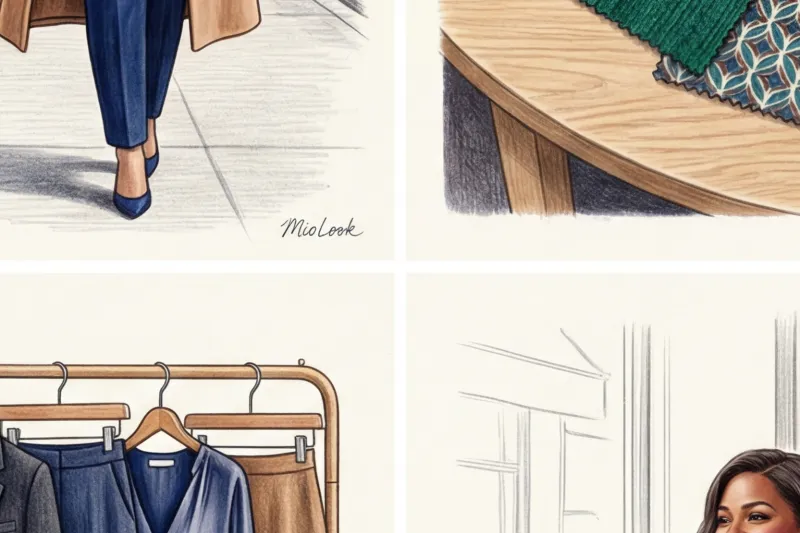
Trousers and Jeans: The Power of Heavy Denim
The main pitfall when choosing bottoms is seeking maximum stretch for the sake of false comfort. Remember: heavy denim without elastane (or with up to 2%) is your personal sculptor. Yes, you'll have to "live in" 100% cotton Levi's jeans or high-quality alternatives for €100-€150 for the first few days to allow the fabric to adapt to your figure. But unlike thin jeggings, heavy fabric will shape your silhouette, cinch your midsection, and won't treacherously fold in when you walk.
- Landing: High waist only. It secures the narrowest part of the torso—the waist (or the area under the bust, where it should be visually), preventing the formation of "rolls" above the waistband.
- Cut: Safe options include confident, straight pipes or flowing palazzo pants in a thick suiting fabric with pleats. Tapered skinnies throw off proportions, turning the figure into an inverted triangle.
Dresses: A Smart Silhouette Builder
Dresses in the basic capsule collection should sculpt the figure in one movement. My absolute favorite is the classic wrap dress , brilliantly designed by Diane von Furstenberg. Its diagonal cut creates a waist even where there physically isn't one, while the V-neckline reveals the neck and collarbone, creating the perfect focal point.
The second required element is - thick cotton shirt dress The shape-stabilizing collar highlights the face, and the vertical row of buttons creates a slimming rhythm throughout the entire look. It can be worn on its own or as a lightweight duster over jeans and a top. The third option is semi-fitted A-line silhouette It flares out delicately at the bottom, concealing the nuances in the hip area.
"The perfect foundation doesn't require you to lose weight for summer. It takes your current measurements and, using the right patterns, packages them into a luxurious, easy-to-understand shape."
Assembling such a functional capsule wardrobe requires discipline. To avoid buying yet another duplicate item that doesn't hold its shape and doesn't coordinate with the basics, I highly recommend digitizing your closets. A great way to do this is by uploading your items to MioLook The app will help you visualize your current base and clearly show whether you have enough structured elements to create effective verticals.
Lingerie Styling: The Invisible Foundation of Your Look
According to large-scale industry research, over 75% of women worldwide choose the wrong bra size. But the most common and critical mistake I see during practical wardrobe reviews is a band that's too loose. Women often choose a wider band, trying to compensate for insufficient cup depth.
Why does every stylish look start with the right bra? It's a matter of clean body architecture and restoring bust-waist proportions. When a stretched band can't support weight, the breasts sag and visually rest on the stomach. Natural geometry is disrupted, and the silhouette becomes a monolithic rectangle, devoid of curves.
I'll recall one of the most telling cases in my practice. A woman came in wanting to conceal her "protruding belly," planning to buy another batch of shapeless tunics. But we started with the basics. We simply selected a bra with the right support, her breasts lifted into place, and she visually gained a waist without having to work out. A space opened up between her décolletage and her stomach—that life-saving "air" that instantly lightens the figure.
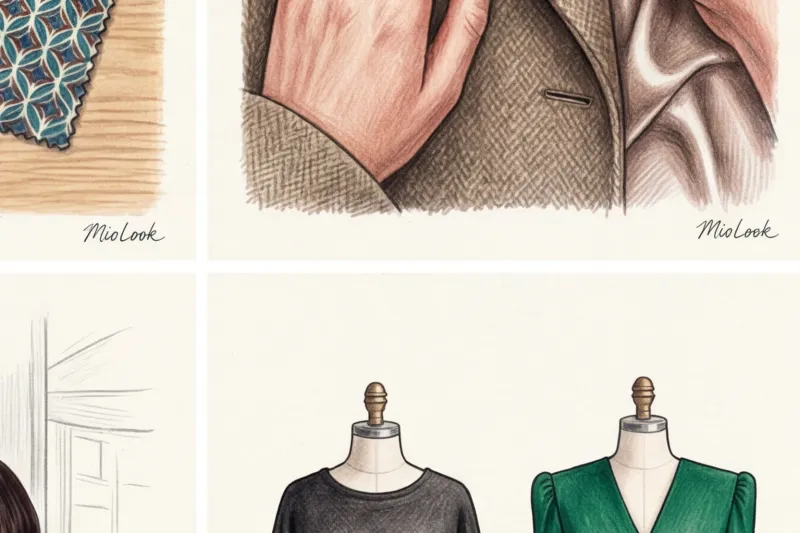
The next crucial step is shapewear. A huge problem with the plus-size industry is its obsession with aggressive shaping. Remember this: harsh "constriction" is harmful to health, compresses internal organs, and, paradoxically, only ruins appearance. You can't fool the physics of tissue. If you squeeze the volume too much in one area, the dense fabric will inevitably push it out, creating new sagging folds above or below the corset.
Modern lingerie styling is based on a completely different concept—"smoothing" the contours of your figure. High-quality microfiber shorts or bodysuits (for example, those with 3D knitting technology) act as a makeup primer. They don't try to make a size 54 look like a size 48. Their purpose is to create a perfectly smooth base over which the fabric of your dress or pants will glide smoothly without catching on your natural folds.
This logically brings us to the final rule: wearing seamless underwear for a smooth silhouette under clothing. You absolutely need panties with laser-cut edges. Classic elastic bands that cut into the thighs show through even thick gabardine, ruining the aesthetic of the look. An important tip from a colorist: basic seamless underwear should match your skin tone, not your clothing. This way, it will remain invisible even under a white summer shirt.
To document your successful finds—brands with the right fits, current measurements after bra fitting, and successful panty styles—I recommend using digital tools. You can upload this information to MioLook wardrobe so that basic parameters are always at hand while shopping.
Your perfect look starts here
Join thousands of users who look flawless every day with MioLook.
Get access — €0.99 onceChecklist: How to Create a Stylish Everyday Look for a Curvy Figure
Imagine a typical morning: fifteen minutes before you go out, you're standing in front of the mirror, unsure of your outfit. To finally settle the question of how plus-size women can dress stylishly and without morning stress, I suggest using the "four-second" method. It's a practical cheat sheet that teachers at the London Central Saint Martins This is called a basic silhouette audit. Go through these four points before you walk out the door.
- Second one: we look for vertical lines. Take a look at your silhouette. Are there any lines that visually elongate your height? Optical illusions work flawlessly: a diagonal wrap dress, an unbuttoned cardigan over a contrasting top, crisp, pressed creases on trousers, or a long sautoir necklace. If the eye glides easily from top to bottom, without tripping over horizontal straps or awkward color gradations, the foundation is laid correctly.
- Second two: assessing the density of the fabric. Gently tug the fabric at your hips. Does it hold its shape? Remember the golden rule of styling: clothing should serve as an architectural framework for your figure, not cling treacherously to every curve. If the material feels like soft pajamas, it will inevitably highlight even the slightest imperfections in your silhouette.
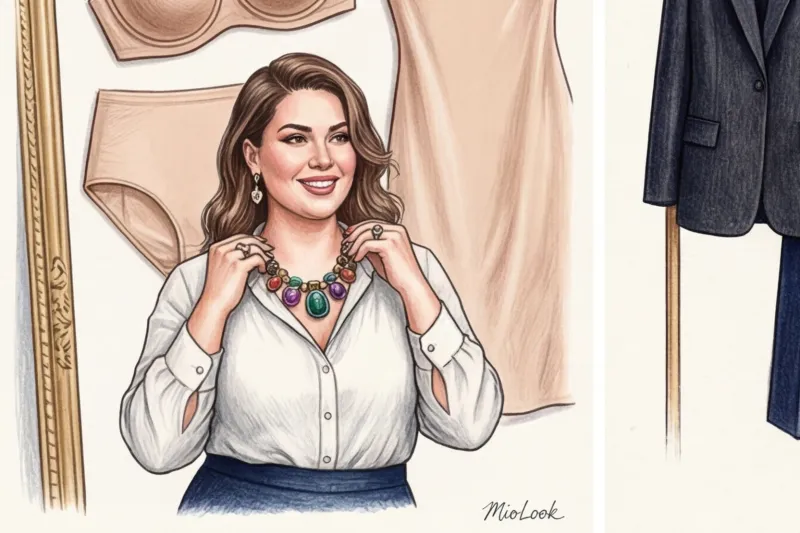
- Second three: the presence of a focal point. Attention-grabbing is what separates a random outfit from a well-thought-out look. Where do you want to direct the eye? A bright matte berry lipstick, statement shoes (like $120 deep wine-colored loafers), or a large vintage brooch pinned to your face instantly steal the show.
- Second four: checking the "air". Grasp the fabric with your fingers at the waist or forearm. Is there enough air space between your body and the garment? There should be at least 2-3 centimeters of space. This gap makes the figure appear lighter, creating the illusion of fragility beneath the dense fabric.
To make this morning audit truly take seconds, I highly recommend preparing tried-and-true combinations in advance. Try digitizing your favorite structured jackets and perfectly-fitted trousers with MioLook Smart wardrobe functionality allows you to create ready-made looks with the right accents and just the right amount of "airiness" right on your phone, saving you the stress of leaving the house every time.
Conclusion: From Self-Acceptance to Impeccable Style
Last week, in the fitting room of a European boutique, my client Anna, after trying on a double-breasted suit made of heavy gabardine, paused in front of the mirror. She didn't tug at the edges of the jacket or instinctively suck in her stomach, as she usually did. Instead, she simply squared her shoulders and smiled at her reflection. In that moment, Anna understood the most important truth I try to convey in every consultation: true style has absolutely nothing to do with the size on the tag.
For years, mass-market fashion has been telling us that fashion ends at size L. But that's not your fault. It's purely an economic factor: it's cheaper for brands to produce a batch of shapeless polyester tunics than to invest tens of thousands of dollars in developing anatomically correct patterns for a size 54, taking into account bust darts and back curves. Size is simply a number, a technical parameter for a tailor, like foot length or wrist circumference. When we discuss, How should plus-size girls dress? I always emphasize: stop waiting for the "perfect" weight to look fabulous. Your life is happening right now.
"Clothes should serve you, not you serve them. If a garment doesn't fit well, the problem lies solely in the poor cut, not your figure. Choose textures that complement your curves."
Let's summarize our guide. To permanently move away from hiding in hoodies and boring black, your new approach to your wardrobe should be based on three fundamental rules:
- Focus on architecture: We don't cling to the body; we build a beautiful, structured framework around it. Use shoulder pads, stiff collars, and straight, semi-fitted silhouettes. Even a basic $60 jacket will look like $600 if it has a defined shoulder line.
- Dense fabrics: Your best tool is a fabric that holds its shape even on a hanger. High-density cotton (from 250 g/m²), structured wool, and heavy denim with minimal elastane content (up to 2%) are textures that gather and lift the silhouette.
- Smart work with color: Use vertical color to visually elongate your height and color blocking to create optical illusions. Place light and bright shades in the portrait area, drawing attention to your face.
But theoretical knowledge only works when you put it into practice. So I'm giving you a specific assignment. Open your closet today, set aside exactly twenty minutes, and conduct a ruthless inventory. Your primary goal is to remove any flimsy knits.
Get out all those thin viscose sweaters, shapeless rag cardigans, and long sleeves made of fine jersey that treacherously outline the contours of your underwear and every fold of your body. Bag them up. Why am I so categorical? From a color and physics perspective, thin fabric creates visual "noise." It reflects light unevenly along the curves of your figure, adding volume where there isn't any. This soft, characterless material is physically incapable of providing either support or an elegant silhouette. Recycle these items without the slightest regret.
To make the process easier and more effective, I recommend immediately digitizing those items that have passed your rigorous selection. Add the remaining structured jackets, heavy trousers, and well-cut dresses to the app. MioLook Visualizing your wardrobe on your smartphone screen miraculously relieves psychological stress. You stop seeing "things I can't fit into" and start thinking in terms of ready-made formulas—stylish capsules that perfectly suit your current measurements.
Ready to get started?
Try a free plan—no commitments required. Start building your perfect wardrobe now!
Get access — €0.99 onceRemember: a flawless look begins with self-love and respect for your proportions. Choose dense fabrics, work boldly with color, and create the architecture of your outfit every day. You are beautiful today, and your clothes should loudly and confidently declare it to the world.
Guide Chapters
Summer clothes for plus-size women: style and comfort in the heat
How to beat the heat and look classy if you're curvy? We'll explore the biggest plus-size summer wardrobe mistakes and fabric selection guidelines.
Can plus-size women wear oversized clothes? Style secrets
Should you hide your figure in loose-fitting clothes or cling to them in knitwear? Learn how to choose voluminous plus-size clothing to look slimmer.
How to Choose Jeans for Plus Size Women: Fabric and Cut
Forget shapeless jeggings! Stylists' tips on how to choose the right thick denim for the perfect silhouette for a plus-size figure.