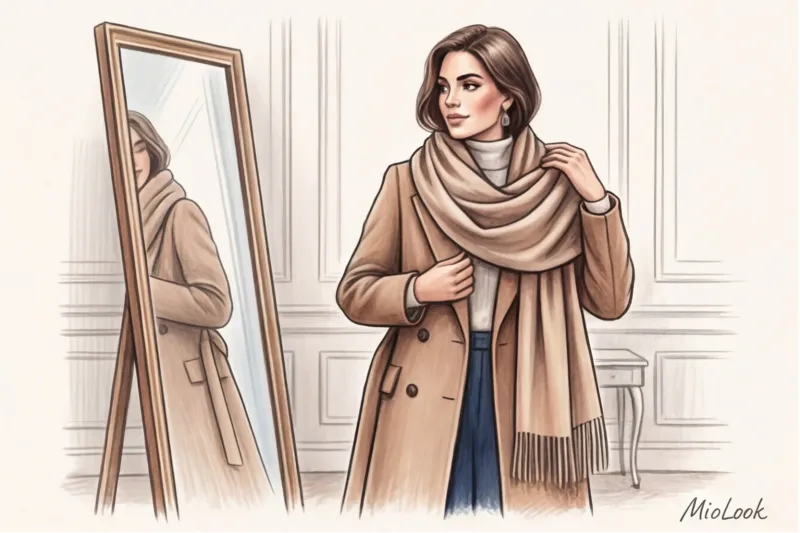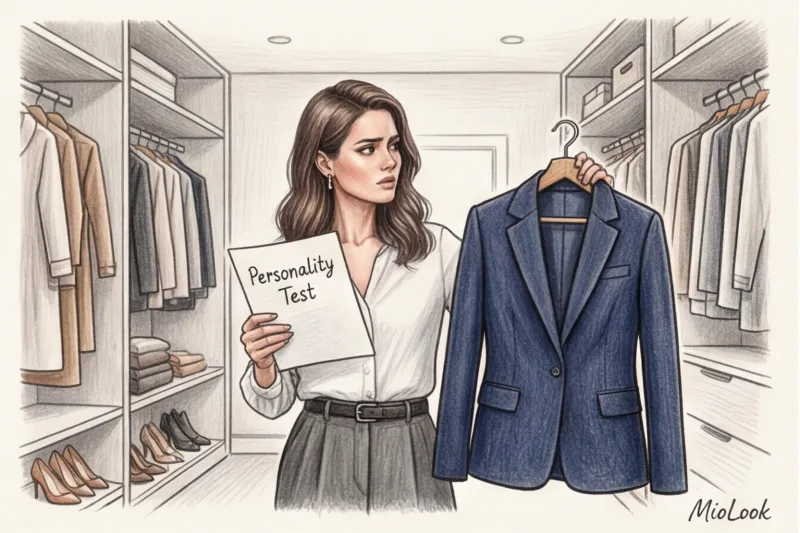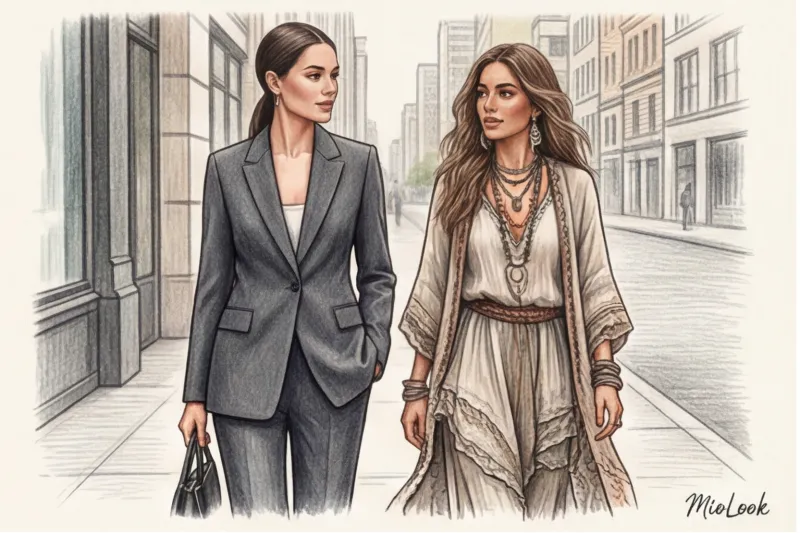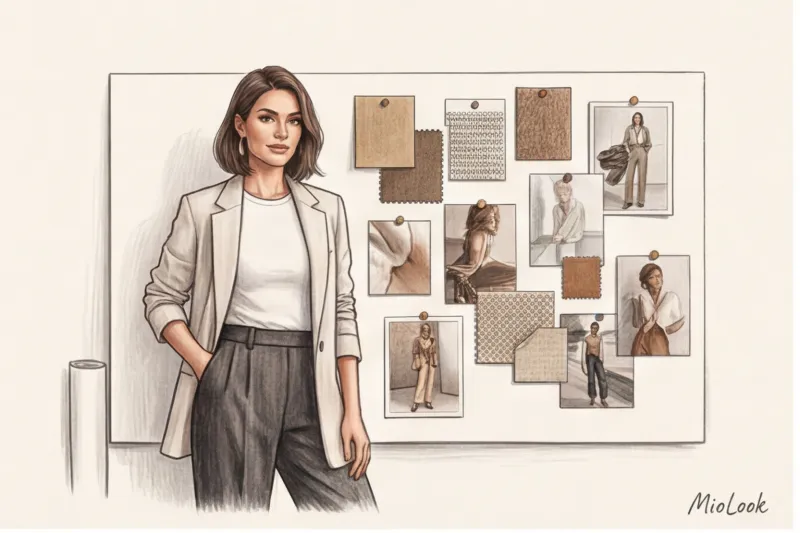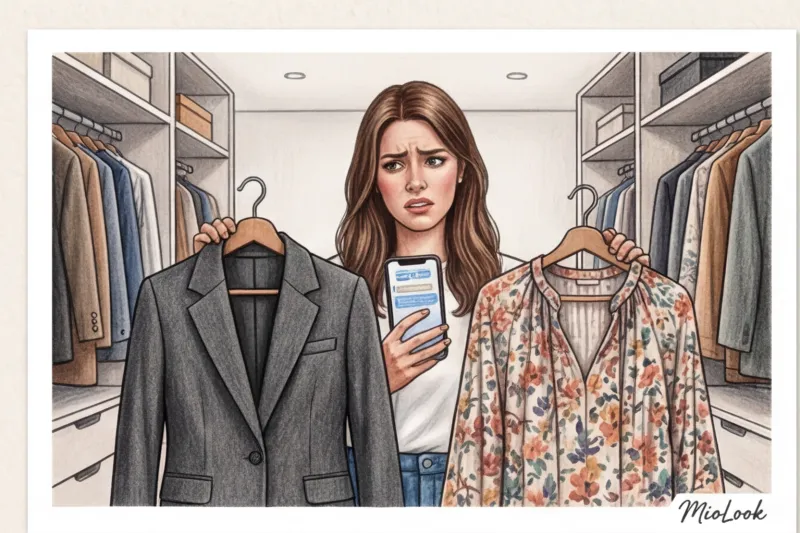
You honestly answered 50 questions on an online quiz, learned you're a "Rebel" type, happily bought a studded leather jacket... and the next morning, you realized you have absolutely nothing to wear to the boardroom. Sound familiar? In 12 years of working as a fashion journalist and stylist between Paris and New York, I've seen this mistake hundreds of times. Women try to force a psychological profile onto themselves, forgetting the harsh realities of their lives.
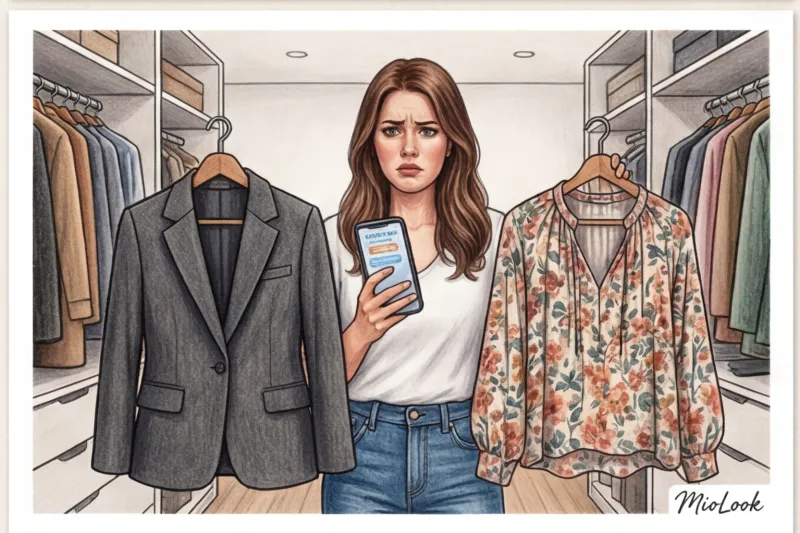
Popular online tests are useless for wardrobe selection. Why? Because they assess your inner state or secret desires, completely ignoring your physical makeup (facial features, body type) and the demands of your profession. Unlike typical articles that suggest searching for yourself in esoteric matters, we'll take a "reverse engineering" approach. If you truly want to understand... How to identify your style archetype , we will have to combine the analysis of the natural lines of your appearance with strategic career goals.
We've covered how this system fundamentally works in more detail in our complete guide. Style Archetypes: How to Express Expertise Through Clothing Today, we'll move on to some rigorous practice and a step-by-step algorithm that will rid you of the "theatrical costume" effect.
Why Online Psychology Tests Are Ruining Your Wardrobe
Let's immediately distinguish between two concepts: psychological archetype (who I am on the inside) and stylistic archetype (what message I convey to the world). These are far from always the same thing. Statistics are merciless: about 80% of people who choose their style solely based on the results of psychological tests fail to incorporate it into their everyday wardrobe.
One of my clients, a top manager in a conservative banking sector, took the test and scored "Creator." She began incorporating asymmetrical culottes, bright prints, and chunky plastic jewelry into her office dress code. The result? Partners stopped taking her seriously in negotiations. Her inner "Creator" conflicted with her external goal of projecting reliability.
"Clothing not only changes how others perceive you, but also your own cognitive abilities. This phenomenon is called Enclothed Cognition."
A study by Northwestern University researchers (Hajo Adam and Adam Galinsky, 2012) demonstrated that when subjects donned a white coat described as a "doctor's coat," their attention span increased dramatically. When the same coat was described as "artist's clothing," the effect disappeared. What you wear literally programs your brain. Therefore, if you want authority, your clothes should project that authority.
Access to MioLook for €0.99 — one-time payment
A smart AI stylist will select the perfect look based on your natural features and goals.
Get access — €0.99 onceStep 1. Visual audit: what your natural features say about you
Professional stylists never begin their work with the question, "Who do you want to be?" We start with geometry. The natural lines of your face and body are a rigid foundation that's futile to argue with. This method won't work if you're trying to completely erase your true nature for the sake of a fleeting trend.
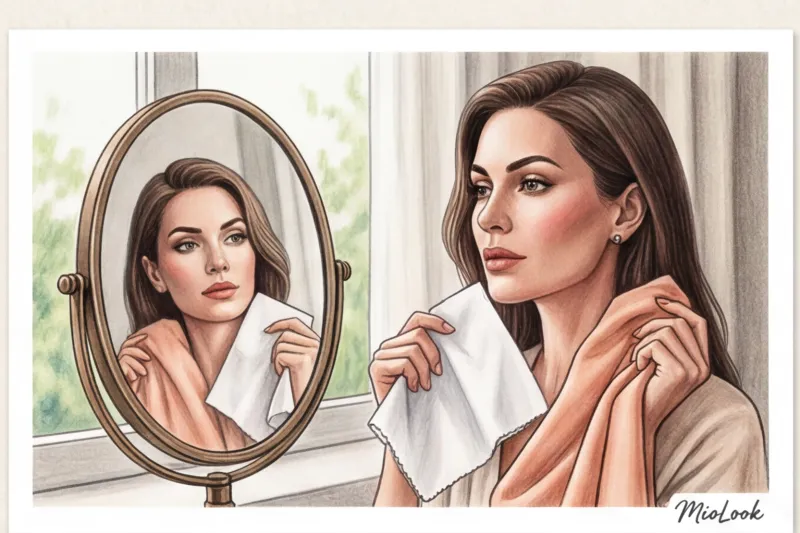
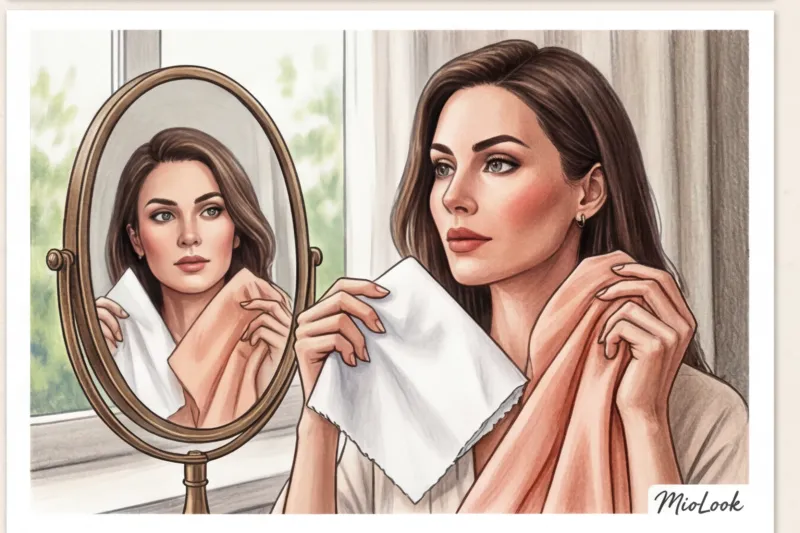
Take a mirror and analyze three parameters:
- Lines and bone structure: Do you have sharp cheekbones, straight shoulders, and a defined chin? Your appearance calls for static lines. This is the territory of the "Ruler" or "Sage." You need fabrics that hold their shape: cold-spun wool, heavy gabardine, or cotton with a weight of at least 180 g/m². If your lines are smooth and rounded, you're suited to dynamism and softness (like "Esthete" or "Guardian"), where silk, viscose, and cashmere are ideal.
- Contrast: How much contrast does your hair color have with your skin and eyes? High contrast (such as porcelain skin and black hair) easily supports dramatic color blocking and pure colors. Low contrast calls for complex, dusty shades and monochrome.
- Texture: Smooth, porcelain skin and shiny, straight hair dictate sleek textures in clothing (silk, satin, smooth leather). Textured, curly hair and freckles resonate beautifully with suede, corduroy, linen, and chunky knits ("Seeker," "Creator").
Step 2. Strategic planning: what problem does your image solve?
Clothing is a visual shortcut, the quickest route to the other person's brain. A Princeton University study (Todorov et al., 2006) found that it takes people just 0.1 seconds to form a first impression of you based on your face and appearance. Subsequent interactions only confirm this initial impression.
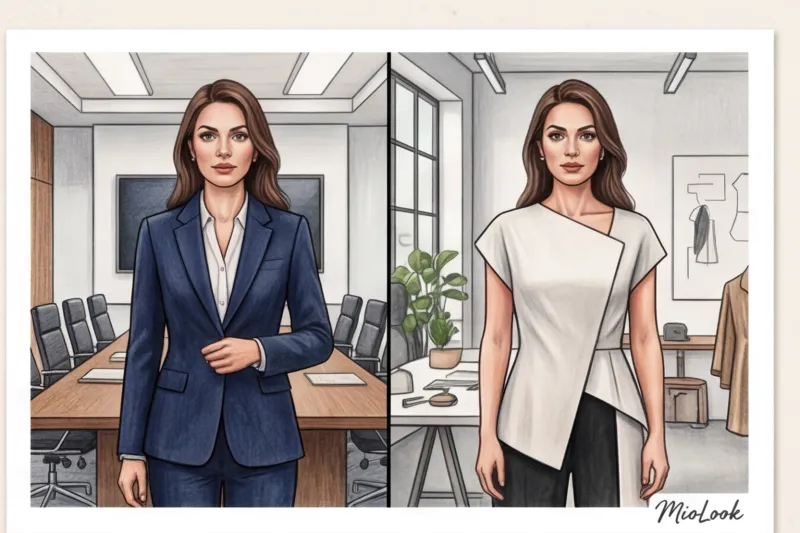
At the first consultation, I always ask clients a rigorous framework of three questions. Ask yourself these questions right now:
- Who is my target audience today? (Investors in an IT startup expect you to have the relaxed confidence of a premium hoodie, while law firm clients expect you to be impeccably armored in a three-piece suit.)
- What should they think about me in the first 3 seconds? (For example: “She is expensive, competent, but you can approach her with a question.”)
- What position do I want to hold in a year? (Dress for the job you want, not the one you're currently stuck with.)
Your perfect look starts here
Join thousands of users who look flawless every day with MioLook. Upload your items, and the algorithm will create a capsule wardrobe tailored to your needs.
Get access — €0.99 onceStep 3: How to Identify Your Style Archetype: The Intersection Method
Now we're creating a Venn diagram. Your ideal style lies precisely at the intersection of three circles: your natural talents, your professional goals, and your personal physical comfort. If you remove even one element, the system collapses.
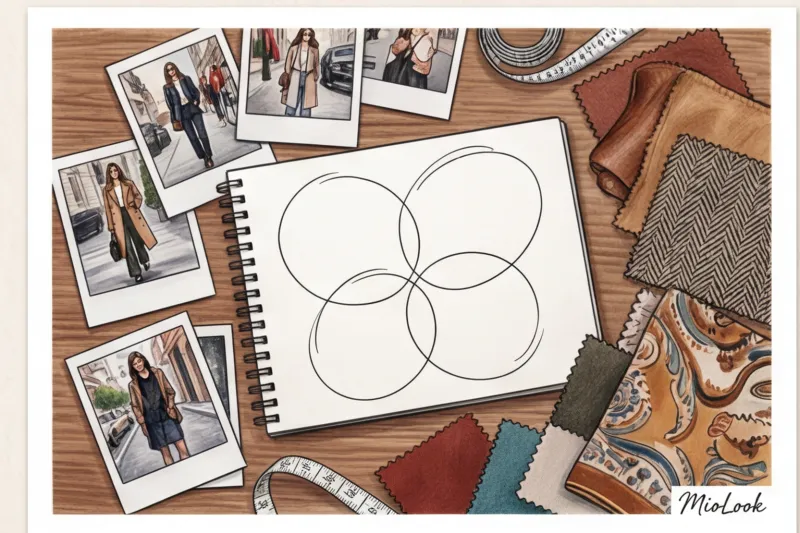
The secret of expensive and complex images lies in 70/30 rule Never dress in a single archetype from head to toe—it looks flat and theatrical. Choose a Core Archetype (70% of the look) and a Shadow/Augmented Archetype (30%).
The basic archetype defines the foundation: cut, silhouette, primary colors, and basic pieces (coats, trousers, jackets). The shadow archetype manifests itself in the details: fabric texture, embellishments, toe shape, and print.
Example from practice: You work as an analyst, and your base is the "Sage" (70%). This means clean cuts, monochrome, a lack of unnecessary details, and brands like COS or Massimo Dutti. But inside, you're a "Magician." We add 30% magic: a complex, asymmetrical, handmade silver pendant, a deep plum jacket lining, or a perfume with notes of incense and black pepper. You adhere to the dress code, but remain yourself.
4 basic style vectors instead of 12 complex types
Marketer Carol Pearson's classic system, adapted from Carl Jung's ideas, includes 12 archetypes. This is too complex for independent wardrobe management. I propose simplifying them into four practical stylistic vectors.
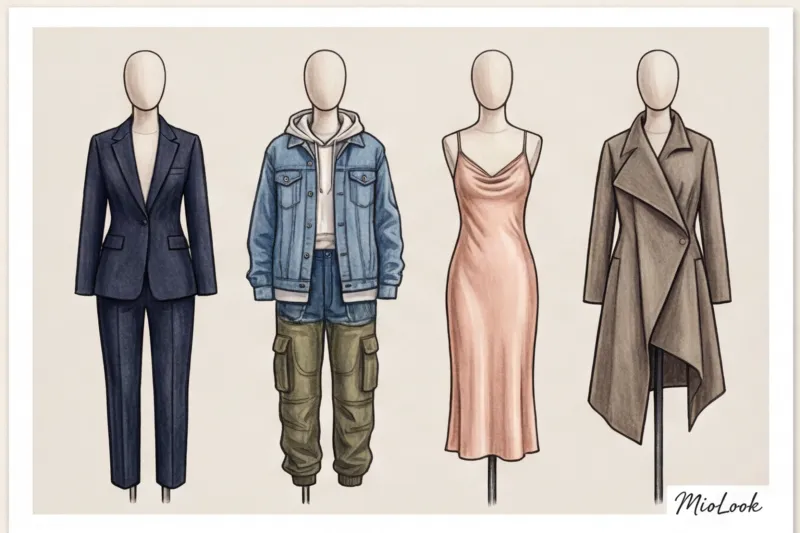
- Vector of Structure and Control (Ruler, Sage, Guardian): Conveys status, reliability, distance.
Tools: Rigid shapes, set-in sleeves, symmetry, and dense fabrics (tweed, gabardine, smooth leather). The silhouette often recalls the architectural masterpieces of Christian Dior or the strict tailoring of Saint Laurent. - Vector of Dynamics and Freedom (Seeker, Rebel, Hero): Conveys energy, action, breaking of rules.
Tools: Layered, 12oz denim, rough leather, metal hardware, and a relaxed fit. Chunky soles and an asymmetrical hem. - Vector of Aesthetics and Feelings (Nice guy, Aesthete/Lover): Conveys empathy, tactility, and enjoyment of the moment.
Tools: Tactile fabrics (cashmere, silk, velvet, angora), soft draping, a defined but not overly taut silhouette. Warm, sophisticated hues. - Vector of Innovations (Creator, Magician, Jester): Conveys unconventional thinking, creativity, and mystery.
Tools: Deconstructivism, unusual color combinations (like fuchsia and olive), signature cuts, hyper-sized pieces, or, conversely, micro-proportions. Brands in the vein of Maison Margiela or conceptual Japanese designers.
Ready to get started?
Try MioLook's free plan—no commitments required. Take photos of your items, and AI will categorize them according to style.
Get access — €0.99 onceThe biggest mistake newbies make: theatrical cosplay
The biggest pitfall when working with archetypes is a literal interpretation. Remember: the "Ruler" archetype doesn't mean you should show up to the office in a velvet robe and tiara. The "Aesthete," taken literally, devolves into vulgar lace and leopard print, and the "Sage" into a dull gray mouse.
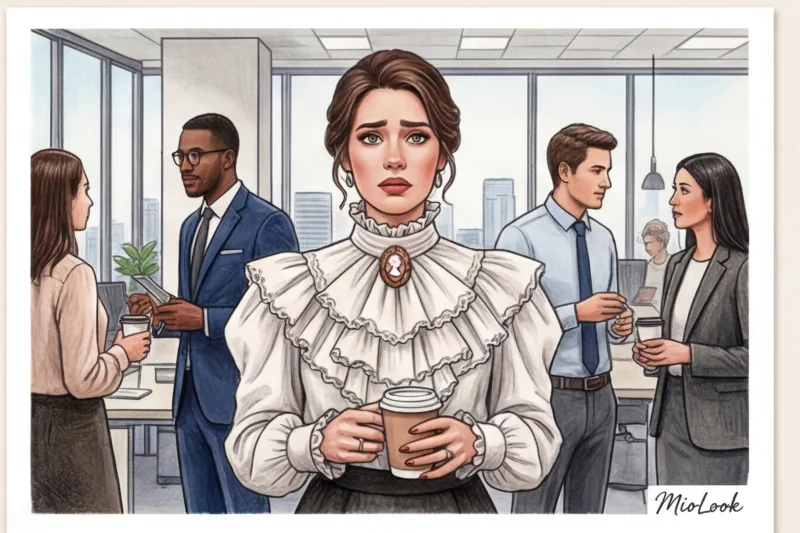
Recently, a client, the CFO of a large corporation, came to see me. Before me, she'd undergone an "esoteric" style analysis, where she'd been diagnosed with the "Magician" archetype and prescribed to wear period-style floor-length dresses, velvet capes, and pendants with enormous amethysts. People in the office began to look at her with suspicion. We had to urgently rescue her wardrobe.
How did we adapt "The Magician" for modern smart-casual? We removed all the theatrical props. Instead of robes, we chose deconstructed jackets with complex cuts (where the lapel merges into the belt). Instead of purple velvet, we chose a deep, almost black shade of "midnight blue" in matte silk. The magic remained in the complexity of the form and the depth of the color, but the uniforms became completely wearable and prestigious.
Checklist: Test Drive Your New Style Archetype
I categorically forbid my clients from buying items on the first day after determining their style vector. The brain needs to get used to the new visual information. Before completely changing your wardrobe, take a test drive.
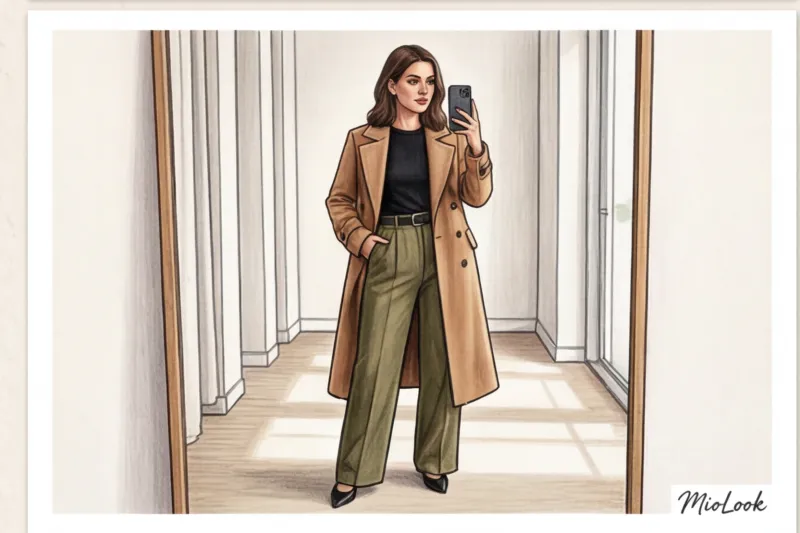
Here's your step-by-step action plan for the coming weekend:
- Shopping without a wallet: Head to the mall (from mass-market stores like Zara to high-end stores), leaving your cards at home. Your only task is trying on clothes and taking photos.
- Assembling the test capsule: Find 5 pieces that reflect your new archetypal mix (e.g. structured jacket + flowy pants + statement shoes).
- Mirror check: After putting on the outfit, ask yourself honestly: do you feel like you're wearing armor that gives you strength, or like you're wearing pajamas that make you want to hide? If your clothes dictate an unnatural, fluid motion, it's not your style.
- Collecting feedback: Show a photo from the fitting room to three people from your professional circle. Ask not, "Does this look good on me?" but, "What impression does this person make on me?" If their answers match your original goal from Step 2—bingo—you've found your code.
A style archetype isn't a life sentence or a box you have to squeeze yourself into. It's simply an equalizer. You can crank up the severity slider before difficult negotiations and add a more relaxed, tactful approach during informal meetings. Understanding your vector gives you the most important thing—control. And it's for such experiments that I recommend using MioLook app , where you can collect virtual capsules and see how your archetypes intersect before spending money on real things.