Recently, a top manager from a large IT company came to me for a consultation. She was wearing an impeccable heavy wool pantsuit (costing around €800), a sturdy, structured bag, and a simple watch. She looked like someone who made decisions worth millions. But when she took off her coat, a thick, sticky smell of synthetic cotton candy and strawberry syrup wafted through the office. Her visual status shattered against olfactory immaturity within the first few seconds. That's when we began working on... How to find your scent , which will not “cheapen” an expensive image.
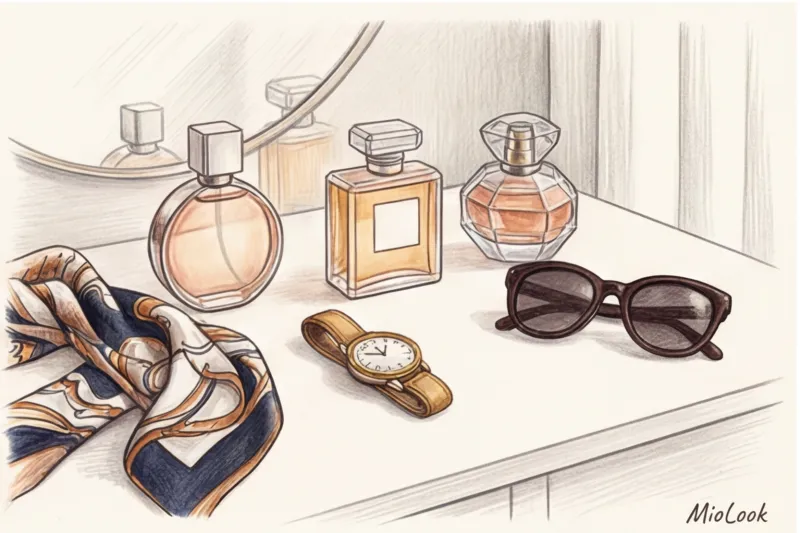
A scent isn't just a pleasant fragrance. It's an invisible accessory that lingers in your room even after you've left. We've covered this in more detail in our the complete guide to your perfume wardrobe , but today I want to talk about something more personal – the search for that signature scent.
The One-Bottle Myth: Why Looking for a Single Signature Scent Is a Bad Idea
For decades, the industry has sold us a beautiful fairy tale: a true woman should find "her" perfume at 20 and remain faithful to it until old age. This "one scent for life" concept was a brilliant marketing ploy by perfume houses of the last century, but today it is hopelessly outdated.
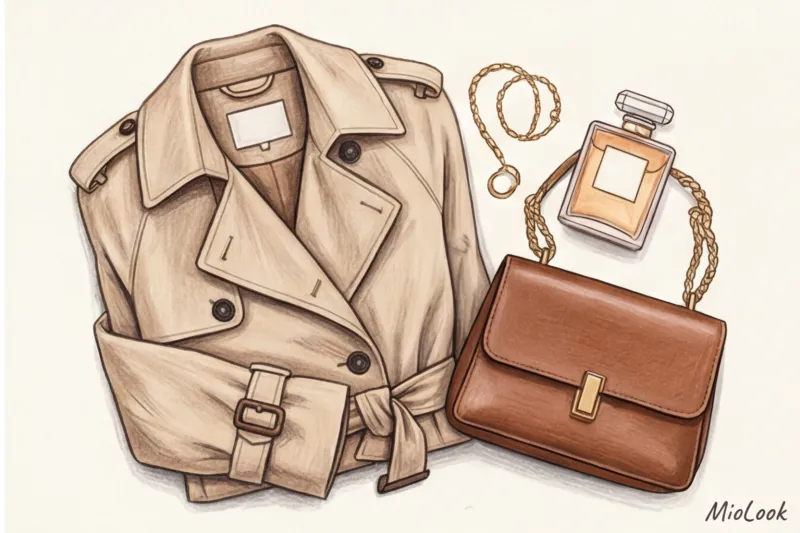
Looking for a signature scent in a single bottle is like trying to wear the same beige trench coat your whole life. Yes, it's classic. Yes, it goes with a lot. But would you want to wear it to a beach party or a New Year's Eve gala? Probably not.
Instead of searching for the mythical Grail, I suggest my clients search olfactory DNA It could be a specific note—for example, cool iris, smoky vetiver, or clean white musk—that runs through your entire fragrance wardrobe. It could be a light citrusy vetiver cologne in the morning, and a deep woody extract in the evening, but your signature will remain recognizable.
How to find your scent through clothing style and archetypes
As a certified colorist, I always draw a parallel between the visual texture of fabric and the notes of a fragrance. The cardinal rule of image styling is that a fragrance must complement the lines, shapes, and colors of your clothing. Otherwise, that same cognitive dissonance arises, as in the cotton candy story.

If you rely on 12 color types of appearance , then you know your temperature. Women with warm undertones (Autumn, Spring) naturally suit amber notes, spices, resins, and warm woods—they sound like a logical continuation of a golden skin tone. Cool undertones (Winter, Summer) often complement aldehydes, crystal white flowers, and crisp citrus.
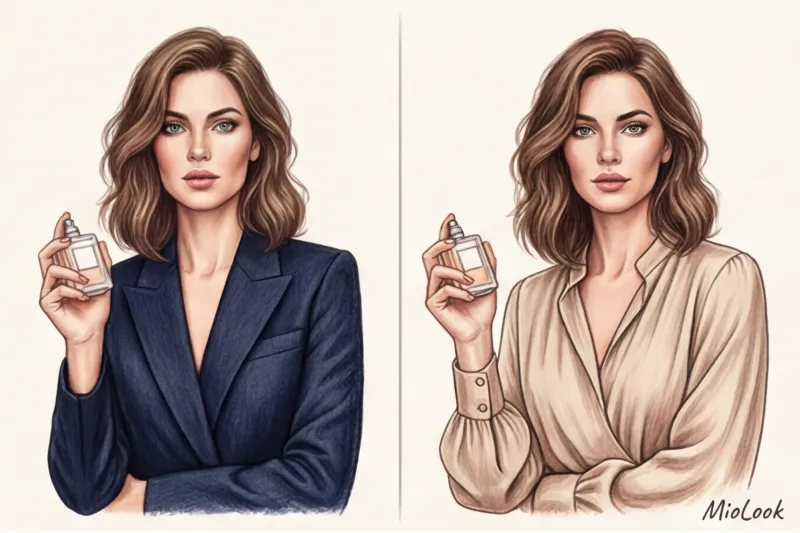
The visual contrast of your appearance (the difference between your hair, eye, and skin color) dictates the "volume" of your perfume. A high-contrast brunette will find it much easier to pull off a heavy, lingering tuberose scent than a woman with a soft, pastel complexion, who will find such a perfume overwhelming and overpowering.
Fragrances for status and business dress code
In the office, perfume acts as your personal boundaries. According to research by neuroscientist Rachel Herz (2022, psychology of smell), woody and green notes subconsciously increase the wearer's perception of competence by 14%. If you need to add a touch of formality, choose woody perfumes with sandalwood, cedar or vetiver They work like a perfectly tailored jacket: they keep your back straight and set your distance.
Gourmand (edible: vanilla, chocolate, praline) and heavy oriental scents are taboo in a meeting room. They are relaxing and associated with comfort, food, or seduction, which completely ruins the business atmosphere. archetype.
Perfume for creative professionals and smart casual
If you work in a creative industry where a formal suit isn't required, your choice might be mineral, molecular, or unconventional green compositions (the scent of freshly cut grass, fig leaves, wet asphalt, or printing ink). Read more about visuals for these industries in the article about style for creative professions.

These compositions highlight unconventional thinking while remaining close to the skin, not invading the privacy of colleagues in an open-plan office. They pair perfectly with relaxed layering, denim, chunky knit sweaters, and sneakers.
Access to MioLook for €0.99 — one-time payment
A smart AI stylist will analyze your appearance and help you create a wardrobe that perfectly complements your olfactory DNA.
Get access — €0.99 onceThe Anatomy of Perfume: What You Need to Know About Your Skin
Buying perfume based on online reviews is like playing Russian roulette. To understand why, we need to understand biochemistry. Let's start with the base—the composition pyramid. Any quality fragrance develops over time:
- Top notes (first 15-30 minutes): Citrus, light fruits, greenery. This is the "greeting" of the fragrance.
- Middle/Heart Notes (2 to 4 hours): Flowers, spices. The true character of perfume.
- Base notes (up to 24 hours on skin, up to several days on clothes): Musk, amber, resins, wood. Something that stays with you until the end of the day.

Judging a perfume by its top notes is like buying an apartment based solely on the doormat. But even more important is your skin chemistry. Skin chemistry is divided into "hot" (vessels are close to the surface, skin is warm) and "cold" (hands are often cold, skin is pale). Besides temperature, pH plays a huge role.
It's precisely because of the pH that the scandalous Baccarat Rouge 540 smells of luxurious strawberries and burnt sugar on your friend, but on you, it smells like a sterile hospital, iodine, and bandages. On hot skin, the citrus notes burn out in 10 minutes, leaving the heavy resins and spices to blossom luxuriously. Cool skin, on the other hand, can retain the subtlest floral accords for hours, but the amber risks becoming a "dirty" note.
The Main Mistakes When Finding Your Scent (And Why Coffee Doesn't Work)
Over 12 years of working with visual and olfactory image, I've seen hundreds of mistakes that cost women hundreds of euros and ruined moods. Let's look at the main ones.
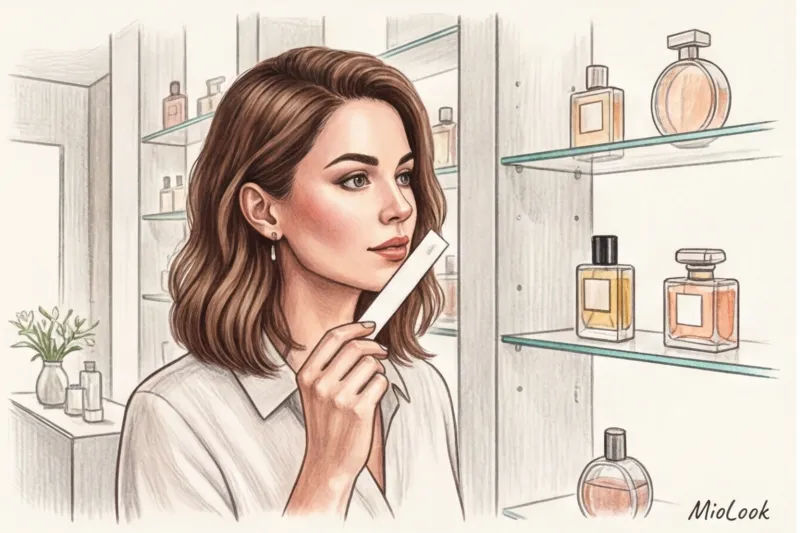
Mistake 1: Smelling coffee beans between tests.
You're always offered a can of coffee at chain stores, right? Decline it. The sharp aroma of roasted coffee is a shock to your olfactory receptors, paralyzing them rather than "clearing" them. If you feel your receptors are overloaded, simply smell the crook of your elbow (where you don't have perfume) or the sleeve of your cotton shirt. Your brain needs a familiar, safe scent to reset.
Mistake 2: Testing 10 fragrances at once.
The average human nose can only adequately perceive three or four complex compositions per visit. Beyond that, a cacophony sets in, and you simply lose track of what you like.
Mistake 3: Buying perfume immediately after applying it.
You sprayed the perfume, inhaled the magical bergamot, happily ran to the checkout, and handed over €150. An hour later, in the car, the bergamot was gone, replaced by a sultry, indolic jasmine that gave you a headache. Never buy a fragrance within the first two hours of meeting someone.
Your perfect look starts here
Join thousands of users who look flawless every day with MioLook. Digitize your wardrobe in just a few clicks.
Get access — €0.99 onceStep-by-step instructions: how to find your scent in 3 visits to the boutique
How do you choose that perfect bottle that you won't want to give to a friend a month later? My tried-and-true algorithm requires patience, but it guarantees a 100% hit. Think of it as an investment.
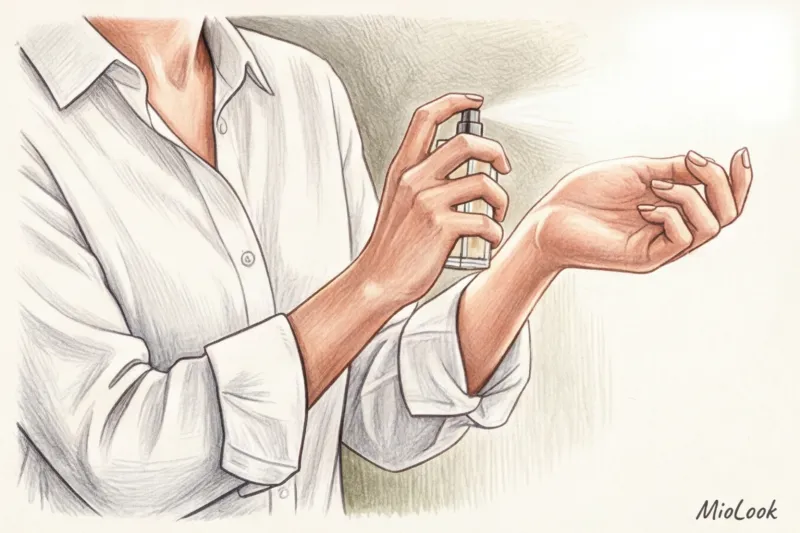
- Visit 1 "Reconnaissance".
Arrive at the store with clean skin and no perfume. Use the Michael Edwards Fragrance Wheel—a widely recognized classification system that divides scents into floral, oriental, woody, and fresh. Apply 3-4 fragrances from DIFFERENT families. only for paper blotters Label them. Take the blotters home and place them on the table. Smell them throughout the evening. Choose two favorites. - Visit 2 “Fitting”.
Return to the boutique the next day (or a week later). Apply your two favorites to your wrists (one on the left, one on the right). And then leave. Live with them for 6-8 hours. Observe how they change in the cold outside, in the warm office, and how they smell in the evening. Which one doesn't irritate you? - Visit 3 "Test drive".
If you still like one of the fragrances, don't rush to buy the bottle. Buy an official sample (decanter) of 2-5 ml. In Europe, this amount will cost you between €10-€25. Wear it every day for a week. Test it in different weather conditions and with different outfits. Only if you've used up the sample and are sad to see it go, feel free to buy the full-size bottle.
Checklist: How to Know You've Found Your "Fragrant Self"
Let's say you've completed all the testing stages. How can you be absolutely sure you've made the right choice? Check this short checklist:
- The scent doesn't "go before you." People around you first see you, your outfit, your facial expressions, and only when they get closer do they notice your scent. Perfume shouldn't knock the door down.
- It harmonizes with your base capsule. Your new perfume won't conflict with a formal jacket, a cashmere sweater, or your favorite jeans.
- You stop noticing it after a couple of hours. This phenomenon is called olfactory adaptation. The brain perceives this scent as safe, "its own," and turns off the alarm. Meanwhile, people around you continue to compliment you.
- The aroma gives you the resource you need. It makes you feel more collected, confident, or, conversely, relaxed—depending on what you were aiming for before making the purchase.
Important note: this algorithm does NOT work if you have severe hormonal imbalances, are pregnant, or are taking harsh medications. During these periods, skin chemistry changes dramatically, and even your favorite perfume can suddenly develop a sour, metallic, or unbearably indolic note.
In conclusion, I want to emphasize the most important thing: your ideal fragrance isn't the season's best-selling bottle or the perfume that garners the most compliments from bloggers. It's the scent that makes you feel like your best self. Don't be afraid to experiment, piece together your olfactory DNA, and let every look you wear sound as beautiful as it looks.