Why Text Search Isn't Powerful Against Movie Magic: How AI Is Changing the Rules of Shopping
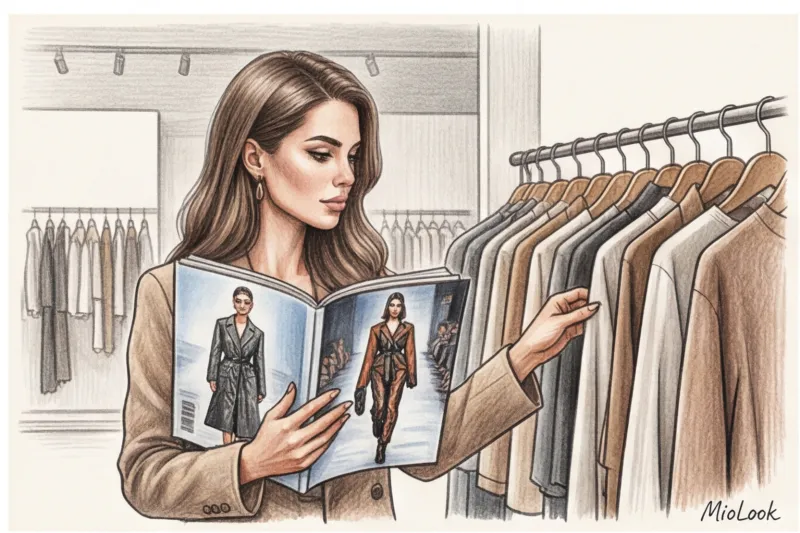
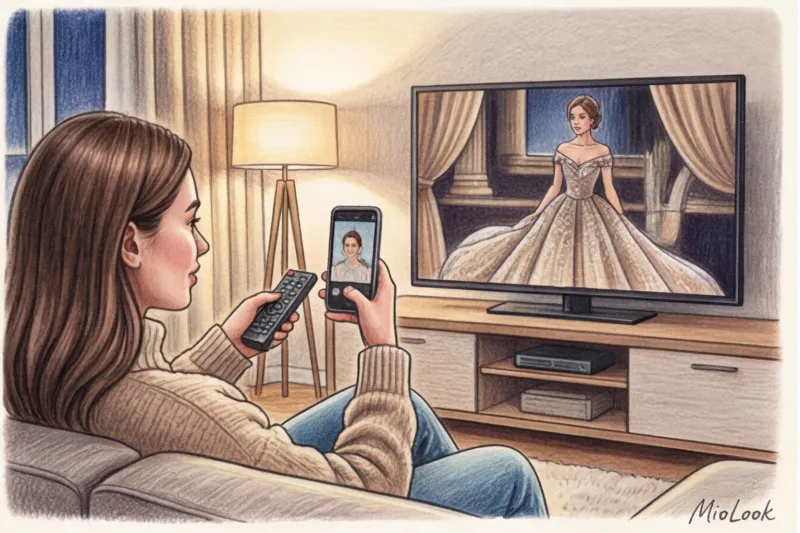
Admit it: how many times have you paused a movie to catch a glimpse of that one dress on the main character? And then opened your browser and searched unsuccessfully for something like "dusty pink midi dress with draped left side and weird collar." Online shopping algorithms don't understand metaphors. They'll return thousands of basic sundresses, but not what you're looking for.
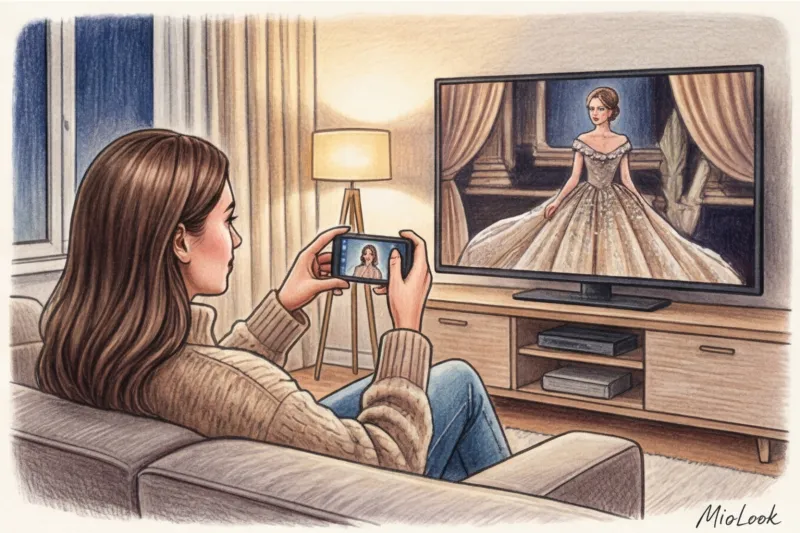
Over 12 years as a personal stylist, I see daily how words limit my clients. We can't accurately describe an architectural cut or a specific fabric shade. That's why the question of how to find a dress from a photo on someone has become a major revolution in my approach to shopping. AI-powered visual search analyzes the silhouette, not your attempts to find the right term. We've covered how these algorithms work in more detail in our complete guide. Find clothes by photo: smart shopping in seconds.
The numbers speak for themselves: a large-scale study by the analytics agency WGSN (2024) showed that using visual search increases purchase accuracy by 37% and reduces return rates. An image contains hundreds of data points that text simply cannot convey.
The Biggest Mistake: Why You Don't Need the Exact Same Thing as the Screenshot
The main trap that newbies fall into is the attempt to find and buy original Women spend weeks researching brands, only to be confronted with a harsh reality. First, there's the "sold out" effect. According to Lyst Index 2024 reports, items worn by celebrities like Hailey Bieber or Zendaya sell out within an average of four hours.
Secondly, the price gap. My favorite example is Shiv Roy's wardrobe from the TV series "Succession." Clients sent me screenshots of her minimalist outfits in droves. A distinctive backless dress by Tom Ford cost around €3,500. But the trick is, the aesthetic of "quiet luxury" doesn't require such sacrifices. We found visually identical dresses in thick viscose at Massimo Dutti for €150. No one but your accountant will notice the difference.
The illusion of a perfect fit
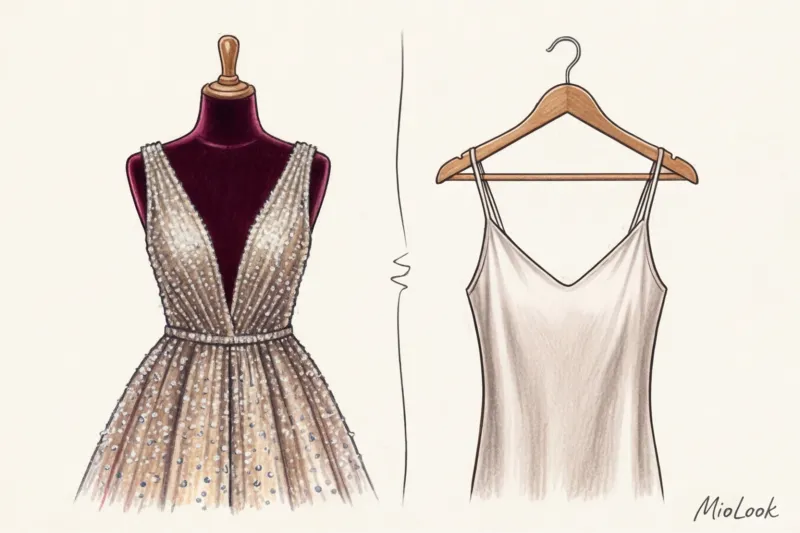
Another professional secret: almost 80% of clothes worn on the red carpet and in films are tailored directly on the actress. What you see on screen is the result of invisible pins, special double-sided tape (fashion tape), and shapewear.
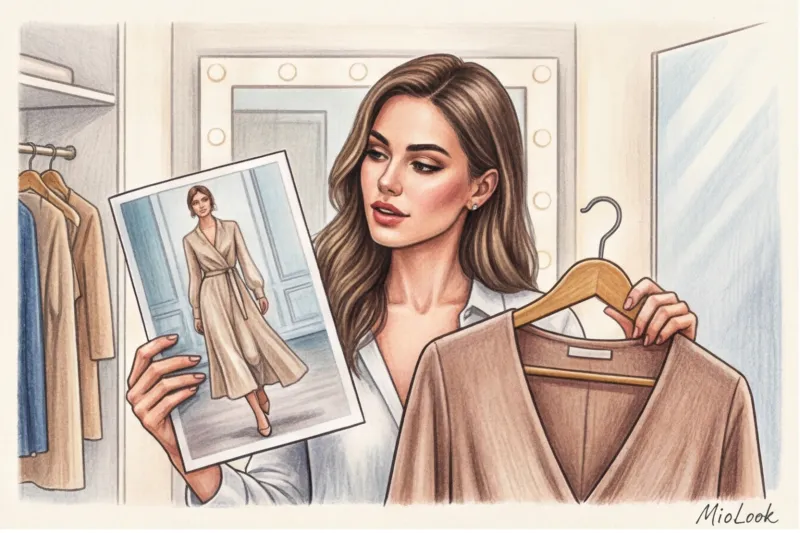
Therefore, it's not the label on the collar that needs to be copied, but the essence: proportions, neckline, length. If Bella Hadid's dress has an extreme slit, consider how to adapt this technique. It's important to do it right. choose clothes according to your body type without stereotypes so that the analogue fits you better than the original on the star.
Access to MioLook for €0.99 — one-time payment
A smart AI stylist will select the perfect look based on your photos and parameters.
Get access — €0.99 onceA stylist's guide: how to properly prepare your photos for smart search
Artificial intelligence is smart, but it's easy to confuse. In my experience, 9 out of 10 unsuccessful searches are due to poor source material. If you simply upload a screenshot from the red carpet with a crowd of photographers in the background and the star wearing heavy makeup, the AI will start searching for... similar blondes with red lipstick, not silk blouses.
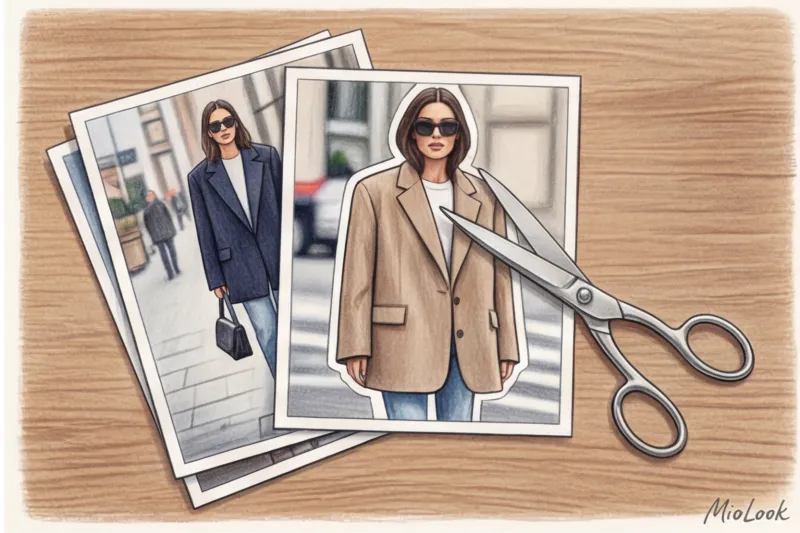
Here's my personal trick: before uploading a picture to the app, I always crop it tightly. I literally crop out the celebrity's face, the bag (if I'm not looking for that), and the busy background.
- Lighting decides everything. Try to take screenshots in daylight scenes. In the dark, the algorithm will interpret dark blue velvet as black knitwear.
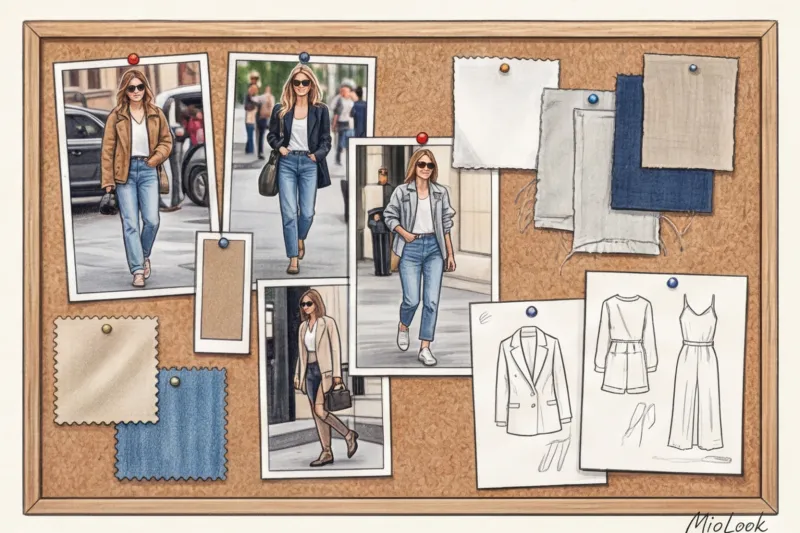
- Look for angles. One full-face photo is fine, but if the film includes a shot from the back or in profile, create a collage. This will help the system understand complex drapery.
From luxury to smart shopping: how to find a dress based on a photo on someone at Zara, COS, and &Other Stories
When you upload a photo to Smart Search, the algorithm will return dozens of options. This is where the filtering rule kicks in. My philosophy is simple: we immediately eliminate ultra-fast fashion (like Shein), where clothes last until the first wash, and extreme luxury that doesn't fit into the concept of a reasonable wardrobe.
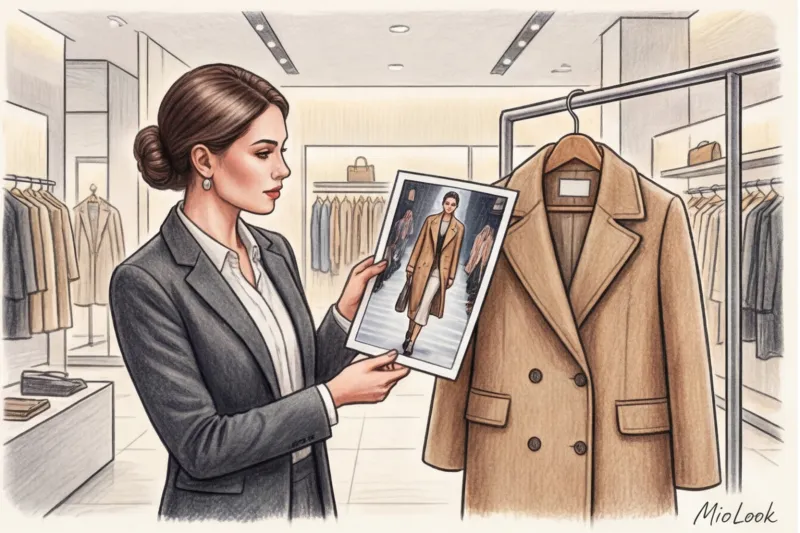
The ideal place to find similar pieces is European premium high-street fashion, with prices in the €80–€250 range. COS brilliantly replicates the complex architectural cuts of Jil Sander. Massimo Dutti is your best bet for finding similar pieces to Ralph Lauren and Loro Piana. When uploading photos of runway looks, look for these brands in the search results.
"Every item in your closet should be worth its price. If you buy a €200 dress and wear it 40 times, the cost per wear (CPW) is €5. That's a smart investment. If you buy an exact replica of Kendall Jenner's rhinestone dress for €50 and wear it once, you've just wasted your money."
Focus on texture and cut, not detail
Visual search has one limitation: it doesn't work perfectly if you're looking for an item with a complex, small designer print. The algorithm will latch onto the pattern and suggest similar "flowers," ignoring the ugly cut of the found alternative.
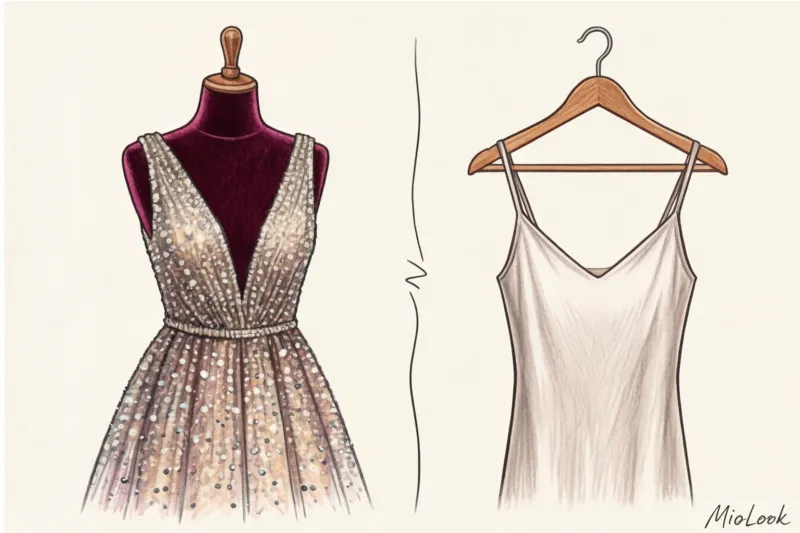
Look for solid-colored pieces with complex textures. And remember this hardware life hack: you can find a perfectly cut basic jacket for €60 and replace the plastic buttons with metal or horn ones for €10. The item will instantly become premium. This is one of the main secrets of How to look expensive and create a prestigious wardrobe.
A real-life case study: adapting a movie character
Let's look at a specific example. In the summer of 2023, at the height of the popularity of the Barbie movie, a client came to me with a request: "I want that same pink dress Margot Robbie wore in the plaid scene."
The original (vintage Chanel) wasn't suitable for three reasons: price, unavailability, and fit (the client has a pear-shaped figure, and a tight bodice with a full skirt would have made the bottom look heavy). What did we do?
- We took a screenshot of the dress from the film and cropped out the actress's face.
- Uploaded the image to AI search (I recommend using it for exactly these types of tasks) smart search feature in MioLook ).
- We ignored carnival costumes and cheap polyester in the search results.
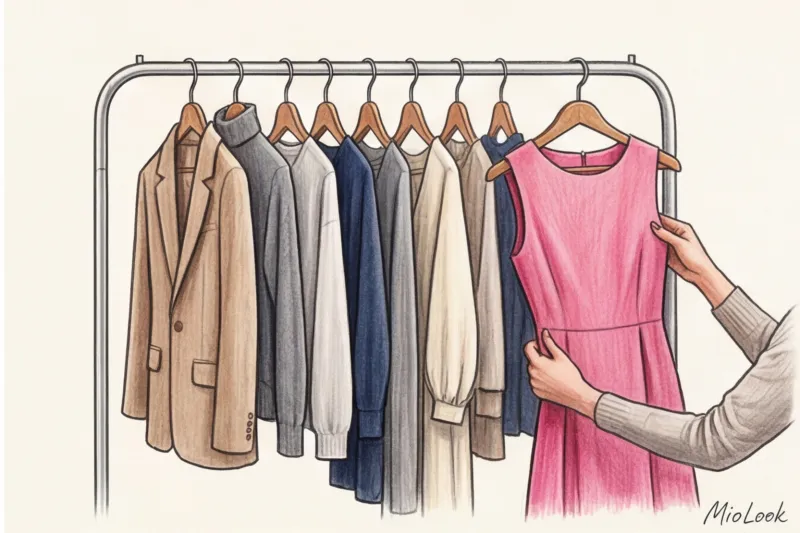
The result: the algorithm found us a stunning A-line dress from COS for €95. It was the same cheerful pink hue, but made of heavy cotton (180 g/m²). Its perfectly sculpted shape perfectly concealed her figure and became the client's favorite piece not only for parties but also for smart-casual Fridays at the office.
Your perfect look starts here
Join thousands of users who look flawless every day with MioLook.
Get access — €0.99 onceChecklist: What to do after smart search has found "that" thing
Finding the right item is only half the battle. Before you hit "Buy," run it through my practical checklist. It should earn a place in your closet.
- The rule of three images. Can you wear this dress with three different pairs of shoes and outerwear from your current closet? If not, it's an impulse buy. We covered the basic principles of pairing in the article about creating a capsule wardrobe.
- Adaptation to color type. A bright mustard sweater looks stunning on the dark-skinned Latin American actress. If you have a cool undertone, this same sweater will make your face look sallow. Look for a similar cut in a color that suits you.
- Fabric testing. The algorithm searches by image; it can't touch the item. Be sure to read the composition. Viscose, lyocell, heavy cotton, and wool blends are all okay. 100% thin acrylic is a definite no-no, even if the item looks exactly like the photo.
Your Personal Stylist in Your Pocket: Why Visual Search Is the Future
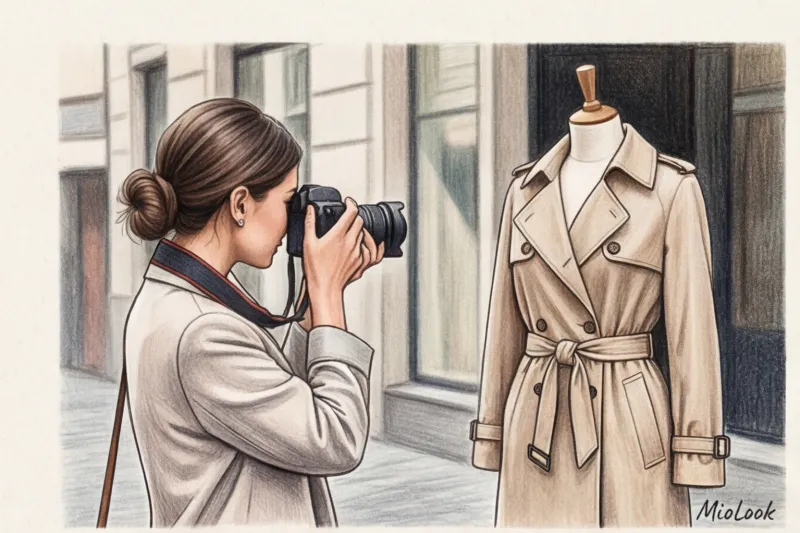
We live in an era where inspiration surrounds us everywhere: in movies, on the streets, on social media. Searching for clothes by image is no longer a futuristic fantasy, but the most efficient way to save time and stress. You no longer need to spend hours scrolling through catalogs or trying to explain to a store assistant exactly what kind of neckline you saw in last night's TV show.
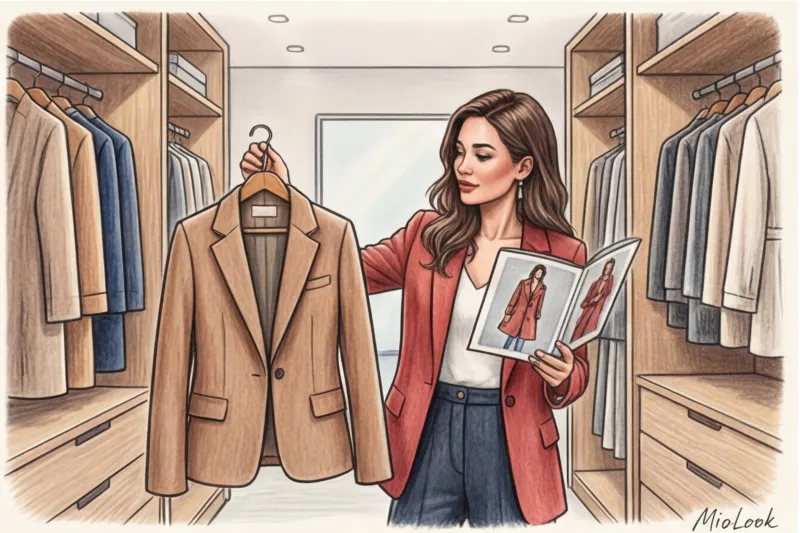
Modern apps like MioLook go even further: they don't just find a similar item based on a screenshot. They allow you to virtually "try it on" in your existing digital wardrobe. You can immediately see if the jacket you find matches your favorite jeans.
Don't put it off. Right now, open your phone's gallery, find that screenshot of the look you've been wanting to recreate, crop it according to my guidelines, and upload it to the visual search. You'll be surprised how accessible your dream style can be.