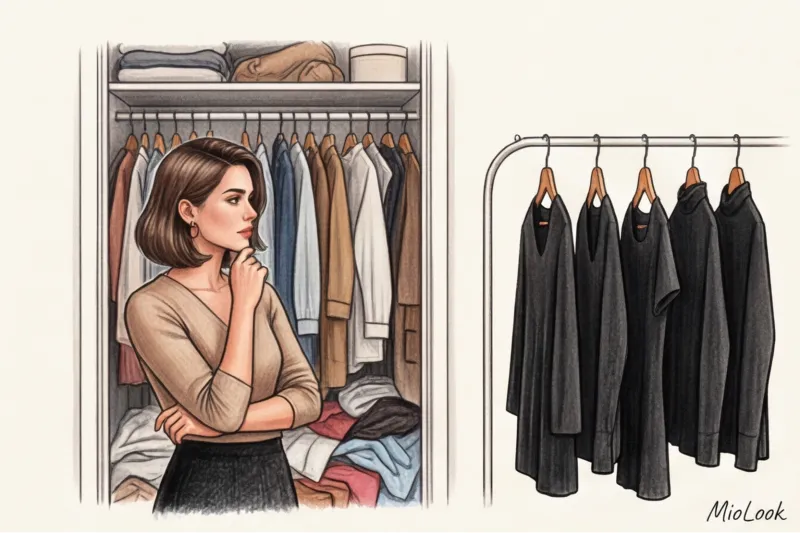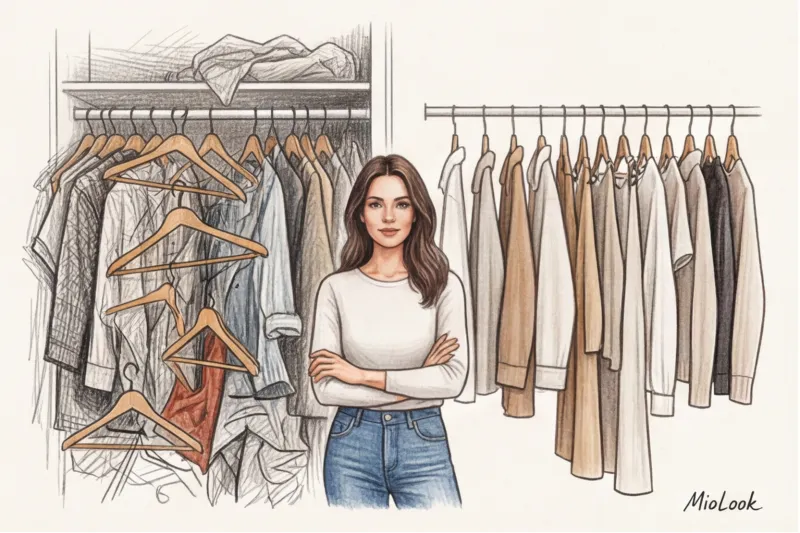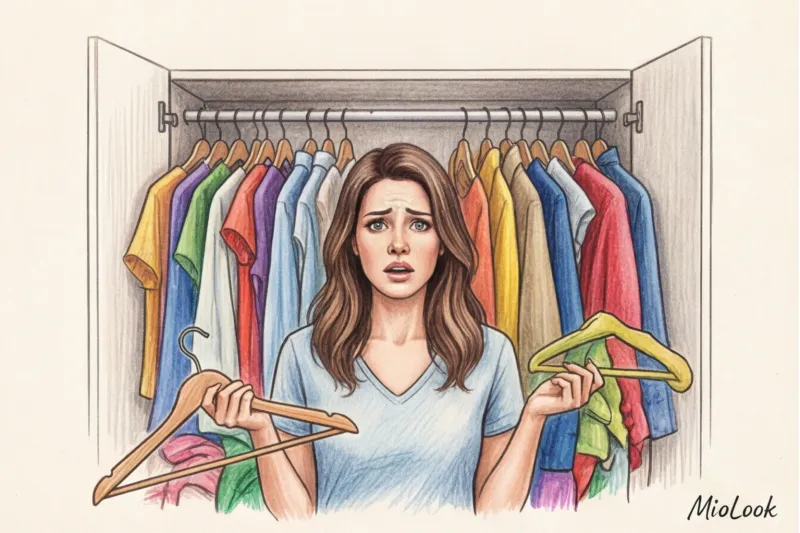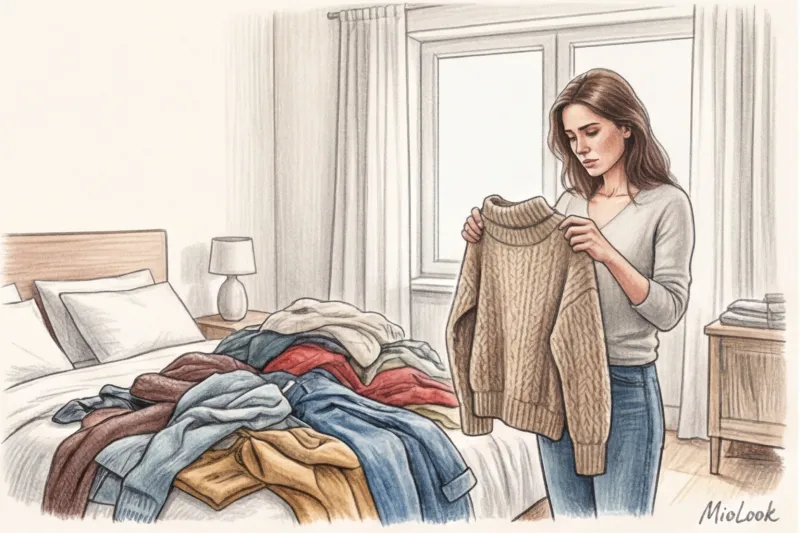
You're standing in front of an open closet, where over a hundred items are crammed onto hangers, but, as usual, there's nothing to wear. Jeans are lying on the shelves, waiting to be "slimmed down," and blouses are hiding in the far corner, with no matching skirt. Sound familiar? Have you ever wondered? How to quickly digitize your wardrobe to turn this chaotic mass of textiles into a working, predictable system?
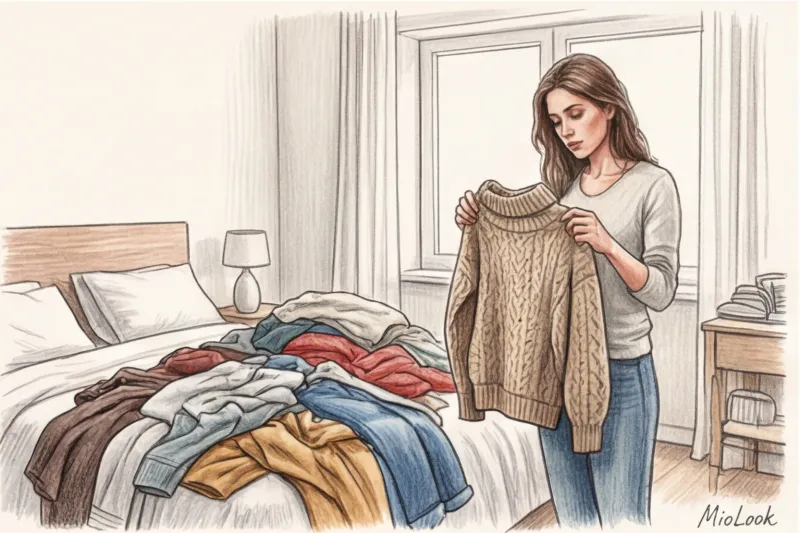
We have already talked in more detail about the technical nuances and lighting setup in our A complete guide on how to photograph clothes for a virtual wardrobe But this guide goes further. We won't just be mechanically snapping away at everything. This weekend, we'll conduct a full-fledged "digital detox," combining a physical fabric quality audit with a technical database download.
My goal as a stylist is to ensure that your smartphone only contains viable, relevant items, and not all the textile baggage accumulated over a decade.
The biggest mistake newbies make: why you shouldn't digitalize 100% of your closet
The main and most destructive illusion about a virtual wardrobe is viewing it as an archive or inventory list. A digital closet is an active workspace. Adding items you don't wear to it is not only pointless but also detrimental to the algorithms.
I had a revealing case in my practice. One of my clients spent an entire weekend photographing 312 items of clothing, including faded high-street T-shirts purchased in 2018. What happened next? The app's artificial intelligence began to faithfully create outfits using these old T-shirts, because the computer vision algorithms perfectly matched their colors with the new jackets. In theory, this was excellent color blocking. In practice, the outfit looked sloppy due to the physical wear of the base garment.
The digital wardrobe follows a strict IT rule: "Garbage in, garbage out." AI doesn't see pilling or stretched collars; it sees only silhouette and color.
According to a large-scale 2023 study by the WRAP (Waste and Resources Action Programme), we regularly wear only 20-30% of our wardrobe. The rest is dead weight. The average European woman's closet contains about 120-150 items, half of which haven't been worn in over a year. Digitizing everything will only transfer physical chaos to your smartphone. We only need to digitize that core 20%.
Friday evening: Textile audit and sorting (Eco-approach)
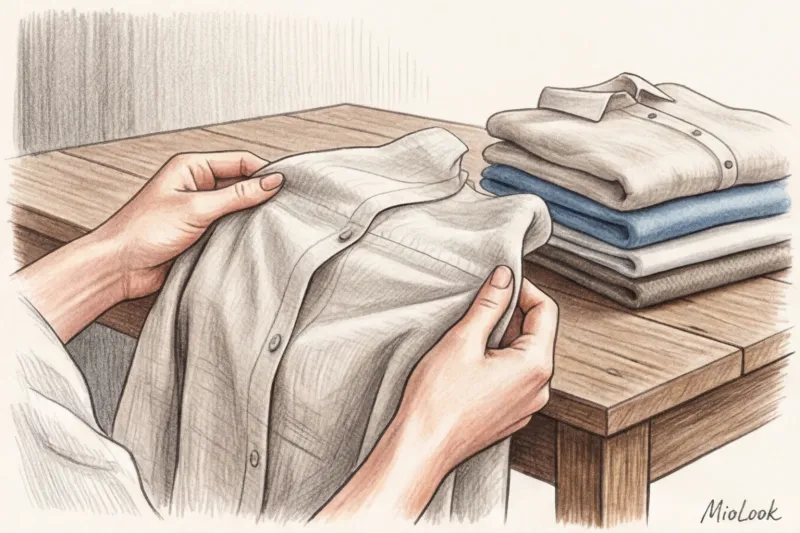
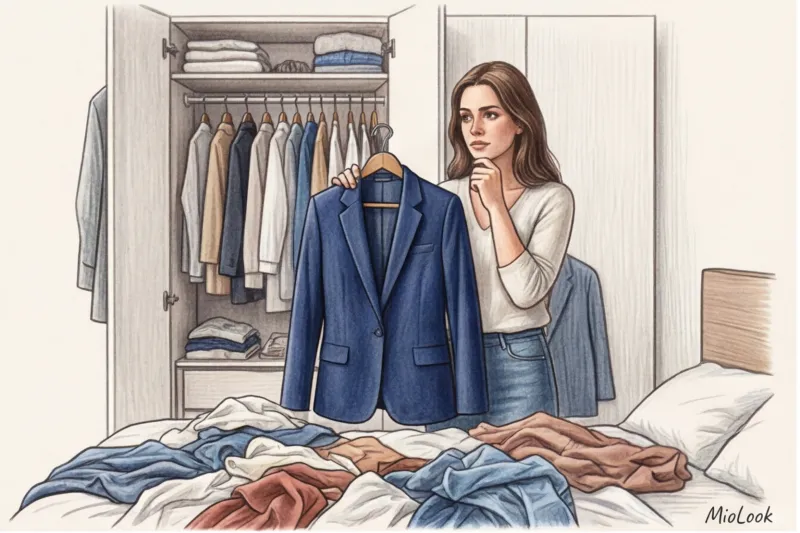
We begin our weekend preparations with a harsh reality: we unpack every single thing onto the bed. Our goal is to divide them into three categories: "Digitalize," "Repair," and "Donate/Recycle."
According to a McKinsey report State of Fashion 2024 Conscious consumption today is based not on buying exclusively eco-brands, but on extending the life cycle of existing clothing. As an eco-stylist, I always encourage focusing on the viability of a garment. If you have a high-quality wool jacket costing around €150 with a slightly torn lining, it goes in the "repair" pile. But a stretched-out acrylic sweater for €20 goes for recycling (we wrote about how to do this sustainably in an article about Where to donate old clothes ).
Wear Test: Which Fabrics Shouldn't Be Bringing into the Digital Future?
No smartphone camera can capture the true texture of a garment like your hands. Before you send it to the app, conduct a tactile test.
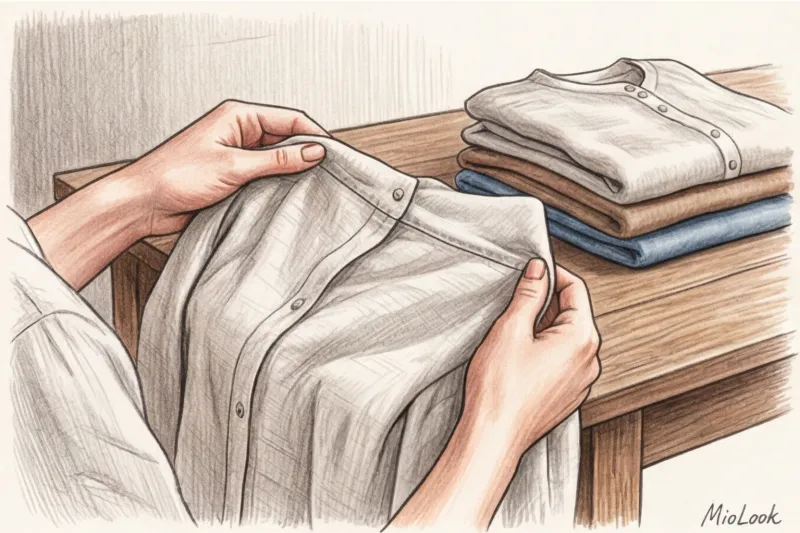
- Non-reversible peeling: Carefully inspect blended fabrics (especially those made with 70% acrylic and 30% wool). If the pilling has formed dense knots that even a machine can't remove, it will ruin even the most carefully layered look.
- Knitwear elasticity test: Pull the edge of a cotton-elastane T-shirt or turtleneck. If the fabric returns slowly or the edge is rippled, the elastane threads have been damaged (often due to washing at 60°C). The garment will no longer fit properly.
- Evaluation of seams and darts: Check the side seams on viscose dresses. If the threads have come apart due to tension, leaving tiny holes where the needle punctured them, the garment's days are numbered.
Don't fool yourself. If an item has lost its marketable appearance, it shouldn't be placed in digital capsules.
Your perfect look starts here
Join thousands of users who look flawless every day with MioLook.
Get access — €0.99 onceSaturday Morning: How to Quickly Digitize Your Wardrobe (Light and Background)
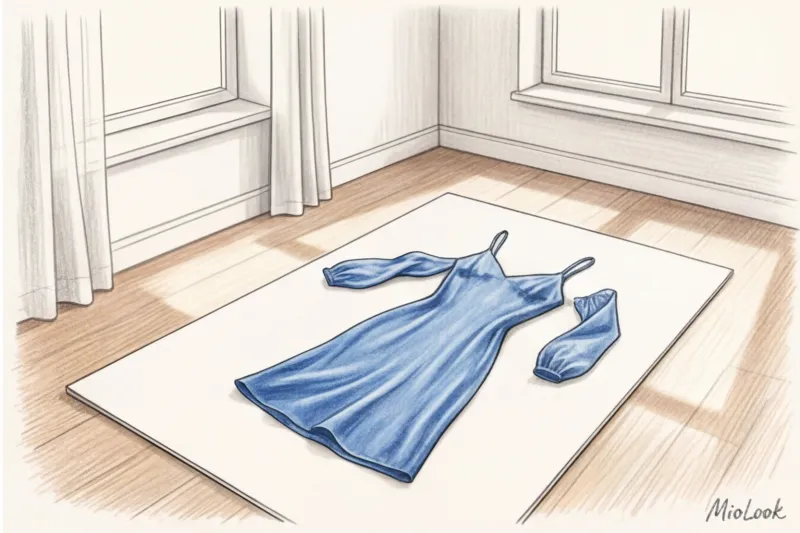
Saturday morning is the ideal time for technical work. Why morning? We need soft, diffused daylight. A north- or east-facing window is ideal. Incandescent light bulbs in apartments produce a harsh yellow undertone, which makes dark blue in photos blend into black, and the neural network will then generate errors when generating images.
Organize the conveyor:
- Prepare the background: No colorful rugs or sofas. Buy two sheets of white A1 paper or use a well-ironed matte sheet. Gloss and creases in the background will confuse the clipping algorithm (background removal).
- Steaming: Be sure to steam your clothes before taking the photo. A wrinkled shirt looks like a shapeless sack in a photo.
- Flat Lay Technique: Lay out your clothes on the floor. Hold the sleeves of shirts and sweaters at a 45-degree angle away from your body—this will help the AI understand the sleeve length and armhole cut. Remove pants with the waistband visible and the legs folded flat.
Fair Limit: The flat lay technique does NOT work for dresses with complex, asymmetrical cuts or items cut on the bias (such as silk slip dresses). They look like a shapeless puddle of fabric on the floor. Such items should be photographed on hangers, hanging them on a closet door or a plain wall.
Secrets of capturing complex textures for neural networks
Some fabrics drive smartphone cameras crazy. Here's how I deal with them in my styling practice:
- Silk and satin: They glare relentlessly. The camera perceives the glare as a white spot, and the app may cut out a section of your blouse. To avoid this, cover the window with white tulle (it will act as a softbox) or photograph the item slightly away from direct sunlight.
- Tweed and boucle: To help the AI recognize the voluminous texture (which is important for the fall capsule collections), don't shoot the garment from above (at a 90-degree angle). Tilt your smartphone just 10-15 degrees—this will create a subtle micro-shadow that highlights the weave.
- Black wool and velvet: The risk of getting a "black hole" in your photo is limitless. Tap your smartphone screen before taking the photo and manually increase the exposure (the sun icon) by +0.5 or +1. The item will appear slightly grayish in the photo, but the app will clearly see lapels and pockets.
Saturday evening: Shoe and accessory shoot
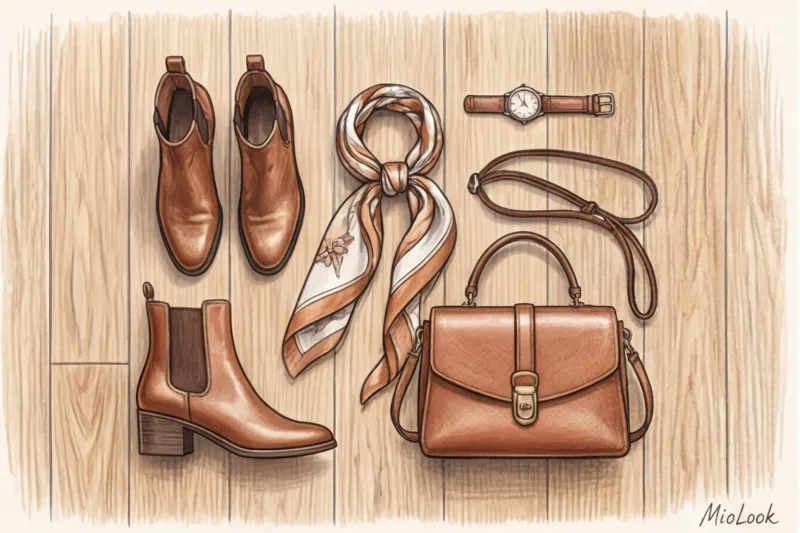
I often see clients meticulously digitize their clothes but completely ignore shoes and bags. This is a fatal mistake. Accessories are the glue that holds outfits together. They transform a simple jeans and white shirt outfit into either a dog-walking outfit (with sneakers and a tote bag) or a stylish casual look for office capsule (with loafers and a structured tote bag).
Rules for digitizing accessories:
- Bags: Never take them off empty. Stuff the bag with paper or plastic wrap to keep it in shape. Wrinkled leather distorts the geometric shape of the image.
- Shoes: Shoot the shoes in profile to show the heel and instep, then take a 45-degree (three-quarter) shot to highlight the toe shape (square, pointed, or round). For AI, toe shape is the main style indicator. And yes, wipe the side of the sole with a melamine sponge before shooting.
- Small details: Belts are best removed neatly folded with the buckle facing up. Fold scarves into a rectangle, revealing the main pattern.
Try MioLook
A smart AI stylist will select the perfect look for you based on your digital wardrobe.
Get access — €0.99 onceSunday: Uploading to MioLook and creating the first capsules
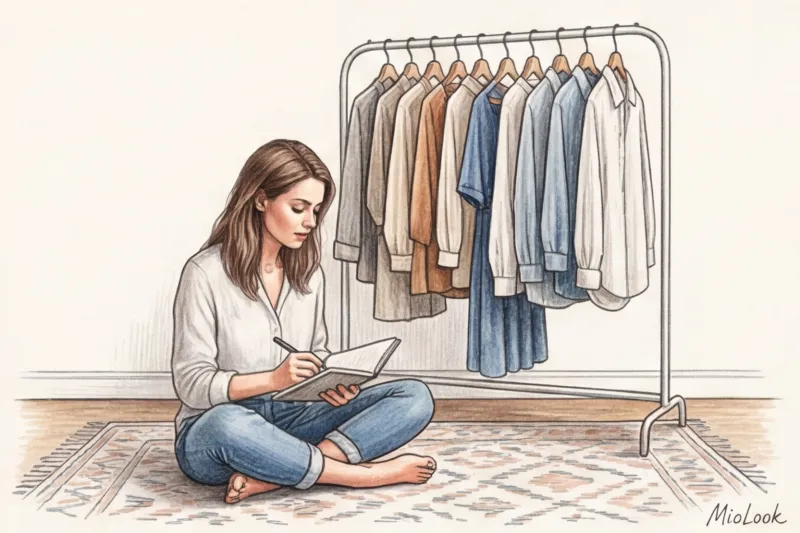
The photos are ready. Now the fun part begins – we transfer them to the app. I recommend using MioLook , as the platform's algorithms are excellent at automatic background clipping and categorization.
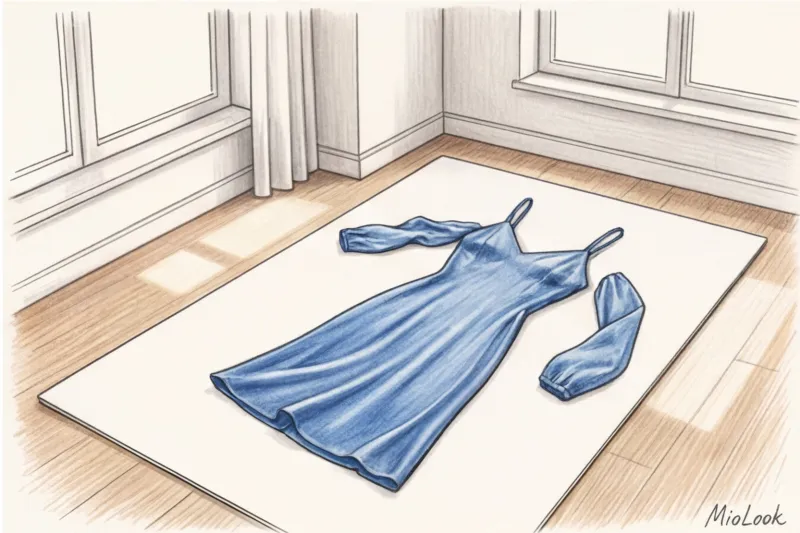
Batch upload photos. The algorithm will automatically remove the white background. Your main task on Sunday is not just putting things in folders, but organizing them correctly. tags This is another insight that is rarely talked about: the neural network is smart, but it can't read minds.
What must be indicated:
- Fabric composition: Don't be lazy when writing "100% linen" or "heavyweight cotton from 180 g/m²." If you don't, the AI might suggest you wear lightweight linen trousers in the January snow simply because they match the color scheme of your winter down jacket.
- Dress code and scenarios: Add specific tags. Don't just say "to work." Say "Smart Casual," "for an IT interview," or "Friday office." The more specific the context, the more relevant the imagery will be.
By Sunday evening, ask the virtual stylist to generate looks for you for the coming week. You'll be surprised how the algorithm "sees" combinations you wouldn't have thought of on your own, having worn the same jeans and sweater for years.
Checklist: Keeping Your Digital Closet Organized
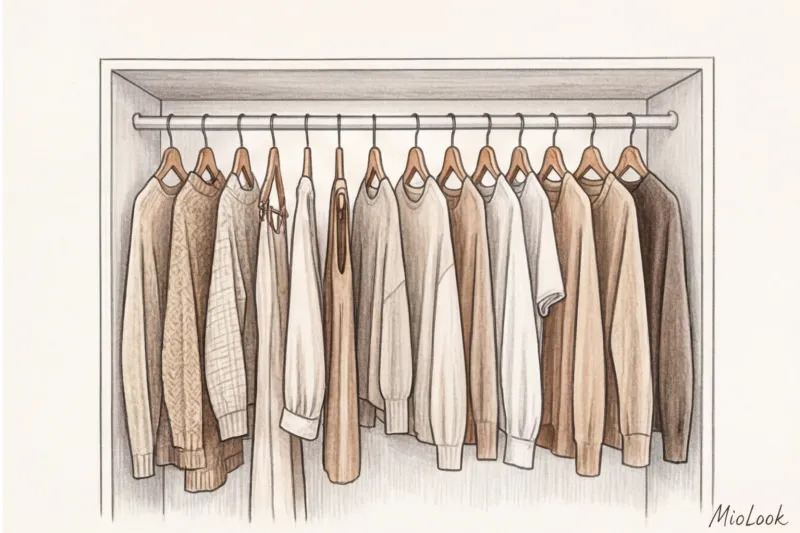
Digitizing your wardrobe over a weekend is half the battle. The key is to stick with the app after a month. To ensure the system works for you for years to come, implement three simple habits into your life.
First, a hard rule One in, one out (One item comes, one goes). Bought a new bag for €200? Great, take a photo of it right there in the store in good light or at home on the day you unpack it, add it to your database, and delete the old, worn-out bag from the app and recycle it.
Secondly, use seasonal archiving. In May, feel free to send down jackets, thick wool scarves, and thermal underwear to the "Archive." If they remain in the active database, they will clutter your recommendations feed and make it difficult to find summer capsules.
Third, ruthlessly remove "dead souls." If you get a wine stain on your favorite blouse that the dry cleaners couldn't remove, don't keep a photo of it in your virtual wardrobe "as a memento of old times." Your digital wardrobe should be 100% accurate to your real-life closet.
Ultimately, the value of a digital wardrobe isn't measured by the number of pretty pictures on your phone, but by the number of saved nerve cells in the morning. Once you've gone through this process once over the weekend, you'll never again utter the phrase "I have nothing to wear" while looking at a bulging closet.