Have you noticed how, with the onset of the first frost, the streets fill with girls with unnaturally beige, slightly plastic-looking legs? The popular trend for "fleece-lined nylon leggings" has played a cruel joke on us. In an attempt to maintain the illusion of bare legs in -15°C, we forgot the most important rule of good taste: true elegance doesn't argue with the weather. High-quality, thick matte leggings look far more prestigious and expensive than any imitation of thin nylon.
But What to wear with insulated leggings in winter To create an urban, put-together look, rather than looking like you just came off the ski slopes or went out to buy bread? We've already discussed the basic rules in more detail in our The Complete Guide: What to Wear with Leggings in the City: Stylist Tips In this article, we'll go further and examine winter essentials through the lens of textile materials science: how fabric density dictates styling rules and why the composition of the inner layer is more important than the brand on the tag.
The Anatomy of Winter Leggings: A Textile Approach to Choosing the Base
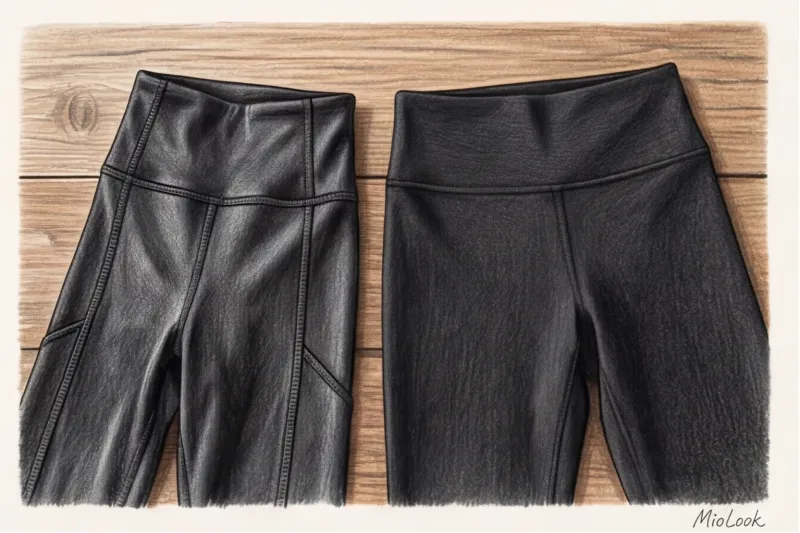
In my wardrobe reviews, I constantly see the same mistake. A client, wanting to stay warm, buys technical thermal underwear with complex anatomical seams (flatlock) on the outer thighs at a sports store. Then she tries to pair it with a casual look and an elegant coat. The result is a visual clash: the sporty texture kills the urban aesthetic.
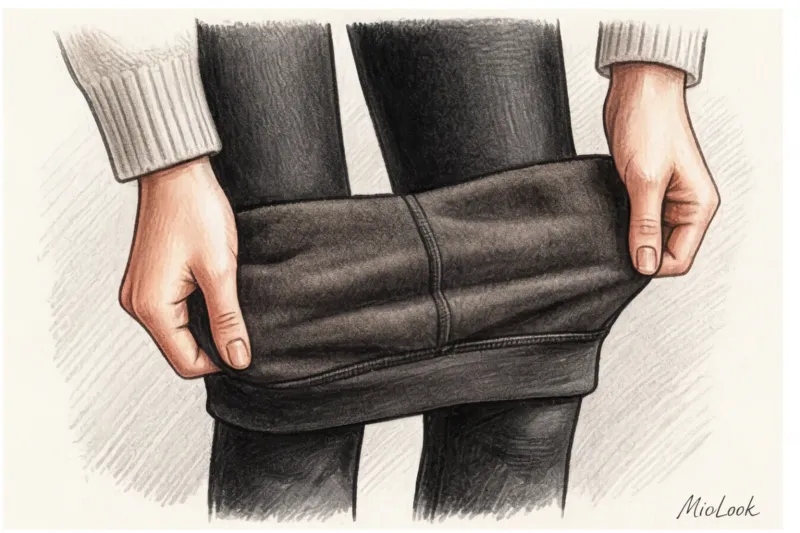
Urban insulated leggings are a completely different product. Their main characteristic is measured by the index GSM (grams per square meter) For winter, you should look for a knitwear weight of at least 300 g/m². Anything thinner will inevitably reveal the contours of your underwear and bunch up unattractively under the knees.
The ideal outer layer for the city is Ponte di Roma fabric. This dense double knit holds its shape well, resists stretching, and has a luxurious matte finish. Another excellent option is high-quality faux leather with a suede or fleece backing. It works as a windbreaker, blocking out icy air.
Fleece, wool or microplush: what really keeps you warm?
What's inside your leggings determines whether you'll sweat on the subway or freeze outside. Manufacturers offer three main options:
- Microfleece (polyester): A common choice in mass-market clothing. Pros: lightweight, dries quickly. Cons: builds up static electricity (hello, clinging dress hems) and creates a greenhouse effect in the room.
- Merino Wool blends: Gold standard. According to the report Textile Exchange (2023) Merino wool fibers can absorb up to 30% of their own weight in moisture while remaining dry to the touch. This means they regulate body temperature perfectly: warm in the cold, cool in the office.
- Bamboo fleece (microplush): The perfect compromise for those with sensitive skin that reacts to wool. Bamboo viscose has natural antibacterial properties and is incredibly soft to the touch.
What to wear with insulated leggings in winter: the key rule of proportions
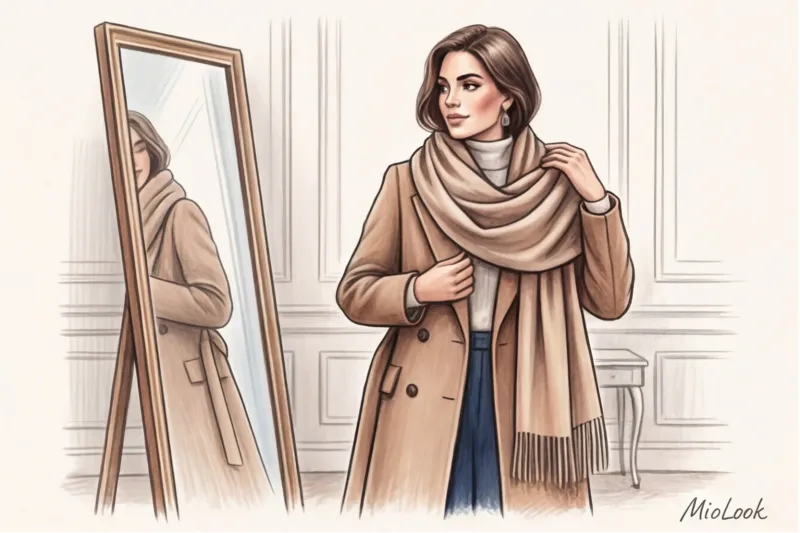
The styling of fitted bottoms is based on one immutable principle: contrasting volumes. If the bottom is tightly fitted, the top must be voluminous, structured, or layered. This isn't just a fashion statement; it's a fundamental principle of body architecture.

The main rule that I never tire of repeating to my clients: the "covered groin" rule In a city (not athletic!) look, leggings shouldn't be perceived as pants on their own. Your sweater, hoodie, jacket, or shirt should cover the widest part of your hips. This instantly elevates the look from "I'm going to the gym" to "relaxed chic."
"In the city, leggings are a canvas, not a painting. They should create a flawless, smooth backdrop for a complex, textured top. As soon as you expose the crotch, leggings turn into tights that forgot to wear a skirt."
— Sophia Müller
Your perfect look starts here
Not sure if your sweater's length matches your leggings? Upload a photo to MioLook, and our smart AI stylist will analyze your silhouette's proportions.
Get access — €0.99 onceShoes and leggings: balancing volume for cold weather
Thick, brushed winter leggings add visual volume to your legs. If you wear them with sleek, thin shoes, your feet will appear disproportionately small and your calves will appear bulky. We need a visual counterbalance.
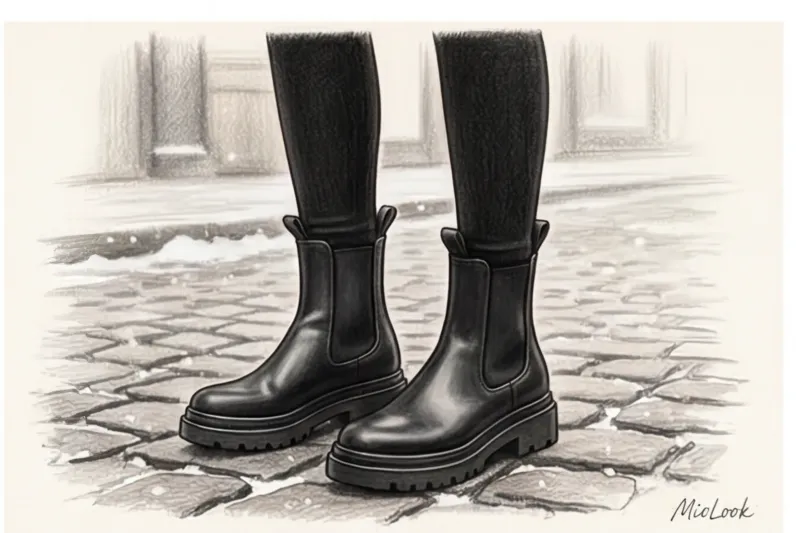
The best companions for winter leggings:
- Chunky Chelsea boots: The rough sole makes the ankle appear thinner, and the thick material of the leggings tucks in easily without creasing.
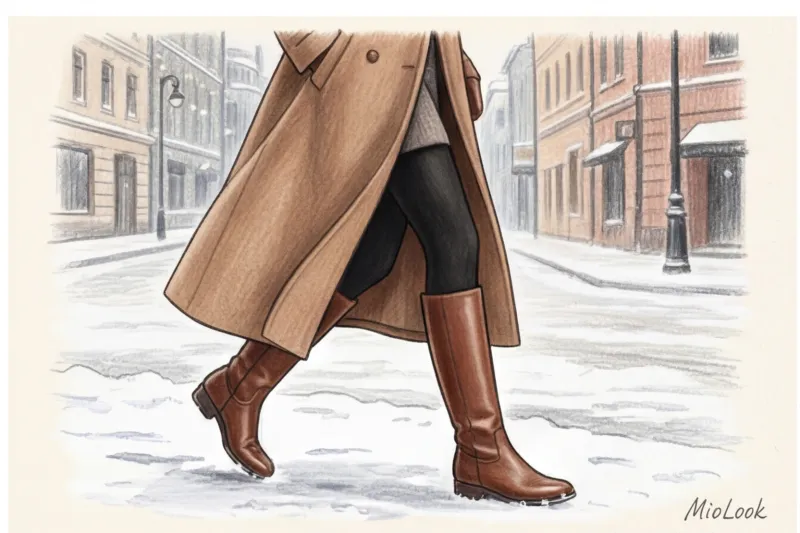
- Knee-high boots: Classic British Equestrian style. Choose boots with a wide shaft to allow some air between the leggings and the top of the boot.
- Combat boots with laces: Paired with chunky leggings and a voluminous down blanket, they create the perfect grunge aesthetic.
What should you avoid? Short, form-fitting ankle boots (sock boots) that end at the narrowest point of the ankle. They visually cut the leg in half and cheapen the look. However, there is an exception: if you have very narrow calves, chunky shoes can create a "pencil-in-a-cup" effect. In this case, choose flat, lace-up boots that provide a secure ankle support.
Sweaters, Jackets, and Cardigans: Creating Stylish Layered Looks
Let's move from theory to concrete formulas you can assemble from your closet tomorrow morning. To make your leggings look "expensive," use a mix of textures: a smooth matte bottom contrasts beautifully with fluffy alpaca wool, ribbed fabric, or crisp cotton.
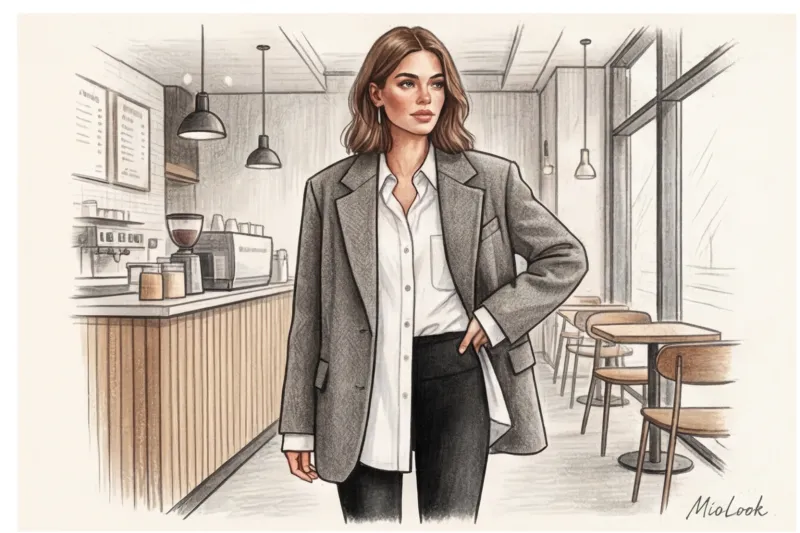
Formula 1: Office Smart Casual
A long, crisp white men's-style shirt (it should cover the buttocks) + a cropped, oversized chunky knit sweater on top + thick black leggings + thigh-high boots. The shirt adds the necessary length and formality, while the sweater provides warmth.
Formula 2: Relaxed Elegance
A long, heavy wool jacket (such as herringbone or small check) + a basic merino turtleneck + a leather belt over the jacket to accentuate the waist + faux leather leggings with fleece lining. This is a favorite look among Scandinavian fashion bloggers.
Formula 3: A Cozy Weekend
A long chunky knit cardigan that hits mid-thigh + a basic thick cotton tee + leggings + high wool socks that peek out slightly from the chunky boots.
Debunking the Myth: Why Fleece-Lined Nylon Jackets Are Not the Best Investment
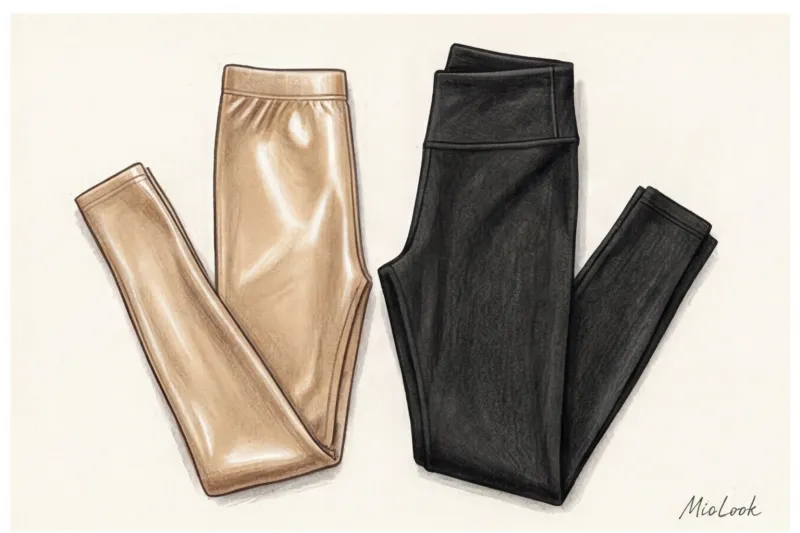
As a stylist and textile researcher, I have to weigh in on this topic. The trend for thermal tights with a "second-skin" effect (where beige fleece shows through black nylon) has taken over marketplaces. But WGSN's 2024 winter consumer trends study shows that shoppers are massively disappointed with this product after just one wear.
Why is this a stylistic error?
- The illusion of bare legs looks out of place in winter. When you're wearing a voluminous down jacket, a fur hat, and a scarf, translucent (even if only visually) legs create a dissonance. This disrupts the seasonal logic of your wardrobe.
- The problem of shades. The inner fleece often has a yellowish, gray, or downright pink undertone. When stretched, this makes the legs look like plastic prosthetics on a mannequin.
- Cheap glitter. Nylon stretched over a thick lining inevitably begins to shine, highlighting the slightest unevenness of the legs.
An elegant alternative: If you want to wear skirts in winter, invest in thick cashmere-blend tights (100 denier and up). If you're going for pantsuits, choose high-quality matte leggings with stirrups. They won't ride up when you put on boots and look classy.
Access to MioLook for €0.99 — one-time payment
Start creating your perfect winter capsule wardrobe with AI. Say goodbye to the "nothing to wear" problem.
Get access — €0.99 onceEco-friendly care: how to wash winter leggings to prevent them from pilling
Last year, I conducted a personal test: I bought three pairs of insulated leggings in different price ranges and washed them 10 times. The results confirmed the laws of textile chemistry: fleece linings (especially synthetic ones) form hard pellets (pilling) if the care instructions aren't followed.
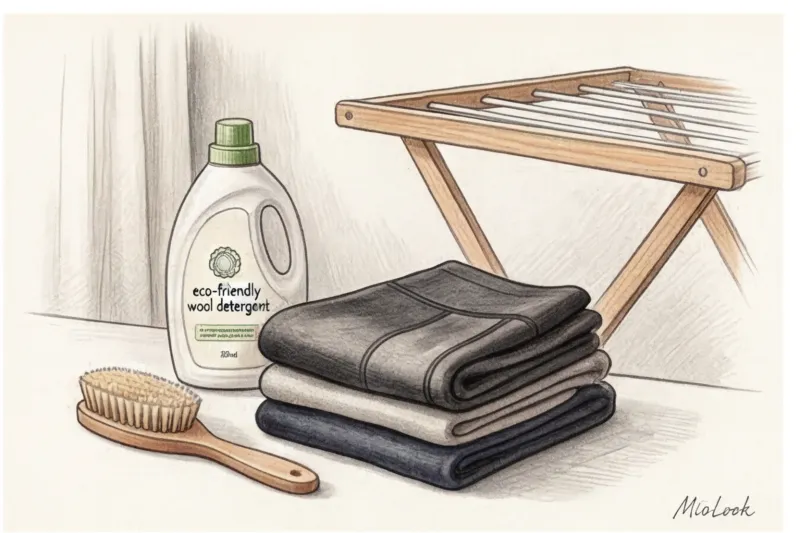
To ensure your leggings last for years, and not just until the first spring, follow these rules:
- Turn inside out. This protects the outer matte layer from friction against the machine drum, and the inner fleece from contact with the zippers of other clothes.
- No fabric softeners! This is critically important. Conditioners coat the elastane fibers (which make up 5 to 8% of leggings) with a silicone film. The elastane loses its ability to contract, and the leggings begin to slip irreversibly from the waist.
- Temperature conditions: Strictly 30°C and liquid laundry detergents. Powdered laundry detergents are difficult to remove from thick knits.
- Drying: Never dry leggings on a hot radiator. Thermal shock destroys the polyurethane threads, causing the fabric to ripple. Dry them naturally and flat only.
Stylist's Checklist: 5 Signs You Know You're Buying Quality Winter Leggings
Before you take your item to the checkout or click the "Order" button, run a quick check using my professional checklist:
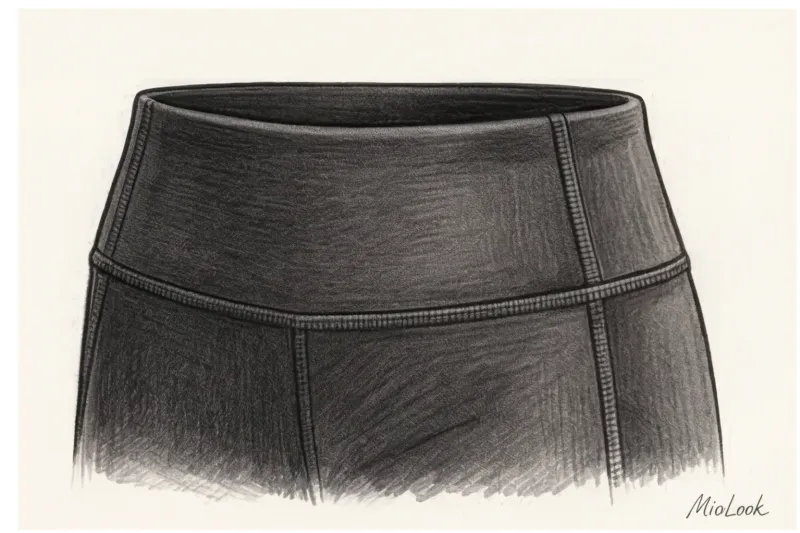
- Wide, thick belt (at least 7-10 cm). A narrow elastic band will curl into a tube under a bulky sweater and dig into your stomach.
- The presence of a gusset. This is a diamond-shaped insert in the inseam. Without it, the dense winter fabric will quickly wear through or tear at the seam from tension.
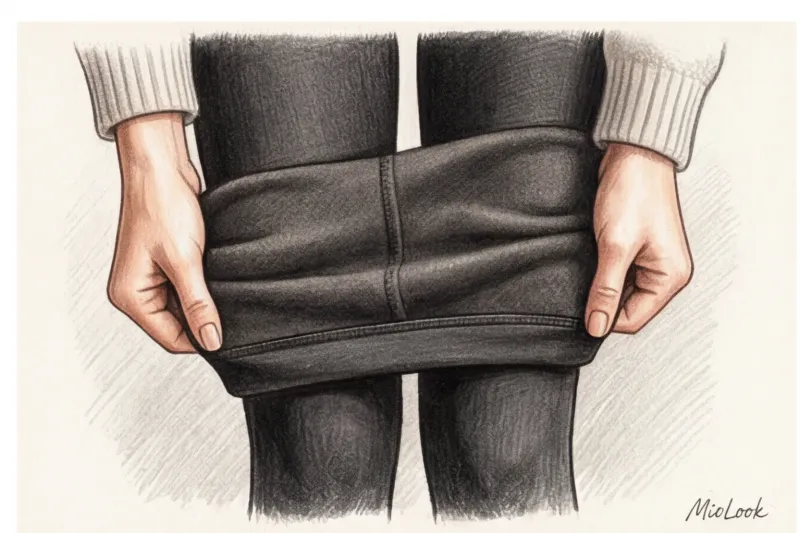
- Tensile test (Recovery rate). Stretch the fabric over your knee and release. It should instantly, within a second, return to its original position without a bubble.
- No external side seams. For the city, look for styles with seamless outer legs. They create a slimming effect and don't look too fitness-inspired.
- Deep color without shine. Hold the fabric up to the light. If a whitish sheen from the synthetic material shows through the black, avoid buying it; it will look cheap.
Summary: Putting together the perfect winter leggings capsule
Insulated leggings are no longer just dog-walking gear. When worn correctly, they become a powerful tool for creating stylish, layered, and, most importantly, warm urban looks.
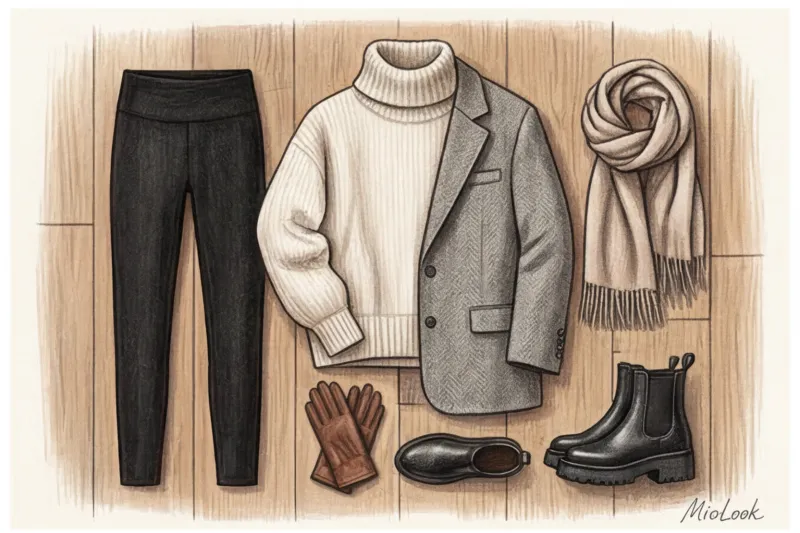
Invest in quality materials—thick Ponte knits, merino wool, or viscose. Avoid dubious trends like fake bare legs in favor of elegant matte textures. And always remember the golden rule of proportion: a fitted bottom calls for a voluminous top and chunky shoes.
Style doesn't require frostbite. It just requires a little knowledge of fabrics and visual illusions.