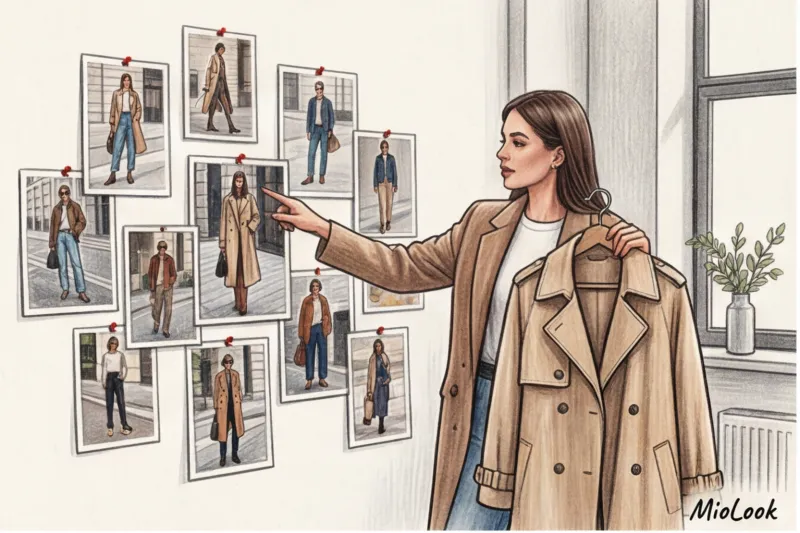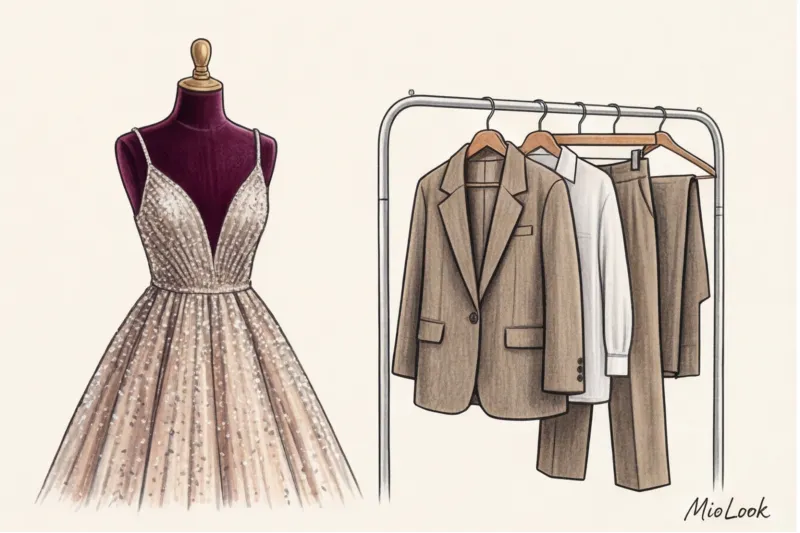
If someone hacked your Pinterest account right now and looked at your saved style boards, what would they conclude about your life? I bet the algorithm would conclude you live on the French Riviera, sip matcha every morning in a silk robe, and spend your evenings at private contemporary art exhibitions. And that's perfectly fine. But when you open your physical closet, you'll likely reach for your usual jeans and sweater.
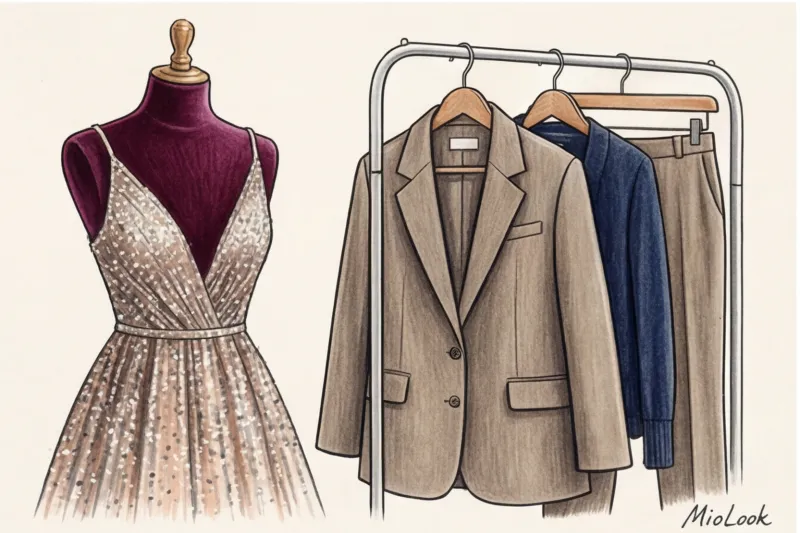
After 12 years of working in the fashion and styling industry, I've realized one thing: the gap between what we love to look at and what we actually wear is the main reason for the "closet full, but nothing to wear" problem. Understanding How to create a style mood board To truly make a photo work, you need to forget popular advice like "just save the images you like." We discussed the psychological aspects of this choice in more detail in our The Complete Guide to Finding Your Style: Forget the Rules.
Today, I propose viewing Pinterest not as a pretty toy, but as an analytical tool. We'll use the methods of professional design firms to separate aesthetic fantasies from your sartorial reality.
The Fantasy Wardrobe Trap: Why Saved Pins Don't Work in Real Life
There is a term in the psychology of style fantasy self (fantasy self). This is the version of you that exists only in your head. It never gets tired, doesn't ride the subway during rush hour, and doesn't spill coffee on your white pants.
One of my clients, let's call her Anna, worked as an architect. When she showed me her mood board, it consisted of 90% silk slip dresses, Bottega Veneta stilettos, and micro-bags. The problem was that Anna spent 80% of her time on construction sites, supervising contractors, wearing Timberland boots and oversized down jackets. Her mood board was beautiful, but completely useless for her actual career goals and lifestyle.
“There is a huge difference between aesthetic admiration (I like looking at this thing) and sartorial reality (I want, can and will wear this).”
Your task is to learn to capture the moment when you save a picture. Ask yourself: do I like this image because I want to look like this on a Zoom call today, or because I like the lighting, the model's pose, and the Parisian atmosphere in the background?
How to Create a Style Mood Board: A Professional Deconstruction Method
The biggest mistake when searching for style is searching Pinterest for phrases like "stylish fall looks." This is a surefire way to lose your individuality and copy other people's cliches. You'll end up with thousands of identical beige trench coats and chunky knit sweaters.
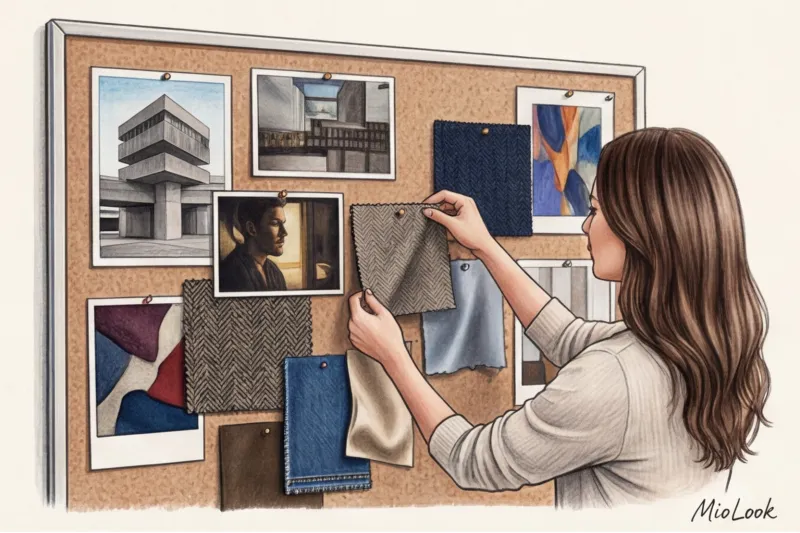
During Paris Fashion Week, I had the chance to go backstage at several major houses. Do you know what the mood board at Celine looked like during Phoebe Philo's time? There were barely any clothes on it. The board was littered with photographs of brutalist architecture, shots of a young Joan Didion, samples of raw linen, and even dried leaves. This is the classic collection methodology at Central Saint Martins: style begins with the deconstruction of form, color, and mood, rather than the stylization of ready-made garments.
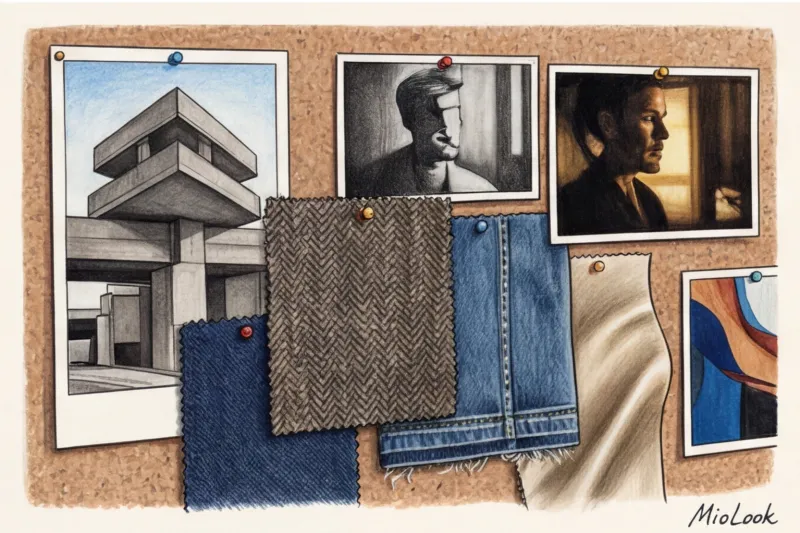
Step 1: Forming the Core (Architecture, Cinema, Art)
Start your mood board with abstractions. Save interiors, furniture designs, and stills from your favorite movies. Why is this important? Interiors unmistakably reveal your preferences in silhouettes. If you maintain minimalist spaces with hidden baseboards and furniture with strict geometric shapes, then your clothing will likely favor architectural cuts, stiff fabrics (such as cotton with a weight of 180 g/m² or higher), and clean lines.
If you're drawn to eclecticism, velvet sofas, an abundance of decor, and warm lighting, your wardrobe calls for layering, flowing silhouettes, and complex color combinations.
Step 2: Focus on textures and macro details
Texture conveys emotion better than color. Find macro shots of fabrics that make you want to touch them. What would it be? Smooth, cool silk? Rough, distressed vintage leather? Fluffy cashmere? Textures are directly related to how you want to communicate with the world through your personal brand. Rigid textures create distance and status, while soft ones encourage conversation.
Access to MioLook for €0.99 — one-time payment
A smart AI stylist will select the perfect look based on your preferences and help you organize your wardrobe.
Get access — €0.99 oncePinterest's Algorithmic Echo Chamber: How to Trick the Discover Feed
Pinterest's algorithm (their famous Visual Discovery Engine) is designed to keep your attention. Research shows that after just 10-12 saved pins on the same topic, the algorithm locks you into an "information bubble." Saved a couple of looks with a beige coat? For the next six months, your feed will consist of 50 shades of beige.
To bypass this echo chamber, you need to use the right, non-obvious search queries. Switch to English or French—the database of high-quality visual content there is hundreds of times larger.
- Instead of "business style" look for: sartorial elegance , “tailored minimalist aesthetic” , "corporate chic editorial".
- Instead of "casual wear" type in: "effortless everyday style" , "je ne sais quoi style" , "off-duty model street style".
- Use cinematic queries: “90s minimalism movie stills” , French New Wave Aesthetics.
Don't forget the "feed cleaning" technique. Every few months, create a new, hidden board and start compiling your visuals from scratch, without relying on old recommendations. This allows you to track how your taste evolves.
From Abstraction to Reality: Analysis of the Collected Visuals
Once you've collected 50-70 images (interiors, textures, portraits, a few clothing items), it's time to analyze them. Look at the board as a whole, squinting slightly. What overall mood does it convey?
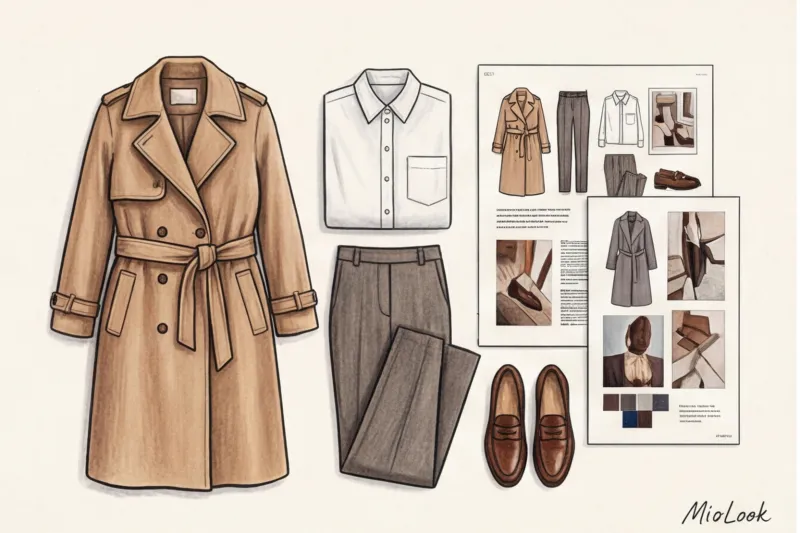
Use the "three adjectives" method. Write down three words that describe this board. For example: "structured, relaxed, intellectual" Now look at what you're wearing right now. Does your current look match these three words?
Next, look for unifying elements. In my experience, 9 out of 10 women don't even notice they're wearing the same pattern. You might find that 80% of your photos feature a V-neck, a certain midi length, or a layering technique (like a turtleneck under a shirt). Identify your "signature pieces." If you see a structured, menswear-inspired jacket in half the photos, that's your cue to invest in something.
Adapting to Your Lifestyle: Crash Testing Your Mood Board
According to WGSN (2023), a persistent trend has emerged since the pandemic: most consumers wear 20% of their clothes 80% of the time. Your mood board should reflect this rule.
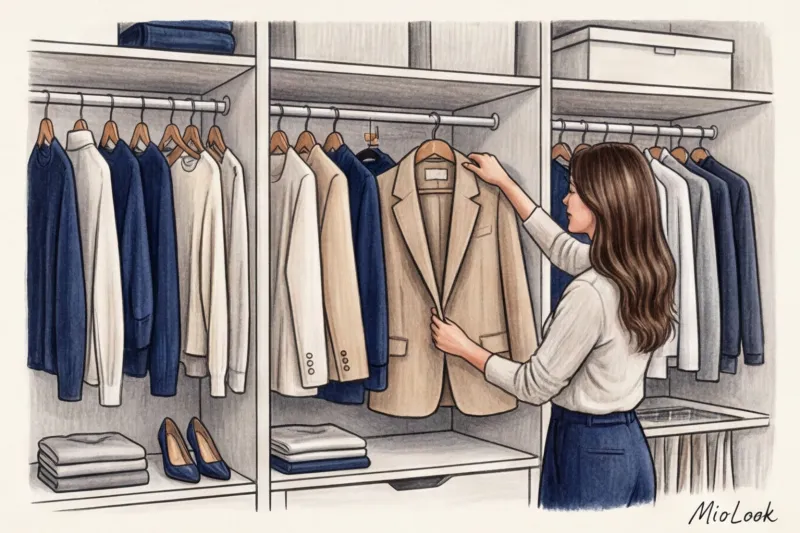
Conduct a crash test using your workload chart. Draw a circle and divide it into sectors: office (40 hours), home (30 hours), walks with kids/dog (15 hours), social outings (5 hours). Now look at your mood board. If it consists of silk skirts and heels, and you spend 60% of your time on your laptop at home, you have a system error.
This is the ideal stage to integrate digital tools. For example, upload your real things to MioLook And visually compare the resulting capsules with your ideal Pinterest moodboard. It's sobering. You clearly see what exactly you're missing. Instead of buying another dressy top for €150, you realize you absolutely need quality basic loafers (in the €150-€250 range) because they appear in every other outfit on your board.
Your perfect look starts here
Join thousands of users who look flawless every day with MioLook. Digitize your wardrobe and create capsule collections in one click.
Get access — €0.99 onceChecklist: 5 Steps to a Working Style Tool
It's important to acknowledge one honest limitation: the deep mood board method doesn't work if you tend to change your aesthetic every week based on fleeting TikTok trends (today you're a "mob wife," tomorrow a "clean girl"). This tool requires thoughtfulness. To transform your mood board from a pretty picture into a style guide, follow this checklist:
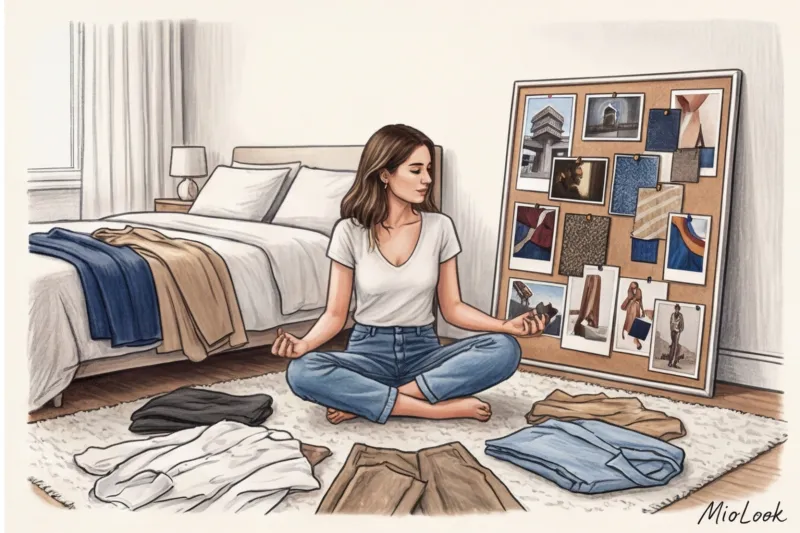
- Merciless cleaning: Remove from your board anything that requires a different body type, climate, or lifestyle. Be honest with yourself.
- Smart categorization: Don't lump everything together. Create sections within the board: "color palette," "silhouettes," "textures," and "ready-made formulas for every day."
- Find duplicates in a closet: Before you go shopping, try recreating 3-4 looks from your mood board using what you already own. Often, it's not new items we lack, but the insight to combine them in new ways.
- Shopping list with goals: List three "anchor pieces" that appear repeatedly on your board but aren't in your wardrobe. Set a budget (e.g., tailored trousers under €120, a basic bag under €300) and search exclusively for those.
- Inspection once a season: You change, so do your career and your worldview. Your mood board isn't set in stone—update it every 3-4 months.
Style isn't magic, accessible only to a select few. It's math, observation, and self-honesty. A mood board isn't meant to make you dream of a different life, but to help you feel like the protagonist of the life you already have.