The Anatomy of a Luxury Look: Why Silk and Wool Work So Well
An analysis of over 500 digital wardrobes in the MioLook app revealed a terrifying statistic: on average, women wear their silk garments exactly 92 days a year. The rest of the time, slip skirts, flowing dresses, and weightless blouses gather dust on hangers, awaiting a "special summer occasion" or warmer weather. As a stylist and advocate of sustainable consumption, I consider this a crime against your wallet and personal style.
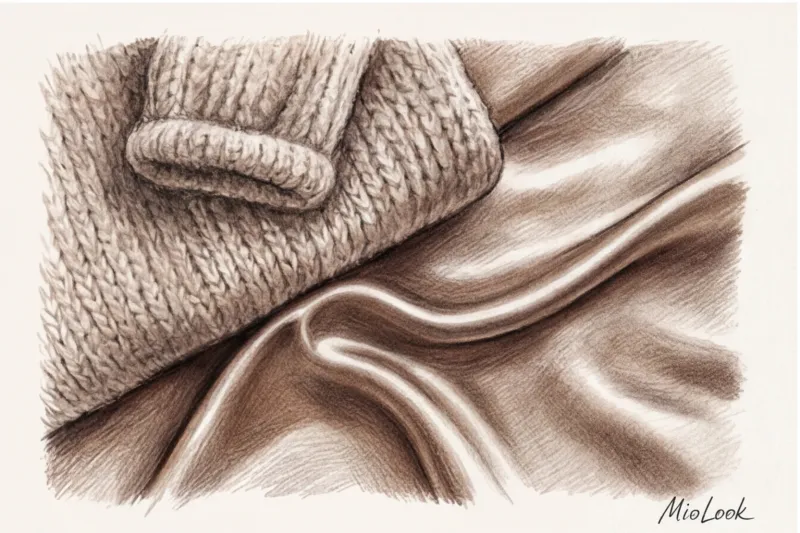
Literate a combination of silk and wool — it's not just a beautiful stylistic device, but a mathematically precise way to increase the versatility of your winter capsule by at least 40% without a single new purchase. We've covered this in more detail in our a complete guide to creating an expensive look through mixing textures , but today I want to analyze the specific mechanics of how this contrast works.
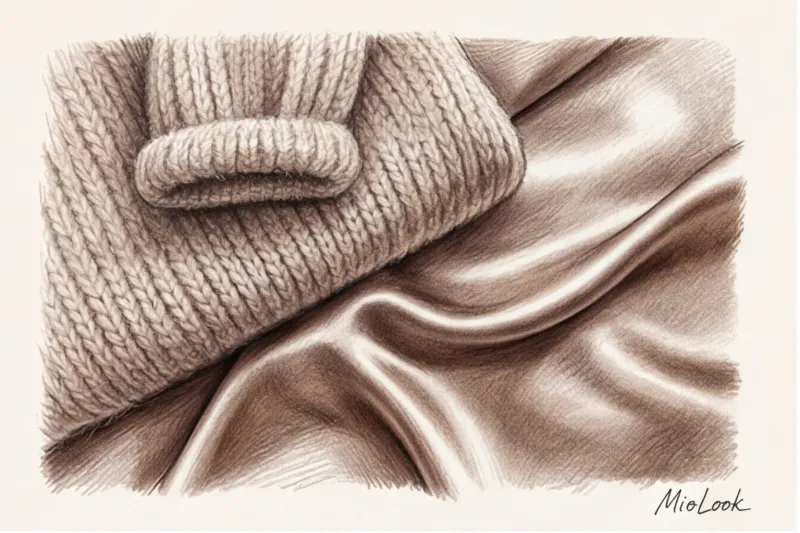
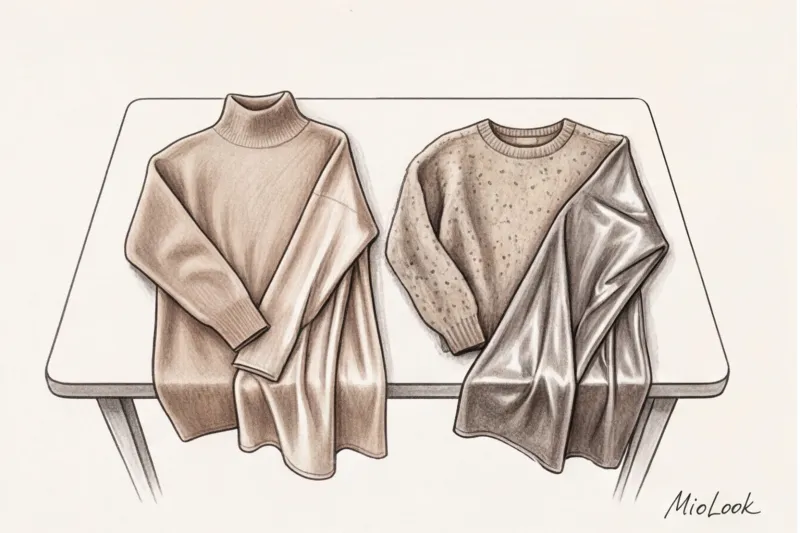
The secret lies in the physics of light. According to research by the PANTONE Color Institute (2023), the human eye perceives the complexity of an image not by the number of shades, but by the reflectivity of materials. Wool absorbs light, creating visual depth, coziness, and a matte finish. Silk, on the other hand, acts like a mirror—reflecting light rays, adding dynamism and gloss. This is why merchandisers for brands like The Row or Brunello Cucinelli always mix matte and glossy textures on mannequins. Our brain subconsciously interprets this tactile contrast as a sign of high status.
The Rule of Proportion: How the Combination of Silk and Wool Changes the Silhouette
The most common mistake I see on the street is a 50/50 ratio. For example, a sweater ends exactly at mid-thigh, with a silk skirt of the same length peeking out from underneath. This geometric cut cuts the figure in half and makes the height appear shorter.
Last winter, a client, a top manager at an IT company, approached me with a relaxed dress code but a desire to look authoritative. She complained that layered outfits made her feel "bulky" and made her look 5 kilograms heavier. We implemented 70/30 rule in the distribution of visual volume.
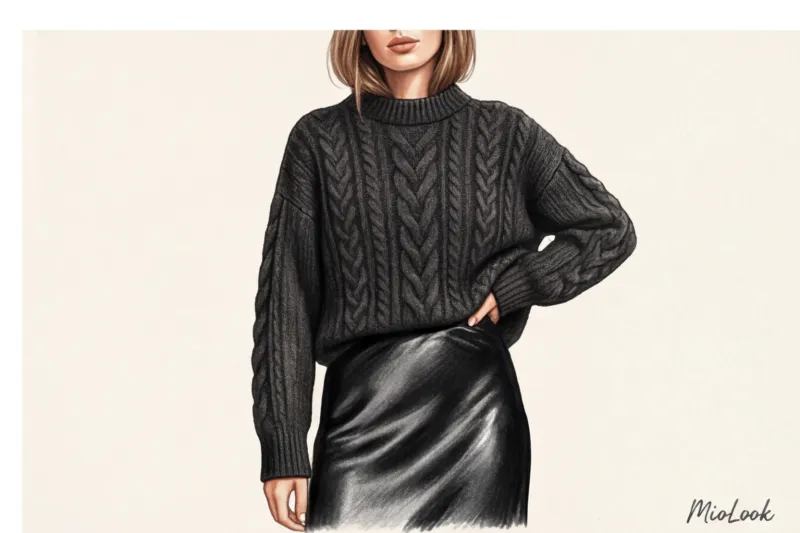
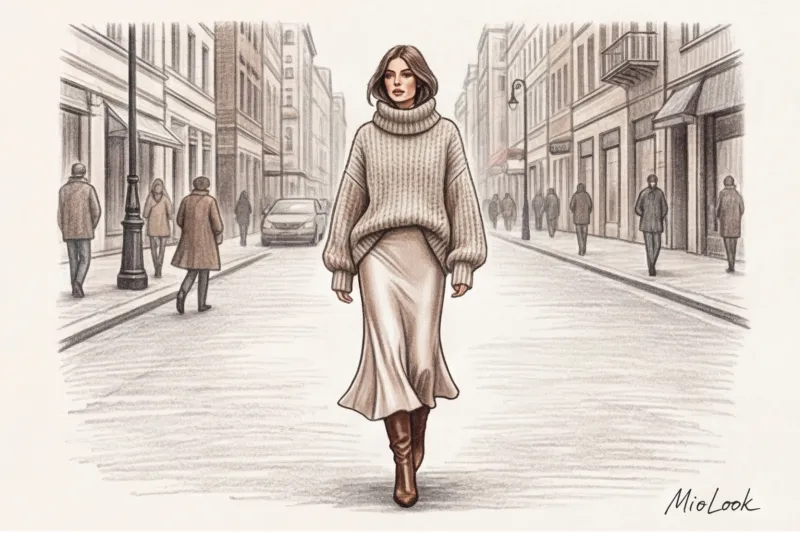
- Option A: 70% of the volume is taken up by a heavy, textured, chunky knit sweater, while 30% is left over for a light, flowing silk hem, which creates the illusion of fragility beneath a dense cocoon.
- Option B: 70% smooth texture (silk blouse and trousers) and 30% accent wool (for example, a cashmere sweater casually thrown over the shoulders).
Access to MioLook for €0.99 — one-time payment
A smart AI stylist will select the perfect look for every day by analyzing your clothes.
Get access — €0.99 onceA Hidden Threat: How Texture Affects Body Shape
Let's be honest: this styling trick doesn't work for all areas. Glossy silk has the ability to visually draw in and enlarge the body part it's worn on. Matte, dense wool, on the other hand, blurs contours.
"If you have wide hips that you don't want to accentuate, avoid tight-fitting silk skirts paired with a cropped sweater. The sheen on the fabric will inevitably widen your pelvis. In this case, switch up the textures: wear a silk blouse (which will add volume to your bust) with thick, matte wool palazzo pants."
By the way, if you have doubts about the choice of bottoms, I recommend studying our material on that, How to choose trousers according to your body type — there we examine in detail the influence of cut on the perception of the silhouette.
Everyday Outfits: Going Beyond the Sweater + Slip Skirt
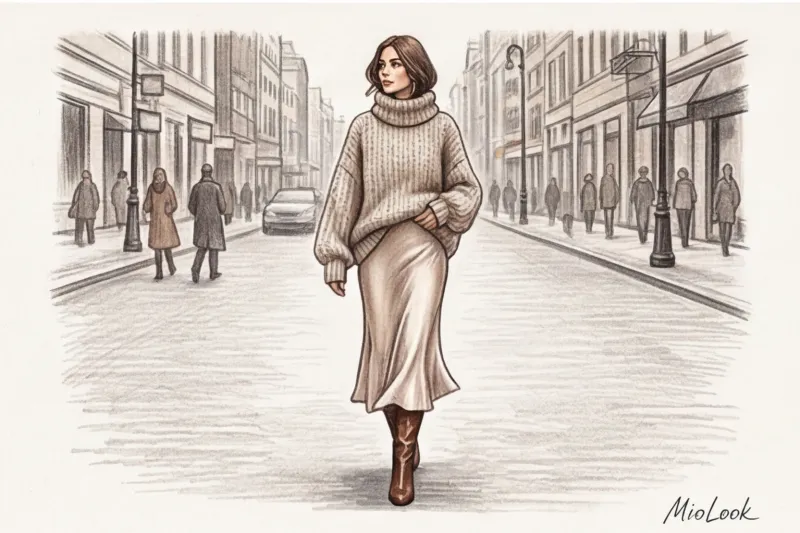
The combination of silk and wool has long since transcended the banal combination of a lingerie dress and a cardigan. Algorithms MioLook Research shows that the most popular combinations from users are subtle, smart-casual styles. Here are four effective formulas you can use tomorrow:
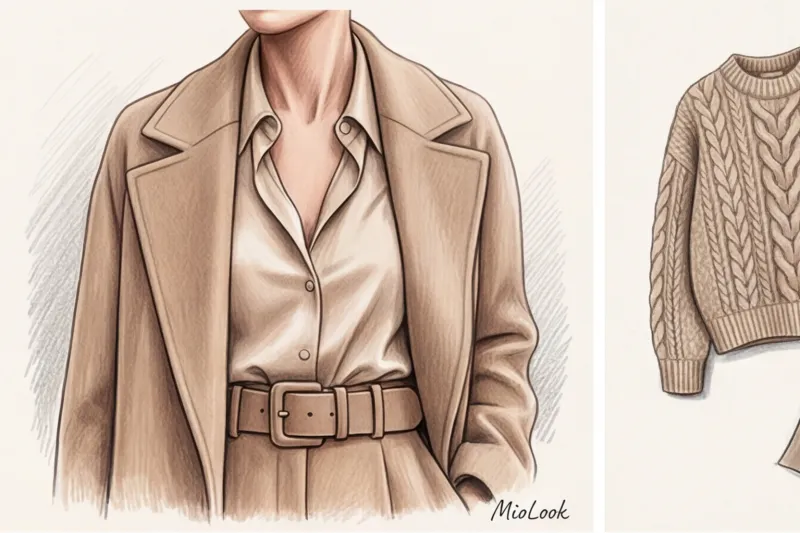
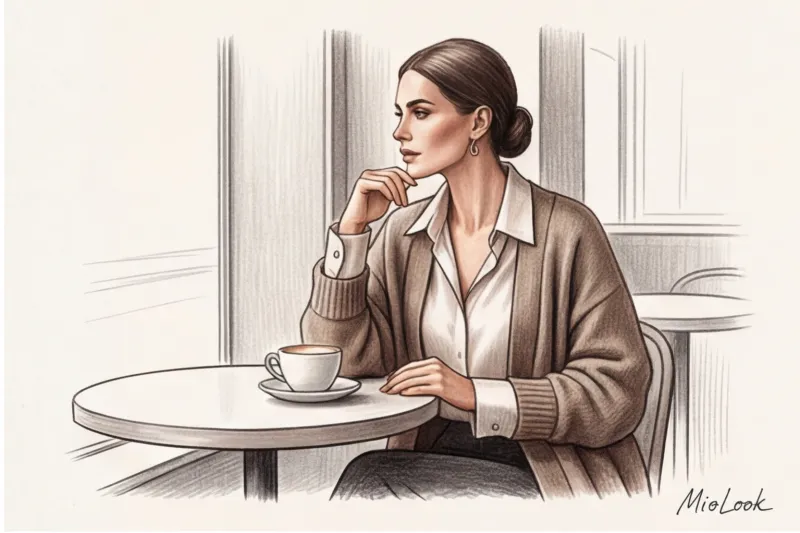
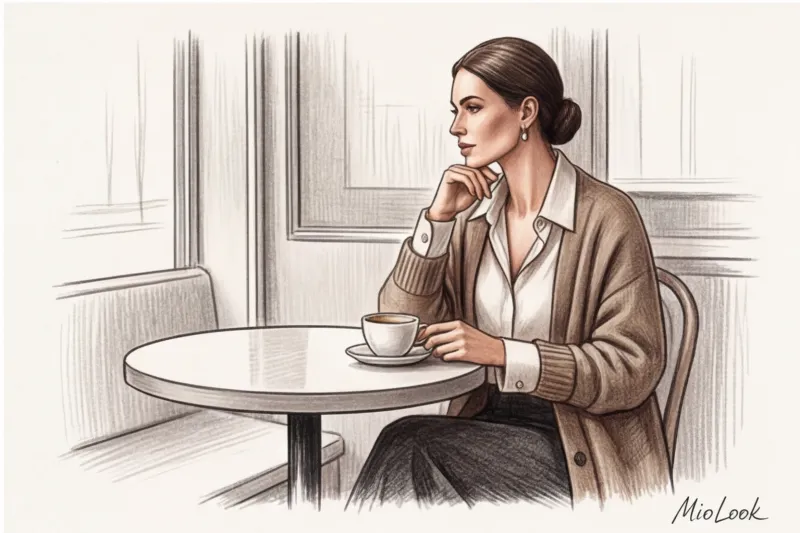
- Silk blouse + chunky knit cardigan. Layer a smooth silk collar and cuffs over a thick, fuzzy cardigan. This micro-contrast near the face perfectly brightens up the skin tone.
- Silk slip dress + cropped sweater. The sweater should end exactly at the waist. This creates the effect of endlessly long legs, especially in a monochrome look.
- Cashmere turtleneck + silk palazzo pants. A brilliant solution for an evening out or a relaxed Friday dress code. Smooth trousers create a beautiful wave as you walk, and cozy cashmere tones down the pretentiousness.
- Thin silk scarf + all-knit look. If you're not quite ready for chunky silk pieces, use a square scarf as a belt over a voluminous wool dress.
Debunking Myths: The Main Mistakes When Mixing Textures
There's a popular myth that creating a luxurious contrast requires only luxurious fabrics. I'm willing to challenge that assertion. Over 12 years of working as a stylist, I've developed an ironclad rule: wool gives away its value, while silk creates a shine.
You can pick up a budget-friendly but high-quality Tencel, viscose, or rayon skirt for €40–€60, pair it with a premium, thick merino or cashmere sweater for €150–€200, and the whole look will look great. But if you do the opposite—wear €300 natural silk with a cheap €20 acrylic sweater (which will pill within a week)—the whole outfit will look cheap. The contrast in textures acts like a magnifying glass: it mercilessly highlights the cheapness of low-quality knitwear.
What you should absolutely not do:
- Combining thin, shiny polyester (which gets staticky) with loose acrylic looks untidy.
- Ignore seasonal prints. Large tropical flowers on a silk skirt paired with a winter Scandinavian sweater will create a stylistic clash. Choose solid silk or an abstract, timeless print.
Your perfect look starts here
Join thousands of users who look flawless every day with MioLook.
Get access — €0.99 onceSeasonality is cancelled: thermoregulation and winter styling of summer clothes
Many people are afraid to wear silk in winter, believing it to be exclusively a summer material. This is a colossal misconception. According to a 2022 study by the University of Leeds' Faculty of Textiles, the protein structure of fibroin (the basis of natural silk) has outstanding thermoregulatory properties. This is why silk is used to make the best premium thermal underwear.
Natural silk worn under thick wool acts as a climate control layer. It traps your body heat while allowing your skin to breathe. If you have sensitive skin that reacts to itchy sheep's wool or mohair, a silk layer (shirt or top) will be your salvation.
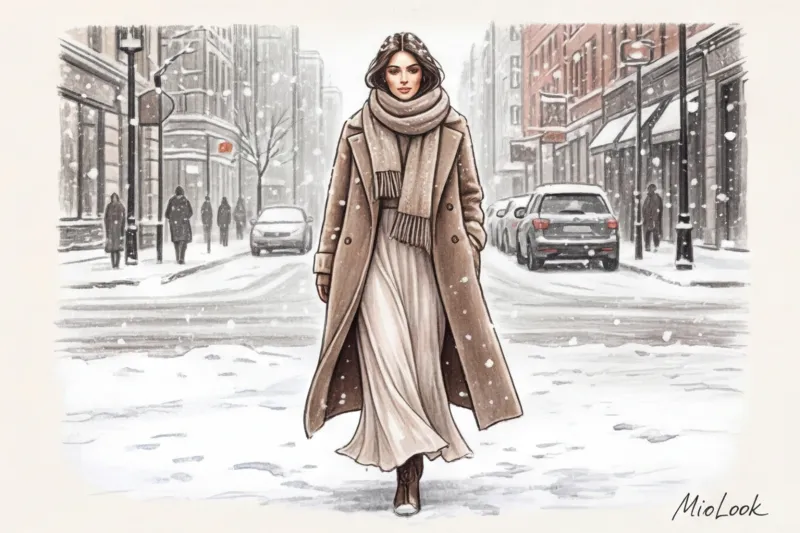
To keep your silk dress warm outside in winter, use intermediate layer rule Layer a thin, basic cotton T-shirt (180 g/m² or higher) under the dress, then throw on a chunky wool sweater over it. You'll get warmth, comfort, and incredible layering.
Checklist: Integrating Texture Contrast into Your Smart Wardrobe
Knowing the theory is half the battle. Let's get practical and make your wardrobe work at its best. Follow these 3 steps this weekend:
- Digitize things wisely. Upload your essentials to the app MioLook Be sure to include texture tags: "glossy" (silk, satin, smooth leather) and "matte" (wool, suede, thick cotton).
- Conduct a thorough audit of your knitwear. Get rid of sweaters with stubborn pilling. As we've learned before, they ruin the magic of pairing with silk.
- Run the selection algorithm. Ask our smart AI stylist to create looks by mixing the tags "glossy" and "matte." You're guaranteed to find pairs of items you'd never even considered wearing together.
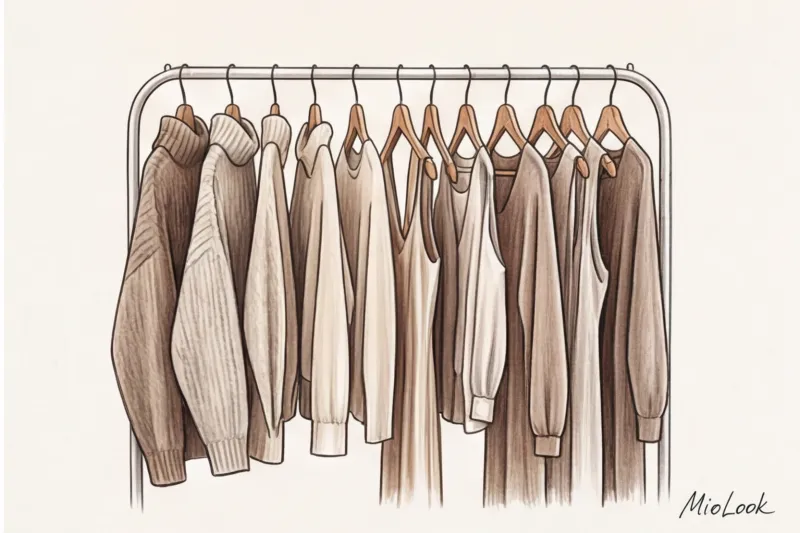
The transition from a wardrobe of quantity to a wardrobe of quality begins with the ability to see new connections between old pieces. Forget the "one piece per season" rule. Add silk to your winter wool capsule wardrobe, and you'll see how your everyday looks instantly gain polish, sophistication, and that subtle casualness that distinguishes true style from blindly following trends.