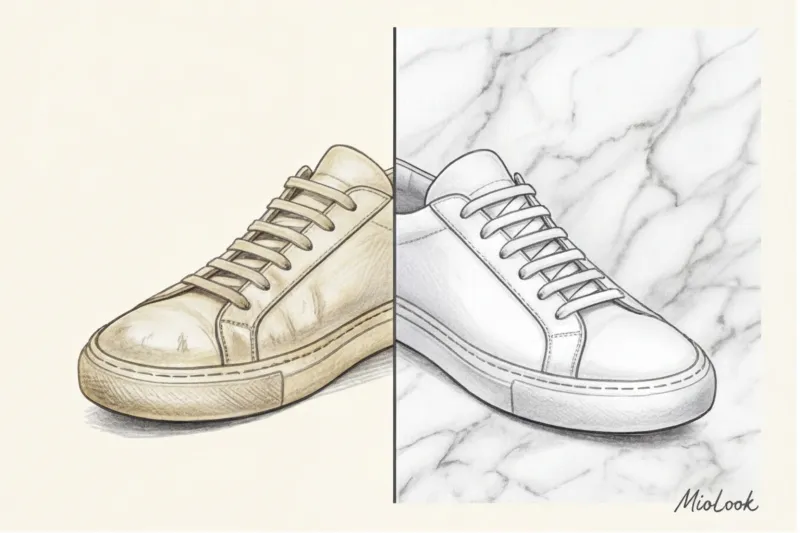
A couple of months ago, Anna, a top manager at a major IT corporation, came to see me for a consultation. She was wearing an immaculate double-breasted camel coat (around $2,000), a perfect cashmere sweater, and... white sneakers covered in a mesh of gray microcracks and yellowish stains. Her entire "quiet luxury" look was shattered by the dirty shoes. Anna sighed, "Isabella, I wash them every week, but they still look old." And in that moment, I realized how many smart, stylish women ruin their shoes by relying on harmful internet life hacks.
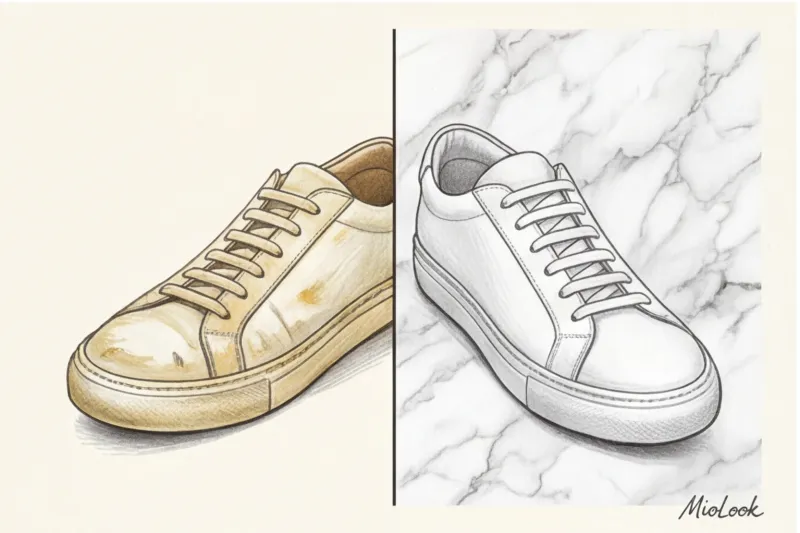
Knowing that, How to clean white leather shoes , is not just a matter of hygiene. It's a matter of your personal brand. I wrote more about how the texture and condition of materials convey your status in our a complete guide to caring for leather items You can wear basic jeans from the mass market and a simple white T-shirt, but if your sneakers are pristine white, the look will look expensive.
Forget everything you've been told on TikTok about toothpaste and baking soda. In 12 years as a stylist, I've seen hundreds of ruined pairs of shoes. Today, I'll share with you a professional algorithm we use on fashion shoots and that restorers in premium boutiques employ.
The Anatomy of a Spot: Why White Skin Turns Yellow and Loses Its Appearance (and How It Affects Your Status)
To defeat an enemy, you need to know them. What is "ingrained dirt" from a chemical standpoint? It's not just soil. It's a combustible mixture of oxidized oils (skin sebum and street chemicals), asphalt microparticles, and dust that literally eats into the pores of the material.
A 2024 study by the WGSN trend agency confirms that white sneakers have become firmly established in the business dress code. However, the requirements for their condition have become as strict as those for classic Oxfords. Dirty sneakers during negotiations scream sloppiness.
The nature of the yellowing depends on the material you are wearing:
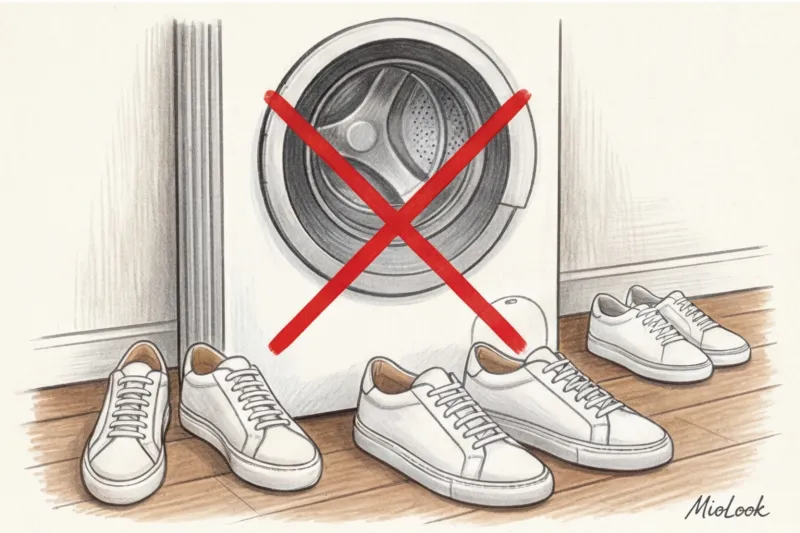
- Mass-market eco-leather (polyurethane): Yellowing occurs when exposed to ultraviolet light. Polymers degrade in the sun, and this process is irreversible. No cleaning will restore their original color—only repainting.
- Genuine Leather: Yellowing and graying are exclusively due to improper care and harsh chemicals. If you see yellow halos on your hair, you most likely created them yourself.
The Biggest Mistake: The Washing Machine, Baking Soda, and Bleach Myth
Let's agree once and for all: washing your shoes in a washing machine is a death sentence for their structure. I often hear from clients: "But I wash them on a delicate cycle in a bag!" It doesn't help.
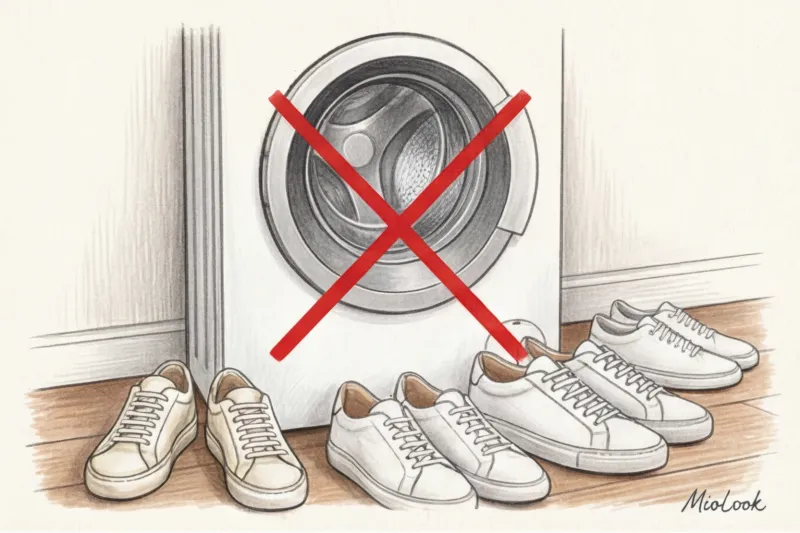
Firstly, even at 30 degrees Celsius, water and powder dissolve shoe glue. It washes out from under the sole and appears as nasty yellow stains on the fabric seams and joints. Secondly, the drum deforms the shoe last. The shoe loses its anatomical shape.
According to technologists at Italian tanneries, household chlorine bleach destroys the collagen fibers of genuine leather by 40%. The leather becomes brittle, dry, and begins to develop a network of cracks after just a couple of months of wear.
Another popular folk remedy is cleaning with baking soda or toothpaste using a stiff brush. Did you know that baking soda works like fine sandpaper? It leaves micro-scratches on the smooth grain of leather. These scratches immediately attract new dust, and within two days, your sneakers look dirtier than before.
Your perfect look starts here
Join thousands of users who look flawless every day with the MioLook smart wardrobe.
Get access — €0.99 onceHow to Clean White Leather Shoes: A Premium Formula Step-by-Step
On commercial shoots, we usually have no more than 3-5 minutes to restore the whiteness of a model's shoes before going on camera. We never use tap water. We rely on the laws of physics.
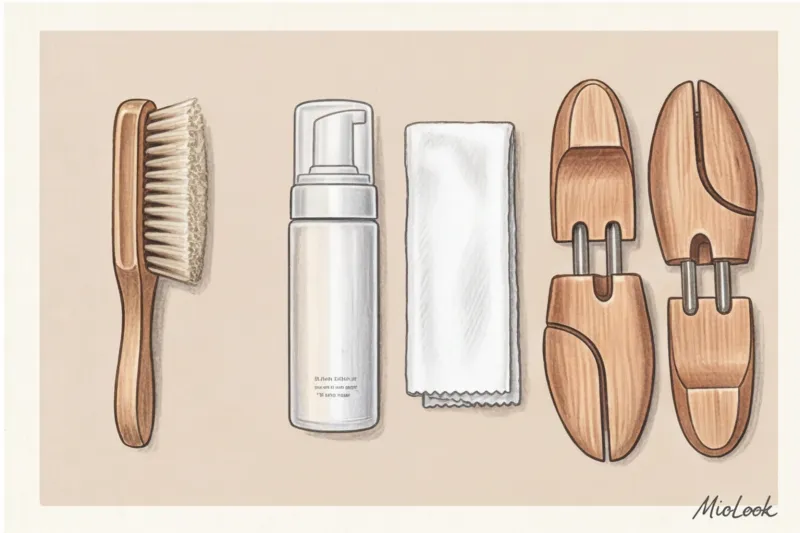
Preparation: Be sure to remove the laces. Insert wooden shoe trees (cedar shoe trees) or at least stuff the shoes tightly with clean, light-colored paper. Tight leather cleans twice as effectively and won't dent under the brush.
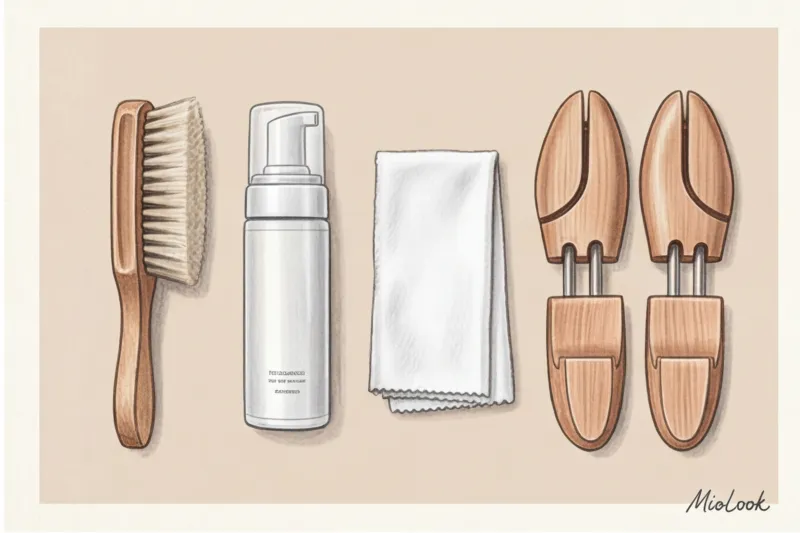
- Step 1: Dry cleaning. This is the most important step, which 90% of people skip. Before applying any wet product, take a dry horsehair brush and brush off any dust. If you immediately apply foam to dusty sneakers, you'll simply push the liquid dirt deep into the leather pores.
- Step 2: Wet cleaning with foam. Forget about laundry soap. Use a specialized pH-neutral sneaker cleaning foam (such as those from Saphir or Tarrago). Apply the foam to the brush, not the shoes, and spread it over the surface using circular motions.
- Step 3: Microfiber. The foam draws dirt to the surface. Now it's your turn to remove it. Take a clean microfiber cloth and use blotting motions (don't rub, just blot!) to remove the dirty foam.
The specifics of sole care: where the magic of a melamine sponge is permitted
A rubber sole and a leather upper are two completely different materials, requiring different chemical treatments. White rubber is porous, and dirt quickly becomes embedded in it.
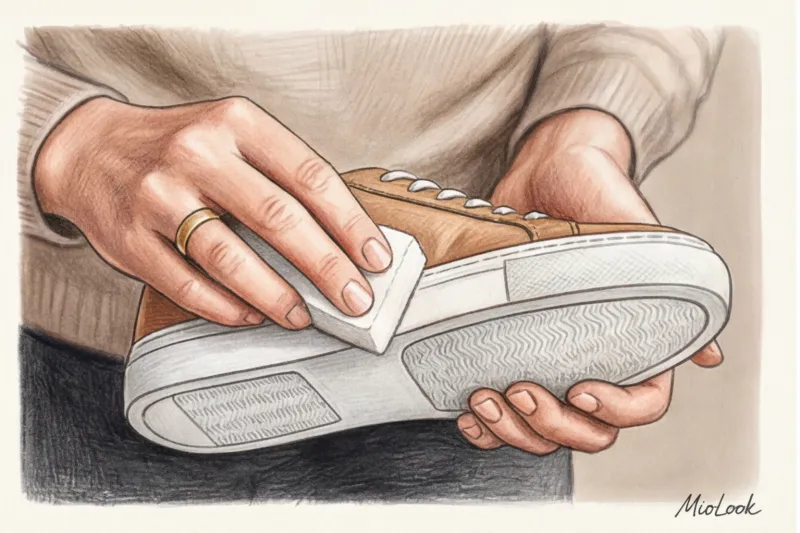
This is where the internet's favorite trick—a melamine sponge—comes into play. But there's a strict rule: the sponge must have the abrasiveness of fine sandpaper (around 3000 grit). It can only be used on rubber welts! One careless move on the leather and you'll remove the top layer of protective paint.
For quick, surface stains on the soles, I use micellar water. Apply a couple of drops to a cotton pad and wipe the rubber—the micelles are great at capturing street dirt particles without any friction.
White laces and stitching: details that reveal the age of shoes
You can perfectly clean the leather, but if the laces are still grayish, the sneakers will still look old. In my experience, fresh, snow-white laces instantly make shoes look 30% newer.
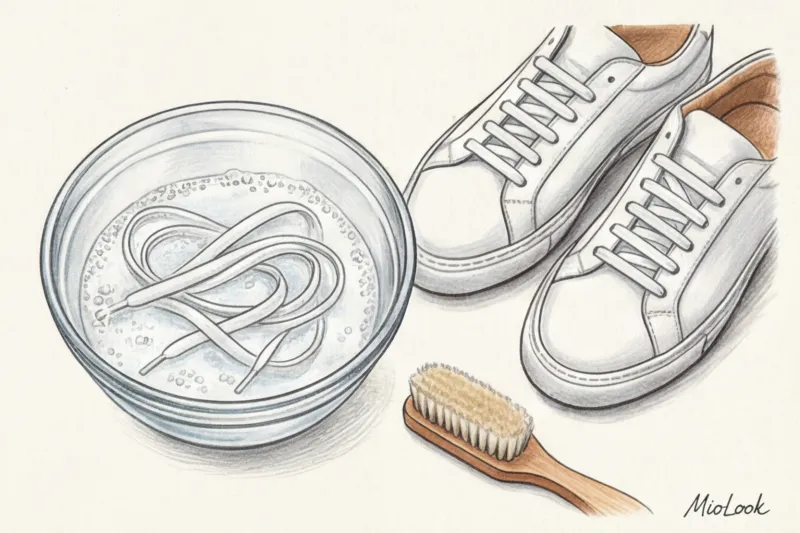
Never wash laces with your shoes. Soak them in a glass bowl with hot water and oxygen bleach (non-chlorine!) for 40 minutes, then rinse.
The seams on leather shoes are a particular pain. Dust gets trapped there, creating an unsightly appearance. To restore their whiteness, apply a drop of thick foam to the seam and scrub with a soft toothbrush (the kind you only use for shoes), then immediately blot with a microfiber cloth.
Try MioLook
A smart AI stylist will create the perfect look for you and suggest how to pair your flawless white sneakers.
Get access — €0.99 onceA Stylist's Secret Weapon: Protection, Liquid Skin, and Prevention
Sometimes dirt doesn't come out simply because it's not dirt. It's peeling paint. If you've caught a curb and a gray scratch appears on the toe, no amount of cleaning will help. This is where "liquid leather" comes in—a special white acrylic paint for sneakers with a strong pigment. It's applied in a thin layer locally to the scratch and completely conceals the defect.
However, I must be honest with you: this does NOT work for suede, nubuck, or deep, through cracks on the arch of the foot. On active creases, the thick layer of liquid leather will simply crack again after a couple of hours of walking.

The key to ensuring the longevity of white shoes is the "24-Hour Rule." Any white pair should be treated with a water-repellent nano-spray immediately after purchase and after each deep cleaning, leaving it for 24 hours before going outside. Statistics from shoe care manufacturers are merciless: treated shoes last 60% longer and are three times faster at removing dirt.
Furthermore, genuine leather (unlike faux leather) critically requires moisturizing. Use a colorless cream-balm once a month to keep the leather supple and prevent it from creasing where your feet bend.
Checklist: First aid if you step in mud before an important meeting
Life is unpredictable. Imagine: you go to an important interview in a perfect outfit (by the way, if you are unsure about your combinations, you can always upload a photo to MioLook (for style analysis), and suddenly—a dirty puddle. What to do?
- No alcohol wipes. Antibacterial hand wipes contain alcohol. Wiping white leather with them can dissolve the finish, leaving your shoes matte and sticky.
- Use cosmetics. If you don't have shoe polish wipes on hand, buy makeup remover wipes (oil-free!) at your local drugstore. They gently dissolve dirt without damaging the paint.
- Paradoxical advice: let the mud dry. If you spill liquid clay on your sneaker, don't try to wipe it off right away—you'll only spread it all over the surface and rub it into the seams. Reach the affected area, let the mud dry for 15 minutes, and then simply scrape off the dry crust with the edge of a plastic card or a dry cloth. Only then, gently wipe away any remaining residue.
Keeping your leather shoes white isn't a daily grind; it's simply a matter of following the right routine and avoiding harsh household products. Spending 10 minutes on proper care once every two weeks will save you not only hundreds of dollars on new sneakers, but also your impeccable image. After all, it's the little things like these that make a difference.