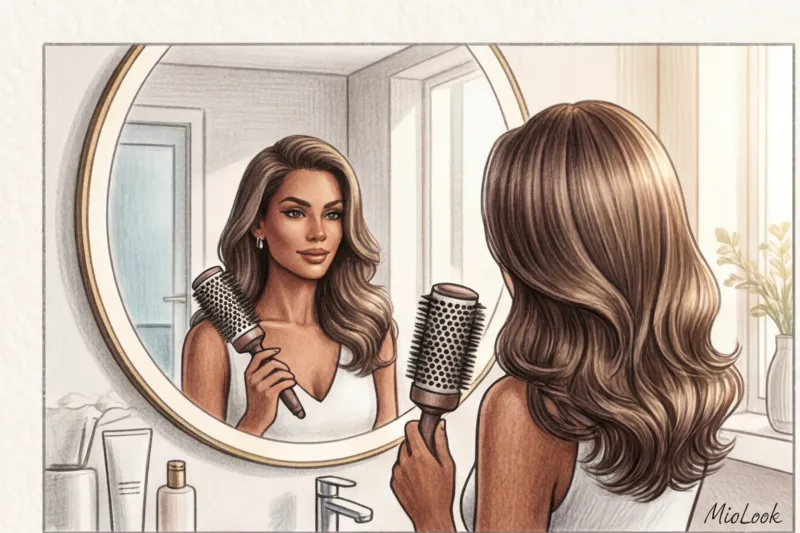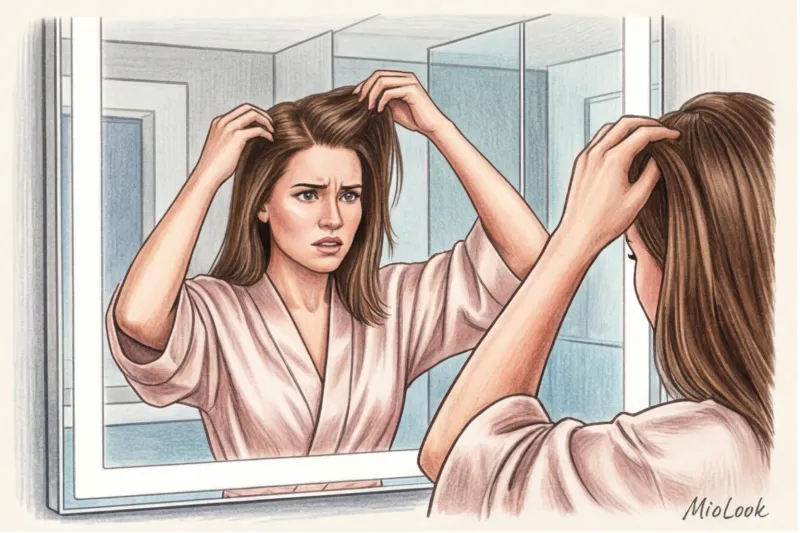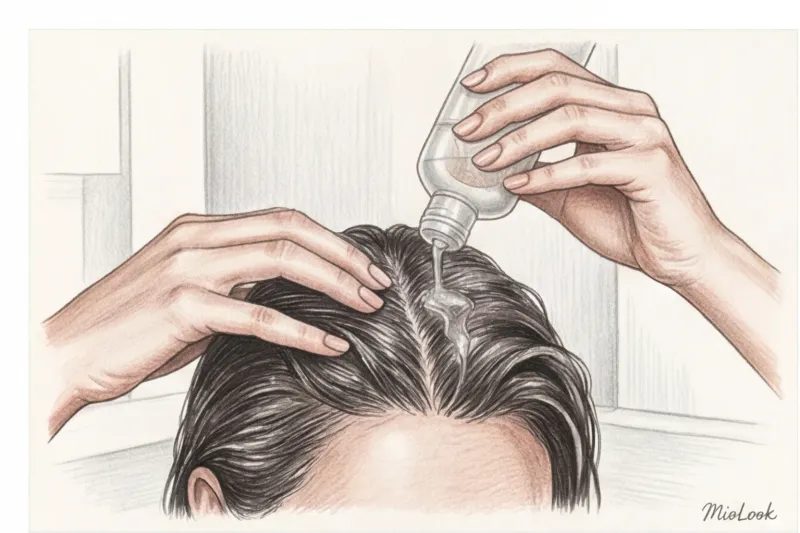
In my practice, every third request for a "long-lasting style" ends with a bathroom shelf overhaul. One of my clients spent years buying cans of super-strong hold hairspray, complaining that her hair "didn't hold any volume." You know what the real problem was? Her "restorative" shampoo with macadamia oil. It overloaded her roots so much that they became heavy and greasy within two hours of washing. The expensive styling products simply cemented this oiliness.
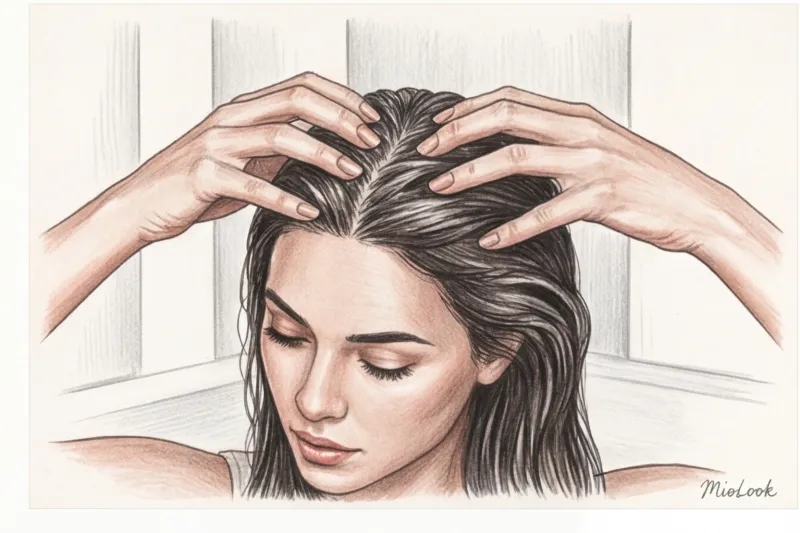
The foundation of any luxurious hairstyle isn't laid in front of a mirror with a curling iron, but in the shower. If you don't know how to choose the right shampoo, your chances of achieving voluminous hair are slim to none. We've covered this in more detail in our a complete guide to proper hair care for perfect styling Today, we'll debunk the biggest mass-market myth and introduce a "double care" system that will change the way you wash your hair.
The main rule of a stylist: how to choose a shampoo for the skin and a conditioner for the length
Store shelves are full of labels: "for split ends," "for damaged hair." As a stylist, I have to say it bluntly: There are no shampoos for split ends. This is pure marketing that forces you to buy a product that does not solve your basic problem.
Shampoo is a cleanser (detergent). Its only function is to dissolve sebum (oil), styling product residue, and urban dust on the scalp. If you try to "cure" dry hair with a shampoo full of silicones and oils, you're simply not washing the roots. Dirty roots are physically unable to stand upright—they collapse under their own weight.
During one of my personal experiments, I tested the concept on myself and my clients for a month. Zone mapping (Zone care). The rule is: we select shampoo strictly based on your scalp type, and conditioner based on the degree of damage to the lengths. The roots need cleansing, while the lengths need protection and light reflection.
Test: How to determine your scalp type (not hair type)
"I have dry hair, but it gets greasy quickly" is the most common complaint. This means you have an oily scalp and damaged hair. In this case, you should choose a cleanser specifically for oily skin.
To accurately determine your hair type, forget about the condition of your ends. Focus on the time it takes for your roots to lose their freshness after washing:
- Oily skin: Requires washing every day or every 1.5 days. Hair loses volume by the evening.
- Normal skin: feels comfortable for 2-3 days.
- Dry skin: does not get dirty for 4-5 days, often accompanied by a feeling of tightness or fine dry dandruff immediately after washing.
"Sebum production is a hormonally dependent process. No shampoo in the world can 'retrain' the scalp to get less dirty. It's all about genetics and the endocrine system," notes a trichologist with whom I work with clients on complex cases of alopecia.
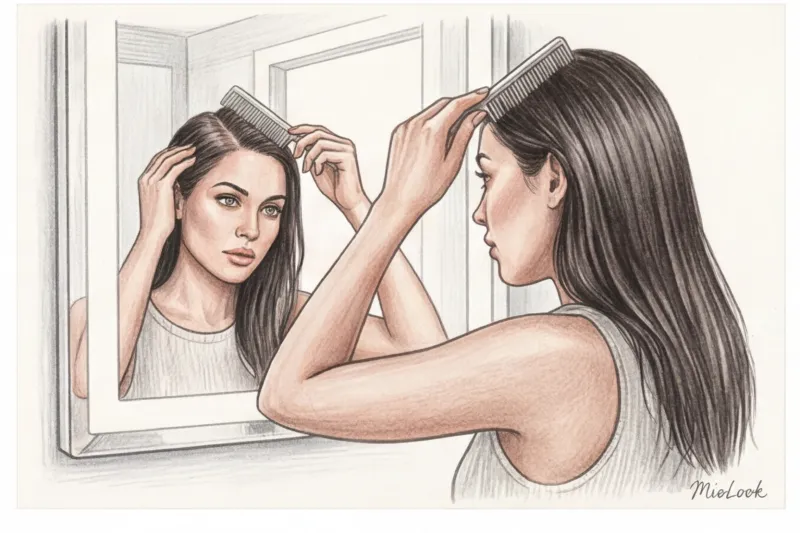
Try a simple test: the next morning after washing your hair, place a thin paper towel over your parting and press lightly. If a noticeable oil stain remains, your skin is oily.
Your perfect look starts here
Join thousands of users who look flawless every day with MioLook. The smart algorithm will take your appearance type into account and help you find the perfect combination.
Get access — €0.99 onceOily skin: how to choose a shampoo that won't increase sebum production
If you have oily skin, the biggest mistake is using harsh sulfates (such as pure sodium lauryl sulfate without emollients) every day, trying to get your hair squeaky clean. This causes a boomerang effect: overdried skin receives an SOS signal and starts producing sebum twice as quickly.
How should you choose a shampoo in this case? Look for sebum-regulating ingredients: salicylic acid (BHA), zinc (Zinc PCA), or tea tree extract. These ingredients gently exfoliate dead skin cells and prolong the freshness of the roots for 4–6 hours.
And another visual lifehack from a stylist: choose transparent gel textures. Pearlescent, opaque, and creamy shampoos (usually in the €5–€15 range) contain opacifiers (glycol distearate) and micro-oils, which will inevitably weigh down fine hair.
Dry and Sensitive Skin: Finding the Right pH Level
According to research in the International Journal of Trichology (2023), a healthy scalp pH is between 4.5 and 5.5 (slightly acidic). If the scalp is dry, tight, or prone to itching, highly alkaline cleansers will damage its protective barrier.
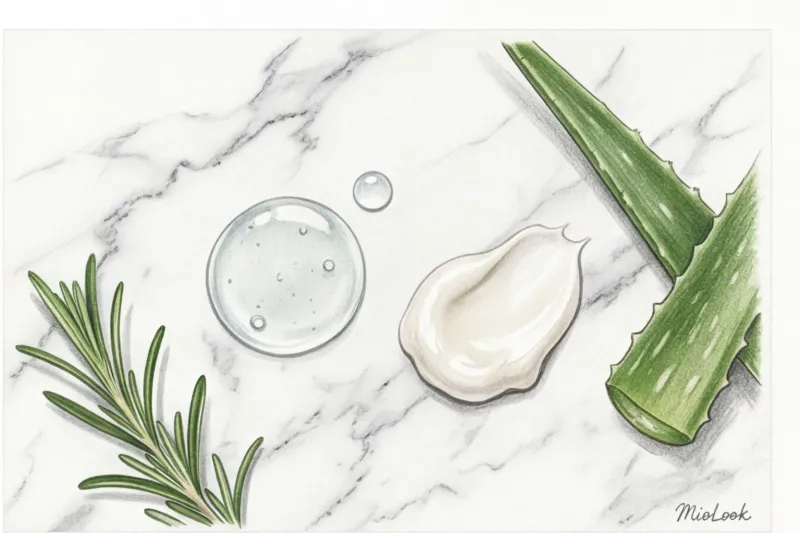
You need mild non-ionic surfactants: Coco-Glucoside , Sodium Cocoyl Isethionate The formula should also contain soothing agents such as panthenol, allantoin, or centella extract. Avoid cooling shampoos with menthol and formulas with harsh exfoliating particles (salt, apricot kernels), as they can cause microtrauma.
Sulfate vs. sulfate-free: which to choose for perfect styling?
The trend for "sulfate-free" shampoos has created a lot of confusion. Many women complain that after switching to mild shampoos, their hair has become dull and their volume has disappeared. Let's look at the chemistry behind this process.
Sulfates (SLS, SLES) are powerful surfactants. They act like magnets: one end of the molecule clings to water, the other to oils and silicones. When rinsed away, sulfates carry away all the dirt. Sulfate-free surfactants are much more gentle.
Fair Limit: Sulfate-free shampoos are NOT suitable for those who regularly use volumizing powders, dry shampoos, hairsprays, and heat protectants containing silicones. Soft foam is physically incapable of dissolving the dense polymers in styling products. build-up The buildup effect. Styling builds up on the hair shaft, the cuticle stops reflecting light, and the roots stick to the scalp. No backcombing with such a base will last even an hour.
My compromise advice for those who protect their color with a mild shampoo but love styling: use a deep-cleansing shampoo (SCS) every 10-14 days. This is a kind of "factory reset" that will remove all the built-up polymers.
Access to MioLook for €0.99 — one-time payment
A smart AI stylist will select the perfect look based on your hair, face shape, and personal preferences.
Get access — €0.99 onceBalm and conditioner: choosing the “cement” based on the degree of damage to the length
Hair grows at a rate of about 1–1.5 cm per month. This means that the ends of your hair, when they're shoulder-length, are approximately 3–4 years old. They've been through hundreds of blow-drys, temperature fluctuations, and friction from clothing. They're almost completely deprived of their protective lipid layer.
The purpose of a conditioner is to smooth the cuticle scales that have been lifted by water and shampoo. Without this "cement," the hair will cling to adjacent strands, tangle, and break under brushing.

A mask works in the cortex (inside the hair shaft), while a balm/conditioner works on the surface (at the cuticle). Here's how to choose the right texture for your length:
- Fine, uncolored hair: Avoid heavy butters (shea butter, coconut, cocoa). Look for lightweight formulas with aloe vera, hydrolyzed silk, and wheat proteins. Budget-friendly formulas (10–20€) do the job perfectly.
- Porous, bleached hair: Here you need "heavy artillery." Look for ceramides, keratin, and high-quality volatile silicones (for example, Amodimethicone ). Silicones create a heat-protective film.
An important nuance from practice: Cheap mass-market conditioners (under €5) often contain heavy, non-volatile silicones (Dimethicone in high concentrations). Studies show that with regular use without proper cleansing, they can increase hair weight by up to 3%. It sounds like a small thing, but for root volume, this is disastrous—hair simply falls out.
The main mistakes in basic care that cause your hairstyle to fall apart within an hour
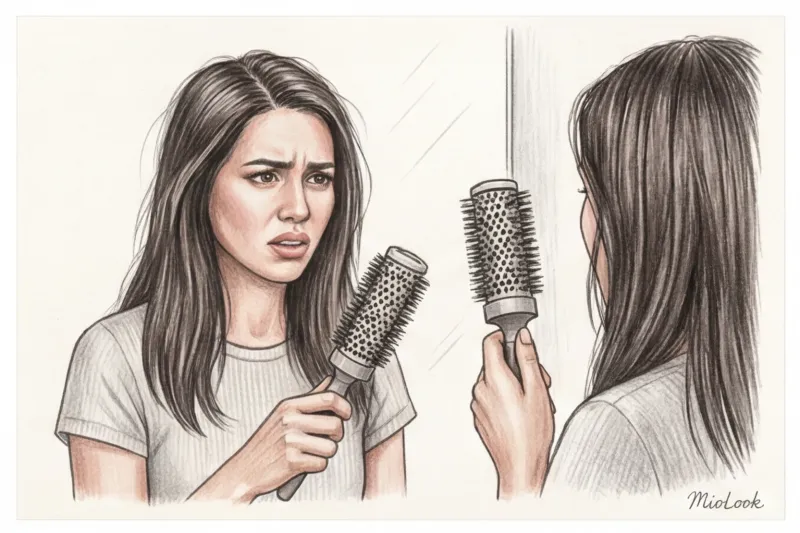
Even if you've purchased premium care for €60, improper washing technique will ruin the results. Here are the top four mistakes I see my clients make:
- Applying conditioner to the roots. Conditioner should begin at or below the ear line. When applied to the scalp, the lipids in the conditioner instantly dissolve volume at the roots.
- A feeling of being "unwashed". Conditioner should be rinsed out longer than shampoo. If your hair feels slippery, you haven't washed it thoroughly. Hot tools can cause product residue to "cook" your hair.
- The water is too hot. Boiling water stimulates the sebaceous glands. Cleanse your skin with warm, comfortable water, but rinse off the conditioner with slightly cool water—this will further smooth the cuticles.
- Aggressive rubbing with a towel. Wet hair stretches by 30% and breaks easily. Rubbing your hair with a terry towel can ruffle the cuticle. As a result, your hair becomes frizzy, dull, and won't hold a straight shape even after straightening.
Ready to get started?
Try the MioLook plan for free—no commitments required. Save styling ideas and plan your looks with just one click.
Get access — €0.99 onceChecklist: A Hair Washing Routine for Impossible Volume
I use this strict hair prep protocol before important events and shoots. Time it—it takes no more than 10 minutes, but the results look like you just left the salon.
- Step 1: Comb dry hair thoroughly before washing. This will remove tangles and some dust and styling products.
- Step 2: Wet your hair. Apply a small amount of shampoo to your palms, lather, and massage. only the root zone with your fingertips for 1–2 minutes.
- Step 3: Rinse out the lather (it will gently cleanse the lengths). Be sure to repeat the lathering process at the roots a second time. The first wash dissolves the styling product, the second cleanses the scalp.
- Step 4: Critical point: Gently squeeze your hair with your hands to remove excess water. If you apply conditioner to wet hair, the water will simply push out the active ingredients, and the product will run down the drain.
- Step 5: Distribute the conditioner throughout your hair, leaving a 10-15 cm gap from the roots. Leave on for 2-3 minutes, then rinse thoroughly.
- Step 6: Wrap your hair in a microfiber towel or a smooth cotton T-shirt using blotting motions. No tight turbans!
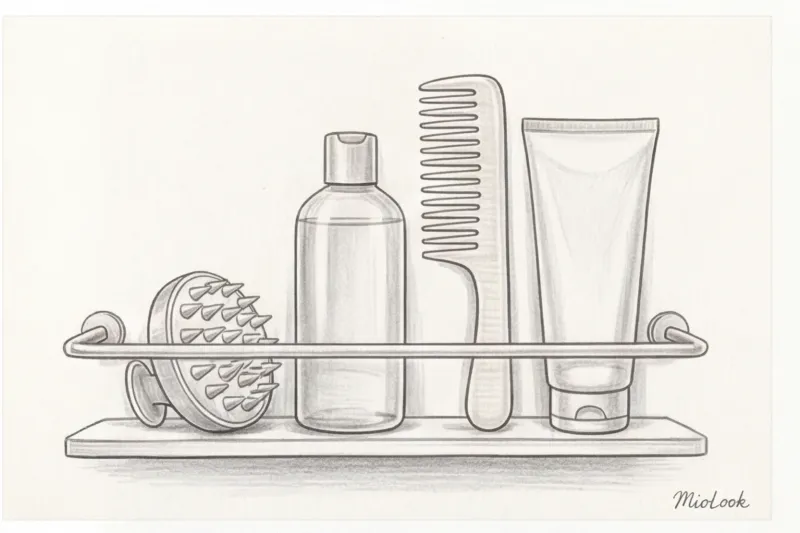
The secret to a luxurious and long-lasting hairstyle isn't the amount of hairspray, but a well-prepared canvas. Learn to listen to your scalp, invest in high-quality cleansing without unnecessary weighting agents, and you'll be surprised how manageable, voluminous, and light your hair can be without complicated styling.