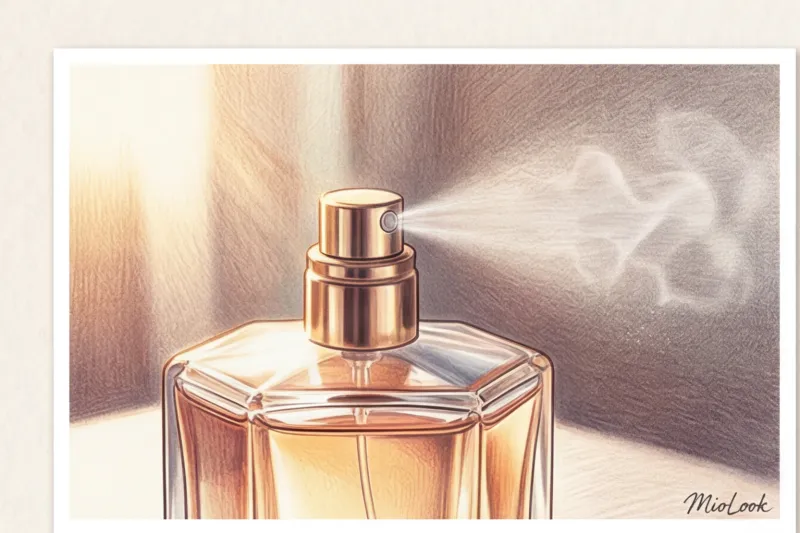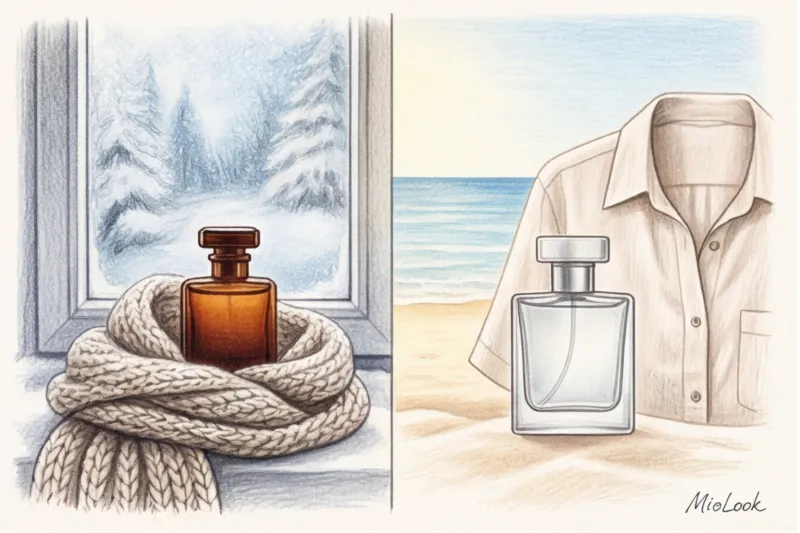
I vividly remember that July day when I had to open all the windows in my studio. A client arrived for a wardrobe review at 30°C, generously spraying herself with a thick, viscous cloud of Tom Ford Oud Wood. The scent, which smells like luxurious cashmere in winter, turned into a suffocating weapon of mass destruction in the heat. It was then that we began our consultation not with clothes, but with perfume.
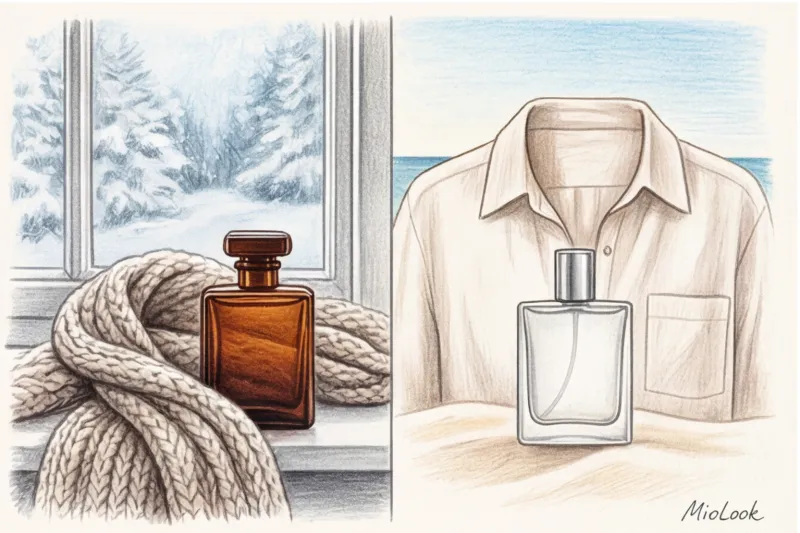
Many women spend years searching for their one and only scent. We discussed this concept in more detail in our the complete guide to finding your perfume "I" But the truth is, wearing the same perfume 365 days a year is like wearing the same wool coat in a January snowstorm and in the August heat. Perfume isn't just a beauty product. It's an invisible part of your capsule wardrobe, subject to the strict laws of physics.
Today we'll explore how to choose the right perfume for the season, why buying ten 100ml bottles is a waste of money, and how to create a smart perfume capsule that will enhance your image.
Why dividing perfumes by seasons isn't marketing, it's physics
The beauty industry often pushes unnecessary purchases on us, but the seasonality of fragrances is not the case. The laws of chemistry and thermodynamics are at work here. The development of any perfume composition depends on the rate of evaporation of olfactory molecules, which, in turn, is directly related to the temperature and humidity of the surrounding environment.
As chemical engineers explain, in summer, the temperature of our skin at the periphery (wrists, neck) increases by 2-3 degrees. Add to this the high humidity, which acts as a magnifying glass for scents, greatly enhancing their diffusion (sillage). This is why your favorite winter perfume with notes of praline and patchouli literally starts to "scream" and suffocate those around you in the summer.
In winter, the opposite process occurs. Cold, dry air "freezes" the volatility of molecules. If you apply a light, summery, citrusy fragrance at -15°C, it will simply shrivel and disappear from your skin within ten minutes, without ever having a chance to develop its base notes.
Access to MioLook for €0.99 — one-time payment
A smart AI stylist will select the perfect look based on the season and your style.
Get access — €0.99 onceSummer Scents: How to Smell Fresh Without Violating Your Personal Boundaries
In the heat, our sense of smell becomes heightened. We react more acutely to any irritants, so summer perfume etiquette requires delicacy. One of my clients, who works at an open-plan IT company, complained about her colleagues giving her headaches—the culprit was her thick oriental perfume, which became unbearable in the closed, air-conditioned space during the summer.
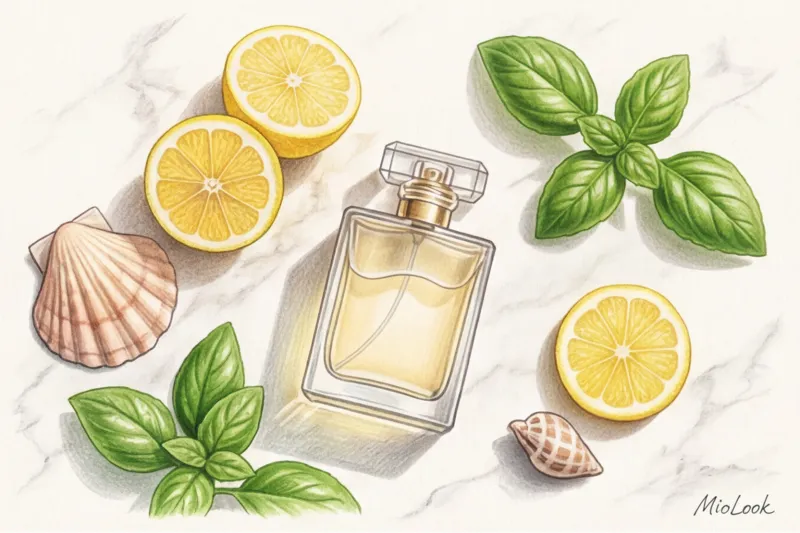
Highly volatile molecules are ideal for hot days. Look for the following groups in the pyramids:
- Citrus: Bergamot, grapefruit, yuzu, and bitter orange create the sensation of a glass of ice-cold lemonade.
- Aquatic and ozone: notes of sea salt, rain, dew.
- Greens: freshly cut grass, fig leaf, basil, mint.
- Light white florals: neroli, orange blossom (but without indolic, heavy animalic notes).
The main rule of the summer office is the "one spray rule." If you can't smell your perfume after an hour, it doesn't mean others can't smell it. It just means your brain has adapted to the scent.
Application Secret: How to Make Summer Perfume Last Longer
Summer fragrances have a significant drawback: light citrus molecules (like limonene) evaporate catastrophically quickly on hot skin. As a stylist, I often see women desperately pour half the bottle on themselves, trying to prolong the scent's longevity.
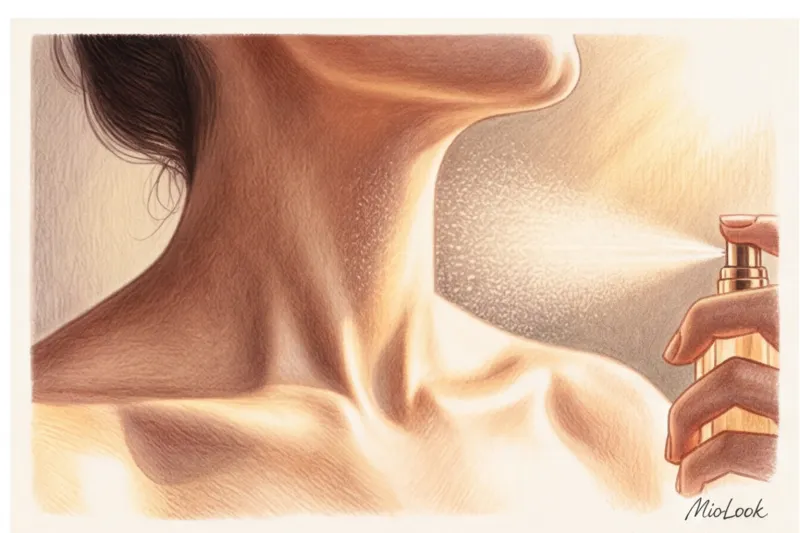
My personal life hack: Stop applying summer perfume to your pulse points (neck and wrists), where body temperature is highest. Apply it to your hair (just spray it and walk into it), the hem of a linen dress, or the inside of your clothing. The fabric is cooler than your skin, and the scent will evaporate more slowly, creating a subtle, delicate trail as you walk.
Winter fragrances: a warming trail like a cashmere sweater
When the temperature drops below freezing, we physically crave bulky scarves and thick textures. Winter perfume should do the same—warm and create a feeling of coziness. In the cold season, we crave heavy, dense base notes that take time and warmth to develop.
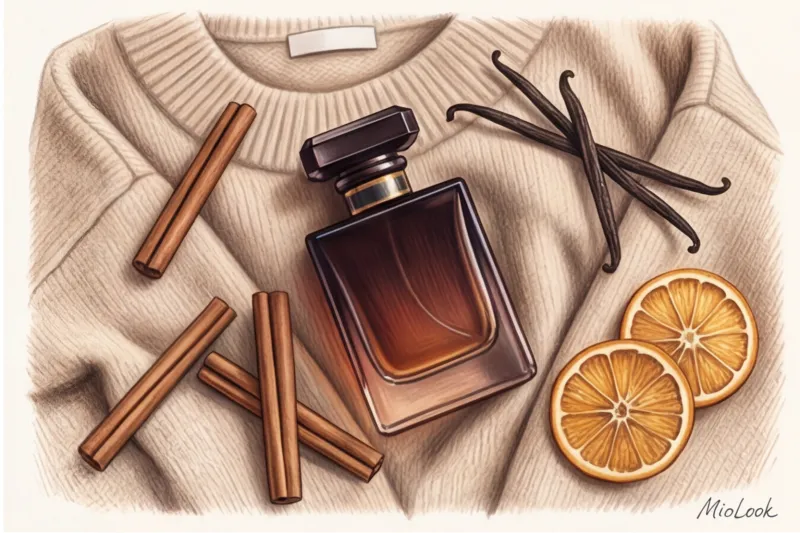
Ideal winter profiles include gourmands (vanilla, chocolate, caramel), resins (amber, incense), heavy woods (oud, sandalwood), spices (cinnamon, cardamom), and tobacco. These molecules are large and heavy, and the cold prevents them from evaporating too quickly, so they sound noble and restrained.
"Natural fabrics—thick merino knits, Scottish tweed, or cashmere—have a porous structure that phenomenally retains heavy perfume molecules. Your favorite winter sweater can retain its amber base for weeks, creating a unique, personal scent trail."
Breaking the mold: "cold" perfumes for frosty days
There's a common misconception that winter is all about sweets, the East, and cinnamon buns. But after 12 years of working with personal style, I've learned that this rule can and should be broken.
On a frosty day, try wearing "cold" aldehyde fragrances (like classic Chanel No. 5 or Byredo Blanche) or crystalline floral notes (lily of the valley, icy iris). In the cold, they literally ring, imitating the scent of clean, crisp snow and starched shirts. This creates an incredibly expensive, prestigious image of the Snow Queen.
But there is a limitation: This trick won't work if your winter style is built on relaxed boho, soft, shapeless cardigans, and Ugg boots. Bold aldehydes require a more composed look—a crisp, straight-cut coat, leather gloves, and perfectly coiffed hair.
Your perfect look starts here
Join thousands of users who look flawless every day with MioLook, choosing clothes and accessories in one click.
Get access — €0.99 onceOff-season: A Perfume Wardrobe for Spring and Fall
The transitional season in perfumery is like a demi-season capsule in clothing. You wouldn't jump straight from a down jacket to a silk top, would you? Transitional options are essential.
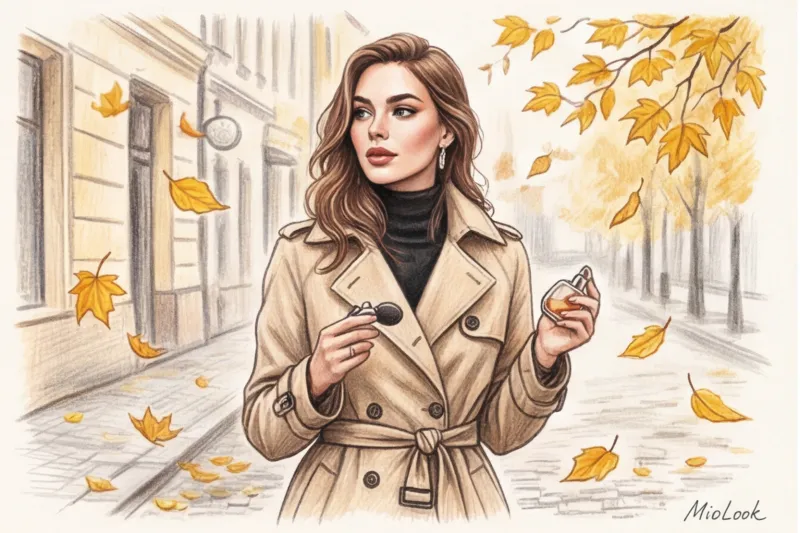
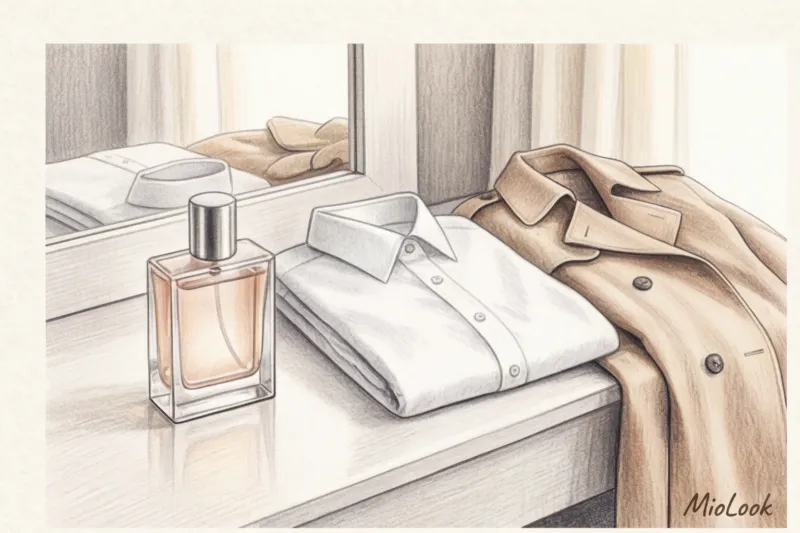
Autumn — a time of chypres, leather notes, and dry woods. These fragrances harmonize brilliantly with the scent of fallen leaves, damp asphalt, and your favorite beige trench coat from Massimo Dutti or COS. They possess a subtle melancholy and elegance.
Spring — a time of awakening. When the air is still cool, but no longer frosty, moist floral notes such as peony, lilac, freesia, and tulip sound stunningly beautiful. They symbolize renewal and perfectly complement lightweight silk scarves and light-colored jackets.
Smart Consumption: Assembling a Perfume Capsule
As a stylist who advocates smart shopping, I'm categorically against mindlessly buying dozens of bottles. Let's do the wardrobe math. A standard 100 ml bottle lasts for approximately 1,000-1,200 sprays. If you use a specific winter fragrance for only three months a year, two sprays a day, it will last you 6-7 years!
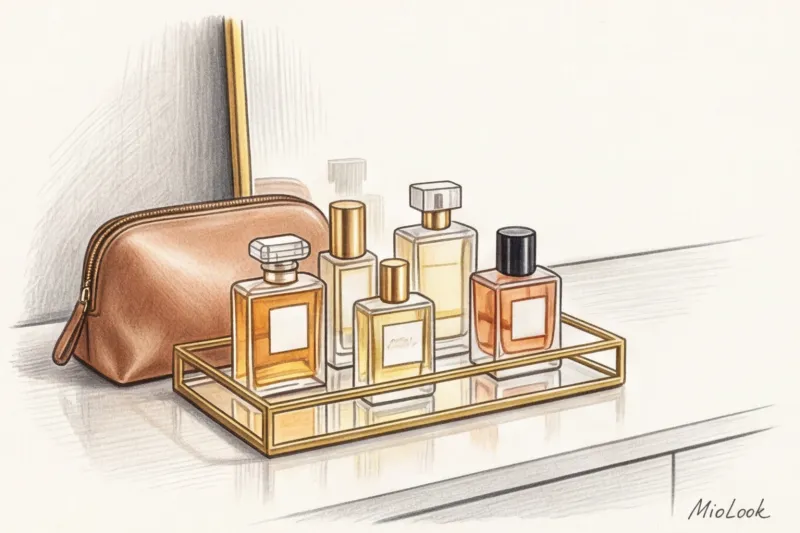
The problem is that, according to perfume chemists, the shelf life of an opened bottle averages 12-36 months. After that, the oils begin to oxidize, and the scent "breaks" (notes of rancid alcohol or old oil appear). Buying 10 full-size bottles for different seasons is literally a waste of money.
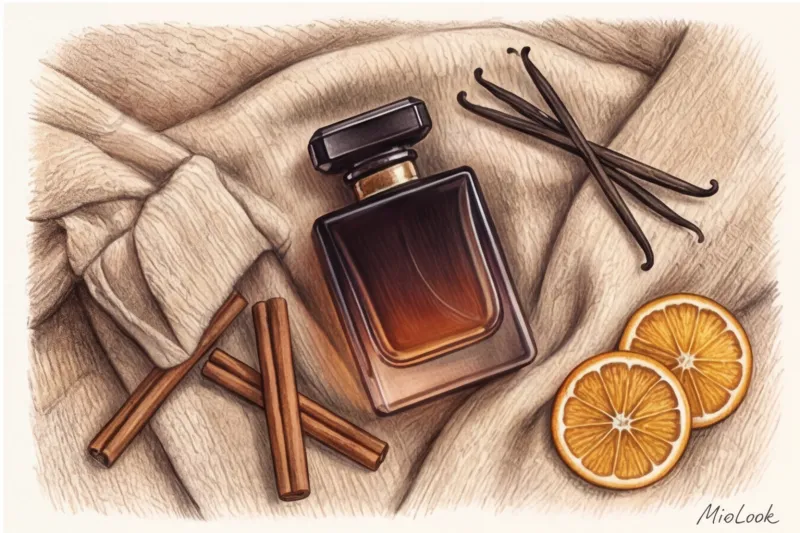
The optimal formula for a perfume capsule:
- One light fragrance for summer (citrus/aquatic).
- One dense aroma for winter (wood/spices).
- One universal base scent for the office (for example, light musk or tea notes).
- One evening, accent perfume for special occasions.
Expert advice: For strong seasonal scents (that you only wear in hot weather or snow), always buy travel-size bottles (10-15 ml) or official miniatures. You'll have time to use them up before they expire, saving money and allowing you to experiment more often. By the way, if you plan your looks in advance, you can add your own scents to MioLook to see how the perfume matches with the chosen capsule for the day.
Checklist: How to Store Seasonal Perfumes While They're Waiting for Their Time
If you're putting away your winter perfume in April and planning to retrieve it in November, you need to properly preserve it. According to the Osmothèque (the main international perfume archive in Versailles), perfume has three main enemies: direct sunlight, temperature fluctuations, and high humidity.
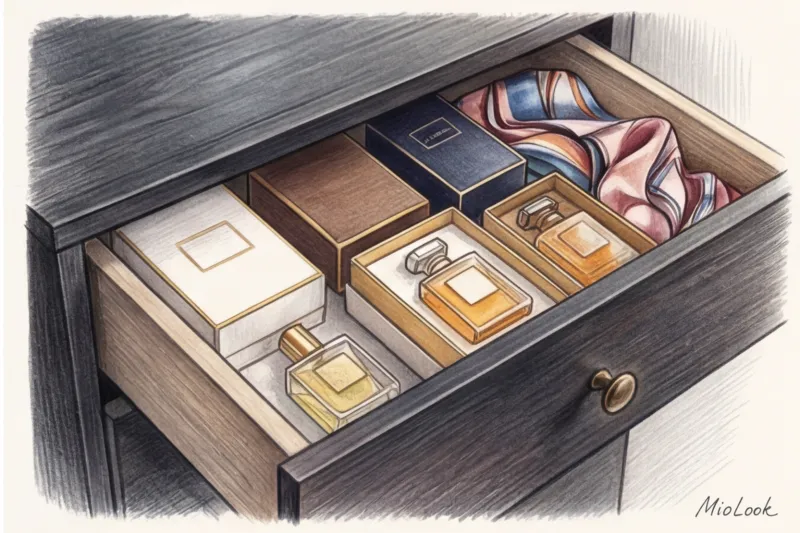
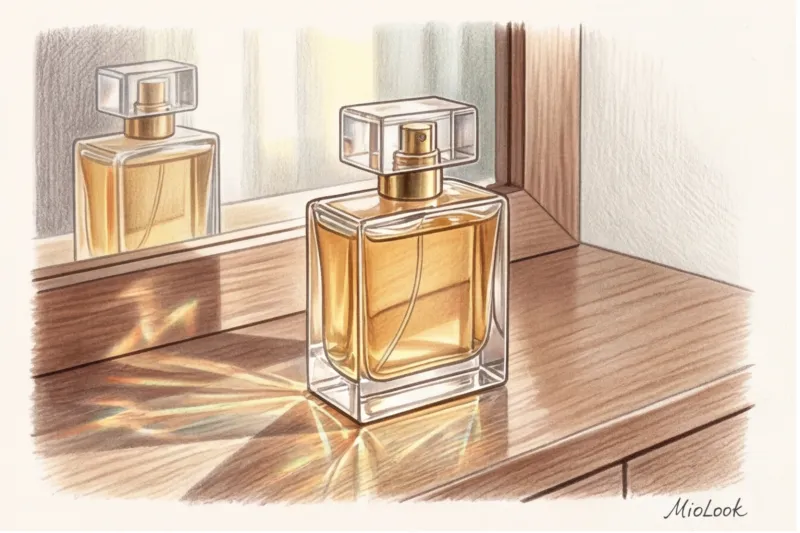
That's why storing perfume on a bathroom shelf is the worst possible idea. Hot steam from the shower will ruin the fragrance within a couple of months. Arranging bottles prettily on a sunlit vanity is also a crime against chemicals.
The Dark Closet Rule:
- Always keep the original cardboard box from your perfume.
- At the end of the season, place the bottle back in the box.
- Place the box in a dark, dry drawer of a chest of drawers or closet in a living room (away from radiators and windows).
- Try not to shake the bottles unnecessarily - excess saturation of the liquid with oxygen accelerates oxidation.
Conclusion: Manage the impression
Changing your scent seasonally isn't a whim for perfume addicts, but a powerful tool for managing your mood and the impression you make on others. A well-chosen seasonal fragrance creates a cohesive look: it doesn't clash with the weather outside, doesn't irritate coworkers, and accentuates the texture of your clothes.
Take stock of your perfume shelf today. Put away those fragrances whose time has passed in a dark closet, and keep only two or three bottles that are relevant to the current season and your wardrobe. You'll be surprised how much easier your morning shopping will be when every item—both visible and invisible—is in its place.