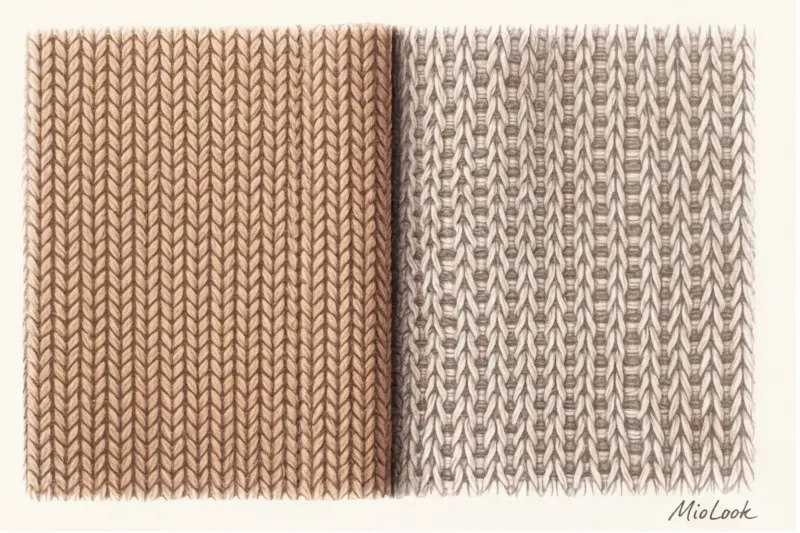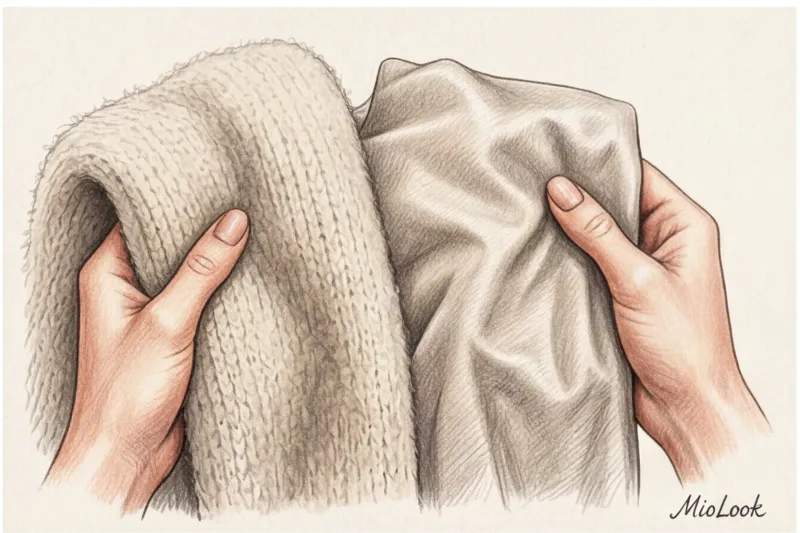
Over 14 years of working as a personal stylist, I've seen the same scene in fitting rooms hundreds of times. A woman picks up a sweater, sees the coveted "100% wool" label, and happily takes it to the checkout, confident in a flawless investment. A month later, during wardrobe review, she shows me a stretched-out, pilling mess. The irony is that sometimes a sweater with 15% synthetic fiber will outlast a "pure" wool sweater by several seasons.
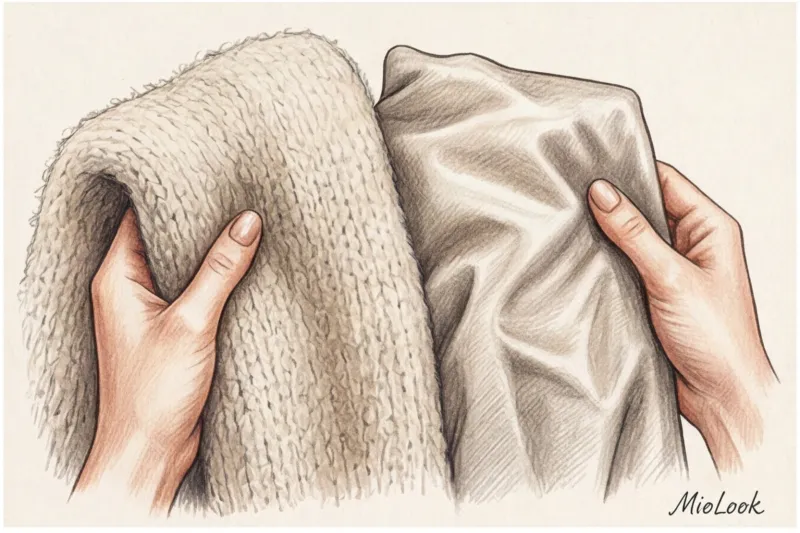
To understand, How to choose a quality sweater , it's not enough to simply look for natural ingredients on the label. We discussed the basic principles in more detail in our a complete guide to choosing quality clothing , but when it comes to complex knitwear, the rules of the game change dramatically.
The Anatomy of Heat: How to Choose a Quality Sweater Based on Composition and Stay Warm
Have you ever noticed how, even in a beautiful, oversized sweater from a popular mass-market brand, you start sweating after just 10 minutes indoors, but once you step outside, you're instantly chilled to the bone? This is the classic "greenhouse" effect created by cheap synthetics.
The physics of warm clothing doesn't work as many people think. It's not the fiber itself that warms, but the air trapped between its fibers. According to research by The Woolmark Company (2023), natural sheep's wool can retain up to 80% of the air within its structure due to the natural crimp of the fiber. This creates a microclimate around the body, absorbing excess moisture and releasing warmth.
The Mass-Market Trap: Why Acrylic Isn't a Replacement for Wool
Acrylic is often called "faux wool," but the only thing they have in common is their appearance on the store shelf. Acrylic thread is completely smooth and non-hygroscopic (doesn't absorb moisture). Sweat from the body stays on the skin, quickly cools in the cold, and you freeze.
Many customers justify their purchases by citing price: "Why pay €120 for merino wool when acrylic is €30?" I always suggest calculating the cost per wear. An acrylic sweater loses its appearance (it stretches, squeaks, and becomes covered in hard pilling) after about 5-7 washes. A woolen garment, with proper care, lasts 4-5 years. In the long run, "cheap" acrylic will cost you three times as much.
Debunking the myth: synthetic ingredients are a good thing
Here's a counterintuitive fact that often angers proponents of 100% naturalness: the presence of 10–15% nylon (polyamide) in a bulky, coarse-knit sweater is not the manufacturer's greed, but a technological necessity.
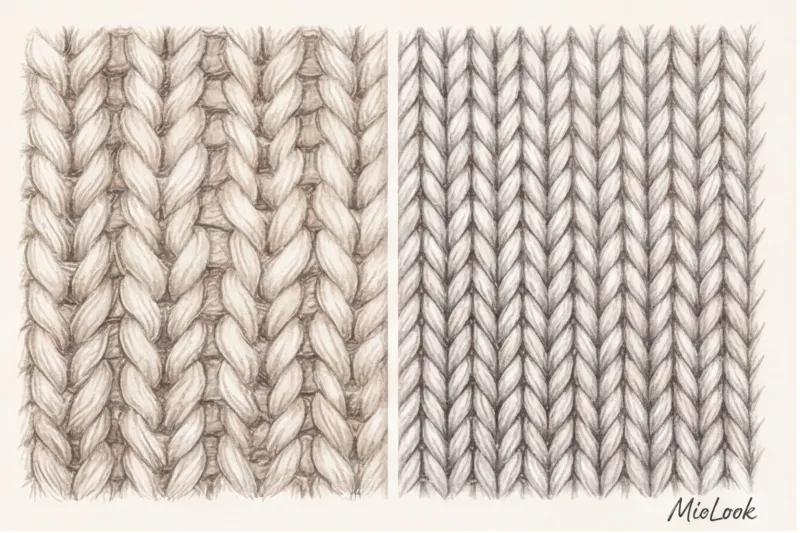
Heavy, thick wool yarn will inevitably stretch at the elbows and shoulders under its own weight. Nylon, in this case, acts as an invisible 3D frame, a reinforcement that returns the thread to its original position. Polyester and acrylic make the garment cheaper, while high-quality polyamide or elastane in small doses (up to 15%) make it durable.
“Adding 5–10% synthetic fibres to heavy wool garments increases their durability by 40%, preventing them from shrinking when wet,” confirms the Textile Exchange 2024 report.
Important limitation: This rule does NOT apply to thin, basic turtlenecks (first layer). Products that fit directly next to the body should be made of 95-100% natural fibers, otherwise you will lose tactile comfort.
Access to MioLook for €0.99 — one-time payment
A smart AI stylist will select the perfect look based on your wardrobe.
Get access — €0.99 onceCashmere, Merino, or Alpaca: A Stylist's Guide to Wool Types
Not all wool is created equal. I select completely different formulas for my clients for different life scenarios:
- Merino wool: Your basic workhorse. Thin, smooth, non-itchy. Perfect for the office. smart casual jacket.
- Alpaca and mohair: Long-haired fibers. They are 3-5 times warmer than sheep's wool and lighter in weight. They create trendy, fluffy, and cozy looks. But be careful: they can tingle slightly on sensitive skin.
- Cotton (100% Cotton): Cotton knitwear is beautiful, but it's not warm. It's only an option for a cool summer evening or an air-conditioned office, where wool would be too hot.
Cheap cashmere: the worst investment in your wardrobe
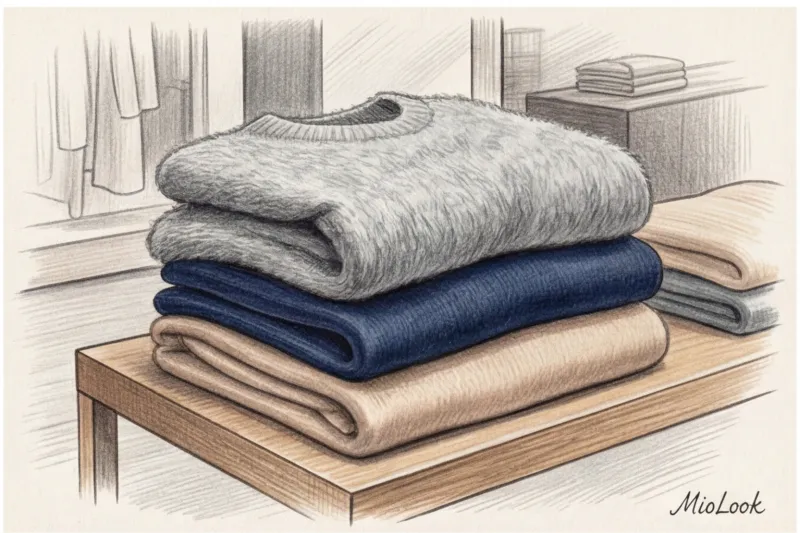
The trend for "quiet luxury" has sparked a boom in affordable cashmere. Mass-market brands are offering cashmere sweaters for €60–€90. My professional advice: pass them by.
The difference lies at the microscopic level. Premium cashmere is made from long down fibers (34–36 mm), carefully combed from the chests of Mongolian goats. Cheap cashmere is made from tow and short fibers (less than 28 mm). Because of their length, these fibers cannot be securely anchored in the yarn twist. The result? An €80 sweater will become covered in a thick layer of down and pilling the first time you wear it under outerwear.
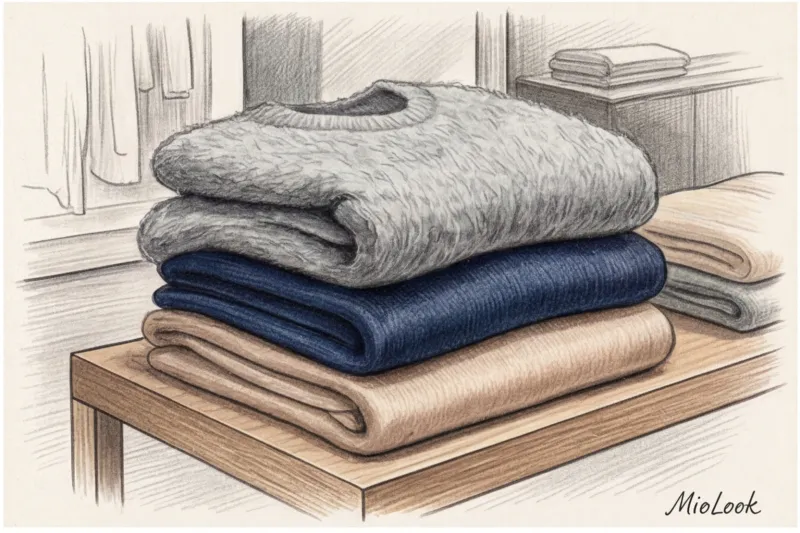
If your knitwear budget is limited to €100, buy a premium 100% merino sweater certified by the Woolmark label rather than the cheapest cashmere.
Test Drive in the Fitting Room: 5 Hidden Signs of a Piece of Clothing That Will Last for Years
During my shopping tours, I teach clients not only to look at the tag but also to test the item with their hands. Here are some insider testing methods:
- Translucent test. Hold the back of the sweater up to the fitting room lights. If the item glows like a sieve, the yarn is loosely twisted and the fabric was skimped on. This type of knitwear will become misshapen after the first wash.
- Kettle quality. Turn the neckline inside out. A quality sweater's collar is sewn to the base loop-to-loop (a flat serger stitch). Cheaper sweaters simply attach it with a coarse overlock stitch, which will chafe your neck and cause it to stick out.
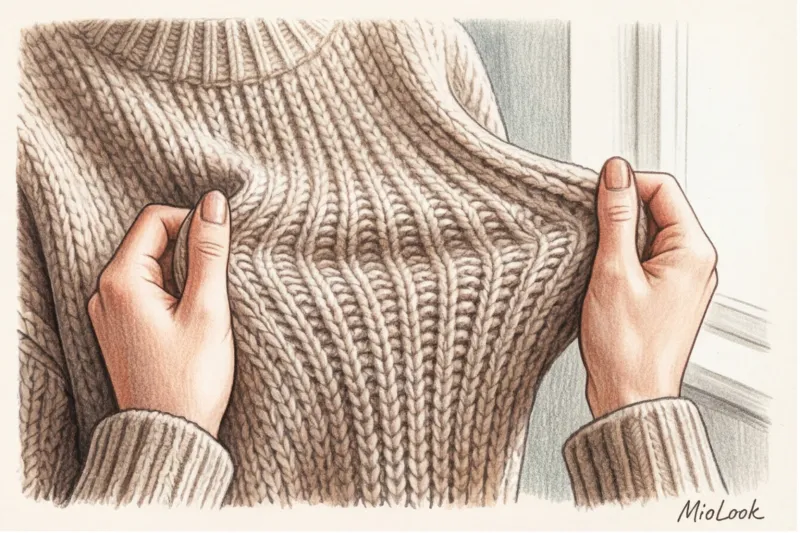
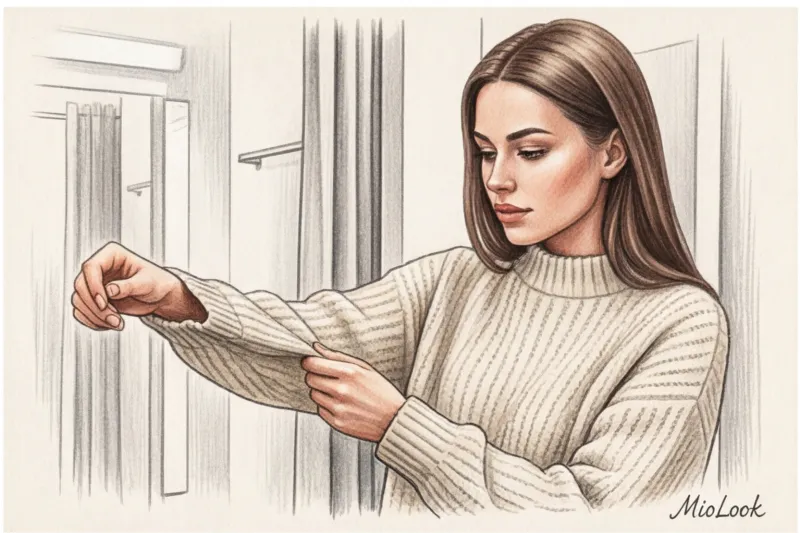
- Tactile test on the neck. Place the sweater not on your arm, but on your neck or collarbone (the most sensitive areas). If you feel itchy after 10 seconds, don't buy it; you won't be able to wear it.
Pilling: Why it appears even on premium items
"Olena, I bought a sweater at a luxury boutique for €300, and it's pilling under the arms! Is it defective?" I hear this question every winter. My answer: no, it's physics.
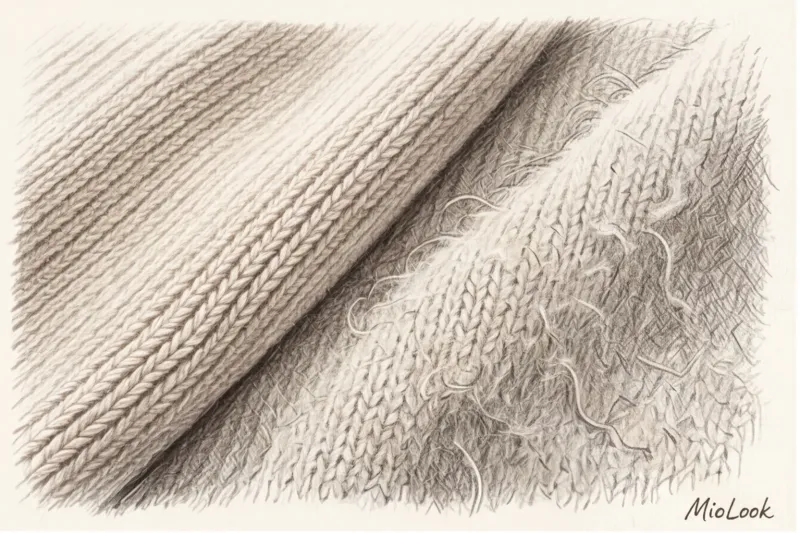
Pilling is a natural process for any soft, natural yarn. In areas of constant friction (like underarms or crossbody bags), short hairs are released from the yarn and form balls. The only difference is how these pills behave afterward.
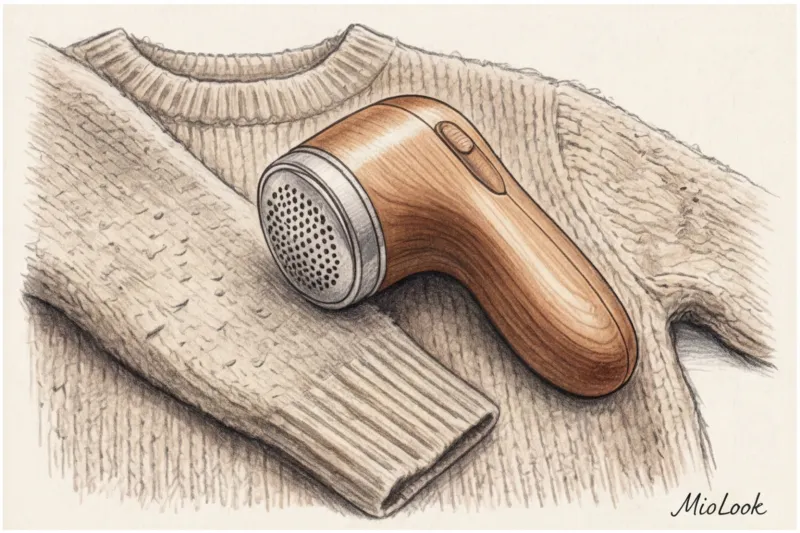
On 100% wool, the pilling is loose: it can be easily removed with your fingers or a special machine, leaving the garment looking like new again. However, on acrylic or polyester blends, the pilling is permanent because the synthetic thread is stronger than natural yarn. By pulling out such pilling, you stretch the very structure of the fabric.
Your ideal image begins Here
Join thousands of users who look flawless every day with an AI assistant.
Get access — €0.99 onceHow to incorporate quality knitwear into your business and casual wardrobe
Knitwear has long ceased to be exclusively a "home" or "country house" thing. In a well-composed capsule wardrobe It solves a lot of problems.
A smooth turtleneck made of fine merino wool is a stunning alternative to a stiff shirt for the colder months. It doesn't add bulk under a tailored wool jacket, yet it keeps you warmer than a layered cotton construction.
A chunky, chunky knit sweater in a neutral shade (camel, graphite, or off-white) perfectly balances elegant textures. Try pairing it with a silk midi skirt or over a slip dress. The coarseness of the wool tone down the silk's flamboyance, creating a sophisticated, luxurious everyday look.

To figure out which sweater styles and colors will truly fit into your lifestyle (and not buy a one-way ticket to the back of your closet), I recommend my clients digitize their closets using MioLook The app helps you visually assess what a potential purchase will pair with and immediately displays statistics on how many times you'll wear the sweater and its actual price per wear.
Checklist: How to Choose a Good Sweater in 3 Minutes
Save this list for your next shopping trip:
- Compound: We look for 70% to 100% natural fibers (wool, angora, alpaca). If the item is bulky, up to 15% nylon/polyamide is acceptable to maintain shape.
- Seams: Examine the back of the armhole and neckline. No rough overlocking, only neat flat seams.
- Return test: Pull the elastic on the sleeve cuff. It should spring back tightly.
- Statics: Your hair shouldn't stand on end when you try it on. If the sweater is creaking, it contains too much hidden cheap synthetic material.
Conclusion: Keep warm (and sweaters) the right way
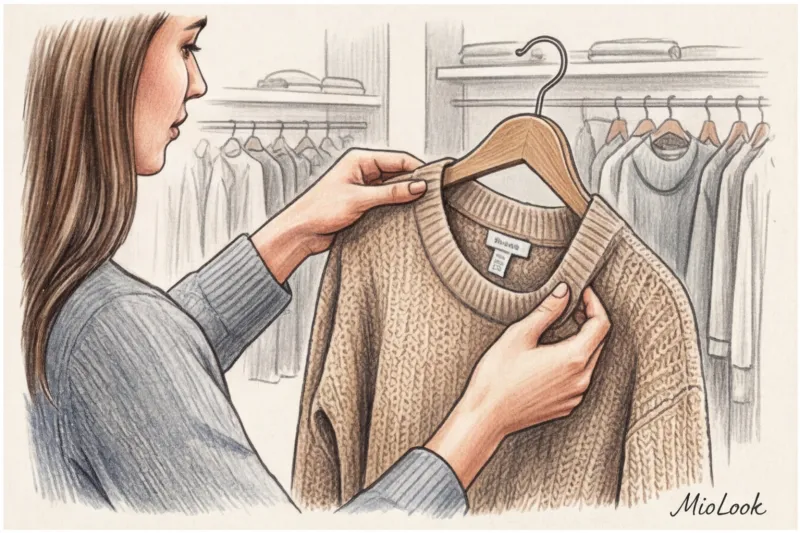
Even the most expensive €400 cashmere jumper can be ruined in a single weekend if stored improperly. Remember the most important rule of stylists: never hang knitted items on hangers. Gravity will inevitably stretch the stitches, causing "ears" to form on the shoulders, and causing the hem to become misshapen.
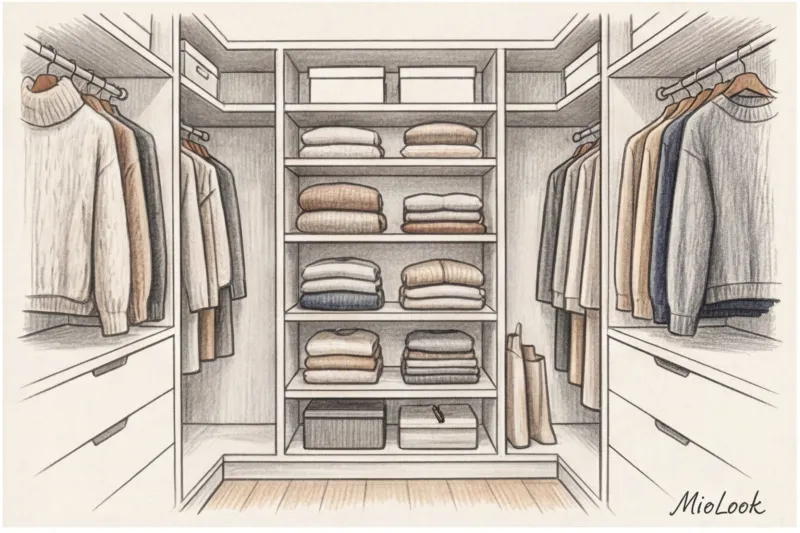
Store knitwear only folded on shelves, leaving some air between stacks. By investing time in finding high-quality fabrics and money in natural yarn, you're buying more than just clothes. You're buying everyday comfort, self-confidence, and warmth that will last for years.