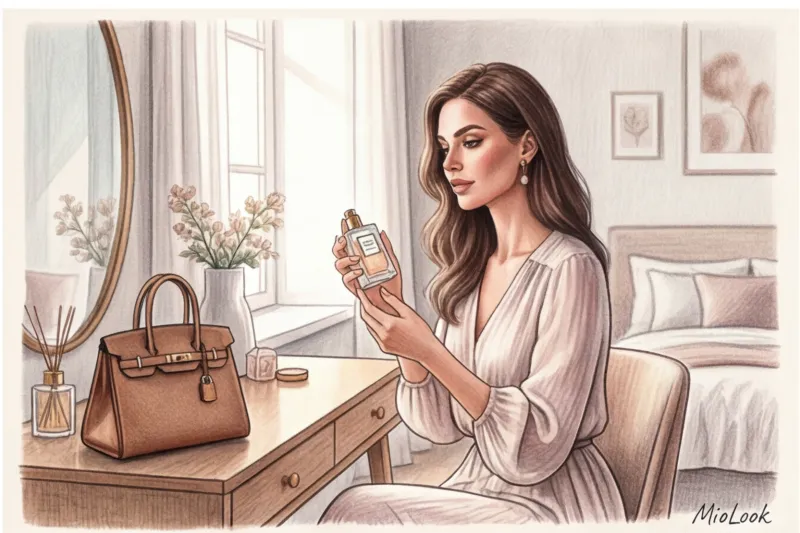
One day, Marina, the CFO of a large IT company, came to me for a consultation. We selected an impeccable wardrobe for her: tailored Italian wool suits, simple silk blouses, and expensive watches. She looked like someone who could easily manage multimillion-dollar budgets. But during the final fitting, the image suddenly fell apart. Marina pulled a bottle from her purse and generously sprayed herself with the scent of strawberry bubble gum and cotton candy. A severe cognitive dissonance arose: her eyes saw a business shark, but her nose read a teenage girl at a school dance.
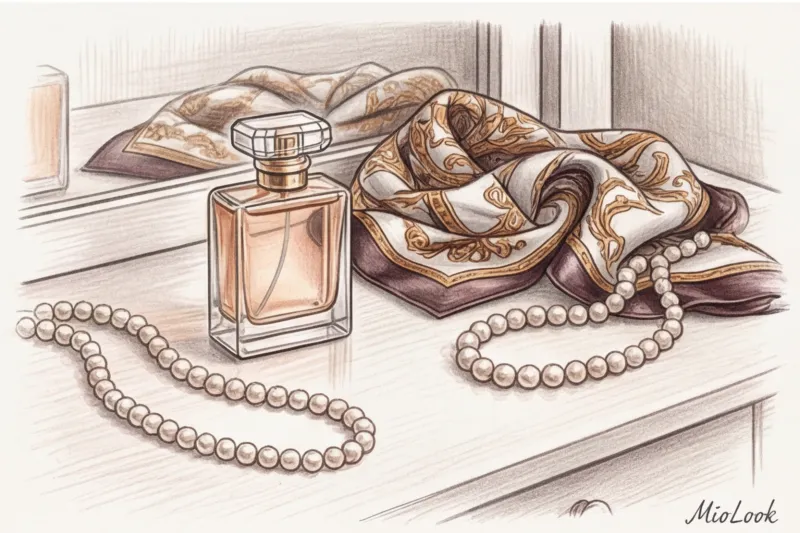
Over 14 years as a stylist, I've learned a hard and fast rule: the wrong perfume can ruin the most precious look faster than worn-out shoes or pilling on a sweater. If you still think perfume exists separately from clothing, you're missing out on a powerful tool for impression management. We've covered the basic principles in more detail in our the complete guide to finding your perfume "I" , and today I will show you the practical side of the issue.
Let's figure out how to choose a perfume to match your clothing style so that your visual and olfactory perceptions work in tandem.
Why Perfume Is an Invisible Part of Your Wardrobe
We're used to assessing our appearance exclusively in the mirror. But science tells a different story. According to the Sense of Smell Institute (2023), after a month, a person can recall only 5% of what they saw and a whopping 35% of what they smelled. Smell bypasses the brain's logical centers and directly impacts the limbic system, which is responsible for emotions and memory.
That's why the concept of "one fragrance for life" is hopelessly outdated. You wouldn't wear the same pumps to the office, the beach, and the gym, would you? Similarly, you need a fragrance wardrobe—a small but well-thought-out capsule of fragrances that adapts to your needs, the season, and the thickness of your fabrics.
How to choose perfume according to your clothing style: the rule of textures
In my practice, I use my own method of "olfactory textures." The idea is simple: the physical density of the fabric should match the density (sillage and heaviness) of the perfume composition.
"Heavy gourmand amber combined with subtle summery linen 'suffocates' those around it. And the light citrusy cologne is instantly lost against the backdrop of a thick tweed coat."
Incidentally, there's another purely technical detail: perfume lasts approximately 40% longer on natural fabrics (wool, heavy cotton) than on synthetics like polyester. Natural fibers retain fragrance molecules better, allowing them to unfold gradually.
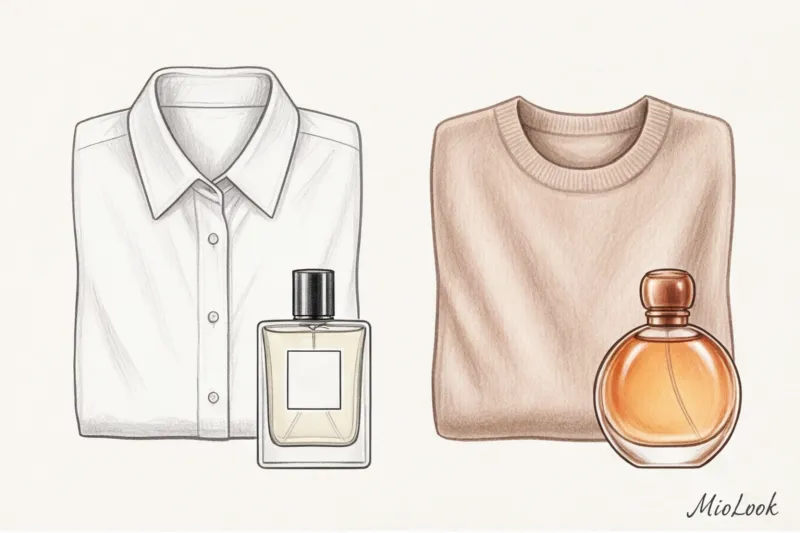
Strict business style and minimalism
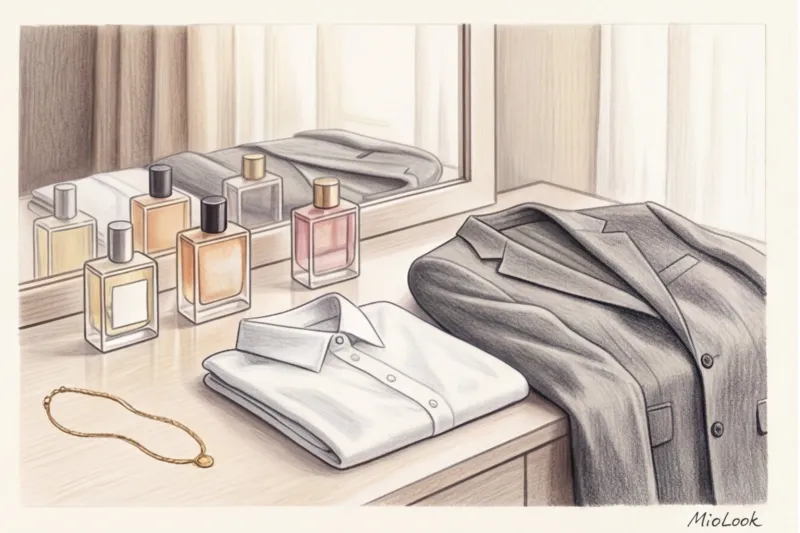
If the basis of your business wardrobe Smooth wool, heavy cotton (from 180 g/m²), and suiting fabrics are all part of your wardrobe. You want scents that are both distancing and collected. They should smell crisp, like a freshly ironed white shirt.
- Suitable notes: vetiver, bitter citrus, aldehydes, cedar, orris root.
- Character: cool, intellectual, not invading the personal space of colleagues.
Relaxed casual and denim
For looks in style smart casual A space dominated by denim, soft cashmere, linen, and cozy knitwear calls for fragrances that sit close to the skin. They create an aura of well-groomedness rather than shouting their presence.
- Suitable notes: white musk, green tea, sandalwood, light cosmetic powder.
- Character: bodily, cozy, like the smell of clean skin after an expensive shower gel.
Romance, silk and evening looks
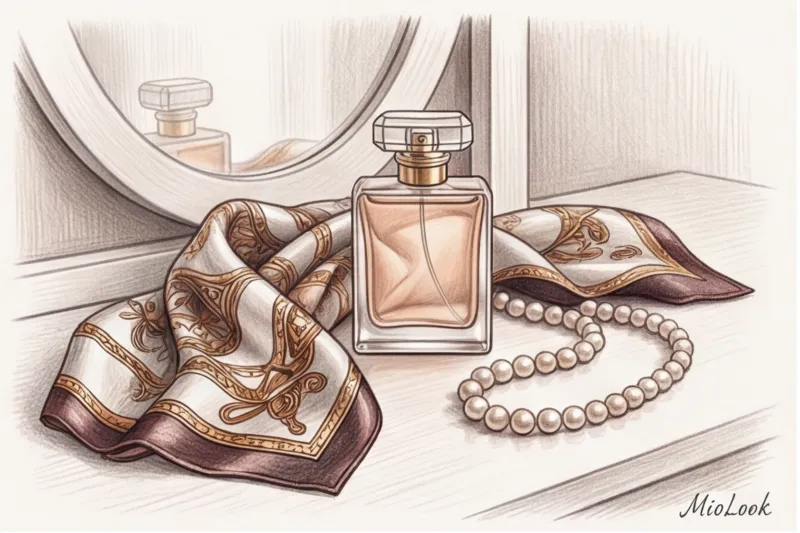
Flowing silk, velvet, lace, and satin call for textured, alluring compositions. A train is appropriate here—it should trail behind you like the hem of an evening gown.
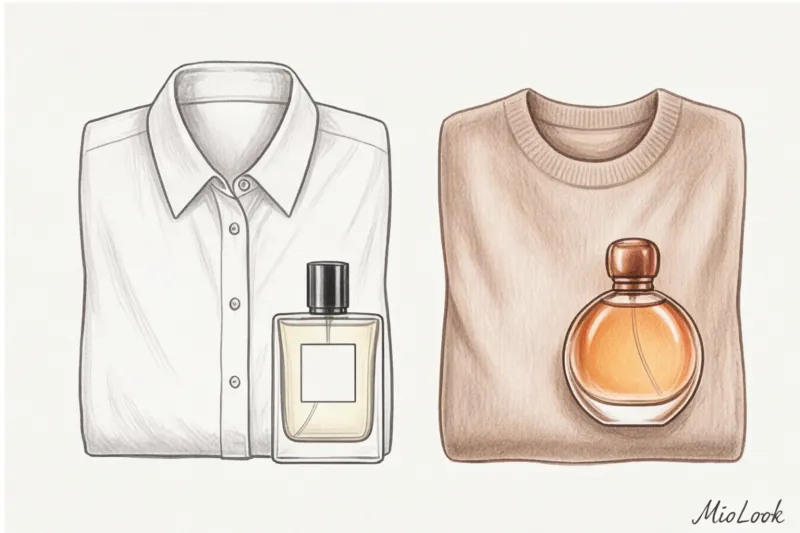
- Suitable notes: predatory white flowers (tuberose, jasmine), patchouli, amber, complex gourmand accords (cherry, rum, bitter vanilla).
- Character: enveloping, deep, declaring.
Access to MioLook for €0.99 — one-time payment
A smart AI stylist will select the perfect look based on your style and wardrobe. Create your capsule collections easily!
Get access — €0.99 onceOlfactory contrast: a secret technique of stylists
Now forget the "floral dress equals floral perfume" rule. It's the most common mistake I see. Matching a fragrance to your outfit is boring, predictable, and a bit old-fashioned. If you wear a pink frilly dress and pair it with a Bulgarian rose scent, you risk turning into a walking marshmallow.
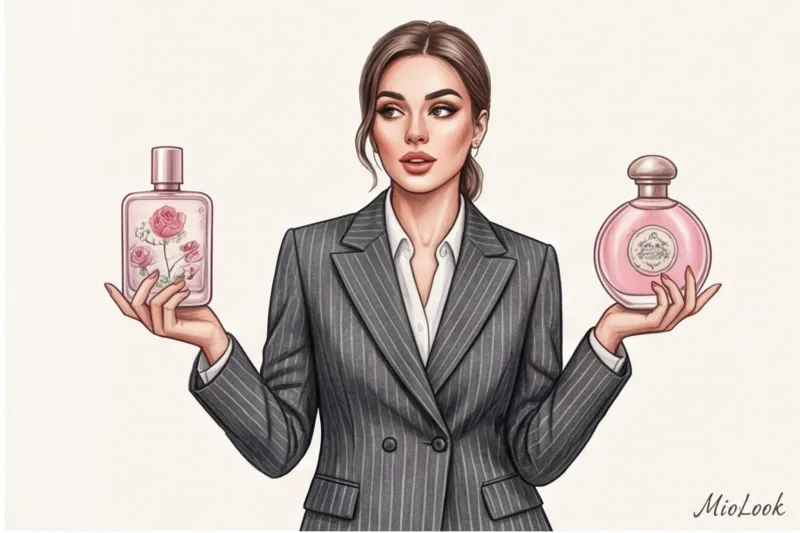
The most stylish, memorable looks are built on olfactory contrast. It's a break from convention that makes people turn their heads.
How to apply this in practice:
- Masculinity + Femininity: Wear a delicate silk slip dress, but instead of the expected florals, apply a strong, woody or even overtly masculine perfume (for example, with notes of tobacco or leather). The fragility of the fabric will seem even more vulnerable against the rugged scent.
- Strictness + Gourmet: A men's tailored two-piece suit looks stunning paired with warm, unconfectionary vanilla or cherry. The formality is offset by the softness of the material.
How character and archetype dictate fragrance choice
Choosing a perfume is always a reflection of your inner state. If we rely on archetypes in style , then the aroma becomes an anchor that enhances the desired qualities.
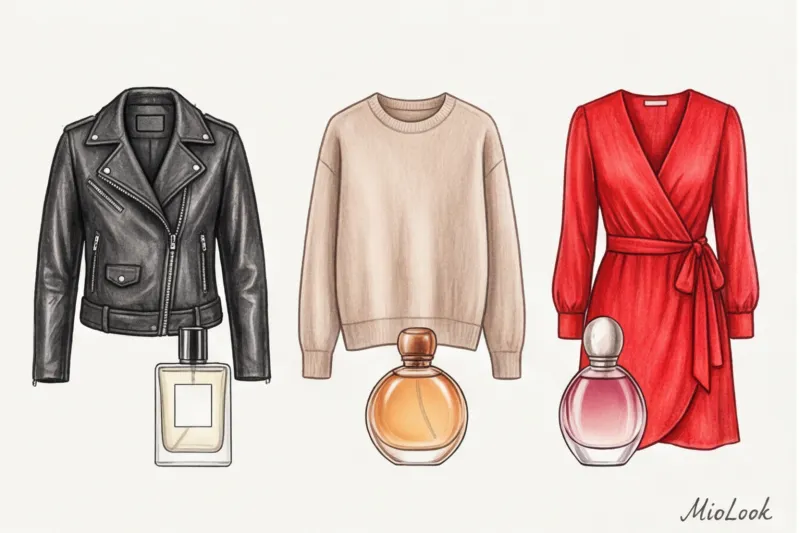
For introverts (Sage and Caregiver archetypes), molecular scents are ideal. They don't have a long sillage, create a cocoon of comfort, and are only noticeable to those you allow close. Extroverts (Rebel and Ruler) need diffuse scents that fill the room and linger even after the owner has left.
I often use perfume as an anchoring tool for my clients. If you're facing difficult negotiations (or, say, public speaking ), apply a fragrance with notes of leather or oakmoss. Subconsciously, you'll pick up on this toughness and convey confidence through your body language.
Assembling a perfume capsule: how many fragrances do you need?
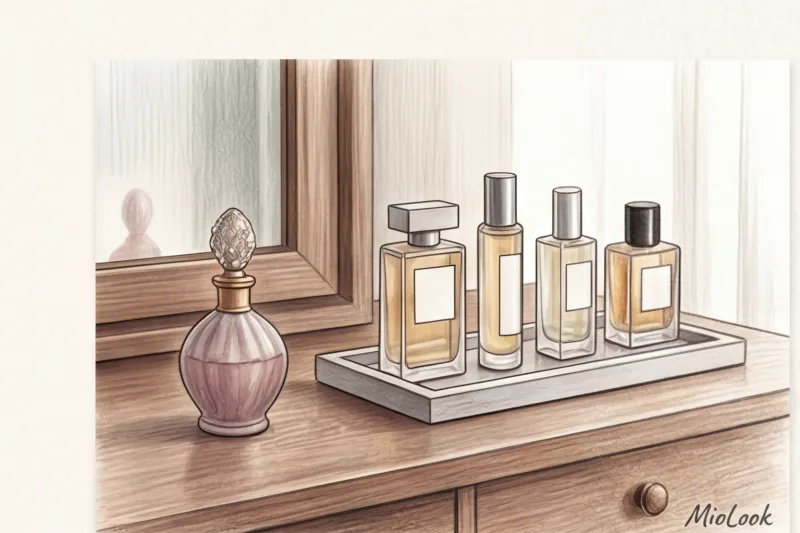
Just like we collect capsule wardrobe I recommend building a perfume shelf from basic items. You don't need 50 bottles gathering dust for years. Three or four well-chosen fragrances are enough to cover 90% of life's situations.
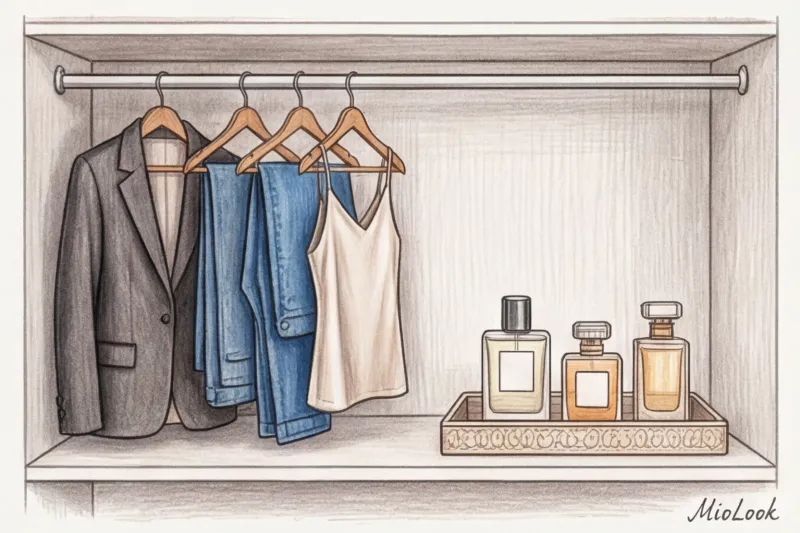
- Basic perfume (like the perfect white t-shirt): Light, fresh, and appropriate anytime, anywhere. Citrus, tea, and light musk. This is your choice for morning meetings, doctor's appointments, or taxi rides.
- A status scent (like a well-tailored jacket): Well-composed, expensive-sounding, and full of character. Woody notes, chypre, and iris. Wear it to work, business lunches, and important meetings.
- Evening/accent scent (like red lipstick or stiletto heels): Bright, lingering, seductive. Resins, spices, white flowers. Save it for dates, theaters, and parties.
An important rule from a stylist: Store your perfume properly. Not on a shelf in the bathroom (temperature fluctuations and humidity will destroy the formula within six months) and not on a sunny windowsill. The ideal place is a dark closet or chest of drawers in the bedroom.
Your perfect look starts here
Join thousands of users who look flawless every day with MioLook. Digitize your wardrobe in just a few clicks.
Get access — €0.99 onceCommon mistakes when choosing a fragrance to match your image
Even the most luxurious perfume can become your enemy if you break the rules of appropriateness. Here are a few scenarios where fragrance can work against you:
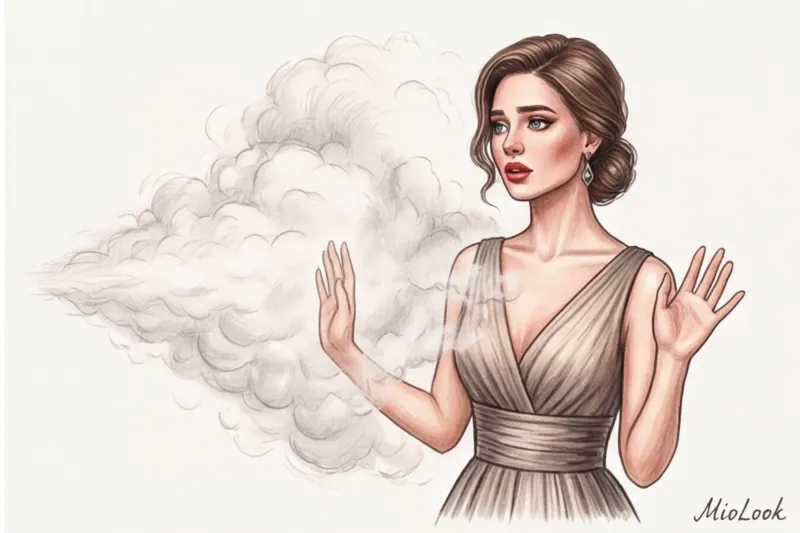
- Evening train in a cramped office. This is a clear violation of business etiquette. Heavy oriental perfumes in an open-plan office give your colleagues a migraine, not admiration for your taste.
- Spraying perfume on light colored clothing. Many fragrances contain oils and resins that leave yellow stains on white cotton and silk. Apply perfume to your skin before getting dressed, or spray it as a mist and step into it.
- Complex gourmet food in the gym or at +30°C. When the body heats up, sweet notes of vanilla, praline, and caramel are distorted, producing a suffocating, sticky scent. For hot weather and sports, only fresh, aquatic, or citrusy compositions are recommended.
- Mixing smells. If your body lotion smells like coconut, your hairspray smells like apple, and you layer a strict chypre on top, the result is a cacophony. Use fragrance-free skincare to ensure your perfume is pure.
Checklist: How to Test a Fragrance Before Buying
Buying a perfume after the first spray on a paper blotter in the store is a lottery you almost always lose. Michael Edwards' classification (creator of the famous Fragrance Wheel) proves that a fragrance has three stages of development, and the top notes you detect in the first 15 minutes will disappear without a trace.
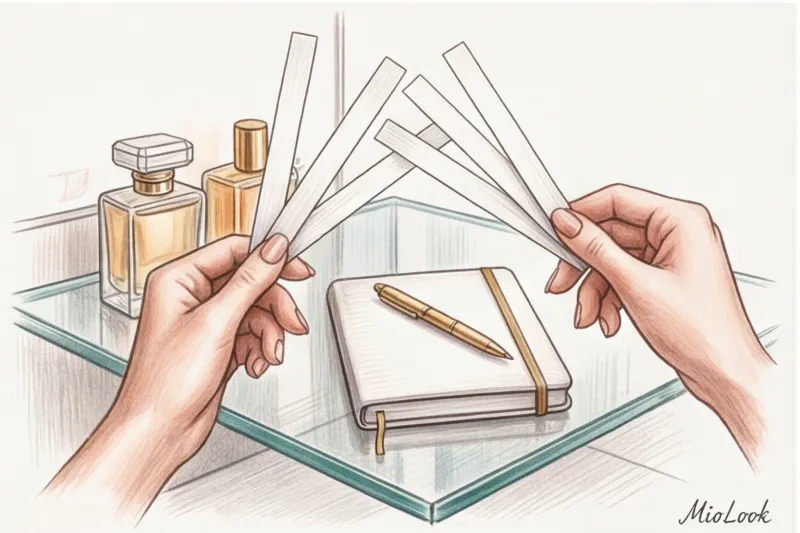
How to test correctly:
- Apply the fragrance to your wrist (without rubbing!) and be sure to drop a small amount onto the edge of your sleeve (if the fabric allows). The scent will develop faster on your skin due to the warmth, while on fabric you'll experience its base, longest scent.
- Apply the "8-hour rule." Leave the store and wear the scent for a full day. Evaluate whether it gives you a headache and how it changes in cold and warm temperatures.
- Try it out in your mind's eye. Ask yourself, "Will I be able to wear this with my favorite beige trench coat? Or with jeans on the weekends?"
Perfume is the only accessory that stays on you even after you've taken off all your clothes. It speaks for you before you open your mouth and leaves a lasting impression long after you've left. Choose it with the same care you take in choosing the perfect coat or bag, and your style will become truly impeccable.