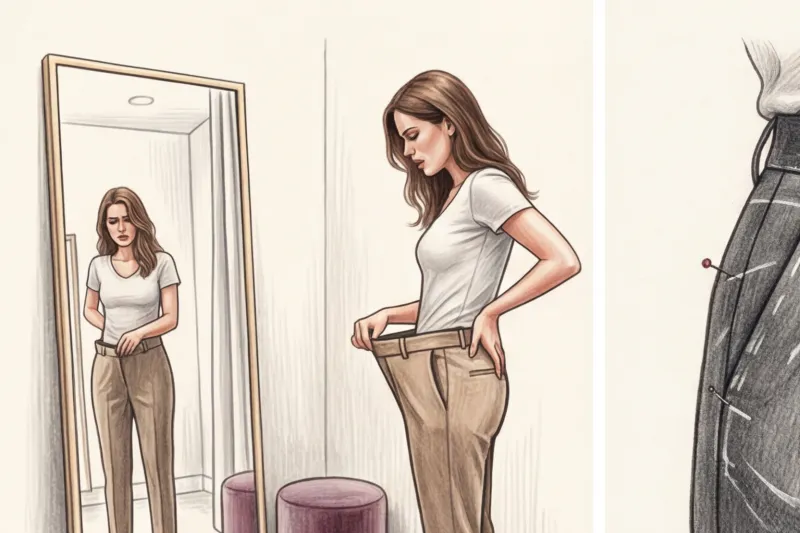
Sound familiar? You're standing in a fitting room, three pairs of pants in front of you. The size M is exactly two centimeters off at the waist, and the size L is treacherously bunching up in the crotch and slipping down the hips. In 12 years of working as a personal stylist, I've seen women cry tears of despair over pants more often than over swimsuits. The problem isn't your figure. The problem is that we're trying to squeeze a living, three-dimensional body into the flat shapes of mass-market fashion, relying on outdated advice.
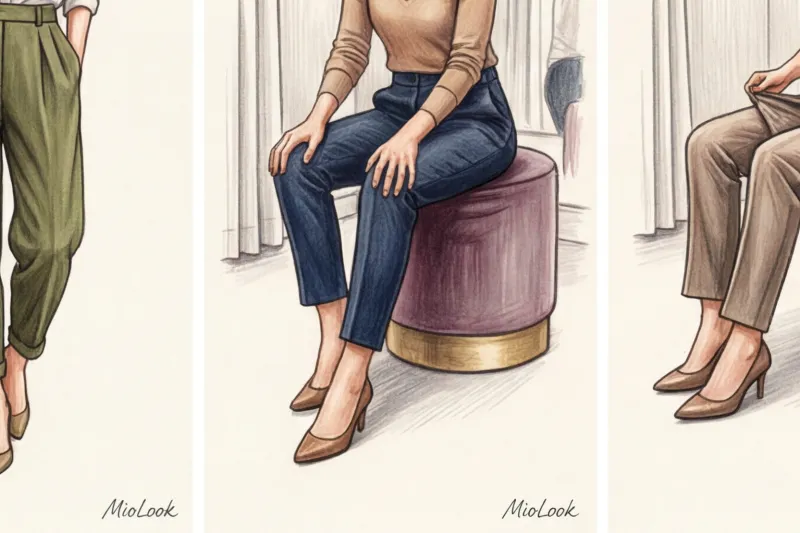
That is why the question is, How to choose trousers according to your body type , still causes so many difficulties. Dividing women into "apples," "pears," and "inverted triangles" is hopelessly outdated. We've already discussed in more detail why standard packing lists don't work in our A complete guide to the perfect capsule for your body type Today we'll go further: I'll teach you how to choose trousers like a clothing designer—through the prism of cut geometry, fabric quality, and fit depth.
How to choose trousers according to your body type: why fruit classifications are outdated
"If you're pear-shaped, wear flares from the knee down." How many times have you read this advice? Now let's be honest: in the realities of modern fashion, where voluminous silhouettes and relaxed cuts reign supreme, these rules from the 2000s seem comical.
The perfect fit depends on three pillars: fabric flexibility (does it flow or does it hold a rigid frame?), rise, and crotch depth. Without understanding these parameters, you're doomed to sift through dozens of hangers in vain.
"One of my clients spent years searching for the perfect pair of classic trousers in her size 11. She was convinced her hips were unusually wide. It turned out she simply had a shorter torso. Once we switched to the petite section (for heights up to 160 cm) and picked up trousers with a shorter seat, they fit like a glove, even though she's 168 cm tall."
Don't try to find "your" style based on the name alone. Look for patterns that match your proportions.
The Anatomy of a Fit: What to Look for in a Fitting Room
The biggest mistake I regularly see during shopping sessions is trying to buy pants that fit perfectly at the waist. Remember the stylist's golden rule: a thing is always bought according to the widest part of the body.
If a pair of pants fits perfectly on your hips, but there's a gap at the back of the waistband big enough to fit your fist through, don't give up on them. According to a large-scale anthropometric study by McKinsey (2022), the standard waist-to-hip difference in mass-market fits is 25-27 cm. If your difference is greater (for example, 32 cm), no brand from the mall will fit you without a tailor's intervention.
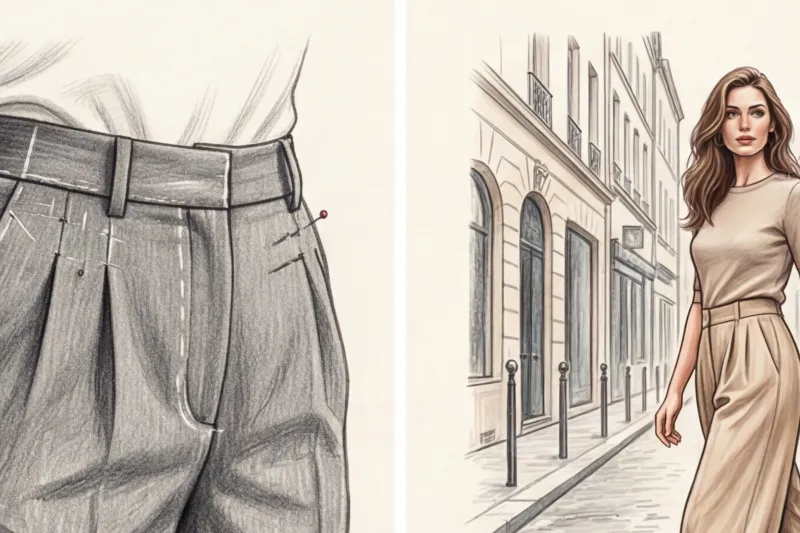
Pintucks, darts and waistline
The difference between a flat-front and pleats is dramatic. Deep Italian pleats, folded from the waist down, create beautiful volume at the hips and lend a relaxed, chic look.
But herein lies the main myth of glossy magazines. It's commonly believed that high waists and pleats conceal a protruding tummy. In practice, it works just the opposite. Hard folds in thick fabric, when pressed against the belly, fan out. Visually, this adds 5 kilograms where there aren't any. If you have a tummy, choose styles with a mid-rise and a completely flat front, shifting the emphasis to the side seams.
Inseam Length: The Stylists' Main Secret
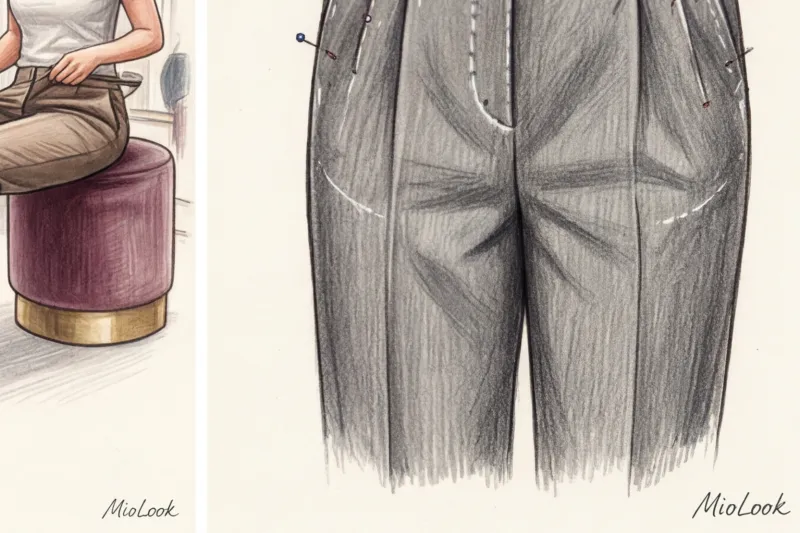
Crotch depth is the distance from the front waistband, through the crotch, to the back waistband. According to my statistics, over 70% of women wear pants with the wrong crotch height.
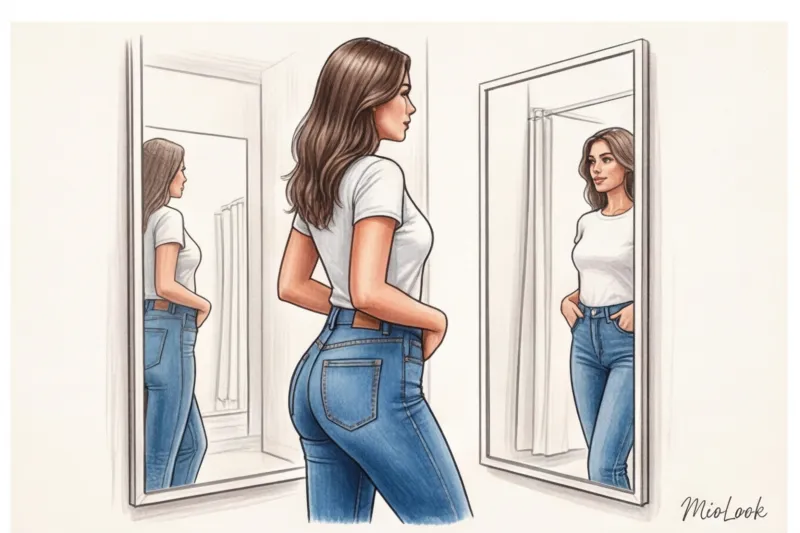
If the inseam is too short, the trousers will cut painfully into the body when walking (the "camel toe" effect). If it's too long, an untidy pouch will form between the legs, visually shortening the legs and making the gait heavier. When trying on the trousers, be sure to take a wide stride: the fabric shouldn't restrict movement or bunch up into hard creases.
Your perfect wardrobe without stress
Stop wasting money on clothes that don't fit. MioLook's smart algorithm analyzes your body shape and creates capsules that work 100% for you.
Create your own capsulePalazzo and wide-leg pants: who suits them and how to wear them
Palazzo pants have become a new classic, but many petite women still shy away from them, believing the wide cut will eat up their height. This is a misconception. Palazzo pants elongate the silhouette better than any other style, provided two conditions are met: a high rise and a floor-length length (ideally, a sneaker that covers two-thirds of the heel or a chunky sole).
The secret lies in the fabric composition. If you choose palazzo pants made of 100% polyester, they'll be stiff and turn you into a rectangle. Look for viscose blends or fine wool (natural fibers). These fabrics have weight and flow beautifully (drape) with movement.
- Zara and H&M (budget 40–60 €): Wide-leg trousers are often made from stiff gabardine. They're great for creating a graphic, architectural A-line silhouette.
- COS and Massimo Dutti (90–150 € segment): Masters of flowing patterns. Their palazzo pants, crafted from viscose with added lyocell, create that "heavy" and luxurious fit that minimizes the hips.
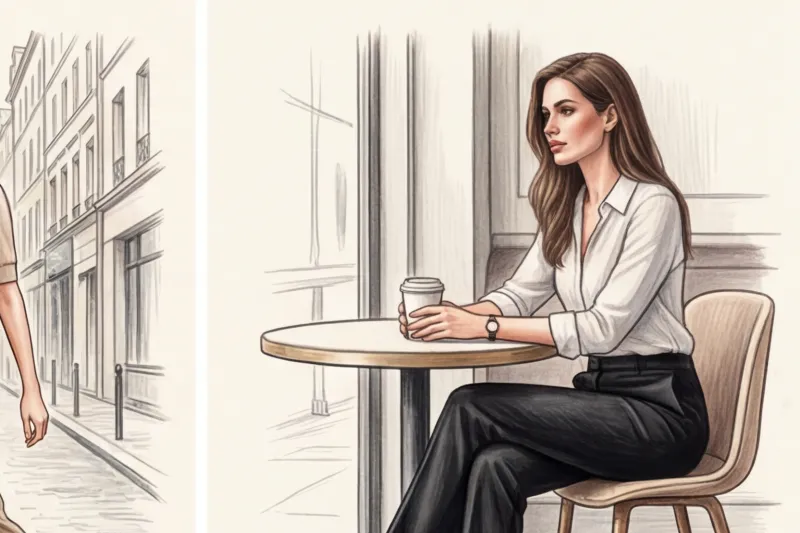
Straight Classic: A versatile staple for the office and smart casual
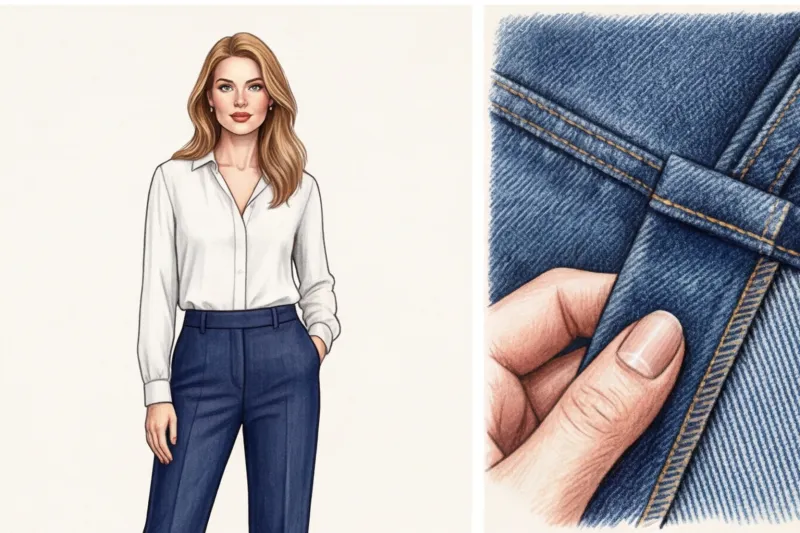
Straight-leg trousers with a crease are your perfect vertical line. The pressed crease works like an optical illusion, visually lengthening the leg and making it look slimmer. This is the element that instantly brings together an office look, even when worn over a simple basic jumper.
Length is everything. If you choose a cropped style (7/8), make sure the leg hem ends at the narrowest part of your ankle. If the pants cut off at the widest part of your calf, you'll visually add weight.
Massimo Dutti's classics are a perfect example of the ultimate in straight silhouettes. Their basic wool-blend models pair perfectly with everything from tailored loafers to pointed ankle boots or simple leather sneakers. Incidentally, when planning these looks, it's very convenient to use outfit visualization function in MioLook - this saves time in the morning getting ready.
Tapered, banana and slouchy styles: a stylish solution or a hidden threat?
Carrot pants with a fuller hip and a narrower hemline are designed to balance the figure. They're ideal for those with an inverted triangle body shape (broad shoulders, narrow hips), as they add just the right amount of volume to the lower body, creating a harmonious silhouette.
But here I must sound a strong warning: these models have severe limitations.
Tapered, cropped banana pants are the worst enemy of petite women with large calves. This style turns such figures into "lollipops," throwing off their proportions.
Another common myth: banana-cut pants make your hips look bigger. No, they don't, as long as they're made of a soft, draping fabric (like Tencel or fine suiting wool) and are the right length—just above the ankle bone. Stiff denim or corduroy in this cut will actually make you look like a ball.
Ready to start updating your wardrobe?
Try MioLook's free plan—upload your items to the app, and an AI stylist will show you how to pair your new perfect pants.
Get access — €0.99 onceKatarzyna's Checklist: 5 Must-Do Fitting Room Tests
None of my clients go to the checkout until they've taken this test drive. Save this checklist—it will save you from buying things that will end up as dead weight in your closet.
- Test: "Sit on an ottoman". Sit down in the fitting room. The pants shouldn't be too tight around your waist, and your hips shouldn't feel like they're about to burst at the seams.
- Pockets Test. If you stand up straight and your side pockets bulge outward, revealing the lining, your pants are too tight in the hips. Go up a size.
- Test "Step". Lunge forward. Your inseam shouldn't pull, limiting your range of motion.
- Test "Light". Stand so the light falls from behind. This is especially true for light-colored summer pants. If the fabric is see-through or highlights every uneven spot on your skin (a cellulite effect, which you may not even have), the fabric is too thin and should be replaced.
- Test "Shoes". Always try on trousers with the heel or platform height you plan to wear them with. A flat-heeled length and a 7cm heeled length are two completely different trousers.
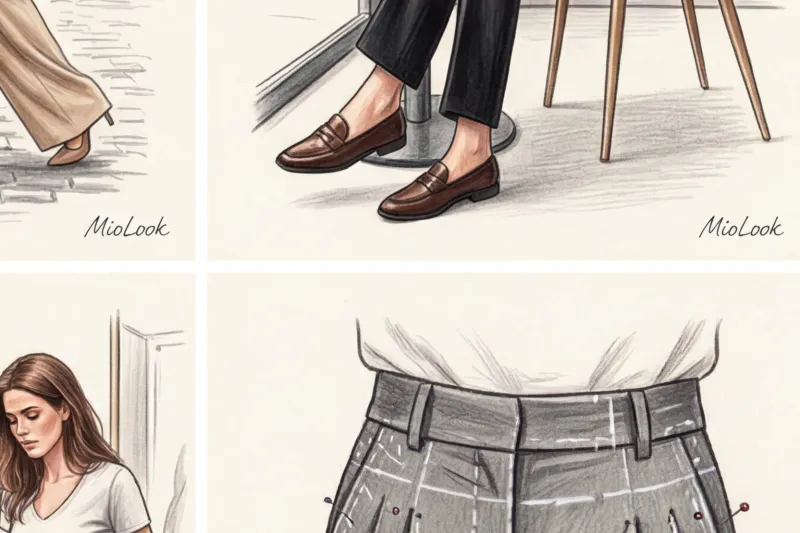
Budget and tailoring: why hemming trousers is the rule, not the exception
It's time to accept the harsh truth: European brands design clothes for an average height of 170–175 cm. If you're 162 cm tall, any standard-fit pants will be too long. And that's perfectly normal.
Many people give up on trousers that are perfect in the hips simply because they're too long or slightly loose in the waist. Factor in the cost of a tailor's service (usually €15–€25 for a waistband adjustment or shortening) into your purchase budget.
In terms of wardrobe investment, the math is simple: it's better to buy H&M trousers from the Premium line (wool blend) for €60, spend €20 to a tailor for a perfect waistband and length adjustment, and get a garment for €80 that fits like a bespoke garment (that same "old money" effect). This is much more reasonable than buying designer trousers for €250 that fit "well, almost okay."
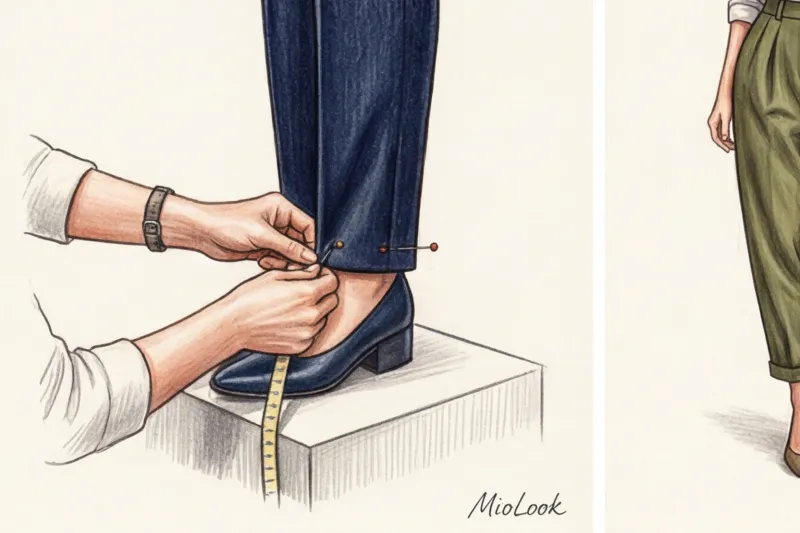
Pay attention to the label: if the content is more than 3-5% elastane, avoid buying them. These pants will fit like a second skin in the fitting room, but after just a month of active wear, the elastane threads will stretch, causing unsightly blisters on the knees and buttocks that are impossible to iron out. High-quality pants hold their shape thanks to a proper cut, not an elastic band.
The perfect pair of trousers exists for every body type. The secret is to stop trying to fit abstract standards and start evaluating items with a cool head: based on the fabric density, the depth of the seams, and your willingness to have the fit perfected in a tailor's shop.