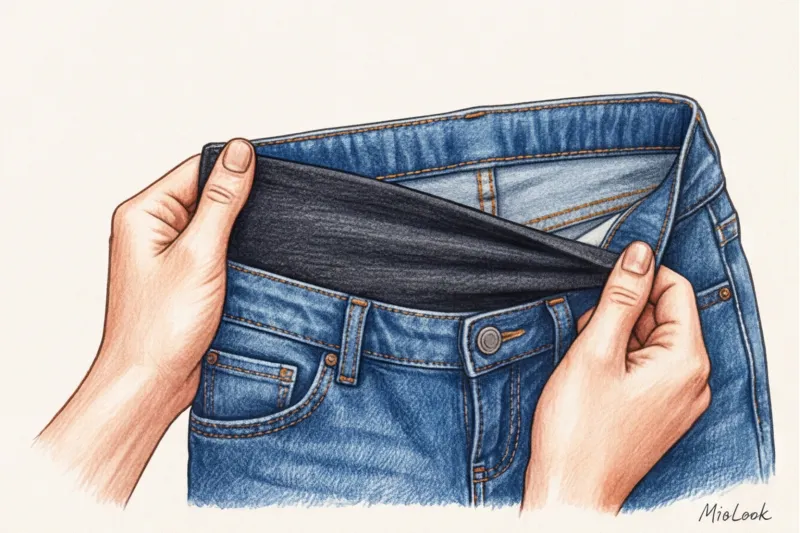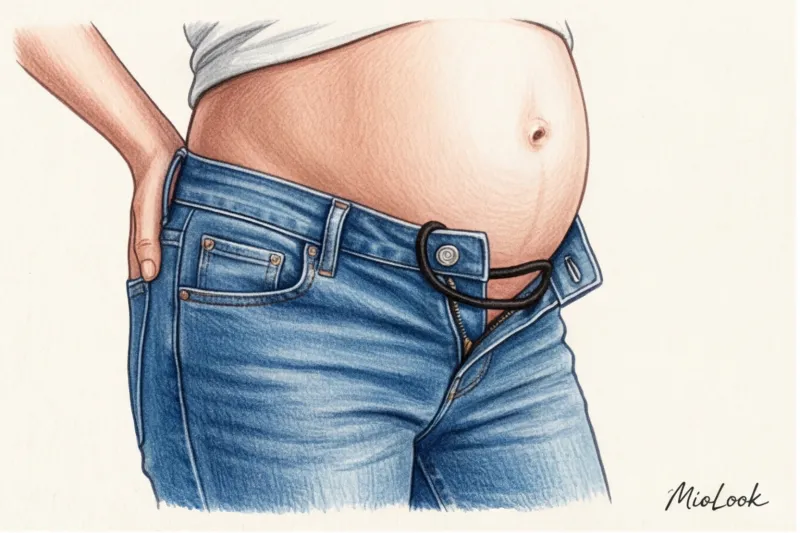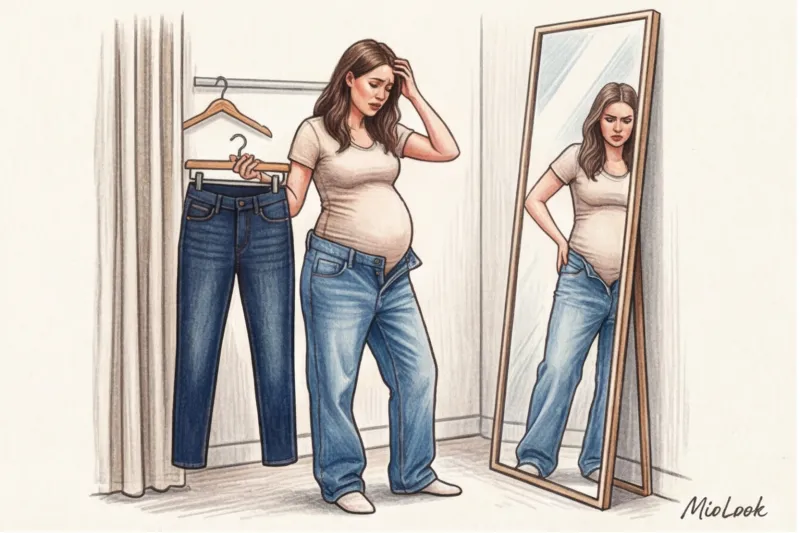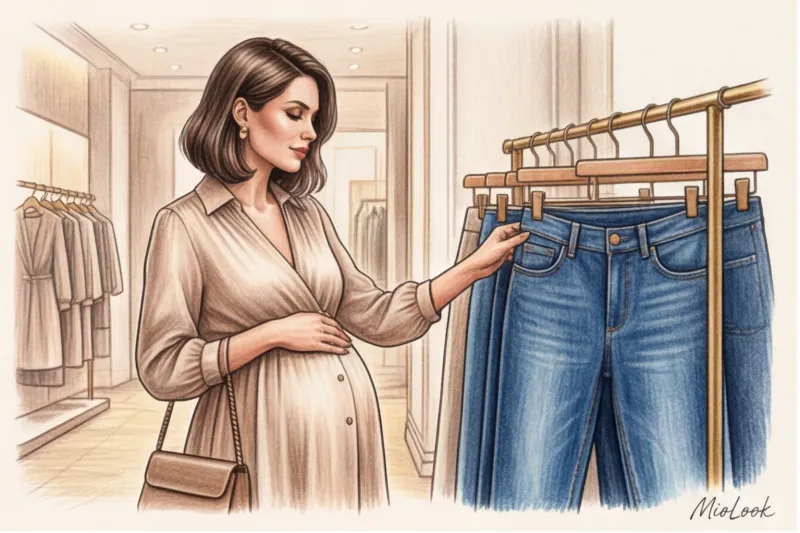
Last Tuesday, a client came to me—the marketing director of a large IT company. She was desperate. During an important presentation to the board of directors, she had to discreetly pull up her slipping mass-market maternity jeans every five minutes. They were made of cheap, instantly stretchable elastane. This incident once again confirmed my main stylistic rule: clothes during pregnancy shouldn't be shapeless, and your personal style shouldn't be compromised during maternity leave.
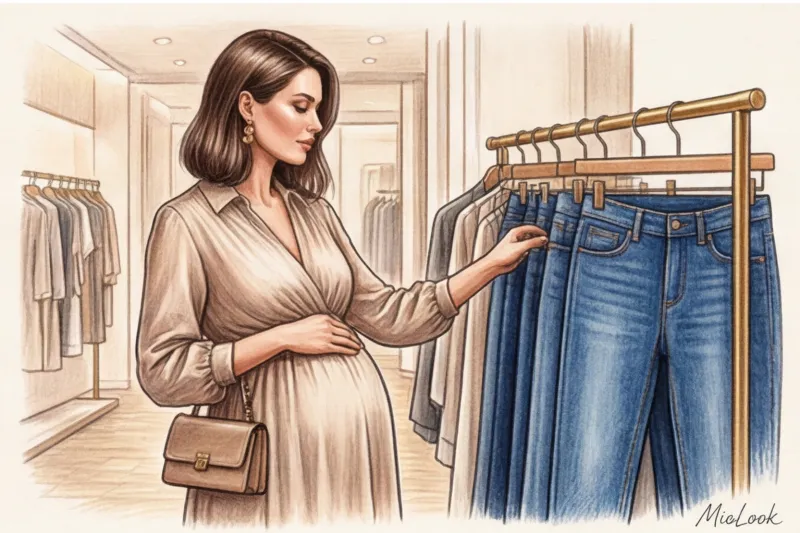
I often see women with impeccable taste suddenly succumb to the onslaught of physiological changes and switch to shapeless leggings. But the secret to elegance lies in the design of the cut. Before choosing maternity jeans, you need to understand one non-obvious thing: you don't need the softest fabric. You need dense, structured premium denim that "gathers" the figure, and a well-designed support belt. We've already discussed the foundation of this approach in The Complete Guide to a Maternity Capsule Wardrobe: How to Maintain Style , and today I propose to focus on his main investment.
Aesthetics vs. Physiology: Why Your Regular Denim Isn't Working Anymore
The first thought most of my clients have in their third month of pregnancy is, "I'll just buy my favorite Zara or Levi's, but two sizes bigger." Let's be honest: that's the worst thing you can do to your proportions.
When you size up regular jeans, you add more than just the waistband. The armholes drop lower, the fabric begins to bunch up in untidy folds at the hips, and the buttock pockets slide down, visually adding at least 10 kilograms to the lower body. According to a 2023 study by the WGSN Institute of Design and Form, the shift in a pregnant woman's center of gravity requires a fundamentally different fit, one where balance is built around the lumbar region rather than the pelvic bones.
The anatomical difference between simple "wide-leg jeans" and denim designed for maternity is colossal. Luxury brands redistribute the fabric's tension so that the main support is placed under the buttocks, creating a subtle lifting effect, while the abdominal area remains completely free of seam pressure.
Your perfect look starts here
Join thousands of users who look flawless every day with MioLook. Our smart AI stylist will help you integrate new jeans into your current wardrobe.
Get access — €0.99 onceA stylist's guide to choosing maternity jeans based on your waistband type.
If the quality of denim is responsible for the status of your look, then the design of the waistband is responsible for your physical well-being. The question of how to choose maternity jeans always comes down to the design of the waistband. Three designs dominate the market, each addressing its own stylistic needs.
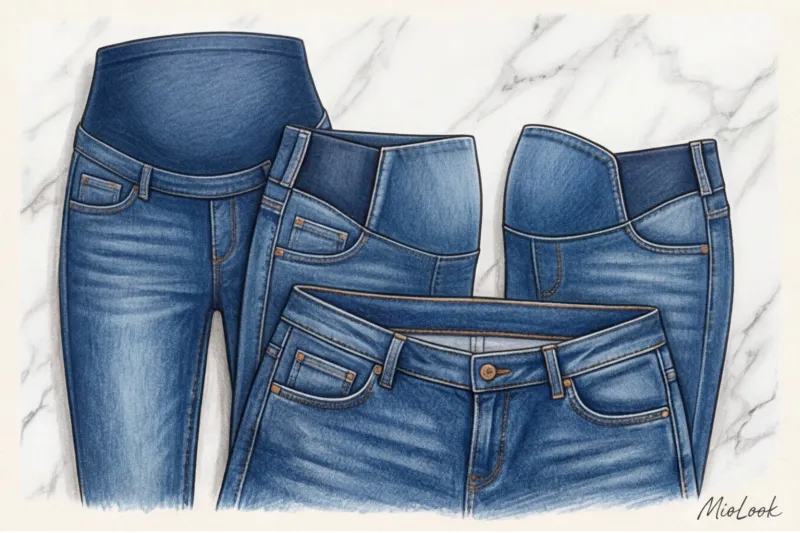
Under-bump: The Elegance of Early Pregnancy
A style with a cutout semicircle at the front and an elastic band running just under the belly. Visually, these are the most basic jeans: they have a button (often functional), classic belt loops, and pockets.
- Who is it suitable for: Ideal for the first 5-6 months and girls with a compact, high belly.
- Stylistic advantage: They allow you to create a French tuck, where the edge of a silk blouse is casually tucked into the waistband at the front.
- Fair Limit: This does NOT work in the 8th or 9th month. When your belly drops before giving birth, these jeans (especially the cheaper ones) begin to slide down relentlessly with every step.
Over-bump: Architectural support
A wide elastic panel that stretches over the entire stomach, reaching almost to the bra line.
Premium denim designers (like Los Angeles-based Paige Maternity or New York-based Hatch) create these wraps using seamless technology and breathable microfiber fibers. They don't create a greenhouse effect and act as lightweight kinesiology tape for your back. They're an absolute must-have for the third trimester. They're easiest to style with long men's shirts. basic T-shirts and structured jackets that will hide the fabric transition line.
Side panels: hidden comfort
A conservative choice. These jeans feature a classic rigid waistband, but the front pockets feature triangular elastic gussets.
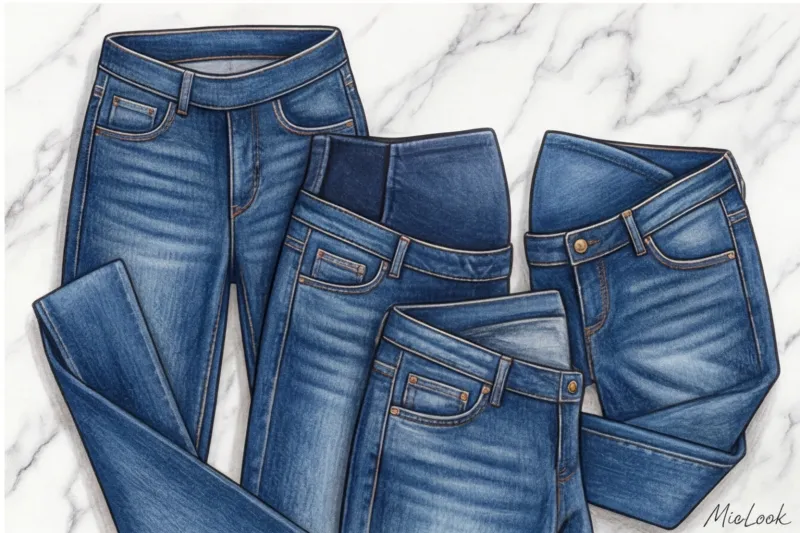
Over the course of 12 years of working, I've noticed that this particular style is a favorite among corporate clients. Why? Because it allows you to wear a leather belt (purely for decorative purposes) and tuck in your shirt in a way that's consistent with office attire, so no one will even notice you're pregnant until your bump becomes obvious.
Fabric Composition: Why Jeggings Ruin a Classy Look
There's a destructive myth: the more elastane in maternity jeans, the better. That's why the market is flooded with "jeggings"—a hybrid of thin leggings and jeans. Let me be clear: jeggings ruin any attempt at looking expensive.
Excessive elasticity causes the fabric to sag at the knees, wrinkle in the groin area, and flatten the buttocks after two hours of wear. You lose the architectural shape of your silhouette.
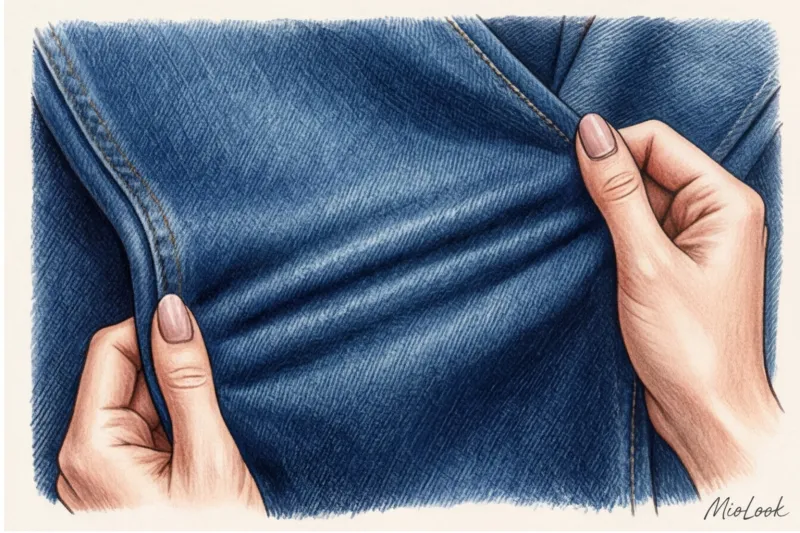
The formula for ideal maternity denim is 92-96% quality cotton (11 to 13 oz) and no more than 4-8% elastomultiester or polyurethane.
Look for the phrase in the composition memory stretch Unlike cheap spandex, premium high-tech threads remember their original shape and return the fabric to its original shape after you get up from your chair. Denim should feel firm to the touch—only then will it serve as a frame for your changing figure.
Ready to get started?
Try the MioLook free plan—no commitments required. Digitize your wardrobe and create capsule wardrobes for any stage of your pregnancy.
Get access — €0.99 onceCurrent silhouettes: how to balance changing volumes
Forget skinny jeans. Skinny jeans that fit tight from the hip to the ankle, combined with a voluminous stomach, create a "lollipop" silhouette. This violates the most important rule of styling: proportionality. Your goal is to balance the volume in the center of the body.
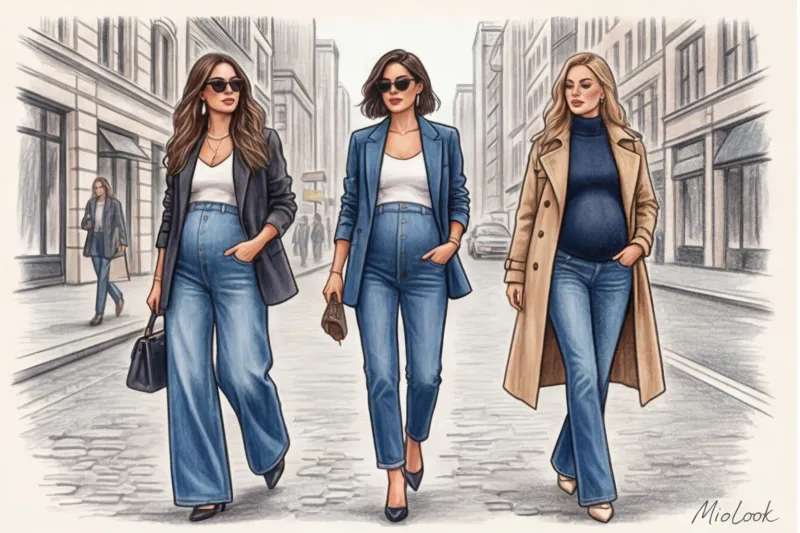
- Straight (straight jeans): The safest and most stylish investment. The straight cut from the knee down doesn't weigh down the figure, but it also doesn't make legs look thin. They look impeccable with loafers, suede ankle boots, and tailored jackets.
- Wide-leg and Bootcut: A counterintuitive piece of advice I give to all my clients is to not be afraid of volume at the bottom. Wide legs harmonize the figure, creating a proper vertical line. They balance the upper body and visually elongate the height, especially if the length covers the heel or platform of the sneaker.
Premium vs. Mass Market: The Math of Wardrobe Investment
"Why spend a lot of money on something I'll only wear for six months?" is the most common question during consultations. Let's do the math. Cost-per-wear.
You buy four pairs of mass-market jeans for €40 each (a total of €160). They fade, fray, and lose their shape after the third wash. They're too awkward to wear to a business dinner. Then you buy one pair of premium denim (like J Brand or Citizens of Humanity) for €220. You wear them 200 days in a row, incorporating them into 15+ different outfits.
Moreover, premium denim has exceptional liquidity. According to a 2024 Vogue Business report, designer maternity wear is among the top 5 fastest-selling categories on resale platforms like Vestiaire Collective. You can easily sell them after giving birth for €100–€120. And if these jeans have become your favorites, a good tailor will remove the elastic waistband and sew in a classic belt for €30. The investment pays for itself completely.
Stylist's Checklist: 5 Steps to Try on Jeans
My personal guide, developed over years of trying on jeans in European boutiques with hundreds of clients, is this: Never buy jeans without doing this test:
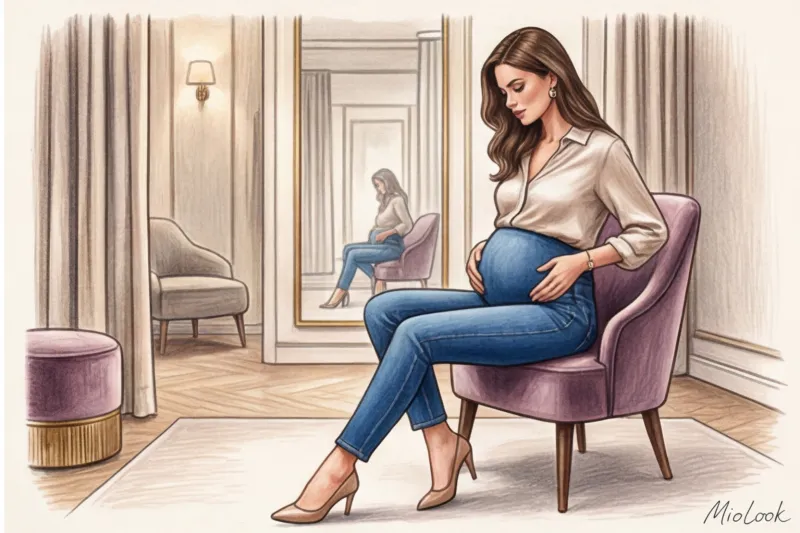
- Sitting test: Sit upright on the fitting room chair. The seam connecting the bandage to the denim shouldn't cut into your lower abdomen. If you feel any pressure, take them off; you won't be able to sit in them in the office.
- Step test: Take 10 wide steps around the room. If you feel the urge to pull your jeans up by the belt loops, the fit isn't right.
- Back pocket rating: Pockets should be positioned exactly at the center of the buttocks. If they flare out or hang down, it's a sign of a cheap cut and excessive stretch, which will ruin the look from behind.
- Checking the seams: Turn your jeans inside out. The inside seams of the bandage (especially the side seams) should be flatlock. A protruding overlock seam will cause unbearable chafing on the stretched skin of your stomach.
- Size selection: Buy yours before pregnancy Size. Premium designers have already factored in a natural 1-2 centimeter increase in hips into their patterns. If you wore a size 27 before pregnancy, choose a maternity size 27.
Summary: Denim as the basis of a pregnancy capsule
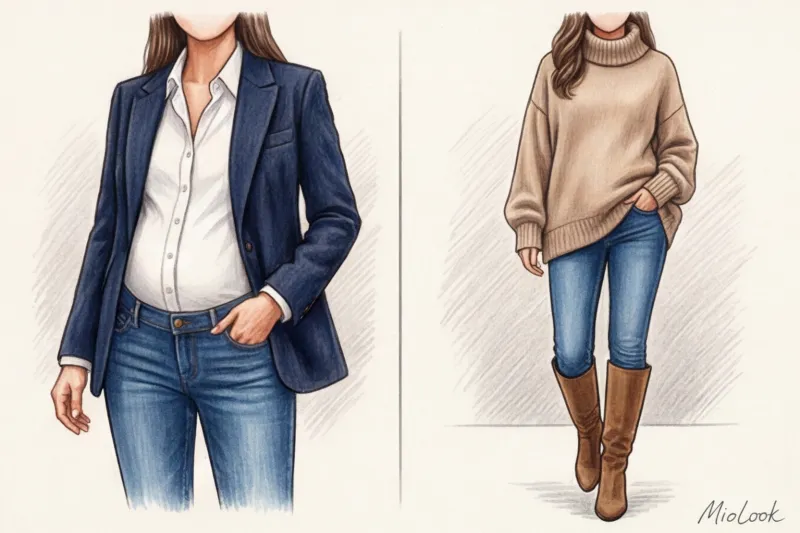
The perfect maternity jeans aren't a temporary compromise, but a solid foundation upon which to build your entire wardrobe during this special time. One pair of high-quality, architecturally perfect straight-leg jeans can cover 90% of your needs: from smart-casual Fridays at the office with a tweed jacket to Sunday brunch in a chunky cashmere sweater.
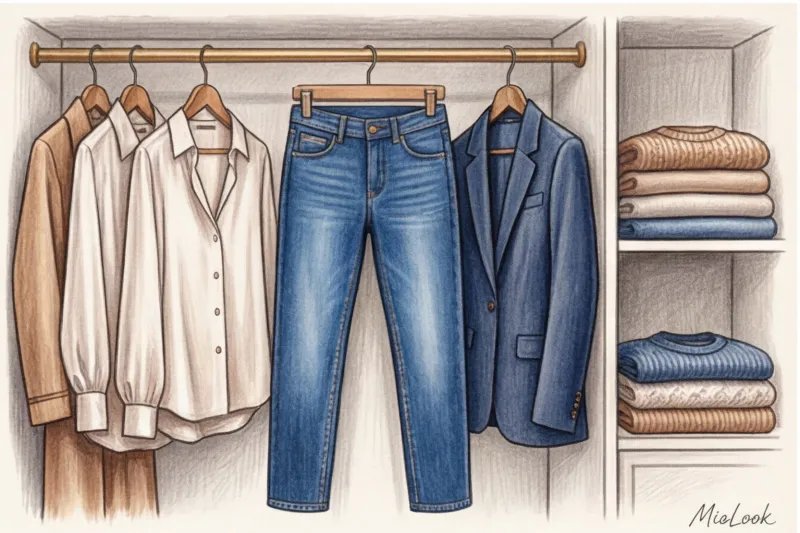
My main advice: don't compromise your taste. Invest in quality that supports you, improves your posture, and makes you feel more confident. And remember, a well-chosen basic outfit solves the "nothing to wear" problem before you even open your closet.