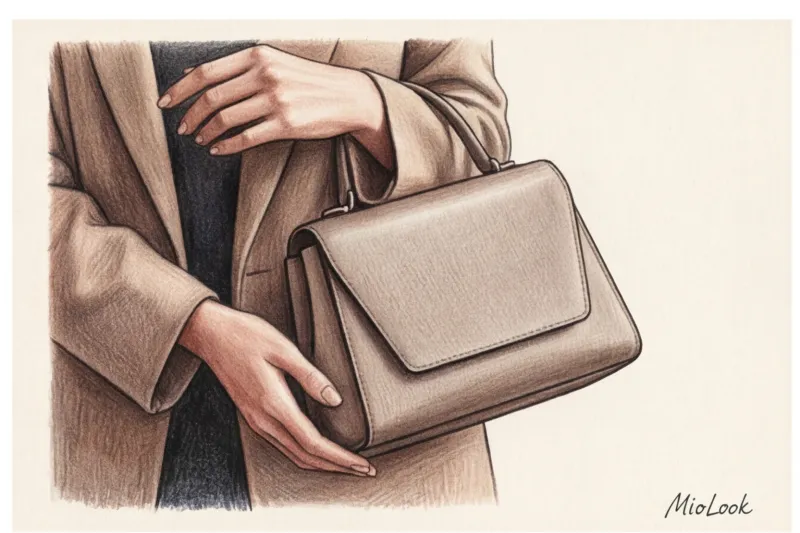
I still remember that sound. The dull, satisfying click of the heavy brass lock in Signor Alessandro's small tannery in Florence. Then, twelve years ago, he told me a phrase that would become the foundation of my approach to style: "Julia, it's not the lack of a logo that gives away a cheap item. It's how it resists gravity and how it sounds in silence.".
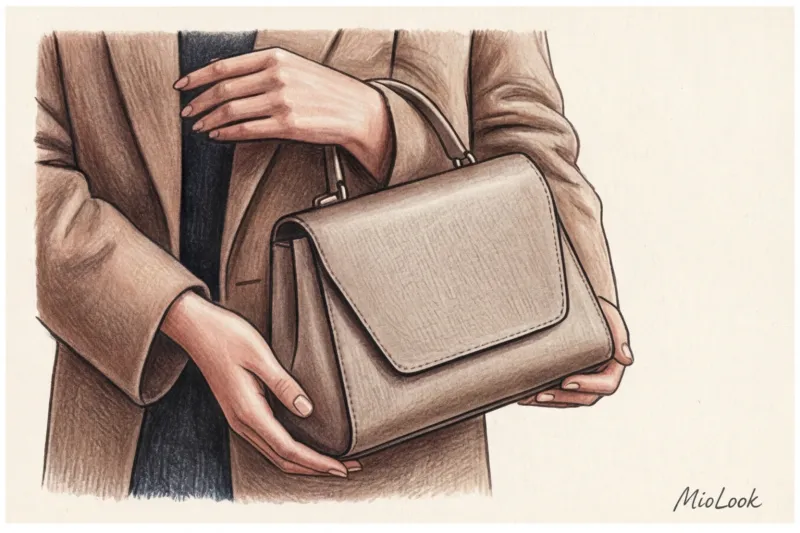
Today, as a personal stylist, I see women spending hefty sums on accessories that visually cheapen their look. Conversely, I see how a well-chosen mass-market item leaves everyone wondering if it's from the latest Bottega Veneta collection. If you're wondering how to choose a bag that looks expensive, you'll have to forget the standard advice from the glossy magazines. We won't talk about "basic black." We'll deconstruct the very architecture of production.
By the way, I talked in detail about which shapes never go out of fashion and form the basis of the capsule collection in our The Complete Guide to Essential Bags.
The Illusion of Luxury: How to Choose a Bag That Looks Expensive
Let's start with the biggest marketing scam of our time. If you see a proudly embossed inscription on an inexpensive bag, Genuine Leather (Genuine leather) isn't a reason to take it to the checkout. In the budget segment, this is a red flag.
According to a 2023 Leather Working Group report, over 60% of inexpensive leather goods are made from so-called split leather. What does this mean in practice? The animal hide is separated into layers. The top, most durable and beautiful layer (full-grain) is reserved for premium products. The lower, loose layer, similar to suede, is reserved for mass-market products. To achieve the appearance of smooth leather, it is generously coated with a thick layer of polyurethane and stamped with an artificial texture.
This "genuine leather" doesn't breathe, stiffens in the cold, and its polyurethane coating develops unsightly cracks after just a couple of months of heavy wear. You're buying plastic on a loose backing, but you're paying for the magic word "leather."
Why is high-quality eco-leather better than cheap genuine leather?
If your budget is limited, the counterintuitive, yet ultimately correct, step is to ditch cheap genuine leather in favor of modern alternatives. Heavy-duty canvas with a special coating or high-tech, next-generation polyurethane (eco-leather) will last longer and look more refined.
How can you tactilely distinguish good eco-leather from "plastic oilcloth"? Run the back of your hand over it. High-quality material is slightly cool, pliable, and has a slight matte finish. Cheap faux leather creaks under your fingers and has an unnatural shine, reflecting light like cheap gloss.
Access to MioLook for €0.99 — one-time payment
A smart AI stylist will create the perfect look and suggest the best accessories to complement your wardrobe.
Get access — €0.99 onceArchitecture and Form: Why Soft Bags Smell Cheap
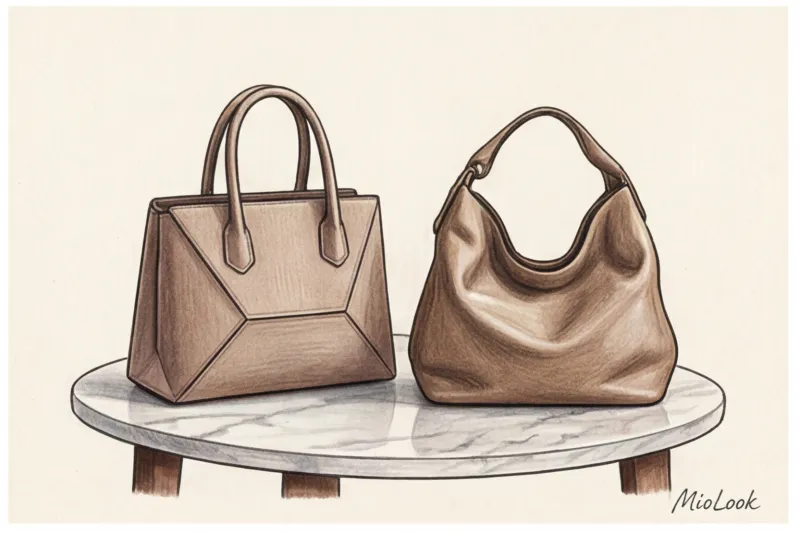
Let's get back to the laws of physics. The geometry of a bag directly affects the perception of its value. Luxury brands spend months developing internal padding (in Italian production, this is called salpa - special cardboard made from leather crumbs) so that the bag keeps its shape.
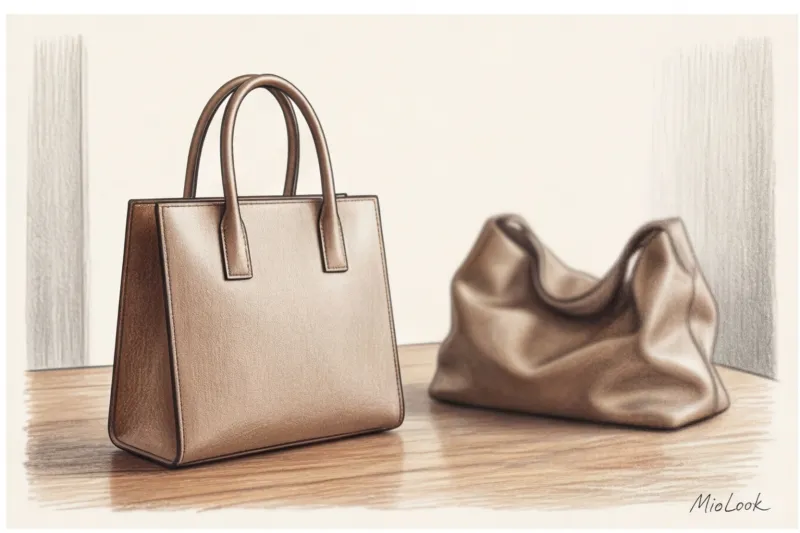
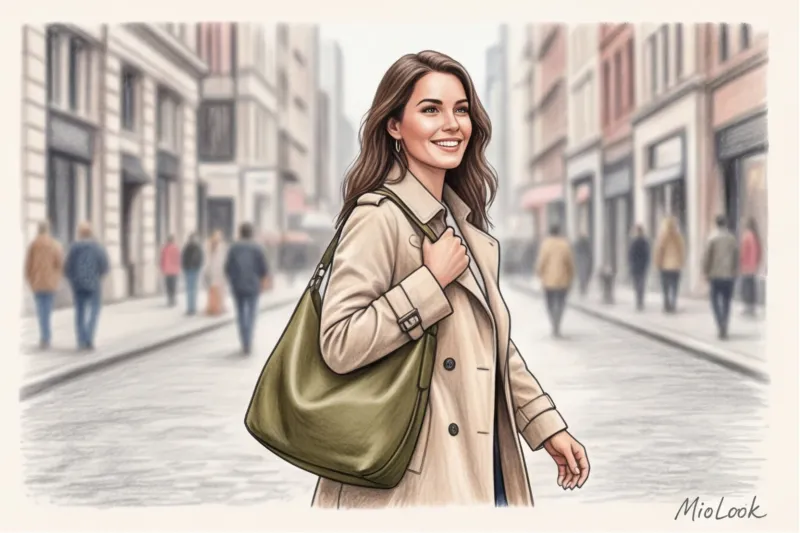
In the budget segment, interior padding is the first thing people skimp on. That's why I always discourage my clients from buying inexpensive hobo bags or oversized soft tote bags. Without proper structure, they instantly turn into shapeless sacks, underscoring their low price.
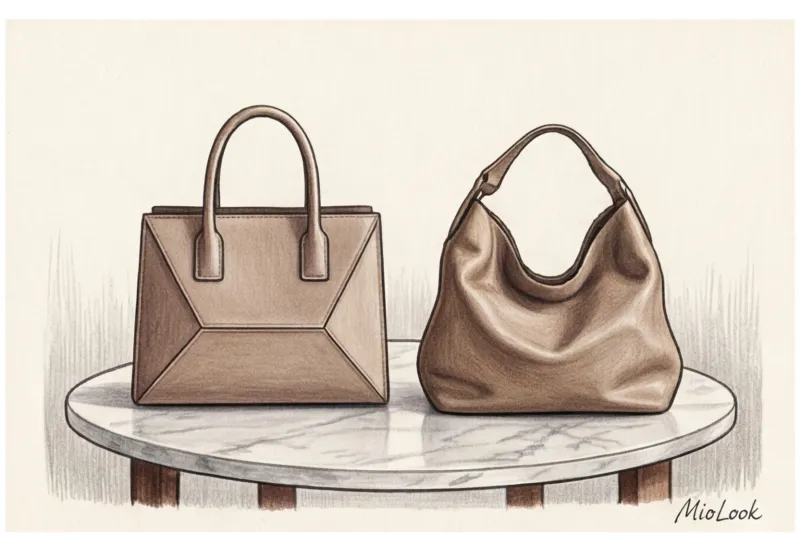
My professional test in the store: Place the empty bag on the table. If it's leaning to the side or the sides are collapsing, leave it on the shelf. The ideal investment bag should stand as securely as an architectural structure.
Of course, this advice doesn't work for boho-chic style, where relaxedness is part of the look's DNA. But if we're talking about urban casual or business attire, a rigid frame is your armor against a cheap look.
Anatomy of Seams and Edge Finishing (Edge Paint)
Do you know where buyers and stylists look to assess a product's quality in three seconds? The handle attachment and the edge finish.
The quality standard at houses like Hermès and Celine is 8-10 stitches per inch (2.54 cm). The finer and denser the stitching, the more expensive the garment looks and the longer it will last. Mass-market garments typically use 5-6 long stitches per inch to speed up production. Pay close attention to the stitching: if the thread is thin and the stitches are long and slightly loose, the garment will quickly lose its appearance.
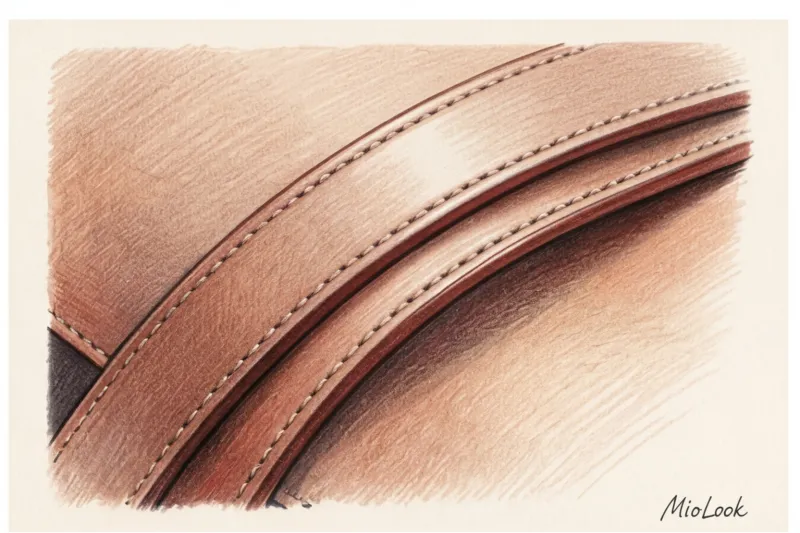
The second critical point is technology Edge Paint (Edge painting). Look at the cross-section of the strap. In expensive products, the edge is sanded and coated with a special paint in 5-7 layers, baking each layer. The result is a perfectly smooth, slightly raised edge. In inexpensive bags, the edge is simply filled with a single thick layer of cheap rubber polymer. In cold weather or at folds (especially at the base of the handles), this "rubber" cracks and peels off in pieces within a month.
Accessories: The Golden Rule of Investment Accessories
We're back to sound and weight again. Hardware is the jewel in your bag's crown. Cast brass is heavy, pleasantly cool in the hand, and produces that "expensive" hollow sound when closed. Hollow alloy (zamak), used in mass-market bags, is lightweight and jingles like a set of cheap keys.
The main rule that I never tire of repeating: avoid bright yellow, samovar gold On inexpensive bags, this unnatural shine screams an attempt to appear more expensive than it actually is.
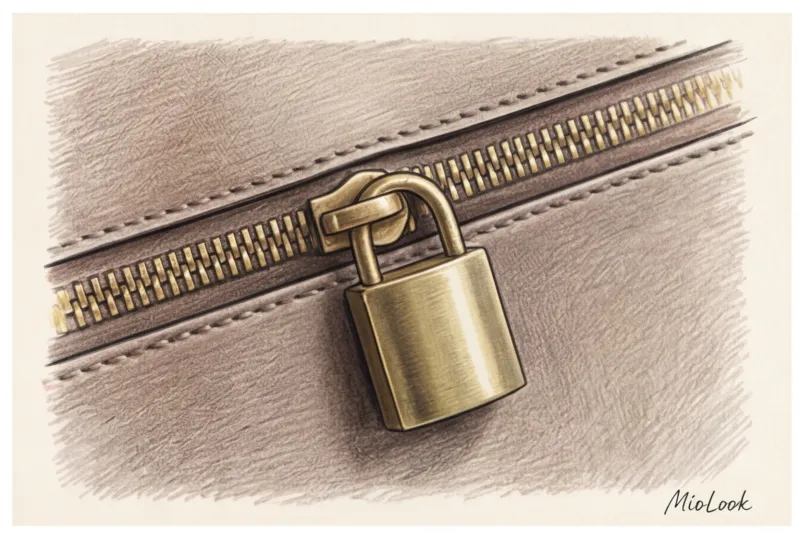
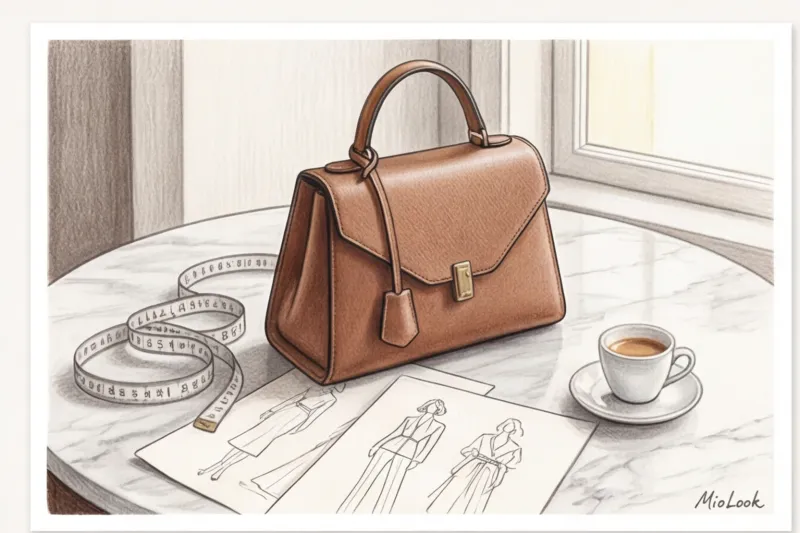
Choose styles with metal that mimics palladium (silver with a slight darkening), matte brass, or aged bronze. Better yet, look for bags with hidden hardware. Leather-covered magnets instead of shiny clasps are a brilliant minimalist touch that always looks classy.
Zippers and lining: invisible status indicators
Nothing ruins the magic of an elegant look like the rustling sound of a cheap polyester lining when you take out your phone. Ideally, the lining should be made of thick cotton, twill, or microfiber that mimics suede.
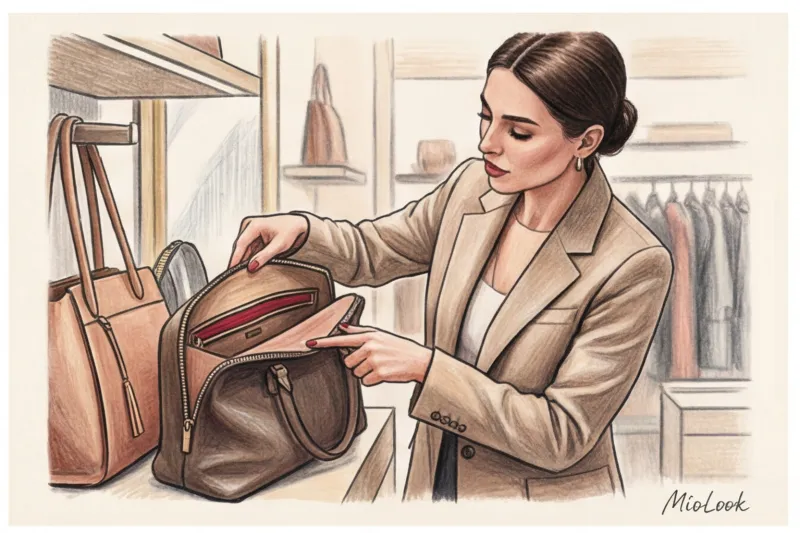
Pay attention to the zippers. A smooth-running metal zipper is a sign of good taste. A classic bag with a plastic "tractor" zipper is a stylistic clash that cheapens the entire design.
Color and texture: what shades are hidden in the mass market?
According to the PANTONE Color Institute (2024), complex, blended hues are psychologically perceived by audiences as more "premium." Why? Because creating pure white or vibrant scarlet from cheap raw materials requires aggressive chemical processing, which flattens the texture.
If you're on a budget, your best friends are colors that have depth in nature:
- Caramel and cognac
- Taupe (gray-beige)
- Deep burgundy or ripe cherry
- Dark chocolate
- Dark emerald
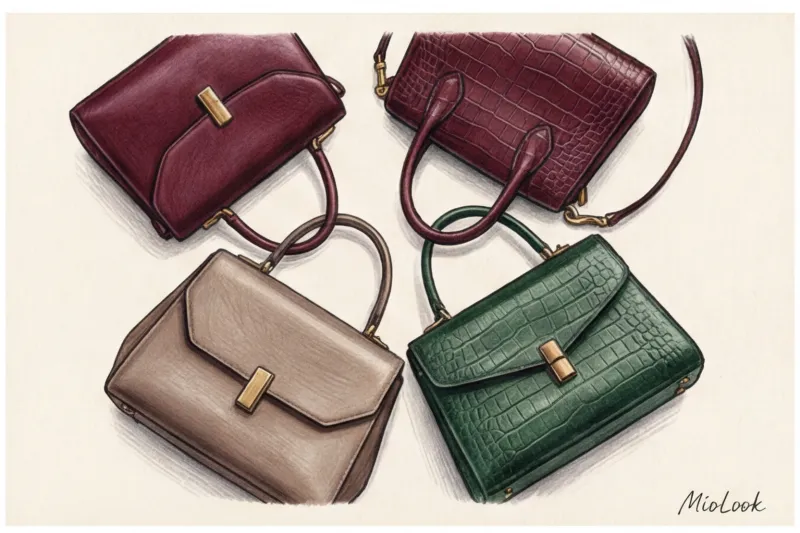
A case study: Last season, a client and I were looking for an office bag. We were on a tight budget. We chose a deep burgundy, crocodile-textured tote from Massimo Dutti. Thanks to the perfect color, the lack of shiny hardware, and the rigid frame, her colleagues asked her the next day if she'd bought the new Saint Laurent model. The formula worked flawlessly.
Speaking of textures, reptile-embossed or Saffiano leather is a great way to hide the imperfections of inexpensive smooth leather. Saffiano's fine ribbing makes the material scratch-resistant, dramatically reducing your cost-per-wear.
Your perfect look starts here
Join thousands of users who look flawless every day with MioLook. Create capsules in just a few clicks.
Get access — €0.99 onceChecklist: 5 Signs a Budget Bag Is Worth Ditching
Save this list and refer to it before every purchase. The cheaper the bag, the more minimalist it should be. Any unnecessary embellishment is an attempt to distract from a poorly designed bag.
- Contrast stitching. White thread on a black or brown bag acts as a magnifying glass, highlighting every crooked stitch. Choose a stitch that matches the color of the material.
- Abundance of fake parts. Zippers that don't go anywhere, decorative straps, and keyless padlocks make the design feel heavy and provincial.
- Huge logos. Monograms of unknown brands or giant metal letters on a $50 bag look comical. Anonymity is a sign of good taste.
- Thin strap handles. If a long belt is not laminated (sewn from one layer of material, and the backing is rough), it will stretch out and lose its appearance in a couple of weeks.
- Glossy finish. Unless it's patent leather (which requires perfect execution), the excessive shine of polyurethane always reveals its petroleum origin.
How to wear an inexpensive bag to elevate your style
Even the most perfect basic bag will be lost if integrated into a sloppy look. The secret to a classy wardrobe lies in the rule of contrasting textures. I wrote about this principle in more detail in the article How to Look Expensive: Secrets of a Status Wardrobe.
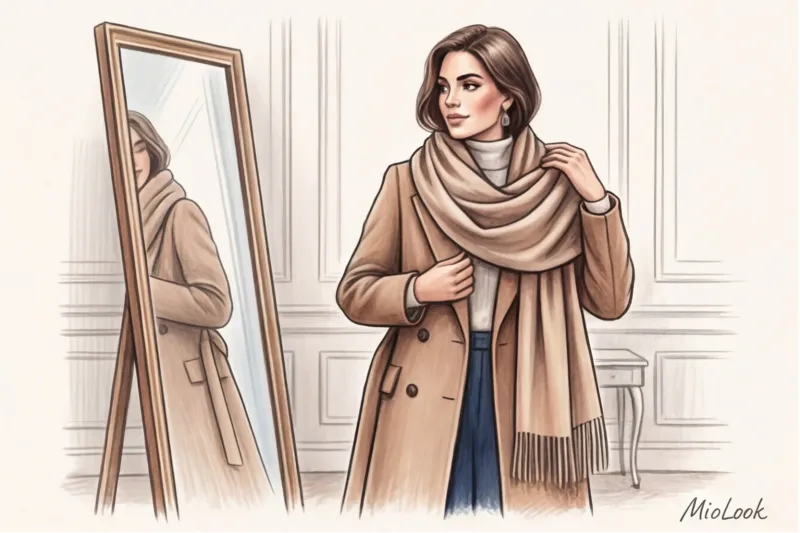
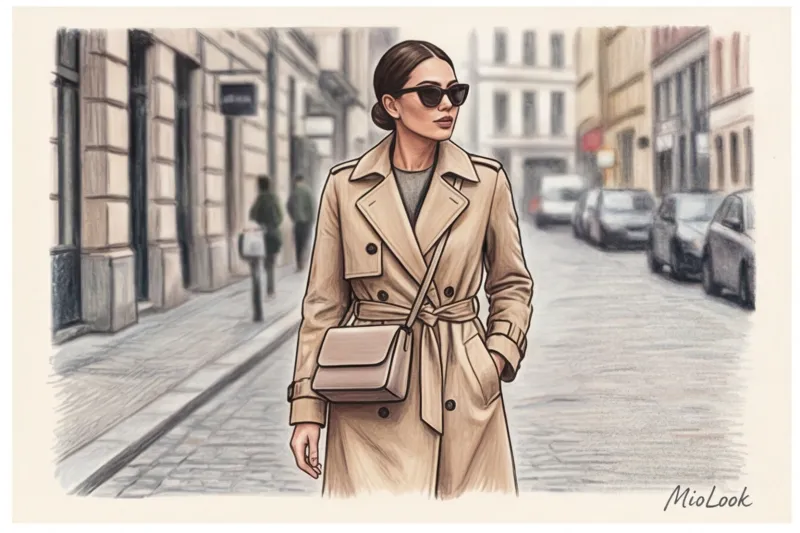
A sleek, rigid bag looks stunning when contrasted with a soft cashmere coat or a chunky knit sweater. A $100 bag paired with a high-quality wool coat (at least 70% wool) will look like a thousand dollars. But a $2,000 bag paired with a rolled-up acrylic cardigan will instantly look like a cheap knockoff.
Don't forget about care. Investing time is just as important as investing money. Store your bag in a dust bag, and be sure to stuff it with paper or special bag trees when not in use. Wipe faux leather with a damp cloth, and treat genuine leather with conditioner.
Choosing a bag isn't a matter of an unlimited budget. It's a matter of being observant and understanding the processes. Next time you're in a store, just close your eyes, run your hand over the material, click the clasp, and set the empty bag down on the table. The bag itself will tell you how much it really costs.